Category: Brecorder

  • Yemen’s Houthis say they attacked Saudi Arabia’s Ras Tanura refinery

    Yemen’s Houthis say they attacked Saudi Arabia’s Ras Tanura refinery

    Yemen’s Houthis said on Wednesday they had attacked Saudi Arabia’s Ras Tanura oil refinery, the kingdom’s largest, which is near a major export terminal for Saudi crude.

    Houthi military spokesman Yahya Saree said the refinery attack caused fires.

    The Houthi militia, which controls much of western Yemen including the capital Sanaa, has been firing at Saudi airports, oil infrastructure and office buildings since Yemen’s frozen civil war reignited in July in a spillover from the US-Iran war.

    The attacks have previously temporarily disrupted some of Aramco’s operations and caused the cancellation of most international flights to Riyadh. They also forced Saudi Arabia to postpone or cancel major international events, including soccer’s AFC Asian Cup and flagship investment conference FII.

    The Saudi-led coalition said earlier on Wednesday that air defences had intercepted and destroyed four drones in Ras Tanura in Saudi Arabia’s Eastern Province. It did not say the refinery there had been struck.

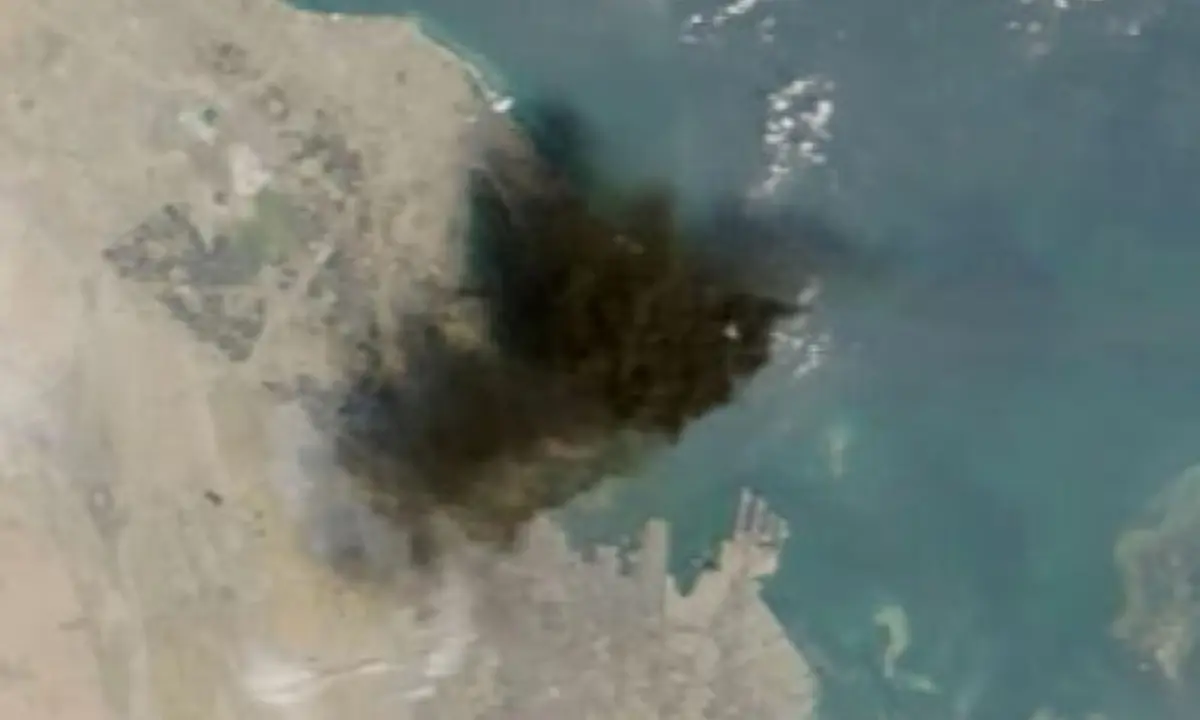
    NASA satellite imagery reviewed by Reuters showed large swathes of thick black smoke around the refinery, covering an area spanning around 600 square kilometres.

    The Saudi government communications office and state oil giant Aramco did not immediately respond to requests for comment.

    Ras Tanura, which has a refining capacity of 550,000 barrels per day, has previously been targeted during the conflict with the Houthis as well as during the broader Iran war.

    It is part of a complex on the kingdom’s Gulf coast that was the kingdom’s main export terminal until the US-Iran war boosted the importance of Yanbu on the west coast, which receives oil via the East-West pipeline.

    Wealth fund tower hit again

    The Houthi spokesman Saree had also said the group had attacked Riyadh’s financial district in three phases.

    Saudi civil defence said 11 people were wounded on Tuesday in a strike on a tower in Riyadh’s financial district, the tallest building in the capital that houses the headquarters of the Public Investment Fund, the kingdom’s sovereign wealth fund. It was the second strike on the tower in less than a week.

    The first, on November 19, damaged the building but caused no injuries. The Saudi civil defence posted an image on Tuesday of the landmark tower showing some damage to the building about halfway up the facade, similar to the impact from last week’s attack.

    Source: brecorder

  • Gold price per tola falls Rs11,500 in Pakistan

    Gold price per tola falls Rs11,500 in Pakistan

    Gold prices in Pakistan fell on Wednesday in line with their decline in the international market. In the local market, gold price per tola reached Rs373,936 after a decrease of Rs11,500 during the day.

    Similarly, 10-gram gold was sold at 320,589 after it declined by Rs9,860, according to rates shared by the All-Pakistan Gems and Jewellers Sarafa Association (APGJSA).

    On Tuesday, gold price per tola reached Rs385,436 after a gain of Rs1,300 during the day.

    The international rate of gold was down by $115 to reach $3,514 per ounce.

    Meanwhile, the price of silver decreased by Rs224 to reach Rs4,463 per tola.

    Source: brecorder

  • At least one dead as six-storey building collapses near Karachi’s Baloch Colony

    At least one dead as six-storey building collapses near Karachi’s Baloch Colony

    A six-storey building collapsed near Baloch Colony on Shahrah-e-Faisal in Karachi, leaving at least one person dead and multiple injured, Rescue 1122 Sindh said on Wednesday.

    According to a spokesperson for Rescue 1122, reports indicated that several people were trapped under the rubble following the collapse.

    The rescue service’s Urban Search and Rescue team reached the site and recovered one body and rescued one person alive from the debris.

    A search and rescue operation was under way to locate other people who might be trapped beneath the rubble, the spokesperson added.

    More to follow

    Source: brecorder

  • Cardamom ad sparks clash between Bollywood star, Indian food regulator

    Cardamom ad sparks clash between Bollywood star, Indian food regulator

    NEW DELHI: An advertisement for cardamom is at the centre of a legal spat between a Bollywood actor and India’s most prominent food commissioner, with a court ruling set to shape how far companies can go in indirectly advertising brands whose promotion is restricted.

    India restricts advertising for liquor and tobacco but officials have for years also frowned upon the use of indirect means, called surrogate advertising, by companies in such sectors promoting their brands in the guise of sodas, water or glassware.

    While companies say these are genuine businesses in their own right whose advertising cannot be curbed, health officials say the advertisements are aimed at generating recall of the parent brand whose publicity is restricted. Since 2024, India has been trying to finalise stringent guidelines to prohibit such advertisements outright.

    In the case involving Bollywood stars, actor Ajay Devgn has sued the food authority of Maharashtra state, arguing he has been wrongly told to stop appearing in advertisements for Vimal cardamom packs, according to a non-public court filing dated October 15 reviewed by Reuters.

    The state, whose food safety commissioner Tukaram Mundhe has become a national sensation for his aggressive stance on public health, asked Bollywood stars Devgn, Shah Rukh Khan and Tiger Shroff in August to stop appearing in advertisements promoting Vimal cardamom, arguing the brand is mostly known for its betel nut mix, or pan masala, which is banned in the state.

    The spat in the High Court in Mumbai could set a precedent, New Delhi-based lawyer Anuj Tiwari said. “The case will test both the fairness of the department’s process before it imposes restrictions… and the parameters for deciding what counts as indirect advertising,” he said.

    Court spat on cardamom ad

    In the advertisement available on Vimal Cardamom’s YouTube page and posted two years ago, the Bollywood stars are seen celebrating, throwing saffron at each other after Devgn consumes the product. The Hindi-language advertisement has 107 million views, while clips dubbed in other Indian languages have garnered millions more.

    “Ajay, Shahrukh, and Tiger played saffron Holi like crazy and drenched the entire community in saffron!” says the advertisement’s description, referring to the Hindu festival of colour.

    Devgn in his filing argues cardamom has not been prohibited in the state and “there is no bar in endorsing a product which is not prohibited”.

    Devgn did not respond to Reuters queries. Mundhe told Reuters the state believes the advertisements are against public health interests, and the state is separately reviewing responses submitted by Khan and Shroff, although Reuters could not ascertain details of their submissions.

    Dushyant Mahant, a lawyer for PB Agro, which holds the licence to make Vimal cardamom and pan masala, told Reuters the allegations were futile as the company does not promote Vimal in Maharashtra and only advertises the product via nationally televised broadcasts that cannot be restricted geographically.

    Industry estimates show India’s pan masala market was worth around $5 billion last year. Health experts say the product is a leading cause of oral fibrosis that often progresses to oral cancer.

    While Maharashtra bans it, Vimal’s tobacco-free pan masala sachets in other states cost around 5 rupees (5.4 US cents). But they are often consumed with chewing tobacco, sold at kiosks as “twin packs” — a pan masala sachet alongside a tiny pouch of unbranded tobacco.

    An adverse ruling in Devgn’s case could affect Bollywood stars as endorsements can amount to up to 30% of an actor’s earnings, and promoting tobacco-linked products is more lucrative than other advertisements, said Suresh Mathew, a Mumbai-based screenwriter.

    “Most actors know if a product is a surrogate for another product,” he added. “There are cases where certain actors have refused to lend their name to a product that they feel is harmful.”

    Source: brecorder

  • Iran says it is prepared to withstand US blockade, seeks to curb price rises

    Iran says it is prepared to withstand US blockade, seeks to curb price rises

    DUBAI: Iran’s first vice president said on Wednesday Tehran was not concerned about a US naval blockade as there had been a significant increase in cargo through other borders, and that the government was seeking to rein in price rises.

    Tehran is facing one of its worst inflation surges in decades, driven by the nearly nine-month-old Iran war, with a particularly sharp rise in food prices.

    The US reimposed its naval blockade on Iranian ports in July, and earlier this month announced Task Force Iron Gate to restrict the movement of weapons and sanctioned materials across Iran’s land borders and the Caspian Sea.

    “The increase in the unloading and clearance of goods through non-southern borders sends the message that we are not concerned about the enemy’s naval blockade,“ Mohammad Reza Aref said.

    Strategic goods reserves were strong and supplies plentiful, he added, without giving any figures.

    Aref said the government was seeking to prevent increases in basic goods prices for at least three months.

    In a separate meeting, President Masoud Pezeshkian said the government was seeking to direct more budget resources and energy savings towards improving living standards in poorer communities.

    Consumer prices in Iran in October were 88.7% higher than a year earlier, while annual average inflation accelerated to 76.8%, according to the Statistical Centre of Iran. Food and beverage prices rose 112.6% year-on-year.

    Source: brecorder

  • From Faiz’s poetry to a ban demand in India: 5 things to know about Pakistan’s first Netflix Original series

    From Faiz’s poetry to a ban demand in India: 5 things to know about Pakistan’s first Netflix Original series

    Pakistan’s first Netflix Original series is finally nearing its global debut, bringing together some of the country’s biggest entertainment stars. But beyond its high-profile cast, Jo Bachay Hain Sang Samait Lo has a literary history, an international production footprint and is already attracting controversy across the border.

    From Faiz's poetry to a ban demand in India: 5 things to know about Pakistan's first Netflix Original series

    Here are five things you may not know about the upcoming series.

    Its title comes from a famous Faiz Ahmed Faiz ghazal

    The title Jo Bachay Hain Sang Samait Lo is borrowed from a couplet by legendary Urdu poet Faiz Ahmed Faiz.

    The verse reads:

    “Jo bachay hain sang samait lo, tan-e-daagh daagh luta diya.”

    The line can be loosely translated as: “Gather whatever remains; I have already given away my scarred and wounded self.”

    The imagery speaks of emotional devastation, sacrifice and what remains after everything has been lost. The ghazal itself also explores themes of resistance, dignity and suffering, giving the title a deeper literary significance beyond its association with a love story.

    From Faiz's poetry to a ban demand in India: 5 things to know about Pakistan's first Netflix Original series

    It began as a novel published in a women’s magazine

    The series is based on bestselling Pakistani author Farhat Ishtiaq’s Urdu novel of the same name.

    The story first appeared in instalments in Khawateen Digest in 2009 before being published as a book in 2013.

    The novel follows Sikandar (played by Ahad Raza Mir), a Harvard law student dealing with emotional trauma, and Liza (Iqra Aziz), an artist with a complicated past. Their paths cross in Italy, setting the stage for a story about love, relationships and personal struggles.

    The adaptation brings Ishtiaq’s literary work to an international streaming platform, with the author also involved in the screenplay.

    From Faiz's poetry to a ban demand in India: 5 things to know about Pakistan's first Netflix Original series

    The series was filmed across three countries

    Unlike productions shot entirely within Pakistan, Jo Bachay Hain Sang Samait Lo was filmed across Pakistan, Italy and the United Kingdom.

    Italy is particularly significant to the story, as it provides the setting for the meeting between its central characters, Sikandar and Liza.

    The international locations also reflect the story’s wider geographical scope, with Pakistani characters and relationships unfolding across different settings.

    From Faiz's poetry to a ban demand in India: 5 things to know about Pakistan's first Netflix Original series

    An Indian film-industry body wants it banned

    Even before its release, the series has become the subject of controversy in India.

    The All Indian Cine Workers Association (AICWA) has written to Indian Prime Minister Narendra Modi, demanding that the series not be released or streamed on Netflix India.

    In a letter dated November 24, the association also urged the government to introduce permanent legislation preventing Pakistani content and artists from appearing on Indian television, cinema screens and streaming platforms.

    AICWA cited an advisory issued by India’s Ministry of Information and Broadcasting in May 2025, which called on streaming platforms to stop carrying Pakistan-origin content following heightened tensions between the two countries.

    The association’s demand is not itself a government ban. Netflix has not publicly confirmed whether the series will be available to Indian subscribers.

    From Faiz's poetry to a ban demand in India: 5 things to know about Pakistan's first Netflix Original series

    It brings together six love stories across three generations

    The series is not limited to the relationship between its two central characters.

    According to Netflix, the production follows six love stories across three generations, exploring relationships, family dynamics, heartbreak and the meaning of love.

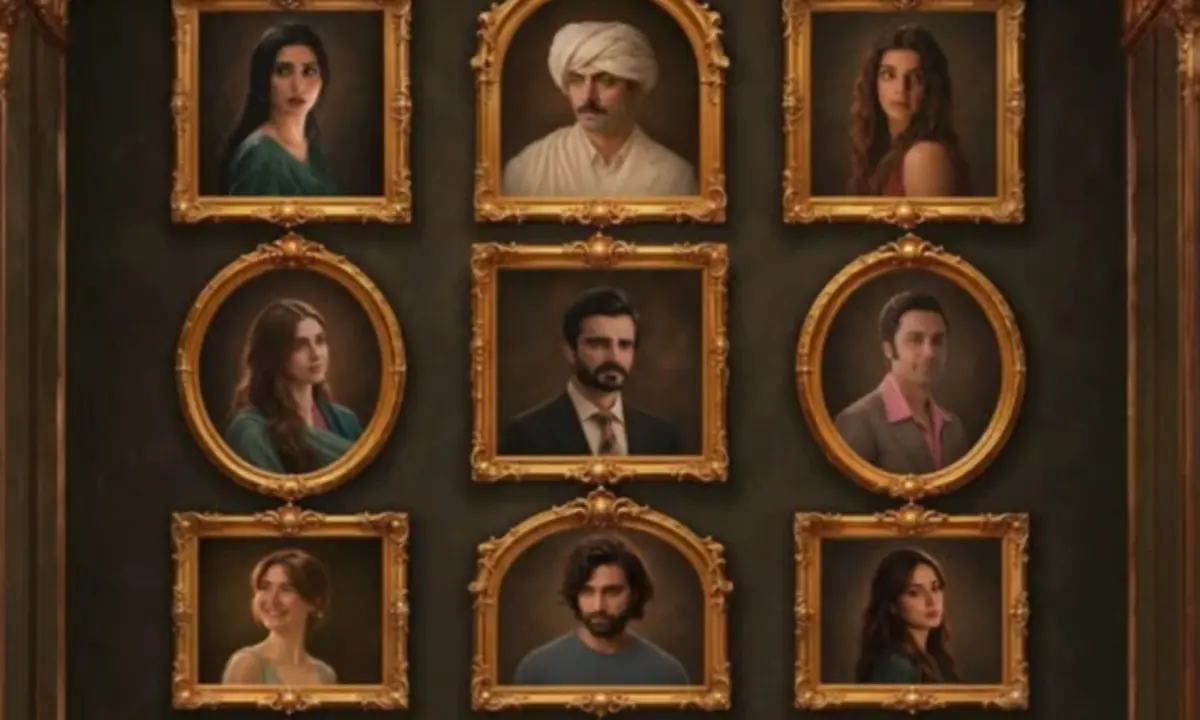
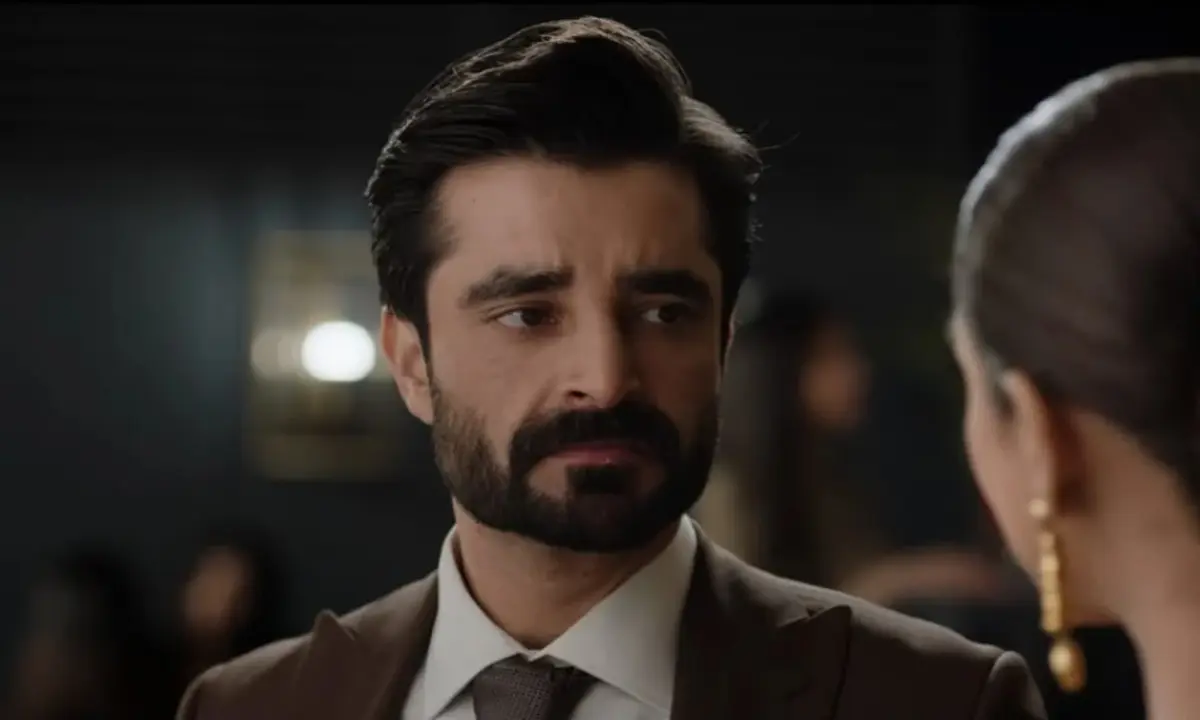
    Its ensemble cast includes Fawad Khan, Mahira Khan, Ahad Raza Mir, Hania Aamir, Sanam Saeed, Hamza Ali Abbasi, Iqra Aziz, Maya Ali, Bilal Ashraf, Ahmed Ali Akbar and Khushhal Khan, among others.

    Produced by Momina Duraid Films, the series marks a significant milestone for Pakistan’s entertainment industry as its first Netflix Original production.

    The series is scheduled to premiere on December 4, 2026, under the international title All the Love Our Hearts Carry.

    From Faiz's poetry to a ban demand in India: 5 things to know about Pakistan's first Netflix Original series

    Momina Duraid is one of Pakistan’s most prominent television producers and the creative force behind some of the country’s best-known dramas, including Humsafar, Zindagi Gulzar Hai, Dastaan, Diyar-e-Dil and Suno Chanda.

    Source: brecorder

  • Bangladesh garment workers win wage rise after weeks of protests

    Bangladesh garment workers win wage rise after weeks of protests

    DHAKA: Bangladesh’s garment workers won a 36-percent minimum wage increase on Wednesday, officials said, after weeks of sometimes violent protests that caused hundreds of millions of dollars in business losses.

    The South Asian nation, the world’s second-biggest garment exporter behind China, has seen widespread demonstrations since October by workers demanding higher pay.

    The garment industry, which clothes millions of consumers across Europe and North America, is Bangladesh’s economic lifeline, accounting for four-fifths of export earnings and employing more than four million people.

    Following lengthy negotiations with factory owners, workers’ representatives urged employees to return to factories.

    “Although we are not completely satisfied, the outcome is not entirely bad either,” Babul Akhter, the workers’ representative on a wage board set up to resolve the crisis, told reporters.

    “Previously, workers used to get a wage revision every five years, but this time they are getting a revised wage after three years.”

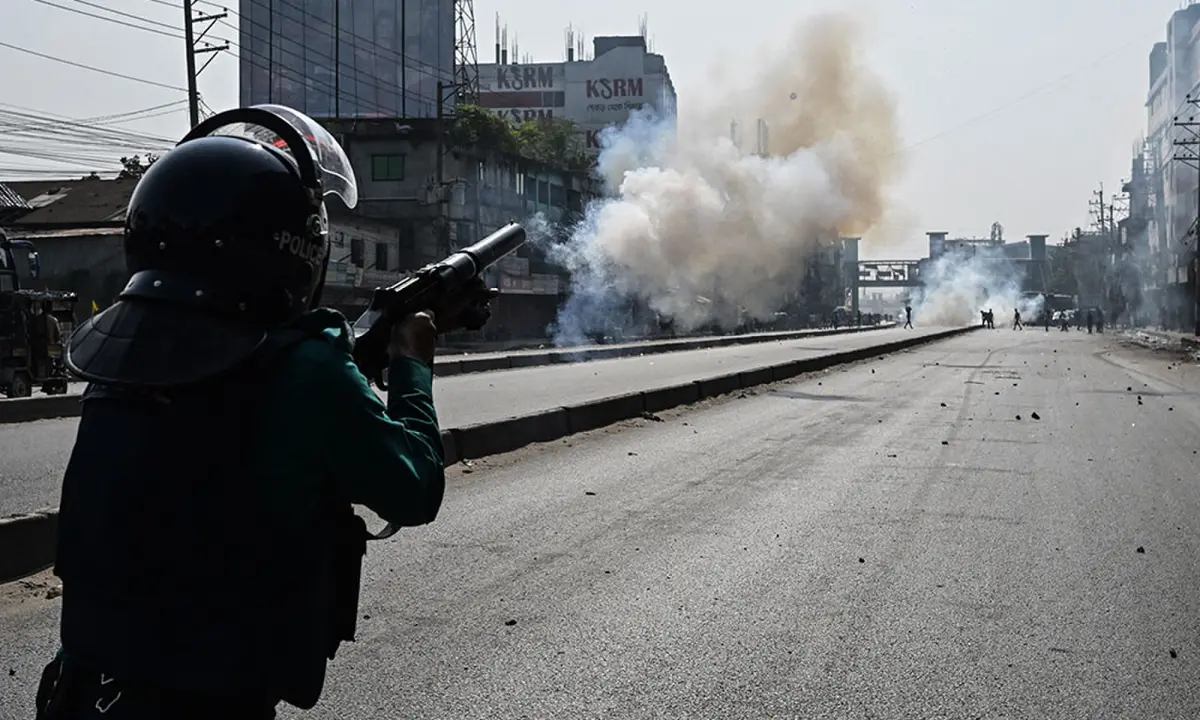
    On Wednesday, several hundred protesters set up barricades in the industrial zone of Gazipur, on the outskirts of the capital Dhaka, some hurling rocks, before police dispersed them using tear gas and stun grenades, witnesses told AFP.

    Police official Md Amzad Hossain said officers were “trying to keep things under control”. Protests later eased, although several factories remained closed.

    “Do you think we should be happy with the raise?” Al Amin, a worker in Gazipur, told AFP. “The increased salary still does not match the rising prices of commodities… But I guess most workers want to return to work.”

    Kamrul Hasan, senior union official from the Ekota Garments Sramik Federation, said that while the increase fell short of demands, they accepted the offer.

    “Workers should also consider the situation of medium and small factories – they would not be able to pay much more and would eventually shut down,” he said. “The unrest will gradually recede.”

    Mahdi Amin, the prime minister’s adviser on labour, welcomed the pay rise and urged calm.

    “Let us not be influenced by any kind of propaganda, provocation or misinformation,” he said, the state-news agency BSS reported.

    ‘Export engine’

    Workers initially demanded a minimum monthly wage of 30,000 taka ($240), up from 12,500 taka.

    They say their pay has failed to keep pace with the rising cost of food, housing, transport and health care.

    Judge Syed Azad Subhani, the chairman of the government-appointed garment industry wage board, said the “majority supported a minimum wage of 17,000 taka”, after a vote early Wednesday.

    The wage hike will take effect in January.

    The Bangladesh Garment Manufacturers and Exporters Association (BGMEA) said on Sunday that protests had cost the industry an estimated $428 million in losses, while orders worth $254 million had shifted to other countries.

    The disruption came ahead of the busy Christmas season.

    The garment industry, which supplies major international brands including Fruit of the Loom and Levi Strauss, earns around $38 billion a year.

    Bangladesh supplies more than 150 countries with ready-made garments, according to the BGMEA, which represents around 4,000 factories.

    The United States is its biggest individual market, while the European Union is its largest trading bloc.

    When Bangladesh won independence from Pakistan in 1971, it was among the world’s poorest countries, with its economy devastated by war.

    The expansion of garment production helped transform the nation of around 170 million people from a predominantly agricultural economy into a major global manufacturing hub.

    Bangladesh’s central bank calls the garment sector the “country’s export engine”.

    But its success has been built on a vast, relatively low-paid workforce, with longstanding disputes over wages, working conditions and labour rights.

    Source: brecorder

  • Pakistan’s first astronaut: Everything you need to know about Muhammad Zeeshan Ali and his historic mission

    Pakistan’s first astronaut: Everything you need to know about Muhammad Zeeshan Ali and his historic mission

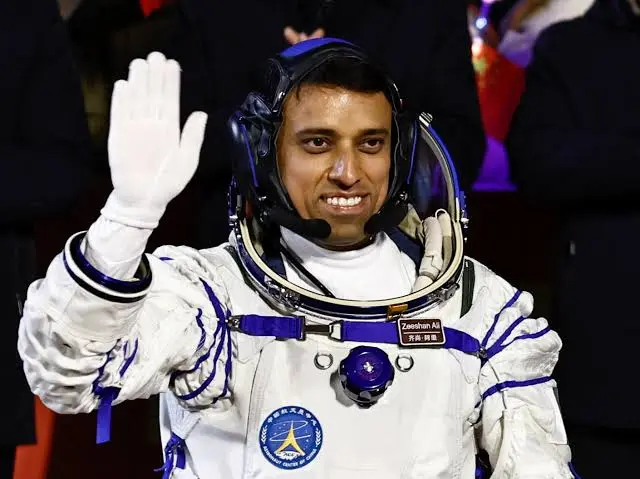
    Pakistan has entered a new chapter in its space programme. Muhammad Zeeshan Ali, a 40-year-old former Pakistan Air Force pilot, has become the first Pakistani to travel into orbit and the first foreign astronaut to join a crewed mission to China’s Tiangong space station.

    Ali arrived at the station on November 25, 2026, aboard China’s Shenzhou-24 spacecraft, alongside Chinese astronauts Tang Hongbo and Wu Yi. But his journey is about more than a historic first: he is there to help carry out scientific experiments developed through Pakistan-China cooperation.

    Who is Muhammad Zeeshan Ali?

    Ali is a former Pakistan Air Force pilot who was selected in April 2026 to train for China’s human spaceflight programme. He was one of two Pakistani candidates chosen for the opportunity, alongside fellow pilot Khurram Daud, who served as his backup.

    Ali travelled to China in April and spent seven months training at the Astronaut Centre of China in Beijing. His preparation covered spacecraft systems, space-station operations, scientific procedures and emergency response. He also received intensive Chinese-language training so he could communicate with his crewmates and understand mission commands.

    At a press conference before the launch, Ali said his first flight represented not just him, but his country.

    What is the Shenzhou-24 mission?

    The Shenzhou-24 mission launched from the Jiuquan Satellite Launch Centre in northwestern China on November 25, 2026, aboard a Long March-2F rocket.

    Ali is travelling as a payload specialist. This means his role is focused on scientific experiments and research activities rather than commanding or piloting the spacecraft. The mission is led by Chinese astronaut Tang Hongbo, with Wu Yi serving as flight engineer.

    The crew docked with China’s Tiangong space station on the same day. Ali is expected to spend between five and 10 days in orbit, considerably shorter than the roughly six-month rotations typically undertaken by Chinese astronauts.

    What will he be doing in space?

    Ali will participate in four Pakistan-China research projects covering materials science and biotechnology. They were selected from more than 300 proposals submitted to Pakistan’s Space and Upper Atmosphere Research Commission (SUPARCO).

    The experiments include research into lightweight, graphene-based composite materials that could help shield spacecraft from radiation; self-healing carbon-fibre composites that may repair tiny cracks; and the effects of microgravity and cosmic radiation on quinoa seeds, including their potential as a food source for future missions.

    A fourth project will examine microalgae and cyanobacteria. These organisms could potentially help regenerate oxygen, remove carbon dioxide and support food production in space.

    The research has applications beyond this particular flight. Stronger spacecraft materials and more sustainable ways of producing food and oxygen could become important as humans undertake longer missions.

    Yes, specially prepared halal food is part of the mission

    China has also made arrangements for Ali’s dietary requirements. Reports say specially prepared halal meals were developed for him to eat during his stay aboard the space station.

    The support team also prepared operating manuals in Chinese and English to help him work alongside his Chinese crewmates. It is a small but telling detail about the practical arrangements involved in sending an astronaut from another country into space.

    He will return in a different spacecraft

    One particularly unusual detail of Ali’s mission is that he is not scheduled to return in the spacecraft that carried him to the station.

    He travelled to Tiangong aboard Shenzhou-24, but is expected to return to Earth aboard Shenzhou-23, together with two Chinese astronauts, Zhang Zhiyuan and Li Jiaying.

    Shenzhou-23 is already docked at the space station. The arrangement means Ali will join the returning crew for their journey home, rather than travelling back in the same spacecraft in which he arrived.

    Why does this matter for Pakistan?

    The flight is part of a wider space partnership between Pakistan and China, which has involved satellite launches and scientific cooperation for decades.

    For Pakistan, the mission offers an opportunity to put its researchers’ experiments into orbit and build experience in human spaceflight. It does not mean Pakistan has its own crewed spacecraft or space station: the launch, transport and orbital laboratory are all part of China’s space programme.

    Ali has described the mission as a starting point for further cooperation, expressing hope that future joint flights could extend to the Moon, Mars and beyond.

    For now, his journey marks a first: a Pakistani astronaut has reached orbit, carrying experiments developed by Pakistani researchers and opening a new chapter in the country’s space ambitions.

    Source: brecorder

  • Maldives to start direct flights to Pakistan, agree to expand cooperation

    Maldives to start direct flights to Pakistan, agree to expand cooperation

    Pakistan and the Maldives agreed to expand cooperation in tourism, sports, health, trade and manpower, as the Maldives announced plans to launch direct flights between the two countries.

    The understanding came during a meeting in Islamabad between Interior Minister Mohsin Naqvi, Minister of State Talal Chaudhry and Maldivian Minister of Tourism and Civil Aviation Mohamed Ameen.

    “Islamabad truly has great potential as a tourism capital city,” he said.

    Naqvi said the Maldives’ national airline would soon begin direct flights between Pakistan and the Maldives, which would make travel easier for Pakistani citizens.

    “Pakistanis have a deep interest in tourism. Direct flights will increase the arrival of Pakistani tourists in the Maldives,” Naqvi said.

    He said well-known Pakistani cricketers, artists and other celebrities would travel to the Maldives on the first direct flight.

    Ameen said Pakistani celebrities were hugely popular in the Maldives and their visit would help promote tourism.

    Naqvi said the Pakistan Cricket Board was working on a proposed project to build a cricket stadium in the Maldives, along with a cricket academy that would provide better training opportunities for young people.

    Ameen said the Maldives needed manpower and would welcome workers from Pakistan.

    He added there were vast opportunities for imports of construction material, medicines and other goods from Pakistan.

    Source: brecorder

  • Alice Huang-linked firms listed $270 million in AI servers in China, records show

    Alice Huang-linked firms listed $270 million in AI servers in China, records show

    BEIJING: Companies linked to Alice Huang, the Chinese businesswoman whose affair with Nvidia CEO Jensen Huang triggered his short-lived exit, raised financing against powerful computing equipment for major AI data centres in China, previously unreported records reviewed by Reuters show.

    The central-bank documents identify up to 764 AI servers and modules valued at $270 million, along with $31 million in equipment used to connect them into large computing networks.

    Much of the hardware was listed as located at a sprawling Shanghai data centre associated with an AI computing project launched under a strategic partnership between Chinese technology giant Tencent and Shanghai’s Songjiang district government.

    The records show businesses connected to Alice Huang’s family and associates helped finance and equip China’s AI industry, even as US authorities investigated whether her Singapore-based company Megaspeed helped Chinese customers obtain restricted Nvidia technology.

    The arrangements also illustrate how companies can finance access to the costly computing infrastructure underpinning China’s AI ambitions, at a time when US restrictions on advanced processors have made securing the hardware a growing challenge for Chinese technology businesses.

    On Monday, the US Commerce Department added Megaspeed to its trade blacklist.

    Megaspeed has denied wrongdoing and said Alice Huang left the company in August 2025. Reuters examined dozens of filings in a Chinese central-bank credit registry that tracks equipment used to secure loans and other financing.

    Alice Huang formerly controlled Megaspeed, a major overseas buyer of Nvidia processors.

    Her relationship with Jensen Huang, who resigned as Nvidia’s CEO earlier this month before being reinstated to his post 11 days later, has intensified scrutiny of Nvidia’s business links to China.

    The records do not establish that the servers contained chips prohibited from export to China or show how and when the equipment entered the country.  

    Financing hundreds of servers

    A central business that raised financing was Century Litong, an Nvidia preferred cloud partner that rents powerful servers to customers needing large amounts of computing capacity.

    Financial records show five leasing arrangements covering up to 512 servers with a declared value of 1.42 billion yuan ($200 million) between May and December 2024.

    Four listed equipment at the Yangtze River Delta AI supercomputing centre in Shanghai, part of a data-centre complex whose infrastructure developer was Shanghai Longrui. Gaming company Century Huatong previously held an interest in Longrui and counts Tencent as a roughly 10% shareholder.

    Tencent and Shanghai’s Songjiang district government signed a strategic cooperation agreement in 2020 to jointly develop an AI computing centre, according to a district government announcement.

    A June 2020 Century Huatong securities filing identified Shanghai Longrui as an infrastructure provider working with Tencent on the centre’s construction and operation.

    A 2023 disclosure from Jiangsu Lettall Electronic identified the Yangtze River Delta AI centre as a location for Century Litong’s server-rental business.

    “Tencent did not develop or co-develop the data centre facility in question,” a Tencent spokesperson said.

    The spokesperson also said Tencent has never owned or operated the Yangtze River Delta data centre project and that its name and trademarks had been used without authorisation.

    It also denied any commercial relationship with Megaspeed or its subsidiaries.

    The records do not establish that Tencent bought, rented or operated the particular servers identified by Reuters.

    One deal described 128 servers located at that data centre containing eight graphics processors each, or 1,024 chips in total, with computing power of “989 PFLOPs”, valued at up to $450,000 apiece.

    Another transaction involved 128 servers worth $57 million, financed by an arm of AVIC, a Chinese state-backed aviation and defence conglomerate, and leased to Century Litong.

    Such arrangements allow businesses to obtain expensive computers without paying the full purchase price upfront.

    A separate inventory listed more than 10,000 Nvidia ConnectX-7 networking cards and 730 BlueField-3 units at the Shanghai facility, equipment used to connect large numbers of computers for AI tasks.

    Manufacturer Lettall Electronic invested in Century Litong in 2023 and took full ownership by mid-2024.

    Its disclosures show guarantees it provided for Century Litong’s equipment-leasing agreements with financial institutions. Nvidia, Century Litong, Century Huatong, Shanghai Longrui, Lettall and AVIC did not respond to requests for comment.

    Shanghai’s Songjiang district government did not immediately reply to a request for comment sent by fax.  

    Family and business connections

     Corporate records connect Century Litong, Century Longteng and Century Huatong to Alice Huang’s sister, Huang Yu, and Kang Wei, an investment executive who is Alice Huang’s husband.

    Alice Huang, Huang Yu, and Kang Wei could not be reached for comment.

    Century Litong was initially established in 2023 as a subsidiary of Shanghai Century Longteng.

    The latter is now wholly controlled by Century Huatong, but a Shanghai state-backed investment fund and an investment company linked to Huang Yu and Kang previously held shares.

    Kang was identified as Century Longteng’s executive director in a 2022 government announcement.

    Century Huatong also owns 70% of a company where Alice Huang previously served as a director, and holds a stake in gaming firm 7Road Holdings, whose former overseas subsidiary was renamed Megaspeed in 2023, corporate records show.

    The network also developed a large data centre in Wuhu, about 300 km (186 miles) inland from Shanghai.

    Wuhu Century Longteng, majority-owned by Huang Yu through investment vehicles until early 2026, pledged another 252 powerful AI computing “modules” to Ping An Bank as collateral for a $70 million loan in April 2026.

    The documents did not disclose the servers’ location.

    The dollar figures reflect the value of assets covered by financing arrangements, not necessarily new spending or distinct purchases.

    Source: brecorder