Category: Brecorder

  • Trump’s new tariffs aim to prise global trade from China’s grip

    Trump’s new tariffs aim to prise global trade from China’s grip

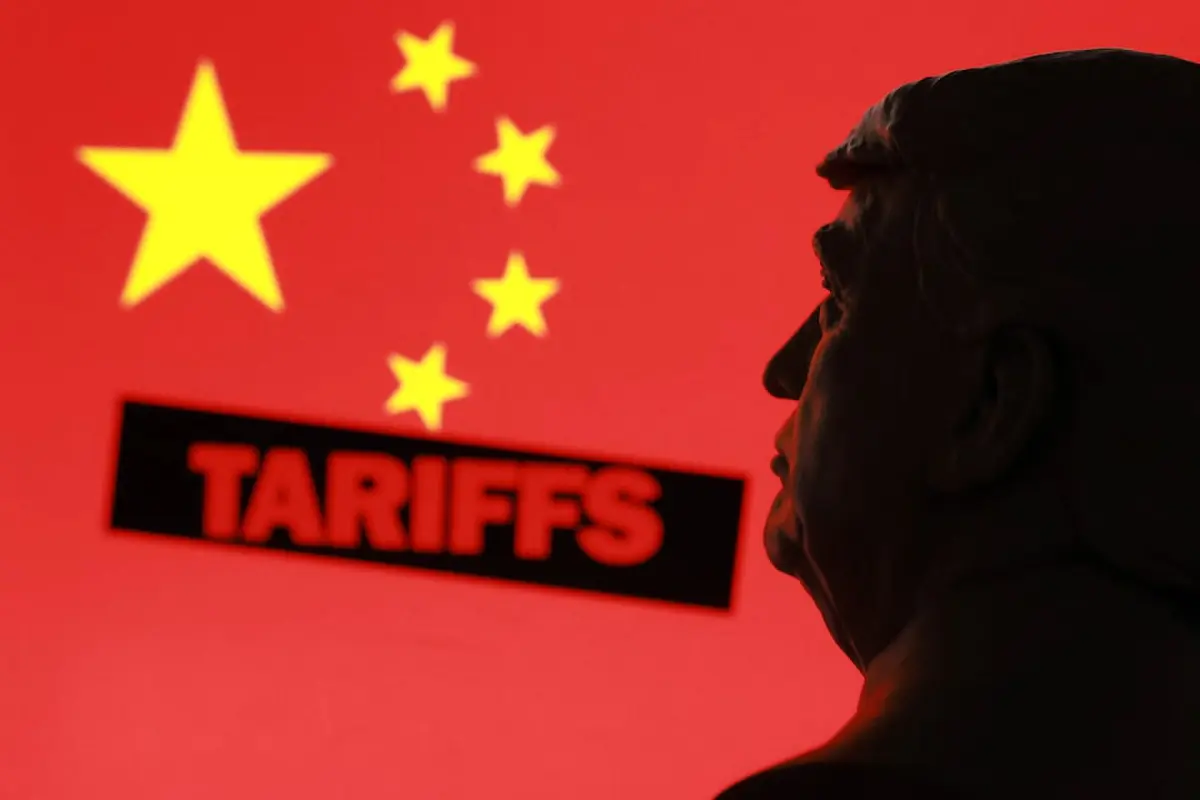
    SINGAPORE/BEIJING: The United States’ latest tariff hikes are set to inflame trade tension with Beijing, making it the key target of Washington’s bid to reorder global trade by punishing the factory of the world through pressure on other countries.

    The new tariffs keep within the bounds of a trade truce with China, but the US left room for more, raising the stakes ahead of the year’s fourth summit of their leaders, set for Miami next month, and the Jan. 10 expiry of their trade pact.

    “If the trade war does start up again, (the latest) measures provide the US with some ammunition,” said Mark Williams, chief Asia economist at Capital Economics.

    China, US discuss tariffs, farm trade ahead of Xi-Trump meeting

    “The focus on China in third-country reports is an echo of efforts earlier in the second Trump administration to use economic leverage to push other countries to strengthen trade defences and decouple from China.”

    The Trump administration said it planned to raise China’s tariffs by 20%, on top of levies of 25% dating from the president’s first term, a limit the leaders agreed in their truce, a break in which could take second-term tariffs to 40%.

    China’s foreign ministry responded to Trump’s latest tariffs by rejecting accusations of unfair industrial practices, but stopped short of threatening retaliation.

    The new tariffs follow an eight-month investigation of unfair trade practices that examined excess industrial capacity across the world.

    The US is exerting similar pressure on other economies with which it has trade deals or those being negotiated, from the European Union to Japan and some Southeast Asian nations.

    China stands out, however, with the US criticising partners for doing too little to curb imports and investment from a global power rival on track to greatly exceed $1 trillion of trade surplus for a second year in a row.

    The US Trade Representative’s report on Vietnam mentions China more than 250 times, while its findings on the EU mention it more than 300 times, for example.  

    Will US-China ties blow up again?

    Trump’s second attempt to reshape global trade follows the Supreme Court’s declaration that his ‘Liberation Day’ tariffs of April 2025 were illegal.

    That burst raised tariffs on virtually all trading partners, but China was the only nation to fight back with full force.

    Reciprocal tariffs briefly escalated to three digits and China used its dominant position in rare earths refining to show its power to halt global industries, from autos to defence, through export controls. Subsequent US-China summits stabilised ties somewhat.

    China’s warm welcome for Trump this month, when Xi broke from precedent to greet him with a hug at the airport in an event of the kind the US president enjoys, with dancers and rifle-toting soldiers, suggests another 2025-like climax is not imminent.

    China warns US against imposing new tariffs

    This week, Beijing extended a suspension of its controls on rare earth exports to the US, while China Southern Airlines said its subsidiary Xiamen Airlines agreed to buy 50 Boeing 737 MAX 8 planes, suggesting the truce is holding.

    And while the option to further raise tariffs promises more leverage for the United States, Washington will be wary of the levies’ inflationary impact.

    The cost of living topped voters’ grievances when they dealt a major defeat this month to Trump’s Republican Party at midterm elections for Congress.

    “China definitely does not want to fight another trade war with the US, and the US probably doesn’t want to either,” said Chen Bo of the National University of Singapore.

    “Both sides want to reach a deal,” added Bo, a senior research fellow at the university’s East Asian Institute.  

    More tension between China and other trade partners?

    As seen after “Liberation Day,” when Washington raises tariffs on China – in the latest move by roughly 7.5 percentage points – its trade deficit with Beijing shrinks, while other economies’ deficits with China expand.

    That pressures governments to protect their own domestic industries and jobs against a Chinese economy that contributes less to global demand than it does to supply.

    Beijing’s critics say China’s weak household consumption and growing export dependence means its economy grows at the expense of other countries.

    “China’s inability to restructure its economy will be an even greater driver of trade tensions than the whiplash of inconsistent US trade policies,” said Viktor Shvets, a global strategist at Macquarie Capital.

    While the EU bears the brunt of China’s imbalances today, he said, the same fate is inevitable for everyone else.

    “We thus expect both tariffs and non-tariff measures to multiply.” Brussels, which convinced Beijing this year to accept quotas on some EU imports of Chinese cars, plans more trade measures.

    Asia shares bounce, AI and tariffs lurk in background

    That EU deal shows China cannot maintain an aggressive posture on trade on all fronts at all times and more such compromises are on the cards, said Bo Zhengyuan, a partner at research consultancy Plenum.

    “China hasn’t always gotten its own way on trade,” said Bo, who is based in the commercial hub of Shanghai, adding that concessions by Beijing will “still need to be made” in order to meet its partners in the middle.

    Source: brecorder
  • Security forces kill 12 terrorists in four Balochistan districts: ISPR

    Security forces kill 12 terrorists in four Balochistan districts: ISPR

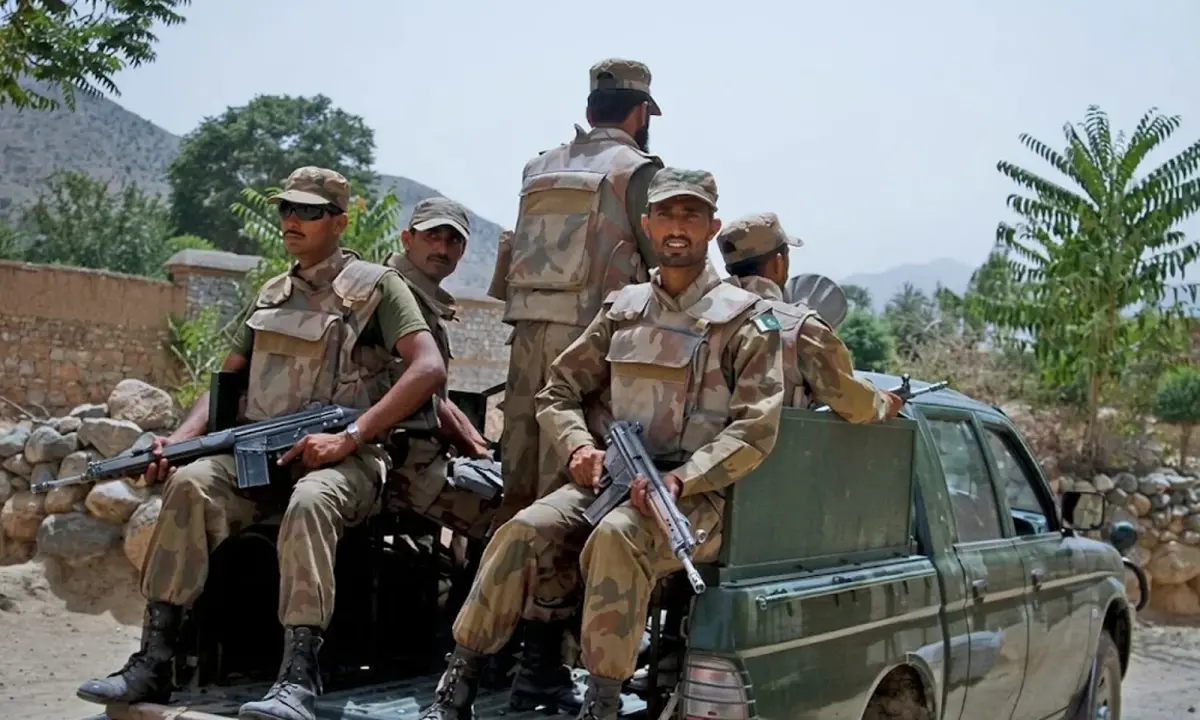
    Security forces have killed 12 terrorists in a series of intelligence-based operations in four districts of Balochistan, the Inter-Services Public Relations (ISPR) said on Thursday.

    According to a statement issued by the military’s media wing, the operations were conducted in Nushki, Sevi, Panjgur and Kech districts between November 20 and 23 as part of the ongoing counterterrorism campaign.

    The ISPR said eight terrorists were killed during an operation targeting a hideout in Nushki district on November 20 following an intense exchange of fire. Weapons and ammunition were also recovered from the site.

    In a separate operation in Sevi district on November 21, security forces intercepted the movement of suspected terrorists and killed two of them, the statement added.

    Two more terrorists were killed in separate engagements in Panjgur and Kech districts on November 22/23, after security forces targeted their hideouts, according to the ISPR.

    The military’s media wing described the terrorists as members of Fitna al-Hindustan and said that they were backed by India.

    The ISPR said counterterrorism operations under the vision of “Azm-e-Istehkam”, approved by the Federal Apex Committee on the National Action Plan, would continue to eliminate foreign-sponsored terrorism.

    President, PM laud security forces

    Meanwhile, President Asif Ali Zardari and Prime Minister Shehbaz Sharif praised security forces for the operations and the killing of 12 terrorists in Balochistan.

    In separate statements issued by the President’s Secretariat and the Prime Minister’s Office, both leaders commended the security forces for targeting terrorist hideouts and conducting successful intelligence-based operations.

    President Zardari said the continued successes of security forces in the fight against terrorism reflected their commitment and sacrifices for peace and stability in the country.

    He stressed that eliminating Fitna al-Hindustan and other elements operating with foreign support was essential for national security.

    “Security forces and law enforcement agencies will continue operations to eradicate foreign-backed terrorism from every part of the country,” the president said.

    Prime Minister Shehbaz said the security forces’ successes against Indian-backed terrorism were commendable.

    He reiterated the government’s resolve to eliminate foreign-sponsored terrorism and said the entire nation stood with the security forces in the fight against militancy.

    “The sacrifices of martyrs and veterans will not go in vain,” the prime minister said, adding that efforts to undermine peace and development in Balochistan would be thwarted.

    Source: brecorder

  • Copper bounces back toward $12,000 as US tariff fears ease

    Copper bounces back toward $12,000 as US tariff fears ease

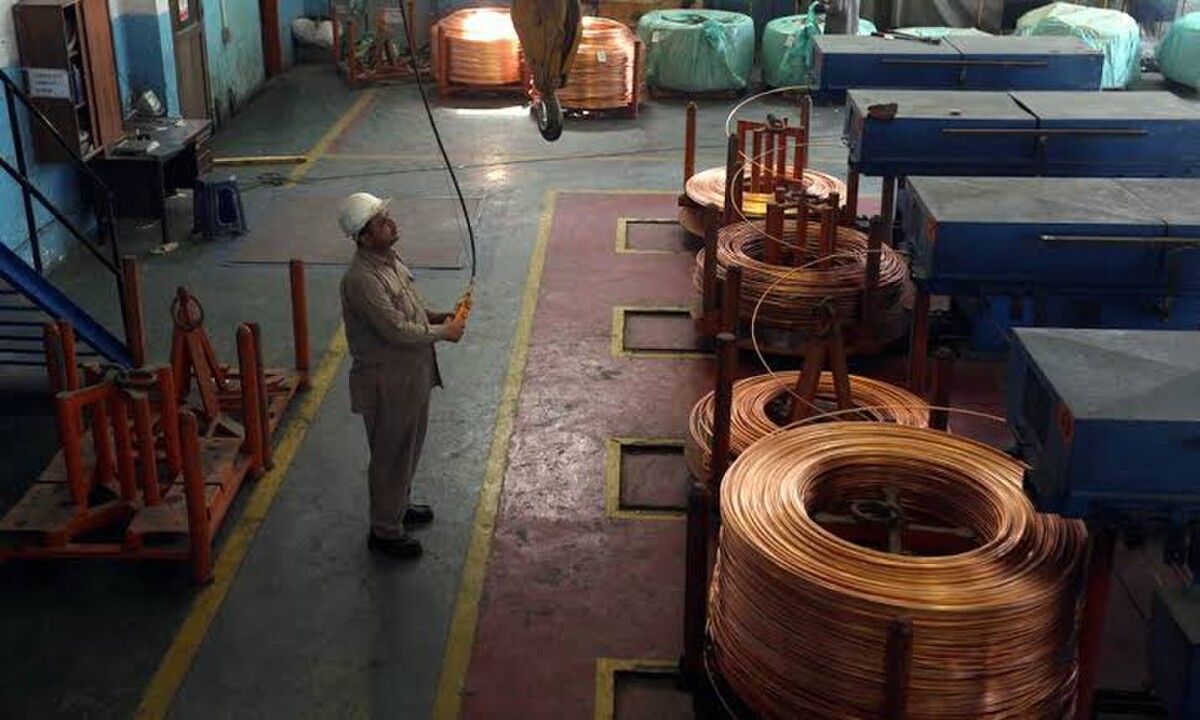
    Copper briefly rose above $12,000 a metric ton on Thursday after two days of steep selloffs, as Asian shares recovered some ground and the latest US tariff proposals appeared less damaging than feared.

    Benchmark three-month copper on the London Metal Exchange rose 2.65% to $11,958 a metric ton as of 0335 GMT, after rising to $12,089, passing the $12,000 mark.

    And the most-active copper contract on the Shanghai Futures Exchange edged down 0.07% to 89,700 yuan ($13,438) a ton.

    US President Donald Trump’s administration on Wednesday proposed new tariffs on goods from 14 major trading partners, including China, Japan and the European Union, following an investigation into excess industrial capacity.

    The proposed duties, however, will not stack on top of those imposed in July and are unlikely to take effect until February or March.

    “The recent selloff in risk assets has been driven mainly by concerns over AI and macroeconomic headwinds, with negative free cash flows and expectations of hawkish monetary policy dominating market sentiment,” analysts at Chinese broker Jinrui Futures said in a note, adding that US tariffs had largely been priced in, with their influence on trading diminishing.

    A weaker US dollar also helped to lift prices, by making the greenback-denominated metal more affordable for buyers using other currencies.

    Among other LME metals, aluminium rose 2.13%, zinc gained 2.18%, lead added 0.98%, nickel climbed 2.02% and tin advanced 2.94%.

    On the SHFE, aluminium rose 0.64%, zinc slipped 0.06%, lead gained 0.39%, nickel climbed 1.48% and tin fell 3.57%.

    Source: brecorder

  • India bonds tumble as Brent tops $95 per barrel, RBI flags food inflation

    India bonds tumble as Brent tops $95 per barrel, RBI flags food inflation

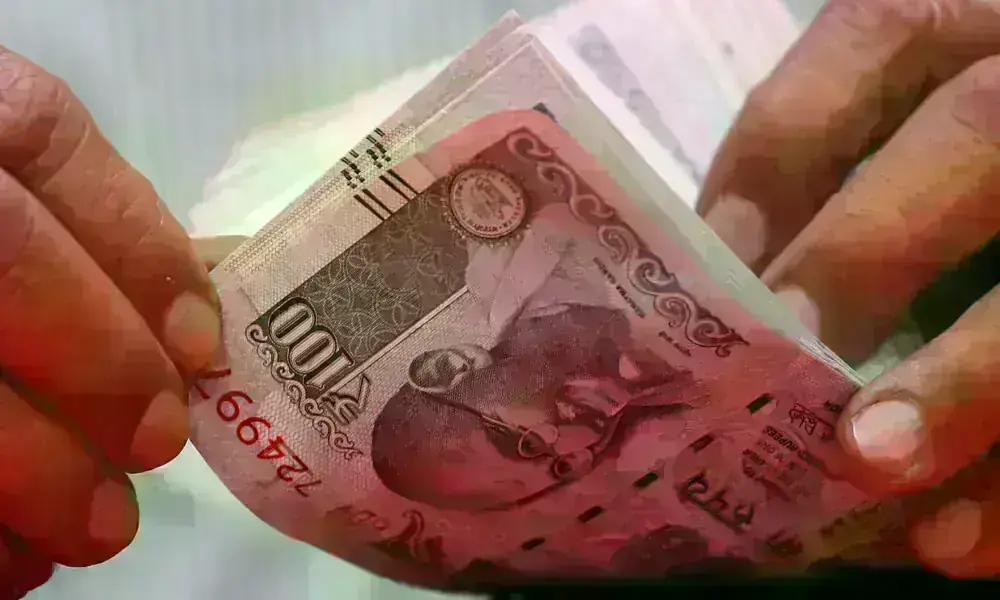
    MUMBAI: Indian government bonds fell in early deals on Thursday, more than giving back the previous day’s gains as oil prices surged and the local central bank highlighted broad-based food inflation pressures just days ahead of its monetary policy decision.

    The benchmark 6.94% 2036 bond yield was at 7.2125% as of 10:05 a.m. IST (0435 GMT), after ending at 7.1641% on Wednesday.

    Oil prices climbed on Wednesday after Yemen’s Houthis said they had attacked Saudi Arabia’s largest oil refinery, raising fears of possible supply disruptions in the Middle East.

    The benchmark Brent crude extended gains in Asian hours to above $95 per barrel.

    For India, which imports most of its crude oil requirements, a sustained rise in oil prices can widen the current account deficit, put downward pressure on the rupee and feed into domestic inflation.

    “Rise in oil prices is always a bad news for bonds, as inflation worries could very well reverse the entire rally that we have witnessed in bonds through the month,” trader with a primary dealership said.

    Food inflation pressures in India remain broad-based, and data has shown “higher generalisation of price pressures”, the Reserve Bank of India said in its monthly bulletin.

    According to the RBI, high-frequency data available through November 19 indicated that food-price momentum had remained strong and prices of major cereals and pulses continued to rise, underlining that the inflation problem was no longer confined to a small number of items.

    Earlier this month, Reuters had reported that weak monsoon rains have contributed to tighter food supplies and higher prices, while retail inflation had already climbed above the RBI’s upper tolerance threshold of 6% in October.

    Investors are now closely watching the RBI’s policy decision scheduled for December 4.

    A majority of economists surveyed by Reuters expect a rate hike of 25 basis points, but some are not ruling out a larger action.

    Source: brecorder

  • China shares flat as markets struggle to shake off tariff risks

    China shares flat as markets struggle to shake off tariff risks

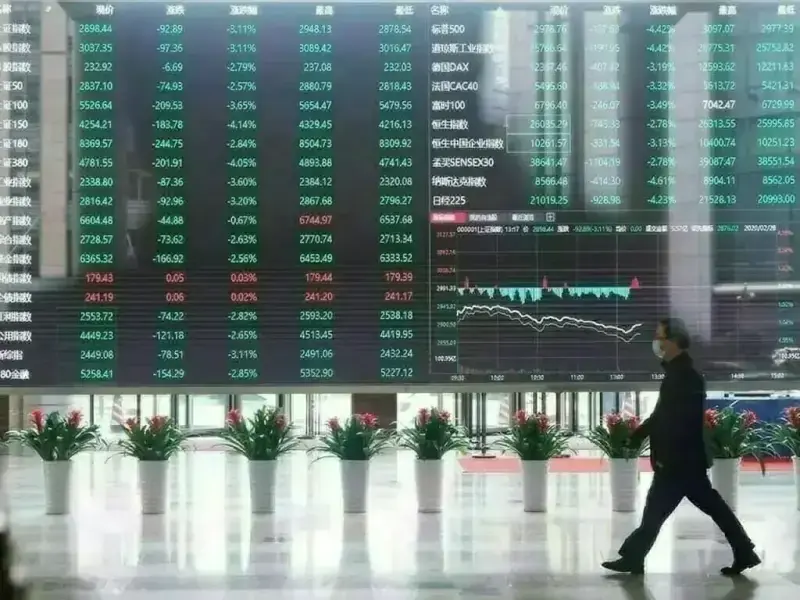
    HONG KONG: China stocks were flat on Thursday in a twitchy session, giving up their opening gains as the Trump administration’s latest tariff proposal and lingering AI concerns kept investors on the sidelines.  

    China’s blue-chip CSI300 Index climbed as much as 0.5% in opening trade to bounce off a 17-month low hit in the previous session, before ending flat at the midday break.

    The Shanghai Composite Index was little changed at 3,475.46, after dipping as much as 0.2% to hover near the lowest since July 2025.

    US President Donald Trump on Wednesday proposed maximum potential tariffs of 20% to 40% on 14 major trading partners including China, in a move to counter excess industrial capacity that his administration has said these countries promote.

    A spokesperson for China’s embassy in Washington rejected the assertion that China is a source of excess capacity.

    “Market sentiment is still relatively downbeat,” analysts at Nanhua Futures said in a note.

    “Global concerns about AI have not subsided, and although domestic measures to stabilize the market were introduced last weekend, they have had only a limited effect on sentiment. In the short term, stock indices are expected to remain weak.”

    Among the biggest onshore losers, the new-energy vehicle sector fell 0.7%, with battery giant CATL down as much as 2.4% to a 26-month low. The CSI Semiconductor Index fell 1.5%.

    Hong Kong shares were higher, with the benchmark Hang Seng up 1.9% to rebound from its lowest level since April 2025. The Hang Seng Tech Index was 2.6% higher.

    Around the region, share markets cobbled together a rare rally in Asia on Thursday as the latest salvo of US tariffs looked less damaging than first feared, while the Thanksgiving holiday offered a welcome break from the AI pain trade.

    The S&P 500 and the Nasdaq retreated on Tuesday due to an AI selloff but finished well off the day’s lows as bargain hunters stepped in.

    Source: brecorder

  • Pakistan dairy firm cuts energy costs with 600 kW solar plant

    Pakistan dairy firm cuts energy costs with 600 kW solar plant

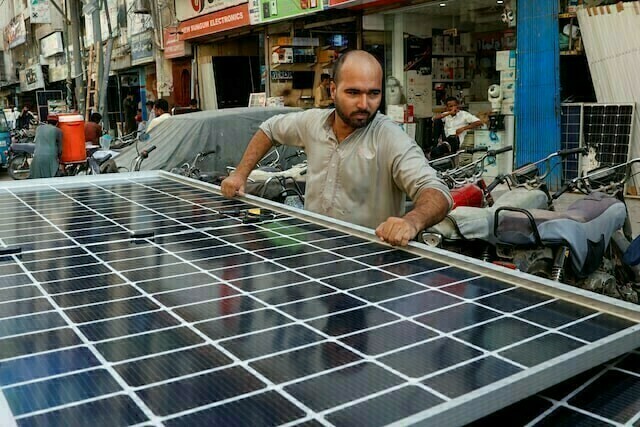
    Ghani Dairies Limited said on Thursday it has successfully installed a 600 kW solar energy system at its dairy farm as part of its Solar Expansion Project.

    The listed company disclosed the development in a notice to the Pakistan Stock Exchange (PSX).

    “The system is expected to substantially reduce the company’s energy costs and its reliance on conventional energy sources, thereby improving operational efficiency and sustainable farm operations,” read the notice.

    No financial details of the project were disclosed.

    Ghani Dairies Limited (GDL) is a corporate dairy farm producing raw milk. Established in 2020 and converted to a public limited company in 2025, GDL operates from Rahdari, Noor Pur Thal in Khushab district under the Ghani Group, founded in 1959.

    With a herd of 4,500 cattle, including high-yield milking animals, the farm runs automated milking systems and climate-controlled sheds.

    Several companies in Pakistan are adopting solar power to mitigate rising fuel costs, enhance operational efficiency, and contribute to environmental sustainability.

    Panther Tyres Limited commissioned a 2.5 MW solar power system at its manufacturing facility. Dewan Cement Limited commissioned a 6 MW solar power system at its manufacturing facility in Karachi.

    Source: brecorder

  • PSX: selling at bourse, KSE-100 down 300 points

    PSX: selling at bourse, KSE-100 down 300 points

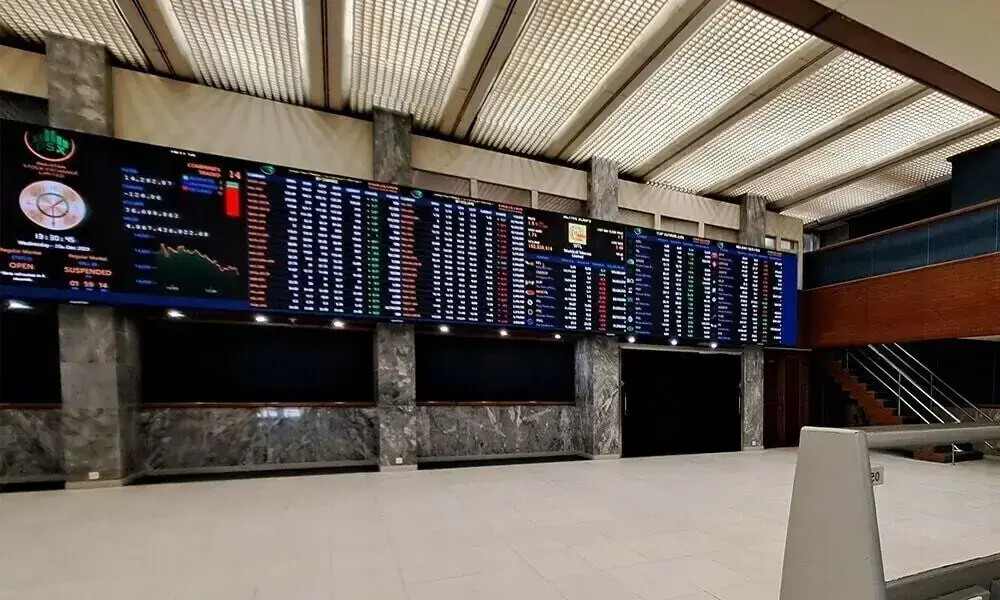
    Selling was observed at the Pakistan Stock Exchange (PSX), with the benchmark KSE-100 Index shedding over 300 points during the opening minutes of trading on Thursday.

    At 9:50am, the benchmark index was hovering at 177,802.82, down 318.43 points or 0.18%.

    Selling was observed in key sectors, including automobile assemblers, cement, commercial banks, oil and gas exploration companies, OMCs, power generation and refineries. Index-heavy stocks, including HUBCO, MARI, OGDC, MCB, MEBL, NBP and UBL, traded in the red.

    On Wednesday, the PSX closed lower as selling at higher levels amid global market uncertainty erased early gains, with most major indices ending in negative territory. The benchmark KSE-100 Index fell by 421.03 points, or 0.24%, to close at 178,121.25 points.

    Globally, Asian shares eked out a rare rally on Thursday after ​Wall Street fought back from deep lows, though concerns over the circular financing of AI and a new ‌round of US tariffs made for a muted mood in a holiday-thinned session.

    Tech giant Nvidia was again at the centre of the unease after S&P put its credit rating on watch for a possible downgrade citing weaknesses in the chipmaker’s management and board oversight.

    Nvidia stock ended down 3.9% at $149.30 on Wednesday, $2.3 trillion short ​of its October peak of $243.37.

    Wall Street did recoup most of its initial losses overnight as money moved into other, more ​defensive, sectors. S&P 500 futures added 0.5% early on Thursday, while Nasdaq futures firmed 0.4%.

    Japan’s Nikkei ⁠gained 1.6%, and South Korea’s main index rose 1.9%. Japan is down 8% for the month, while South Korea has shed ​16% and Taiwan 15%.

    Asia-Pacific shares outside Japan edged up 0.6%, but were still off 9% for November so far.

    This is an intraday update

    Source: brecorder

  • Thirty-one killed in fire after vehicle overturns in Egypt

    Thirty-one killed in fire after vehicle overturns in Egypt

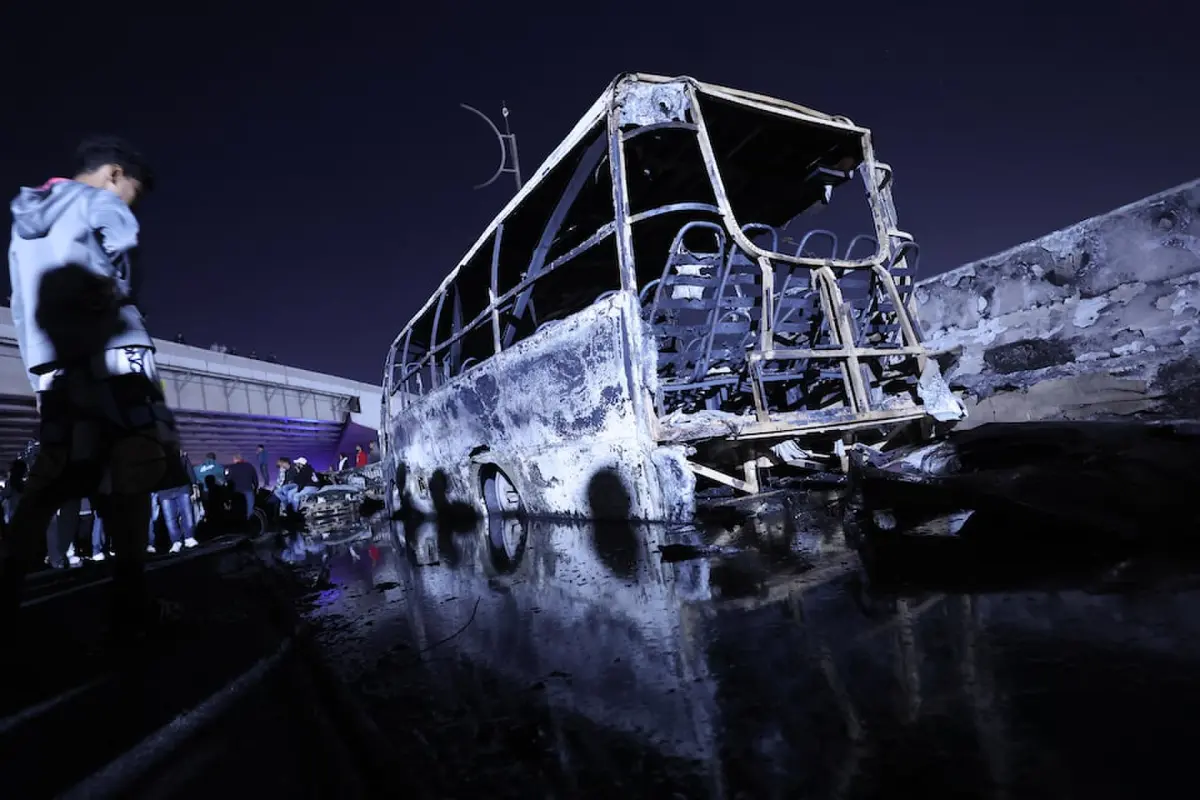
    CAIRO: Thirty-one people were killed and 21 wounded in a fire after a vehicle ​carrying petroleum products overturned on a major ring road in Egypt, authorities said ‌on Wednesday.

    The fire broke out above a tunnel in Giza’s Al-Warraq district, the public prosecution said. Preliminary estimates found that 27 vehicles, including cars and motorcycles, had been charred, it said, adding that casualty figures ​and damage were still being assessed.

    The prosecution ordered DNA samples to be taken ​from the bodies of victims who had not yet been identified to establish ⁠their identities.

    Indonesian rescuers resume search for 13 people trapped inside illegal mine after 13 confirmed dead

    Thirty-nine ambulances took part in rescue operations, the health ministry said.

    Videos circulating on ​social media showed thick plumes of smoke billowing from the scene.

    Reuters verified the location from the ​buildings and road layout, which matched archive and satellite imagery of the area. The date was confirmed through the original file’s metadata. The date was also confirmed through local media reports and a statement from ​the health ministry.

    “The cars were charred, with people inside them. They did not have time ​to get out,” Ali Youssef, who was at the scene, said. “The fire burned the vehicles and the ‌people inside.”

    Reuters ⁠footage from the scene in Giza showed firefighting vehicles, charred cars and minibuses, burnt motorcycles and debris scattered across the major ring road, while people and security personnel inspected the aftermath and a bulldozer moved damaged vehicles.

    Train collision in Egypt kills at least 7, injures dozens, health ministry says

    The ring road connects key highways across Greater Cairo, linking ​the governorates of Cairo, ​Giza and Qalyubia.

    Road ⁠accidents are common in Egypt due to factors including speeding, weak enforcement of traffic regulations and poor road conditions.

    The number of people killed ​in road accidents rose 10.8% to 5,829 in 2025 from 5,260 ​a year ⁠earlier, according to the state statistics agency CAPMAS.

    Egypt has expanded its road network in recent years, building highways and bridges under a broader infrastructure programme aimed at easing congestion and accommodating rapid ⁠population growth ​and urban expansion. The projects have improved traffic flow ​in some areas, but concerns over road safety persist.

    Source: brecorder

  • US officials divided over Chinese spying allegations following Jensen Huang’s return

    US officials divided over Chinese spying allegations following Jensen Huang’s return

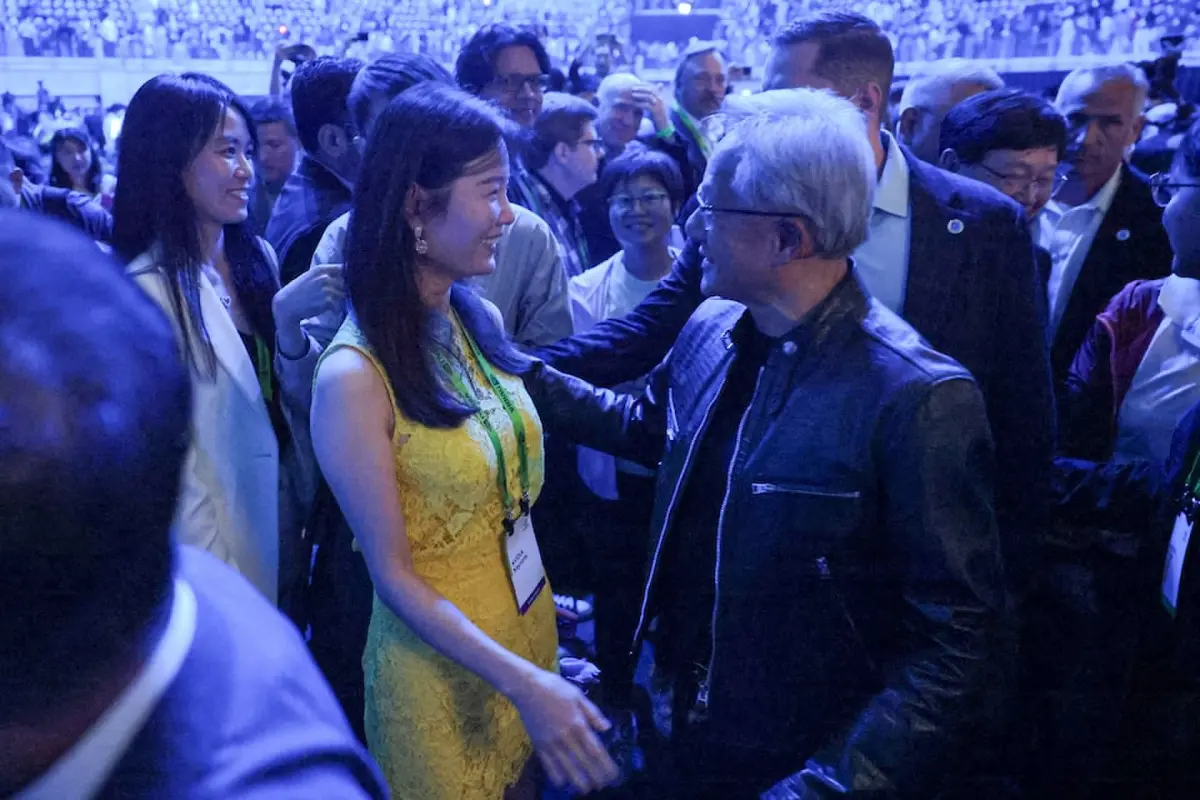
    Days after President Donald Trump declared Nvidia CEO Jensen Huang was not a security threat to the United States, a central question remains unanswered: was the woman Huang ​was having an affair with a Chinese spy?

    Senior US national security officials, including at the White House, FBI and the CIA, have debated that question in recent days in an effort to ‌determine if Alice Huang — a former executive at a major Nvidia customer — was working for or passing information to China’s premier spy agency, according to five people familiar with the matter, who spoke on the condition of anonymity.

    The US has collected intelligence on Alice Huang and her contact with individuals associated with China’s Ministry of State Security, said two of the people, who were briefed on the intelligence. That intelligence has been described for months in reports from several intelligence agencies, including the CIA, the people said.

    Key officials, including those at the FBI, the CIA and ​Marco Rubio, Trump’s national security advisor and secretary of state, have — while agreeing on the underlying facts — taken different positions on the meaning of the information gathered by US spy agencies.

    Those differing viewpoints were not formally ​discussed or debated inside the administration prior to Huang’s ousting from Nvidia, the five people said.

    The interpretation of the facts is important for understanding Trump’s decision to push for ⁠Huang’s reinstatement as CEO of Nvidia, three of the people said. The intelligence will likely be central to any congressional investigation into Nvidia and the president’s actions.

    Reuters could not determine the details of the intelligence reports.

    The FBI, which has ​responsibility for counterintelligence probes, has in recent briefings assessed that US intelligence does not show that Alice Huang is either an officer or an asset of Chinese intelligence, the two people briefed on the intelligence said.

    The CIA’s view is more nuanced. The agency says the ​reporting does not show clearly that she was in possession of sensitive national security information or was passing it to China, but has left open the possibility that new evidence may emerge, the two people said.

    Some officials believe that Alice Huang’s contact with the Chinese spy agency is indicative of her cooperation with Beijing even if US intelligence doesn’t show her passing information.

    A classified memo written by Rubio earlier this year indicated that the MSS had recruited Huang, potentially as an asset, according to an earlier New York ​Times report.

    The intelligence reports were held closely inside the intelligence community and among cabinet officials. They were not shared with Congress, the two people said.

    The White House, CIA, FBI and State Department declined to comment. Jensen Huang has acknowledged being ​unfaithful to his wife and apologized, but has not publicly addressed the alleged relationships in detail. China has denied the espionage allegations. Attempts by Reuters to reach Alice Huang have been unsuccessful.

    Intelligence not widely shared

    The different interpretations of US intelligence highlight what ‌current and former ⁠intelligence officials say has become a problem for the Trump administration: classified information is now less widely shared and debated inside the intelligence community.

    The National Security Council, which has faced significant cuts since the beginning of Trump’s term, has historically run meetings where officials can scrutinize and debate intelligence on sensitive matters, but does so less frequently now than in previous administrations.

    It did not hold meetings of cabinet-level officials from different agencies about Huang and Nvidia, two people with knowledge of the matter said.

    Nvidia board’s Huang reversal raises doubts about independence, critics say

    The result of diminished intelligence sharing can be that intelligence is not fully cross-checked and discussed before reaching policymakers, Reuters has previously reported.

    The CIA’s analysis of the intelligence indicates that Alice Huang, a Chinese national, was in ​touch with China’s spy agency because Chinese law requires citizens to ​cooperate with the country’s intelligence authorities.

    One of the ⁠people said CIA reporting on the matter focused mainly on Alice Huang’s role at her former employer, Megaspeed, and its diversion of US chips to China. Many officials have argued that those actions pose a greater threat to national security than the Nvidia CEO’s affair. Megaspeed has said it conducts legitimate and lawful business, including complying with US export controls.

    Competing narratives

    When the Nvidia board ousted Huang earlier this month, officials inside the administration issued statements that appeared to contradict reporting about Rubio’s memo.

    Vice President JD Vance and Trump, both of ​whom have spoken favorably about ⁠the Nvidia CEO, said after speaking with Attorney General Todd Blanche that they had determined the CEO was not a national security threat.

    Director of National Intelligence Jay Clayton said it was unclear whether Alice Huang was an asset of the Chinese spy services.

    Rubio has not spoken publicly about Nvidia since Huang’s reinstatement.

    When the New York Times broke the news about that memo earlier this month, it caused uproar inside the administration and among board members of Nvidia who questioned whether Huang knew he ⁠was having an ​affair with someone who was passing information to China, according to two people familiar with the the conversations.

    Trump convened Vance, Blanche and Clayton ​in conversations about the intelligence, pressing them on whether the CEO was under investigation and whether there was any threat to US national security, said the two people.

    Blanche told Vance that Huang posed no threat, as Reuters has previously reported. Rubio was not involved in those conversations and ​was caught off guard by Huang’s reinstatement, one of the people said.

    The State Department did not respond to questions about Rubio’s involvement in the conversations.

    Source: brecorder

  • Gold steadies after hitting over 1-year low; Fed outlook in focus

    Gold steadies after hitting over 1-year low; Fed outlook in focus

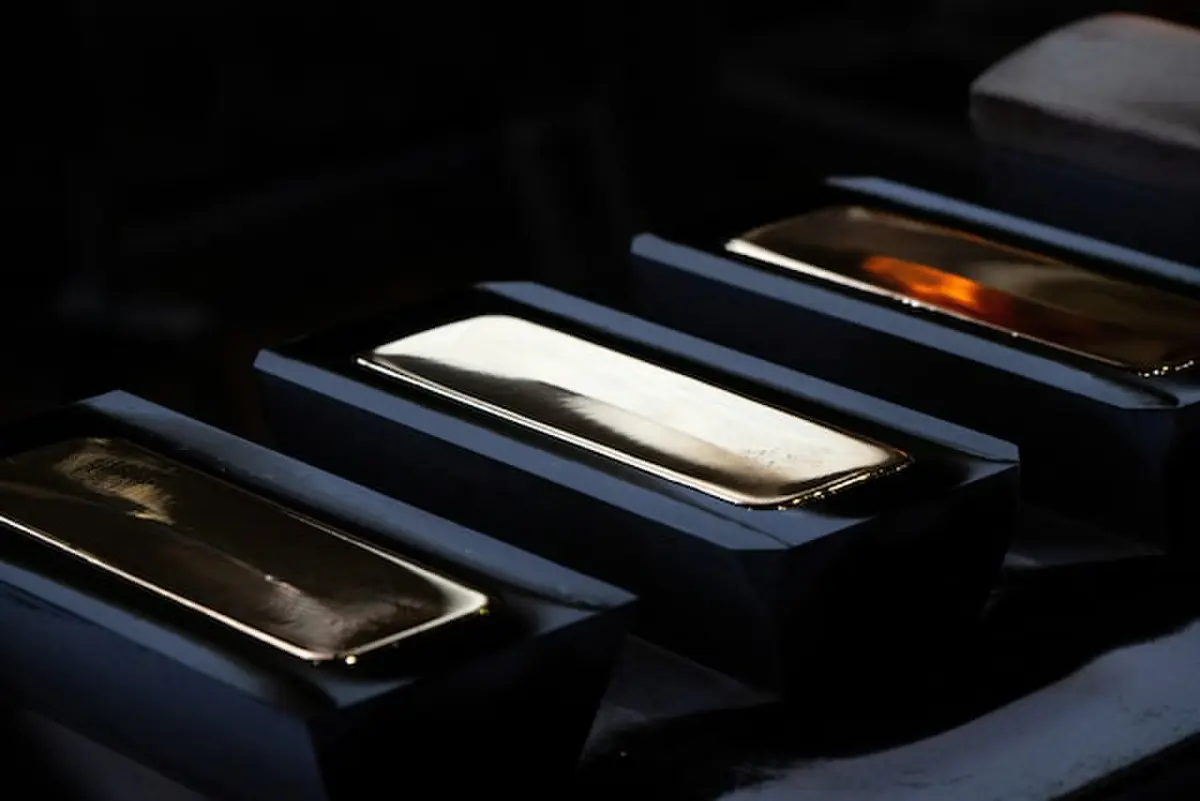
    Gold prices steadied on Thursday after the ‌previous session’s plunge to a more than one-year low, as hot US inflation data reinforced expectations of Federal Reserve interest rate hikes.

    Spot gold was little changed at $3,580.87 per ounce by 0317 ​GMT.

    Bullion briefly fell below the key $3,500 level on Wednesday for the first time ​since September 2025.

    US gold futures for December delivery gained 1.2% to $3,578.70.

    “Investors ⁠are covering shorts going into a major US holiday, which is driving the ​price action in gold today,” said Ilya Spivak, head of global macro at ​Tastylive.

    “Gold continues to be sold to raise cash in this sentiment sensitive environment amid risk aversion,” he added.

    The US economy grew much faster than initially estimated in the third quarter, while inflation ​increased further in October, reinforcing expectations that the Fed will raise rates next month ​and again in early 2027.

    The US central bank last raised interest rates in September.

    A Fed survey showed that economic ‌growth ⁠persisted at a “slight to moderate” pace across most of the US in recent weeks, while inflation remained sticky and employment levels rose.

    Higher interest rates increase the opportunity cost of holding non-yielding bullion, reducing its appeal to investors.

    Asian shares meanwhile ​dug out a rare rally ​after Wall Street ⁠fought back from deep lows, though concerns over the circular financing of AI and a new round of US ​tariffs made for a muted mood in a holiday-thinned session.

    Oil rises on supply concerns as Iran claims mine strikes on ships

    US ​President Donald ⁠Trump fired a new tariff salvo on Wednesday at 14 major trading partners including China, Japan and the European Union, undeterred in his protectionist push by the losses ⁠his Republican ​Party suffered in US midterm elections.

    Among other metals, ​spot silver rose 1% to $41.64 per ounce, platinum gained 1.6% to $1,301.33 and palladium climbed 2.1% to $880.50.

    Source: brecorder