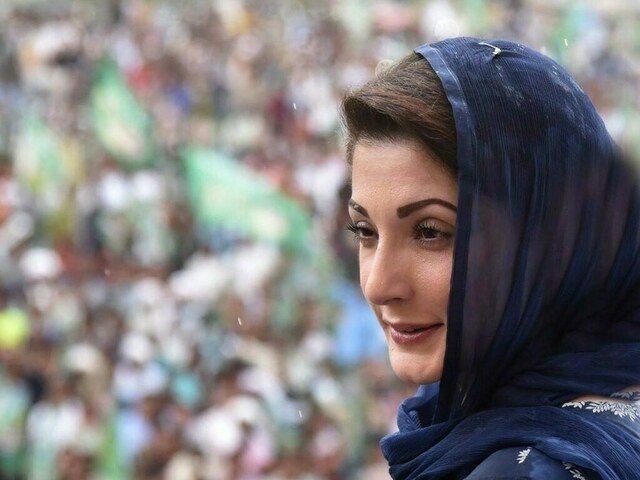
The Maryam Nawaz government in Punjab has completed 1,000 days in office. During this period, Maryam Nawaz has delivered projects that previous governments could not accomplish even during their five-year tenures. Ultimately, it is a question of commitment and a sense of responsibility: whether those elected by the people of Punjab are able to live up to their expectations and fulfil the promises made to them.
Soon after assuming office as Chief Minister, Maryam Nawaz launched the Ramazan Nigahban Programme in Punjab. During the first year, financial assistance was distributed to beneficiaries in cash, while in the second year, 4.5 million families received financial assistance through ATM cards under the Ramadan Nigahban Programme. Throughout the process, the dignity and self-respect of deserving and financially struggling citizens were fully protected. The cards were delivered directly to the doorsteps of the intended beneficiaries, ensuring that no one had to compromise their dignity to receive assistance.
One of the most transformative initiatives introduced by Maryam Nawaz is the Suthra Punjab Programme. Under this initiative, an improved and comprehensive sanitation system has been introduced across Punjab, covering both urban and rural areas. The programme has created more than 120,000 new jobs, while modern machinery and equipment have been provided to strengthen the province’s waste management system. The sanitation network has been extended from major cities to smaller towns and rural settlements.
The fundamental objective of Suthra Punjab is to establish cleanliness as a permanent public service rather than treating it as a temporary campaign or a short-term activity. Workers employed under the programme do not merely collect waste; it is also disposed of through an organised and appropriate mechanism. One of the programme’s most significant features is its complaint redressal mechanism, with a 100 per cent resolution rate for complaints registered through its helpline.
Another landmark initiative of the Maryam Nawaz government is the Apni Chhat Apna Ghar Programme. In just 18 months, more than 220,000 houses have been constructed in Punjab under this scheme, enabling citizens to live in homes of their own with dignity and security. Recognising the success and transparency of the initiative, the United Nations presented Maryam Nawaz with its first award at a major ceremony held in Muscat last month. Maryam Nawaz dedicated the award to the people of Pakistan.
The construction and rehabilitation of roads across Punjab is also progressing successfully. Under this initiative, work on the construction and rehabilitation of approximately 50,000 kilometres of roads has been completed. The programme covers urban roads, rural link roads, streets and roads connecting different localities and towns. The objective is not merely to improve travelling conditions but also to connect rural economies with markets, facilitate the transportation of agricultural produce, save time and reduce the difficulties faced by citizens in their daily commutes. The initiative has been named the Punjab Development Programme.
Like other sectors, Chief Minister Maryam Nawaz has placed healthcare among her foremost priorities. Access to quality healthcare remains one of the most pressing basic needs of the public, which is why she has placed particular emphasis on transforming the health sector. Punjab has witnessed unprecedented initiatives in healthcare, with new hospitals being established in different cities.
These include the Nawaz Sharif Cancer Hospital in Lahore, which, with a capacity of 1,000 beds, is set to become the largest hospital of its kind in the world. Its outpatient department (OPD) is already fully operational. The Jinnah Institute of Cardiology has also been established in Lahore, while new hospitals have been built in Sargodha, Murree and Sahiwal.
In addition, Maryam Nawaz Health Clinics and catheterisation laboratories (Cath Labs) have been established in remote areas of Punjab, providing citizens with facilities that meet high standards of healthcare. Expensive medicines for cancer, tuberculosis and hepatitis are being delivered free of charge to the doorsteps of one million people across the province. More than 18,000 children have undergone free heart surgeries in Punjab.
At present, more than 1,000 Clinics on Wheels are providing healthcare services to citizens, while Field Hospitals are also extending medical facilities to people in their neighbourhoods and communities.
The Maryam Nawaz government has also taken significant initiatives in the education sector. For the first time in Punjab’s history, laptops and scholarships are being distributed to students on such a massive scale, with no comparable precedent in the past. For children of poor and financially struggling families, access to scholarships and laptops is nothing short of a blessing. Only parents and students who have struggled with financial constraints can truly appreciate the importance of such opportunities.
Many talented students were previously unable to complete their education because of poverty. Recognising this challenge, Chief Minister Maryam Nawaz expanded the scholarship programme across the province. The Punjab government is distributing laptops to 112,000 students and scholarships to 120,000 students. The provision of electric bikes to students is also underway.
Maryam Nawaz deserves credit for introducing an electric bike scheme for students for the first time. Last year, the Punjab government provided 25,000 electric bikes to students. This year, Maryam Nawaz has announced an ambitious target of distributing 100,000 electric bikes, with the programme set to be formally launched in the coming days.
Government schools across Punjab are also being transformed into institutions that provide quality education. Improvements are being made to boundary walls, the availability of clean drinking water and toilets, better classrooms and the provision of essential facilities, including IT laboratories.
A Milk Programme has also been launched in various districts of South Punjab. So far, more than 1.1 million children have been provided with milk and biscuits under the initiative, contributing to improvements in their physical growth and development. Provincial Education Minister Rana Sikandar is successfully leading this programme.
Rana Sikandar is personally a dynamic and committed provincial minister. He is also overseeing the successful implementation of the Nawaz Sharif School of Eminence initiative with a strong sense of responsibility. The establishment of Schools of Eminence in Punjab represents a major transformation in the education sector. Around 150 schools have already been established under the programme, providing thousands of children with free, high-quality education. The Punjab government plans to establish a total of 300 such schools. Rana Sikandar is taking a keen personal interest in the initiative and leading its implementation.
Similarly, an autism school has been established for children with special needs. Special Assistant Sania Ashiq is overseeing the initiative and taking a personal interest in its development and implementation.
With Punjab’s population growing rapidly, the need for an efficient and extensive public transport system had become increasingly urgent. Recognising this requirement, Chief Minister Maryam Nawaz made public transport a priority immediately after assuming office and introduced a transformative electric bus programme across the province.
Under this initiative, 650 electric buses are now operating in different cities of Punjab. The Chief Minister’s plan is to expand the fleet to 3,000 buses by 2027, while the target is to have 5,000 buses operating across all tehsils of Punjab within five years. Provincial Transport Minister Bilal Akbar is a hardworking minister who is successfully leading the programme.
Agriculture is a major pillar of Punjab’s economy, with a substantial proportion of its rural population dependent on this sector. Consequently, financial assistance for farmers and the provision of modern agricultural machinery have remained among the Punjab government’s key priorities.
Through the Kisan Card, more than one million farmers are receiving financial assistance. The government is also ensuring the timely availability of fertilisers, seeds and other essential agricultural inputs. In addition, programmes for the solarisation of tube wells and the provision of super seeders are underway.
One of Maryam Nawaz’s most significant initiatives in the agriculture sector is the provision of Green Tractors to farmers. The Punjab government is working on a programme to provide 50,000 Green Tractors to farmers. Internship programmes for agricultural graduates and Model Agriculture Malls have also been introduced, providing farmers with access to a range of essential facilities and services under one roof.
These initiatives in the agriculture sector have contributed to record increases in the production of wheat, rice and sugarcane across Punjab.
Most of Maryam Nawaz’s government programmes have online application procedures. Transparency and merit are ensured throughout the process, with no room for recommendations or preferential treatment. Applicants are selected strictly on merit. Perhaps the greatest achievement of Maryam Nawaz so far is her commitment to ensuring that merit remains the guiding principle in all government initiatives.
To encourage young people and entrepreneurs, Maryam Nawaz has launched the Asaan Karobar Programme. Under this scheme, young people and business owners can obtain loans ranging from Rs1 million to Rs30 million. Interest-free loans worth up to Rs100 billion have already been disbursed under the programme.
Last year, Punjab experienced the largest floods in the country’s history, affecting more than 800,000 people. The scale of devastation and the number of citizens displaced or affected by the floods constituted a major humanitarian tragedy. However, Maryam Nawaz did not lose heart and ensured comprehensive financial assistance for all affected families.
The Punjab government distributed financial assistance worth up to Rs200 billion among flood-affected people from its own resources. During this period, Maryam Nawaz faced pressure from various political circles to seek financial assistance from international organisations for the rehabilitation of flood victims. However, Maryam Nawaz, the daughter of a self-respecting father, chose to support the affected families through the province’s own resources. The resources of Punjab were spent on the people of Punjab.
The Chief Minister also launched the E-Taxi Scheme in Punjab. Under the programme, electric vehicles have been provided to people, and these vehicles can now be seen operating on the roads. The initiative has created opportunities for unemployed individuals to earn a respectable livelihood. A significant number of women have also benefited from the scheme.
Last year, Chief Minister Maryam Nawaz introduced a programme for the provision of solar panels to households across Punjab. Under the scheme, solar panels were distributed among 90,000 people last year. This year, Maryam Nawaz has increased the target to 100,000 beneficiaries.
The Chief Minister’s urban beautification initiative is also progressing successfully throughout Punjab. Major markets and commercial areas in different cities are being developed and upgraded according to uniform standards. The level of development and prosperity visible in Lahore can now also be seen in Faisalabad, Sialkot, Rahim Yar Khan, Rawalpindi and Attock.
Maryam Nawaz has ensured that no city or region is discriminated against in the distribution of development opportunities. The facilities being provided in Lahore are also being extended to other cities across Punjab.
Punjab Information and Culture Minister Azma Bukhari has played a significant role in effectively communicating the Chief Minister’s public welfare initiatives to the media and the people. The manner in which Azma Bukhari has managed the Information and Culture Department over the past two years is unprecedented. For the first time, the Information Department has introduced a highly transparent and organised system for media payments under her leadership.
Azma Bukhari has also introduced innovation and modernisation in the fields of information and culture. A new building for the Directorate General Public Relations (DGPR) has been established. The DGPR has also acquired its own outside broadcast (OB) van for official government events. Azma Bukhari is further working on a plan to acquire two additional OB vans.
Meanwhile, the historic Alhamra Hall building in Lahore is undergoing extensive renovation and restoration. A new art gallery has also been established at Alhamra. These initiatives mark the first major developments of their kind since 1992.
Secretary Information and Culture Tahir Raza Hamdani has also been working with dedication and a strong sense of responsibility over the past two years. Similarly, DGPR Farid Ahmed is performing his responsibilities effectively in line with the agenda of Punjab Information Minister Azma Bukhari.
Chief Minister Maryam Nawaz has introduced several successful welfare initiatives, including the Himmat Card, Minority Card, Labour Card, Livestock Card and Rehmat Card, through which thousands of people across Punjab are benefiting. Thesee are just some of the initiatives launched during the first 1,000 days of the Maryam Nawaz government. During her tenure, Maryam Nawaz has introduced approximately 120 development and public welfare projects, directly benefiting the people of Punjab.
For Maryam Nawaz, there is no room for discrimination when it comes to public welfare. She believes that the same facilities being provided to the people of Punjab should also be available to children and citizens in other provinces of Pakistan. Guided by this vision, she has extended various facilities and opportunities to children from Balochistan, Khyber Pakhtunkhwa and Gilgit. Most recently, Chief Minister Maryam Nawaz also presented the gift of electric buses to Azad Kashmir.
This reflects a broader vision, one that is characteristic of a national leader who looks beyond provincial boundaries and believes in the collective progress of the country.
Maryam Nawaz is more concerned about the welfare of the people of Punjab than about falsehoods, propaganda and rumours. The people of Punjab have given her the mandate, and serving them therefore remains her foremost responsibility.
Addressing young people in her various speeches, Maryam Nawaz has repeatedly emphasised that Pakistan must always come first. She has urged the younger generation to remember that their country should be their greatest priority and that they should never listen to anyone who encourages them to stand against Pakistan. The progress and prosperity of Pakistan are only possible when its people are committed to contributing positively to the country.
On the completion of 1,000 days of the Maryam Nawaz government in Punjab, she deserves congratulations and recognition. She has worked day and night with sincerity, dedication and honesty to serve the people of the province. This journey of public service must continue with the same commitment over the next two and a half years.
The impact of Maryam Nawaz’s working style and delivery-oriented approach is such that people in other provinces of Pakistan are also expressing the wish that they, too, had Maryam Nawaz as their Chief Minister.
By delivering so much in such a relatively short period, Maryam Nawaz has succeeded in winning the hearts of the people.
Source: brecorder
Leave a Reply