Author: Theph

  • COP31 must deliver climate justice, not empty pledges, says Sherry

    COP31 must deliver climate justice, not empty pledges, says Sherry

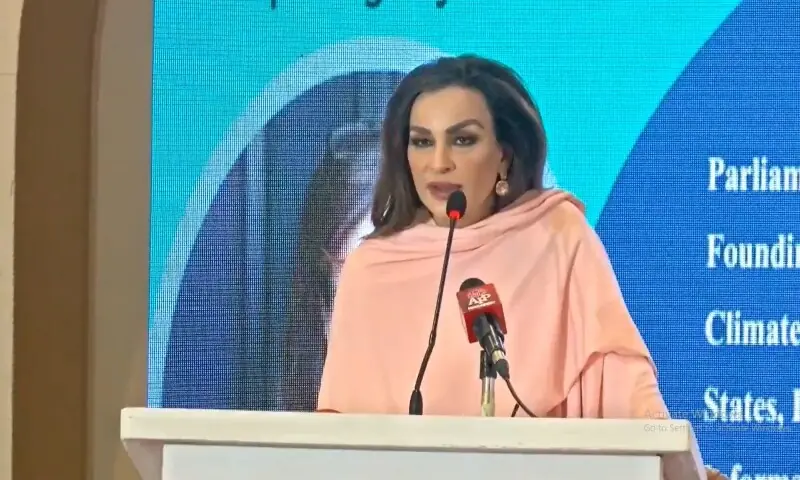
    ISLAMABAD: Senator Sherry Rehman Friday called for COP31 in Antalya to move beyond declarations and deliver a credible, accessible and equitable climate financing framework, warning that Pakistan and other climate-vulnerable countries were being pushed into a dangerous cycle of disasters, debt and declining development opportunities.

    In a statement issued here on Friday, Senator Rehman expressed her appreciation for Turkiye’s hosting of COP31 and its Presidency of this critical global climate conference, recognising Turkiye’s role in bringing the international community together at a time of growing geopolitical divisions and escalating climate emergencies.

    “Pakistan deeply appreciates Turkiye’s leadership in hosting COP31. As a close friend and longstanding partner, Turkiye understands the devastating human and economic costs of climate disasters. Its Presidency offers an important opportunity to bridge divisions between developed and developing countries and restore confidence in multilateral climate action.

    “We hope the Antalya conference will be remembered not simply for renewed pledges, but for translating climate solidarity into concrete fina­ncial commitments and meaningful outcomes for vulnerable nations.”

    Referring to the UN Secretary-General’s address at the COP31 Leaders’ Summit, where he warned that “fossil fuels must go the way of the dinosaurs”, Senator Rehman stressed that the world could no longer afford the contradiction between climate commitments and continued support for fossil fuels.

    “Governments cannot continue subsidising the very industries driving the climate crisis while pleading scarcity of resources when vulnerable countries demand climate fina­nce. Global fossil fuel subsidies are estimated at approximately $7 trillion.

    “This is an extraordinary misallocation of resources at a time when countries on the climate frontlines are struggling to finance basic adaptation, resilience and recovery. The question is not whether the world has the resources, but whether it has the political will to redirect them,” Senator Rehman said.

    She warned that the global temperature trajectory was becoming increasingly alarming, with the 1.5°C goal slipping further out of reach. According to Climate Action Tracker, current policies put the world on course for approximately 2.7 degrees centigrade of warming by the end of the century, up from its previous estimate of 2.6 degrees centigrade.

    “The 1.5 degrees centigrade thre­shold is no longer alive, a 2.7 degrees centigrade trajectory would have devastating consequences for countries like Pakistan, where climate extremes are already undermining livelihoods, food security, water availability and economic stability.

    “The cost of inaction will be measured in lost lives, displaced communities and development reversed by decades.”

    Highlighting Pakistan’s escalating climate vulnerability, Senator Rehman recalled that the devastating floods of 2022 affected 33 million people and caused approximately $30 billion in damages and losses.

    Agricultural losses from the 2025 floods alone have been estimated at $1 billion.

    “These are not isolated disasters. They represent a recurring assault on Pakistan’s economy, food security, infrastructure and development prospects. Pakistan is not asking for charity. We are demanding climate justice, financial accountability and a fair international system,” she said.

    Published in Dawn, November 14th, 2026

    Source: dawn

  • WASA launches smart water metering system in Lahore

    WASA launches smart water metering system in Lahore

    LAHORE: In a major step towards urban resource management and digital transformation, the Water and Sanitation Agency (WASA) Lahore has formally launched a state-of-the-art smart water metering system.

    As part of the initial phase, 1,000 advanced ultrasonic smart water meters have been successfully installed and made fully operational in Johar Town. The initiative marks a decisive shift from traditional flat-rate billing to consumption-based utility management, said WASA Lahore on Saturday.

    Building on the success of Johar Town pilot project, WASA Lahore has announced plans to rapidly scale up the project.

    An additional 10,000 smart meters are slated for installation over the next three months as part of the agency’s broader mandate to promote the responsible and sustainable use of water across the city.

    WASA Lahore Managing Director (MD) Ghufran Ahmed visited Johar Town to review the newly deployed infrastructure and inspect the centralised device management dashboard. During the visit, Director Planning and Evaluation (P&E) Mudassar Javed delivered an in-depth technical briefing to the MD, outlining the operational mechanics of the telemetry network, real-data streaming, and system performance parameters.

    Officials noted that the smart meters are being rigorously tracked via the device management dashboard to ensure optimal efficiency and uptime.

    Under the new framework, consumers are billed strictly according to their actual water usage, fostering a culture of conservation and accountability. To bridge the gap between consumers and utility providers, WASA has integrated the system with the Punjab WASA mobile app.

    Through the application, residents can monitor their daily water consumption trends in real time, access and review detailed meter reading histories, and view and download water bills directly from their mobile devices.

    WASA leadership emphasised that the modern infrastructure plays a critical role in curbing resource loss. “The ultrasonic meters are already proving effective in preventing widespread water wastage, deterring unauthorised water theft, and eliminating illegal connections. Furthermore, real-time data feeds enable a far more accurate assessment of fluctuating urban water demand and supply patterns.”

    Copyright Business Recorder, 2026

    Source: brecorder

  • UHS launches digital platform

    UHS launches digital platform

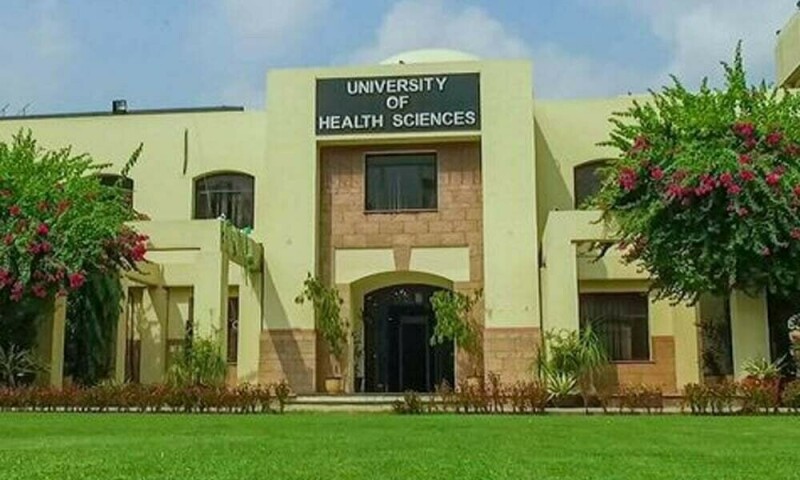
    LAHORE: The University of Health Sciences (UHS) has launched a province-wide digital platform, PRIME, to bring medical and health professions education, clinical training and competency assessment under an integrated monitoring system.

    Provincial Minister for Specialized Healthcare and Medical Education Khawaja Salman Rafique inaugurated the platform at a ceremony held at UHS on Friday. Titled Health Professions Education – Progress, Research, Integrated Monitoring and Evaluation (HPE-PRIME), the initiative aims to improve transparency, accountability and quality assurance through digital monitoring and competency-based assessment.

    The platform will initially cover postgraduate medical and dental training, with its first phase encompassing approximately 3,300 MS, MD and MDS trainees enrolled in 33 training institutions across Punjab. Around 1,100 supervisors will also be registered on the portal.

    It will replace conventional paper-based logbooks with electronic records of clinical cases, procedures, attendance, rotations, research activities and workplace-based assessments. Supervisors will be able to verify trainees’ clinical and academic activities, provide feedback and monitor their progress, while institutional dashboards will enable UHS to oversee training standards and identify deficiencies.

    Addressing the ceremony, Khawaja Salman Rafique said improving healthcare was among the top priorities of Chief Minister Maryam Nawaz Sharif’s government. He stressed that modern hospitals and medical facilities must be supported by a well-trained healthcare workforce capable of making sound clinical decisions and providing quality patient care. “Medical education is not merely about awarding degrees or increasing the number of doctors. Its real objective is to produce competent professionals who can make appropriate clinical decisions and deliver quality treatment,” he said.

    He appreciated UHS for developing an effective digital monitoring mechanism and expressed the hope that the platform would bring substantial improvement in postgraduate training. He also commended the Directorate of Postgraduate Studies, faculty members and the IT team for their efforts in developing the initiative.

    The minister said UHS was overseeing undergraduate and postgraduate training across approximately 230 institutions, making systematic monitoring, reliable data and regular assessment of professional competencies essential. He said information generated through PRIME would help identify training gaps, support evidence-based decisions and improve the performance of supervisors and institutions.

    UHS Vice Chancellor Maj Gen Prof. Sohail Sabir (Retd) said the platform would move health professions education beyond conventional record-keeping towards a system based on demonstrated clinical competence and verified professional skills.

    He said the initiative had initially been conceived and developed during the tenures of former UHS vice chancellors Prof. Javed Akram and Prof. Ahsan Waheed Rathore, whose contributions he acknowledged. The present administration had taken the project forward towards its implementation, he added.

    Prof. Sohail Sabir said the second phase would extend the platform to undergraduate MBBS and BDS programmes and house-job training, covering approximately 33,875 students and house officers across 60 medical and dental colleges. The third phase would bring Nursing, Pharmacy and Allied Health Sciences programmes into the system, covering around 31,734 students enrolled in 180 institutions.

    UHS Director Postgraduate Studies Prof. Muhammad Asif Naveed briefed the participants on the portal’s operational features and implementation framework. He explained that the system would incorporate quarterly continuous internal assessments, workplace-based assessments, including Mini-CEX, Direct Observation of Procedural Skills (DOPS) and Case-Based Discussions, alongside research monitoring and academic activity records.

    The platform will also include a learning management system and institutional and university-level dashboards, enabling supervisors and administrators to monitor training progress, evaluate performance and take corrective measures during the training period rather than relying solely on final examinations.

    Copyright Business Recorder, 2026

    Source: brecorder

  • Chiniot police solve blind murder case, three suspects arrested

    CHINIOT – Kot Wasawa police on Friday solved a blind murder case with the arrest of three suspects, including two women, allegedly involved in the killing of Muhammad Waqas.

    Source: Nation

  • DG Khan RPO dismisses ASI over corruption

    MUZAFFARGARH – Regional Police Officer (RPO) Dera Ghazi Khan Muhammad Azhar Akram has ordered the dismissal of Assistant Sub-Inspector (ASI) Muhammad Saleem, posted in Muzaffargarh district, after corruption charges against him were established.

    Source: Nation

  • Three men shot dead shortly after court hearing in Satiana

    FAISALABAD – Three people were killed in a firing incident allegedly carried out by their opponents over an old enmity and ongoing legal disputes in the jurisdiction of Satiana Police Station Faisalabad.

    Source: Nation

  • Police maintain process of reward and punishment

    Mailsi – The Vehari District Police rewarded 5,515 police officers and officials for outstanding performance during 2026, while 576 personnel faced disciplinary action over poor performance, negligence and violations of departmental rules.

    Source: Nation

  • Lahore CCPO orders supervisory officers to lead raids, operations against criminals

    Lahore CCPO orders supervisory officers to lead raids, operations against criminals

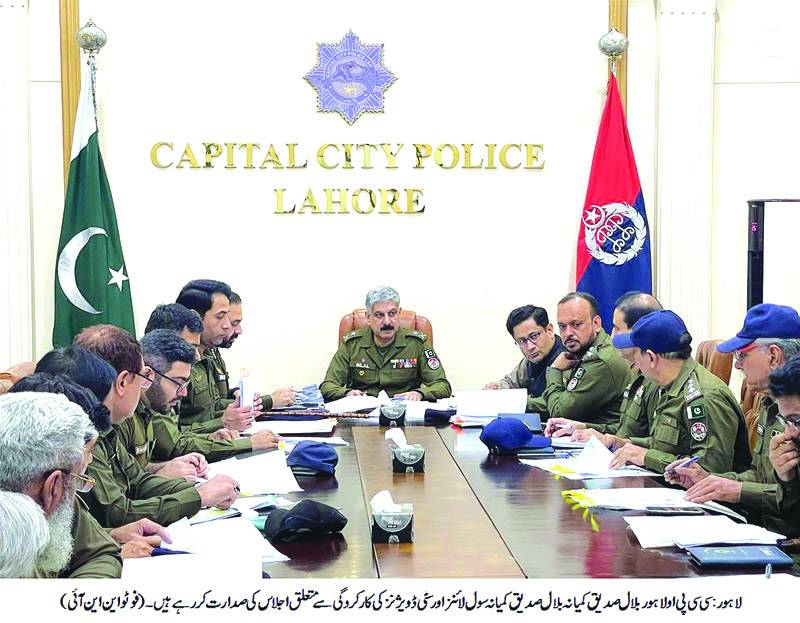
    LAHORE – Lahore Capital City Police Officer (CCPO) Bilal Siddique Kamyana has directed police officers to devise a comprehensive strategy to prevent burglary, theft and pickpocketing, and intensify action against organized gangs involved in pickpocketing and mobile phone snatching.

    Source: Nation

  • Sohna Punjab Programme: Punjab launches second, third phases

    Sohna Punjab Programme: Punjab launches second, third phases

    LAHORE: Punjab Local Government Minister Zeeshan Rafique has said that after the successful completion of the first phase of ‘Maryam Nawaz Ka Sohna Punjab’ programme in 51 cities, work has started on the second and third phases.

    While reviewing the ongoing schemes under the Punjab Development Program (PDP) during a meeting on Friday, he directed that special attention be paid to the beautification of cities as the beauty of cities is the focus of Chief Minister Maryam Nawaz Sharif.

    He said the local government department is constructing 61 kilometres of new drains in 51 cities while the existing 63 kilometres of dilapidated stormwater drains are also being renovated.

    He further said 4135 kilometres of sewers and 1245 kilometres of roads will also be constructed. “Under the programme, the construction and rehabilitation of 4146 kilometres of streets and disposal stations will be ensured. Initially, the construction of 40 disposal stations has started in different cities.”

    Rafique also said that 70 new machines have been handed over to the municipal bodies of the cities included in the programme to deal with urban flooding, while the process of purchasing 217 more is underway. He expressed satisfaction over the presentation and also issued necessary instructions.

    On this occasion, PDP Project Director Shahid Zaman Lak, Additional Secretary Mehreen Fahim Abbasi, concerned Assistant Project Directors and Municipal Officers Infrastructure (MOI) were also present.

    Copyright Business Recorder, 2026

    Source: brecorder

  • PRA promoting digital payments

    PRA promoting digital payments

    LAHORE: The Punjab Revenue Authority (PRA) is set to launch a reward scheme for customers of hotels and restaurants who pay digitally, as part of a push to promote electronic payments and a culture of tax compliance.

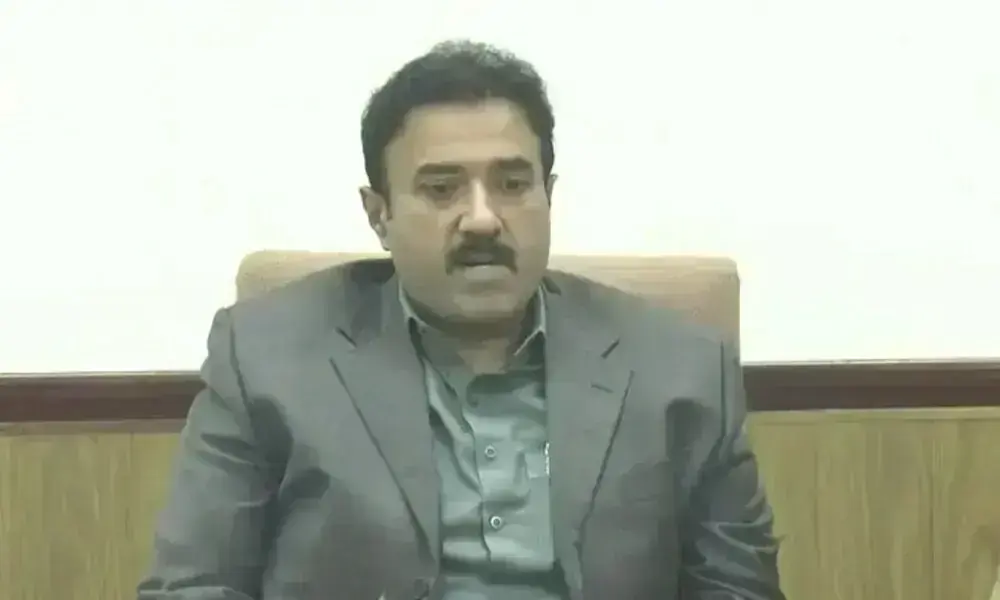
    The decision was made at a meeting on digital monitoring and database management, chaired by PRA Chairman Moazzam Iqbal Sipra. Participants were briefed on priority initiatives to expand tax culture and e-payments across service sectors.

    Sipra directed the relevant departments to prioritise monitoring of consumer complaints about digital payment facilities and to set up an effective system for resolving them promptly.

    A PRA spokesperson said customers who pay through QR codes at hotels and restaurants will get a chance to win prizes, with the aim of moving the public away from cash transactions.

    The spokesperson warned that businesses refusing QR code payments will face strict legal action under applicable laws.

    “Promoting digital payments will make business transactions more transparent and strengthen public confidence in the tax system,” the spokesperson said.

    A monitoring mechanism will also be introduced to ensure quick redressal of complaints from customers paying by QR code. In addition, the Electronic Invoice Monitoring System (EIMS) will be used to ensure transparency in business activity and tax payments, while an awareness campaign will encourage digital transactions across the hotels and restaurants sector.

    Copyright Business Recorder, 2026

    Source: brecorder