Author: Theph

  • Aluminium falls on higher Chinese exports and hopes for Middle East de-escalation

    Aluminium falls on higher Chinese exports and hopes for Middle East de-escalation

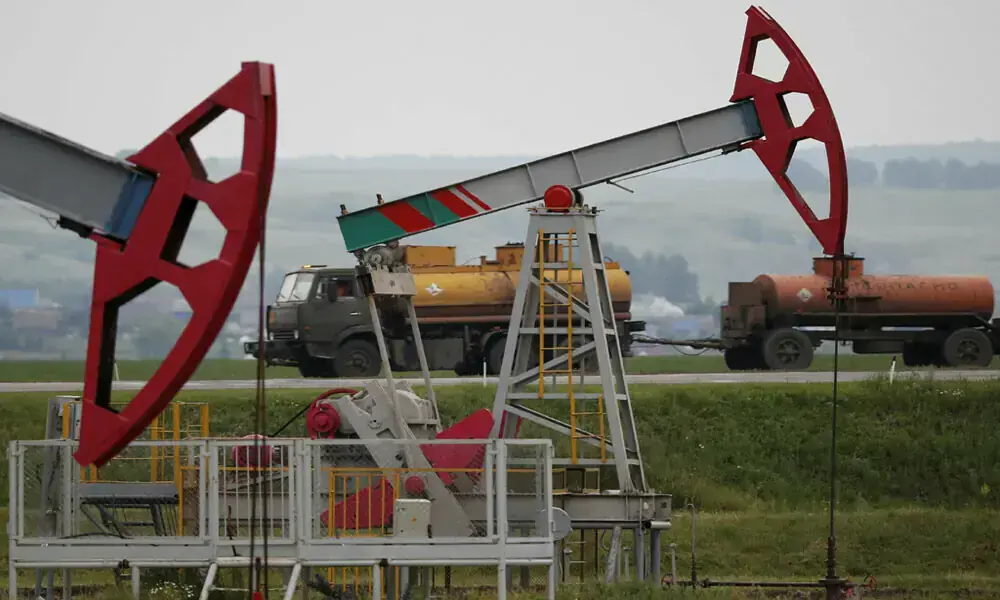
    LONDON: Aluminium prices fell on Tuesday to their lowest in more than two weeks as rising exports from top producer China and hopes of de-escalation in the Middle East eased supply concerns, offsetting support from tight inventories.

    Benchmark three-month aluminium on the London Metal Exchange was down 1.1% at $3,031.50 a metric ton by 0950 GMT after touching $3,014, its lowest level since October 23.

    China’s customs data showed that the country’s exports of aluminium and aluminium products rose 18% to 5.9 million tons in the first 10 months of 2026.

    Aluminium prices have declined 20% since reaching a four-year high in June as supply restarts in the Middle East, disrupted by the Iran war, have progressed faster than expected, while new production capacity is expected to come online in Indonesia.

    Copper rebounds on firmer risk sentiment and tight supply in China

    US President Donald Trump said on Monday he would hold off on new military strikes against Iran for the time being after appeals from countries in the region.

    “As more metal returns to the market from the Middle East and new Indonesian projects ramp up, global supply growth should outpace demand, flipping the market into surplus in 2027,” analysts at ANZ said.

    This should limit aluminium price gains next year, although lingering supply risks in the Middle East are likely to keep prices volatile and above $3,000 through early 2027, they added.

    Providing some support to aluminium are relatively low global inventories, said Rupankar RM, head of market research at AL Circle.

    Available aluminium stocks in LME-registered warehouses stood at 207,525 tons, their lowest level since March 2025. The inventories are dominated by Russian-made metal, which many Western traders avoid.

    Tight availability for immediate supply is visible in the premium of the LME cash aluminium contract over the three-month benchmark, which was last at $96 a ton, its widest since June.

    Among LME metals, copper fell 0.1% to $13,876 a ton, zinc rose 0.1% to $3,733.50, lead was steady at $1,884.50, tin lost 0.6% to $45,960 and nickel dropped 0.7% to $16,100.

    Source: brecorder

  • Mbappe in good spirits after difficult spell, says Konate

    Mbappe in good spirits after difficult spell, says Konate

    France captain Kylian Mbappe had put a difficult period behind him and is focused on helping his team ahead of Nations League fixtures against Italy and Turkey, defender Ibrahima Konate said.

    Mbappe has returned to the France squad after missing their last three matches through injury, having failed to win the Ballon d’Or award and attracting criticism in China over his comments relating to Mao Zedong, modern China’s founding leader.

    “He’s in a very good frame of mind; you can see that from his recent matches,” Konate told reporters. “He’s been decisive. He’s absolutely vital for us in Madrid.”

    The 27-year-old Real Madrid forward finished second to England captain Harry Kane in the Ballon d’Or voting.

    Mbappe apologises for ‘ill-judged’ Mao meme comments

    He also had to apologise for remarks made during an interview in which he referred to an online meme depicting his face on an image of Mao.

    The episode sparked backlash in China, prompting several brands to end commercial partnerships with Mbappe, while Spanish league matches were dropped from state broadcaster CCTV’s schedule.

    Konate, also Mbappe’s club teammate at Real Madrid, said the World Cup winner had responded in typical fashion.

    “He’s a competitor, so of course not winning the Ballon d’Or when he thought he had a chance is difficult,” Konate said. “But the next day he was fully focused in training.”

    Source: brecorder

  • UAE is selling Saudi oil in a rare move, document shows

    UAE is selling Saudi oil in a rare move, document shows

    NEW DELHI/LONDON: The United Arab Emirates energy ministry is selling 1.7 million barrels of Saudi Arab Light oil via a rare tender, a document showed.

    Sources said the UAE was selling the oil loaded on the Gem No. 2 tanker, which was struck by an unidentified projectile last month.

    Since the start of the US-Israeli war with Iran, attacks on commercial vessels in Gulf shipping lanes have driven up security risks for maritime traffic and heightened fears over the conflict’s environmental fallout.

    The UAE last week said an oil leak from the Gem No. 2 tanker had been stopped.

    Saudi East-West oil pipeline hit in Medina region, state media reports

    The tender mentions the Ministry of Energy and Infrastructure, UAE, under judicial supervision by the UAE Federal Public Prosecution, as the seller.

    The tender, which closed on Monday, offered to load the cargo between November 10 and 20 via a ship-to-ship transfer from inside the Gulf, the document showed.

    Source: brecorder

  • New Israel parliament to be sworn in as Gadi Eisenkot seeks government

    New Israel parliament to be sworn in as Gadi Eisenkot seeks government

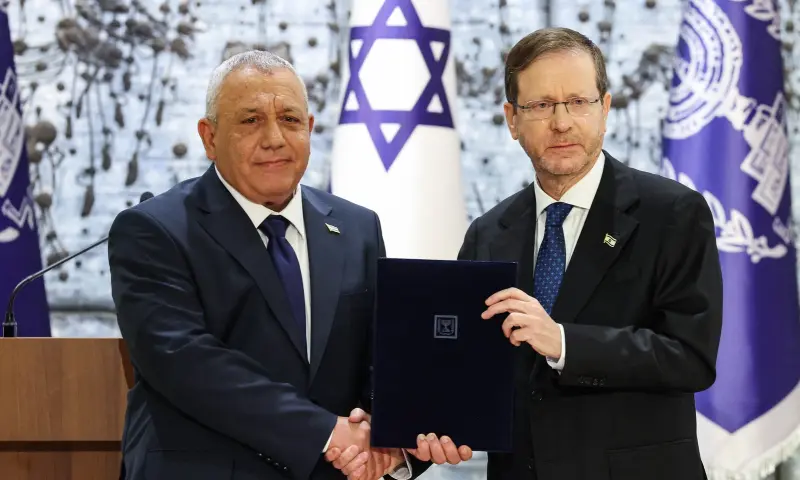
    Israel’s new parliament will be sworn in on Tuesday, with Prime Minister Benjamin Netanyahu set to lose his majority even as rival Gadi Eisenkot still works to form a new government.

    President Isaac Herzog will deliver a speech at 4pm (7pm PKT) for the swearing-in of the 120-seat parliament, in which neither Netanyahu’s right-wing bloc nor Eisenkot’s opposition will hold a majority.

    The opposition hopes to use its newfound legislative power to move quickly on key priorities, including a commission to investigate security failures under Netanyahu that allowed the October 7, 2023 attack by Hamas, the deadliest day in Israel’s history.

    Herzog on Sunday gave Eisenkot the initial mandate to form a government, starting the clock for him to cobble together a coalition within 28 days, with a possible 14-day extension.

    Ahead of the parliament opening, Eisenkot’s party announced progress in naming people to seek key positions.

    The opposition will put forward Matan Kahana — like Eisenkot, a former senior military figure — as speaker of the parliament, Eisenkot’s Yashar party said.

    Avigdor Lieberman, a right-wing opposition leader who has played a key role in deciding who can enter the government, will be nominated as chair of the foreign affairs and defence committee.

    The opposition’s choice for speaker would need to secure a larger number of votes than anyone backed by Netanyahu’s bloc, which has been trying to push back a vote on the speaker.

    The newly formed government would need 61 votes to be approved to take office.

    Eisenkot could secure the threshold with support from Arab-Israeli lawmakers, who secured a record number of seats on the back of anger in the minority community over Netanyahu’s hard-right government.

    But Lieberman had been clear he would not allow Eisenkot to rely on Arab-Israelis to come to power. He has instead proposed an alliance with ultra-Orthodox Jews, despite his years of bitter denunciations of the community for its singular priority on maintaining an exemption from mandatory military service.

    Eisenkot’s core opposition bloc has fewer seats than Netanyahu at 48, but would achieve a majority if the 19 Arab-Israeli lawmakers either enter the government or, more likely, vote for it without joining.

    The two ultra-Orthodox parties, with 13 seats, could also crown Eisenkot if they ditch their long alliance with Netanyahu, who backed the exemption from military service without enshrining it fully into law.

    An alliance with either group would likely be fragile. Arab-Israelis are likely to object if Eisenkot carries out another major offensive in Gaza.

    Eisenkot has largely backed Netanyahu’s war decisions, although he has vowed to crack down on extremist settlers in the West Bank who have been attacking and stealing from Palestinians with virtual impunity.

    Source: dawn

  • Missing discussion

    Missing discussion

    IN contrast to official claims of economic stability, a series of recently released reports provide disturbing evidence of deepening poverty and a human development crisis in Pakistan.

    According to the World Bank’s Pakistan Poverty and Equity brief, the national poverty rate spiralled from 22 per cent in 2018-19 to 29pc in 2024-25 — meaning that about 70 million poor people across the country live below the national poverty line. The Gini index, a measure of economic inequality, has increased from 28.4pc to 32.7pc, the highest in 25 years. The World Bank’s regional economic outlook reported that Pakistan is home to about half of the MENAAP region’s population that falls under the extremely poor category. The World Bank attributes Pakistan’s reversal in poverty reduction to economic shocks triggered by the Covid-19 pandemic, the devastating 2022 floods, high inflation, and currency depreciation.

    The UNDP’s 2025 Global Multidimensional Poverty Index reported that 38.3pc of Pakistan’s population (95m people) is multidimensionally poor — deprived not just of cash but also of necessities such as healthcare and education. Another 32m people are vulnerable to multidimensional poverty. Pakistan’s poor population of 38.3pc dwarfed India’s 16.4pc and Bangladesh’s 14.9pc.

    The alarming scale of deprivation was also reflected in the 2026 Global Hunger Index, which placed Pakistan 106th among 122 countries. Pakistan has the highest hunger score in South Asia. The report attributes food price inflation to declining household purchasing power and constrained access to food. It finds that undernourishment in the country climbed from ‘low’ in 2018 to ‘medium’, while child wasting has risen towards the ‘high’ threshold.

    Poverty is rooted in decades of misguided public policy.

    All these reports reflect the severity of the crisis. A nationally representative mental health survey (2018-22), published in the British Medical Journal, revealed distressing facts. The survey found that every third Pakistani lives with a diagnosable mental or behavioural disorder; one in five meets the criteria for post-traumatic stress disorder. A shocking 6pc reported suicidal thoughts, and more than one in 10 had depression. Such staggering rates of mental disorders have been linked to lower income and poor education, unemployment, age, and disrupted family circumstances.

    Human development has remained a chronically ignored priority in Pakistan. The UNDP’s Human Development Report 2025 placed Pakistan 168th out of 193 countries appearing in the ‘low’ human development category. Except for Afghanistan, all regional countries ranked ahead of Pakistan on the Human Development Index.

    Poverty is rooted in decades of misguided public policy and bad governance. Human development has been given cosmetic importance — the subject is mostly confined to official speeches and election manifestos. Although Covid-19, the floods, and broader climate change have battered the economy, human development seldom features on the government’s list of priorities.

    Geopolitical and ongoing border tensions, and more recently the Gulf war shocks, have diverted resources and attention from human development to security priorities. The issue has been further compounded by internal security challenges that have held back exports and stifled foreign investment. Terrorism in two provinces and the poor law and order situation have shattered local investments. This environment has forced many foreign companies to pack up and withdraw capital from our markets.

    Agriculture — for long the bedrock of the national economy and a source of food security for millions — has been systematically eroded in recent decades. Sha­rp increases in agri-input prices, a poorly managed water sector, rapid land degradation, and exploitative market forces have wrecked this critical sector. Soaring energy prices, an unreliable grid, and a huge tax burden, including petroleum surcharges, have made energy exorbitant for the farm sector. Crippling increases in petroleum prices have pushed up transport fares, raising the cost of the farm-to-market supply chain. The resulting food inflation has forced millions of families to compromise on their diet.

    Sadly, even though poverty and hunger have emerged as an existential challenge for millions of families in Pakistan, a national focus on these issues is absent. These issues rarely find space in the national discourse — especially on electronic media, which remains abuzz with hysterical talk shows on subjects like governor’s rule and new provinces. Distracting the masses from the real issues and failing to include critical report findings will not reduce the citizens’ frustration.

    The writer is senior adviser, water governance, at the Sustainable Development Policy Institute.

    naseer_memon@sdpi.org

    Published in Dawn, November 10th, 2026

    Source: dawn

  • BHC hands ex-MPA Abdul Majeed Achakzai 10-year sentence in traffic cop hit-and-run case

    BHC hands ex-MPA Abdul Majeed Achakzai 10-year sentence in traffic cop hit-and-run case

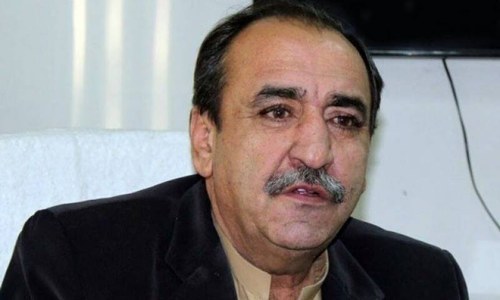
    QUETTA: The Balochistan High Court on Tuesday handed former MPA Abdul Majeed Achakzai a ten-year sentence in a case regarding the death of a traffic policeman in a hit-and-run incident.

    A division bench comprising Justice Muhammad Amir Nawaz Rana and Justice Abdul Qayyum Lehr allowed an appeal filed by the provincial government against Achakzai’s acquittal and set aside the local court decision dated September 4, 2020.

    Achakzai was convicted under Section 320 (punishment for qatl-i-khata by rash or negligent driving) of the Pakistan Penal Code (PPC) for causing the death of Traffic Sub-Inspector Haji Attaullah.

    He was also ordered to pay diyat to the legal heirs of the deceased. Furthermore, the court directed the learned Additional Sessions Judge-VI, Quetta, to issue non-bailable warrants for Achakzai’s immediate arrest.

    Traffic sergeant Ataullah was killed when a fast-moving vehicle hit him at GPO Chowk in Quetta in June 2017. The ex-lawmaker was returning from the Balochistan Assem­­bly after attending a session when the vehicle hit the traffic policeman, who was performing his duty at the place.

    He suffered serious injuries and later died at the hospital.

    Initially, police had registered an accident case against unidentified persons. But after the CCTV footage of the accident went viral on social media and was repeatedly shown by TV channels, Balochistan police decided to lodge a manslaughter case against the former MPA, who belongs to the Pakhtunkhwa Milli Awami Party (PkMAP).

    He was granted bail by an anti-terrorism court (ATC) six months later. However, in 2020, a local court in Quetta acquitted him in the case. Subsequently, Quetta police filed an app­eal filed against the acquittal.

    Achakzai is a close relative of opposition leader and PkMAP chairman Mehmood Khan Achakzai. He was elected to the Balochistan Assembly twice and remained a minister in the provincial cabinet. He also served as chairman of the provincial assembly’s Public Accounts Committee.

    Source: dawn

  • Pakistan records $3.9bn in remittances for October 2026

    Pakistan records $3.9bn in remittances for October 2026

    Overseas workers’ remittances into Pakistan totalled $3.9 billion in October 2026, the State Bank of Pakistan (SBP) said on Tuesday.

    Remittances rose 13.8% year-on-year to $3.89 billion from $3.42 billion in October 2025.

    Meanwhile, it recorded an 8.5% increase on a month-on-month basis from $3.6 billion in September 2026.

    Cumulatively, workers’ remittances increased by 14% to $14.8 billion during Jul-Oct FY27, compared to $13 billion received during the same period last year.

    “These sustained inflows are strengthening Pakistan’s foreign exchange position, supporting households and reinforcing external-account stability,” Khurram Schehzad, advisor to the finance minister, commented on social media platform X.

    Remittances play a significant role in supporting the country’s external account, stimulating Pakistan’s economic activity, and supplementing the disposable incomes of remittance-dependent households.

    Last month, SBP revised its projections for workers’ remittances and foreign exchange reserves upward, reflecting improved inflows and a stronger external account outlook.

    Addressing a press conference on the monetary policy decision, SBP Governor Jameel Ahmed said that workers’ remittances have remained resilient in the first quarter of this fiscal year (FY27) and are projected to turn out higher than the earlier assessment.

    “Workers’ remittances are expected to increase further, with Pakistan’s inflows projected at $45 billion in the current fiscal year, up from the previous estimate of $44 billion,” he added.

    Major corridors of workers’ remittances

    Overseas Pakistanis in Saudi Arabia remitted the largest amount in October 2026, sending $982 million. The amount was up 17% compared to the $838 million sent by the expatriates in the same month last year. The amount was also higher by 9% compared to $899 million in September 2026.

    Inflows from the United Arab Emirates rose by 16% on a yearly basis, from $703 million in October 2025 to $816 million in October 2026. On a monthly basis, remittances were up by 9%, from $749 million registered in September 2026.

    Remittances from the UK amounted to $592 million in October 2026, up 19% from $499 million in the same month last year.

    Overseas Pakistanis in the US sent $329 million in October 2026, a 9% increase from $301 million in the same month last year. On a monthly basis, remittances from the US increased by 8% from $306 million in August 2026.

    Meanwhile, remittances from European Union (EU) countries clocked in at $461 million in October 2026, recording a growth of 3% on a monthly basis from $448 million in September 2026.

    Source: brecorder

  • £190m corruption case: IHC adjourns hearing for 10 days, orders meeting between Imran and legal team

    £190m corruption case: IHC adjourns hearing for 10 days, orders meeting between Imran and legal team

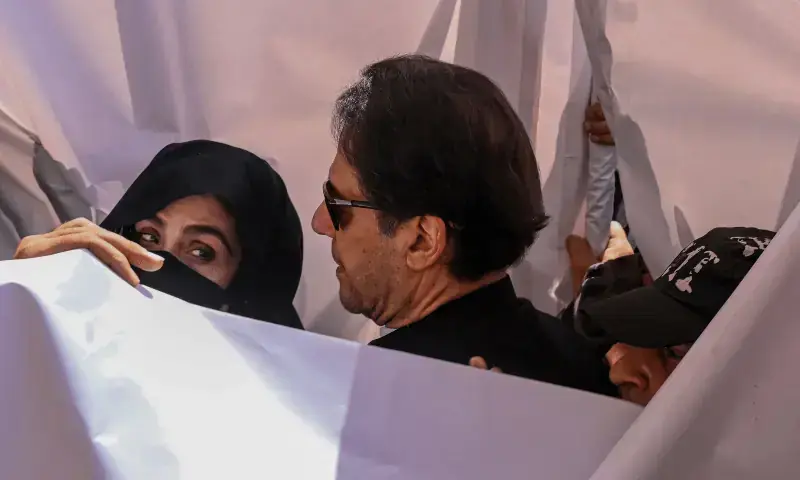
    ISLAMABAD: The Islamabad High Court (IHC) on Tuesday adjourned for 10 days the hearing of appeals filed by PTI founder and former prime minister Imran Khan and his wife, Bushra Bibi, against their convictions in the £190 million reference.

    The couple is serving prison sentences in the £190m corruption case, also known as the Al-Qadir Trust case. An accountability court had sentenced Imran to 14 years in prison and Bushra to seven years.

    The IHC also directed the authorities to facilitate meetings between Imran and his legal team.

    At the outset of the proceedings on Tuesday, Chief Justice Sardar Muhammad Sarfraz Dogar, heading a division bench, observed that he had allowed the lawyers to meet Imran and Bushra.

    He recalled that on June 29, the court had specifically directed the counsel to proceed with arguments and obtained an undertaking that no adjournment would be sought.

    Barrister Salman Safdar responded that the undertaking had been given by Advocate Sardar Latif Khan Khosa, who should explain his position before the court.

    He said he was present to argue the appeals as well as a civil miscellaneous application seeking permission for Bushra to receive medical treatment.

    Justice Dogar, however, observed that the undertaking had been furnished by Khosa and that arguments on the main appeals would commence forthwith and conclude in due course.

    Khosa, however, informed the court that he had not been granted access to Imran.

    Taking note of the matter, the chief justice asked Islamabad Advocate General Naveed Hayat Malik whether arrangements could be made for Khosa to meet the PTI founder within the next couple of days. The advocate general responded in the affirmative.

    Justice Dogar reiterated that he wanted formal arguments in the appeals to begin.

    Meanwhile, lawyer and PTI Secretary General Salman Akram Raja informed the court that he had received instructions from Imran. Justice Dogar observed that the court’s directions also formed part of the judicial record.

    Barrister Safdar told the bench that he had been denied access to Imran for the past seven months and to Bushra for the past 11 months. Justice Dogar recalled that Barrister Safdar had earlier expressed his inability to argue the case due to restrictions on meetings with his clients.

    The counsel further pointed out that the paper books in the appeals had yet to be received from the IHC. He said the case involved approximately 3,500 pages of documents and testimony from 35 witnesses, which required thorough examination before he could properly present his arguments.

    Seeking reasonable time for preparation, Barrister Safdar said he had been allowed to meet Imran and Bushra for only 40 minutes, which was insufficient to discuss the cases in detail.

    He also apprised the court of Bushra’s medical condition, saying that she appeared deeply concerned when he met her after a gap of 11 months and that her eyes appeared to be badly infected.

    Regarding Imran’s health, he said that although his eyesight had improved somewhat, his blood pressure remained unstable, putting him at risk of a brain haemorrhage.

    He added that the PTI founder was more concerned about his wife’s health than his own.

    Barrister Safdar said Bushra had been wearing sunglasses during their meeting and had removed them only at his insistence. He maintained that her eye condition appeared serious and required immediate attention from a specialist.

    He argued that women could be granted bail on statutory grounds and that Bushra urgently needed medical treatment. He requested the court to consider granting her bail for a fortnight to enable her to receive appropriate medical care.

    Advocate General Malik, however, maintained that Bushra had been provided with proper medical treatment. He argued that individuals convicted and sentenced by courts could not claim the same absolute rights as law-abiding citizens.

    Justice Dogar observed that Khosa would argue the main appeals and directed the advocate general to facilitate his meeting with Imran.

    Barrister Safdar also requested an opportunity to meet both Imran and Bushra, explaining that his last meeting with them had taken place after a prolonged gap.

    Raja supported the request and asked the court to allow Barrister Safdar to accompany Khosa during the proposed meeting with Imran.

    Justice Dogar, however, observed that the matter relating to Bushra’s medical treatment was pending before the Federal Constitutional Court (FCC) and that Barrister Safdar could pursue the issue of access to his clients before the appropriate forum.

    Barrister Safdar reiterated his request that Bushra be permitted to receive medical treatment from a specialist of her own choice.

    At the conclusion of the proceedings, the court directed the advocate general to arrange a meeting of at least an hour between Khosa and the PTI founder. It also directed the authorities to ensure that the paper books were prepared and made available before the next hearing.

    Barrister Safdar informed the bench that he had also been instructed to argue both appeals. The court further allowed Barrister Safdar to meet Imran and Bushra before adjourning the proceedings for 10 days.

    Speaking to the media outside the IHC, PTI Chairman Barrister Gohar Ali Khan said that the party had knocked on every court’s door and approached every forum to seek justice.

    “It feels as though court orders in our favour were written in pencil, while those in others’ favour were written in permanent marker. Perhaps that is why no one even noticed the orders issued in our favour, let alone implemented them,” he contended.

    “What is needed now is for decisions to be written not in pencil or permanent marker, but with the same pen for everyone,” he demanded, urging equal justice for every citizen.

    “All of Pakistan, every political party and the public are looking to the courts for justice,” he said. He said that the courts should issue extraordinary orders in these extraordinary circumstances so that all obstacles to justice could be removed.

    “We hope the court will not stop at merely issuing an order, but will also ensure that its order is implemented,” he said, talking about the most recent orders issued by the IHC.

    “We also demand that the government immediately implement the court order and ensure that lawyers can meet Imran,” he urged, asserting that it was the ex-premier’s fundamental and legal right.

    The £190m pound case pertains to the Al-Qadir Trust settlement, where NAB alleged that Imran and Bushra obtained billions of rupees and land worth hundreds of kanals from a real estate firm for legalising Rs50 billion that was identified and returned to the country by the United Kingdom during the PTI government.

    The amount was deposited in the Supreme Court account as part of a settlement with the property tycoon.

    An accountability court in Islamabad had sentenced Imran and Bushra to 14 and seven years in prison, respectively, on Jan 17, 2025, in the case. Subsequently, both had challenged their convictions before the IHC.

    Source: dawn

  • Gold price per tola sheds Rs1,500 in Pakistan

    Gold price per tola sheds Rs1,500 in Pakistan

    Gold prices in Pakistan decreased on Tuesday in line with their loss in the international market. In the local market, gold price per tola reached Rs430,836 after a decline of Rs1,500 during the day.

    Similarly, 10-gram gold was sold at Rs369,372 after it fell by Rs1,286, according to rates shared by the All-Pakistan Gems and Jewellers Sarafa Association (APGJSA).

    On Monday, gold price per tola reached Rs432,336 after a gain of Rs3,200 during the day.

    The international rate of gold declined by $15 to reach $4,083 per ounce.

    Meanwhile, the price of silver remained unchanged at Rs5,723 per tola.

    Source: brecorder

  • Political narratives and allegations have a limited ‘shelf life’, CM Maryam says

    Political narratives and allegations have a limited ‘shelf life’, CM Maryam says

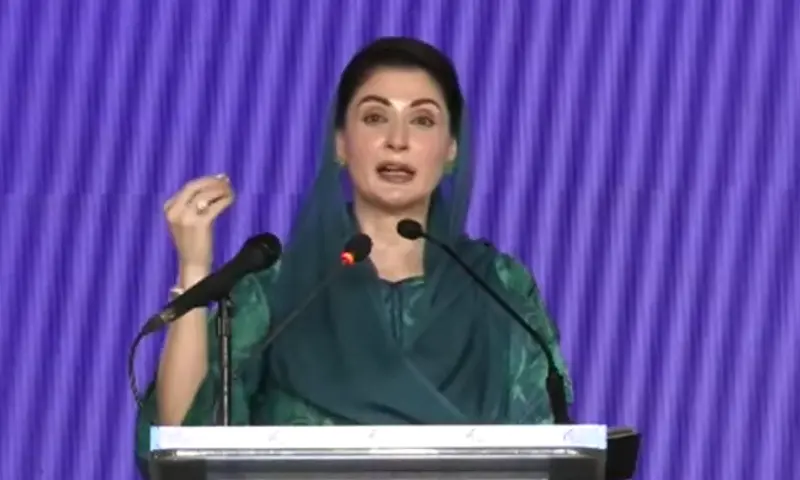
    Punjab Chief Minister Maryam Nawaz on Tuesday said political narratives, allegations and criticism had a limited “shelf life”, asserting that public service and development work ultimately determined electoral success.

    She was speaking at a Honhaar Scholarship and laptop distribution ceremony at Government Comprehensive High School in Jhelum.

    During her address, Maryam said voters did not support political narratives but instead judged political parties by their public service record. She cited the PML-N’s victories in recent local elections in Sahiwal and Gujranwala, despite opposition parties having “joined hands” against her.

    “No matter how much you talk or how many claims you make, if you have not served the people, there comes a day when you are deprived [of public support],” she said.

    “If some people have objections and are levelling allegations of corruption against the Punjab government, why don’t they resign from the cabinet?” the provincial chief executive said, in an apparent reference to Minister for Overseas Pakistanis Chaudhry Salik’s recent allegations of corruption against the Punjab government.

    She maintained that there had been no corruption in the development projects worth trillions of rupees launched by her government over the past three years.

    Referring to the opposition’s criticism of her government, Maryam said attempts were being made to distract her as elections drew closer.

    She said she was answerable to the people for the expenditure of public money, adding that she would not spare any minister or official against whom evidence of corruption or bribery was presented.

    “I have not said that corruption has completely ended in Punjab,” she said.

    The chief minister said she would not comment on other provinces, as their respective governments were answerable to their own populations. However, she claimed that Punjab was the only province where the chief minister pursued a new corruption case every day.

    Maryam asserted that her government had broken the tradition of concentrating development spending in major cities.

    She cited the expansion of the Green Bus service to cities including Jhelum, Khushab, Layyah, Bhakkar, Rahim Yar Khan, Bahawalpur and Multan, saying similar transport facilities and infrastructure were being provided across the province.

    The chief minister also highlighted the establishment of Nawaz Sharif Schools of Eminence, saying they were comparable to expensive private schools.

    She said the schools offered facilities such as air-conditioned classrooms, computer laboratories, artificial intelligence laboratories and science laboratories, along with qualified faculty.

    Maryam also praised provincial Education Minister Rana Sikandar Hayat for his work in the education sector. She announced that 300 Nawaz Sharif Schools of Eminence would be established, with work on the initiative in Jhelum scheduled to begin on Dec 15.

    She further said the government was establishing cardiac treatment facilities in 25 cities where such services had previously been unavailable. Patients visiting catheterisation laboratories (cath labs) at public hospitals would be able to receive procedures, including angiograms, angioplasty, stenting and pacemaker implantation, free of cost, she added.

    She further said cancer hospitals were being established in every divisional headquarters, while the country’s first government-run cancer hospital was being built in Lahore.

    Source: dawn