Author: Theph

  • Solar boom leaves low-income households behind amid Sindh’s energy, climate challenges, experts say

    Solar boom leaves low-income households behind amid Sindh’s energy, climate challenges, experts say

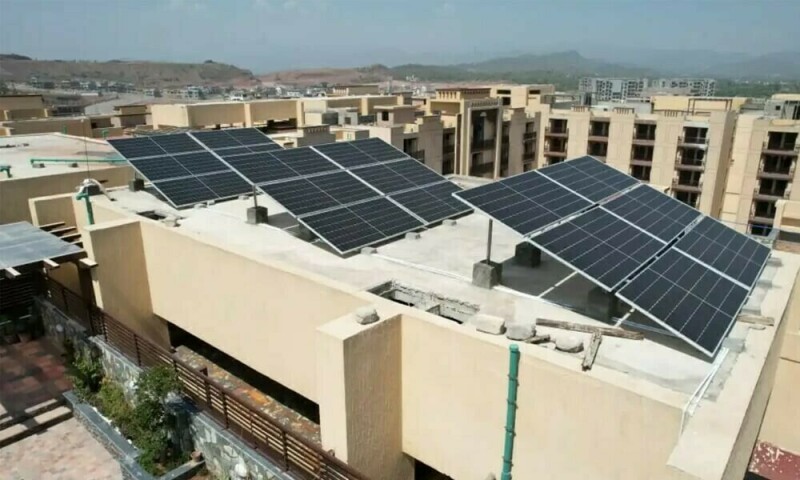
    Pakistan’s rapidly expanding solar market was transforming the country’s energy landscape, but millions of low-income households risk being left behind as the high upfront cost of installations and lack of maintenance support limit access to affordable electricity, speakers warned at the Sindh Energy & Climate Conference (SECC26).

    The disparity was highlighted during a discussion on solar energy access at the two-day conference held in Karachi last week, where experts, government representatives, labour groups, and community activists examined whether the country’s growing shift towards renewable energy was benefiting those most in need or primarily serving consumers who could afford the initial investment.

    The scale of the country’s solar expansion is striking. Dr Omais Abdur Rehman of Renewables First said during a session on solar energy access that Pakistan’s power plants had a combined capacity of approximately 45 gigawatts, while consumers had independently installed nearly 38 gigawatts of solar capacity.

    But he cautioned that the number of installations alone offered little indication of whether communities were enjoying reliable and sustainable access to electricity.

    Citing a World Bank-supported programme, he said only 33% of distributed solar systems remained operational after ten years, largely because of inadequate maintenance skills.

    “Giving solar panels is not a success. Access does not equal success,” he said.

    The problem is not limited to maintaining solar systems. For many households, the initial investment remains the biggest obstacle.

    Hussain Rizvi of the Climate Action Center presented survey findings showing that 86% of respondents in Karachi’s low-income neighbourhoods experienced between 13 and 20 hours of load-shedding. Many residents of informal settlements were also struggling with unaffordable electricity bills, despite being interested in switching to solar power through instalment-based financing.

    The divide between those benefiting from the solar transition and those being left behind was perhaps best illustrated by a garment factory worker, Muneer Ahmed. Although his factory operated on solar power, he told participants that his monthly salary of Rs30,000 to Rs40,000 made it difficult to afford a similar system for his own home.

    The contrast raised a broader question about the distribution of benefits from Pakistan’s energy transition: if businesses can turn to solar power to reduce their electricity costs, what options are available to the workers who keep those businesses running?

    Wasim Jamal, Director of Public Relations at the Sindh Employees Social Security Institution (SESSI), proposed a provincial solarisation programme linked to the Benazir Income Support Programme (BISP), suggesting an initial pilot that would provide systems costing approximately Rs150,000 per beneficiary. He also proposed developing mini-grids to extend electricity access to rural communities.

    But making solar power more accessible is only one part of a much larger challenge. As renewable energy installations increase, Pakistan must also rethink how its electricity grid operates and how surplus power can be distributed.

    Participants called for modernising existing grid infrastructure and introducing community-based electricity-sharing arrangements that would allow households and businesses to supply excess solar power to others rather than letting it go unused.

    The rapid expansion of solar technology has also brought concerns about substandard equipment and the potential accumulation of electronic waste. Speakers stressed the need for stronger quality controls, recycling facilities, and technical training, warning that an energy transition built around renewable technology must also account for what happens when equipment reaches the end of its working life.

    The national grid, they argued, would remain indispensable even as solar adoption increases, particularly as demand grows with the wider use of air conditioners, household appliances and electric vehicles.

    Speakers also highlighted the curtailment of wind power and called for investment in battery storage, flexible transmission infrastructure, and real-time data-sharing to ensure that renewable electricity generated in the country is not wasted.

    The transition is also beginning to reshape public transport. Behram Amir Memon, Managing Director of the Sindh Mass Transit Authority, said 84 electric buses were already operational, with another 1,100 planned in principle and 500 proposed through public-private partnerships. He also referred to the distribution of 1,000 pink electric scooters.

    Mehrosh Fatima of the National Energy Efficiency and Conservation Authority (NEECA) said 161 electric vehicle charging stations were operational across Pakistan, while work was under way on an integrated online portal for charging infrastructure.

    Yet the shift towards electric mobility will require more than introducing vehicles. Participants stressed the need to expand charging networks beyond major cities and develop domestic manufacturing capacity for batteries and motors.

    For Sindh, however, the climate crisis is not a distant threat tied only to future energy choices. Its effects are already being felt in workplaces, agricultural fields, and communities struggling with increasingly extreme weather.

    During a discussion on heat-related challenges, labour representatives and community activists drew attention to the risks faced by agricultural workers, women, children, and industrial labourers. Inadequate workplace ventilation, limited access to drinking water, and prolonged electricity outages were identified as major concerns.

    They called for dedicated heat-protection policies, workplace risk assessments, cooling facilities, and mandatory rest breaks for workers exposed to extreme temperatures.

    Water security added another dimension to the province’s climate challenges. At a session examining the relationship between water and energy, participants questioned the social and environmental costs of dams, barrages, and changing river flows, particularly for communities whose livelihoods depend on agriculture and fishing.

    Speakers raised concerns about inadequate compensation around hydropower projects, environmental damage and the absence of effective mechanisms through which affected communities could pursue reparations.

    The situation in parts of Badin illustrated the scale of the problem. Panelists said some communities received irrigation supplies for only five days annually, contributing to food insecurity and preventing farmers from cultivating rice this year.

    They also discussed the wider economic implications of hydropower development, particularly questioning where projects are financed through loans and repayment costs ultimately fall on electricity consumers. More equitable water distribution and meaningful consultation with affected communities, they argued, must become central to infrastructure planning.

    The question of who pays for development and who benefits from it also surfaced in discussions on international climate finance.

    Despite repeated global commitments to support climate-vulnerable countries, participants said a significant gap remained between promised funding and the resources actually reaching communities on the ground. They warned that access to finance alone would not be enough without transparent spending and accountability.

    Pakistan’s experience of repeated climate disasters, particularly the 2022 floods that caused more than $30 billion in combined damage and economic losses, underscored the urgency of the issue. Speakers called for stronger local governments, improved early-warning systems, affordable crop insurance and greater involvement of coastal and delta communities in climate adaptation planning.

    Closing the conference, Sindh Governor Nehal Hashmi argued that climate action must extend well beyond renewable energy projects and technical discussions, calling for environmental awareness to become part of everyday community life.

    He stressed that clean water, hygiene, sanitation, drainage, urban infrastructure, and marine conservation deserved greater attention in discussions about climate change, noting that environmental sustainability was closely linked to public health and the quality of life in communities.

    Drawing attention to Karachi’s coastline, Hashmi expressed concern over the condition of coastal waters and the marine environment, urging greater efforts to address pollution and protect marine ecosystems. He also pointed to the future potential of ocean-based energy, suggesting that Asian countries could increasingly explore energy generation from the sea in the coming years. However, he stressed that such opportunities would depend on protecting marine resources and improving coastal water quality.

    The Governor also raised the issue of electricity theft, particularly in urban markets and commercial areas, arguing that energy discussions should address not only increasing supply but also responsible consumption, efficient distribution, and the prevention of wastage.

    He called for stronger collaboration between government institutions and civil society organisations, describing the latter as an important link between policymakers and communities. Their understanding of local concerns, he said, could help government departments develop more practical responses to environmental and energy challenges.

    Hashmi urged the conference organisers to share their recommendations with relevant government departments and the Governor House, while calling for climate awareness campaigns to move beyond seminars and conference halls into schools, universities, and coastal communities.

    SECC26 highlighted that Sindh’s energy transition is about far more than producing more electricity or installing solar panels. Its real success will depend on whether cleaner energy becomes affordable for ordinary households, whether workers and farmers are protected from the growing pressures of climate change, and whether communities most affected by development have a voice in decisions shaping their future.

    The challenge, participants suggested, was not simply to power Sindh differently, but to build a fairer, more resilient, and sustainable province.

    Source: brecorder
  • Saudi-led coalition says it shot down Houthi missiles aimed at Riyadh

    Saudi-led coalition says it shot down Houthi missiles aimed at Riyadh

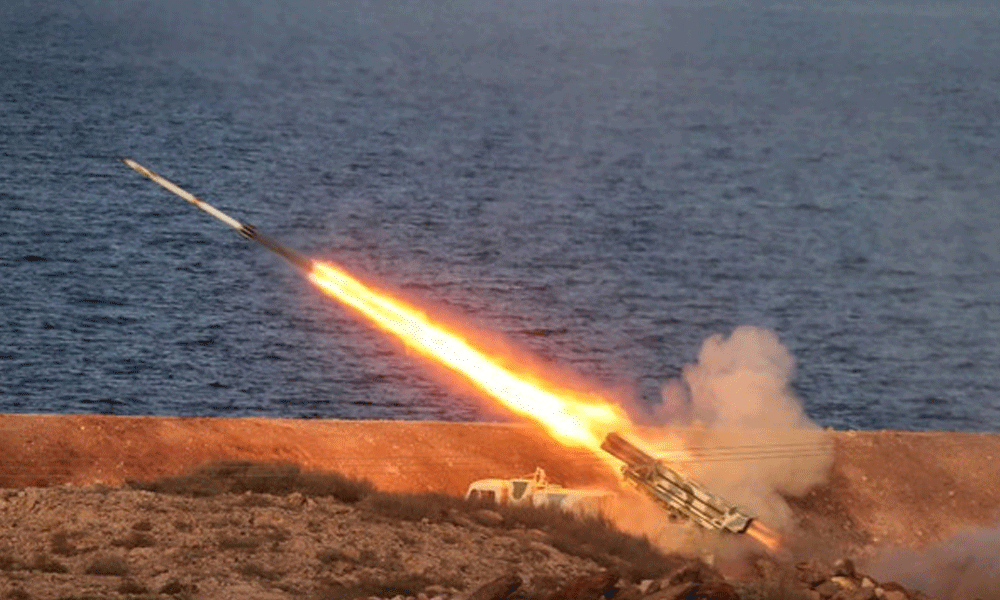
    The Saudi-led military coalition in Yemen said on Tuesday it shot down missiles fired by Yemen’s Houthis at several Saudi cities in a night of intensifying military action, while the Houthis reported Saudi airstrikes hit the Yemeni capital Sanaa.

    The coalition said it had intercepted a ballistic missile and a cruise missile fired by the Houthis towards Riyadh, as well as a ballistic missile fired towards the kingdom’s southern region and a drone ‌over the oil-rich east.

    Saudi civil defences issued alerts in the capital and the southern cities of Abha and Khamis Mushait, later saying the threats had passed.

    Houthi military spokesperson Yahya Saree said the group had hit King Khalid International Airport in Riyadh and an oil facility in Abqaiq in the east. There was no immediate comment from Saudi Arabia.

    Saudi-led coalition intercepts two Houthi missiles fired towards Riyadh

    The Saba news agency reported that Saudi Arabia carried out airstrikes on Sanaa, hitting a petrol filling station in the Jadar district north of the capital and a building belonging to the state oil company in southern Sanaa.

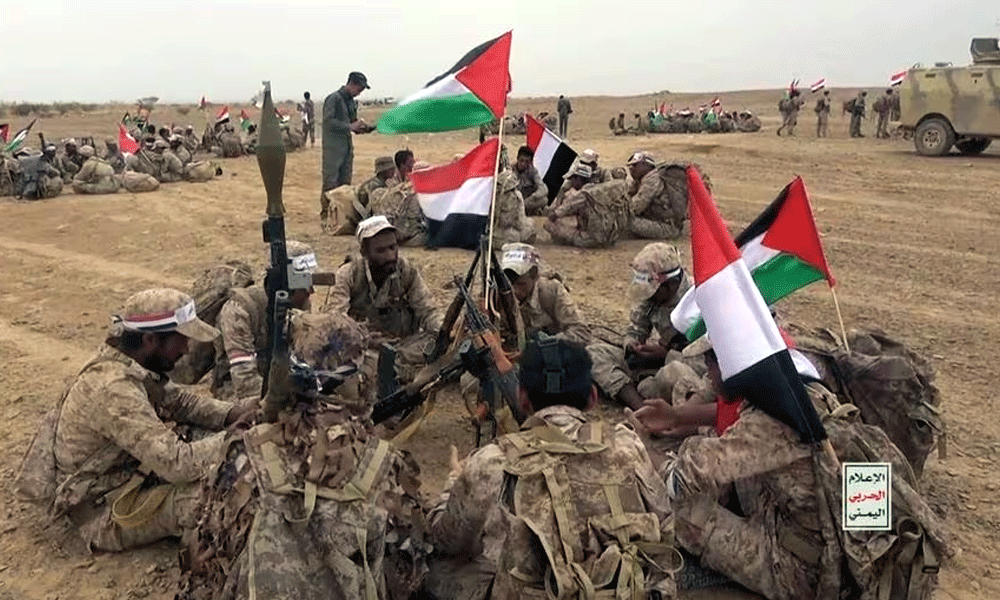
    Hostilities have been escalating between the Houthis and Saudi Arabia, which leads a military coalition that has backed Yemen’s internationally recognised government, driven more than a decade ago from Sanaa by the Houthis.

    Fighting has intensified since September when the Houthis advanced towards the Bab el-Mandeb Strait, a strategic shipping chokepoint at the ​southern entrance to the Red Sea. The Houthis have since stepped up strikes on ⁠Saudi airports, ports and oil facilities, while Saudi Arabia has carried out airstrikes on Houthi targets ​in Yemen.

    Syria aids Saudi Arabia with military advice and training amid Houthi attacks, sources say

    The Houthis said on Tuesday they had attacked Saudi Arabia’s vital East-West Pipeline in Riyadh Province, while denying a Saudi assertion that they had attacked the pipeline in the Medina region. Saudi state media had reported on Monday that an attack on the pipeline in the Medina region had caused a limited fire there, and that operations were not affected.

    Medina, home to one of Islam’s holiest sites, is visited by millions of Muslim pilgrims each year. The Houthis have repeatedly rejected Saudi accusations that they have targeted Makkah and Medina, Islam’s two holiest cities.

    Since conflict in the Middle East disrupted oil flows through the Strait of Hormuz, Riyadh has used its East-West Pipeline to divert about 4 million barrels per day of crude ​to Yanbu on the Red Sea, ​equivalent ⁠to about 4% of global supply.

    Source: brecorder

  • Pakistan Atomic Energy Commission completes dome placement at Chashma-5 nuclear plant

    Pakistan Atomic Energy Commission completes dome placement at Chashma-5 nuclear plant

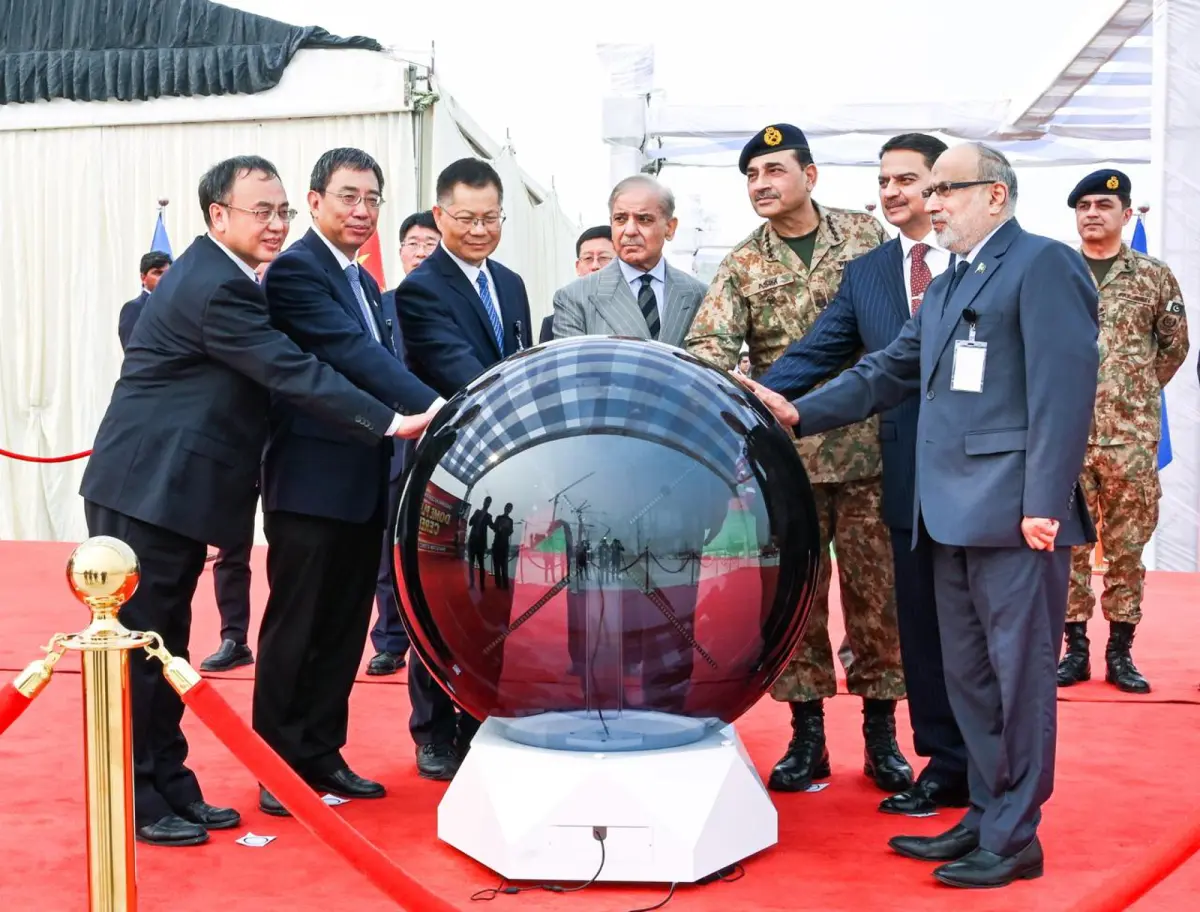
    The Pakistan Atomic Energy Commission (PAEC) had achieved a major milestone at the Chashma Nuclear Power Plant Generating Station with the successful dome placement of the Chashma-5 (C-5) Nuclear Power Plant, the Prime Minister’s Office (PMO) said on Tuesday.

    “C-5 Project is a manifestation of clean and emissions-free electricity generation in Pakistan,” Prime Minister Shehbaz Sharif said at the ceremony also attended by Field Marshal Syed Asim Munir.

    The C-5 project will have a generation capacity of 1,200 megawatts (MW). The plant is expected to commence electricity generation in September 2030.

    • Dome placement is a construction milestone in building a nuclear power plant. It refers to the installation of the large, dome-shaped roof of the reactor building, which houses the nuclear reactor and its associated equipment. In simple terms, it means the main reactor building has reached an important stage of structural completion.

    PM Shehbaz highlighted that nuclear energy accounted for around 16.6% of the country’s electricity generation despite representing only 8.6% of its installed capacity, with its share of electricity generation rising to 26% during winter.

    PAEC chairman highlighted that nuclear power continued to play an important role in Pakistan’s energy security, providing reliable and low-carbon electricity.

    “Pakistan’s nuclear power plants are safely and efficiently generating 3,530 MW of electricity and helping avoid approximately 15 million tonnes of carbon dioxide emissions annually,” he said.

    The prime minister commended Chinese partners, saying the event reaffirmed Pak-China All-Weather friendship and commitment to expanding strategic cooperation in economic, security, and development sectors.

    “We must increasingly harness our resources and human capital to build a Pakistan that is economically stronger, energy-secure and environmentally responsible,” he said.

    Once operational, Chashma-5 is expected to provide affordable, low-carbon and sustainable electricity to Pakistan’s national grid, further expanding the role of nuclear energy in the country’s power generation mix.

    China has remained a key partner in Pakistan’s civil nuclear energy programme, including the development of the Chashma nuclear power complex.

    Source: brecorder

  • Bilawal calls for unity via ‘political reset’, urges PM to build trust with allies and opposition

    Bilawal calls for unity via ‘political reset’, urges PM to build trust with allies and opposition

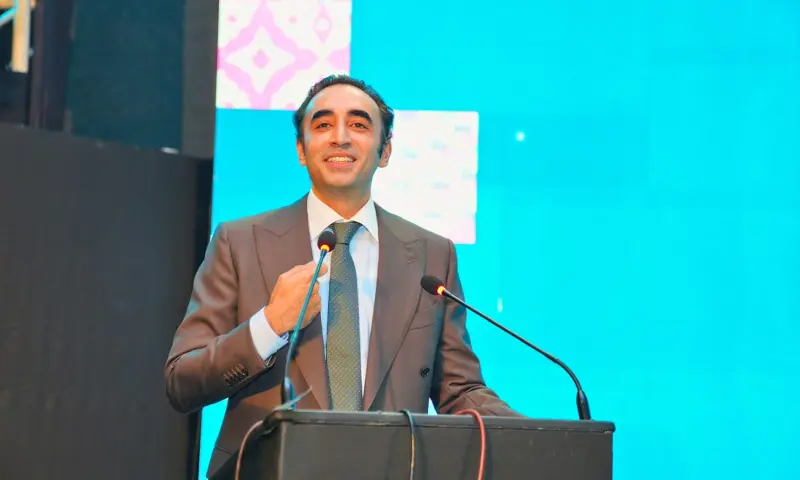
    PPP Chairman Bilawal Bhutto-Zardari on Tuesday called for a “political reset”, wherein all political parties must unite for the sake of the country, and urged the prime minister to take measures to build trust with allies and the opposition.

    The PPP scion was addressing an event to mark the completion of one million houses for flood affectees under the Sindh Flood Resilience Project (SFRP), which he said “made history” by being the largest house-building programme in the world.

    “The Sindh government has built one million houses, and when this project is completed, we would have built two million houses,” Bilawal said.

    Referring to the ongoing oil and energy crisis due to the US-Iran war, he said that Pakistan and the world were facing an “economic catastrophe” and stressed that “Pakistan’s politics will definitely have to be reset” to combat it.

    “But via this reset, political parties will have to work together instead of fighting,” he added.

    Emphasising that the public did not want to witness further fighting, the Bhutto scion reiterated, “We need a political reset.”

    He invited Prime Minister Shehbaz Sharif to first “restore trust of his allies”, then of opposition parties, “instead of picking new fights with them”.

    The former foreign minister contended that the ongoing economic crisis was one of the worst in the world’s history, and therefore, support of all Pakistanis, including those in the opposition, was needed to face it.

    “Unless we face this crisis together, we would not be able to save our people from this difficulty.”

    As he highlighted the efforts of his PPP’s provincial government, Bilawal particularly thanked the premier for the Centre’s support in the flood rehabilitation projects.

    Without naming PTI founder Imran Khan, the PPP chairman said that a predecessor of Shehbaz “did not give us a single penny” to help the flood-hit people of Sindh.

    “He even said ‘Sindh is not ours’, but Prime Minister Shehbaz Sharif has at least not made us feel this,” Bilawal said.

    He attributed SFRP’s success to Sindh’s efforts, international support and “cooperation of the Centre”.

    The PPP chairman said that some politicians believed that the country would make progress if it was reset and run according to the wishes of the rich and business class; however, he believed that it should be run according to the will of the poor and homeless.

    “During the days of the flooding, our enemies were saying that we (PPP) were only making this much effort to make money,” he said, referring to the initiative to build homes for those affected by the 2022 floods.

    He also suggested that the Sindh chief minister write to international corruption monitors and invite them to investigate the housing initiative, declaring that “there is no corruption in this scheme”.

    “As we are facing a financial crisis, the people of Sindh who are enduring historic poverty, inflation and unemployment are receiving financial security,” the PPP chairman said. “This is the responsibility of every government, party and Pakistan’s people.”

    “I can tell the people of Sindh that every project, whether it is a historic housing project or free hospital care, aims to lift the financial burden off the people’s shoulders,” he added.

    The European Investment Bank’s international development arm, EIB Global, is providing a €100m loan to the government for the initiative, which aims to rebuild around 2.1m rural homes damaged by devastating floods in 2022.

    The project has a total cost of almost $2 billion and covers 40 per cent of rural households in Sindh.

    The provincial government has also sought financial assistance of $350m from the World Bank for the project for the fiscal year 2026-2027.

    Source: dawn

  • JI, govt agree on ‘basic outline’ of proposal for petroleum levy relief

    JI, govt agree on ‘basic outline’ of proposal for petroleum levy relief

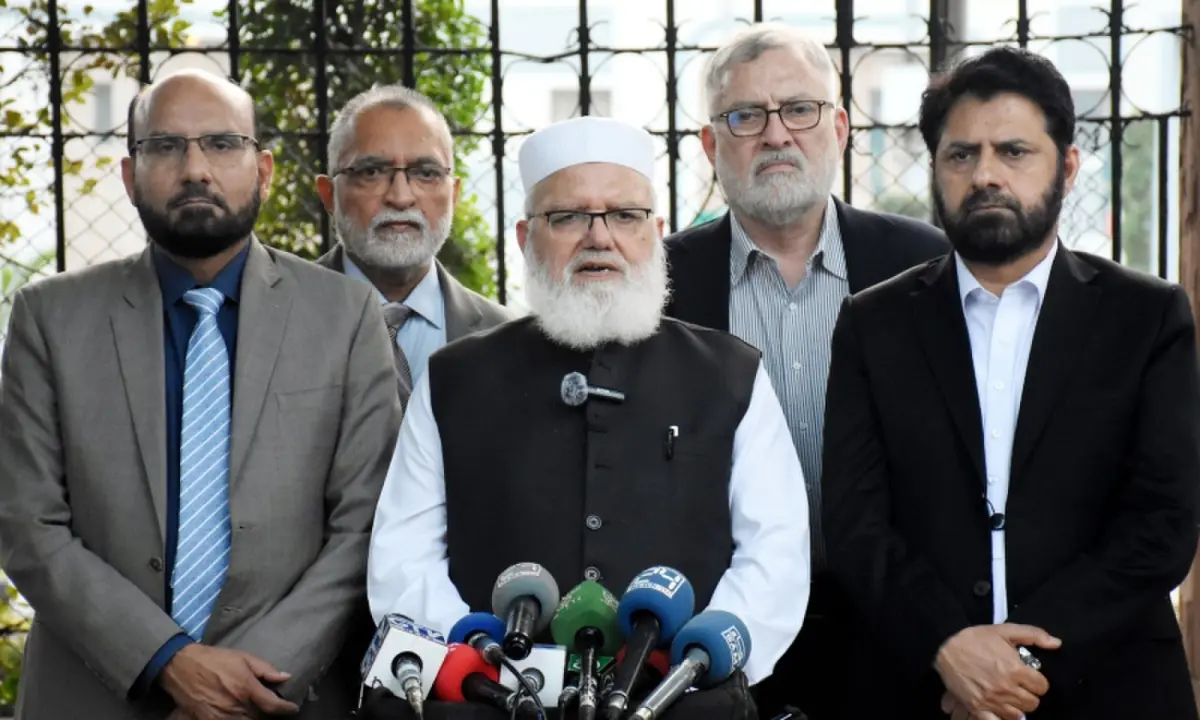
    ISLAMABAD: Jamaat-i-Islami (JI) Vice Emir Liaqat Baloch said on Tuesday that the government and the party had agreed on the “basic outlines” of a proposed agreement as the two sides held their 10th round of negotiations on petroleum levy relief.

    After a meeting with Prime Minister Shehbaz Sharif last month, both sides agreed to form a bipartisan committee to expand the government’s ongoing fuel relief scheme in response to JI’s demands for the abolition of the petroleum levy. The JI also warned of resuming its postponed march to Islamabad by mid-November if no relief was announced.

    Speaking to the media after the talks at the Ministry of Foreign Affairs (MOFA), Baloch said a final decision was expected after a possible meeting between PM Shehbaz and JI chief Hafiz Naeemur Rehman, according to a statement issued by the party.

    Baloch said the proposed meeting would involve detailed discussions before the agreement was finalised. He was accompanied by members of the JI negotiating committee, the statement added.

    Baloch described Tuesday’s meeting as the “most important” round of negotiations yet, after previously held nine sessions and reiterated that securing relief remained the “central objective”.

    According to the statement, the discussions focused on two key aspects — providing relief to consumers and reaching an agreement on measures to achieve that objective.

    The JI added that the government had acknowledged the difficulties resulting from the regional conflict and that both sides agreed to expand and continue the existing relief package.

    It was the government’s responsibility to negotiate with the International Monetary Fund (IMF) to ensure the continuation of relief measures, the statement quoted Baloch as saying.

    The Fund has called for phasing out the fuel support scheme promptly, citing high cost and broad targeting.

    During the meeting, the JI proposed extending the relief scheme to vehicles with engines of up to 1,000cc and the agriculture sector, including tractors. As per the statement, Baloch said the government also acknowledged that the demand for abolition of the petroleum levy was justified and could result in substantial relief for the public.

    In Tuesday’s talks, the JI demanded “immediate and visible reductions” in petroleum prices, along with the abolition of the levy. The party also proposed a mechanism for phasing out the levy, the statement said.

    The government promised to present a future course of action on the levy’s abolition while explaining its financial constraints, Baloch was quoted as saying.

    Criticising the government’s economic priorities, Baloch said it was unwilling to curb lavish expenditure and non-development funds; meanwhile, the Federal Board of Revenue (FBR) had failed to meet its tax collection targets, the statement added.

    He said the government was placing the burden of its “financial shortcomings onto ordinary citizens instead of reducing its own expenditure and improving revenue collection”.

    As per the party statement, the negotiation process had reached “stage of final decisions”.

    “The two sides had also worked on drafting the proposed agreement during Tuesday’s meeting,” the statement quoted Baloch as saying, adding that the party’s future course of action will depend on the government’s response, based on which it will decide whether to proceed with its proposed long march.

    According to the JI statement, the party’s protest had helped prevent further increase in petroleum prices.

    “The burden should not be placed on the people. The rulers must reduce their own expenditures and provide relief to consumers gradually,” Baloch was quoted as saying.

    The JI would not continue negotiations indefinitely, the statement read, adding that “the party would walk away the day it felt talks no longer served any purpose.”

    The talks so far

    The JI has been demanding for over two months that the Centre abolish petroleum levies, as fuel prices have skyrocketed due to conflicts in the Middle East since March.

    The Centre and JI agreed to form committees in early September — when the latter had planned a nationwide strike — to recommend measures to reduce the levy.

    On Sept 20, the party launched a protest march towards Islamabad, warning that if the government failed to abolish the petroleum levy, the protest could turn into one to oust the government.

    On Sept 22, the JI emir said his party, whose convoy had reached Multan, was postponing its long march at the request of PM Shehbaz, who had assured the other side of a meeting to discuss the matter.

    When PM Shehbaz and Rehman finally met about a month later, they agreed to form a joint committee to recommend proposals for expanding the fuel relief scheme and for a phased reduction in the petroleum levy for the next budget.

    On Nov 3, the two sides held “candid discussions” on practical measures to provide relief to low-income citizens from petroleum prices.

    Speaking to media after the talks, Baloch said that JI had presented six proposals to the government to provide relief to the people.

    “These included abolishing the petroleum levy, introducing a relief package, reducing public transport costs and extending relief to owners of vehicles above 800cc and the agricultural sector,” he said, noting that four key points were discussed.

    Both sides agreed to continue their consultations over the coming days to formulate a way forward on energy pricing and public relief.

    Source: dawn

  • Embattled Pentagon chief slams impeachment effort as ‘farce’

    Embattled Pentagon chief slams impeachment effort as ‘farce’

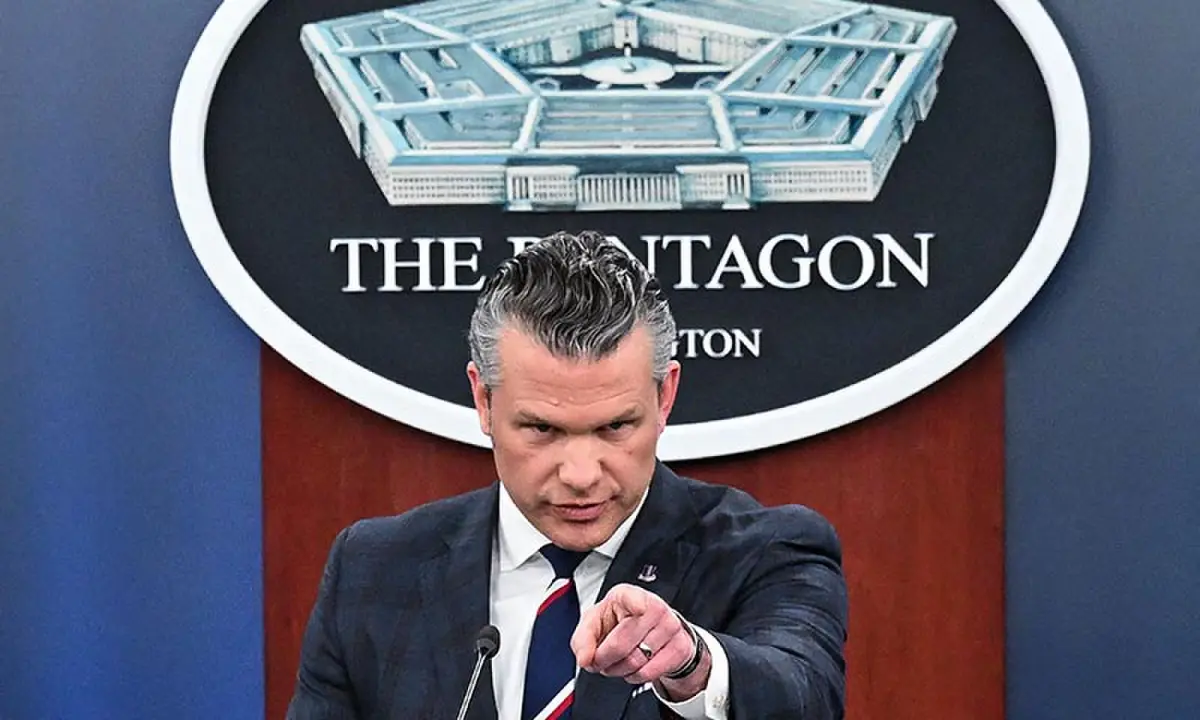
    US Defence Secretary Pete Hegseth on Tuesday denounced a push to impeach him as a “farce” and defended his record leading multiple military operations that have sparked allegations of misconduct against the Pentagon chief.

    Under pressure after President Donald Trump and Vice President JD Vance blamed the Iran war for the Republican Party’s sweeping losses in midterm elections, Hegseth now faces a congressional effort to remove him from office.

    “It’s a farce and it’s a stunt and everybody knows it,” a defiant Hegseth told journalists of the impeachment proceedings launched by Representative Thomas Massie, a Republican, the previous day.

    “What one disgruntled and defeated congressman is attempting is not oversight, and it’s not accountability. It’s a political spectacle,” Hegseth said.

    Massie, a fierce critic of Trump, is leaving office after losing a primary contest to a candidate backed by the president.

    Trump has backed Hegseth so far, and on Tuesday wrote on social media that the Pentagon chief “gets an ‘A’ plus, plus, plus for his defence” against the impeachment efforts.

    Hegseth on Tuesday defended military interventions in Yemen, Iran and Venezuela as well as strikes targeting alleged drug-smuggling boats in the Caribbean and eastern Pacific.

    ‘Would do it again’

    “I stand behind every one of these operations. I was proud to execute them, and I would do it again tomorrow,” he said, equating the effort to remove him with an attack on US troops.

    “These resolutions tell every one of them that their service was a crime. Their service was not a crime. These are heroes,” said Hegseth.

    Several of the articles of impeachment relate to the Iran war, accusing Hegseth of violating the War Powers Resolution, which requires congressional consultation on US military interventions.

    Hegseth is a staunch defender of the widely unpopular war against Iran, which he has described as a “courageous and historic effort”.

    The 2025 conflict with Yemen’s Houthis also features in Massie’s articles of impeachment, which charge Hegseth with starting the operation without congressional approval and in the absence of an imminent threat to the United States.

    Massie also branded strikes on alleged drug-smuggling boats in the Caribbean and eastern Pacific as “extrajudicial killings” and said Hegseth “chilled independent legal review within the Department of Defence.”

    He also accused Hegseth of suppressing free speech by trying to punish Democratic Senator Mark Kelly over a video in which he and other lawmakers urged military and intelligence personnel to refuse illegal orders.

    “Using the powers of his office, Secretary Hegseth retaliated against and sought to intimidate United States Senator Mark Kelly for his statement,” one of the articles of impeachment said.

    Source: dawn

  • Microsoft presses Trump to scuttle expected ban on Chinese data center technology

    Microsoft presses Trump to scuttle expected ban on Chinese data center technology

    WASHINGTON: Microsoft has been pressing the Trump administration to halt plans to bar Chinese imports of a key component used in AI data centers, three people familiar with the situation said.

    Reuters reported in August that the Trump administration wants to ban US imports of new models of Chinese optical transceivers, which allow data to travel over fiber-optic cables at the speed of light within data centers. The concern is that they could be used by Beijing to steal data, install malware or disrupt service at US data centers.

    Microsoft has 35 data centers under construction in the US and another 134 planned, according to Cleanview, a market intelligence company which tracks data center development. It is one of a group of companies and trade groups making the case to the Trump administration that such a ban could irreparably damage the US edge over China in the AI race by further slowing the data center rollout, the sources said.

    The cloud and software company was one of a handful of firms that met with officials from the White House Office of Science and Technology Policy and the National Security Council in September to flag the supply chain challenges that any such ban would present, two of the sources said.

    “It really threatens to arguably grind (the data center rollout) to a halt,” said John Miller, general counsel of the Information Technology Industry Council (ITI), a tech lobbying group, which has publicly urged the administration not to move forward with a ban.

    Microsoft is offering buyouts to around 60,000 employees, Business Insider reports

    He said many cloud companies have already purchased the AI chips needed for the buildout. “Those chips, without optical transceivers literally could just sit there waiting around un-utilized until you actually have the transceivers to essentially connect them together,” he added.

    Some data centers need millions of optical transceivers to connect servers, routers and switches.

    The Federal Communications Commission, which oversees the US ‌telecom industry, is working on the ban.

    The efforts by Microsoft and other firms, which have not been previously reported, show how the agency’s deliberations have set off alarms in an industry scrambling to meet surging demand for cloud and AI services despite a growing backlash by consumers over rising energy costs and water use.

    Microsoft declined to comment. The White House, the FCC and the Chinese embassy in Washington did not immediately respond to requests for comment.

    US competitors lack scale

    China boasts two-thirds of the global market foroptical transceivers, according to Counterpoint Research. Chinese firms like Eoptolink and Zhongji Innolight, which was added to the Pentagon’s list of Chinese military-backed companies, dominate global supply, counting top American hyperscalers among their customers.

    Telcos seek ‘industrial power tariff’: Investment in 5G networks, AI-ready data centres at risk

    US-based Coherent and Lumentum produce technology that competes with them but lack the scale to replace Chinese vendors, according to a report by the Foundation for American Innovation.

    ITI sent a letter to the FCC on August 13 calling on the telecoms watchdog to “refrain from adding optical transceivers” to a trade blacklist, emphasizing the “potential effects that supply disruptions could have on data center deployment and US AI leadership.”

    Morgan Stanley said in an October client note that the Trump administration was considering barring Chinese optical transceivers capable of handling 3.2 terabits of data per second, whose production is not expected to ramp up until 2028, with widespread installation expected in 2029.

    Such a threshold could avoid antagonizing US companies and Beijing while giving US optical companies time to expand production.

    The FCC has not addressed the optical transceiver issue publicly, but two of the sources said the 3.2 terabit per second threshold is under consideration.

    Lawmakers may not want to wait. In September, a bipartisan group of US lawmakers introduced legislation to bar the federal government from equipping sensitive government systems with Chinese-made optical transceivers.

    Source: brecorder

  • Pakistan U19 crush Nepal by 101 runs in Under-19 Asia Cup

    Pakistan U19 crush Nepal by 101 runs in Under-19 Asia Cup

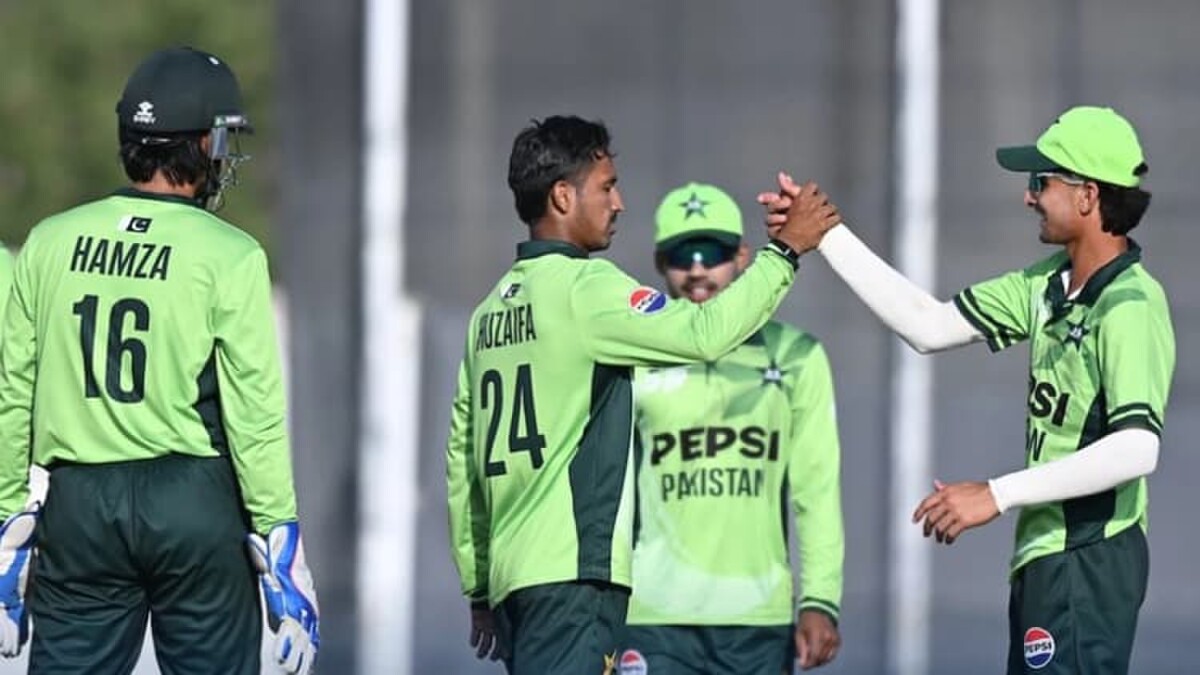
    Pakistan Under-19 registered a comprehensive 101-run victory over Nepal in the 12th match of the Asian Cricket Council Under-19 Asia Cup 2026 in Al Amerat on Tuesday.

    Pakistan posted 275 for seven in 50 overs after being asked to bat, with Ahmed Hussain and captain Farhan Yousaf scoring half-centuries.

    Ahmed led the batting with 89 off 73 balls, striking seven fours and two sixes. Farhan made 74 off 95 deliveries, including six fours and three sixes.

    Hasnain Abbas Dar added a quick 25 off 23 balls, while Jahangir Bilal scored 22.

    Nepal’s Bipin Sharma claimed three wickets for 58 runs, while Sushil Rawal took two wickets.

    Chasing 276, Nepal struggled to build partnerships and were dismissed for 174 in 43.4 overs.

    Rohit Chand scored 37 off 54 balls, while Niraj Kumar Yadav made 29. Abhay Yadav chipped in with 23 off 16 deliveries.

    Ahmed Hussain delivered an outstanding all-round performance, taking four wickets for 35 runs to finish with match figures of 89 runs and four wickets.

    Mohammad Huzaifa and Mohammad Sayyam also claimed two wickets each as Pakistan bowled Nepal out to seal a convincing victory.

    Source: brecorder

  • Yemen’s Houthis deny attacking East-West pipeline in Medina

    Yemen’s Houthis deny attacking East-West pipeline in Medina

    Yemen’s Houthis on Tuesday denied attacking Saudi Arabia’s vital East-West pipeline in the Medina region, saying they attacked the pipeline in the capital Riyadh.

    On Monday, a Saudi Energy Ministry source said the pipeline was attacked in the Medina region and that operations were not affected, according to state media.

    Source: brecorder

  • Rupee records gain against US dollar

    Rupee records gain against US dollar

    The Pakistani rupee continued its marginal gain against the US dollar in the inter-bank market on Tuesday.

    The local unit closed the day at 276.65, a gain of Re0.01 against the greenback.

    During the previous week, the Pakistani rupee extended its marginal gain against the US dollar, appreciating 0.03% in the inter-bank market. The local unit closed at 276.66 against the greenback, a gain of Re0.09 from 276.75 it had closed at a week earlier, according to State Bank of Pakistan (SBP) data.

    Internationally, the US dollar found support following a bumpy few days and held firm in Tuesday’s Asia session while ​traders waited for US inflation data, which could push it higher if it bolsters rate hike bets.

    A tumble ‌in oil prices and gains overnight for stocks had knocked the dollar lower as investors rotated back into riskier assets.

    The trade and sentiment-sensitive Australian dollar rose by nearly 1% through Monday to sit at $0.6921 early on Tuesday and the New Zealand dollar rose even further ​to trade at $0.5624, with both steady in morning Asia trade.

    The euro jumped 0.7% overnight to $1.1220, reversing a Friday ​fall when strong US jobs data lifted the dollar and interest rate expectations, and putting ⁠the euro/dollar pair roughly into the middle of a range it has held for a month.

    The market is long ​dollars, and the dollar index has gained this year as early expectations for US interest rate cuts quickly turned to ​bets on hikes after the US-Israeli war on Iran drove up energy prices and fuelled inflation.

    A blowout October jobs report on Friday, with hiring more than twice forecasts, has markets pricing an 85% chance of a Federal Reserve rate increase next month.

    Oil prices, a key indicator of currency parity, fell on Tuesday, adding to the previous day’s losses after US President Donald Trump downplayed the need for military action against Iran “at this point”, easing fears of sustained supply disruptions in the Middle East.

    Brent crude futures declined 70 cents, or 0.75%, to $91.88 a barrel by 0246 GMT, while US West Texas Intermediate (WTI) futures fell 78 cents, or 0.90%, to $86.07 a barrel.

    Both benchmarks had fallen 1% earlier in the session.

    Source: brecorder