Author: Theph

  • ASEAN countries need up to $7.1 trillion for infrastructure but face funding gap, ADB says

    ASEAN countries need up to $7.1 trillion for infrastructure but face funding gap, ADB says

    MANILA: Southeast Asia’s economies need $7.1 trillion in infrastructure investments through 2040 ​but the region faces a huge ‌funding gap, the Asian Development Bank said in a new report published on Tuesday.

    ADB ​has updated its assessment of ​the Association of Southeast Asian Nations’ ⁠infrastructure needs from almost a decade ​ago, more than doubling the region’s investment ​requirements for the next 15 years, from the $3.15 trillion estimate for the 2016-2030 period.

    Governments should ​prioritize projects that improve transportation, ​electricity and health, the bank said.

    ASEAN governments’ current ‌spending ⁠could cover 45% of the infrastructure needs, leaving a shortfall of almost $4 trillion.

    Nehal calls for stronger cooperation among ASEAN nations

    Private capital is also limited, and ADB ​said the ​funding ⁠gap can only narrow if public money is used in ​ways that draw private capital ​and ⁠under predictable terms.

    Half of the investment requirements are for electricity, while a third ⁠of ​the region’s needs are ​for improving transportation, roads, airports and rail systems.

    Source: brecorder

  • Two years in, women leaving top roles in Trump admin

    Two years in, women leaving top roles in Trump admin

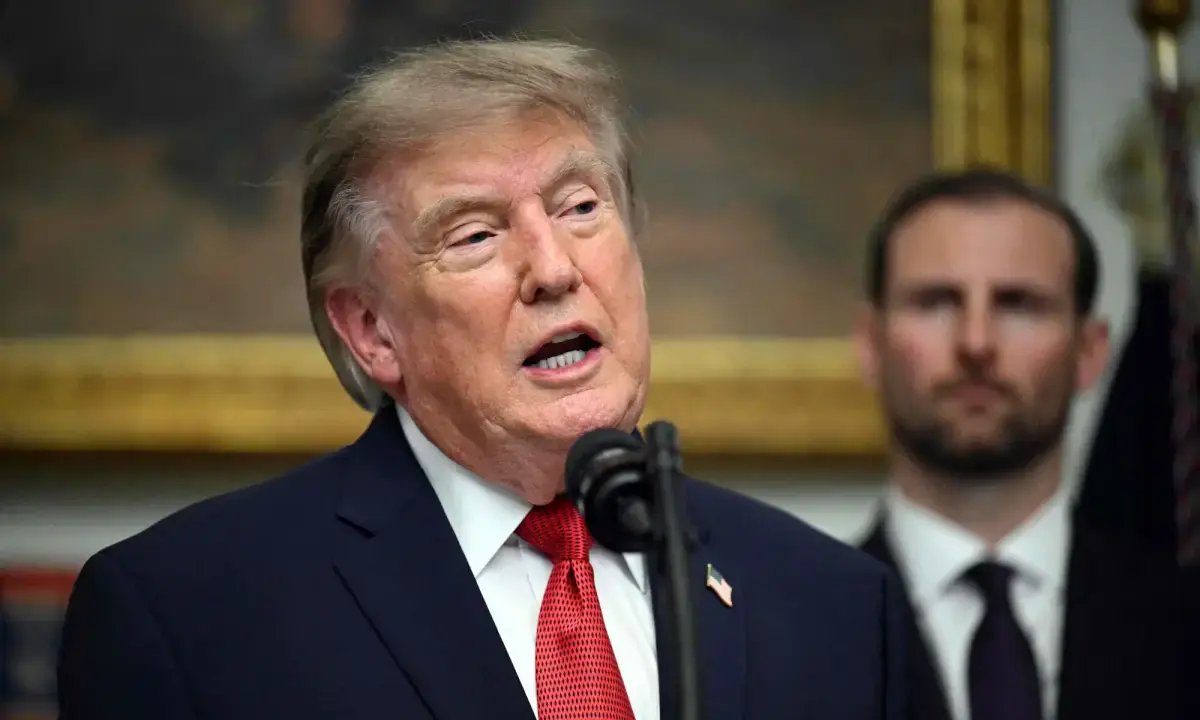
    The abrupt exit of White House Chief of Staff Susie Wiles, one day after Republicans were stomped in midterm elections, adds her to a growing list of women who have departed top roles in President Donald Trump’s administration since the year began.

    At the beginning of his second term, the 80-year-old Republican boasted that he was “thrilled to say that we have more women in our cabinet than any Republican president in the history of our country.”

    At that point, there were eight women in top roles, out of more than 20 such positions.

    Eighteen months later, there are only three left: Agriculture Secretary Brooke Rollins, Education Secretary Linda McMahon and Kelly Loeffler, who heads the Small Business Administration.

    Half the women were pushed out over three months in the spring.

    First went Homeland Security Secretary Kristi Noem, who became the face of Trump’s violent anti-immigration offensive.

    She was followed by Trump’s top federal prosecutor Pam Bondi, Labor Secretary Lori Chavez-DeRemer and Tulsi Gabbard, director of national intelligence.

    Most recently, one day after Republicans lost in the midterms, Wiles announced her departure.

    Double standard

    “Is he out of women?” Democrat Alexandria Ocasio-Cortez said last spring, after being asked who would be next to meet that fate.

    “Trump only seems to have the capability to fire female secretaries,” the congresswoman said, adding: “If you’re a man in the Trump administration, it seems that they reward misconduct.”

    For Trump, a former beauty pageant organiser, women are about appearances, Colorado State University professor Karrin Vasby Anderson told AFP.

    “Trump hires and appoints women who he thinks will make him look good. The minute they don’t, they are gone,” she said.

    “He continues to defend (Defense Secretary) Pete Hegseth, despite the fact that nearly everyone agrees that the Iran war has been a catastrophe,” Anderson said.

    “I think it’s telling that the men he defends most vociferously are those who promote a particular kind of sexist MAGA masculinity. It’s clear that Trump feels comfortable surrounding himself with that type of man.”

    Trump has stood by men in his administration despite national outcry against chief of staff Stephen Miller’s vocal support for the violent immigration policy and the taint of scandal dogging FBI Director Kash Patel over allegations of a taxpayer-funded slush fund to reward loyalists and other missteps.

    Male successors

    The only man not spared was Mike Waltz, who was removed from his post as national security adviser in May 2025 after he inadvertently added a journalist to a leadership discussion group where they chatted about US strikes in Yemen.

    But Waltz rebounded quickly and was appointed to be ambassador to the United Nations soon after.

    In every case where a woman was sidelined, a man invariably replaced her.
    Todd Blanche took over Bondi’s role at the Justice Department after working as Trump’s personal lawyer.

    And Wiles — the first woman to hold the strategic position of White House chief of staff — has just been replaced by hard-right ideologue Miller, a longtime Trump loyalist.

    Anderson said Wiles was a rare hire for Trump because she was recruited for her expertise.

    But after Democratic blue wave’s crushing victory in the midterm elections, the Republican president may think “Stephen Miller will defend Trump better than Susie Wiles would.”

    Trump, however, appears to be struggling to replace one prominent female face of his presidency: Karoline Leavitt, the youngest White House press secretary ever who left her post at the end of August.

    The president jokingly called on UFC chief Dana White to take on the role instead, but the fighting executive demurred on Monday, saying: “I do not want to be in politics. “

    Source: dawn

  • Trump nominates Natalie Baker as US ambassador to Pakistan

    Trump nominates Natalie Baker as US ambassador to Pakistan

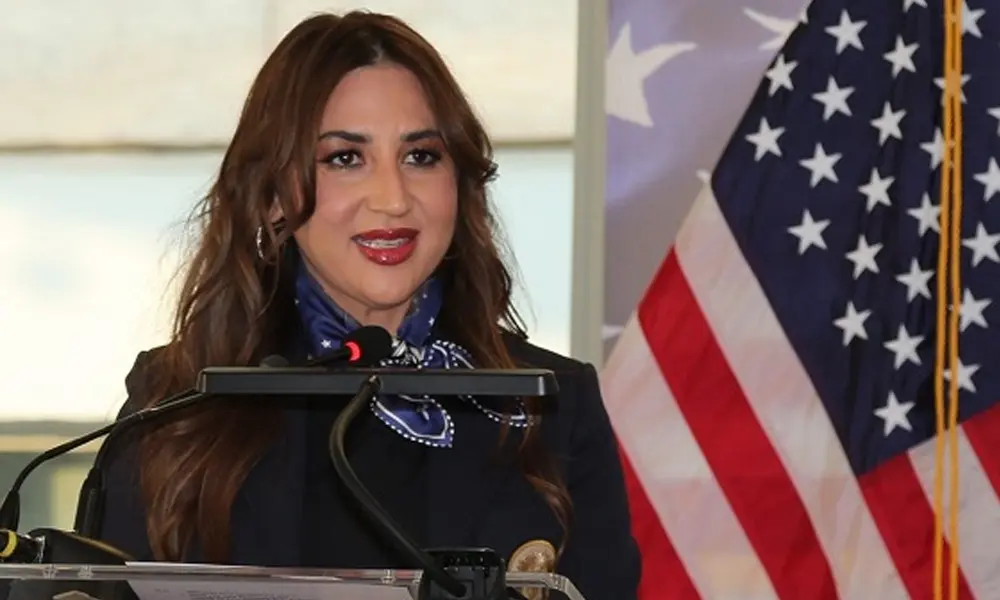
    US President Donald Trump has nominated career diplomat Natalie Baker to serve as Washington’s ambassador to Pakistan, sending her name to the Senate for consideration, according to a White House announcement.

    “Natalie Baker, of Texas, a career member of the Senior Foreign Service, Class of Minister-Counselor, to be Ambassador Extraordinary and Plenipotentiary of the United States of America to the Islamic Republic of Pakistan,” the White House said in an announcement dated November 9.

    Her nomination now requires Senate consideration and confirmation before she can formally assume the position.

    Baker’s nomination comes as Washington and Islamabad continue diplomatic engagement on trade, investment, security and regional issues.

    Donald Blome was the last diplomat to serve as the US Ambassador to Pakistan.

    She is currently serving as the US Chargé d’Affaires to Pakistan, holding the rank of Minister Counselor. She assumed the role of Deputy Chief of Mission (DCM) at the US Embassy in Islamabad on August 16, 2024.

    Aurangzeb, Baker discuss economic cooperation

    Prior to her current assignment in Islamabad, Baker served as Deputy Chief of Mission at the US Embassy in Doha, Qatar.

    Her previous roles include Director of the Office of North African Affairs in the US Department of State’s Bureau of Near Eastern Affairs, Deputy Chief and Chargé d’Affaires of the US Mission to Libya, Deputy Director of the Iran Regional Presence Office at the US Consulate in Dubai, and Economic Counselor at the US Embassy in Kuwait.

    In Kuwait, she collaborated with the Department of Defense to support the withdrawal of US forces from Iraq.

    As Chargé d’Affaires, Baker has been actively involved in strengthening US-Pakistan relations.

    Source: brecorder

  • PM Shehbaz to leave for Turkiye today, will address COP31 tomorrow

    PM Shehbaz to leave for Turkiye today, will address COP31 tomorrow

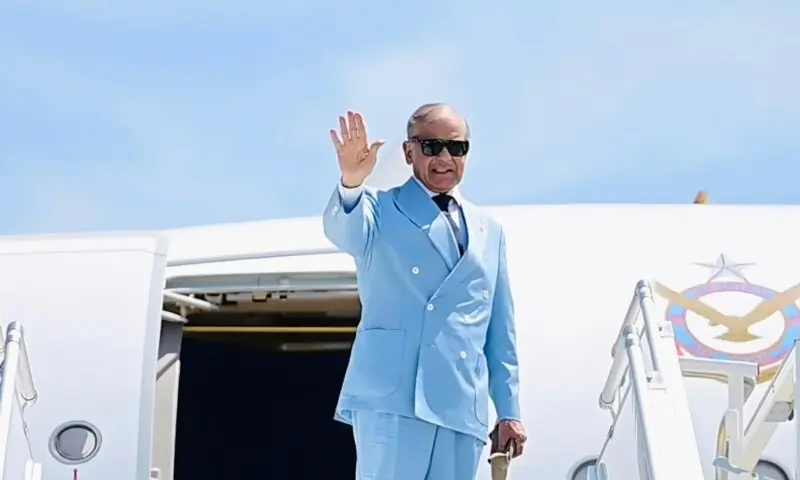
    Prime Minister Shehbaz Sharif will be undertaking a visit to Antalya in Turkiye from Nov 10-12 to participate in the Leaders’ Summit of the 31st Conference of the Parties (COP 31) to the United Nations Framework Convention on Climate Change (UNFCCC).

    According to the Foreign Office (FO), the premier will address the summit on Nov 11, during which he will urge the global community to take concrete actions to address the threat posed by climate change to the planet.

    He will highlight “Pakistan’s steps towards rapid solarisation and expansion of its renewable energy capacity, as part of its transition towards a cleaner and more resilient economy, along with its efforts to strengthen disaster preparedness and early-warning systems”, the FO statement said.

    The premier will also call for predictable, adequate and accessible climate finance for developing countries to strengthen their resilience and pursue sustainable development, it added.

    Moreover, the prime minister will attend a high-level roundtable meeting convened by the presidency of COP31 on the sidelines of the Leaders’ Summit, and hold bilateral meetings with the Turkish leadership as well as several other world leaders.

    “Prime minister’s participation in COP31 Leaders’ Summit is an expression of Pakistan’s strong support for the climate agenda, and will provide Pakistan with an opportunity to reaffirm its commitment towards working closely with the international community to address the climate crisis,” the FO statement said.

    The COP31 climate talks kicked off on Monday with an early fight over money as the UN’s chief urged world leaders to “get serious” about tackling the crisis after a year of devastating weather extremes.

    The summit comes after a year of punishing heatwaves in Europe, major wildfires in Indonesia and catastrophic floods in Nepal, with an exceptionally strong El Nino weather phenomenon fuelling more climate chaos.

    The COP31 opening ceremony opened an hour-and-a-half late without explanation.

    Negotiators had been locked in discussions late on Sunday over demands by developing nations to include items on climate finance in the official agenda.

    “This has already been a difficult start for COP31,” said Jasper Inventor, head of Greenpeace’s COP31 delegation.

    Under UN climate agreements, developed countries, which are historically responsible for most greenhouse gas emissions, have provided financial support to help developing nations adapt to climate impacts and transition to cleaner energy. But poorer countries say the sums remain insufficient.

    Inventor said developed countries were “taking a hard line” over whether to include a platform, agreed at COP30 in Brazil last year, aimed at discussing how wealthy nations should provide funds to developing nations.

    African countries are also pushing for the agenda to include discussions on the tripling of adaptation finance, which aims to help poorer nations pay for measures such as building sea walls or planting drought-resistant crops.

    But that point was not made a standalone agenda item.

    A senior European Union official warned last week that there would be “no political will” for extra funding pledges at COP31.

    Observers say few major breakthroughs are expected at COP31 as countries grapple with an oil price shock and geopolitical tensions fuelled by the US war on Iran and Russia’s conflict in Ukraine.

    As negotiators tussled in Antalya, the UN’s World Meteorological Organisation released a report indicating that 2026 has continued a streak of exceptional global temperatures, melting ice and rising sea levels.

    The EU’s climate monitor warned last week that 2026 would most likely be the second-hottest year ever recorded, while scientists say 2027 could top the chart, fuelled by El Nino.

    The long-term outlook is bleak: the UN warned in September that global temperatures were on course to exceed 1.5 degrees Celsius above preindustrial levels, breaching the most ambitious threshold set by the Paris Agreement.

    Source: dawn

  • Honey Traps: A spy’s oldest trick

    Honey Traps: A spy’s oldest trick

    AI, superchips and cyber warfare may be reshaping modern espionage, but some secrets are still won the old-fashioned way: through sex and scandal.

    The latest controversy to ripple through the tech world centres on Nvidia chief Jensen Huang and his affair with a woman accused by Washington of working for Chinese intelligence, a claim Beijing denies.

    The episode has thrust the “honey trap” back into the spotlight, reviving interest in an age-old spying tactic that turns attraction and intimacy into tools for stealing state secrets and influencing those in power.

    Seduction and blackmail

    History is packed with powerful politicians and insiders who found themselves ensnared by men and women tasked with winning their trust before extracting intelligence or gaining leverage.

    One of the most famous femme fatales in spy lore is Mata Hari, the Dutch exotic dancer executed in 1917 after being accused of spying for Germany during World War I.

    The Cold War also produced a long list of similarly colourful cases.

    In France, ambassador Maurice Dejean was recalled from Moscow in 1964 after an extramarital affair, said Clement Renault, a researcher at France’s Institute for Strategic Research (IRSEM).

    The scandal created one of former president Charles de Gaulle’s most memorable put-downs: “Alors Dejean, on couche?” (“So, Dejean, sleeping around?”).

    Another famous case, Renault said, involved the Soviet KGB blackmailing British embassy employee John Vassall with “intimate photos revealing his homosexuality, taken in Moscow”.

    In the 1980s, Israeli whistleblower Mordechai Vanunu, who revealed details of Israel’s secret nuclear programme, was lured into the hands of his kidnappers by a woman known as “Cindy”.

    She “persuaded him to join her in Rome, where he was abducted by the Mossad and taken back to Israel,” Renault explained.

    Other honey traps ran for years.

    In the 1960s, Chinese opera singer Shi Pei Pu, secretly working for Chinese intelligence, began a two-decade affair with French diplomat Bernard Boursicot, who handed over sensitive information.

    Not so glamorous

    The honey trap can take many forms.

    Some seducers are trained professionals, like East Germany’s famed “Romeo Spies” whose mission was to romance lonely West German women and gain access to important information.

    “With the shortage of eligible men — another consequence of the war (WWII) — single West German women, eager for male companionship, became frequent targets for East German male spies,” the CIA later said in a study.

    Not every honey trap looks like something out of a Hollywood film.

    Intelligence services have also used sex workers, business executives and well-connected individuals who already move in the target’s world.

    That is what makes the Nvidia allegations so intriguing.

    Alice Huang, the woman involved in the affair, “held a senior role at Megaspeed, a Singaporean firm specialising in AI computing infrastructure” that did business with Nvidia, Renault said.

    “She was allegedly recruited by (China’s) state security ministry as an agent, perfectly placed to make contact (with Jensen Huang),” Renault said.

    “What is interesting here is that a key figure in the ‘AI war’ could be caught in a relatively classic operation.” Some cases are not so subtle.

    A former member of a French security service recalled being contacted by a woman from South America who claimed she was a journalist seeking an interview with a senior security official.

    “I met her twice,” he told AFP.

    “Each time she was evasive about her work as a journalist and what the interview was actually about. But she kept telling me her marriage was unhappy and showing me photos of herself in lingerie.”

    Too good to be true

    Who deploys honey traps? According to Renault, the short answer is almost everyone.

    “Potentially all intelligence services can resort to ‘compromise’ operations and similar methods,” Renault said.

    But not all states are equally equipped to run them.

    “These missions require an extremely high level of personal and physical commitment from agents”, Renault noted.

    So authoritarian governments, he argued, “which can exert greater pressure on their citizens or are driven by strong ideologies”, may be better positioned to ask agents to make such sacrifices.

    Counter-intelligence agencies regularly warn officials that espionage rarely begins with a dramatic exchange in a dark alley.

    France’s domestic service has released a YouTube video titled: “Trapped by a foreign intelligence agency. It’s never too late to get help.” British authorities offer simpler advice.

    If someone’s interest in you seems unusually intense or “too good to be true”, then “you should be cautious”.

    Source: dawn
  • Tech lifts China, HK shares amid risk-on mood

    Tech lifts China, HK shares amid risk-on mood

    SHANGHAI: China and Hong Kong stocks rose on Tuesday, led by AI supply chain shares, as an overnight equity rally on Wall Street and sliding oil prices lifted risk sentiment across Asia.

    China’s blue-chip CSI300 Index and the Shanghai Composite Index both edged up 0.1% by the lunch break. Hong Kong benchmark Hang Seng was up 0.2%.

    Chip supply chain shares across Asia climbed, tracking an overnight rally on Wall Street that saw the Nasdaq jump 2.7%.

    The 5G Communication Index rose 2.7%, leading gains onshore, while the tech-focused STAR50 Index was up 1%.

    Hong Kong-listed shares of optical communication giant Zhongji Innolight jumped 10%.

    Tech majors listed in Hong Kong were up 0.5%.

    Wuxi AppTec shares rose as much as 5% before paring gains, after the Pentagon removed the Chinese biotechnology company from its list of Chinese military companies.

    Non-ferrous metal shares edged up 0.5% as gold prices rebounded this month on falling oil prices. The CSI Energy Index fell 2.2%, with PetroChina down 5.2%.

    China’s trade surplus surged past $1 trillion in the first 10 months as a global race to build AI infrastructure buoyed sales of high-tech products and helped offset weak domestic demand, a dynamic likely to sharpen tensions with major trading partners.

    Chinese chip firms Suzhou Denglin Technology and Jiangsu Xinde Semiconductor Technology made mixed Hong Kong trading debuts on Tuesday after raising a combined HK$2.36 billion ($301 million) in initial public offerings.‑Reuters

    Source: brecorder

  • Hormuz LNG traffic hits highest in October since Iran war began

    Hormuz LNG traffic hits highest in October since Iran war began

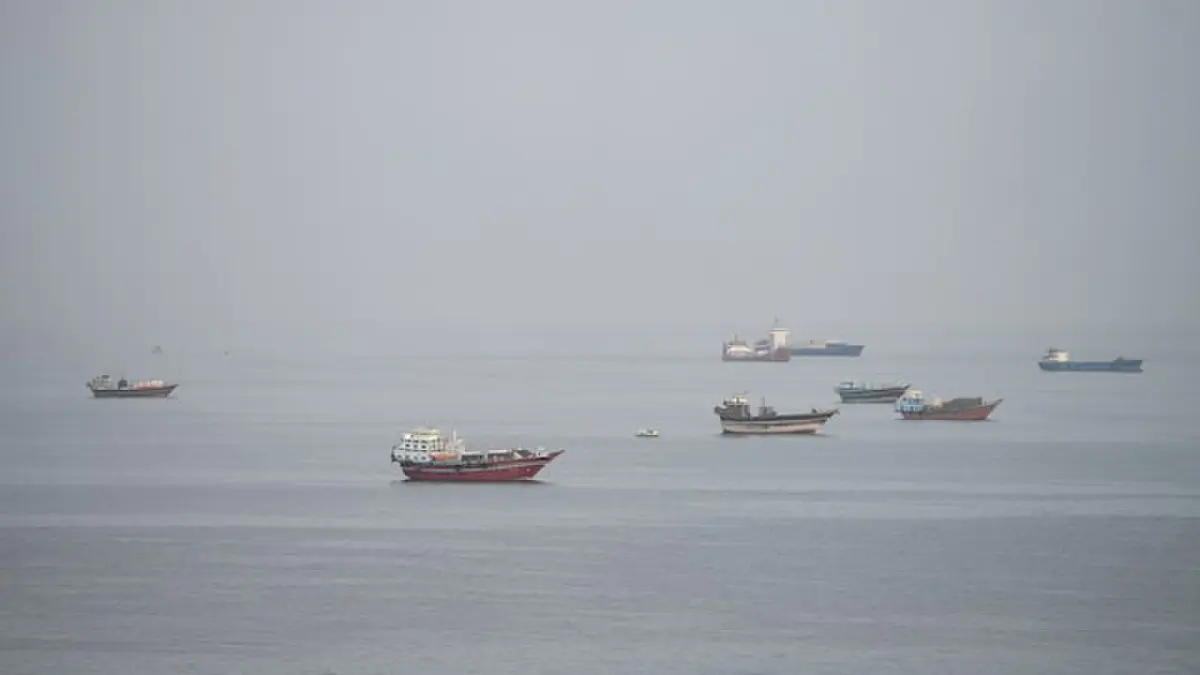
    SINGAPORE: The monthly tally of laden liquefied natural gas (LNG) tankers exiting the Strait of Hormuz reached its highest in October since the US-Iran conflict disrupted shipping this year, vessel tracking data showed.

    Last month, 31 LNG tankers went through the key waterway, according to data from S&P Global Energy, of which 23 were loaded at Ras Laffan in Qatar and eight at Das Island in the United Arab Emirates.

    October exports were the highest since February when the war started and were up from September’s corresponding tally of 23 vessels exiting the strait, the data showed.

    “We are looking at UAE back to pre-war transit levels and Qatar at over 30% of pre-war Hormuz transits,” said Eric Yep, a senior principal analyst at S&P Global Energy.

    Saudi-led coalition says it intercepts two Houthi missiles fired towards Riyadh

    Kpler’s shiptracking data showed 42 LNG cargoes were loaded in October, up from 27 in September.

    The changes come as Ras Laffan’s October loadings reached 35 cargoes, surpassing 2.7 million tons, the highest since the war started, according to Kpler data.

    Qatar exported nearly 6.2 million tons in February.

    Two of the vessels carrying LNG from Ras Laffan that exited the strait subsequently conducted ship-to-ship (STS) transfers off the coast of Oman’s Sohar anchorage, Kpler data showed.

    The SC Prestige transferred LNG to the BW ENN Crystal Sky, which is now bound for South Korea.

    The Al Mafyar moved its LNG to Shandong Redwood and Ejnan, both of which delivered the cargoes to Pakistan.

    Das Island exports held steady at seven loadings in October, flat with September, Kpler data showed.‑Reuters

    Source: brecorder

  • PTPA presses player fatigue concerns after Rybakina’s WTA Finals withdrawal

    PTPA presses player fatigue concerns after Rybakina’s WTA Finals withdrawal

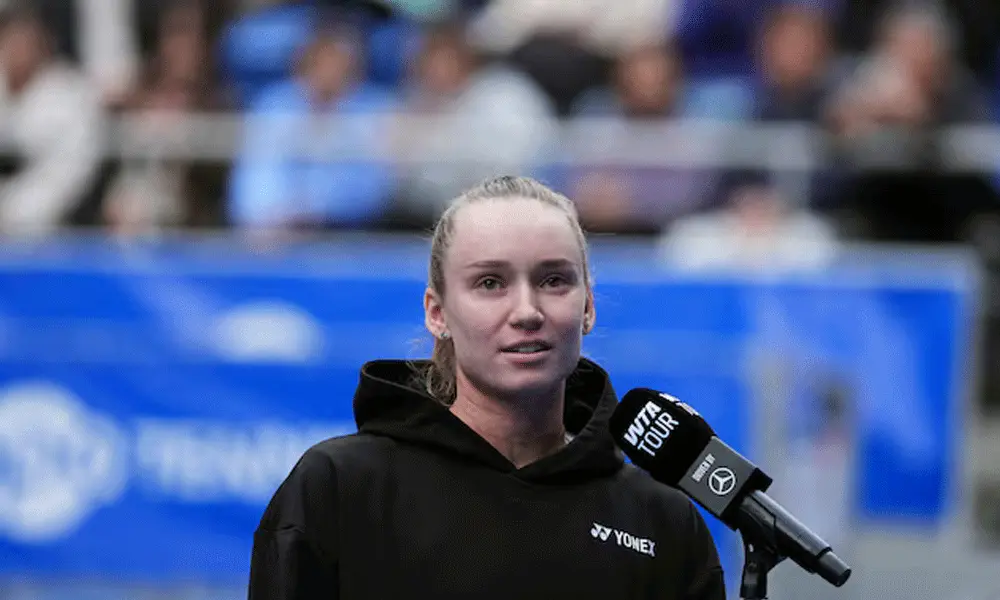
    The Professional Tennis Players Association (PTPA) reiterated its criticism of the tennis schedule on Monday, saying world number one Elena Rybakina withdrew from the season-ending WTA Finals as “her body had nothing left to give”.

    Defending champion Rybakina said on Saturday she was not physically ready to compete at the tournament, with organizers citing a viral illness for the Kazakh’s withdrawal.

    Rybakina, who won two Grand Slam titles this year, also withdrew from the Tokyo quarter-finals last month because of a neck injury.

    “She finishes 2026 with two Grand Slam titles and four titles overall. And still, by the season’s final event in November, her body had nothing left to give,” the PTPA said in a post on social media.

    “Players shouldn’t reach the biggest event of the year running on empty. The PTPA continues to push for a season that leaves players healthy enough to finish it.”

    The WTA Tour did not immediately respond to a Reuters request for comment.

    The elite women’s tour has previously said athlete welfare is a top priority and that it has listened to players’ views on the calendar.

    Concerns over player workload are echoed on the men’s ATP Tour, with American Taylor Fritz saying on Sunday that the sport’s brief off-season left players with little opportunity to recover.

    “It’s just so year-round, round-the-clock,” he said on “The Running Interview Show”.

    “We have a one-month off-season and, if you take that off-season off, you’d be showing up without practice at the beginning of the year.

    “So, essentially, you can only really take, max, two weeks off, and then you have to be training. So we essentially get no time off ever. You are literally living out of a suitcase.”

    The ATP has said players retain choices over their schedules and that it is working to create incentives for an appropriate number of matches to be played during the season.

    Source: brecorder

  • PSX: stocks surge, KSE-100 up nearly 3,300 points

    PSX: stocks surge, KSE-100 up nearly 3,300 points

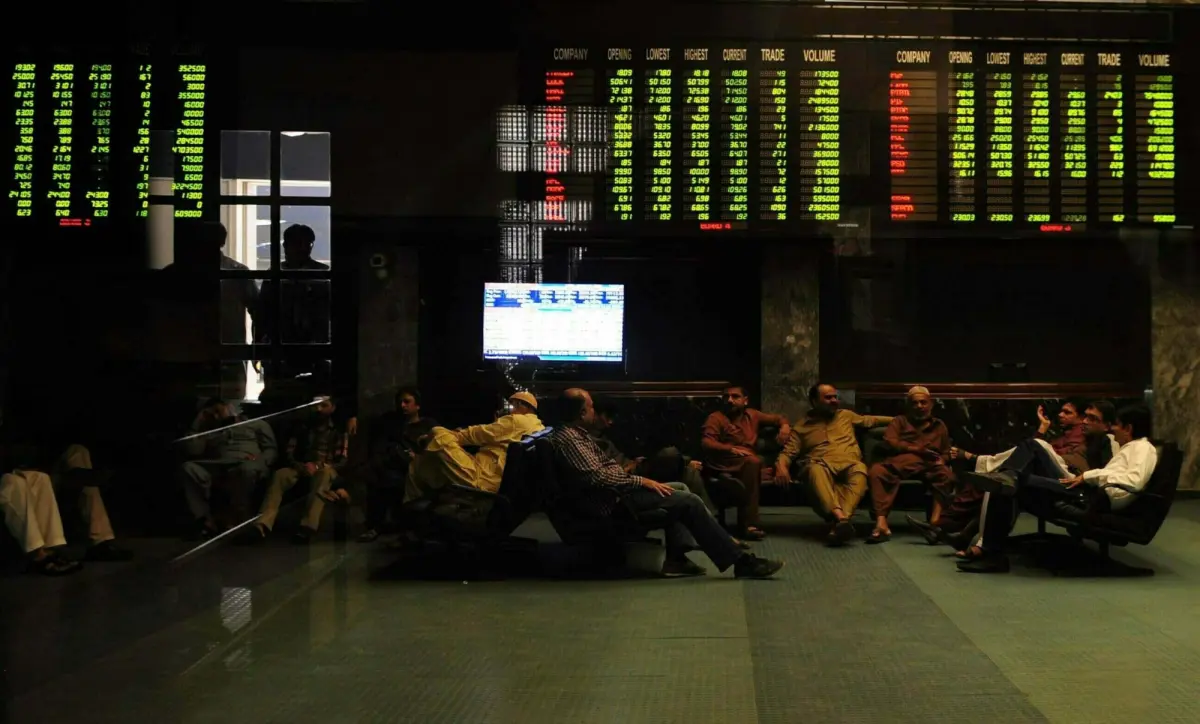
    Buying returned at the Pakistan Stock Exchange (PSX) after US President Donald Trump said US military action against Iran ​is not necessary “at this point”, with the benchmark KSE-100 gaining nearly 3,300 points during the opening minutes of trading on Tuesday.

    At 9:45am, the benchmark index was hovering at 177,168.09, up 3,281.41 points or 1.89%.

    Buying was observed in key sectors, including automobile assemblers, cement, commercial banks, oil and gas exploration companies, OMCs and power generation. Index-heavy stocks, including MARI, OGDC, PPL, PSO, HUBCO, HBL, MCB, MEBL and UBL, traded in the green.

    The PSX recorded its strongest weekly rally in nearly six months, with the benchmark KSE-100 Index surging 7,477.44 points, or 4.5% week-on-week, to close at 173,886.69 points.

    Globally, Asian stocks rose on Tuesday as a drop in oil prices after US President Donald Trump said he plans to hold off on new military strikes ​against Iran lifted sentiment ahead of US inflation data that could sway the near-term interest rate outlook.

    Brent crude futures were hovering at their lowest ‌levels since early September, well below $100 per barrel, as investors pinned their hopes on possible talks between US and Iran.

    They were last down 1% at $91.56 a barrel.

    The US-Israeli war with Iran, which erupted at the end of February, has stoked inflationary concerns across the globe, spurring major central banks to raise rates in recent months.

    Nick Twidale, chief market strategist at ATFX Global, said the latest ​developments offered hope that an end to the conflict could be approaching, but there was still a considerable gap between diplomacy and a lasting ​peace agreement.

    The slump in oil prices eased inflation worries and helped lift stocks after last ​week’s rout as a sweeping victory by Democrats in the US midterm elections fed concerns that new regulations could dent the durability of the AI trade.

    South Korea’s ​KOSPI rose over 5%, while Japan’s Nikkei gained about 3% in early trading. MSCI’s broadest index of Asia-Pacific shares pushed 1.5% higher, moving away from the seven-month low it hit last week.

    On Monday, the S&P 500 clocked its biggest one-day jump since April, closing up 2.35% while the Nasdaq closed 2.7% higher, its best day in over four months.

    Earnings ​reports due this week from tech companies including CoreWeave, a barometer of investor anxiety over AI, will be another test for markets as investors fret about the cost of the ‌AI buildout.

    This is an intraday update

    Source: brecorder

  • Anthropic unveils new Fable, Mythos models as competition heats up ahead of IPO

    Anthropic unveils new Fable, Mythos models as competition heats up ahead of IPO

    Anthropic on Monday unveiled two new artificial intelligence models, Claude Fable 5.2 and Claude Mythos 5.2, as the OpenAI rival seeks to strengthen its position in the fast-growing AI market ahead of its planned initial public offering (IPO).

    The company said Claude Fable 5.2 was designed for coding, reasoning and AI agent tasks, while Claude Mythos 5.2 was developed for approved cybersecurity and life-sciences research applications.

    Access to Claude Mythos 5.2 will be restricted to organisations approved through Anthropic’s verification programmes for cybersecurity and life-sciences research, while Claude Fable 5.2 will be available more broadly, the company said.

    Anthropic said the new models could generate outputs up to 30 per cent faster than their Claude 5.1 predecessors and communicate more clearly with users.

    The models are priced at $8 per million input tokens and $40 per million output tokens, lower than the prices of previous Fable and Mythos releases, according to the company.

    The launch follows Anthropic’s introduction of Claude Haiku 5.5 in October, as the AI startup expands its product portfolio ahead of a planned IPO.

    Competition in the artificial intelligence industry has intensified, with OpenAI, Alphabet’s Google and Meta Platforms rolling out new models focused on coding, reasoning and AI agents to attract developers and enterprise customers.

    Source: dawn