Author: Theph

  • Trump says Nvidia CEO Huang had ‘no idea’ lover was alleged Chinese spy

    Trump says Nvidia CEO Huang had ‘no idea’ lover was alleged Chinese spy

    US President Donald Trump took a tech tone towards Jensen Huang on Monday, saying the Nvidia CEO was “suffering greatly” and didn’t know a woman he had an affair with was an alleged Chinese spy.

    Trump also danced around the question of when he personally was aware of intelligence linking the chip boss to Alice Huang, a Chinese executive who had allegedly been funnelling information to Beijing.

    The US leader said he had spoken to Huang earlier on Monday “to see if he’s feeling alright,” calling the Taiwanese-born tech boss an “amazing guy”.

    “I asked him that question, ‘did you have any idea that she was a spy?’ He said, ‘I had no idea that she was a spy,’ and I really believe him,” Trump told reporters at the White House.

    He added: “I hope there is no problem. I believe he is suffering greatly … more so because of his family, his wife, who he loves, and his family. But he’s definitely suffering.”

    Jensen Huang sent a message to Nvidia employees on Sunday in which he acknowledged having an affair and apologised to both his family and company staff.

    Trump said he was not aware of the allegations when Huang accompanied him to China in May. Huang is a key figure in the AI revolution and close to the US president.

    “No, I didn’t hear about it then. But a lot of people have heard about it,” Trump said.

    Huang has also attended numerous White House events, including a state visit by Chinese President Xi Jinping in September.

    But Trump would not specify when he was told.

    “Not too long ago. We’ll look into it, I know the FBI is looking into it in terms of something else, and I think he’ll be in good shape,” Trump said.

    Asked by AFP to clarify the president’s remark as to whether there is an investigation into Huang under way, the FBI declined comment Monday.

    Source: dawn

  • Matric exams postponed in North Waziristan due to security situation

    Matric exams postponed in North Waziristan due to security situation

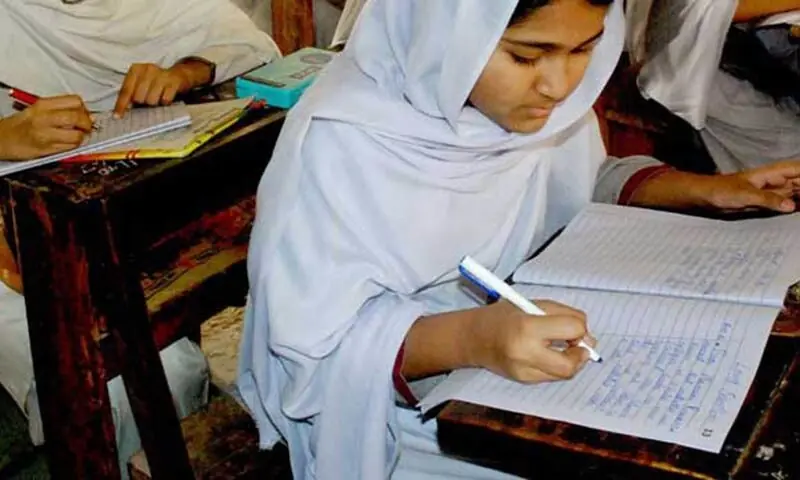
    BANNU: The Board of Intermediate and Secondary Education (BISE), Bannu, has postponed the Secondary School Certificate Second Annual Examination in North Waziristan due to the security situation while a curfew has also been imposed in the district’s Mir Ali area.

    The postponement of the exams was announced in a press release by the BISE on Nov 9, following the North Waziristan deputy commissioner’s instructions.

    A revised schedule for the examinations would be announced later, the press release said, adding that examinations at centres set up at Cadet College Razmak and in Bakakhel tehsil would be held as per schedule.

    In North Waziristan, this is the second time that these exams — scheduled to start on October 12 — have been postponed. They were initially postponed last month, not just in North Waziristan but also in Bannu, Lakki Marwat.

    Meanwhile, a curfew was imposed in areas from Bobali and Mir Ali up to Isha, an official statement by the district administration said. The curfew would remain in place until the completion of an ongoing security operation in these areas.

    The Bannu-Miranshah Road will also remain closed for traffic during this period.

    Area Representative and Development Council member Malik Rohullah Khan said the general officer commanding north had issued instructions for the curfew. However, he added, residents had been allowed to visit markets for the purchase of essential daily-use items in Miranshah and Datta Khel on his request.

    He further stated that residents wishing to travel outside North Waziristan could use the Miranshah, Isha and Razmak routes.

    Khyber Pakhtunkhwa, including North Waziristan, has been facing security challenges for a long time.

    Security forces conducted an intelligence-based operation in Muzak village, on the southern outskirts of Mir Ali on Monday and neutralised two terrorist hideouts, the military’s media wing said the previous day.

    According to the Inter-Services Public Relations, security forces recovered a huge cache of prepared improvised explosive devices, explosive preparation material, weapons, and ammunition from hideouts, which were established inside mosques.

    On Oct 8, the state media reported that the troops had killed nine terrorists in another IBO in North Waziristan.

    According to statistics released by the Islamabad-based Pakistan Institute for Conflict and Security Studies, KP recorded 40 terrorist attacks in October, compared with 58 in September, representing a decline of 31pc. Fatalities from these attacks decreased from 90 to 38, a reduction of approximately 58pc, while injuries fell from 165 to 19, an improvement of 88pc.

    As per the report, the erstwhile Fata region experienced a comparatively modest decline in terrorist violence. The think tank recorded 30 attacks during October, compared with 34 in September, a reduction of 12pc.

    Source: dawn

  • Why Russia lost its seat and the G7 lost its innocence

    Why Russia lost its seat and the G7 lost its innocence

    The 52nd G7 Summit, held in Évian-les-Bains, France (June 15-17, 2026), revived a question that continues to resonate in contemporary diplomacy: whatever happened to the G8? For nearly two decades, Russia sat alongside the world’s leading industrial democracies, transforming the Group of Seven into the Group of Eight. Since 2014, however, Russia has been absent from the forum. Its departure was not merely an act of diplomatic exclusion. It became a telling illustration of how power, rather than principle, often determines who remains at the top table of global governance.

    More than a century ago, Winston Churchill observed: “The story of the human race is war. Except for brief and precarious interludes there has never been peace in the world; and long before history began murderous strife was universal and unending.” Though spoken in 1900, the remark remains strikingly relevant. International institutions frequently proclaim universal values, yet history suggests that those values are often interpreted through the lens of geopolitical interests. Russia’s removal from the G8 illustrates this uncomfortable reality.

    The origins of the G7 date back to 1975 when the leaders of France, West Germany, Italy, Japan, the United Kingdom and the United States met in Rambouillet to confront economic turmoil triggered by oil shocks and stagflation. Canada joined a year later, creating the G7. Over time, what began as an economic coordination forum evolved into an influential political club embodying Western power and influence.

    The end of the Cold War appeared to offer a historic opportunity to bridge old divides. With ideological confrontation seemingly over, Western leaders sought to integrate Russia into the emerging international order. After years of participation, Moscow became a full member in 1997, transforming the G7 into the G8. Russia’s admission was not based on economic parity alone. It reflected a strategic effort to anchor Russia within a cooperative Euro-Atlantic framework.

    For a time, the experiment seemed successful. Russia gained prestige and influence, while Western governments anticipated greater political and economic convergence. The G8 symbolised the hope that Cold War rivalries could be replaced by partnership and dialogue.

    Yet fundamental differences persisted. Russia viewed itself as an independent great power with legitimate security interests, while Western capitals increasingly promoted a rules-based order largely defined by Western institutions and norms. As long as relations remained cooperative, these contradictions were manageable. When geopolitical competition returned, they became irreconcilable.

    The breaking point came in 2014 during the Ukraine crisis. Following the political upheaval in Kyiv and the removal of President Viktor Yanukovych, Russia moved swiftly to secure Crimea, home to its Black Sea Fleet and a predominantly Russian-speaking population. A referendum followed, after which Moscow incorporated Crimea into the Russian Federation. Ukraine and most Western governments denounced the move as illegal and a violation of sovereignty.

    The response was immediate. The United States, Canada, Britain, France, Germany, Italy and Japan cancelled the planned G8 summit in Sochi and reconvened as the G7 in Brussels. Although the G8 possessed neither a formal charter nor an expulsion mechanism, Russia was effectively shown the door. The political outcome was unmistakable: the G8 ceased to exist.

    Yet a troubling question remains. Was Russia excluded because it violated international norms, or because it challenged a Western-led geopolitical order? If the G7 is truly a guardian of international law, its standards should apply equally to all. If those standards are enforced selectively, the issue becomes one of power rather than principle.

    Critics point to precisely this inconsistency. The United States and its allies have repeatedly undertaken military interventions and coercive campaigns without facing comparable consequences. The 1989 invasion of Panama removed General Manuel Noriega by force. NATO’s intervention in Kosovo proceeded without explicit United Nations Security Council authorisation. The 2003 invasion of Iraq, justified by claims later found wanting, destabilised an entire region and inflicted immense human suffering.

    Similarly, decades of sanctions on Iran have imposed severe hardship on ordinary citizens while producing little lasting reconciliation. Venezuela has faced persistent economic and diplomatic pressure aimed at weakening and isolating its government. Yet none of these actions prompted calls for suspension from the G7. No emergency summit declared such conduct incompatible with international norms. No membership was questioned.

    One need not endorse Russia’s actions in Crimea to recognise the contradiction. If intervention, regime change and violations of sovereignty justify exclusion, consistency requires equal scrutiny of all major powers. Instead, the impression conveyed to much of the world is that friends are accommodated while rivals are punished.

    This perception has steadily eroded the moral authority of Western-led institutions. Across Asia, Africa, Latin America and the Middle East, many governments view the so-called rules-based order with growing scepticism. Their concern is not the existence of rules, but the unequal manner in which those rules are applied.

    The world of 2026 is no longer the world of 1975. China has emerged as a superpower, India has become a pivotal global actor, and nations across the Global South increasingly demand a greater voice in international affairs. Alternative forums and partnerships are gaining traction, challenging institutions that once claimed unquestioned legitimacy.

    Russia’s removal from the G8 was therefore about far more than Crimea. It marked the collapse of the post-Cold War vision that Russia could be integrated into a Western-led order on Western terms. More importantly, it exposed a reality long suspected by many: elite international forums are not neutral arbiters of global conduct but political institutions shaped by the interests of their most powerful members.

    Churchill’s observation remains as pertinent today as it was over a century ago. Great-power rivalry has not disappeared; it has merely assumed new forms. The enduring lesson of Russia’s exit from the G8 is that institutions derive authority not merely from power but from legitimacy. When principles are applied selectively, legitimacy erodes. And when legitimacy erodes, even the world’s most exclusive clubs begin to lose their claim to moral authority.

    Source: brecorder

  • Govt approves board changes at HESCO, SEPCO & NESPAK

    Govt approves board changes at HESCO, SEPCO & NESPAK

    The government has approved changes to the boards of three state-owned enterprises (SOEs), including the reconstitution of the boards of Hyderabad Electric Supply Company (HESCO) and Sukkur Electric Power Company (SEPCO), and the appointment of a chairman/independent director at National Engineering Services Pakistan (NESPAK).

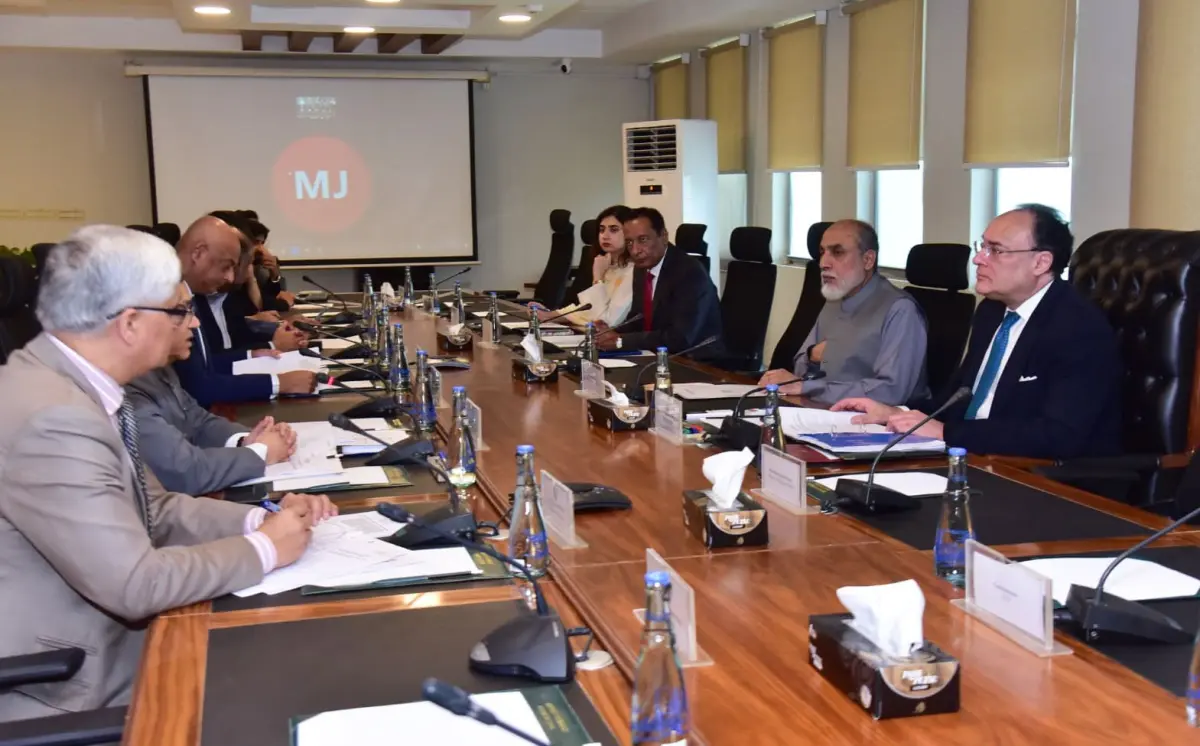
    The development came during a meeting of the Cabinet Committee on State-Owned Enterprises (CCoSOEs) held on Tuesday under the chairmanship of Federal Minister for Finance and Revenue, Senator Muhammad Aurangzeb, read a statement released by the Finance Division.

    The CCoSOEs considered two agenda items concerning the appointment of the chairman/independent director of NESPAK, and the reconstitution of the Board of Directors of HESCO, alongside the appointment of an independent director on the Board of Sukkur Electric Power Company (SEPCO). After deliberations, both proposals were approved.

    The finance minister emphasised that government representatives serving as ex-officio directors on these boards should be appropriately placed, competent and possess the requisite experience and institutional understanding to effectively represent their respective divisions.

    Source: brecorder

  • Beyond the order: the logistics behind Pakistan’s export ambitions

    Beyond the order: the logistics behind Pakistan’s export ambitions

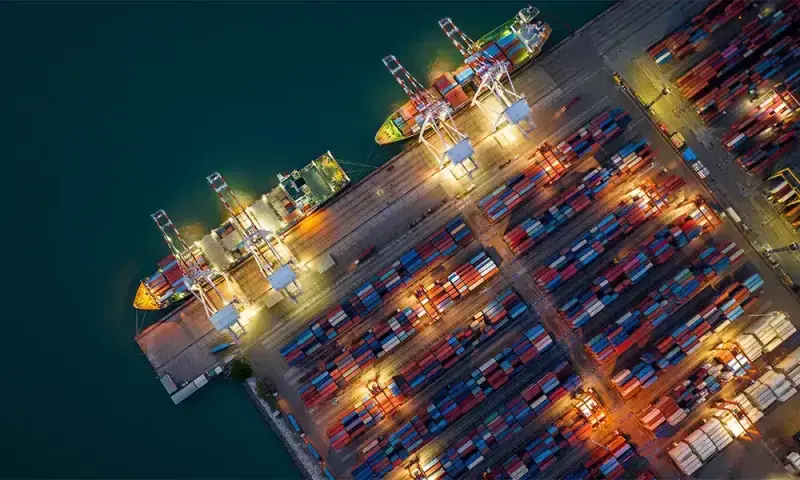
    For a Pakistani business looking to sell overseas, securing an international customer is only the beginning. Getting products across borders at a competitive price, navigating customs, managing payments and handling returns can determine whether an export order becomes profitable or an expensive exercise.

    These challenges are pronounced for small and medium-sized enterprises (SMEs) and emerging e-commerce brands, which lack the freight efficiencies and specialised teams available to larger exporters.

    Shipping costs can eat into margins, affected by fuel surcharges, airline capacity and global freight conditions. Customs documentation and destination-country regulations add complications, while banking procedures and foreign exchange requirements can make international payments difficult.

    Returns present another hurdle. According to SkyNet Worldwide Express Pakistan, when an international parcel is returned to Pakistan, it is treated as a fresh import for customs purposes, potentially triggering duties and additional costs despite having originally left the country as an export. For smaller businesses, this can make international e-commerce difficult to sustain.

    The challenge is building an operation capable of serving international customers consistently and profitably.

    As businesses grow, scheduled pickups, bulk processing, inventory coordination, technology integration and shipment visibility become essential. Fulfilment and warehousing gain importance as companies move from occasional orders to regular cross-border operations.

    “The critical change is that logistics moves from being the final step after an order is placed to becoming part of the company’s operational infrastructure,” said Wasay Shamshad, Managing Director of SkyNet Pakistan.

    This means exporters need systems that support growth.

    Case Study

    SkyNet Pakistan’s work with textile exporters participating in Heimtextil, the international textile trade fair, illustrates the logistical demands of reaching overseas buyers.

    According to the company, it works with more than 133 Pakistani businesses in connection with Heimtextil. These include established exporters such as Al-Karam, Gul Ahmed Textile Mills, Yunus Textile Mills, Feroze1888 Mills, Liberty Mills, Lucky Textile Mills, Nishat Mills and Nishat Chunian.

    Exhibition shipments are time-sensitive: samples, catalogues and display materials must arrive within a specific window. Late arrival can mean missing buyers, while early deliveries create coordination challenges. The process requires documentation, customs clearance, cargo coordination and strict timelines.

    The example shows logistics extending beyond parcels: exporters need coordinated services to secure buyers and develop relationships abroad.

    Operating in Pakistan since 1996, SkyNet is adapting under second-generation leadership. Shamshad serves as Managing Director, while Zariq Ahmed Mughal leads Marketing and International Coordination.

    The company says its focus has shifted towards e-commerce, technology, fulfilment, partnerships and SMEs. Freight volumes across Karachi and Lahore have grown since 2023, expanding through 2025 and continuing into 2026.

    According to the company, the United Kingdom remains its largest international corridor. US business grew approximately 89% in 2025, while Europe recorded growth of approximately 173%. By September 2026, activity in both markets had reached or surpassed levels recorded during the whole of the previous year.

    The question is whether Pakistan’s trade ecosystem can make international business more accessible to smaller exporters.

    Customs and export documentation need to become more digital, standardised and accessible. Banking procedures and international receipts should be easier to navigate while maintaining compliance. Cost competitiveness remains crucial: freight can represent a substantial share of an order’s value.

    Pakistani brands also need broader ambitions. Many fashion businesses rely heavily on the South Asian diaspora, an important but limited customer base. Developing products for wider audiences and studying global demand could open larger opportunities.

    “Pakistan therefore needs to think beyond individual courier rates and look at the full ecosystem: customs, payments, banking, logistics, fulfilment and export readiness,” said Zariq Ahmed Mughal, who leads Marketing and International Coordination at SkyNet Pakistan.

    Reliable international logistics should not be limited to large corporations or businesses able to absorb premium costs. Efficient shipping, fulfilment and returns can influence whether SMEs compete overseas.

    Pakistan’s export ambitions will depend on more than producing goods for international buyers. Businesses must deliver reliably, manage the commercial realities of cross-border trade and build operations that can scale. Making that journey easier—from the first international order to becoming a regular exporter—could turn individual opportunities into sustained growth.

    Source: brecorder
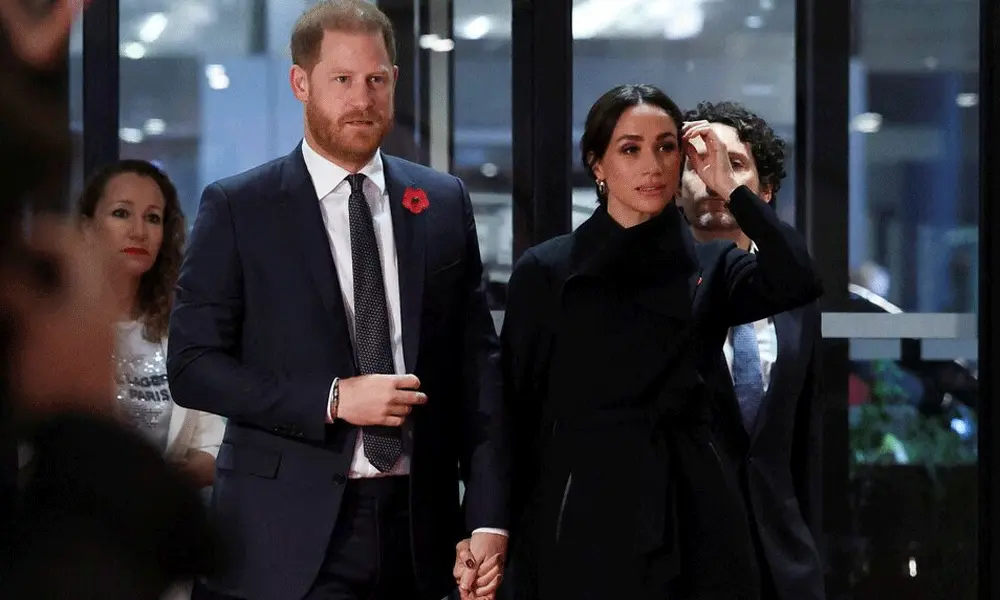
  • Meghan, wife of Prince Harry, will no longer speak at Brussels event

    Meghan, wife of Prince Harry, will no longer speak at Brussels event

    LONDON: Meghan, the wife of Britain’s Prince Harry, will no longer address a European Parliament gathering on child online safety issues on Tuesday, her first ​public event since her father was charged with possessing child sexual abuse ‌photos.

    The couple are still expected to appear in Brussels, where Harry will deliver a speech at the opening of the Lost Screen Memorial.

    A spokesman said he would not make any ​reference to the arrest of Thomas Markle, Meghan’s estranged father, in Florida ​last week.

    The Daily Telegraph reported that Meghan, who said in a ⁠statement last month that she was “deeply distressed” about the allegations about her father, ​did not feel “strong enough” to speak at the event, as had been planned.

    Thomas Markle ​was charged with possession of child sexual abuse photos last week, including photographs of himself with naked underage girls, found in rented storage units in California.

    Pakistan-built robots serve taste of future to Karachi diners

    The 82-year-old denied the accusations of possessing ​child sexual abuse material when they initially came to light, telling the Daily ​Mail they were untrue and “sick lies.”

    Meghan has been estranged from her father since the run-up to ‌her ⁠marriage to King Charles’ younger son Harry in 2018.

    She said in her statement last month that she had known about the allegations against him since 2018 and had prevented him from having contact with her children Archie, 7, and Lilibet, 5, ​to protect them.

    In Brussels, ​Harry and Meghan ⁠are expected to join European Parliament President Roberta Metsola at the opening of the Lost Screen Memorial, an art installation ​commemorating children who have lost their lives as a result ​of suffering ⁠harm on social media.

    The royal couple first launched the memorial in New York last year through their charitable organisation Archewell, which they set up in 2020 after stepping ⁠back from ​royal duties and moving to the United States.

    Their ​trip to Brussels follows an appearance in Nottingham in October, their first joint appearance since they moved back ​to live in Britain.

    Source: brecorder

  • Israeli forces shoot dead 14-year-old in West Bank: Palestinian officials

    Israeli forces shoot dead 14-year-old in West Bank: Palestinian officials

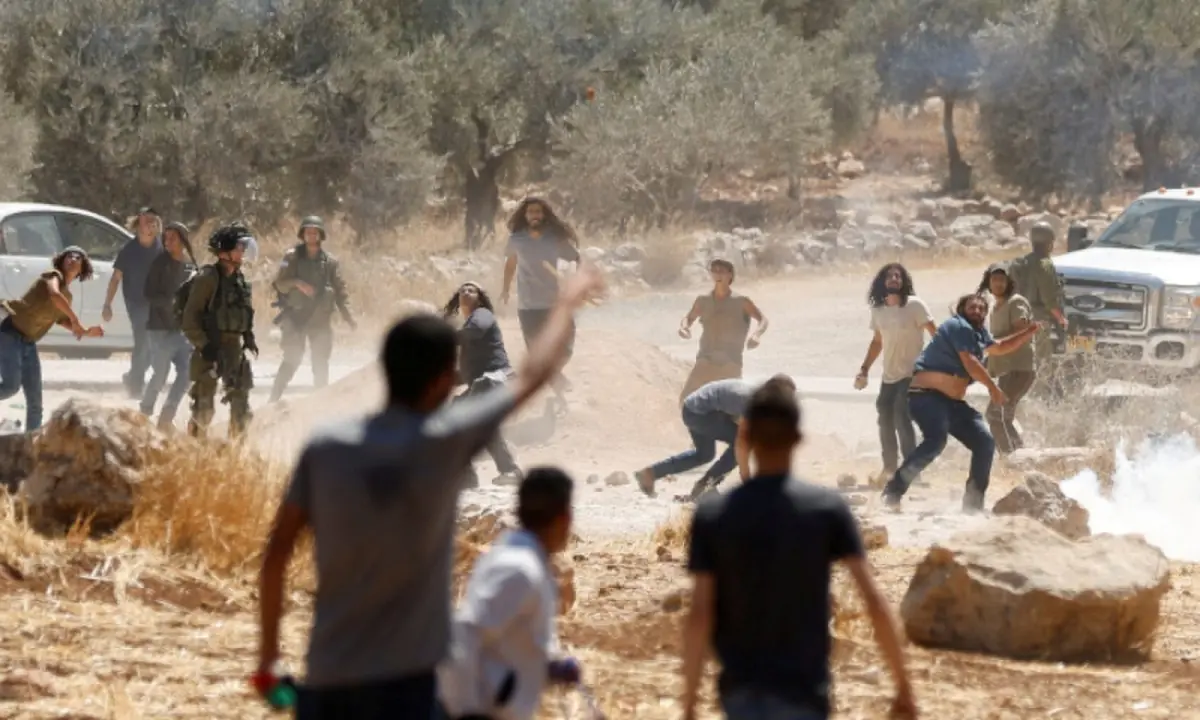
    Israeli forces shot dead a 14-year-old in the occupied West Bank, Palestinian officials said, with Israel claiming it was responding to stone-throwing.

    Moutaz Eyad Daghlas was killed in Burqa, northwest of Nablus, late on Monday, the Palestinian health ministry said.

    The Palestine Red Crescent Society said its teams treated two people with gunshot wounds and took them to hospital, but that Israeli forces blocked access to a third wounded person and detained three volunteer paramedics.

    The Israeli military, asked by AFP about the incident, alleged Tuesday it had acted to “thwart stone-hurling” in the area.

    “The soldiers identified several individuals who intended to hurl stones at a highway used by Israeli vehicles. This was in an area where stones have recently been hurled at Israeli vehicles,” the military said.

    “The soldiers responded by firing towards them in order to remove the threat.”

    Israeli forces have routinely opened live fire on Palestinians, including minors who throw stones in the West Bank, which Israel has occupied since 1967.

    The Israeli human rights group B’Tselem said Israeli forces killed at least 241 children or teenagers in the territory between the October 7, 2023, and late June this year.

    Violence has increased in recent weeks, especially in the run-up to Israel’s October 27 election, before which Prime Minister Benjamin Netanyahu had sought to appeal to hardline settlers in the West Bank.

    On October 23, Palestinian gunmen killed two Israeli soldiers at a checkpoint near Hebron before being killed by Israeli forces, who later responded with a major operation in the flashpoint city.

    Israeli soldiers or settlers have killed at least 1,116 Palestinians in the West Bank since the start of the Gaza war, according to an AFP tally based on Palestinian Authority figures.

    Source: dawn

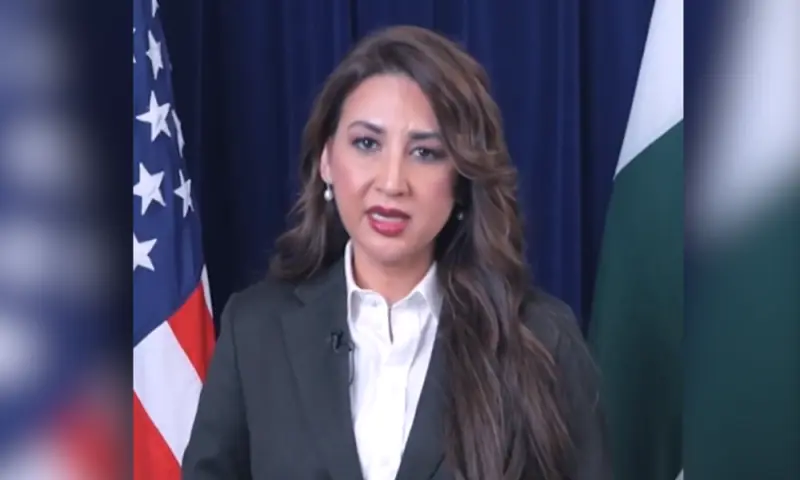
  • Trump nominates Natalie Baker for US ambassador to Pakistan

    Trump nominates Natalie Baker for US ambassador to Pakistan

    US President Donald Trump has nominated Natalie Baker, the current charge d’affaires at the US embassy in Islamabad, to be the ambassador to Pakistan, according to a statement by the White House.

    The nomination has been submitted to the US Senate, whose foreign relations committee will review it. If approved by the committee, the nomination will proceed to a vote by the full Senate.

    Baker would be appointed as the US ambassador to Pakistan following the Senate’s confirmation.

    Baker assumed the role of charge d’affaires at the US embassy in Islamabad in January 2025, following the departure of then-ambassador Donald Armin Blome.

    She arrived in Islamabad as deputy chief of mission in August 2024, according to details available on the embassy’s website. Prior to that, she served as the deputy chief of mission at the US embassy in Doha from Aug 2021 to July 2024.

    Baker was also deployed as the deputy chief of mission and charge d’affaires of the US Mission to Libya, deputy director of the Iran Regional Presence Office at the US consulate in Dubai and economic counsellor at the US embassy in Kuwait. She also served as the director of the Office of North African Affairs in the Us State Department’s Near Eastern Affairs Bureau.

    “From 2009-2011, Natalie served as the political and cconomic counsellor in Libya, as the bilateral relationship was normalising after a nearly 30-year pause.  She remained in Libya until the Libyan Revolution forced the embassy to evacuate in February 2011,” the website says.

    Source: dawn

  • Trump sets off bedlam in White House briefing room with UFC chief Dana White, who rejects politics

    Trump sets off bedlam in White House briefing room with UFC chief Dana White, who rejects politics

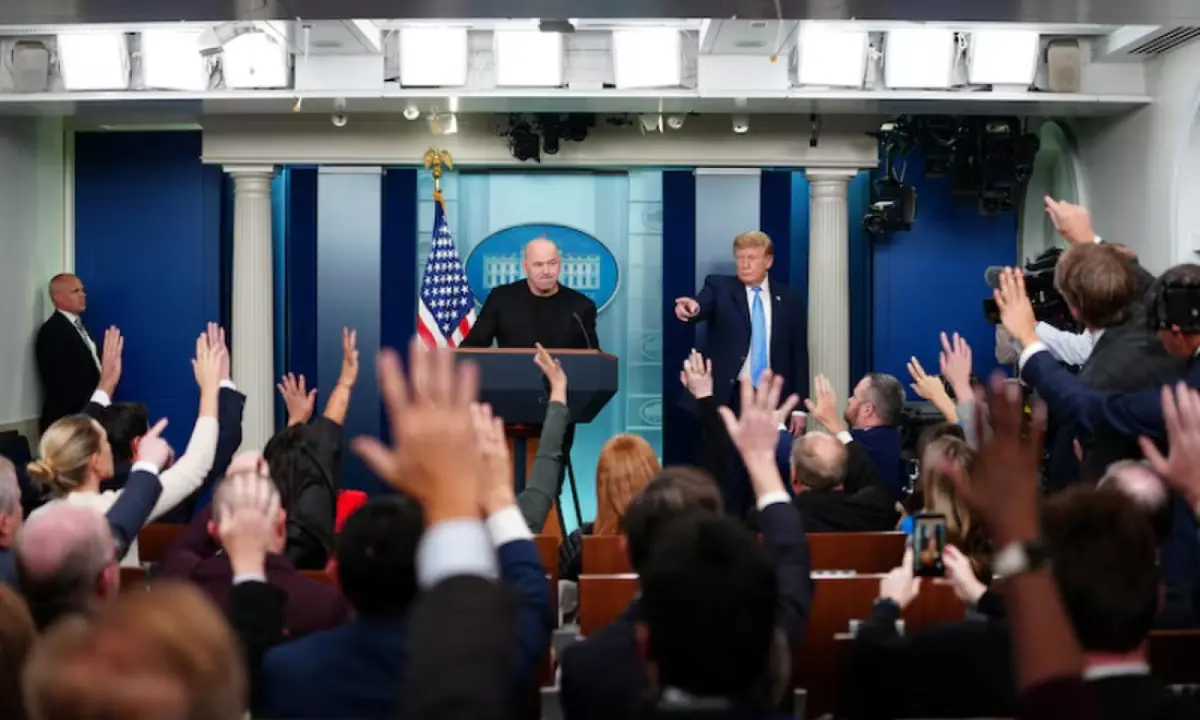
    President Donald Trump set off a scramble in the White House press briefing room on Monday with an appearance so sudden that aides had no time to place the presidential seal on the podium.

    The cause of the sudden bedlam? Trump was eager to show off UFC CEO Dana White, a close friend more comfortable with watching fighters bash each other in the Octagon than mixing it up with reporters.

    After heavy Republican losses in the midterm elections less than a week ago, Trump announced on Saturday that he had offered the White House press secretary job to White. Trump said on Sunday he was just teasing, but White came to the White House anyway to see the president.

    “Everyone please take a seat in the briefing room RIGHT NOW,” was a press assistant’s urgent instruction for reporters over the loudspeaker.

    The announcement set off a stampede among the press corps with TV technicians plugging in cables and setting up microphones. The spot on the podium where the presidential seal would normally hang was left vacant.

    w“Dana is really very unique. The only problem is he’ll talk for a little while and then he’s going to beat the hell out of you,” Trump joked.

    Trump announced that a UFC fight this weekend at Madison Square Garden will feature “the two greatest women fighters of all time.” “How would I do against one of them?” Trump asked White. “Would I do well?” “I don’t think so,” White said.

    White, who organised a series of UFC bouts on the White House grounds in June, made clear he had no desire to tussle with reporters.

    “I have zero political aspirations,” said White, while nonetheless taking a few questions.

    In his first four years in office, Trump was a regular presence in the White House briefing room, but now, nearly halfway through his second term, he takes questions in other places. He has talked about moving the press corps out of the West Wing to a “less obnoxious location.” But there was no talk of that on Monday. After Trump took questions on Iran, Ukraine, Defence Secretary Pete Hegseth, Nvidia CEO Jensen Huang and other topics, he turned back to White.

    “Would you like to be press secretary of the United States of America?” said Trump. “Would you like that, or do you just want to stay with that ridiculous UFC?” “Thanks for the offer, sir,” said White. “I do not want to be in politics.”

    Source: dawn

  • Thai baht/US dollar little changed on Tuesday

    Thai baht/US dollar little changed on Tuesday

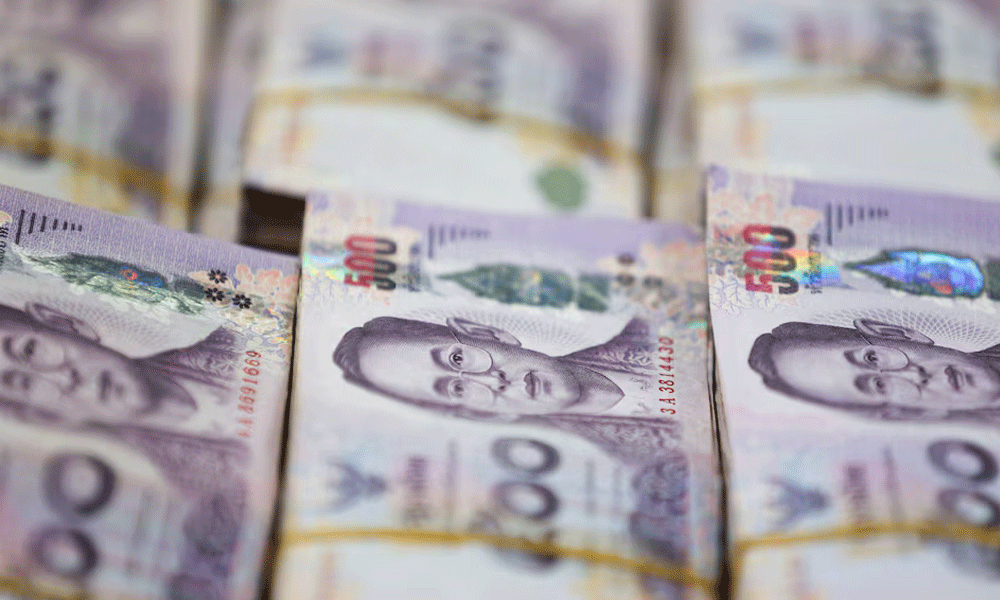
    BANGKOK: The Thai baht was steady against the US dollar on Tuesday.

    At 0133 GMT, the baht was 0.05% lower at 33.42 versus the dollar, after trading in a range of 33.385 to 33.433.

    It ended the previous session at 33.4025 per dollar, as per LSEG data.

    Source: brecorder