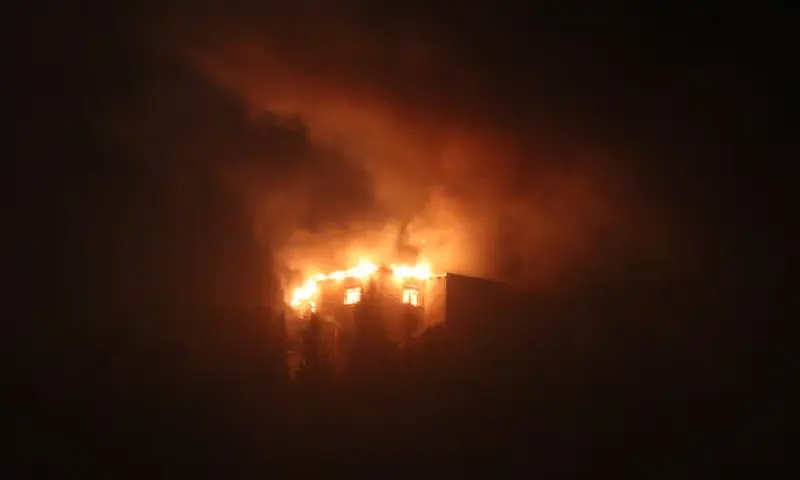
PERCHED on a ridge high in the German Alps lie the burned-out ruins of a mountain house frequented by Adolf Hitler, which is now at the heart of an intense debate about Germany’s Nazi past.
Called The Eagle’s Nest, or Kehlsteinhaus in German, the retreat was built by the Nazis in 1938. After World War II it was classified as a historical monument.
But after it was gutted in a suspected arson attack last month, some believe it is time for the site to be completely destroyed, so it can shed the mantle of its Nazi past, BBC Newsreported.
Others, however, want it either partially or completely rebuilt, wary of the risk of turning it into a lightning rod for neo-Nazi elements at a time when Germany is witnessing the resurgence of the far-right.
Before it was burned down on Oct 23, the Eagle’s Nest had been a popular tourist attraction, owned by the state of Bavaria and operating for many years as a restaurant.
Visitors would take a bus and then ride the original brass and mirror-panelled lift through the mountain to the Kehlsteinhaus to savour the magnificent views above the town of Berchtesgaden.
Unlike Hitler’s nearby summer residence, the Berghof, which was bombed in World War II and demolished in 1952, the Eagle’s Nest survived the war.
In the 1990s, amid concerns that the site did not do enough to confront the crimes of the Nazi past, a museum, the Obersalzberg Documentation Centre, was opened close by.
Although the Eagle’s Nest itself was “largely destroyed” by the
fire, according to police, the documentation centre survived unscathed.
The authorities have not commented on a possible motive, but a 33-year-old man with a history of mental illness has been detained on suspicion of arson.
According to BBC News, some feel that this is an opportune moment to allow the site to fade into history.
“It’s been torched now. It’s been destroyed. I think they should just clear away the rubble and leave the mountain as it should be in its natural state,” said Prof Sir Richard J. Evans, a specialist in Nazi Germany at the University of Cambridge.
That has happened with “quite a few other Nazi sites”, he argued, including the bunker in Berlin where Hitler killed himself.
But Bavaria’s authorities take a different view about the site’s future. Both the state’s interior minister, Joachim Herrmann, and its minister for the arts, Markus Blume, have spoken out in favour of rebuilding the Kehlsteinhaus.
Germany and Austria have long struggled to deal with the fraught legacy of buildings and sites connected to the Nazi era.
With the recent rise of the far-right AfD and the Austrian Freedom Party, the debate over Erinnerungskultur (Culture of Remembrance) has taken on a new urgency.
A row broke out recently in Germany when AfD and conservative CDU councillors in a town in Saxony decided to ban “stumbling stones” memorials – embedded small brass plaques in the streets – to victims of the Nazis.
In Austria over the summer, a police station was opened in the house where Hitler was born in Braunau am Inn. It followed years of controversy about how the house should be used.
The Austrian government said the police presence would help prevent neo-Nazi ‘pilgrims’. But others want the site to become a centre of responsibility, actively confronting the Nazi past.
WHEN COP31 opens in Antalya today, governments will have to show that years of climate negotiations have produced more than ambitious targets and promises of financial help. Geopolitical tensions, an energy crisis, and strained finances in rich countries have dampened hopes of a breakthrough. The absence of an official US delegation after Washington’s withdrawal from the Paris Agreement has worsened matters.
Meanwhile, the climate crisis is advancing faster than efforts to contain it. A new UN report warns that even if countries fulfil existing climate pledges, global temperatures could rise by 2.6°C this century.
For Pakistan, already exposed to floods, extreme heat, and erratic rainfall, the question is what it can realistically secure from the talks.
At COP29, developed countries committed to mobilising $300bn annually for developing nations by 2035. COP30 called for progress towards a broader goal of $1.3tr a year and for adaptation finance to be tripled by 2035. But promises of more money mean little if vulnerable states cannot access it.
For Pakistan, the priority should be to secure easier access to climate funds, more grants rather than debt-creating loans, and clear deadlines for financial contributions. It should seek support for practical measures to protect homes from flooding, secure water supplies, and improve early warning systems. By joining forces with other vulnerable countries, Pakistan could strengthen calls for better glacier monitoring, flood protection, and affordable climate technology.
Its latest climate plan aims to cut projected emissions by 50pc by 2035, with 17 percentage points unconditional and the remaining 33 reliant on international support. This gives Pakistan grounds to seek investment in cleaner energy, transport, and agriculture. But it must also pursue reforms at home, while pressing for stronger global action to reduce emissions.
Pakistan’s preparations for COP31 offer an opportunity to put these priorities into practice. Its planned pavilion sessions in Antalya cover disaster preparedness, solar electrification, local adaptation, and climate investment projects. These discussions should lead to partnerships and investment proposals. Islamabad should identify priority projects and report publicly on commitments secured and money received. Provincial governments must be involved, as irrigation, land use, drainage, and emergency services are largely their responsibility. Local communities should help determine which projects receive priority funding.
Pakistan must also address problems that international aid alone cannot solve, including construction on floodplains and poor enforcement of environmental rules.
COP31 may produce modest advances rather than a sweeping agreement. But Pakistan can still make progress by presenting workable proposals and showing that the assistance it receives will benefit those most at risk.
• Report says fruit yields plunge 50pc; heat stress spreads livestock disease, cuts milk output • Shrinking incomes, food spoilage limit rural families’ healthy diets • Women bear brunt of crisis due to heavy outdoor labour; preterm birth risk jumps 26pc in severe weather
ISLAMABAD: Increasingly frequent and severe heatwaves in Punjab’s rain-fed rural areas are disrupting agricultural production, reducing household incomes and worsening food insecurity, particularly among women and vulnerable communities, according to a report by United Nations (UN) agencies.
The assessment “Extreme Heat and Agriculture”, was published jointly by the UN Food and Agriculture Organisation (FAO) and the World Meteorological Organization (WMO).
It warns that rising temperatures have emerged as one of the most serious and acute hazards facing global food production, threatening the livelihoods of billions of people while inflicting immediate economic and nutritional damage on vulnerable farming communities.
“The effects of extreme heat on production are stark, as heat waves have led to significant declines in crop yields,” the report said.
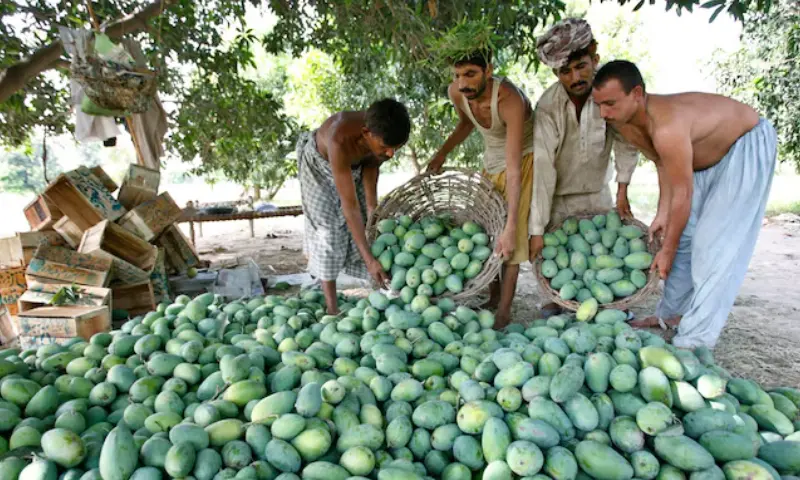
In the high-rainfall zones of Punjab, fruit productivity has fallen by as much as 50 per cent, the agencies found.
Livestock operations across the region are also severely affected. Large ruminants produce less milk under heat stress, and small ruminants face increased outbreaks of foot-and-mouth disease, the report said.
For rural families dependent on farming, the loss of agricultural output directly translates into reduced household income and diminishes their ability to purchase basic food staples.
The crisis is compounded by the accelerated spoilage of vegetables, dairy products and other perishable goods in extreme temperatures. That widespread spoilage further reduces local food availability and drives up market prices.
As a result, rural families face a double burden. They produce less diverse and nutritious food for their own consumption while simultaneously losing the agricultural income they rely on to purchase food from markets. “This double burden severely limits their access to healthy diets,” the report said.
Although entire communities are affected, women generally bear a disproportionate share of the burden, the UN agencies found. Women in Punjab play an essential role in agricultural activities, including harvesting, collecting water and carrying out physically demanding household responsibilities.
This exposes them to high temperatures for extended periods, increasing their risk of heat-related illnesses and other health complications.
Those health risks are particularly acute for pregnant and lactating women, who have greater nutritional and dietary needs that are often the first to be compromised during periods of household food scarcity.
Research cited in the report indicates that each 1°C rise in temperature is associated with a 4pc increase in the likelihood of preterm birth. During heat waves, the risk of preterm birth jumps to 26pc, according to the report.
Additional social inequalities exacerbate women’s vulnerabilities to extreme heat. Despite their critical role in farming, women often lack ownership of land and other assets, necessary to access credit and financial services that could aid adaptation.
With limited access to climate information and early warning systems, they are often less prepared to respond to heat events.
Rural women’s coping strategies, such as reducing their own food intake to prioritise other family members, which can further compromise their health and resilience, reflect broader patterns of gender discrimination that amplify their vulnerability in times of climate crisis, the report said.
Beyond the localised crisis in Punjab, the FAO and the WMO warned that extreme heat is acting as a powerful risk multiplier with direct and indirect impacts across all agricultural subsectors worldwide.
Rising temperatures amplify existing environmental hazards such as drought, heighten the risk of destructive wildfires and create complex compound impacts.
Those converging threats endanger not only global agricultural production, but also the physical health of agricultural workers who labour on the front lines of the growing climate threat.
The fingerprints of extreme heat on agriculture are already visible worldwide, and the analysis of scientific evidence confirms that heat is driving significant productivity losses.
Under high-emission scenarios, nearly half the world’s cattle could be exposed to dangerous heat by 2100, with annual losses nearing $40bn, although under a low-emission scenario, impacts from livestock exposure to extreme heat are reduced by nearly two-thirds.
In aquatic systems, marine heatwaves have already caused repeated mass mortality events and are forcing entire fish stocks to migrate in search of cooler water. Fruit and nut trees and natural forests are also subject to production losses and the growing risk of more frequent and intense wildfires.
Together, those global agricultural losses create a dangerous environmental feedback loop, the report concluded. When heat-driven shortfalls in crop and livestock production prompt farmers to clear additional land for agricultural expansion to compensate for lost yields, the resulting land-use changes increase greenhouse gas emissions — fuelling further climate change.
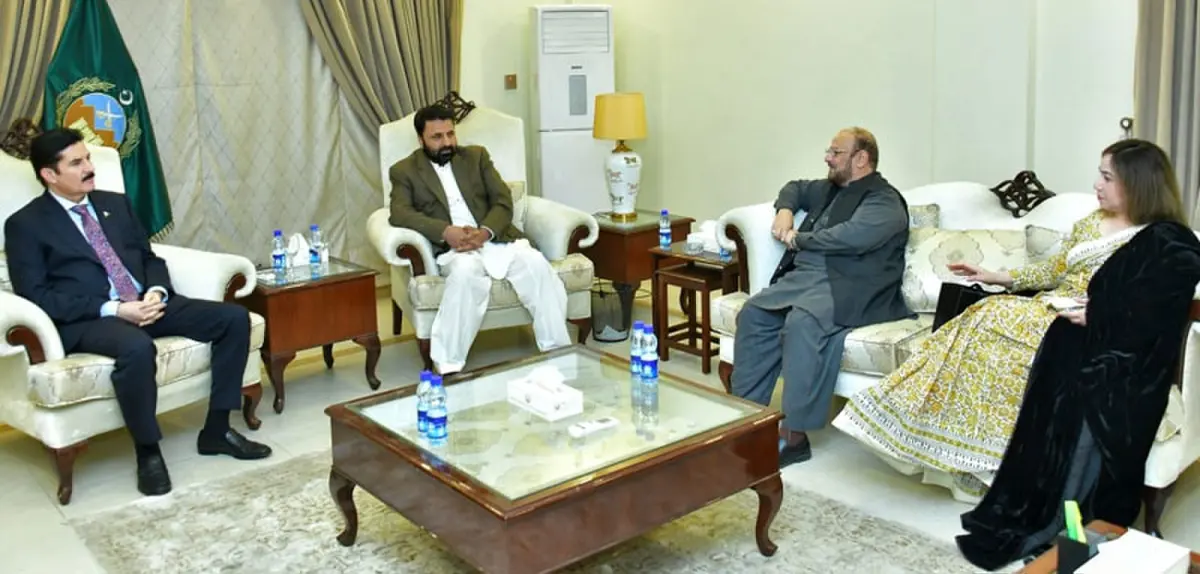
KP Governor Faisal Karim Kundi and GB Chief Minister Amjad Hussain meet in Islamabad.—Dawn
GILGIT/MANSEHRA: In a move towards resolving decades-old territorial issues, Gilgit-Baltistan Chief Minister Amjad Hussain and Khyber Pakhtunkhwa Governor Faisal Karim Kundi have agreed to initiate negotiations to settle boundary disputes between the two regions, including those involving Shandur Top, Babusar Top and areas surrounding the Diamer-Bhasha and Dassu dams.
The agreement came during a meeting between the two leaders in Islamabad on Sunday, where they discussed matters of mutual interest, including territorial disputes, improved air connectivity to Gilgit-Baltistan and the training of relevant officials.
According to a statement issued by the GB Chief Minister’s Secretariat, both leaders agreed that the boundary disputes would be taken up by the chief secretaries of the two regions, before being referred to their respective political leadership for deliberations.
South Air offers to operate flights to northern areas
The initiative aims to resolve disputes involving villages along the KP-GB boundary through mutual understanding and amicable negotiations.
An official attending the meeting told Dawn that the two sides had agreed to pursue a peaceful settlement of the long-standing disputes, which have repeatedly triggered tensions and violent clashes between communities living along the disputed territories.
Disputes between KP and GB persist over several strategically important areas, including Shandur Top, Babusar Top and parts of Kohistan.
Shandur Top, home to the world’s highest polo ground at around 12,500 feet, is claimed by both provinces, with the matter under consideration by a provincial boundary commission.
Babusar Top, linking Mansehra with Diamer through Kaghan Valley, is another contested area whose ownership and jurisdiction remain unresolved by the federal government. The dispute has also surfaced in land acquisition and compensation claims, prompting the Peshawar High Court to direct the NHA and KP government to clear outstanding payments to landowners whose properties were acquired in 2001 for road expansion.
Another major dispute concerns the Harban tribe of Kohistan and the Thor tribe of Diamer over an eight-kilometre stretch near the Diamer-Bhasha Dam. A 2014 clash over the land claimed the lives of five people and left 15 injured.
A 24-member jirga defused the decades-old dispute in 2022, paving the way for official demarcation and compensation payments to affected Kohistan settlers.
However, other territorial and ownership questions, including those concerning areas near the Dassu Dam and Babusar Top, have continued to complicate relations between communities on both sides of the provincial boundary.
Air connectivity
Apart from territorial matters, the Islamabad meeting also focused on improving air connectivity between Gilgit and Islamabad, where passengers have long faced difficulties because of limited flight operations and frequent cancellations.
At present, PIA operates a 44-seat ATR aircraft on the Islamabad-Gilgit route. The limited seating capacity, coupled with weather-related cancellations, has made air travel particularly difficult for patients, tourists and government officials who depend on the service.
The operational limitations of Gilgit airport, which cannot accommodate larger aircraft, further restrict travel options.
During the meeting, representatives of the private airline South Air also held discussions with the GB chief minister regarding the introduction of additional air services.
According to an official source, it was agreed that aircraft would be acquired on lease against a guarantee provided by the GB government, while South Air would operate flights under a joint-venture arrangement.
The proposed service is expected to introduce weather-compliant aircraft on the Islamabad-Gilgit route, potentially improving the reliability of air travel for residents and visitors.
• Khawaja Asif says new units should be created on administrative grounds, not linguistic, ethnic or political lines • Calls for transfer of powers, resources from provincial capitals to local institutions • MQM-P renews demand for new administrative units; calls for ending ‘deprivation’ of urban Sindh
SIALKOT / KARACHI: As a debate around the possible creation of new administrative units rages in the country, another federal minister on Sunday voiced his support for the proposal, but warned against carving out units on linguistic, ethnic or political lines.
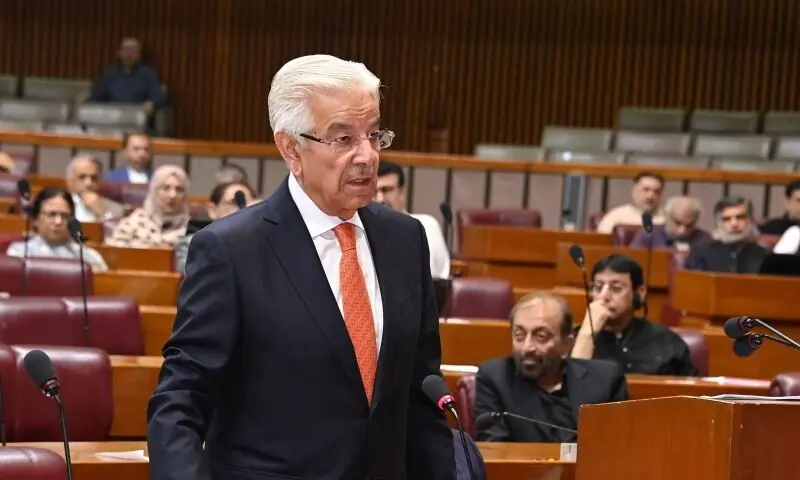
Outspoken Defence Minister Khawaja Asif, who has previously voiced his support for the suggestion — first put forward by his cabinet colleague Mohsin Naqvi — said that the existing concentration of authority in provincial capitals was preventing government services and resources from reaching people at the local level.
Speaking to Geo News, Mr Asif said the idea of creating new provinces had been debated for the past two months, stressing that the country could have as many as 12 if the exercise was driven by administrative needs rather than linguistic, ethnic or political considerations.
He argued that Pakistan’s growing population called for smaller administrative units capable of delivering public services more effectively, adding that decision-making should not be confined to provincial capitals such as Lahore, Karachi, Quetta and Peshawar.
Stressing the need to bring administrative authority closer to the people, Mr Asif also questioned the existing arrangement for distributing financial resources, insisting that funds provided by the federal government remained largely under the control of provincial administrations, instead of reaching local government institutions.
He maintained that local bodies, which were supposed to benefit from these resources, continued to depend on provincial governments for funds and authority.
The minister also urged political leaders to change their attitude towards the exercise of power, saying that as politicians, there was a temptation to exercise all the power themselves.
Public representatives must remember that their authority was entrusted to them by the people, he said.
Referring to past administrative arrangements, Mr Asif recalled the One Unit scheme, under which the provinces of West Pakistan were merged into a single administrative unit before the arrangement was eventually abolished.
He also pointed to Afghanistan, saying the number of its provinces had increased from around eight or 10 to more than 30.
The defence minister’s remarks come amid reports of a plan to divide Pakistan into 12 provinces through a possible 28th Constitutional Amendment, with a nationwide referendum also being contemplated.
Media reports suggested that the proposed restructuring could involve dividing Punjab into four provinces, KP and Balochistan into three each, and Sindh into two.
MQM-P renews demand
Meanwhile, the Muttahida Qaumi Movement-Pakistan (MQM-P) on Sunday vowed to mobilise its entire organisational network and parliamentary leadership for the upcoming local government elections eyeing a “historic win”, while renewing its demand for the creation of new administrative units in Sindh to ensure the devolution of powers and resources to the grassroots level.
The resolve was expressed at a high-level meeting of the party’s political and administrative leadership, chaired by MQM-P Convener and Federal Minister Dr Khalid Maqbool Siddiqui at its Bahadurabad headquarters.
According to a press release, the meeting discussed a strategy to address the long-standing grievances of urban Sindh, accelerate Karachi’s development and prepare for upcoming political and local government contests.
The party leadership stressed that the establishment of new administrative units was essential to empower people at the grassroots level and ensure the equitable provision of basic municipal services.
It maintained that the devolution of authority and resources to lower tiers of government was necessary to address the administrative and civic challenges facing urban centres.
Dr Siddiqui directed parliamentarians and organisational departments to become actively involved at the neighbourhood level and mobilise workers and residents across the city ahead of the local government elections.
Speaking at the meeting, Dr Siddiqui said ending the deprivation of urban Sindh, establishing new administrative units and winning the local government elections were among the party’s foremost priorities.
“The reconstruction and development of Karachi and other major urban centres of Sindh, transparent utilisation of public funds and the protection of citizens’ fundamental rights remained at the heart of the party’s political agenda,” a statement issued after the meeting quoted him as saying.
He added that no political or administrative obstacle would be allowed to stand in the way of public welfare and development.
The meeting also underscored the party’s determination to “restore the rightful representation of urban communities in local governance through electoral success and a stronger grassroots organisational presence”.
Imran Ayub in Karachi also contributed to this report Published in Dawn, November 9th, 2026
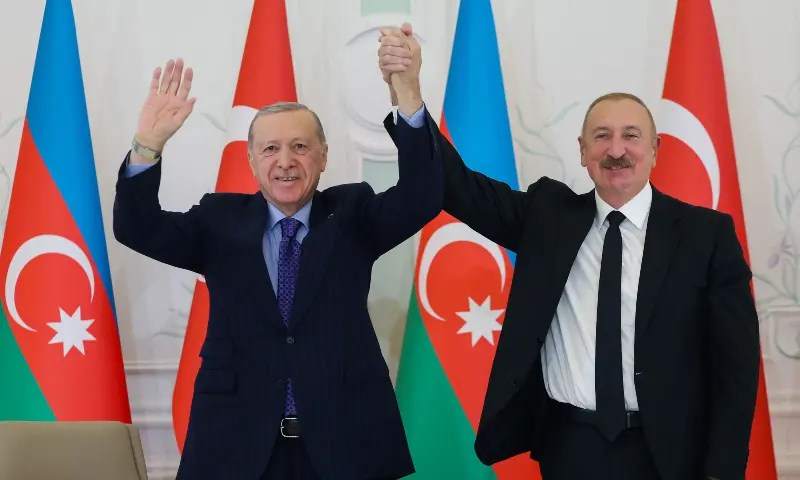
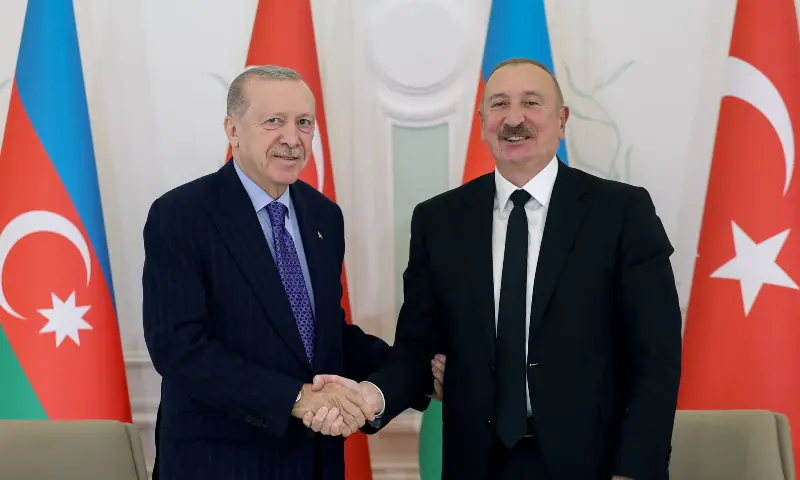
Turkiye’s President Recep Tayyip Erdogan and Azerbaijan’s President Ilham Aliyev vowed on Sunday that their countries’ alliance would remain solid, in a show of unity aimed at overcoming a public rift between the close neighbours.
Tensions flared in September, when Baku revised school uniform regulations to prohibit clothing deemed incompatible with secular education, effectively barring Islamic headscarves in classrooms.
Erdogan’s government has dismantled restrictions on hijabs in Turkiye.
Azerbaijan’s move sparked protests at home and drew criticism from Erdogan’s Justice and Development Party (AKP). Presidential adviser Oktay Saral demanded that Azerbaijan reverse the restrictions.
Aliyev’s ruling party, Yeni Azerbaijan, denounced the comments as “interference in Azerbaijan’s internal affairs”.
Baku also declared 31 Turkish nationals, including an opposition lawmaker and party leaders, persona non grata over critical social media posts.
Erdogan subsequently dismissed Saral, but Aliyev stayed away from an Oct 30 summit of Turkic leaders in Ankara — despite a personal invitation from Erdogan. Instead, he sent Foreign Minister Jeyhun Bayramov.
On Sunday, as Azerbaijan marked Victory Day commemorating a 2020 war with Armenia, Erdogan arrived in the country’s Fuzuli district, which Baku recaptured from Armenian forces six years ago.
A guard of honour lined up at the airport, where Aliyev and First Lady Mehriban Aliyeva welcomed Erdogan and his wife Emine.
“With the permission of Almighty God, our unity will endure forever,” Erdogan told a joint press conference with Aliyev.
“This unity of hearts, which we describe with the motto ‘One Nation, Two States,’ is an everlasting torch that draws strength from our shared past and illuminates our future.”
Aliyev said the alliance — “an important factor across a vast geographical area” — remained unshaken.
“Together, Azerbaijan and Turkiye are even stronger,” he said, adding that Erdogan’s visit “shows the whole world our unity”.
“I am confident that this unity will last forever.”
‘Deeper rift’
Analysts say the quarrel reflects deeper unease over Baku’s diplomatic independence and its close ties to Israel.
“Azerbaijan-Turkiye tensions stemmed from the fact that Baku does not see itself as the younger brother in this alliance and insists on relations between equal partners,” Elkhan Shahinoglu, head of the Baku-based Atlas Research Centre, told AFP.
“The hijab dispute is a symptom of a deeper rift,” Gonul Tol, an analyst at the Washington-based Middle East Institute, wrote on X.
“Tensions have long simmered over a number of issues including Azerbaijan’s sovereignty, Ankara’s influence in Baku, diverging policies toward Israel, and Turkiye’s rapprochement with Armenia.”
Baku has forged strong military and economic ties with Israel, which supplied Azerbaijan with weapons during its 2020 war with Armenia over the breakaway Karabakh region.
This angered Turkiye, which has grown increasingly hostile towards Israel over the Gaza conflict. Erdogan has accused Israel of genocide.
Turkiye is also seeking to normalise relations with Armenia, whose border it closed in the 1990s in solidarity with Azerbaijan, while linking progress to Armenian-Azerbaijani peace efforts.
Nov 8 marks Azerbaijan’s capture of the city of Shusha in Karabakh during its war with Armenia, a victory achieved with Turkish backing.
The Turkic-speaking allies describe their relationship as “one nation, two states” and, despite the friction, remain closely bound by military and energy ties.
Turkiye serves as a key transit route for Azerbaijani oil and gas exports to Western markets.
An ex-Soviet republic, Azerbaijan is a mainly Shia Muslim country, but after decades of Soviet rule it emerged as one of the most secular states in the Muslim world.
Israel’s former military chief Gadi Eisenkot started the tough task on Sunday of forming a government, reaching out to Benjamin Netanyahu’s allies as he warned the veteran prime minister had brought the country to a historic crisis.
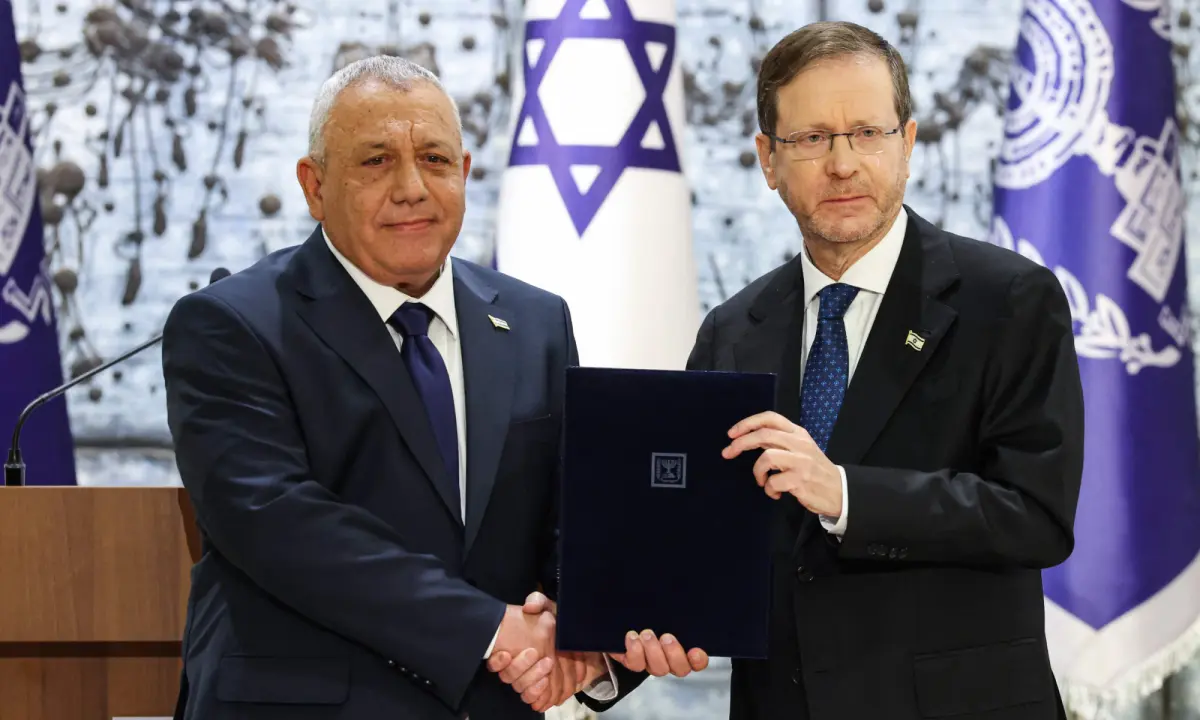
Eisenkot, 66, a political novice who has vowed to bridge Israel’s deep polarisation under Netanyahu, formally received a mandate from President Isaac Herzog, giving him 28 days to form a government despite his bloc lacking a clear majority.
“We are in a state of emergency, approaching a point of no return for the State of Israel,” Eisenkot said at a ceremony at the presidential office.
Both Eisenkot and Herzog acknowledged Israel’s growing isolation under Netanyahu, who is wanted by the International Criminal Court over allegations of crimes against humanity and war crimes in Gaza.
“We are in the midst of a devastating diplomatic crisis. Even our closest friends and strategic allies are saying their relationship with Israel must be reassessed,” Eisenkot said.
“We must form a national emergency government. This will require creative and unconventional political steps,” Eisenkot stressed.
He said Israeli democracy was at a vulnerable moment at a time when it faced immense challenges. “There is great urgency for new leadership, leadership that people can look in the eye and trust,” he said.
Eisenkot appealed to Netanyahu’s Likud Party as well as the far-right party of Finance Minister Bezalel Smotrich to join — but only with himself as prime minister.
“My door is open and my hand is extended, wholeheartedly and willingly, to anyone who understands the gravity of this moment,” he said.
Meanwhile, Herzog cited a threat of attack from Iran, the need to progress towards peace in Gaza and negotiations with Lebanon and other neighbours.
“We need to start shaping the political horizon in the region, and we also have to present the 20 points of the agreement in the Gaza strip, and consultations with our neighbours in Lebanon and the region,” he was quoted as saying in a translation by Al Jazeera.
“We also have to deal with the sanctions and the political challenges in light of the recent political developments in the United States,” the Israeli president said.
In the United States, the most vital ally of Israel, Democrats on Tuesday swept the midterm elections with calls to rein in Israel after the devastation in Gaza and the unpopular Iran war which Netanyahu launched with President Donald Trump.
Eisenkot, born to a family of working-class Moroccan immigrants, would be the first Sephardic prime minister — a community mostly descended from Middle Eastern or North African Jews — in a country long dominated by an Ashkenazi elite with ties to Europe.
Netanyahu is Israel’s longest-serving prime minister, having led the country on and off for nearly two decades. He has taken the country in a sharply rightward direction and led wars against Gaza, Lebanon and Iran since the Oct 7, 2023 attacks by Hamas.
Netanyahu called for a unity government of all Zionist parties to preserve a Jewish state, while giving no indication whether he was prepared to serve under Eisekenkot’s leadership.
“This is the will of the people and the need of the hour,” he said in a statement, ruling out a coalition government with Arabs — who make up 21 per cent of Israel’s population.
Nearly all Jewish parties now share Netanyahu’s rejection of an eventual independent Palestinian state, the basis of internationally endorsed peace efforts since the 1990s.
Negotiations can take 6 weeks
Eisenkot’s potential pathways to power include trying to form a minority government with Arab party support for key issues; forming a coalition with ultra-Orthodox parties that he and his allies have shunned in the past; or forging a unity government with Netanyahu. All three options face formidable obstacles.
Eisenkot has appeared to suggest he is willing to start off with a minority government — relying on outside votes from Arab-Israeli parties — before bringing other lawmakers into his coalition.
He said he will call on all parties to join who meet his main principles. These include recognition of Israel as a Jewish and democratic state; a duty of national service for all to strengthen the military and expand its ranks; and recognition of Hamas as a terrorist organisation and a commitment to destroying its military and governing capacity.
“I am convinced that it is possible and right to form a new government quickly, one that will win a large majority in the Knesset,” Eisenkot said, referring to Israel’s parliament.
Eisenkot now has 28 days plus a possible 14-day extension. If he fails, Netanyahu will likely get his shot at forming a government. Should he also be unable, new elections could be called.
Assaf Shapira, a political expert at the Israel Democracy Institute, said Eisenkot would face an exceptionally fragile government if it only had 48 lawmakers in the 120-member parliament, with extensive negotiations needed on every piece of legislation.
Eisenkot’s views
Eisenkot has vowed to put an end to rampant violence against Palestinians by extremist West Bank settlers supported by Netanyahu’s government and has warned that the incumbent premier does not have the mandate for another attack on Iran.
But he shares Netanyahu’s hawkish security views that have hardened since Oct 7, 2023: he opposes Palestinian statehood and says Hamas’s military wing must be destroyed or dismantled.
He emphasised his security credentials on the campaign trail, citing his “Dahiya doctrine” of responding to attacks with disproportionate force, which he deployed as a commander during Israel’s 2006 war with Hezbollah in Lebanon.
Both Eisenkot and Netanyahu say Israeli troops will not withdraw from Gaza until Hamas is disarmed, and that Israel is prepared to restart fighting to achieve this.
Although Eisenkot has criticised settler violence against Palestinians in occupied West Bank, which has surged since 2023, he favours settlement in principle and says it should comply with Israeli law.
He opposes settlements built without authorisation, aims to dismantle outposts in areas where they are forbidden and has pledged to rein in violent settlers.
Wooing the ultra-Orthodox
In consultations last week with Herzog, Eisenkot received recommendations from parties accounting for 67 lawmakers, against 46 for Netanyahu.
But that vote count included Israeli Arabs, whose seat haul surged to a historic high on anger over Netanyahu’s government and whom several parties oppose having in government.
Potentially making Eisenkot’s job tougher is the position of one opposition leader, Avigdor Lieberman of the Israel Our Home party, who has ruled out a unity government with Netanyahu or a minority government that has backing from Arab parties.
Lieberman, a former Netanyahu aide turned sharp critic who nonetheless shares his hawkish views, has been adamant against any alliance with Arab Israelis, who are descendants of Palestinians who stayed after Israel’s creation in 1948.
But Lieberman has softened his stance on sitting with ultra-Orthodox Jewish parties as long as they agree to support a law under which ultra-Orthodox men serve in the military.
Taking back one of his signature campaign pledges, Lieberman instead voiced an openness to an alliance with ultra-Orthodox Jews, whose almost singular priority is ensuring that they remain exempt from military service.
The exemption for the ultra-Orthodox — whose two main parties had been aligned with Netanyahu but could push Eisenkot to a majority — has been a source of growing resentment for many Israelis as reservists fight on multiple tours of duty.
Lieberman said on Sunday he still backed conscription for all Israelis but that he had to make “difficult decisions” for the higher priority of ousting Netanyahu, who faces corruption charges that could land him in jail if he loses power.
Naftali Bennett, the second strongest opposition leader after Lieberman, has also been outspoken against the ultra-Orthodox community’s military exemption and has stayed quiet since Lieberman’s about-face.
In Tel Aviv, Neri Bar-On, who works in educational technology, said he expected Eisenkot to succeed in forming a government.
“But the problems run deeper,” he said.
“The country is facing a massive internal conflict; even if he manages to form a government, it won’t solve the underlying issues.”
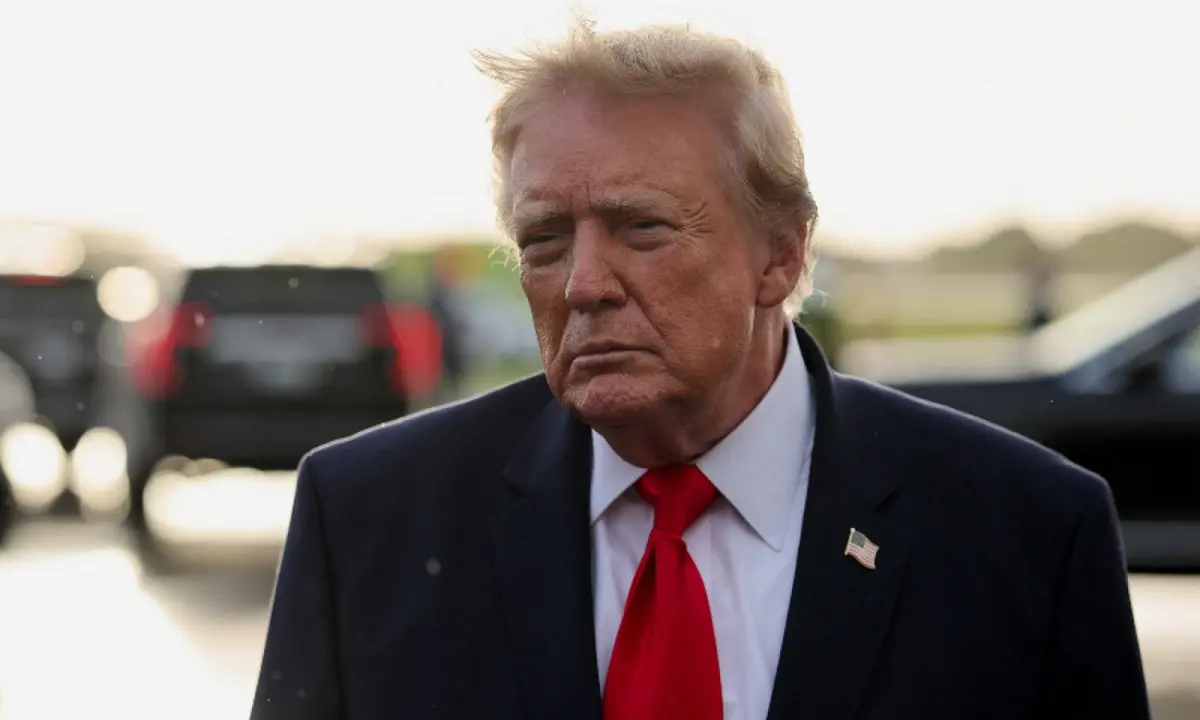
United States President Donald Trump vowed on Sunday to bounce back stronger from a massive midterm elections loss that he called a “giant step back in history” for the US.
Democrats captured both chambers of Congress in last Tuesday’s midterms that dealt historic losses for Trump’s Republican Party in states they had dominated for decades.
“America took a giant step back in History with the results of the last Election,” Trump said in a post on Truth Social, saying that the stock market that had grown during his tenure took a loss after the vote.
“But have no fear, we will be back, BIGGER AND STRONGER THAN EVER BEFORE!”
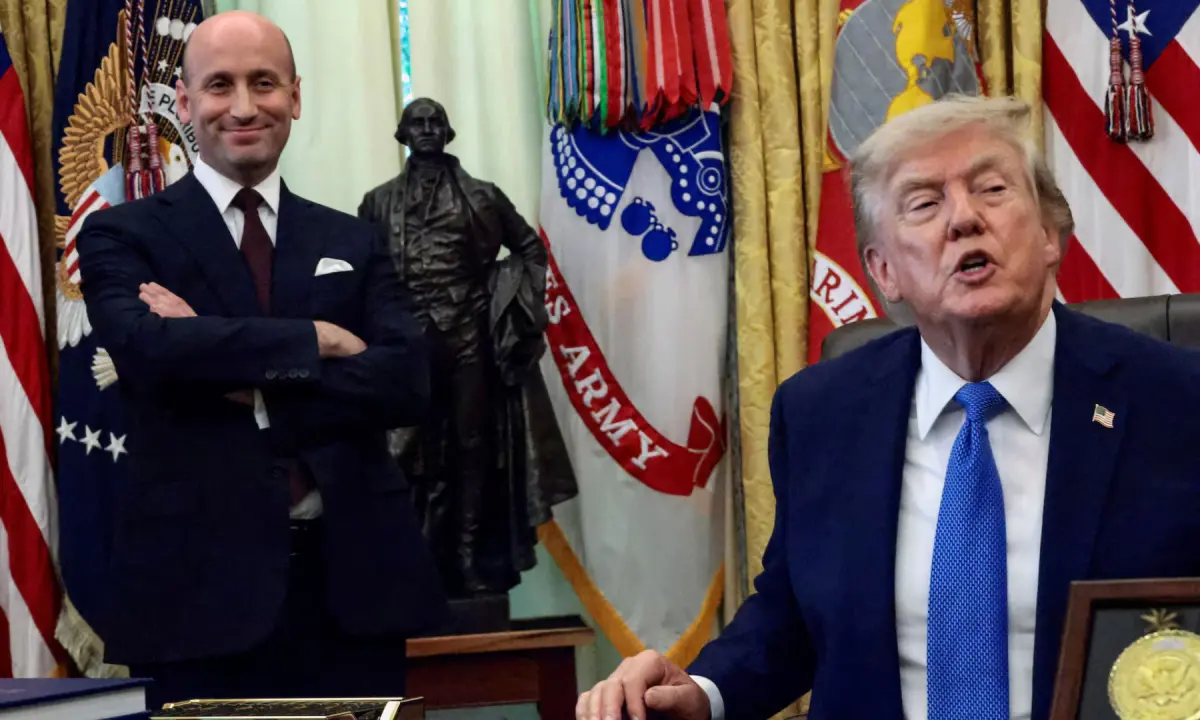
While Republican lawmakers have been licking their wounds over the setback, Trump has sounded defiant and on Friday appointed hardline advisor Stephen Miller as his new chief of staff, signaling a bare-knuckle fightback.
Democrats have pledged to hold the Trump administration to account and fight “every step of the way” against Miller, architect of Trump’s tough immigration policy.
It will be the first time that Trump, a Republican who also held the White House from 2017 to 2021, has had to contend with a Democratic-controlled Congress in both chambers.
House Democratic leader Hakeem Jeffries has said the incoming majority will be focused on affordability and accountability.
“We don’t work for Donald Trump,” the New York lawmaker told reporters on Wednesday. “We work for the American people. And the days of the House of Representatives functioning like a wholly owned subsidiary of the Trump administration are over.”
The result was a personal humiliation for the 80-year-old Trump, leaving him as a lame duck president for the remaining two years of his term and signaling an end to his stranglehold on the Republican Party.
He had previously attempted to brush off the election results, spending the beginning of his first public appearance on Wednesday talking to reporters about the marble and Corinthian columns of his new $400 million ballroom.
But he conceded that what Vance had said about the Iran war was “largely true because it drove the gasoline up” — a key issue for voters angered by the rising cost of living.
“But at the same time, if I had it to do again, I’d have to do it again.
Because long term, it’s the only answer. You can’t let Iran have a nuclear weapon,” he said.
Vice President JD Vance publicly split with Trump over the Iran war a day after the vote, saying the conflict was the “reason we lost” as he distanced himself from the unpopular war ahead of a possible 2028 White House run.
“The reason we lost is the war,” Vance wrote in a long social media post. “The president himself said so last night. If you’d like to argue it was worth it, that losing the Senate for the next six years was worth it, then do so. Argue it was a worthwhile cost to pay.”
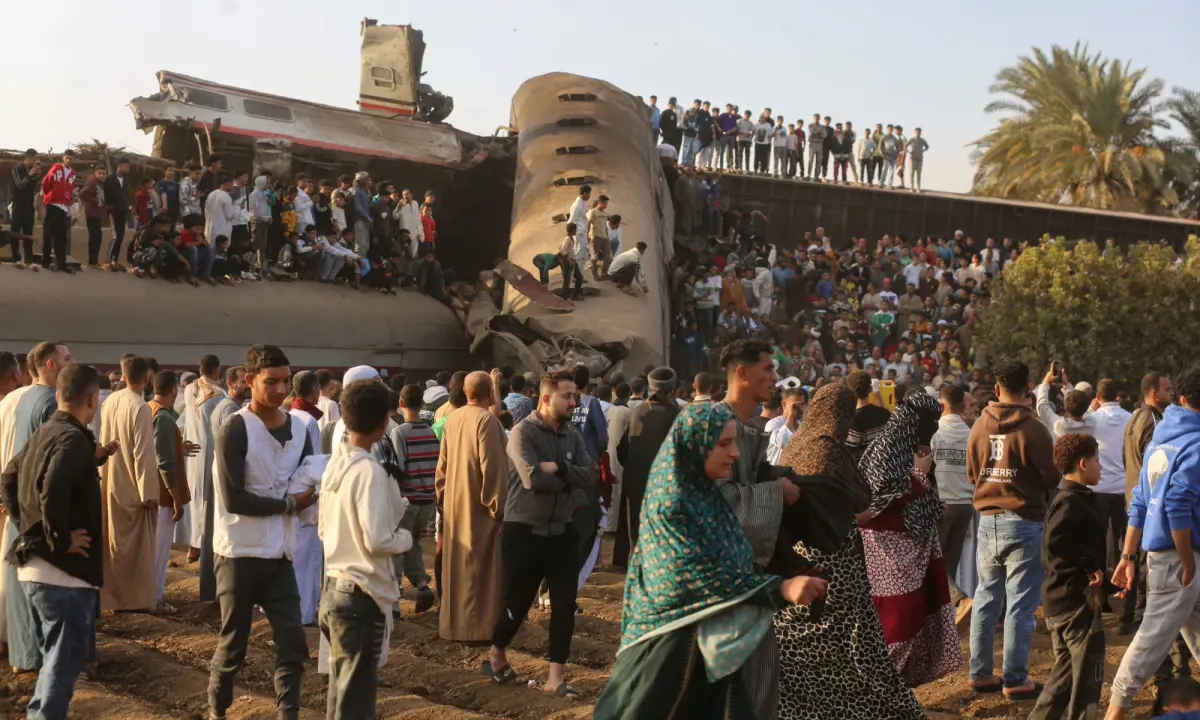
Two trains collided south of the Egyptian capital on Sunday, derailing several carriages, killing four and injuring dozens, according to the authorities.
Egypt’s railway authority said a train travelling from Giza to Fayoum crashed into the rear of another service heading south from Cairo to the city of Aswan.
The health ministry said an initial count put the toll from the crash at four passengers killed, with 88 others currently being treated for injuries in hospitals around the Giza area.
State-owned media had earlier reported 120 people were wounded, without clarifying the degree of injury.
President Abdel Fattah al-Sisi said he was following the accident “with great concern”, and had directed authorities to conduct an urgent investigation to “hold accountable anyone found to have been negligent”.
Emergency crews used cranes to remove the wreckage, the authority said.
Authorities said they had launched an investigation into the cause of the crash, which occurred in Giza’s Al-Ayyat area, the site of Egypt’s worst-ever rail disaster.
In 2002, more than 370 people were killed when a fire swept through a train carrying holiday travellers south of Cairo.
In 2009, multiple train crashes in the area killed dozens.
Egypt’s 110 million people depend heavily on rail transport, but the network — one of the largest in Africa — has suffered repeated deadly accidents.
Over the past decade, Egypt has poured billions of dollars into updating its transport infrastructure, including new highways and high-speed rail lines, but has yet to overhaul much of its ageing rail network.
US President Donald Trump’s decision to elevate loyalist Stephen Miller to run his White House indicates that he plans to ramp up confrontation in his final two years in office and block outside political and economic pressures, Trump administration officials and other Republicans say.
Voters delivered a historic rebuke to Republicans in Tuesday’s midterm election, but with Miller as White House chief of staff, the Trump administration is expected to continue its aggressive immigration crackdown, amplify cultural conflicts and give no ground to a Democratic-controlled Congress, say officials and experts who spoke to Reuters.
They say wavering Republicans will face increased pressure to stay in line, while businesses may have a harder time making their case to the White House.
“This signals the administration is going to have a fighting-from-a-bunker approach the last two years,” said Dan Eberhart, a Trump donor and energy executive.
Although Trump has said he can work with Democrats, he has shown a feisty approach since the midterm election results became clear.
On Saturday, he ordered the Justice Department to “look into” Democrats whom he accused of sending “threatening letters” to Republican donors and other Trump allies.
The president also offered the job of White House press secretary to combat sports promoter Dana White.
‘This man saved America’
Miller, 41, marks a sharp contrast with outgoing chief of staff Susie Wiles, a former lobbyist who ran Trump’s 2024 presidential campaign.
Wiles lacked significant Washington experience but was seen as a deft manager of competing interests.
Miller, by contrast, is regarded by allies and foes alike as a combative ideologue with a deep knowledge of the levers of power and an unswerving loyalty to Trump.
“If it wasn’t for President Trump, the United States of America would not exist right now. This man saved America,” Miller said at an event at Trump’s Florida estate on Friday.
Miller joined Trump’s first presidential campaign in 2016 and served throughout his two terms in the White House. He is best known for driving Trump’s aggressive immigration crackdown, which has galvanised Trump’s supporters but alienated many voters.
Only 37 per cent approve of Trump’s handling of immigration, according to an October Reuters/Ipsos poll, down from 50pc when he took office.
Still, four US immigration officials told Reuters that there have been no signs that the administration will let up. “Nothing is changing, same quotas,” said one official, who spoke on condition of anonymity.
Representative Don Bacon of Nebraska, an occasional Trump critic who is retiring, told Reuters that Miller “was in denial” as he and other Republican lawmakers tried to warn him before the election that Trump’s immigration and tariff policies were driving away voters.
“We said, ‘You’re going to give us a bad midterm election,’ and he rejected it,” Bacon said.
‘Doubling down on a failed strategy’
The White House said Miller will continue to deliver “historic successes” in his new role, but Bacon said most of his peers in the House view it as “doubling down on a failed strategy”.
“It’s going over like a lead balloon in most of Congress,” Bacon said of Miller’s appointment.
Miller has also overseen Trump’s executive orders, giving him an expansive understanding of the administrative tools available to the president.
Several people interviewed for this story said they expect the White House to rely on executive orders more extensively rather than working with lawmakers.
Republican legislators will face pressure to stick with Trump through Democratic-led investigations to come, even if they damage the party as a whole.
“Those on Capitol Hill looking to break away from the Trump administration will know that Stephen Miller is not going to sit idly by and watch that happen,“ said Republican strategist Ron Bonjean.
Ending the Mideast war?
As well as the domestic issues he has focused on for most of his career, Miller now will have a greater say in foreign affairs.
Miller opposes prolonging the war with Iran, according to three sources familiar with his thinking who spoke on condition of anonymity, but he strongly supports Israel — potentially putting him at odds with a president who has threatened to resume strikes on Iran and announced he will end aid to Jerusalem.
Miller’s elevation also has unnerved some corporate lobbyists, who worry he will not be as responsive to their issues as Wiles, who cultivated relationships with top executives.
“This will be a big change,” said a senior lobbyist at a Trump-aligned firm who spoke on condition of anonymity.
“Miller is there to focus on political priorities, like immigration and tariffs, stuff Trump cares about, and won’t have the same approach as Susie, who understood policies have unintended consequences.”
Miller’s appointment was met with praise from senior cabinet officials and political supporters, who described him as the fighter they will need in Trump’s final stretch.
“I think Donald Trump has found his wartime consigliere,” Trump ally Roger Stone told Reuters.