Category: dawn news

  • Siblings acquitted in blasphemy case after 20 years

    Siblings acquitted in blasphemy case after 20 years

    • SC sets aside death sentences upheld by LHC
    • Observes findings on mental illness raise doubts about culpability

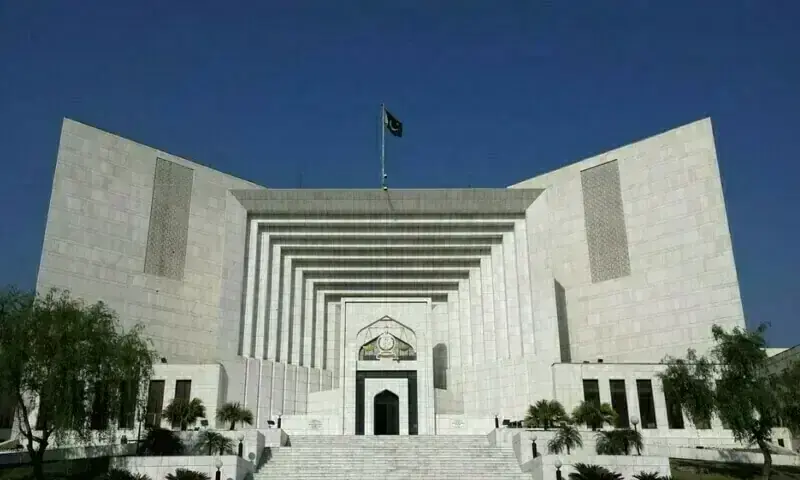
    ISLAMABAD: The Supreme Court on Saturday acquitted two brothers in a blasphemy case under Section 295-C of the Pakistan Penal Code (PPC), setting aside their death sentences earlier upheld by the Lahore High Court (LHC) over a decade ago.

    A three-judge SC bench, headed by Chief Justice of Pakistan Yahya Afridi and comprising Justices Shakeel Ahmad and Ishtiaq Ibrahim, took up criminal appeals against the Sept 17, 2015 decision of the LHC.

    The brothers, Liaqat Ali and Umar Draz, have spent around 20 years behind bars. They were convicted by a sessions judge in Jhang on March 27, 2006. The trial court sentenced both brothers to death and imposed a fine of Rs500,000 each, with five years’ rigorous imprisonment in default. The high court dismissed their appeals and upheld the convictions.

    The main SC judgement was authored by Justice Ishtiaq Ibrahim. Justice Shakeel Ahmad concurred with the order but also annexed an additional note.

    According to the complaint, Umar Draz had begun making explicit blasphemous statements, leading to a marital dispute between him and his wife that culminated in divorce on March 13, 2006. Draz explicitly affirmed in writing his conversion from Islam in the divorce papers.

    During the return of his former wife’s dowry articles, a written document auth­ored by co-appellant Liaqat Ali was recovered. It also contained blasphemous assertions.

    On March 18, 2006, when the complainant and witnesses confronted the brothers over the alleged blasphemous material, both appellants acknowledged and verified the contents of the documents and unequivocally declared their willingness to reiterate their assertions before any forum.

    Before the SC, their counsel confined his submissions to the plea of mental unsoundness, arguing that the appellants lacked the requisite mens rea (guilty mind) at the time of the alleged offence.

    The SC examined three psychiatric assessments. An initial three-member medical board at DHQ Hospital, Faisalabad, found both appellants mentally sound in 2007. However, an eight-member Board of Certification diagnosed them with “bipolar affective disorder with psychotic symptoms” in 2023.

    A nine-member Board of Certification in September 2025 concluded that both brothers were suffering from “bipolar disorder current episode manic”. It described the condition as a chronic illness that was most likely permanent in acute cases, with absent insight and an inability to understand their acts at the time.

    The SC observed that the unanimous opinions of specialised boards comprising senior professors of psychiatry carried greater weight than the earlier assessm­ent by a board with only one psychiatrist.

    It also noted that bipolar disorder was episodic and had a genetic component, and that both brothers had been independently diagnosed with the same condition.

    “The appellants have spent around 20 years behind bars. In the light of the opinion of medical board which raises doubts regarding the culpability of the appellants, the benefit of doubt cannot be withheld from the appellants,” the judgement said.

    While acquitting the appellants, the SC also expected the executive director of the Punjab Institute of Mental Health, Lahore, to ensure that their medical treatment was not discontinued.

    Additional note

    In his concurring note, Justice Ahmad agreed with the acquittal but cautioned that a psychiatric diagnosis alone did not satisfy the requirements of Section 84 of the PPC. The judge distinguished medical insanity from legal insanity, noting that the key question was whether, at the time of the offence, the accused was incapable of knowing the nature of the act or that it was wrong or contrary to law.

    He argued that legal accountability had to be balanced with humanity, explaining that true justice also included mercy when the law recognised a person’s lack of mental capacity.

    The note said the medical reports, along with the surrounding circumstances, created reasonable doubt. It also referred to Islamic principles of legal capacity and responsibility.

    Published in Dawn, November 8th, 2026

    Source: dawn
  • Trump’s choice

    ALTHOUGH American President Donald Trump has admitted that the disastrous Iran war was a factor in the heavy drubbing his party received from the Democrats in the midterm polls, there are few indications he has decided to wind down the conflict. In fact, Mr Trump has sent mixed messages, saying there has been “progress” in talks with Iran, while also threatening to “destroy what is left” of the Islamic Republic should negotiations fail.

    These are hardly reassuring words for the international community, which wants the war to end quickly. Qatar has taken centre stage in mediation, with Mr Trump discussing the Iran file with the country’s emir.

    There is genuine reason to fear another US strike on Iran. For one, Mr Trump may want to act before January 2027, when the new Congress is empowered to scrutinise his decisions.

    The US government on Saturday asked its citizens in the Middle East to “exercise heightened vigilance”, while it has struck the Iranian island of Qeshm twice this week. The Iranians have not taken the bait, but have promised strong retaliation to new attacks.

    These developments illustrate the unpredictability of the Gulf situation: one rash move could restart the conflict, which is why mediation efforts should be stepped up.

    The US leadership is mistaken if it thinks that a fresh round of hostilities would be ‘limited’. If Iran does retaliate to new American or Israeli strikes, the impact of the conflict could be far more devastating than the last round. Along with needless aggression against a sovereign state, the economic shockwave caused by the conflict would hit ordinary people everywhere.

    In order to prevent a new military and economic crisis, the US leadership must prioritise diplomacy over war. The Iranians want an end to the blockade of their ports, as well as lifting of sanctions and the release of their funds. All these are achievable goals if the US sincerely desires peace. Even the nuclear issue can be resolved at the negotiating table if Mr Trump eschews his threatening tone.

    In return, Iran should promise unhindered navigation in the Strait of Hormuz. Moreover, the ceasefire must be broadened to stop the Yemen conflict as well as Israeli violence in Lebanon and the occupied Palestinian territories. Though technically, these are separate conflicts, they are also interlinked, involving Iran’s allies in the ‘Axis of Resistance’.

    It is decision time for Mr Trump. He can either work with regional states and negotiate an end to his own ‘forever war’. Or he can continue down the same path, with the international community paying the price for American and Israeli bellicosity. For the sake of peace, it is hoped he chooses the former option.

    Published in Dawn, November 8th, 2026

    Source: dawn
  • Ruling coalition inches ahead on electoral reforms

    ISLAMABAD: The ruling coalition partners have formally submitted the names of their nominees for the proposed parliamentary committee on electoral reforms, while nominations from opposition parties are still awaited.

    Talking to Dawn, Parliamentary Affairs Minister Dr Tariq Fazal Chaudhry confirmed that he had received the names from coalition parties, including the PPP.

    Declining to disclose the names, the minister said the committee would comprise 30 members from the National Assembly and the Senate, with parties receiving representation proportionate to their strength in the two houses of parliament.

    Under the formula, he said, the PPP would have seven members on the committee, while the PML-N would be allocated 10 seats. However, he added: “The PML-N may have to sacrifice some of its members to accommodate smaller parties.”

    Opposition yet to submit nominees for parliamentary panel on reforms as PTI doubts govt intent

    The minister said he had requested the chief whip of the main opposition party, PTI, Aamir Dogar, to provide a list of the party’s nominees for the committee, but Mr Dogar had sought some time. The other opposition party, Jamiat Ulema-i-Islam-Fazl (JUI-F), had also not submitted the names of its proposed members, he said.

    The PTI had objected to the composition of the committee, he said, adding that he had informed the party that all previous parliamentary committees had been constituted on a proportional basis.

    The minister expressed hope that the PTI would announce its decision next week.

    Interestingly, Dr Chaudhry said his own party, the ruling PML-N, had shortlisted names for the committee, but these would be submitted to the National Assembly Secretariat only after final approval from the party leadership.

    Replying to a question, Dr Chaudhry said that if opposition parties decided to boycott the committee, the leadership of the ruling coalition parties would make a final decision on the matter.

    In a recent post on X, Dr Chaudhry had said that the allocation of seats in the Senate for the committee would give two seats each to the PML-N, PPP and PTI. The Awami National Party (ANP), Balochistan Awami Party (BAP), National Party and JUI-F would each be allocated one seat, he had stated.

    “The final decision on the names of committee members will be made by the leader of the house [the prime minister] and the deputy prime minister after consultations with the opposition, coalition partners and relevant parliamentary leaders,” Dr Chaudhry said.

    Earlier this week, the government, taking ownership of an initiative to bring all parliamentary parties, including the opposition, to the negotiating table on electoral reforms, had formally approached its allies to join the proposed Parliamentary Committee on Electoral Reforms (PCER).

    PTI serious about reforms

    When contacted, PTI Information Secretary Sheikh Waqas Akram said the party was serious about electoral reforms but had doubts that the government wanted to ensure PTI’s representation on the committee merely to legitimise the process.

    “The government wants to have five opposition members on the committee. With five members, we will not be able to implement our proposals,” he explained.

    Replying to a question, Sheikh Waqas said the matter would first have to be discussed in the party’s political committee and then in its parliamentary and core committees.

    “We held meetings of both committees a few days ago, but due to Imran Khan’s health issues, it was decided to limit their agenda to one point — the health of Imran Khan,” he said.

    He said the PTI was very clear about its position on electoral reforms and wanted electronic voting machines and a mechanism to ensure that no one could rig elections.

    “It was the PTI that introduced electronic voting machines and tried them in Pakistan,” he said.

    Asked how many days the PTI would take to decide whether to become part of the electoral reforms committee, Mr Waqas said meetings of the parliamentary and core committees would be held within two to three days to make a decision.

    “However, I want to make it clear that the PTI wants electoral reforms and will become part of any sincere effort to ensure that true representatives of the masses run the country,” he said.

    Talking to Dawn, JUI-F spokesperson Aslam Ghouri said the party had not yet made any decision regarding the PCER.

    He expressed hope that the matter would soon be discussed by the party’s executive committee.

    Published in Dawn, November 8th, 2026

    Source: dawn

  • Ex-AJK president Raja Zulqarnain dies at 93

    Ex-AJK president Raja Zulqarnain dies at 93

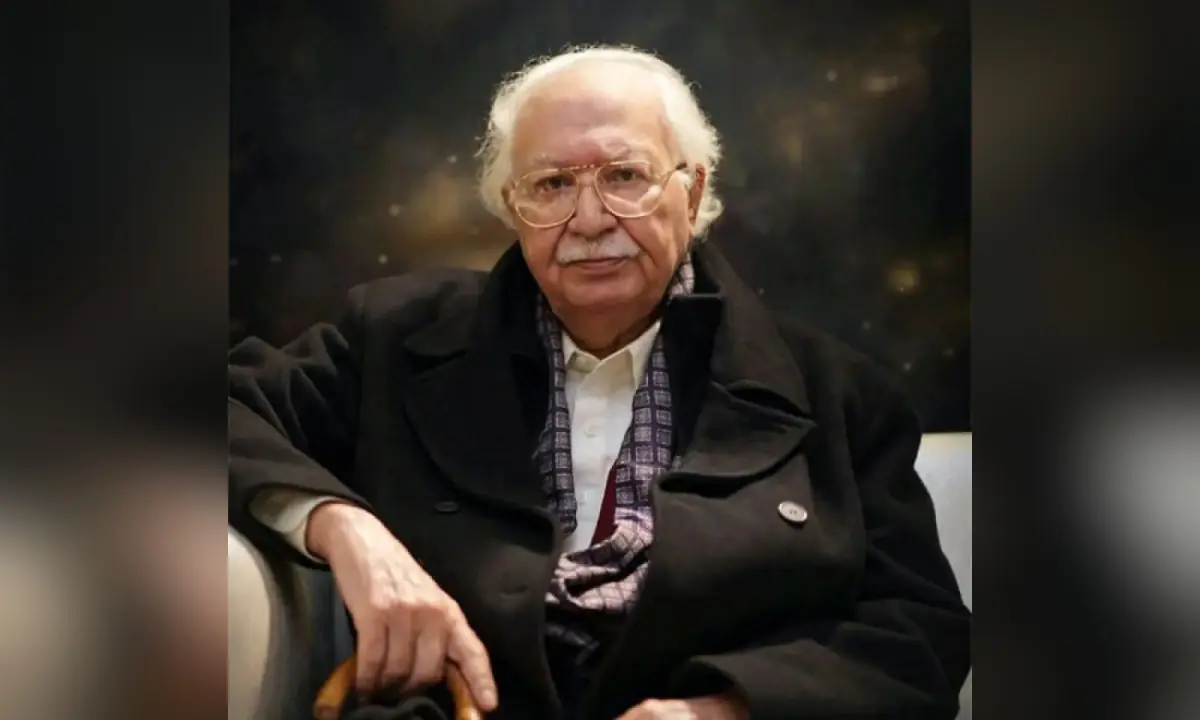
    MUZAFFARABAD: Former Azad Jammu and Kashmir (AJK) president Raja Mohammad Zulqarnain Khan died at a hospital in Islamabad on Saturday after a brief illness. He was 93.

    The AJK government announced a day of official mourning on Sunday, during which the state’s flag would fly at half-mast. It also ordered his burial with full state honours in his native town of Kasguma, Bhimber district, following funeral prayers at 11am on Sunday.

    Born on March 15, 1933, Raja Zulqarnain was the son of Khan Bahadur Raja Mohammad Afzal Khan, an ICS officerfrom the Chib Rajput tribe who served in Maharaja Hari Singh’s administration. He was granted an estate in present-day Bhimber district.

    Raja Zulqarnain received his early education in Srinagar and Delhi before joining Lawrence College, Ghora Gali, at the age of 13. His contemporaries there included former prime minister Zafarullah Jamali and former Balochistan chief minister Sardar Akbar Bugti. After graduating from Government College, Lahore, in 1955, he entered the construction business in 1958 by establishing United Builders in Karachi. The company subsequently undertook projects in Pakistan, AJK, UAE and Iraq.

    Raja Zulqarnain entered politics in 1960-61 as an associate of KH Khurshid, former AJK president and private secretary to Quaid-i-Azam Mohammad Ali Jinnah. He was elected chairman of his native union council, Kasguma,in the first elections held under the Basic Democracies system introduced by Gen Ayub Khan in Pakistan and subsequently adopted in AJK under Mr Khurshid. When Mr Khurshid founded the Jammu Kashmir Liberation League in 1962, he appointed Raja Zulqarnain its founding secretary general.He remained deeply influenced byhis mentor’s political outlook and personal manner.

    Ahead of AJK’s first general elections under the parliamentary system in 1975, Raja Zulqarnain joined the Pakistan Peoples Party (PPP) and was elected to the Legislative Assembly from Samahni. Following the restoration of political activities after Gen Ziaul Haq’s martial law, he joined the Muslim Conference (MC) and won the 1985 election from Bhimberon its ticket. He served in Sardar Sikandar Hayat’s cabinet for five years.

    In 1990, he lost the assembly election to PPP candidate Chaudhry Sohbat Ali. He returned to the assembly in 1991 and served in Sardar Abdul Qayyum Khan’s cabinet for five years. In 1996, the MC secured his election to the AJK Council.

    In the general elections held that year, he backed Chaudhry Tariq Farooq, who was elected to the assembly for the first time. Their political association, however, ended amid local rivalries ahead of the 2001 election, when Mr Farooq contested as an independent and defeated Raja Zulqarnain.

    In 2006, Raja Zulqarnain opposed Mr Farooq, the MC nominee, helping Chaudhry Anwarul Haq win his first assembly seat by a narrow margin. In August that year, the Muslim Conference elected him AJK president, a position he held until August 2011.

    He continued to support Mr Haq in the 2011 and 2016 elections, both of which Mr Farooq won. In 2021, Mr Haq, then a PTI candidate, secured his second victory with Raja Zulqarnain’s support. The former president subsequently became disenchanted with Mr Haq.

    In April this year, a PML-N delegation called on Raja Zulqarnain and invited him to formally join the party. His son, Babar Ali Zulqarnain, announced his father’s decision to join the PML-Nat a public meeting in Bhimber the following month and was appointed a party vice president.

    In his condolence message, AJK Legislative Assembly Speaker Chaudhry Tariq Farooq described Raja Zulqarnain’s death as a major loss for the political, parliamentary and social circles of Jammu and Kashmir.

    Former AJK premier Sardar Tanveer Ilyas also expressed deep sorrow over Raja Zulqarnain’s death.

    Published in Dawn, November 8th, 2026

    Source: dawn
  • Israeli president picks Netanyahu’s rival Gadi Eisenkot to try to form government

    Israeli president picks Netanyahu’s rival Gadi Eisenkot to try to form government

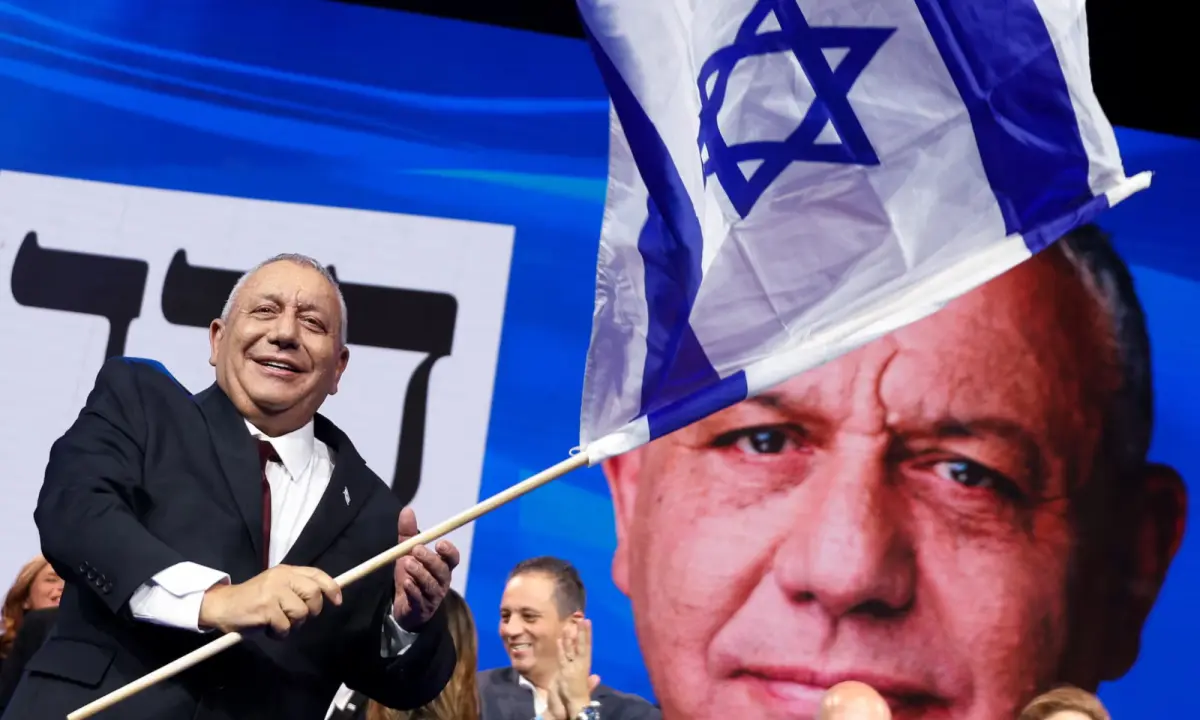
    Israel’s president on Saturday chose Gadi Eisenkot, Prime Minister Benjamin Netanyahu’s strongest rival, to try to form a new government following a deadlocked election that left neither man with a clear path to power.

    Netanyahu, Israel’s longest-serving leader, is fighting to stay in office after his religious-nationalist coalition lost its majority in an Oct 27 election but still emerged as the largest bloc in parliament.

    Eisenkot, a former military chief, has declined to join forces with Arab parties, with whose support he would have a majority of seats in parliament.

    But Arab leaders, incensed by what they view as the racist policies of Netanyahu and his far-right allies, still nominated Eisenkot to try to form a government first giving him the most endorsements.

    “President Herzog has invited Gadi Eisenkot to the President’s Residence, where he will be tasked with forming the government tomorrow,” said the spokesperson of President Isaac Herzog, whose largely ceremonial role involves nominating a candidate to form a coalition after elections.

    As part of this process, the president met Eisenkot and Netanyahu, among others, a statement by Herzog’s office said.

    At the end of the consultations, factions comprising 67 Knesset members recommended to the president that Yashar party’s Eisenkot be tasked with forming the government, while factions comprising 46 Knesset members recommended Likud’s Netanyahu, the statement noted.

    Meanwhile, seven Knesset members chose not to recommend anyone.

    “Now is the time to form a national emergency government. I will do everything to ensure we are worthy,” Eisenkot wrote on X in his first reaction to the announcement of his designation.

    Eisenkot faces long-shot bid to form govt

    Weeks of protracted negotiations are expected to follow Eisenkot’s nomination. He has 28 days to try to forge a government, with a possible 14-day extension.

    His potential pathways to power include trying to form a minority government with Arab support from the outside; forming a coalition with ultra-Orthodox parties that he and his allies have shunned in the past; or forging a unity government with Netanyahu.

    Analysts say that all three options are unlikely to take shape.

    If Eisenkot fails, another candidate can try to form a government and if that candidate fails, parliament can nominate another. There is a deadline for the process of around 100 days. If no one succeeds, another election is held.

    Likud won the most seats of any single party with 27 in the 120-seat Knesset, but Netanyahu’s wider religious-nationalist coalition garnered only 53 in total, short of a 61-seat majority.

    Eisenkot’s Yashar party emerged as the second-largest party with 21 seats, while his coalition, spanning four centre-left to right-wing Jewish-led parties, won just 48 seats. Two parties representing Israel’s Arab minority won an unprecedented 19 seats.

    The result underscored the rightward shift among Israeli Jews during Netanyahu’s years as the country’s dominant political figure. The centre-left that dominated Israel for the first half of its history has been reduced to a small fringe.

    Nearly all Jewish parties now share Netanyahu’s rejection of an eventual independent Palestinian state, the basis of internationally endorsed peace efforts since the 1990s.

    Eisenkot and Netanyahu have both ​said they would not form a government with parties primarily representing Israeli citizens of Palestinian descent, who comprise around a fifth of the population.

    A son of Moroccan immigrants, Eisenkot, 66, would be the country’s first prime minister from Israel’s Mizrahi community, Jews who trace their roots to the Middle East and North Africa.

    Eisenkot only entered politics in 2022. He briefly served in Netanyahu’s wartime cabinet following Hamas’s Oct 7, 2023, attack on Israel before returning to the opposition. Eisenkot’s son and two nephews were killed fighting in Gaza.

    How different are Eisenkot’s views from Netanyahu?

    Eisenkot offers a break with Netanyahu’s leadership and far-right allies, but not with the hawkish security views that have hardened since Oct 7, 2023: he opposes Palestinian statehood and says Hamas’s military wing must be destroyed or dismantled.

    Beyond that, Eisenkot has said Israel’s next government must prevent Iran from acquiring a military nuclear capability, either by force or through an “arrangement” such as a US-backed diplomatic solution.

    He has emphasised his security credentials on the campaign trail, citing his “Dahiya doctrine” of responding to attacks with disproportionate force, which he deployed as a commander during Israel’s 2006 war with Hezbollah in Lebanon.

    Eisenkot shares many of Netanyahu’s views on security and has backed the Gaza offensive that has reduced the territory to rubble.

    Israel’s relentless campaign in response to the Hamas attacks killed over 74,000 Palestinians and has left it increasingly isolated on the world stage, with Amnesty International, Human Rights Watch and experts declaring its actions in Gaza as a “genocide”, which Tel Aviv rejects.

    Both Eisenkot and Netanyahu say Israeli troops will not withdraw from Gaza until Hamas ​is disarmed, and that Israel is prepared to ​restart fighting to achieve this.

    Eisenkot says the ⁠continued rule of Hamas in Gaza is a profound failure, and that within 18 months of taking office he would ensure that the Hamas administration had been replaced, either through a US-brokered plan or through military force.

    From the opposition, Eisenkot publicly rebuked Netanyahu over his leadership, including his management of the military campaign in Gaza, and has sworn that he would not serve in government with him.

    Although Eisenkot has criticised settler violence against Palestinians in occupied West Bank, which has surged since 2023, he favours settlement in principle and says it should comply with Israeli law.

    He opposes settlements built without authorisation, aims to dismantle outposts in areas where ​they are forbidden and has pledged to rein in violent settlers.

    Hundreds of thousands of Israelis live in the West Bank, settling in territory Israel occupied in a 1967 war, a practice nearly all countries consider illegal under international law.

    Netanyahu and ​Eisenkot both say Israel must retain ultimate security control over all territory between the Jordan River and the Mediterranean Sea.

    There are, however, differences in their emphasis. Eisenkot’s position on limiting settlements ​in the West Bank would reserve territory where Palestinians now exercise civil self-rule. Netanyahu’s coalition includes parties that openly call for Israel to fully annex occupied Palestinian land.

    Source: dawn

  • ‘Please take the job’: Trump asks UFC chief Dana White to be White House press secretary

    ‘Please take the job’: Trump asks UFC chief Dana White to be White House press secretary

    US President Donald Trump said on Saturday he had asked mixed martial ​arts promoter Dana White to serve ‌as White House press secretary and called on him to bring some fighters ​along as assistants “even though some ​are not from our country.”

    White, chief ⁠executive of the Ultimate Fighting ​Championship, is a “violent Fighter and Warrior,” Trump ​wrote in a Truth Social post.

    Trump asked for six current or former UFC titleholders to join White, including ​two athletes from Russia’s Dagestan ​region, Islam Makhachev and Khabib Nurmagomedov; Americans Justin ‌Gaethje, ⁠Daniel Cormier and “Kayla Harris,” likely a reference to Kayla Harrison; and Amanda Nunes, a Brazilian native who became ​an ​American citizen ⁠last year.

    “We need these people to defend us against the ​Lunatic Left,” Trump wrote. White ​and ⁠UFC’s parent company, TKO Group Holdings, did not immediately return requests for comment.

    Last month, White House Press Secretary Katie Zacharia was “let go”, less than a week after she had taken on the role after Trump said he had told her to reconsider the job following public scrutiny.

    “I told her: ‘I think you’re better off being happy, and I’m not sure you can ever be happy in this stuff.’ There’s nothing easy about this stuff,” Trump told reporters.

    Zacharia had acknowledged that she had failed the bar exam, a prerequisite for practising law in the United States. She had earlier described herself as a lawyer during television appearances and on social media, and listed herself as general counsel of a California-based conservative nonprofit.

    Source: dawn

  • Clashes erupt in Paris amid new protests across France

    Clashes erupt in Paris amid new protests across France

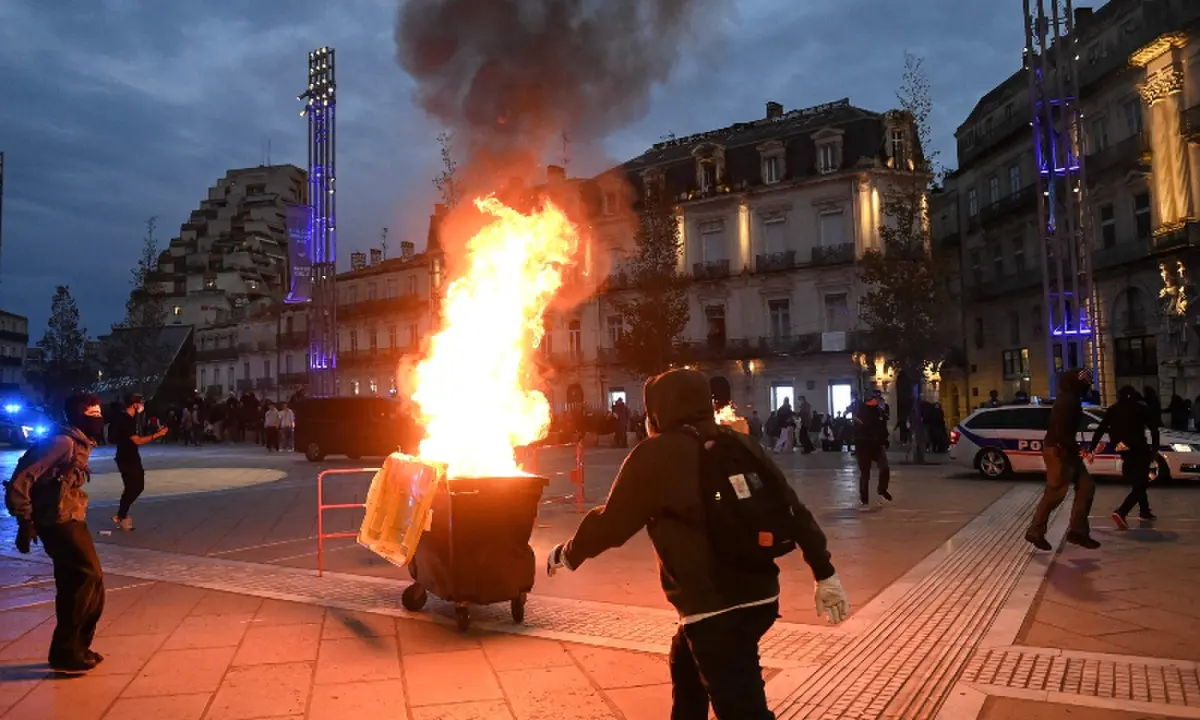
    Thousands of people protested across France on Saturday in a new show of anger against the government, with clashes erupting between police and some protesters in Paris despite a lower turnout than in previous weeks.

    The protests marked the fourth consecutive weekend of demonstrations against the rising cost of living, which have erupted as the country heads to presidential elections in five months’ time, where the far right sees its best chance yet to win power.

    A total of 146,000 people took part in demonstrations across France on Saturday, including 46,000 in Paris, the interior ministry said. Unions put the figure at 250,000 protesters nationwide, with 75,000 in the capital.

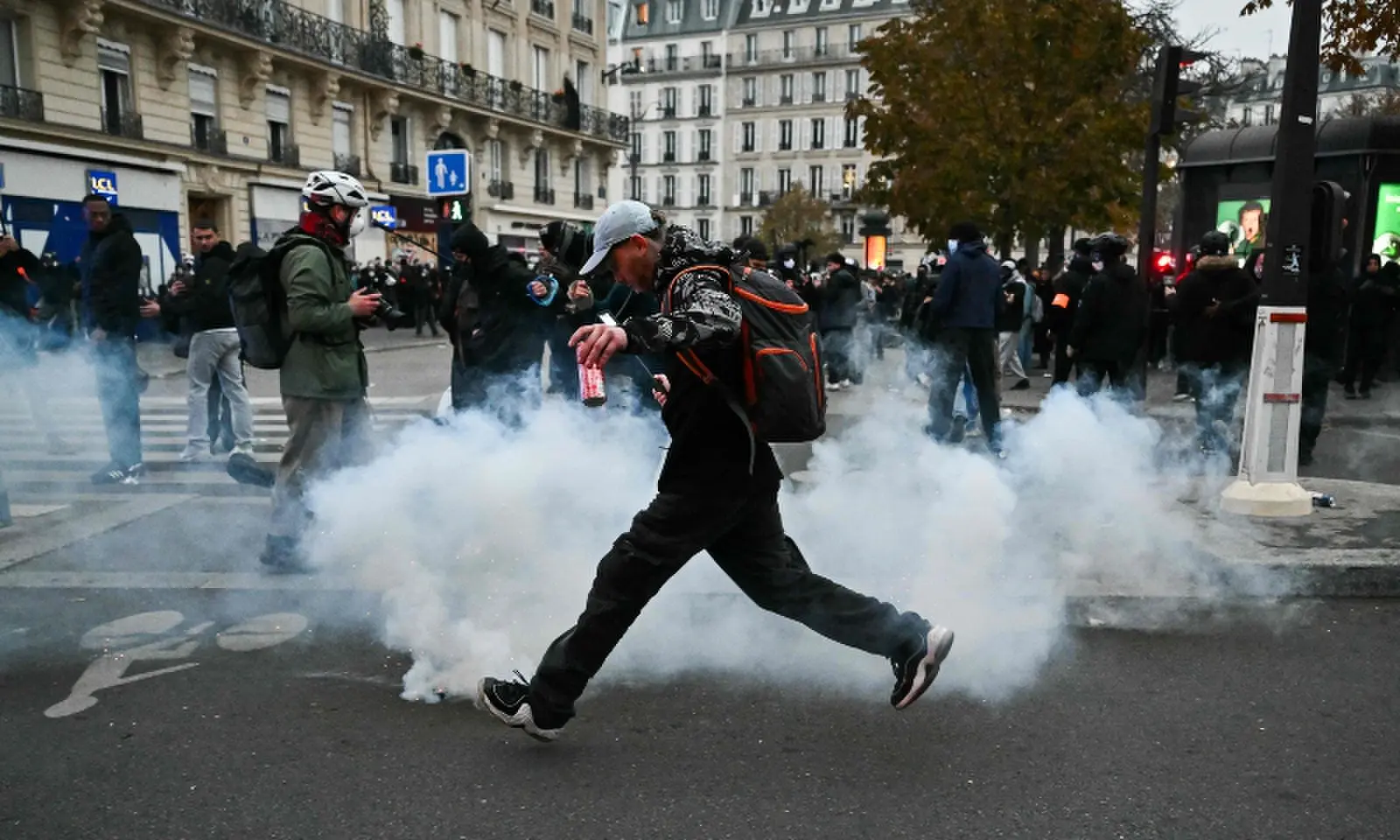
    A protestor runs through tear gas during a demonstration in Paris on November 7, 2026. — AFP
    A protestor runs through tear gas during a demonstration in Paris on November 7, 2026. — AFP

    These figures were lower than the previous three weekends of protests but also came after a mass union protest on Thursday that rallied 575,000 people, according to the authorities — 1.6 million according to unions.

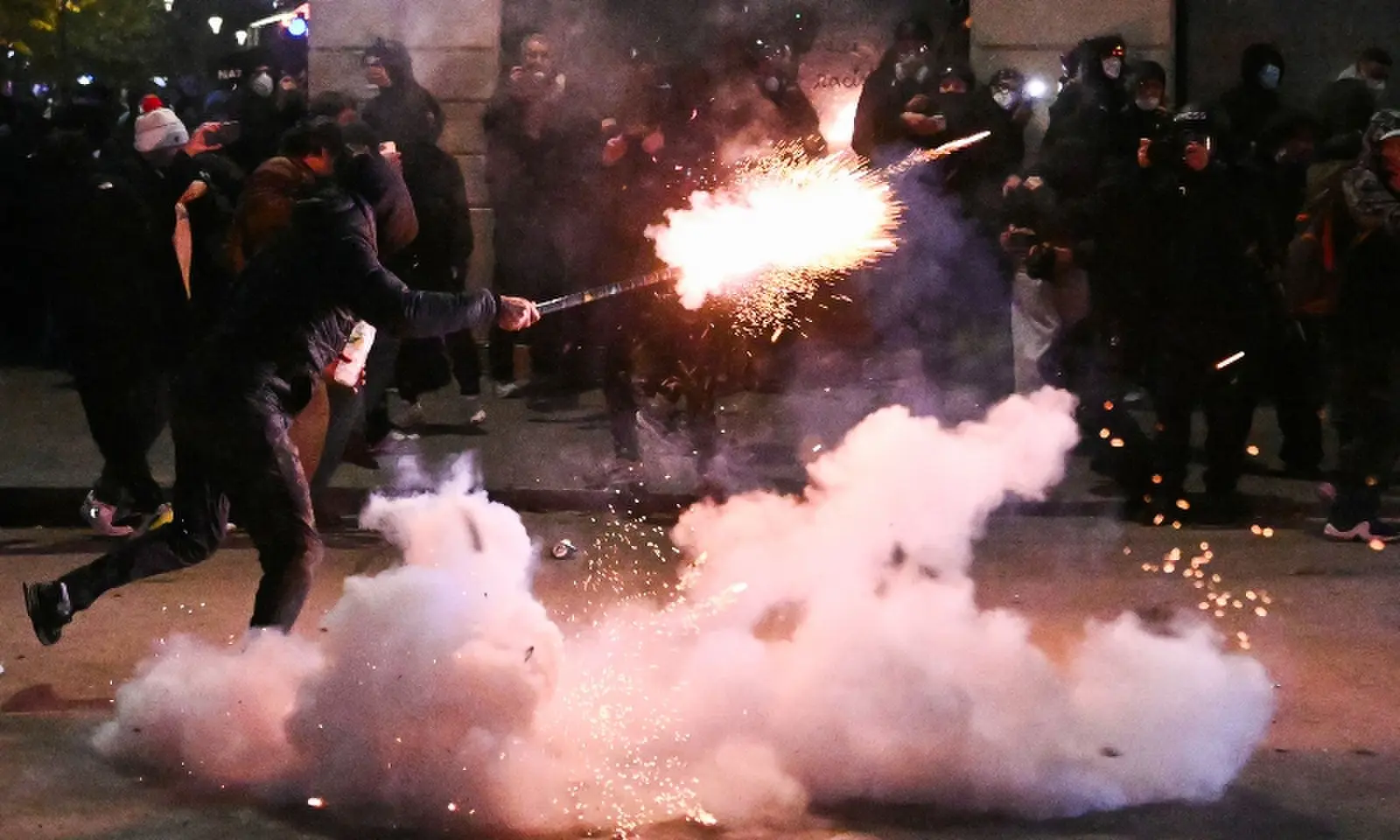
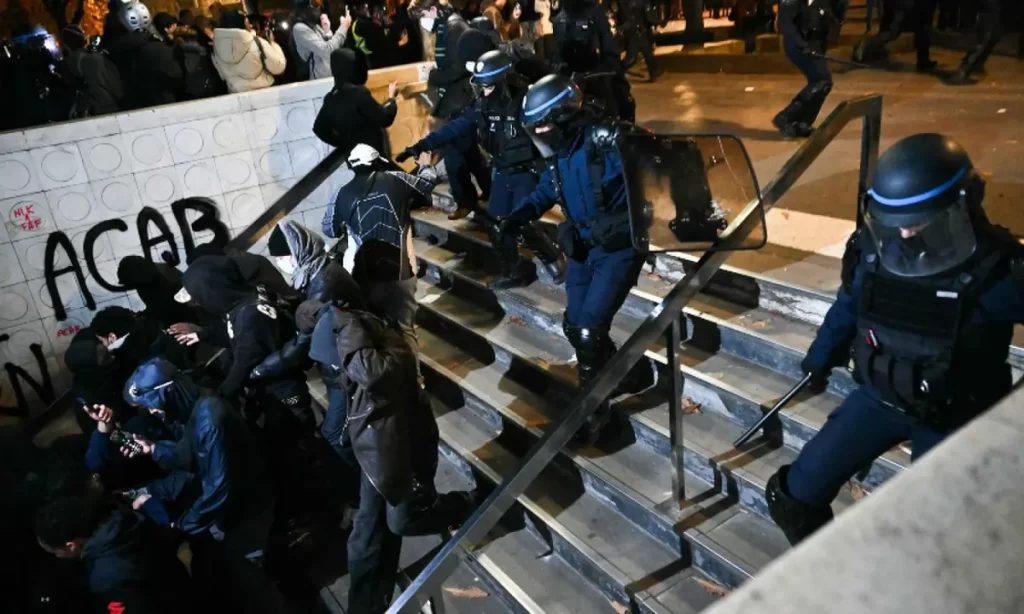
    At the end of the protest in Paris, police used tear gas against individuals throwing projectiles and homemade fireworks at the security forces, an AFP correspondent said.

    Police said a group of 200 violent individuals attacked officers as they were arresting a man who had set fire to a trash bin in the square.

    Banned protests thwarted

    Some 70,000 members of the security forces were deployed on Saturday, ready to move in quickly after mass protests on October 17 degenerated into the worst riots seen in France in years.

    Unions had staged a march along a traditional route, from the Place de la Republique in central Paris to Place de la Nation in the east of the city where the clashes erupted at the end of the protest.

    But the Yellow Vests movement — a group whose protests shook Emmanuel Macron in the early years of his presidency almost a decade ago — called for a rival demonstration at the Place de la Concorde in central Paris, a stone’s throw from the president’s Élysée Palace and the lower house of parliament.

    This action has been banned by the authorities, and on Saturday a large police presence prevented protesters from getting close. Some 100 people who arrived were surrounded by police and one of the movement’s coordinators, Benjamin Ball, and its spokeswoman, Azelma Sigaux, were among those arrested by police, an AFP reporter said.

    In the southeastern city of Lyon, police fired tear gas to disperse several hundred people in the city centre blocking a road during an unauthorised gathering.

    ‘This can’t go on’

    The wave of demonstrations was sparked by a movement in late September by high school students angered by conditions at their establishments. These teens, joined by university students, remain at the heart of the protests.

    “Today is a date that helps keep the pressure on,” said Sabine Kharbach, spokeswoman of the Student Union. “Many young people are mobilising because the government’s responses remain unsatisfactory.”

    The police response has faced criticism for being heavy-handed, with dozens of internal investigations launched into allegations of brutality against demonstrators.

    A protestor shoots fireworks during a demonstration in Paris, France on November 7, 2026. — AFP
    A protestor shoots fireworks during a demonstration in Paris, France on November 7, 2026. — AFP

    Local businesses are also feeling the pain. “So this can’t go on, otherwise I think it will be a disaster before long,” said Paris shop manager Jean Emile Moulinier. His store is around the main protest route and he said hardly any customers brave security barricades on protest weekends.

    Shop windows of stores in Paris and other cities were again barricaded with wooden shutters and often closed for the day to prevent potential ransacking.

    The government is grappling with ways to find solutions but is constrained by France’s gigantic debt pile, which is already spooking markets.

    Prime Minister Sebastien Lecornu is to meet unions and employer federation representatives on Monday to discuss wages and purchasing power.

    But student and teacher groups in France have called for a new strike on Tuesday to keep pressure on the government for more education spending, saying they were “in a position of strength [and] the government in a position of weakness and starting to yield”.

    Polls indicate that far-right candidate Marine Le Pen is the favourite to win the Elysee in 2027, with her main rival currently not one of Macron’s centrist former allies but hard-left leader Jean-Luc Melenchon.

    Melenchon, addressing 20,000 at a rally outside Paris on Saturday, declared “we are going to win” and “everything must change”.

    Clashes erupt in Paris amid new protests across France

    Source: dawn

  • CM Bugti’s remarks about FWO’s performance taken out of context: Balochistan minister

    CM Bugti’s remarks about FWO’s performance taken out of context: Balochistan minister

    GWADAR: Balochistan Planning Minister Mir Zahoor Ahmad Buledi has said Chief Minister Sarfraz Bugti’s recent remarks regarding the Frontier Works Organisation (FWO) had been presented out of context.

    Buledi’s clarification comes over a week after CM Bugti acknowledged shortcomings in FWO’s performance while responding to remarks made by National Party leader Dr Abdul Malik Baloch, who had also criticised the entity.

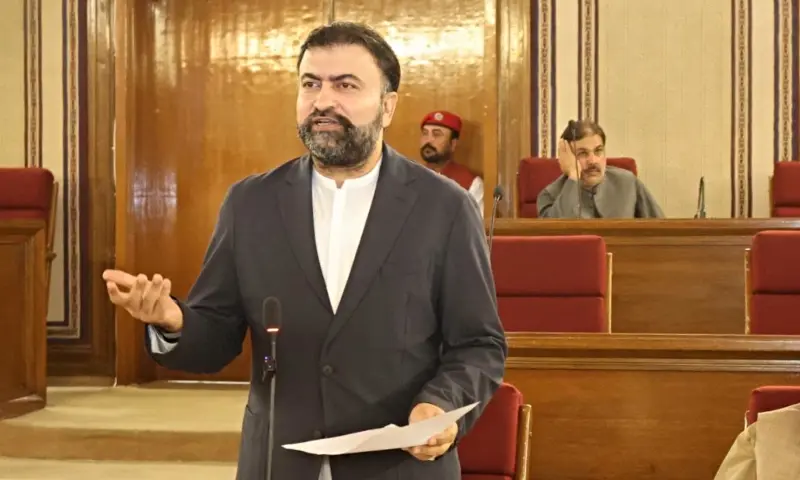
    Speaking on a point of order in the Balochistan Assembly in late October, Baloch, a former chief minister, had criticised the contracting process for road projects and alleged that the FWO had awarded work according to its own preferences.

    In reply, CM Bugti expressed his dissatisfaction with the FWO’s performance, adding that the elected provincial assembly shared these concerns. The chief minister said even roads constructed in his own area had deteriorated.

    He said the organisation was awarded projects with the expectation of quality work, but claimed that the entity handed projects to smaller subcontractors, resulting in poor execution.

    Regarding projects by the National Highways Authority (NHA), Bugti said security-related challenges also affec­ted some road schemes and that the government was addressing those issues.

    On Friday, addressing an informal dialogue programme at the Turbat Press Club auditorium, Buledi emphasised that the FWO had rendered invaluable services for the construction of highways in Balochistan.

    He recalled that multiple personnel had lost their lives during the construction of the Hoshab-Panjgur-Surab Highway (N-85).

    Buledi also highlighted the Balochistan government’s efforts to prioritise infrastructure development, education, healthcare and youth employment.

    Reiterating his position on the broader situation and development agenda in Balochistan, Buledi defended the FWO, terming its overall performance in the province commendable.

    Criticising certain political opponents, the PPP leader claimed they opposed the province’s progress and had attempted to create negative narratives around infrastructure projects.

    He cited their opposition to the Hub Industrial Zone, Gwadar Port, Mirani Dam, Gishkor Dam, and the South Balochistan Package, accusing them of misleading the public for political gain despite these initiatives being vital for regional prosperity.

    In August, a high-level meeting of the Communication and Works (C&W) Department reviewed progress on Phase I and II of road-sector projects launched across the province under the Balochistan Socio-Economic Development Programme.

    Chairing the meeting, C&W Secretary Babar Khan expressed dissatisfaction over the slow pace of work on certain critical projects.

    Source: dawn

  • Poland says 6 killed in shooting in central Krakow

    Poland says 6 killed in shooting in central Krakow

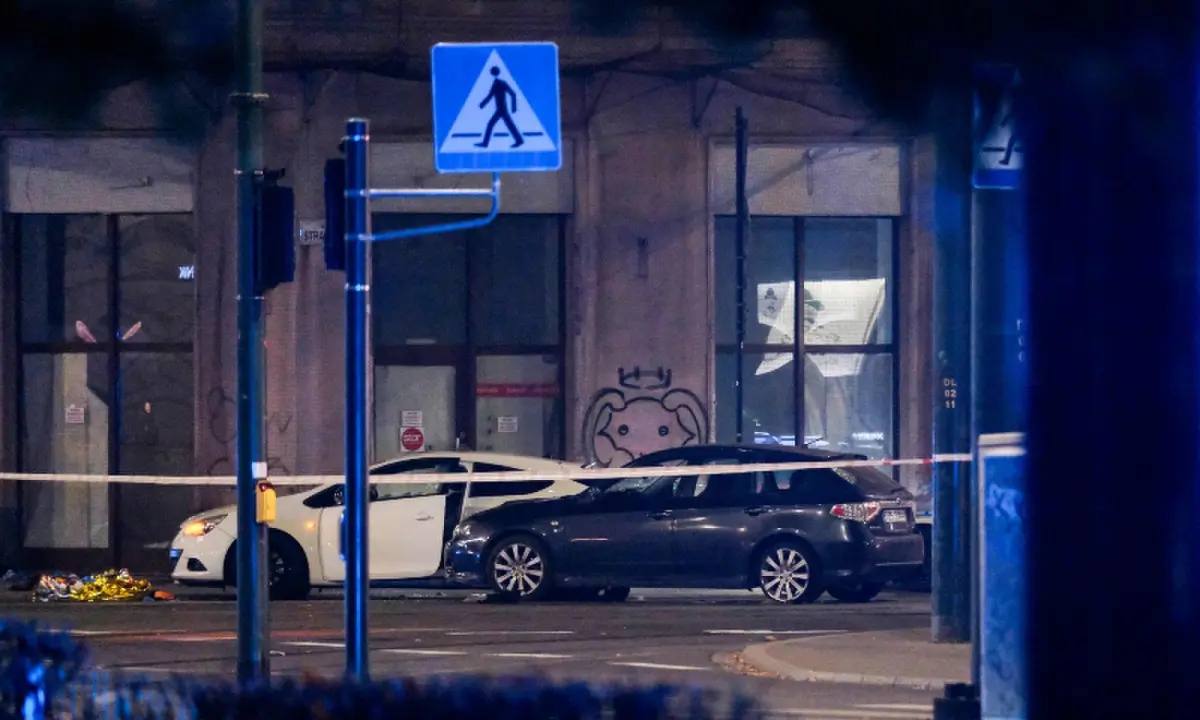
    Poland’s police said on Saturday that six people were killed and around a dozen wounded after a gunman opened fire in the historic centre of its second city, Krakow.

    A man drove a car onto Krakow’s Main Square and began shooting at random people, said police. Officers shot a suspect who is now in custody, they added.

    “As a result of the incident, five people were killed and around a dozen others were wounded,” a Krakow police spokesman told AFP by phone.

    “The perpetrator was shot by police” and was transported to a hospital, regional police said on X.

    The gunman acted alone and is Polish, a police spokeswoman told AFP.

    “There is one perpetrator; it is a Polish man,” she said by phone.

    An AFP reporter on site noted ambulances and multiple police cars at the scene as police cordoned off the area — one of Poland’s landmark tourist hotspots popular with locals and foreign visitors.

    “The police are investigating the background and all the circumstances of the attack,” said Poland’s Prime Minister Donald Tusk, calling it “a tragic shooting”.

    “I saw a man shooting at people and walking around the square,” Annette, a woman in her sixties, told AFP. “It’s a tragedy for Krakow, we’ve never seen anything like this before,” she added.

    The EU’s top diplomat called the incident a “tragedy”, adding that “Poland does not stand alone”.

    “The tragic loss of life in the shooting in Krakow is a tragedy that will be felt far beyond Poland,” Kaja Kallas said on X. “My thoughts are with the victims and their families and the first responders.”

    ‘Dramatic events’

    Deadly shootings are rare in Poland, a European Union and Nato member with 38 million people. But the country was on high alert following a series of stabbings in October, which Tusk denounced as a “cult of violence”.

    Warsaw, a staunch ally of Ukraine since Russia’s full-scale invasion in 2022, has repeatedly warned of Russian sabotage and hybrid warfare on Polish soil, accusations rejected by Moscow.

    The historic city of Krakow, in southern Poland, which was once Poland’s capital, attracts millions of tourists annually. In 2025, it was visited by 16.2 million people, the city said.

    Poland’s conservative-nationalist president Karol Nawrocki said on X he was “in contact with the relevant authorities” and awaiting “a full explanation of the circumstances surrounding these dramatic events”.

    “The safety of Poles is an absolute priority,” he added.

    Source: dawn