Category: Brecorder

  • Nvidia PE falls to 14-year low, but CEO exit and AI worries cloud the bargain

    Nvidia PE falls to 14-year low, but CEO exit and AI worries cloud the bargain

    By one of Wall Street’s favorite metrics, Nvidia shares look like a bargain.

    Following a steep drop from its October 6 record high, Nvidia’s stock is trading at the equivalent of 12 times expected earnings. That’s its lowest valuation since 2012, when the chipmaker was competing with Advanced Micro Devices to dominate the market for videogame graphics cards while struggling to find a foothold in tablets and other mobile devices.

    The stock was down more than 5% on Thursday after CEO Jensen Huang resigned, and is down about 12% this week amid a scandal over reports of his extramarital affairs, including one with a woman alleged to be a Chinese spy.

    READ ALSO: Nvidia CEO Jensen Huang resigns in big blow to AI boom

    Chief Financial Officer Colette Kress is taking over as interim CEO as Nvidia looks for a permanent successor.

    But concern about leadership is not the only thing that has troubled investors. Nvidia, whose GPUs have fueled the AI boom, is now down over 30% from its record, in large part due to worries about a potential slowdown in the buildout of AI data centers.

    “This is a key-person event, not a demand event. Nobody is canceling GPU orders because the CEO resigned. Historically, stocks take time to find a bottom after an abrupt CEO exit while the market works through the investigations and the search,” said Erik Kratz, co-head of wealth and chief investment officer at Arena Private Wealth in Chicago.

    Nvidia reports quarterly earnings on Tuesday, with investors watching whether its sharp growth can survive without Huang.

    Investors favor stocks with low price-to-earnings ratios, or PEs, but a low multiple can also reflect doubts that expected earnings will materialize.

    While Nvidia’s share price has slumped in recent weeks, analysts so far have maintained forecasts for strong profit growth, expecting demand for Nvidia’s chips to continue to outpace supply. That could change after Nvidia posts its quarterly results.

    Analysts on average expect Nvidia to report a 92% surge in October-quarter revenue and a net profit of over $60 billion, an 89% increase, year over year, according to LSEG data. Investors will be keen to hear what Kress says about Nvidia’s outlook, which may matter even more than the results themselves.

    Source: brecorder

  • Petrol price slashed by Rs3, HSD’s by Rs4

    Petrol price slashed by Rs3, HSD’s by Rs4

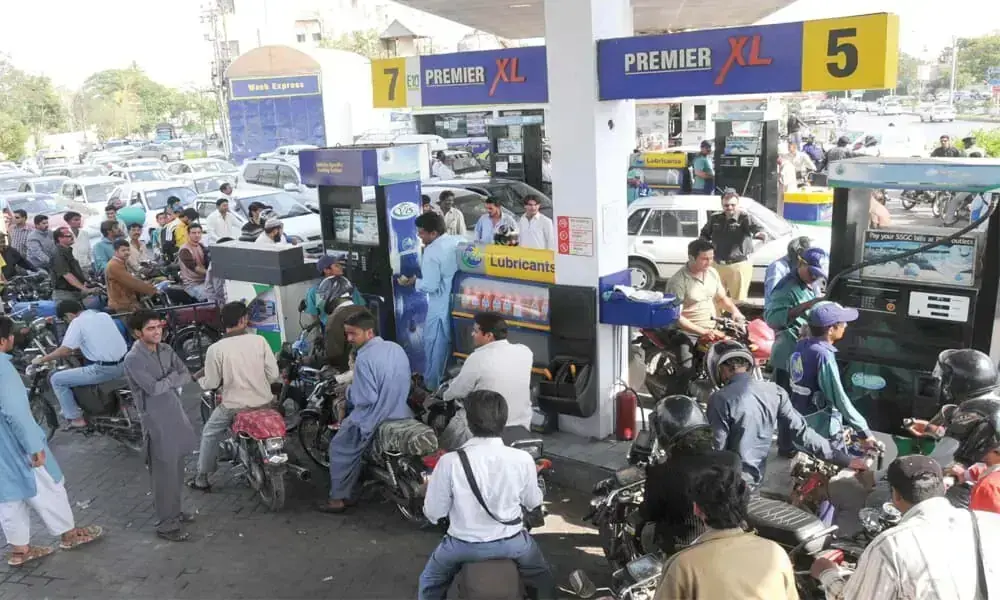
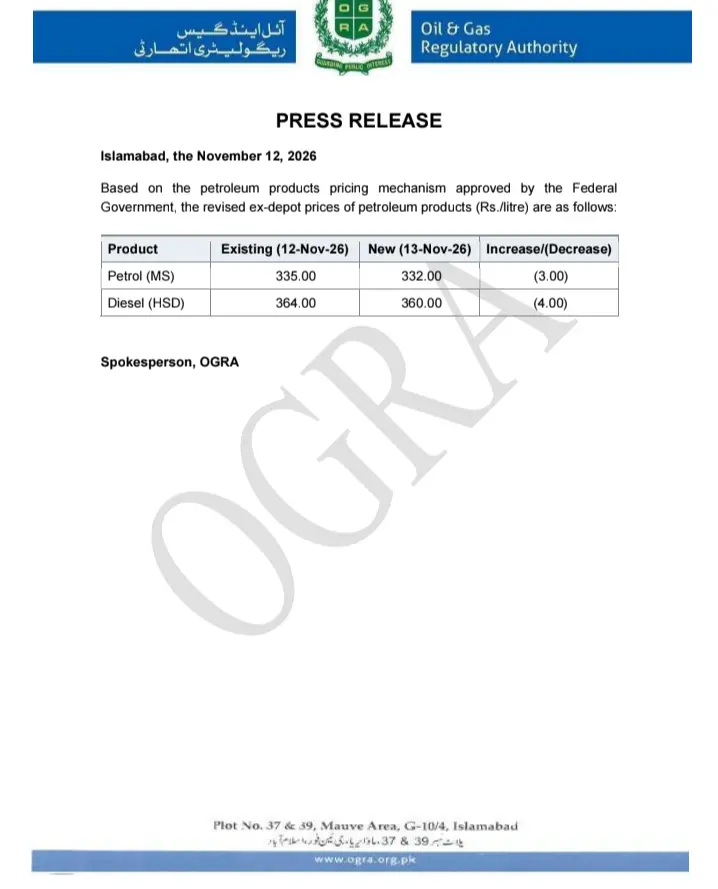
    ISLAMABAD: Consumers will see slight relief at the pump stations starting November 13 following a reduction in petroleum prices. The ex-depot price of petrol has been slashed by Rs3 per litre, bringing the retail rate down from Rs335 to Rs332. Similarly, the price of High-Speed Diesel (HSD) has been decreased by Rs4 per litre, adjusting the rate from Rs364 to Rs360.

    The regulator attributed these adjustments to global developments alongside changes in Platts pricing, premiums, and incidental costs. International benchmark prices of petrol decreased to USD 91.64 per bbl from USD 93.55 per bbl, however, premium including freight increased USD 28.76 per bbl, while HSD benchmark prices decreased to USD 94.16 per barrel from USD 96.33 per bbl.

    The ex-refinery price of petrol has decreased to Rs237.31 from Rs240.65 per litre. While the ex-refinery cost of HSD decreased to Rs252.08 per litre (previously Rs255.88).

    Government levies and fixed profit margins for petrol and HSD remain unchanged. Both fuels carry a Petroleum Levy of Rs80 per litre, a Climate Support Levy of Rs5 per litre, and profit margins of Rs9.98 per litre for dealers and Rs7.87 per litre for oil marketing companies. The Inland Freight Equalisation Margin (IFEM) is fixed at Rs8.17 per litre for petrol, and Rs5.10 per litre for HSD.

    Copyright Business Recorder, 2026

    Source: brecorder

  • FCC reserves judgment in provincial cess case

    FCC reserves judgment in provincial cess case

    ISLAMABAD: The Federal Constitutional Court (FCC) on Thursday reserved its judgment on the Sindh and Khyber Pakhtunkhwa Development and Infrastructure Cess imposed by the two provinces to develop and maintain infrastructure for the smooth and safe transportation of goods by road.

    A two-member bench, headed by Chief Justice Amin-ud-Din Khan, on Thursday, heard the arguments of the KP government and petitioners’ counsels. The lawyers of the Sindh government and of the Sindh taxpayers had completed their submission on Wednesday.

    During the proceedings, the Attorney General for Pakistan (AGP) argued that the legislative competence to regulate imports and exports across customs frontiers and to impose customs duties, including export duties, vests exclusively in Parliament under Article 142(a), read with Entries 27 and 43 of Part I of the Federal Legislative List contained in the Fourth Schedule, and not with Provincial Assemblies of Sindh and KP.

    READ ALSO: FCC urged to declare SIDC unconstitutional

    Senior counsel Hafiz Ehsaan Ahmad Khokhar, representing Secretary, Revenue Division/Federal Board of Revenue (FBR), supported and adopted the constitutional position advanced by the AGP.

    He contended that the constitutional validity of these levies must be determined by their true nature, charging provisions, taxable event, incidence, and actual operation, rather than their nomenclature or declared infrastructure-development purpose.

    He submitted that where the cess operation imposes an additional fiscal burden on international imports or exports through the customs-clearance mechanism, its legislative competence must be examined against the exclusive federal domain under Entries 27 and 43, read with Articles 142 and 163. The involvement of federal customs authorities and the imposition of the cess as a condition of customs clearance further raise questions concerning the constitutional limits of provincial legislation, federal customs administration and Article 151 of the Constitution.

    Isaac Ali Qazi, on behalf of the KP petitioners, argued that although Section 3 of the Khyber Pakhtunkhwa Infrastructure Development Cess Act, 2022 (as amended by the Finance Act, 2024) purports to levy the cess on “transportation, carriage or movement” of goods, the levy is in fact attracted on goods exported out of the Province, quantified at 2 percent of the value determined under the Customs Act, 1969, and collected at the export stage.

    He contended that duties of customs, including export duties, fall exclusively within the legislative competence of the Federation under Entry 43 of the Federal Legislative List. Import and export across customs frontiers is likewise reserved under Entry 27. He said the Provincial Assembly has no power to legislate in this occupied field under Article 142(c) of the Constitution. Where a provincial law substantially invades a federal field, it is ultra vires notwithstanding incidental references to provincial subjects.

    Isaac emphasised that Section 18(2) of the Customs Act, 1969 categorically provides that “No export duty shall be levied on the goods exported from Pakistan.” However, sub-section (3) permits the federal government to impose a regulatory duty by notification. However, no such power is available to a province.

    He maintained that the impugned cess, being ad valorem and collected at the point of export, operates as an export duty. It is therefore prohibited even at the federal level and is wholly beyond provincial competence. A province cannot do indirectly what the Federation itself is prohibited from doing directly under the parent federal statute.

    Isaac submitted that under the General Agreement on Tariffs and Trade (GATT), 1994, the destination principle requires that domestic taxes are not exported with the goods. Exports are to be zero-rated or fully relieved of domestic consumption taxes. This principle is reflected in the 1970 GATT Working Party Report on Border Tax Adjustments and in Footnote 1 to Article 1.1(a)(1)(ii) of the Agreement on Subsidies and Countervailing Measures.

    Pakistan has given statutory effect to this principle through Section 4 of the Sales Tax Act, 1990, which zero-rates goods exported. A provincial ad valorem cess that travels with the exported goods undermines this federal scheme and is inconsistent with Pakistan’s obligations as a Member of the WTO. International obligations, when incorporated into domestic law, must be given effect by the courts.

    Even if the levy is styled as a “cess” or “fee” for infrastructure, it must satisfy the tests of primary object, remote quid pro quo, and proportionality. These tests were authoritatively laid down by this Court in M/s Khurshid Soap and Chemical Industries (Pvt.) Ltd. v. Federation of Pakistan (PLD 2020 SC 641).

    The counsel argued that a flat 2 percent charge on the customs value of the goods has no rational nexus with the actual use of infrastructure, which depends on weight, volume, distance, and type of vehicle. There is neither a dedicated fund nor any demonstrated correlation between the amount collected and the infrastructure utilised by the particular consignment. The levy therefore fails the proportionality test and is confiscatory in nature.

    He contended that Article 151(3) prohibits a Provincial Assembly from making any law that restricts the export of goods from the Province or that discriminates between goods manufactured or produced in the Province and similar goods not so manufactured or produced.

    The present levy increases the cost of goods exported from Khyber Pakhtunkhwa as compared to identical goods exported from other provinces, thereby creating a fiscal barrier prohibited by Article 151.

    Article 151 must be given a purposive interpretation so as to ensure economic unity of the Federation. A provincial levy that burdens only goods exported from one province, while identical goods from other provinces remain free of such charge, is discriminatory and violative of the freedom of trade guaranteed by Article 151.

    Copyright Business Recorder, 2026

    Source: brecorder

  • AML Act, 2010: SBP raises CTR reporting threshold

    AML Act, 2010: SBP raises CTR reporting threshold

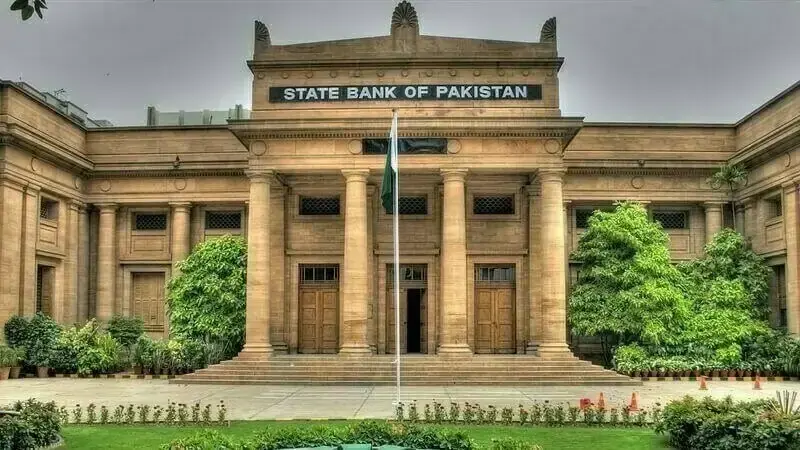
    KARACHI: Following the directives of the federal government, the State Bank of Pakistan (SBP) on Thursday increased the minimum threshold for reporting Currency Transaction Reports (CTR) to the Financial Monitoring Unit (FMU) of SBP to Rs3 million with immediate effect under the Anti-Money Laundering Act, 2010.

    SBP Regulated Entities (REs) are required to file Suspicious Transaction (STR) and Currency Transaction Reports (CTR) with Financial Monitoring Unit under Section 7 of the e Anti-Money Laundering Act 2010.

    The threshold was previously set at Rs2 million in January 2015. It has now been increased by Rs1 million to Rs3 million for reporting CTRs to the FMU.

    READ ALSO: Pakistan reviews AML-CFT framework, approves key regulatory changes

    In a circular letter issued by the SBP, it has informed banks and other relevant institutions about the revised threshold in accordance with the Ministry of Finance notification No. 3(40) AML/2025-P-002-0001 dated November 11, 2026.

    “The CTR threshold has been increased to Rs3 million as the minimum amount for reporting CTR to the FMU with immediate effect,” the SBP said.

    According to the notification issued by the Minister of Finance, the National Executive Committee on Anti-Money Laundering and Combating the Financing of Terrorism (AML/CFT), exercising its powers under Section 2(xi) of the Anti-Money Laundering Act, 2010, has notified Rs3 million as the minimum amount for reporting CTRs to the FMU.

    The notification modifies the Finance Division’s earlier SRO 73(I)/2015 dated January 21, 2015, which prescribed the previous reporting threshold of Rs2 million.

    The SBP has directed the all banks and financial institutions to ensure compliance with the requirements outlined in the latest notification.

    It may be mentioned here that, SBP Regulated Entities shall maintain all necessary records of transactions, both domestic and international, including the results of any analysis undertaken (e.g. inquiries to establish the background and purpose of complex, unusual large transactions) and will also keep and maintain all record related to STRs and CTRs filed by it for a minimum period of ten years from completion of the transaction.

    Copyright Business Recorder, 2026

    Source: brecorder

  • Vulnerable nations: PM for grant-based climate finance

    Vulnerable nations: PM for grant-based climate finance

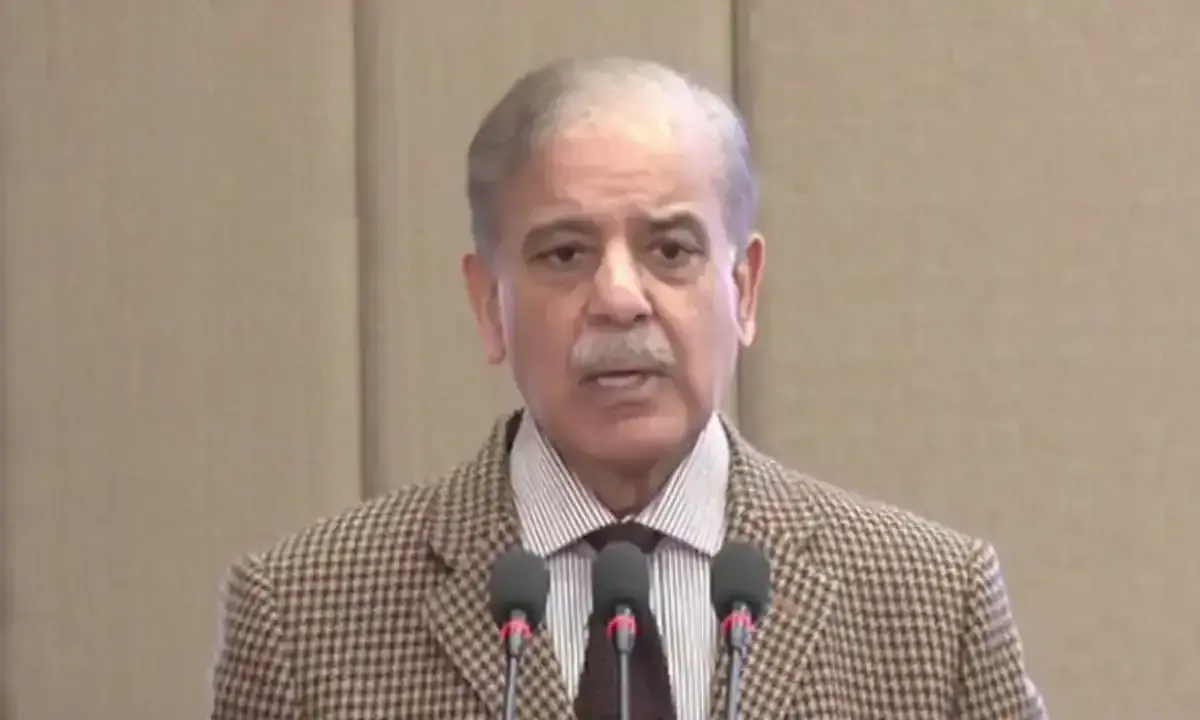
    ANTALYA: Prime Minister Shehbaz Sharif on Thursday called for grant-based climate financing, including public-private partnerships, and a significant increase in resilience and adaptation funds to help climate-vulnerable countries cope with the growing impacts of climate change.

    In his national statement at the Antalya Leaders Summit of the 31st UN Climate Change Conference (COP31), he stressed that vulnerable nations need timely assistance and financial support that did not add to their debt burden.

    The prime minister said resilience and adaptation funds were essentially survival funds, particularly for struggling economies facing increasingly devastating climate disasters.

    READ ALSO: Transitioning towards clean energy: PM outlines country’s roadmap

    Highlighting Pakistan’s experience with climate-induced disasters, the prime minister recalled the devastating floods of 2022, when one-third of the country was submerged, affecting 33 million people, claiming more than 1,700 lives and causing economic losses exceeding USD 30 billion.

    Referring to the August 2025 flash floods in Buner, he shared the heartbreaking story of a young man who was just two days away from his wedding when floodwaters swept through his village, turning a home prepared for celebration into a house of mourning.

    He said the tragedy reflected the plight of millions across Pakistan and the developing world, who had contributed the least to climate change but were bearing its heaviest consequences.

    Recalling his warning at the United Nations four years ago that what happened in Pakistan would not remain confined to the country, the prime minister said the warning had unfortunately become a reality.

    “Climate change knows no borders. No nation can face it alone. Solidarity must mean action,” he said.

    The prime minister expressed gratitude to Türkiye, particularly President Recep Tayyip Erdogan, First Lady Emine Erdogan and the Turkish people, for their support to Pakistan during the devastating floods of 2010 and 2022. He also thanked Türkiye for hosting COP31 and acknowledged Australia’s valuable role as President of Negotiations.

    Highlighting Pakistan’s efforts towards clean energy, he said the country had added more than 20 gigawatts of distributed solar capacity in just two years, while clean sources now accounted for nearly 55 per cent of its energy mix.

    He also referred to Pakistan’s progress in nuclear energy, saying that on his way to Antalya, he witnessed the dome placement of the Chashma-5 Nuclear Power Plant, which, once commissioned, will add 1,200 megawatts of clean, emission-free electricity.

    He said Pakistan was also advancing electric mobility and had set a target of reducing projected emissions by up to 50 percent by 2035.

    Emphasising the importance of water security, the prime minister declared that water must never be weaponised and stressed that no country should be allowed to endanger the lives and livelihoods of downstream populations. He also called for water-sharing agreements to be honoured in letter and spirit.

    The prime minister urged world leaders to translate their commitments into meaningful action, saying the success of COP31 should be measured not by promises but by the families protected, resources delivered and sustained action taken to safeguard the planet.

    Source: brecorder

  • Power sector: gas output and use of RLNG slump

    Power sector: gas output and use of RLNG slump

    ISLAMABAD: Pakistan’s indigenous natural gas production declined by 8 percent in FY25, while consumption of imported Regasified Liquefied Natural Gas (RLNG) in the power sector plunged by 24 percent as expanding distributed solar generation displaced expensive fuel-based electricity, according to Renewables First’s Pakistan Energy Market Review.

    The report highlights how increasing adoption of rooftop and other distributed solar systems is reshaping Pakistan’s energy consumption patterns, reducing dependence on imported fossil fuels and generating substantial foreign exchange savings, while exposing structural weaknesses in the country’s energy statistics.

    Local natural gas production declined by 8 percent year-on-year in FY25 after a brief period of stability during FY23-FY24, continuing the downward trajectory of indigenous supplies. The decline reflects depletion of mature gas fields and limited exploration activity, which have constrained replacement supplies.

    READ ALSO: RLNG consumption in power sector: Govt constitutes panel to craft operational plan

    Excess RLNG availability during FY25 also resulted in curtailment of domestic gas production, further reducing indigenous output.

    LNG imports declined by 4 percent year-on-year to 8.7 million tonnes of oil equivalent (Mtoe) in FY25, slightly below the five-year average of 9 Mtoe, as rising solar adoption reduced RLNG-fired power generation.

    Lower power sector offtake resulted in surplus contracted LNG volumes, leading to cargo deferrals and diversions to international markets.

    Power sector natural gas demand declined by 17 percent year-on-year as distributed solar reduced grid electricity demand and RLNG-fired power plants remained lower on the economic merit order, limiting their utilisation.

    RLNG consumption in the power sector contracted by 24 percent year-on-year in FY25, reflecting continued growth in distributed solar among residential and industrial consumers.

    The persistent shortage of domestic gas and the government’s objective of diverting surplus LNG towards industries increased RLNG consumption in other sectors by 54 percent year-on-year in FY25.

    RLNG held in gas pipelines increased by 23 percent year-on-year, raising line-pack pressure, curtailing indigenous gas production and contributing to excess cargo diversion.

    Natural gas consumption in the domestic sector declined by 10 percent year-on-year in FY25, reaching its lowest level during the review period amid government interventions, curtailed supplies and higher tariffs.

    Industrial gas consumption, however, increased by 3.6 percent year-on-year, supported by improved industrial activity. Export-oriented industries and cement production were the principal drivers, although annual demand remained the second-highest since FY20.

    According to Renewables First, distributed solar has emerged as a missing component in Pakistan’s official energy statistics, resulting in an incomplete assessment of the country’s energy supply, consumption and economic transformation.

    Official figures show primary energy supply increased by only 1.6 percent in FY25, while reported energy consumption grew by 8 percent. However, these statistics do not account for energy generated through rooftop and other distributed solar systems.

    By incorporating distributed solar into national energy statistics, the analysis presents a more comprehensive picture of Pakistan’s energy landscape, showing that energy supply and consumption have both expanded steadily alongside economic activity.

    The report estimates that distributed solar has helped Pakistan avoid approximately $15 billion in fossil fuel imports by FY26, substantially reducing pressure on foreign exchange reserves.

    Imported fossil fuels accounted for approximately 34 Mtoe, or 41 percent of Pakistan’s primary energy supply in FY25, compared with 37 percent in FY24. This growing dependence is exposing the economy to international price volatility and supply disruptions.

    Between FY20 and FY26, a substantial portion of Pakistan’s energy import expenditure went towards fuels that are less efficient, both economically and physically, than renewable technologies available for substitution.

    Solar panels and inverters are increasingly replacing imported RLNG and coal used for power generation, converting a one-time equipment import into long-term savings through reduced fuel requirements.

    The report estimates that solar capacity and inverters imported at a cost of $8.9 billion up to FY26 have helped Pakistan avoid nearly $14.7 billion in fossil fuel imports.

    A further investment of $4.57 billion in future inverter replacements is projected to avoid an additional $109 billion in fossil fuel imports between FY27 and FY50.

    This brings cumulative savings to approximately $124 billion over FY17-FY50, equivalent to $9.23 in avoided fossil fuel imports for every dollar invested, even without assuming inflation or increases in RLNG and coal import prices.

    The report estimates that every dollar Pakistan spends on importing solar panels and inverters saves approximately nine dollars in fossil fuel imports over the equipment’s lifetime. Solar panels and inverters displace imported RLNG and coal that would otherwise be consumed for power generation, transforming a one-time equipment import into sustained reductions in the country’s fuel import bill.

    Oil supplies increased by 15 percent year-on-year in FY25, accounting for 24 percent of total primary energy supply, largely driven by transportation requirements.

    Domestic crude oil production declined by 12 percent year-on-year, despite a 10.5 percent increase in annual crude supplies. The persistent decline reflects depletion of mature fields, weak reserve replacement and limited upstream investment.

    Crude oil imports increased by 20 percent year-on-year in FY25 to meet refinery requirements as domestic production declined. Imported crude now accounts for 77 percent of local refinery requirements, making refinery operations increasingly dependent on external supplies.

    Petroleum consumption in the power sector plunged by 77 percent year-on-year in FY25, reflecting the continued transition away from expensive oil-fired generation through plant retirements and greater reliance on distributed solar.

    Meanwhile, industrial oil demand increased by 3.2 percent year-on-year to 1.14 Mtoe in FY25, reflecting stronger manufacturing activity and higher industrial fuel requirements.

    Indigenous coal production declined by 3 percent year-on-year in FY25, marking its first annual reduction since FY15. Consequently, its share of national coal supply fell by six percentage points.

    The decline reflects operational constraints and lower output from mature coalfields, slowing the growth of domestic coal supplies.

    Coal imports increased from 3.6 Mtoe in FY24 to 4.6 Mtoe in FY25 to meet rising demand from power generation, brick kilns and other industrial consumers.

    However, expanding Thar lignite production and government plans to shift existing coal-fired power plants towards domestic coal could limit future import growth, keeping volumes below previous peaks.

    Coal consumption in the power sector remained unchanged overall, although it declined by 9 percent year-on-year in FY25, reflecting changes in plant dispatch and utilisation.

    Growing reliance on domestic lignite for power generation is expected to sustain the fuel’s role in Pakistan’s energy mix in coming years.

    The report identifies the domestic sector as the leading segment in distributed solar adoption, with an electrification rate of 48 percent. Nearly half of its annual energy demand continues to rely on natural gas, indicating considerable scope for further electrification.

    Industrial electrification increased from 20 percent to 25 percent between FY23 and FY25, driven by growing solar adoption among industrial consumers.

    Agriculture’s reliance on grid electricity declined for the third consecutive year as rising electricity tariffs accelerated solar electrification, which increased by 80 percent year-on-year in FY25.

    However, official statistics classify agricultural high-speed diesel (HSD) consumption under transportation, leaving diesel displacement from solarised tubewells unaccounted for in reported electrification rates.

    The transportation sector remains the largest consumer of oil products and the least electrified segment of the economy, highlighting the need for accelerated electrification to reduce dependence on imported petroleum products.

    Copyright Business Recorder, 2026

    Source: brecorder

  • The economics of ‘log kya kaheinge’

    The economics of ‘log kya kaheinge’

    In Pakistan, few questions carry as much economic weight as four seemingly harmless words: ‘log kya kaheinge’ (what will people say).

    It is usually treated as a cultural cliché, something parents say when a daughter wants to marry differently, a family considers a modest wedding, or someone chooses a career that does not fit conventional expectations. However, behind the phrase lies an economic force that is rarely examined: the pressure to spend, earn, own, and live in ways that signal social standing.

    In other words, log kya kaheinge? can influence not just what Pakistanis think, but what they buy.

    Consider the wedding. A family may know that spending several million rupees on a wedding is financially imprudent. Yet reducing the number of functions, inviting fewer guests or choosing a simpler venue can feel socially costly. The economic calculation is no longer simply “Can we afford this?” It becomes “What will people think if we do not?”

    This is where consumption becomes a form of social signalling. A wedding is not only a celebration; it can become a public display of status. The venue, décor, clothes, jewellery, photography, guest list, and number of events all communicate something about the family. The same logic applies to cars, homes, schools, holidays, and even restaurants.

    Economists have long recognised that consumption can serve purposes beyond satisfying basic needs. People consume partly to signal wealth, taste or social position. In Pakistan, the pressure can be particularly visible because communities are often closely connected and social comparisons are difficult to escape. Relatives, neighbours, colleagues, and social media provide an almost continuous audience.

    The result is a curious contradiction. A household may be financially constrained while simultaneously feeling compelled to maintain an appearance of financial comfort.

    The same phenomenon can influence career decisions. A young person may choose medicine, engineering, law or another traditionally prestigious profession despite having different interests, because certain careers carry greater social approval. Conversely, someone may hesitate to pursue a less conventional but potentially rewarding path because explaining it to relatives feels harder than following the expected route.

    There is an economic cost to such decisions.

    When people allocate money towards status rather than utility, the opportunity cost can be substantial. Money spent on an elaborate wedding cannot simultaneously be invested, used to purchase a home, fund further education or provide financial security. A larger house in a prestigious neighbourhood may come with years of additional debt. An expensive car may consume income that could otherwise build savings.

    This does not mean that every expensive purchase is irrational. People derive genuine pleasure from celebrations, beautiful homes, good clothes and comfortable cars. The economic problem emerges when the primary motivation is not what the household actually values, but the anticipated judgement of others.

    Social media has amplified this pressure. Previously, comparison might have been limited to one’s neighbourhood or extended family. Today, people are exposed to carefully curated versions of hundreds of other people’s lives. Weddings become productions for Instagram; holidays become visual evidence of success; homes and wardrobes become content.

    The consequence is what might be called aspirational inflation: as visible standards rise, ordinary consumption can begin to feel inadequate.

    Yet, there is another side to the economics of log kya kaheinge? Social expectations can also constrain consumption. Families may avoid spending on things they genuinely value because those choices are considered unconventional. People may remain in unsuitable careers or relationships because leaving would invite criticism. These decisions have economic consequences too, because they affect labour-market participation, mobility and the allocation of human capital.

    The phrase, therefore, operates at two levels. It can encourage people to spend more than they otherwise would, while simultaneously discouraging them from making choices that might improve their long-term economic wellbeing.

    The solution is not to declare status-conscious consumption irrational or to suggest that social expectations can simply be ignored. Humans are social beings, and reputation has real value. The more useful question is whether the price of maintaining that reputation is worth paying.

    For households, that may mean asking a deceptively simple question before making a major financial decision: If nobody else were going to see this, would we still choose it?

    If the answer is no, the expenditure deserves a second look.

    Pakistan’s financial pressures are often discussed in terms of inflation, interest rates, exchange rates, taxes and declining purchasing power. These are undeniably important. However, household economics is also shaped by something far less measurable: the desire to keep up with everyone else.

    Perhaps log kya kaheinge? should therefore be understood not merely as a question of social approval, but as a line item in the invisible household budget. And sometimes, it may be the most expensive one.


    The article does not necessarily reflect the opinion of Business Recorder or its owners.

    Source: brecorder

  • Govt cuts petrol price by Rs3, diesel by Rs4 per litre

    Govt cuts petrol price by Rs3, diesel by Rs4 per litre

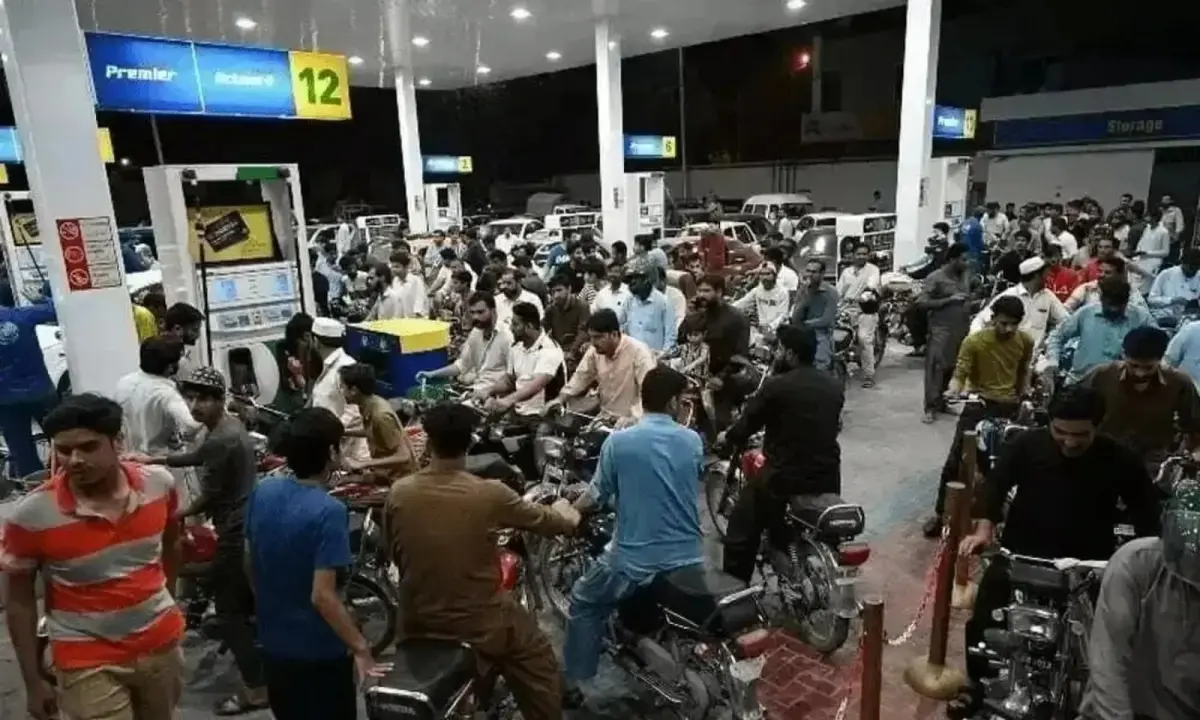
    Pakistan government on Thursday reduced the price of petrol by Rs3 to Rs332 per litre, and the price of high-speed diesel (HSD) by Rs4 to Rs360 per litre, effective Friday, November 13, 2026.

    In its press release, the Oil and Gas Regulatory Authority (OGRA) said the prices were worked out under the petroleum products pricing mechanism approved by the federal government.

    Govt cuts petrol price by Rs3, diesel by Rs4 per litre

    The new prices are effective for Friday, November 13.

    On Wednesday, the government reduced the price of petrol by Rs3 to Rs335 per litre and the price of HSD by Rs7 to Rs364 per litre.

    Globally, oil prices edged higher on Thursday after earlier losses, as persistent geopolitical tensions in the Middle East and Russia offset pressure from rising crude output.

    Brent futures were up 65 cents at $93.40 a barrel at 1425 GMT. US West Texas Intermediate crude was up 1 cent to $86.54; both contracts fell more than $1 per barrel in early Asian trading. They were also headed for a weekly fall.

    Source: brecorder

  • Who is Nvidia interim CEO Colette Kress?

    Who is Nvidia interim CEO Colette Kress?

    Nvidia finance chief Colette Kress is set to take over as interim CEO from Jensen Huang, the company said on Thursday, putting her in charge of the chipmaker whose processors power the world’s most advanced supercomputers and AI data centers.

    The appointment comes after the board ousted co-founder and CEO Jensen Huang amid reports of two extramarital affairs, one with a woman alleged to be a Chinese spy.

    Here are five facts about Kress:

    CFO since 2013

    Kress joined Nvidia in September 2013 as executive vice president and chief financial officer and has held the post since. She has appeared alongside Jensen Huang on the company’s quarterly earnings calls.

    Nvidia’s revenue was $4.13 billion in the fiscal year she joined and $215.9 billion in fiscal 2026.

    Career before Nvidia

    Before Nvidia, Kress spent eight years in finance roles at Texas Instruments, then worked at Microsoft from 1997 to 2010. At Microsoft, she became chief financial officer of the Server and Tools division in 2006, with responsibility for its financial strategy, planning and reporting.

    Also read: Nvidia CEO Jensen Huang resigns in big blow to AI boom

    She moved to Cisco in 2010 as senior vice president and chief financial officer of its Business Technology and Operations Finance organization, where she was responsible for financial strategy and business development. She left for Nvidia in 2013.

    Education and experience

    Kress holds a bachelor of science degree in finance from the University of Arizona and a master of business administration degree from Southern Methodist University, according to Nvidia’s annual report filed with the US Securities and Exchange Commission.

    She joined Nvidia after nearly 25 years in finance roles at major technology companies, Fortune reported in 2024. She told Fortune Nvidia was the smallest company she had worked for when she started there in 2013.

    Contract terms

    Executive officers at Nvidia are employed at will and have no individual employment, severance or change-in-control agreements, according to the company’s proxy statement. Nvidia has said in earlier filings that many of its peer companies offer such agreements.

    Regulatory filings show Kress’ pay includes restricted stock units, including a March 2026 award that vests over four years.

    Wealth

    Forbes ranks Kress No. 32 on its 2026 list of America’s richest self-made women. Her shares in the chip firm were valued at roughly $750 million, as of Wednesday’s close, down from more than $1 billion at the stock’s peak last month.

    Source: brecorder

  • Naqvi says referendum best way to decide on new provinces

    Naqvi says referendum best way to decide on new provinces

    Interior Minister Mohsin Naqvi has proposed holding a referendum to seek public opinion on the creation of new provinces, saying all political parties have the right to express their views on the matter.

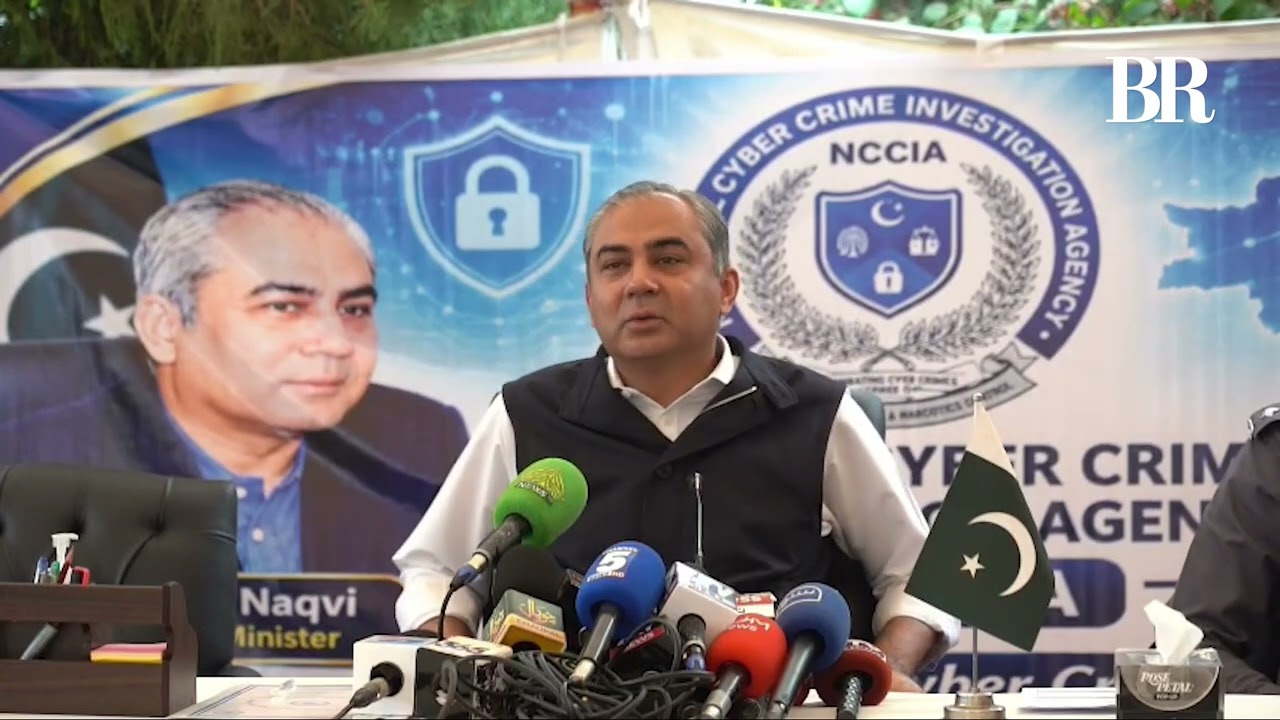
    Addressing a press conference at the National Cyber Crime Investigation Agency (NCCIA) Lahore office, the minister said the proposal should not be pursued if people opposed the creation of new provinces. However, if they supported it, new provinces should be established accordingly, he added.

    “The best solution is to seek the people’s opinion through a referendum,” Naqvi said.

    The debate over creating new provinces in Pakistan has resurfaced amid calls for administrative restructuring, decentralisation of power and improved governance.

    The issue gained renewed momentum in July 2026 after Naqvi called for the creation of additional administrative units, arguing that structural reforms were needed to address governance challenges.

    Responding to a question about the political situation, he said all political parties, including the Pakistan Tehreek-e-Insaf (PTI), were entitled to their legal rights, and any relief granted by courts would be available to them.

    The minister said various rumours had been circulating over the past couple of days about possible political developments, but there had been no extraordinary change in the situation.

    Speaking about corruption, the minister said it existed across the country and must be acknowledged and addressed through evidence-based action. He said the government was also taking action against corruption within public sector institutions, disclosing that the NCCIA had arrested a Grade-17 government officer, while five major cases involving public sector institutions were under investigation.

    Responding to a question about inappropriate content being circulated by social media bloggers, he urged people to avoid promoting such material and said action would be taken in accordance with the law.

    Rejecting reports of differences among coalition partners, Mohsin Naqvi said the Pakistan Peoples Party, Pakistan Muslim League-Nawaz, and other allied parties were important partners in the government.

    All major decisions would be taken through consensus, and efforts would be made to prevent differences being portrayed as divisions within the coalition, he added.

    Meanwhile, the minister announced that the facility to lodge cybercrime complaints through NADRA’s Pak ID platform would be launched soon. The initiative would ensure that every complaint was digitally recorded, enabling authorities to track its progress and monitor the action taken, he added.

    He said a meeting with the prime minister was scheduled for next week to brief him on the NCCIA’s resources and requirements. Highlighting the shortage of staff, he said the agency had only 61 personnel, ranging from drivers and constables to the Director Punjab, for a population of 140 million.

    Naqvi disclosed that the NCCIA had uncovered a major gang involved in facilitating approximately 5,000 Pakistanis to pass examinations of international educational institutions through fraudulent means.

    He said action would be taken against the network as well as the 5,000 Pakistanis who had obtained undue benefits through the scheme. He termed it a major scam whose timely detection had prevented potential damage to Pakistan’s interests.

    The minister further said the National Centre for Missing and Child Abuse had arrested 15 individuals during the previous month for their alleged involvement in child exploitation and the distribution of pornographic content in Punjab, particularly Lahore. The suspects were reportedly connected with various international websites.

    He added that several other cases, including an FBI-related case, a call centre case and a child exploitation case, had also been resolved.

    Source: brecorder