Category: Brecorder

  • Australian shares retreat as oil surges, banks and miners weigh

    Australian shares retreat as oil surges, banks and miners weigh

    Australian shares extended their decline for a second day on Friday, as most sectors traded in negative territory with banks and miners shedding the most, while investor sentiment was hampered by resurgent geopolitical tensions.

    The S&P/ASX 200 was down 0.5% at 9,101.70 by 2321 GMT.

    The index ended 0.1% lower on Friday, but was on pace to book a third consecutive weekly gain with a roughly 1% jump.

    Earlier this week, Australian markets rallied alongside their global peers when oil prices hit multi-month lows after US President Donald Trump downplayed the likelihood of renewed strikes on Iran.

    However, escalating attacks on energy infrastructure in top crude producer Saudi Arabia and shipping disruptions at the Strait of Hormuz lifted oil prices on the day.

    That renewed inflationary pressures, which have rattled world economies since the start of the Iran war earlier this year.

    Yields on short-term government bonds, which typically move in tandem with central bank rate expectations, advanced on Friday, with the 1-year yield up at 4.966%.

    On the economic front, investors will be looking out for monthly employment figures due next week.

    Australian shares tick down as miners slip, banks limit losses

    Mining stocks tracked lower base metal prices to fall 0.9%, with BHP and Rio Tinto slipping 0.6% and 0.9%, respectively.

    The sector was, however, poised for a 1.8% weekly rise.

    Financials fell 0.6% after all “Big Four” banks traded in the red, with the sub-index on track to log its second consecutive weekly loss.

    Technology stocks slipped 1.2% to mirror overnight losses in the tech-heavy Nasdaq Composite.

    US markets were pressured by a drop in AI chipmaker Nvidia following CEO Jensen Huang’s resignation.

    Energy stocks were among the few outliers to jump 1.1%. Shares of Woodside Energy and Santos added more than 1% each.

    In New Zealand, the S&P/NZX 50 fell 0.3% to 14,210.10, retreating from a record high on Thursday. The index was, however, poised for a 1.4% weekly advance.

    Source: brecorder

  • How can carbon credits add up to 20% to revenues of green projects in Pakistan?

    How can carbon credits add up to 20% to revenues of green projects in Pakistan?

    Carbon credits could generate additional revenues equivalent to 10% to 20% of project earnings for qualifying low-carbon investments in Pakistan, offering ventures an additional source of income from renewable energy, electric vehicles, battery storage and agriculture, the chief executive of climate finance firm Resources Future said.

    Carbon credits, also known as carbon offsets, are tradable certificates representing the reduction or removal of one tonne of carbon dioxide equivalent (CO2e) from the atmosphere. They allow businesses and other entities to compensate for their greenhouse gas emissions by supporting projects that reduce or remove emissions elsewhere, including afforestation, mangrove restoration and renewable energy initiatives.

    Such credits are issued following certification and verification under recognised standards, with international organisations such as Verra and Gold Standard playing a key role in assessing projects and ensuring the credibility of emissions reductions.

    Pakistan is developing its carbon market as part of efforts to meet its climate commitments, attract green investment and transition towards a low-carbon economy. The country’s carbon market became operational in early 2025 following the approval of federal guidelines under Article 6 of the Paris Agreement, which provides a framework for international cooperation on emissions reduction.

    “Anything which is a low-carbon project can essentially get you carbon credits,” said Khurram Lalani, director and chief executive of Resources Future, in an interview with Business Recorder.

    “Think about carbon credits as a commodity, like gold, silver or copper. Carbon credits are also a commodity.”

    Lalani said carbon credits could provide an additional monetisation stream for businesses already investing in environmentally friendly projects, helping them recover operating and maintenance costs while improving overall project economics.

    “If you are investing anyway, you can consider this as the cherry on top. This is not the whole cake, but a cherry on top.”

    He estimated that carbon credits could contribute an additional 10% to 15% in revenues for qualifying projects, with the potential to reach 20% in some cases.

    “If you have a Rs10 billion project, you are not going to earn Rs10 billion on Rs10 billion. But what it does is that it will give you enough potential to substantiate your topline with 10 to 15% of revenues, in general,” he said.

    “Your OPEX, your operations, your O&M costs, at least recover from these things.”

    Lalani said the opportunity extended beyond conventional renewable energy investments to electric vehicles, battery energy storage systems (BESS), biodiesel manufacturing, forestry and agriculture.

    “We have our own agroforestry project which is around mango restoration,” he said.

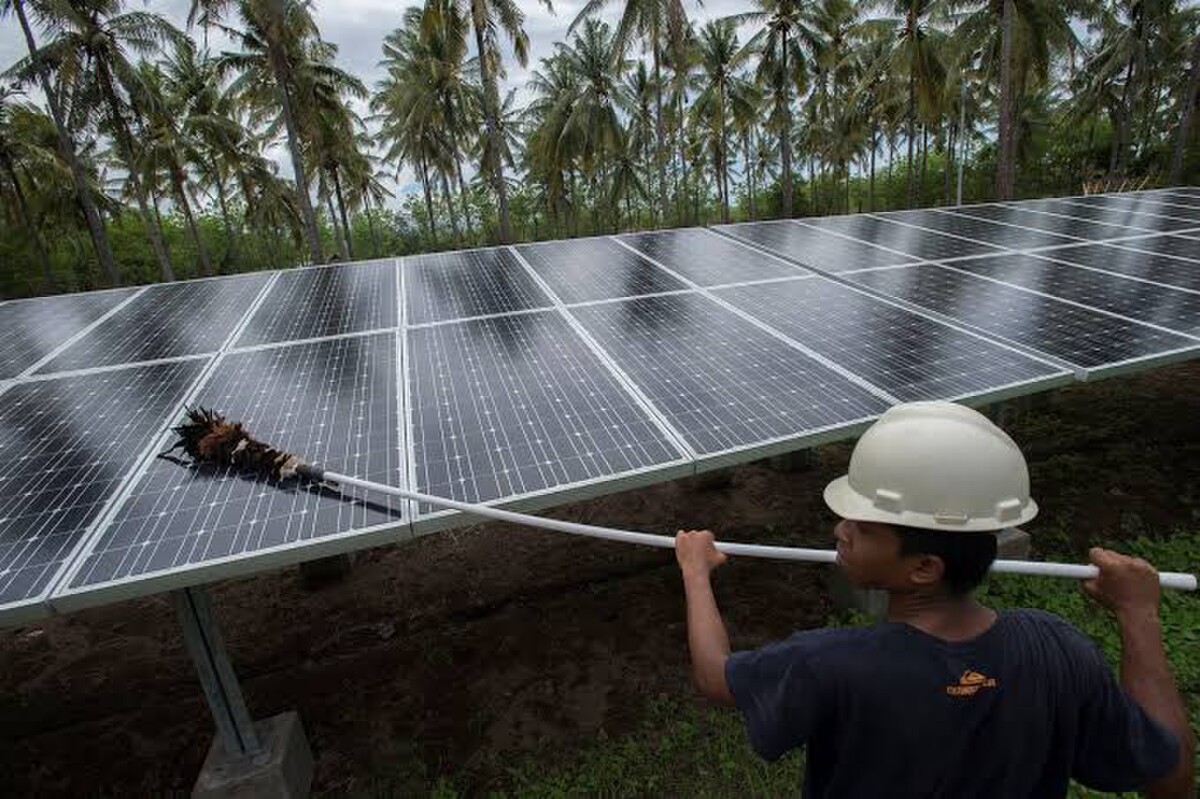
    Solar and wind projects, for instance, could generate carbon credits by displacing electricity produced through diesel, furnace oil and natural gas, while electric vehicles (EV) could qualify by replacing petrol-powered transport.

    “Think about your EVs, electric vehicles. They displace petrol. That’s a low-carbon project; you can earn carbon credits,” Lalani said.

    “Anything which displaces or sequesters carbon can be converted into a project that can earn carbon credits.”

    He said Resources Future was working with project developers involved in battery energy storage systems and electric vehicle projects, including businesses importing electric buses and manufacturing electric motorcycles.

    The firm has also supported a large biodiesel manufacturing facility under construction in Pakistan, which has applied for carbon credits, he said.

    “We are helping them out. The idea is that there can be two revenue streams for example, if you sell biodiesel, the project sponsors of biodiesel can also monetise with carbon credits. Hence, carbon credits essentially gives you another monetisation rail on which you can do monetisation,” he said.

    Despite the potential, Pakistan has been slower than regional competitors in developing carbon credit projects and attracting private investment, he said.

    “Pakistan has not been very active when it comes to carbon credit projects, but I think there are reasons for that as well.”

    Comparing Pakistan with India, China and Bangladesh, Lalani said businesses in those countries had developed a better understanding of carbon credits as a monetisation opportunity.

    “In Pakistan, generally, that capacity does not exist, where our industrialists will be able to understand exactly what carbon credits are.”

    He attributed the gap partly to limited awareness and technical expertise among local businesses, as well as a reluctance to invest in unfamiliar opportunities.

    “In Pakistan, the risk-taking ability is not very prominent, whereas foreign businesses are generally more keen to invest in something new because they understand that there is risk, but there are also returns.

    “In Pakistan, we have been very much focused on the existing business opportunities, and we don’t really consider moving in a new direction, where there is a little more cost incurred. But the Pakistani market is opening up and is going to flourish also,” he said.

    Another obstacle has been the cost of developing carbon credit projects, which requires technical documentation, independent verification and registration with international carbon credit registries.

    Lalani said a typical carbon credit project could cost around $100,000 to develop.

    “If you hire an outside consultant from Europe, you would essentially incur, just in the consulting fees, around $200,000 to $250,000,” he said.

    “What we have done is that we have been able to bring that cost down to less than $100,000.”

    He said businesses should consider carbon credit development expenses as part of the overall investment cost of low-carbon projects rather than treating them as a separate commercial venture.

    “If you are investing in a project worth Rs10 billion or a project worth Rs5 billion, if you add $100,000 to it to make a carbon credit project, the marginal cost is not that much, but the marginal revenue is quite big.”

    “Hence, it should be a natural proposition. What we have seen in India, what we have seen in China, the industrialists there, whatever low carbon project they design, they automatically go for carbon credits,” he said.

    Carbon credits generated through Pakistani projects are generally sold to global buyers, as the market remains largely international, Lalani said.

    He added that domestic banks had yet to develop dedicated financing products based on carbon credits, with the local banking sector still at an early stage of understanding the market.

    “Banks do not take a view on carbon credits. I have not come across any such product,” he said.

    Talking about the evolving international climate rules, Lalani cited the example of the European Union, saying that a very broad-based change was coming into the region under CBAM [Carbon Border Adjustment Mechanism].

    “It means that in Pakistan, any products with high carbon intensity, when they are exported to European countries. Europe will impose a carbon tax because of the carbon intensity of your products. So this will have a huge impact on Pakistani textile companies,” he said.

    The CBAM is a carbon pricing policy that places a fair price on carbon emitted during the production of carbon-intensive goods imported into the European Union.

    “The way to go about CBAM is… Either the textile companies will pay a carbon tax in Europe, or they should have offsets here. They should be the owners of carbon credits. So that they can show that they have mitigated their carbon emissions,” said Lalani.

    He said Pakistan needed stronger private-sector capacity and a more developed regulatory framework to attract international investors, who could choose to finance projects in competing markets such as India, Indonesia, China and Malaysia.

    “Somehow we have not been able to operationalise the policy. The policy framework is there, but the rules are not there, and the associated guidelines are not there,” he said.

    “The government needs to speed up, expedite that process. Make sure the rules are out there, so it gives enough clarity to everyone involved.”

    He also called for greater capacity building among industrialists, financial institutions and investors, alongside the operationalisation of a climate change fund at the federal level to channel funding towards low-carbon projects.

    “Pakistan’s potential is limitless. The only thing is that we need to really come up with a framework that can essentially help the private sector take the next step and also go for carbon credits as a monetisation opportunity,” Lalani said.

    “The mobilisation that has happened in India, the mobilisation that has happened in China, the mobilisation that has happened in Bangladesh – is Pakistan comes nowhere near.”

    “We have to take a long-term view on this. Think of it as a monetisation opportunity. And try and create good high-integrity projects for carbon markets,” Lalani concluded.

    Source: brecorder
  • Japan’s Nikkei on track for best week in 5 months despite Nvidia turmoil

    Japan’s Nikkei on track for best week in 5 months despite Nvidia turmoil

    TOKYO: Japan’s Nikkei share average was on track for its best week in five months on Friday, rebounding from a sharp drop the previous week as upbeat earnings and renewed AI optimism lifted sentiment, despite turmoil surrounding chipmaker Nvidia.

    The Nikkei was up 1.25% at 61,576.91, as of 0140 GMT, putting the index on track to finish the week with a 7.3% weekly gain, its biggest since the week of June 15.

    The broader Topix advanced 0.63% to 3,962.08 and was headed for a weekly gain of about 7%, its strongest since mid-August 2024.

    Semiconductor stocks led the Nikkei’s advance, with Advantest gaining 5.9%, Tokyo Electron rising 3% and Kioxia adding 2.9%.

    The gains came despite a selloff in Nvidia shares overnight, which dragged US stocks lower.

    However, rival chipmakers Broadcom and Alphabet rose, suggesting investor optimism about the broader AI sector remained intact.

    “The rise in semiconductor- and AI-related shares, which had been under pressure for a relatively long period, appears to have been a factor behind this week’s gains in the Nikkei average and Topix,” said Maki Sawada, equities strategist at Nomura Securities.

    Reports surrounding Nvidia CEO Jensen Huang’s departure have also raised questions about the company’s future direction and the implications for US chip export policy and access to the Chinese market.

    Japanese shares had already weakened in the previous session amid concerns over the Nvidia developments, helping set the stage for Friday’s recovery, Sawada said.

    The market breadth was positive, with 138 advancers in the Nikkei 225, against 82 decliners and 5 unchanged stocks.

    Banking shares on the Tokyo bourses gained 1%, tracking a rise in US Treasury yields amid speculation about potential US rate hikes.

    Japan’s three largest banks were due to report earnings later in the day.

    The largest percentage gainers in the index were Amada Co up 9.46%, followed by Socionext gaining 6.77% and Trend Micro up by 6.61%.

    The largest losers were Terumo, down 7.39%, followed by Haseko, trading 6.12% lower, and Mercari , which lost 3.68%.

    Source: brecorder

  • PSX: volatility at bourse, KSE-100 trades marginally higher

    PSX: volatility at bourse, KSE-100 trades marginally higher

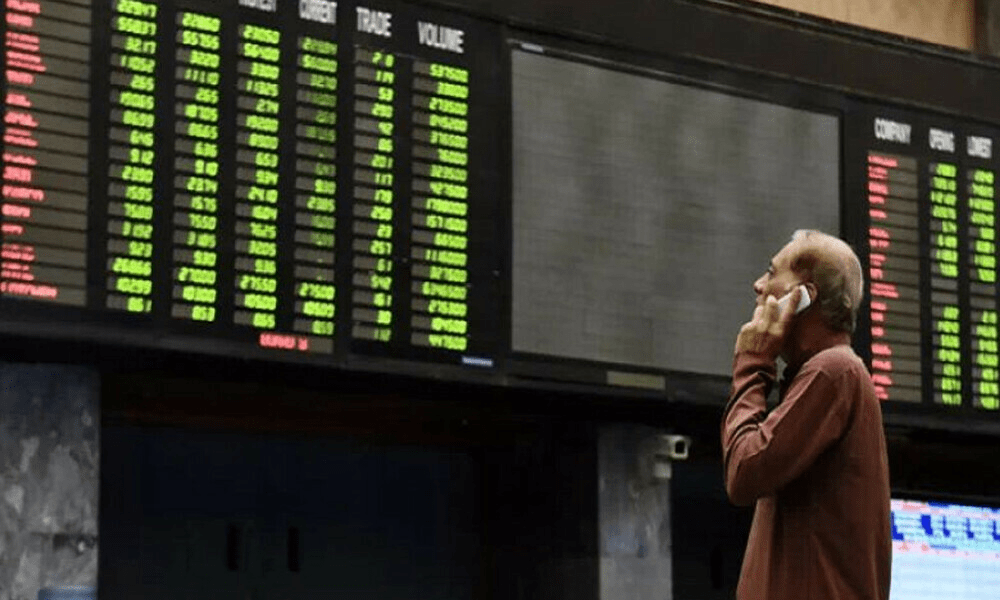
    The Pakistan Stock Exchange (PSX) saw volatility during the opening minutes of trading on Friday, with the benchmark KSE-100 Index trading marginally higher.

    At 10am, the benchmark index was hovering at 177,506.80, up 133.04 points or 0.08%.

    Buying was observed in key sectors, including commercial banks, oil and gas exploration companies, OMCs and refineries. Index-heavy stocks, including ARL, PRL, MARI, POL, PSO, SSGC, HBL, MCB, NBP and UBL, traded in the green.

    On Thursday, PSX witnessed a volatile session as the market reversed its early gains and closed sharply lower. Renewed selling pressure after midday wiped out the gains, amid investor caution over domestic political uncertainty.

    The KSE-100 Index declined by 1,710.04 points, or 0.95%, to close at 177,373.76 points.

    Globally, stocks in Asia were on steadier footing on Friday after a turbulent week dominated by ​revelations of extramarital affairs involving Nvidia CEO Jensen Huang that culminated in his resignation, in a blow to the global AI boom he helped advance.

    US Treasury ‌yields climbed, with the 2-year yield hitting a one-month high, lifting the dollar as investors weighed the prospect of an outsized 50-basis-point rate hike by the Federal Reserve next month.

    Huang stepped down on Thursday after reports of the affair, including one involving a suspected Chinese spy, which plunged the chipmaker into crisis and sent shockwaves through the AI industry.

    His exit could have far-reaching consequences for US chip export policy and the broader AI ​industry and supply chain, given Huang’s push to preserve access to the Chinese market as well as his close ties with US President Donald Trump.

    Nvidia shares fell 3% in extended trading, while those of its customers, including South ​Korea’s Naver, extended declines on Friday, with Naver down 2.75%.

    MSCI’s broadest index of Asia-Pacific shares outside Japan was up 0.26%, reversing some of its 1.3% fall ​from the previous session. South Korea’s Kospi rose 2.35% while Japan’s Nikkei added 1.4%.

    The recovery in global equities also follows last week’s market meltdown sparked by the Republicans’ electoral ​drubbing, which stoked fears that tighter regulation could slow the AI infrastructure buildout that has helped send stocks to record highs this year.

    Nasdaq futures and S&P 500 futures rose more than 0.2% each, while ‌EUROSTOXX 50 ⁠futures fell 0.37%.

    This is an intraday update

    Source: brecorder

  • Indian rupee faltering rally faces returning oil pressure, surging US yields

    Indian rupee faltering rally faces returning oil pressure, surging US yields

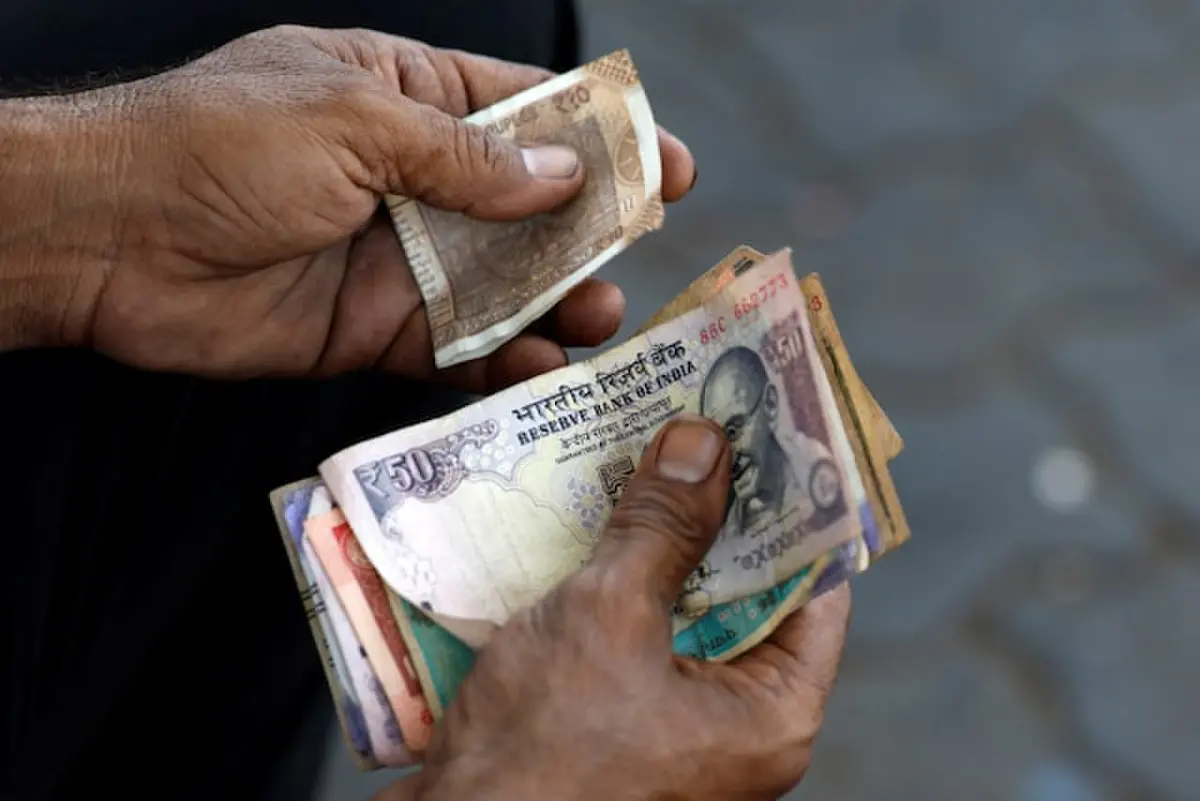
    MUMBAI: The Indian rupee’s faltering rally faces further challenges on Friday, as rising oil prices revive a key source ​of pressure and surging US yields bolster the dollar.

    The Indian rupee is expected to open weaker than the 94-per-dollar mark and remain under pressure, after falling below it on Thursday in its biggest daily decline in ​nearly three weeks.

    The external backdrop is turning less favourable for the ​rupee, which has now faced resistance at the 94-per-dollar ⁠mark for three straight sessions.

    Brent crude, which had fallen below $90 a ​barrel earlier this week, climbed to $96, after fresh attacks on Saudi ​energy infrastructure and disruptions to shipping through the Strait of Hormuz.

    Meanwhile, the 10-year US Treasury yield rose well above the 5% mark after President Donald Trump ​said the United States did not need a deal with ​Iran.

    US Treasury yields have climbed sharply in recent sessions after higher-than-expected US inflation data ‌strengthened ⁠expectations of further Federal Reserve rate hikes.

    Markets are fully pricing in a 25-basis-point Fed rate hike in December, with a small probability of a larger 50-basis-point increase.

    The worries over oil prices and US ​Treasury yields come ​at a ⁠time when the rupee’s recovery is already facing resistance.

    Thursday’s session offered evidence of that, with the currency ​climbing to an intraday high of 93.60 before coming ​under ⁠pressure and slipping past the 94-per-dollar mark.

    Bankers said the rupee’s inability to extend its rally in recent days despite robust equity inflows has ⁠fuelled speculation ​that the Reserve Bank of India ​may be buying dollars, while oil companies could be returning to the spot market ​to meet their dollar requirements.

    Source: brecorder

  • Colette Kress, the CFO who challenged Huang’s bets, is Nvidia’s interim CEO

    Colette Kress, the CFO who challenged Huang’s bets, is Nvidia’s interim CEO

    WASHINGTON/SAN FRANCISCO: Colette Kress spent years as the one Nvidia executive willing to check CEO Jensen Huang’s enormous, often risky ​ambitions. As he drove the chipmaker deeper into multibillion-dollar AI investments, she pushed back, according to two people familiar with the matter on Thursday.

    Now the 59-year-old finance chief ‌has been handed the top job on an interim basis, while Nvidia searches for a permanent successor. Huang on Thursday stepped downfrom the company he co-founded and ran for three decades in a cloud of scandal, leaving Nvidia to navigate its first leadership transition without the architect of its rise.

    Through their conflicts, Kress served as an important counterweight to Huang, whose success afforded him great latitude on key decisions, the two sources said. Months before news that Huang had a ​relationship with a woman suspected of being a Chinese spy, some on Wall Street were questioning whether his appetite for risk was sound and if the deals he struck were feeding an ​increasingly circular AI economy.

    Kress and her staff clashed with Huang and the company’s sales team over the massive and risky financing deals that fed into ⁠what some Wall Street critics deemed a circular AI economy, including investments in OpenAI and AI infrastructure companies such as Lambda, according to one of the people familiar with the matter.

    A proposed $250 billion plan ​to support an OpenAI data center project in Ohio was ultimately pared to $120 billion.

    “I think it’s unlikely anyone but Jensen is going to invest in his own customers as aggressively,” said a third ​source, a venture capital investor. Huang has pushed Nvidia to offer financing to startups, the person said.

    Kress the pragmatist

    People who know her describe Kress as a calming contrast to Huang’s often confrontational style. Kress joined Nvidia in 2013 after a long career at other tech industry giants including Microsoft, Cisco and Texas Instruments.

    “Colette is a pragmatist,” said a fourth source familiar with the matter. She can project calm and help stabilize markets while the search is ongoing, ​the person said, adding that Kress had been on recent calls to reassure customers and suppliers as the tumult inside the company unfolded.

    Under her leadership, Nvidia is likely to “approach DC more like other tech ​companies do, by trying to build capital and make friends,” instead of picking “a fight over export controls” the way it did under Huang’s leadership, the person said.

    But many investors, analysts and industry sources who spoke to ‌Reuters questioned ⁠whether a finance executive could preserve the technological risk-taking that turned Nvidia into an AI chips powerhouse.

    “Putting (Kress) in the interim role makes sense to keep the markets calm, but I don’t think she is the long-term visionary that Nvidia needs to continue its current trajectory,” said Anshel Sag, principal analyst at Moor Insights and Strategy.

    Nvidia PE falls to 14-year low, but CEO exit and AI worries cloud the bargain

    Nvidia shares slumped 14% to their lowest in nearly 16 months on Thursday after the company said Huang would step down, but pared losses to close down 4.3%.

    Whether Kress will keep the CEO role permanently is yet to be decided. But other names have surfaced, including Nvidia ​executive Ian Buck, who helped launch AI on ​Nvidia chips and led development of the ⁠CUDA software system. AMD CEO Lisa Su as well as Arm boss Rene Haas have also been speculated as potential candidates.

    What did Kress know?

    Questions are also swirling about how much Kress knew about Nvidia’s chip sales and Huang’s affairs. China has denied the spying allegations. Reuters was not able ​to contact Alice Huang for comment.

    A fifth source said Kress knew about his relationship with Kimberly Powell, Nvidia’s vice president of healthcare, who ​reported to him. Nvidia and ⁠Powell did not immediately respond to requests for comment.

    Sunny Cheung, an analyst at the Washington-based Jamestown Foundation, said Kress could face congressional questions about the company’s oversight of chip sales involving Chinese military-linked institutions and Southeast Asian intermediaries.

    In a 2023 interview with an Israeli publication, Kress credited her two young sons with urging her to join Nvidia in 2013 because they knew its chips from their video games.

    She became ⁠a billionaire ​in 2025 based on the value of her Nvidia equity, according to media reports, and Forbes said her net worth ​of $1.2 billion in mid-2026 put her in 32nd place on its list of America’s richest self-made women.

    Kress, who holds an undergraduate degree in finance and an MBA, was also named among the 50 most powerful women in business on rankings ​compiled by Fortune and Forbes magazines in recent years.

    Source: brecorder

  • Oil prices set for second weekly decline as Trump to stay with Iran blockade

    Oil prices set for second weekly decline as Trump to stay with Iran blockade

    PERTH: Oil prices were mixed on Friday, but set for their second weekly decline, as the US plans to continue its Iranian blockade, reducing the chance of renewed large-scale fighting ​that could disrupt Middle East supplies, though attacks on shipping remain a danger.

    Brent futures were ‌little changed, down 1 cent at $95.41 a barrel at 0242 GMT. West Texas Intermediate (WTI) declined by 20 cents, or 0.25%, to $88.52 a barrel.

    Friday’s declines reversed two days of gains amid a volatile trading week with earlier hopes for a rapprochement ​of the US-Israel war against Iran, now in its ninth month, offset by strikes on Saudi ​Arabian infrastructure by Yemen’s Houthis and attacks on tankers transporting crude out ⁠of the Gulf.

    Despite the swings in prices amid the inconclusive war, Brent is set for a 2.4% ​drop this week, after plunging 16% the previous week, while WTI is set for a 2.5% decline, ​after dropping 13% previously.

    Prices slipped on Friday after US President Donald Trump said on Truth Social a deal with Iran was not necessary to end the war, indicating he will stick with the blockade on oil shipments and trade and economic ​sanctions.

    The overall decline in prices over the past two weeks reflects a good assessment of the risks ​to the market, said Chris Brankin, global advisor for Melbourne-based brokerage MiTrade.

    “I think the oil market is priced to perfection ‌at ⁠this point,” he said, adding that prices have bounced back a bit but without much conviction on the part of traders, which shows they are following closely what is happening in the Middle East.

    Despite the easing prices, risks remain for oil shipments out of the Strait of Hormuz, the key waterway for crude ​exports from the main ​Middle East producers.

    On Thursday, ⁠Iran’s military said four oil tankers were hit by explosions in the Strait of Hormuz after ignoring warnings. Reuters could not immediately verify the Iranian accounts.

    That ​same day, Yemen’s Houthis said they had attacked a pumping station on the ​Saudi East-West ⁠oil pipeline; an oil facility in the Saudi Red Sea city of Yanbu; and an Aramco building in the capital Riyadh.

    Also pressuring prices, US crude and fuel inventories rose last week, driven by softer refined products demand ⁠and ​a jump in oil imports, the Energy Information Administration said on ​Thursday.

    Crude inventories rose by 4.7 million barrels to 414.4 million barrels in the week ended November 6, the EIA said, compared with ​analysts’ expectations in a Reuters poll for a 1.1 million-barrel draw.

    Source: brecorder

  • Mobilink Bank to acquire 82.51pc stake in Apna Bank

    Mobilink Bank to acquire 82.51pc stake in Apna Bank

    ISLAMABAD: Mobilink Bank has signed a Sale Purchase Agreement (SPA) to acquire 82.51 percent shareholding in Apna Microfinance Bank Limited (Apna Bank), subject to applicable legal and regulatory approvals.

    The proposed acquisition is an extension of Mobilink Bank’s “Growth with Purpose” strategy, reflecting our commitment to responsible growth, financial inclusion, and a stronger, more resilient banking ecosystem. The transaction reinforces Mobilink Bank’s position as a trusted leader in the banking sector. The transaction is aimed at safeguarding the interests of Apna Bank’s depositors, preserving stakeholders’ confidence, and creating a stronger institutional foundation for sustainable growth. It also underscores Mobilink Bank’s commitment to contributing meaningfully to the stability, resilience, and continued evolution Pakistan’s financial sector.

    Upon completion of the transaction, Apna Bank’s customers will become part of a larger, financially resilient institution, with continued access to their accounts and services throughout the transaction. They will benefit from Mobilink Bank’s broader nationwide presence, Islamic Banking offerings, and access to an expanded digital financial services ecosystem powered by JazzCash, creating a more secure, convenient, and future-ready banking experience.

    “We have been building the foundation of a comprehensive financial services ecosystem for Pakistan, from JazzCash’s extensive reach in payments to JazzSure Insurance (formerly TPL Insurance) and FikrFree’s modern insurance offerings in a market where insurance penetration remains considerably low, and now Mobilink Bank, which extends that same ambition into banking for agriculture and micro-enterprises. Each of these businesses complements the others, and together they bring us closer to a Pakistan where every citizen, regardless of where they live or how they earn a living, has access to the financial tools they need to grow,“ said Aamir Ibrahim, Chairman, Mobilink Bank and CEO, JazzWorld.

    Speaking on the SPA signing, Haaris M Chaudhary, President and CEO of Mobilink Bank, said, “Mobilink Bank has built strong digital capabilities, scale and customer reach over time. As a customer-first organisation, our focus is to ensure continuity for Apna Bank customers and make their transition into a larger, more future-ready institution as seamless as possible, supported by close coordination across teams throughout the process.”

    Copyright Business Recorder, 2026

    Source: brecorder

  • Leather industry seeks slaughter houses, Kasur plant revival

    Leather industry seeks slaughter houses, Kasur plant revival

    LAHORE: Pakistan’s leather industry is facing a shortage of raw materials, with industry representatives urging the Punjab government to establish organised slaughterhouses and make the wastewater treatment plant in Kasur operational to address key challenges confronting the sector.

    The issues were discussed during a meeting between Provincial Minister for Industries and Commerce, Chaudhry Shafay Hussain, and a delegation of the Pakistan Tanners Association (PTA), led by its Chairman Malik Muhammad Azam, on Thursday.

    The PTA chairman informed the minister that the shortage of raw materials was a major challenge for the leather industry and could be addressed through the establishment of organised slaughterhouses. The delegation also sought government cooperation to make the wastewater treatment plant in Kasur operational.

    Speaking on the occasion, Chaudhry Shafay said the leather industry was one of the country’s major industrial sectors, with considerable potential to enhance exports. He assured the delegation that the industry’s problems would be addressed on a priority basis.

    He stressed that ensuring a pollution-free environment for future generations was a shared responsibility, urging the industry to strictly comply with environmental protection standards and ensure the installation of wastewater treatment plants.

    The minister also highlighted government financing facilities available to businesses, saying that interest-free loans of up to Rs30 million were being provided under the second phase of the Chief Minister’s Asaan Karobar Finance Scheme.

    He added that the Industries, Commerce and Investment Department had launched a major programme to promote exports and accelerate industrial development, under which loans of up to Rs500 million were being offered on easy terms. Under the industrial development programme, businesses could also obtain interest-free loans of up to Rs100 million.

    He urged the Association to benefit from the government’s interest-free and easy financing schemes, adding that applications could be submitted online through the Bank of Punjab’s website.

    Chaudhry Shafay further proposed that the leather industry could enter into an agreement with the Skills Development Department to meet its requirements for skilled manpower.

    Speaking on the occasion, Malik Muhammad Azam said the Pakistan Tanners Association planned to establish business centres in Azerbaijan, Uzbekistan and Kazakhstan to strengthen trade links and explore new business opportunities.

    The delegation included Chaudhry Tahir, Muhammad Aslam, Rana Adnan and others.

    Director of Punjab Small Industries Corporation, Sabih Zaka, and other relevant officials were also present.

    Copyright Business Recorder, 2026

    Source: brecorder

  • Govt squeezing blood of public through utility bills: PDP

    Govt squeezing blood of public through utility bills: PDP

    KARACHI: Pasban Democratic Party Karachi President Abdul Hakim Quaid has said that the government is squeezing the blood of the public through utility bills.

    He said, the public does not have access to electricity, but electricity is constantly becoming more expensive. Now the same is the case with gas. Due to the unavailability of gas, LPG is being sold at double the price, but the government is not ready to take any steps to correct it. What is the logic of increasing the price from backdated? Is OGRA not even capable of protecting public interests and fulfilling its responsibility of determining prices correctly?

    He said, sending heavy bills despite the lack of electricity and doubling LPG prices due to gas shortage is a complete injustice to the people. The lack of gas has made it difficult for the poor to cook, while the government and related institutions are silent spectators to the huge increase in LPG prices.

    He said government institutions run by public taxes are protecting the interests of companies instead of providing relief to the people. It is imperative to activate consumer courts in Pakistan.

    Abdul Hakim Quaid demanded that immediate notice be taken of the illegal increase in utility prices and backdated recoveries. Gas supply should be ensured and LPG prices should be brought in line with the purchasing power of the people.

    Copyright Business Recorder, 2026

    Source: brecorder