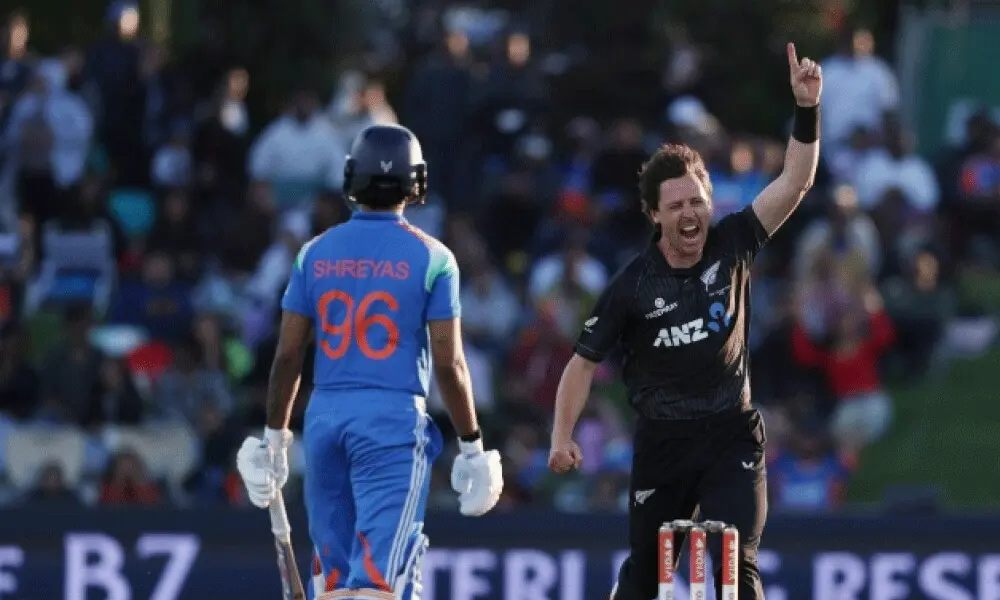
MOUNT MAUNGANUI: Matt Henry produced a scintillating opening over to remove Rohit Sharma, Virat Kohli and Shreyas Iyer all without scoring as New Zealand thrashed a ragged India by 244 runs in the fourth ODI at Mount Maunganui on Friday.
The fast bowler took a career-best 6-27 and Will Young struck a century as the hosts pulled the series back to 2-1 down with a game to play this Sunday.
Henry tore India’s much-vaunted top order apart with the visitors, needing a massive 334 for victory, rolled for just 89.
New Zealand made 333 all out in the last over after being asked to bat, Young punishing two simple drops by Indian fielders to bring up his fifth ODI hundred.
India never stood a chance of chasing the total after Henry’s heavenly opening over.
Rohit edged his first ball to slip, Kohli was bowled facing his fourth ball, and then Iyer was pegged on his back leg to fall lbw.
India’s rebuild never happened, Ishan Kishan top-scoring with just 27.
“It’s quite funny isn’t it, the wind was quite strong so it was about keeping things simple,” Henry said of his incredible spell.
“A bit of luck as well. It was about trying to hit the strings, be as simple as possible, and when it moves sharply like that in the first over it’s pretty tough.”
Henry was returning to the Black Caps after a head clash with Devon Conway in training last week which concussed the batter and kept Henry out of the first three games.
“It wasn’t ideal,” Henry said of the head clash, “But thankfully we’re doing alright now.”
New Zealand’s imposing total came off the back of Young’s 125 from 108 balls, including 14 fours and four sixes.
Young and Tim Seifert combined for an 85-run opening partnership.
While Young rode his early luck – dropped twice in two balls when on five in the second over, first by slip Rohit and then by wicketkeeper Kishan – Seifert played the aggressor with a brisk 39-ball 50.
When Seifert fell for 58, Nick Kelly and Dean Foxcroft soon followed playing reckless shots.
Young found better support in Finn Allen, the pair putting on 90 runs in just 65 balls as they seized on wayward Indian bowling.
Young’s first 50 came from 49 balls, and his second from just 39 balls as he hit regular boundaries through the middle overs.
Allen made 41 from 30 deliveries, including five fours and two sixes.
“We tried almost everything,” India captain Iyer said of the bowling performance.
“We thought the wicket was pretty tough to bat on. A couple of dropped catches, but that happens.”
Axar Patel took 2-39 from 10 overs as India pulled the innings back late, while Auqib Nabi had 2-59 and Gurnoor Brar 2-69.
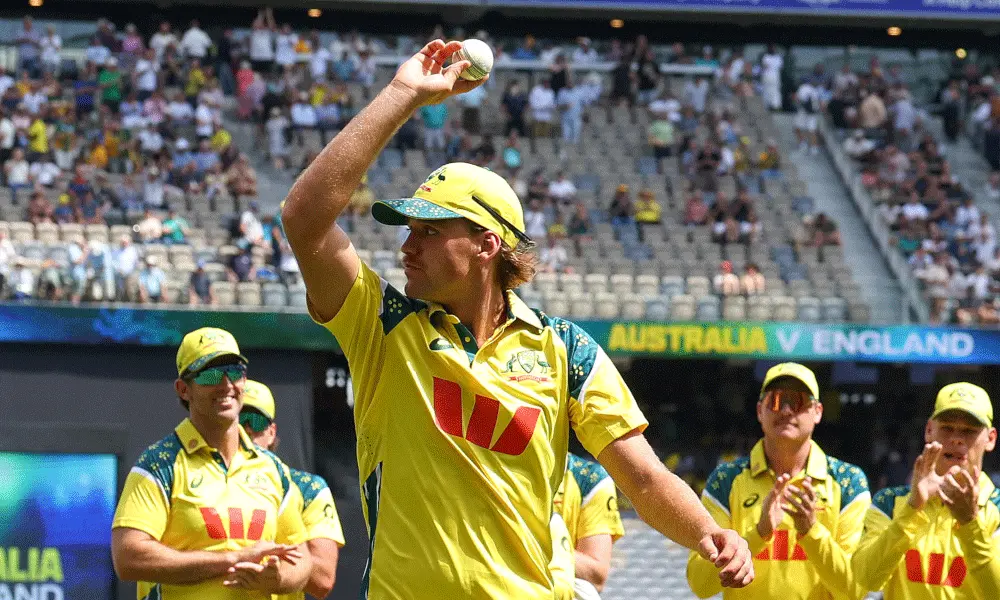
PERTH: Mahli Beardman took 6-24 on debut before Mitchell Marsh smashed a 29-ball 50 as Australia crushed England by seven wickets in the first ODI in Perth on Friday.
After Marsh won the toss and chose to bowl, 21-year-old Beardman tore through the England batting as the visitors slumped to be all out for 131 off just 33.4 overs.
Marsh then put the game beyond doubt with a devastating half-century, hitting four boundaries and clearing the fence another four times to the delight of his home crowd.
Earlier, Beardman bowled with real pace and aggression to record the best ODI bowling figures by an Australian on debut.
Marsh said Beardman was one of a number of young pace bowlers ready to step up when the ageing trio of Pat Cummins, Mitchell Starc and Josh Hazlewood retired.
“It’s a fantastic start to his career,” Marsh said.
“It’s a glimpse into the future. There’s some really good young talent around the country and hopefully we see them get an opportunity at some stage.”
Beardman tore through the England upper order, most of whom fell to poor shots, playing at balls they didn’t need to.
He was well supported by left-armer Spencer Johnson, who took 3-42 as England fell apart on the drop-in wicket at Optus Stadium.
“We’ve spoken a lot about adaptability and how we want to adapt to different surfaces,” England captain Harry Brook said.
“We prepared really well, we knew certain shots weren’t going to work on this wicket, but the Australian attack bowled extremely well.
“They put the ball in the right areas and we didn’t execute our skills well enough.”
The three-match ODI series got off to a low-key start, with most eyes on the Sandpapergate ball-tampering scandal following the launch of former Australian opener Usman Khawaja’s autobiography.
England openers Ben Duckett and Tom Banton were relatively untroubled, taking the score to 24 off five overs until Duckett slashed at a Johnson delivery outside off-stump and edged to Jack Edwards at backward point.
The visitors then lost 7-41 as the England batsmen failed to come to terms with the seam and swing from Beardman and Johnson.
At 65-8 they were in danger of being bowled out below 100 but a partnership from Will Jacks and Gus Atkinson saved them from complete humiliation.
Jacks was caught first ball after the drinks break for 25 and when Beardman claimed Jofra Archer, Atkinson was left as top scorer with 29 not out from 32 balls.
England got the perfect start when Atkinson bowled Travis Head first ball, but Marsh had other ideas and launched an all-out assault on Archer and Atkinson.
Cooper Connolly chipped in with 27 before Josh Inglis (23) and Matt Renshaw (26) saw Australia home.
The two teams head to Adelaide for the second match on Sunday.
Oil and the US dollar are closely connected through global trade, inflation, monetary policy, and risk sentiment. But that relationship is not as straightforward as assuming higher oil prices automatically mean a stronger or weaker dollar. For me, the more useful question is what is driving oil’s movement and how the same shock affects interest-rate expectations, yields, and demand for the US dollar.
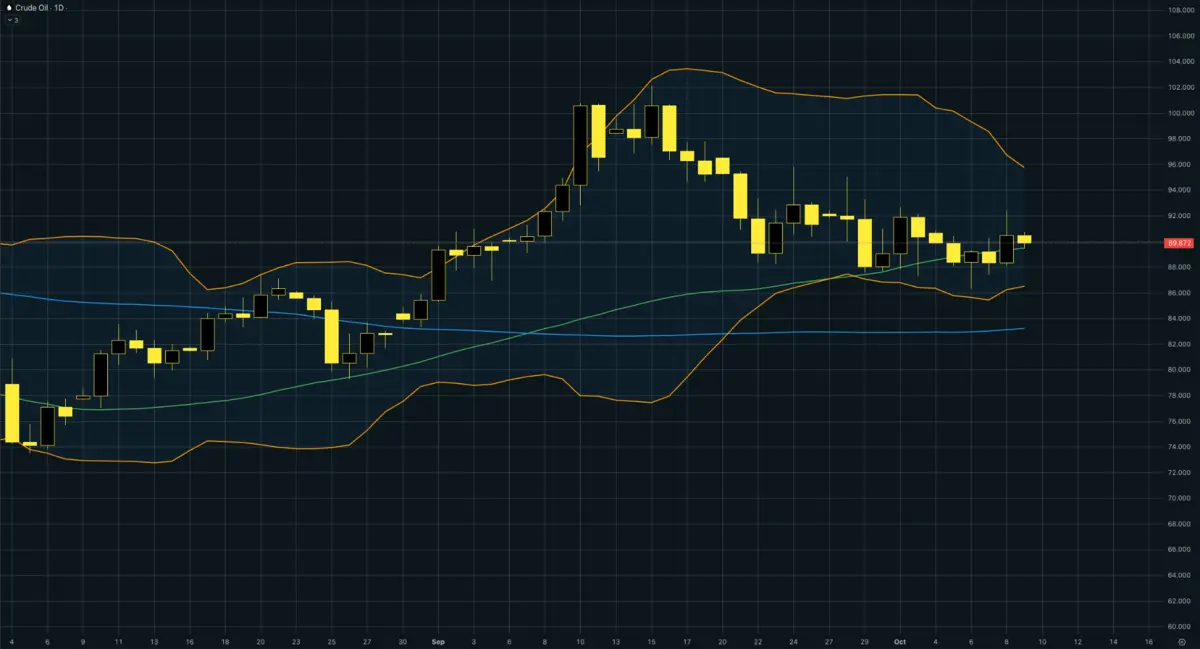
This distinction becomes important during geopolitical disruptions and supply shocks, when oil can move rapidly while FX, bonds, and equities simultaneously reprice the broader macroeconomic implications. WTI has recently shown this volatility, with prices moving above 100 USD in early September to the mid-80s, before rebounding to 90 USD in October.
The dollar layer behind oil
Crude benchmarks such as Brent and WTI are predominantly priced in US dollars, creating a direct currency component in energy costs for buyers outside the United States. If oil rises from 80 USD to 100 USD per barrel while the exchange rate remains unchanged, an importer faces roughly the same percentage increase in local-currency terms. If the dollar appreciates at the same time, however, the importer’s effective energy cost increases.
I see the dollar as an additional transmission channel for oil shocks rather than another market that happens to correlate with crude. Therefore, it is also important to distinguish dollar pricing from dollar dominance. The fact that oil is priced in dollars reflects the currency’s established role in global commodity and financial markets. But dollar-denominated oil does not mean that every oil shock creates additional demand for USD.
When an oil shock can support the dollar
A supply disruption can create a chain reaction that extends well beyond the energy market. Higher crude prices can feed directly into headline inflation and indirectly increase transportation, production, and other input costs. If markets expect these pressures to persist, inflation expectations can rise, and central banks may be expected to maintain restrictive policies for longer. This is where I start looking closely at interest-rate markets; for example, if an oil shock causes US rate expectations to rise relative to those of other major economies, Treasury yields can increase, and the dollar can strengthen. The transmission can therefore look like this:
A major geopolitical disruption can encourage investors to reduce exposure to riskier assets and increase demand for liquid dollar-denominated assets. At the same time, higher energy costs can put additional pressure on energy-importing economies and their currencies.
However, I wouldn’t assume this reaction will always persist. If the oil shock becomes large enough to materially damage global or US growth, markets may eventually shift their focus from inflation towards recession risks. Expectations of monetary easing could then increase, pushing Treasury yields lower and weakening the dollar even while oil remains elevated.
That is one of the most important distinctions I make when analysing an energy shock: the initial reaction and the medium-term macro reaction do not necessarily have to be the same.
When a stronger dollar amplifies the oil shock
This relationship is important to predominantly energy-importing economies. When the dollar appreciates, dollar-priced oil becomes more expensive in local-currency terms. This means an energy importer can face significantly greater inflationary pressure even if the dollar price of crude does not increase further.
According to the US Energy Information Administration, Brent crude rose 59% between June 2021 and May 2022 when calculated in US dollars. But it increased 86% in euro terms, partly because of the stronger dollar.
When I look at oil and FX together, this is one of the effects I want to capture. The headline oil price tells me what is happening in the commodity market, while the currency tells me how that move is being transmitted to individual economies.
When the relationship breaks down
I find the exceptions to the oil-dollar relationship particularly useful because they prevent me from relying on a static correlation. Imagine a supply disruption pushes crude significantly higher while US economic data deteriorate and markets increase expectations for Federal Reserve easing. Oil could keep rising because of the physical supply deficit, while the dollar falls because US rate expectations and Treasury yields decrease.
The same divergence can occur when geopolitical risk is concentrated around oil supply without creating a broader flight to liquidity. In that situation, crude can rally strongly while the dollar response remains limited. However, the reverse can also happen: a stronger dollar places downward pressure on dollar-denominated commodities even when underlying oil fundamentals remain supportive.
For me, the key is identifying which is the dominant driver. Is the market responding primarily to supply, demand, inflation, interest rates, or risk sentiment?
What I watch during an oil shock
When oil starts moving sharply, I prefer to monitor several markets together rather than relying on crude alone to get a better picture of what is actually happening in the market.
Brent and WTI help me identify whether the initial move is driven by physical supply, demand expectations, inventories, or geopolitical risk.
DXY and major FX pairs tell me whether dollar strength is reinforcing or offsetting the commodity move. EURUSD can be particularly useful when assessing how changes in USD valuation affect European energy costs.
US Treasury yields help me understand how markets are repricing monetary policy. If oil and yields rise together, inflation concerns may be dominating. If oil rises while yields fall, markets may increasingly focus on the shock’s implications for growth.
Inflation expectations and economic data help me determine whether higher energy prices are becoming a broader inflation problem rather than remaining isolated within the energy sector.
Central-bank communication and rate expectations are critical because the monetary-policy response can ultimately determine the dollar’s direction.
Risk sentiment across equities, credit, and emerging-market currencies helps me assess whether the oil move is becoming part of a wider risk-off event.
The question I want to answer is not simply whether oil is bullish or bearish. I want to know whether the shock is changing relative interest rates, growth expectations, and global risk positioning in a way that supports or undermines the dollar.
What this means for traders
Periods of geopolitical tension, unexpected supply disruptions, and major economic releases can cause FX, commodities, bonds, and equities to reprice simultaneously. That makes cross-asset analysis particularly valuable, but it also means that trading conditions can change rapidly.
When I trade or analyse both FX and commodities, I consider execution conditions alongside the market thesis. Spreads and liquidity can change during periods of elevated volatility, so conditions observed during a normal session should not automatically be assumed during a major market event. This is where the broker, like Exness, fits into the analytical process without replacing it.
The platform doesn’t remove volatility or determine whether an analysis is correct. Its role is more practical, keeping the related markets in view while CFD traders interpret the shock, assess the available conditions, and decide whether acting still makes sense.
Oil shocks are never only about oil
When I analyse an energy shock, I see the oil move as the starting point rather than the complete story. The broader market impact depends on how that shock feeds into inflation expectations, monetary policy, yields, currencies and risk sentiment.
A supply-driven oil rally with higher US yields, stronger inflation expectations, and broad USD demand represents a very different environment from an oil rally accompanied by falling yields, weaker growth expectations, and a softer dollar.
Oil can trigger the shock, but the dollar, rates, and risk sentiment often determine how far that shock travels through global markets.
Footnotes
The opinions in this article are personal to the people quoted; they do not represent those of Exness.
This article does not constitute investment advice. Past performance is not indicative of future results. The information, data, prices, and market conditions presented in this article are accurate as of the publication date and may change over time. Your capital is at risk. Please trade responsibly.
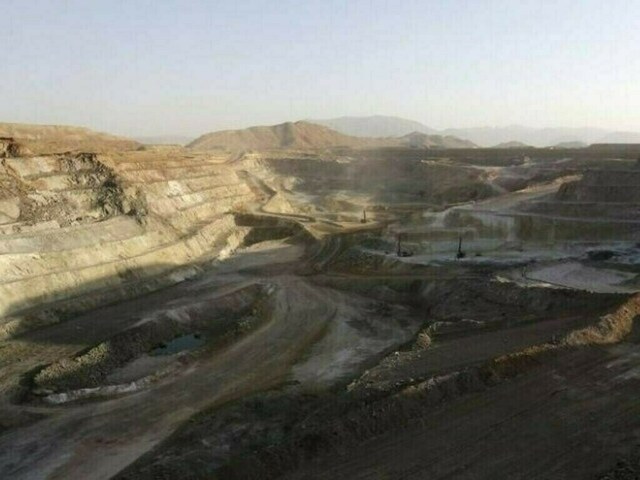
Mari Energies Limited, one of Pakistan’s largest E&P companies, has announced a significant copper-gold discovery at its East Siah Diq (ESD-1) target in Chagai district, Balochistan, through its wholly owned subsidiary Mari Minerals (Private) Limited.
The company disclosed the development in a notice to the Pakistan Stock Exchange on Friday.
“The discovery area under discussion is located approximately 50km east of the Reko Diq copper-gold mine development project and 25km northwest of Nokkundi in the Koh-i-Sultan area adjacent to the Siah Diq Project,” the company said.
Mari Minerals, which holds multiple exploration licenses in Chagai, has completed approximately 25,000 metres of exploration drilling at ESD-1 in two phases.
Based on the results to date, the company said ESD-1 is a new porphyry copper discovery.
“Further drilling, geological interpretation, metallurgical test work, resource estimation and technical studies will be required before the scale, grade continuity, economic significance and development potential of mineralisation can be determined,” the company said.
The technical information was reviewed and approved by John Mortimer, PhD, of JM Geoscience Pty Ltd, who has over 40 years of relevant experience, including porphyry copper exploration, said the company.
Mari Minerals (Private) Limited, formerly known as Mari Mining Company (Pvt) Limited (MMC), is a wholly-owned subsidiary of Mari Energies Limited (previously Mari Petroleum Company Limited). It was established in July 2023 with the purpose of undertaking mineral mining projects in Pakistan and contributing to the growth of the country’s mineral mining sector.
A day ago, Mari Minerals inked an agreement with mining giant Ivanhoe Atlantic for the exploration of copper and gold deposits in Chagai, Balochistan.
Under the agreement, the two companies intend to undertake exploration activities to assess the region’s mineral potential and identify opportunities for the development of its copper-gold resources.
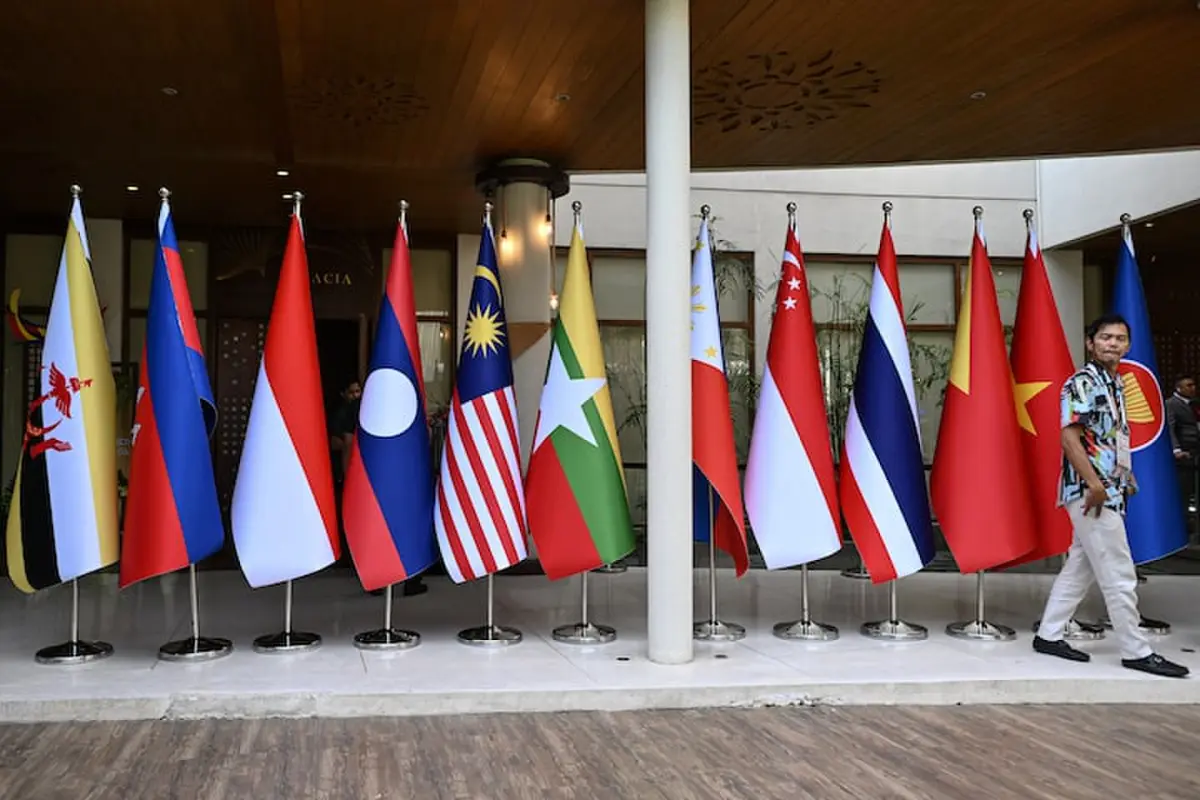
BANGKOK: ASEAN is under increasing pressure at its upcoming summit to ease a five-year ban on Myanmar’s military-backed leaders attending high-level meetings, after Thailand and several other members stepped up engagement despite the country’s ongoing civil war.
Leaders of the Association of Southeast Asian Nations are set to review their decision to exclude Myanmar when they meet in Manila from November 15 to November 17.
Myanmar has been in turmoil since 2021, when then-military chief Min Aung Hlaing ousted the elected government in a coup, unleashing armed conflict across much of the country that has killed more than 100,000 people.
Its political leadership has been barred from ASEAN summits and foreign ministers’ meetings over its failure to implement the Five-Point Consensus, a peace plan agreed after the coup.
But nearly half the bloc’s 11 members have stepped up bilateral engagement since elections in December and January, won overwhelmingly by the military-backed Union Solidarity and Development Party in the absence of any viable opposition.
Laos, Thailand, Vietnam, Cambodia and Malaysia have this year welcomed Min Aung Hlaing on official visits.
Malaysian Prime Minister Anwar Ibrahim pledged in October to work towards Myanmar’s reintegration into the bloc.
Thailand is now openly calling for restrictions to be eased.
“For Thailand, we believe that the next step is to have the Foreign Minister of Myanmar participate in the ASEAN meetings at the level of Foreign Minister,” Thai Foreign Minister Sihasak Phuangketkeow told reporters after visiting Myanmar on Thursday.
He hoped sufficient progress would allow a decision on Myanmar’s participation by Thailand’s chairmanship in 2028 at the latest.
Engaging policymakers would help convey ASEAN’s concerns directly to decision-makers, he said, while stressing that the decision rested with the bloc’s foreign ministers.
Separate diplomatic tracks
Analysts say the shifting approaches put pressure on the Five-Point Consensus, which calls for an end to violence, inclusive dialogue, humanitarian assistance and mediation by an envoy able to meet all parties.
Leaders will issue a negotiated document reviewing its implementation at the upcoming ASEAN summit, Dominic Xavier Imperial, a spokesperson for the Philippines, said on Friday.
“I think the Five-Point Consensus now has been overtaken by events,” said Thitinan Pongsudhirak, a political scientist at Bangkok’s Chulalongkorn University.
Civil war continues, millions remain displaced and efforts to bring the warring parties into dialogue have yet to produce a breakthrough.
Aung San Suu Kyi, the country’s civilian leader and a Nobel Peace Prize winner, has been detained since the coup.
She was moved to house arrest in April, following the military-engineered election, but while a Red Cross official was allowed to meet her in August, no foreign leader or envoy has been able to despite requests.
Thailand has repeatedly offered to facilitate talks between Myanmar’s government and ethnic armed groups along its border.
Sihasak said Myanmar had agreed in principle to send a delegation to any talks, but gave no date.
Philippine Foreign Secretary Theresa Lazaro, ASEAN’s special envoy, visited Myanmar on a humanitarian mission in October.
But the envoy’s role, which changes each year with ASEAN’s rotating chairmanship, is also under scrutiny.
“Myanmar’s been keen to do away with the Special Envoy entirely,” said a Southeast Asian diplomat who declined to be named, adding that ongoing discussions had also covered appointing a permanent envoy.
“But if no consensus on either of these approaches, then the status quo will remain,” the diplomat said.
Testing ASEAN unity
Thailand’s assertive engagement reflects the country’s concerns over fighting spilling across its long land border with Myanmar, alongside trade, migrant workers and energy cooperation.
But Thitinan said Bangkok’s “calibrated re-engagement” had pressured other capitals to follow suit, leaving Singapore, next year’s chair, to reconcile divergent approaches.
“It should not have been a blank cheque; it should not have been an open-ended reception and recognition,” he said, advocating conditions including political prisoner releases, humanitarian access and an end to military airstrikes.
Human Rights Watch has urged ASEAN to maintain restrictions and increase pressure on the military to end abuses and pursue a transition to civilian rule.
Warmer bilateral ties do not automatically change ASEAN policy, however, said Simon Tay, chairman of the Singapore Institute of International Affairs.
The consensus remains unless members collectively agree otherwise.
“There is room for both good cop and bad cop within ASEAN, provided these different approaches remain within the 5PC framework,” he said.
“Otherwise, Myanmar could simply play one against the other.”
Tay advocates interim goals including regular access to Aung San Suu Kyi, reduced violence and humanitarian aid.
“ASEAN can be pragmatic without being premature,” he said.
“Political acceptance should follow progress, not precede it.”
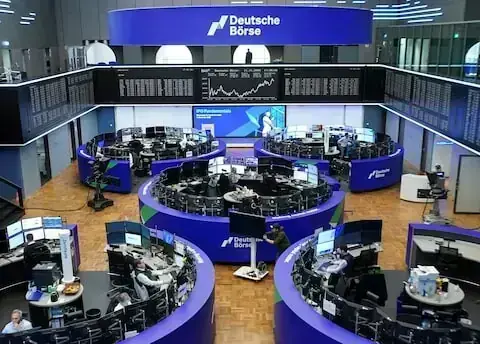
European shares opened lower on Friday, retreating from record highs hit in the previous session, while uncertainty over the outlook for the AI trade rippled through global markets following Jensen Huang’s abrupt resignation as Nvidia’s CEO.
Investors were worried about what Huang’s resignation following revelations of extramarital affairs would mean for future AI development that has underpinned much of the global economy, given that he was a key personality in a web of deals that financed the flourishing trade.
The STOXX 600 was down 0.2% at 662.64 points at 0808 GMT, with personal and household goods leading sectoral declines with a 1% drop.
Goldman Sachs raised its 12-month target for the STOXX 600 to 700 points from 695. European equities have also been supported by robust earnings this quarter.
Given Europe’s smaller exposure to AI-linked stocks, the STOXX 600 index breached record-high levels for the first time since August earlier this week and is up over 2% for the week, its strongest gain since June.
In comparison, its US peer, the S&P 500, is more than 3% away from all-time highs.
On Friday, chip stocks such as Siltronic and Aixtron were down over 1% each, while AI equipment makers such as Schneider Electric and Legrand were marginally lower. The broader tech sector lost 0.6%.
On the earnings front, Cartier owner Richemontfell 7% after reporting a 13% growth in sales in the three months ending in September, slower than the 20% growth rate in the previous quarter.
National Resources Limited (NRL), a 100% Pakistani privately-owned mineral exploration company, has identified copper and gold mineralisation across at least eight porphyry discoveries in Balochistan’s Chagai district, with nearly 25,000 metres of drilling delivering encouraging results as the company advances towards its first mineral resource estimate.
According to a statement, one drill hole returned 295 metres of continuous mineralisation grading 0.43% copper and 0.13 grams per tonne of gold, including a 132-metre interval grading 0.83% copper, Chairman Muhammad Ali Tabba told the Pakistan Minerals Investment Forum 2026.
The discoveries span 5.6 square kilometres in Darigwan, adjoining NRL’s earlier discovery at the Tang Kaur copper-gold porphyry system. Tabba said further investigations at exploration licence EL214 were expected to establish substantial resources, subject to completion of exploration and formal resource estimation.
A joint venture between Fatima Fertilisers, Liberty Mills, and Lucky Cement Ltd, NRL holds five exploration licences in Balochistan, comprising two copper-gold projects, one lead-zinc project and two antimony projects, with exploration work ongoing.
As per the statement, NRL plans to initiate environmental, hydrogeological, metallurgical, and geotechnical studies in 2027, with the aim of completing a bankable feasibility study by the end of the decade.
Tabba reaffirmed NRL’s previously announced $100 million commitment to mineral exploration in Pakistan and invited domestic and international investors and service providers to discuss emerging opportunities.
While preliminary resource estimates have been prepared by a separate consultant, the company is withholding their public release pending compliance with international reporting requirements. NRL is progressing towards its maiden mineral resource estimate in accordance with international standards.
The company has also initiated the development of a predictive artificial intelligence model with Lahore University of Management Sciences to help accelerate exploration, building on geological modelling and data gathered through its drilling programme.
“Our ambition is to build a world-class mineral exploration platform and contribute to an integrated mineral value chain, from discovery and mining to processing and onward value addition,” Tabba said.
Tabba said the programme was developing local expertise, with Baloch geologists working alongside international consultants and Pakistani contractors undertaking inclined drilling. The company’s technical workforce is almost entirely indigenous, supporting its ambition to build domestic capabilities that could also serve international exploration projects.
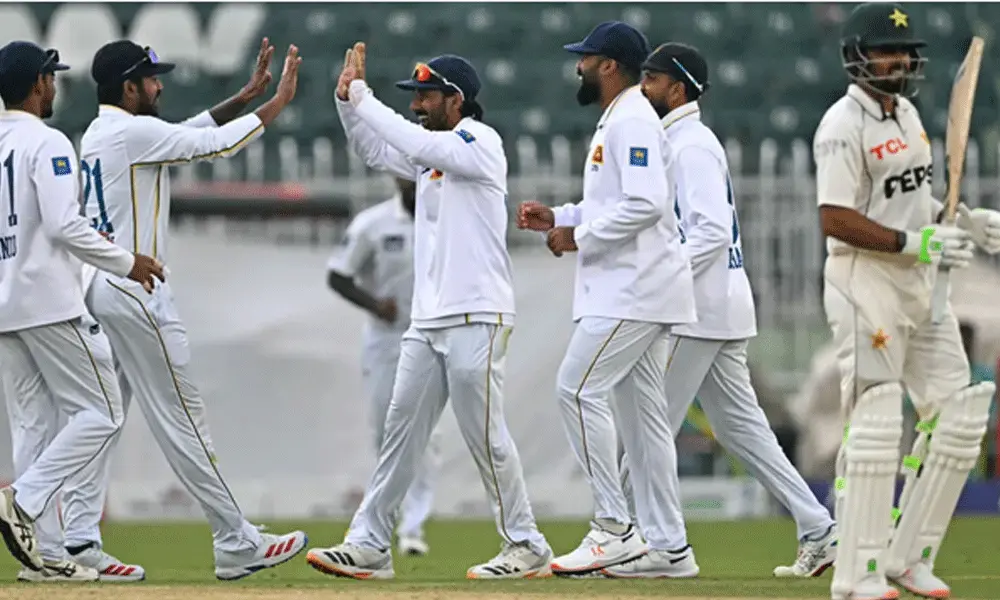
RAWALPINDI: Babar Azam’s century drought continued as Sri Lanka pushed hard for victory over Pakistan in the weather-hit first Test in Rawalpindi on Friday.
The tourists took four wickets in bad light in the morning as Pakistan reached 151-5 at lunch on the fifth and final day, leading by 139 runs with five wickets in hand.
At the break Saud Shakeel was unbeaten on 23 and Ghazi Ghori seven not out after a 20-minute break due to bad light halted Sri Lanka’s push for a 1-0 lead in the two-match series.
Azam fell to a leg-side trap, handing the short square-leg fielder a simple catch off fast bowler Milan Rathnayaka for 34, making it a 42nd innings without a Test century.
Salman Agha too fell in the same manner off Rathnayaka for 13, leaving Pakistan struggling on 125-5.
Earlier, Sri Lanka struck with the first ball of the day when Lahiru Kumara dismissed Azan Awais for 22 at Pakistan’s overnight total of 57.
Next over Asitha Fernando made it 57-3 with Mohammad Taha caught behind for 24.
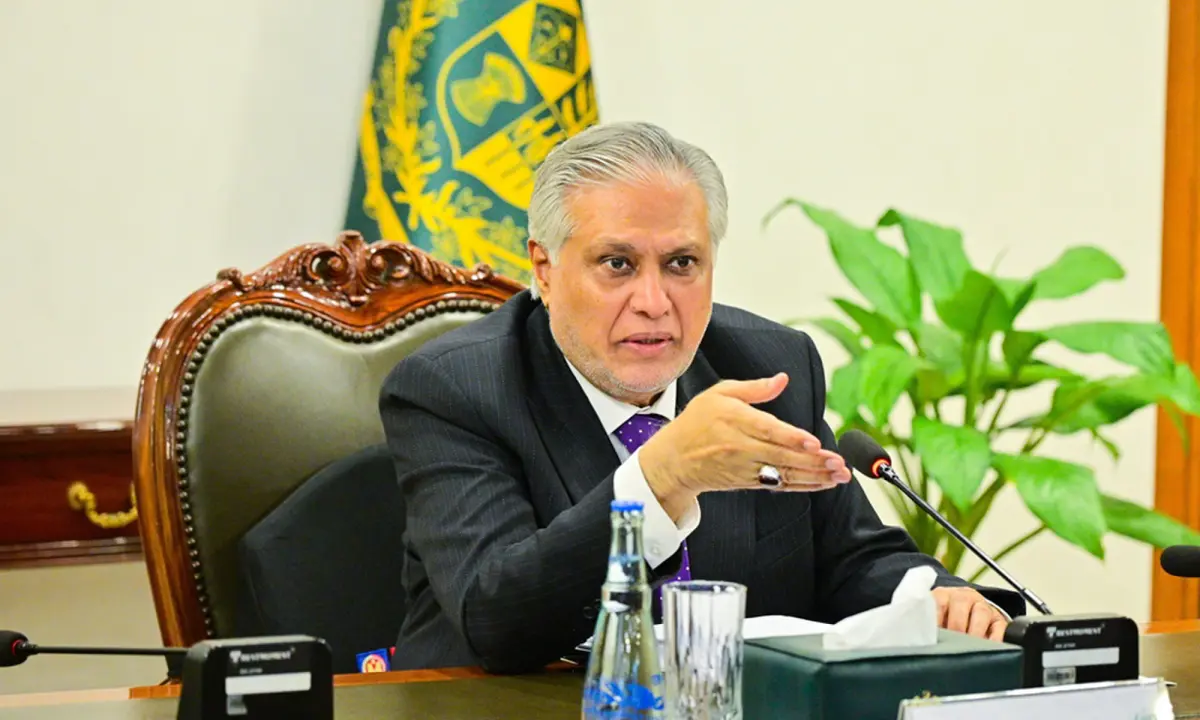
Deputy Prime Minister and Foreign Minister Senator Mohammad Ishaq Dar on Friday called for sustained efforts and closer coordination among government institutions to ensure effective implementation of austerity measures and achieve lasting savings.
He made these remarks while chairing a meeting of the Committee for Monitoring and Implementation of Conservation and Additional Austerity Measures at the Ministry of Foreign Affairs, according to a Foreign Office statement.
The meeting reviewed progress on the implementation of previously taken decisions, with a focus on expenditure management and conservation of resources across ministries and divisions.
Dar stressed the need for continued efforts to curb avoidable expenditure and improve administrative efficiency. He said close coordination and consistent follow-up were essential to achieving the objectives of the government’s austerity drive.
He also underscored the shared responsibility of all relevant institutions in ensuring that the measures translated into sustainable savings.
The meeting was attended by the minister for Information Technology and Telecommunication, Special Assistant to the Prime Minister Tariq Bajwa, secretaries of the Cabinet, Law and Justice, Information and Broadcasting, and Federal Education and Professional Training, as well as senior representatives from the provinces, Azad Jammu and Kashmir, Gilgit-Baltistan and relevant ministries.
India wicketkeeper-batter Rishabh Pant has passed a fitness Test and left to join the national team in New Zealand for a two-Test series, media reports said on Thursday.
The 29-year-old, who last played for India in August, was sidelined with a left-side strain. He was named in India’s squad last month pending a fitness clearance at the Indian cricket board’s (BCCI) Centre of Excellence, where he underwent rehabilitation.
On Thursday, Pant posted a picture of an airplane wing in an Instagram story, with emojis indicating he was flying to New Zealand, where India are playing a five-match one-day international series.