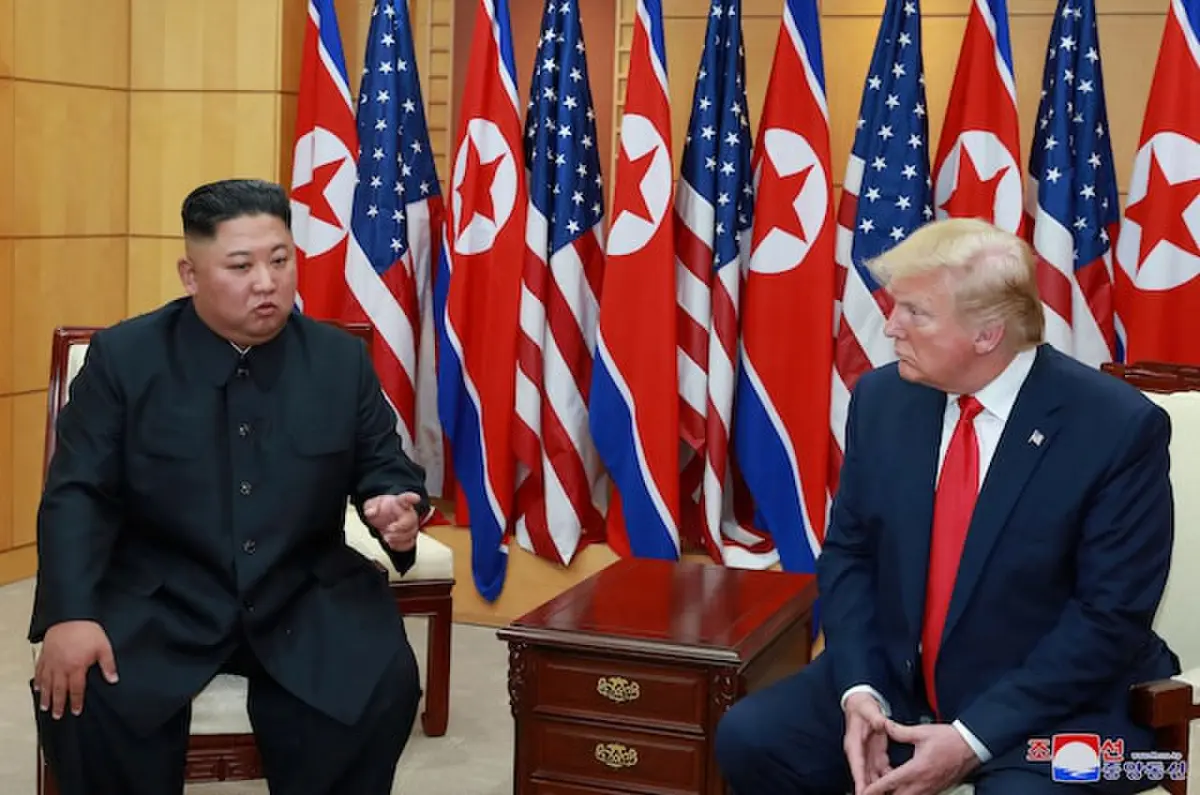
The president met the North Korean leader several times during his 2017-2021 first term in unprecedented direct diplomacy that failed to persuade Kim to give up his nuclear weapons.
Trump has repeatedly expressed interest in another meeting during his current term, but also previously previewed meetings with Kim that never took place, including during a trip to Asia last year.
Senior US officials have previously said he has no immediate plans for another meeting, while North Korea has said it sees no need for talks at this time and denounced hostile US policies.
Trump told reporters while departing the White House en route to the Philippines and China that any meeting would occur in China, and that the North Korean leader’s presence was ultimately up to Chinese President Xi Jinping.
“(Xi) was here … and we’re also going to meet with (Russian) President Putin, and we may meet with Kim Jong Un also,” Trump said.
“So that’ll be good. We have a chance to accomplish a lot.”
Trump added in reference to Kim: “He may come. I don’t know. That’s up to President Xi.”
North Korea’s mission to the United Nations did not respond to a request for comment on Trump’s remarks.
The Kremlin said on Monday a planned meeting between Putin, Trump and Xi on the sidelines of this week’s Asia-Pacific Economic Cooperation (APEC) meeting in China would have a major impact on global affairs.
Trump said he would discuss denuclearization, Iran and Ukraine with Xi and Putin, as well as trade and the economy, but US officials and analysts have played down the possibility of a meaningful agreement emerging.
Russia’s Interfax news agency quoted Kremlin spokesman Dmitry Peskov as saying later on Monday that Putin could meet Kim if he comes to China.
North Korea has sent about 14,000 to 15,000 troops to support Russia’s war in Ukraine since 2024, according to Ukrainian and South Korean estimates, with most deployed in the Kursk region to help repel a Ukrainian incursion.
Victor Cha, head of the Korea program at Washington’s Center for Strategic and International Studies think tank, said Trump’s comments made clear he had asked Xi to bring Kim to China for a meeting.
“One could see a huge diplomatic victory for Kim if he were to share a stage with the US, Russia, China … the three other nuclear powers in Asia – in addition to any bilateral with Trump,” he said.
“The common narrative is that China would not want to distract from their hosting APEC but I think Xi’s global diplomacy offensive would probably be enhanced, in his mind, if he were bringing together all of the leaders for this extraordinary meeting,” Cha said.
Trump’s interest in renewed engagement with Kim comes seven years after their last summit ended without agreement when they failed to bridge differences over North Korea’s nuclear weapons and sanctions relief.
Since then, North Korea has significantly expanded its nuclear and missile capabilities while strengthening ties with Russia and China, and any willingness by Trump to make major concessions to Pyongyang risks creating friction with regional allies.
Trump has referred to North Korea as a nuclear power, a status allies in the region and the West have refused to recognize despite the dozens of nuclear warheads experts believe Pyongyang has built.
SHENZHEN: China’s freewheeling tech capital of Shenzhen has embraced an unusual quiet as it prepares to host world leaders this week, with car horns banned, delivery drones grounded and residents urged to leave vehicles at home.
The meeting of the Asia-Pacific Economic Cooperation (APEC) forum, which Presidents Donald Trump of the US and Vladimir Putin of Russia will attend, is a chance for Shenzhen to show off its transformation from an agricultural backwater into the high-tech – and orderly, officials hope to show – city it is today.
More than 1.5 million local car owners have pledged to stay off the roads in exchange for APEC car stickers and, if they keep their word, transit cards worth up to 100 yuan ($15).
From Tuesday, cars with out-of-town plates will be barred from most city districts during the day, Shenzhen traffic police said.
Even the city’s ubiquitous e-bike riders have been asked to dismount in return for discounts on insurance, while parked bikes are being removed from main streets.
Many downtown areas have been spruced up for the summit.
The venue stands beside Honey Lake, or Xiangmihu, which was home to one of Asia’s largest amusement parks when it opened in 1985. The park’s long-disused roller coaster was torn down in 2024 to make way for a financial district.
Today the lakeside area is lined with fresh flower beds and newly paved roads.
Not everyone in Shenzhen seems ready for all the pomp, and inconvenience, involved with having around 20 world leaders and their entourages descend on the city, however.
“It’s pretty, but that’s my taxpayer money they’re spending,” said Beau, in her 40s, who lives near the venue. She declined to use her full name because her employer had told staff not to speak to media.
She will not be able to drive to work this week as nearby roads will be closed at key times, she said.
Beau said her bigger headache is childcare. Shenzhen’s primary and middle schools begin a four-day autumn break on Tuesday. Except teachers, there is no holiday for adults.
Shenzhen has encouraged employers to allow remote work, staggered hours or paid leave.
Some residents are making the most of it. John, a middle-school teacher, is heading to the southwestern city of Chongqing. “I just want to relax and enjoy cheap food, and come back when things are back to normal,” he said.
On the roads, the hush owes much to a citywide ban on beeping that came in this month, enforced by acoustic cameras and fines starting at 300 yuan. Shenzhen has long restricted horn use, but the new rules have been widely publicized.
“People are cutting in much more dangerously, you’ve just got to sit and watch,” complained Liu, a 29-year-old working in media, on the ban on using her car horn.
Drones, one of the city’s most famous exports, have been grounded, with Meituan suspending drone deliveries for 10 days.
Preparations extend to wardrobes. An office worker called Lin said her employer had told staff not to wear clothing printed with English phrases they did not understand, in case they were inadvertently displaying obscenities.
Still, across the city, tens of thousands of people are wearing red jackets with “volunteer” written on them, including security guards at housing compounds.
“My boss told me we have to wear them,” said Guo, a guard in Shenzhen’s Nanshan district, adding that he didn’t understand the letters. “I don’t speak English,” he explained.
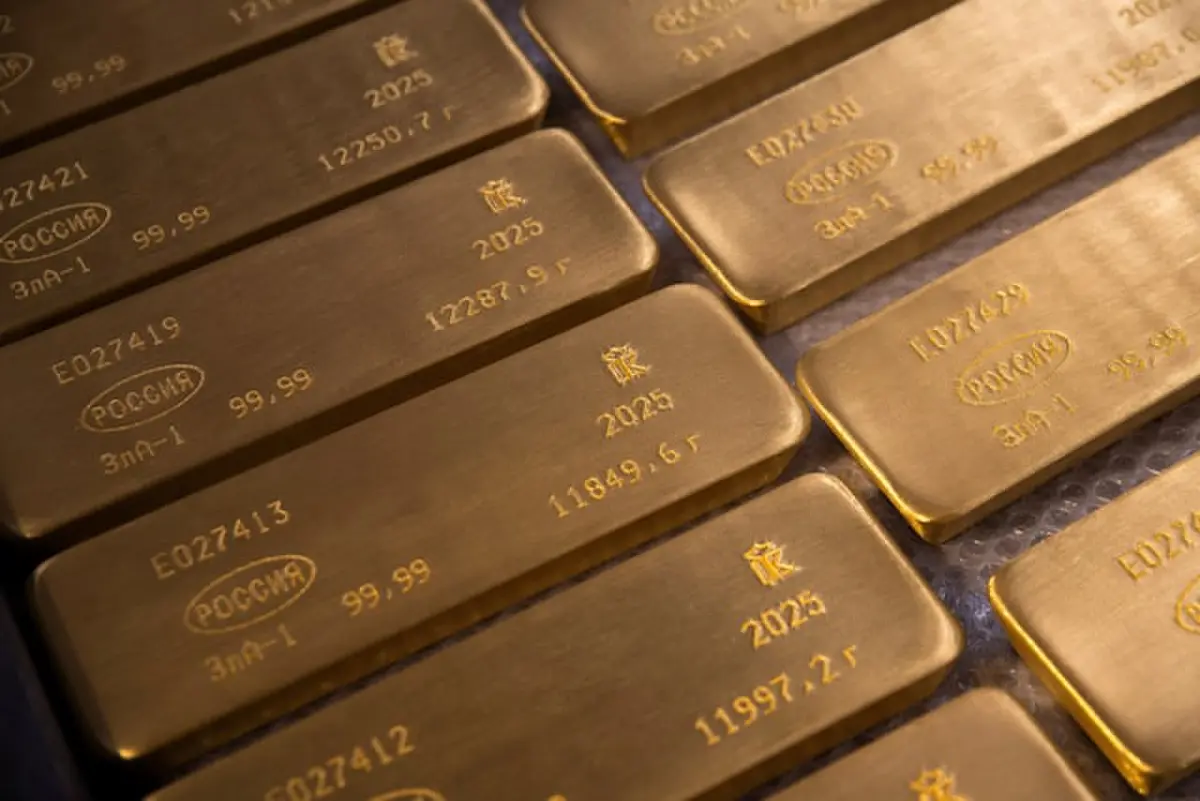
Gold prices steadied on Tuesdaybut remained near their lowest level in more than a year, pressured by a resilient US dollar and bets that the Federal Reserve will raise interest rates next month, with investors looking to the central bank’s October meeting minutes for fresh policy signals.
Spot gold was little changed at $3,856.52 per ounce by 0028 GMT, after hitting its lowest level since October 2025 on Monday.
US gold futures for December delivery rose 0.2% to $3,859.
Bullion sank to a one-year low on Monday, battered by a mix of high Treasury yields, a strong dollar and expectations of tighter monetary policy, putting bullion on course for further losses and its worst year in more than a decade.
The dollar rose on Monday to its highest level since April 2025, remaining supported by last week’s strong inflation data and hawkish Fed commentary.
A stronger dollar makes greenback-priced bullion more expensive for buyers overseas.
Markets see a 96.6% chance of a 25-basis-point rate hike in December, while the probability of a larger 50-basis-point move is priced at 3.4%, according to CME’s FedWatch tool.
Although gold is typically seen as an inflation hedge, higher interest rates increase the opportunity cost of holding non-yielding bullion, reducing its appeal to investors.
Federal Reserve Chairman Kevin Warsh said on Monday that emerging technologies will have a significant impact on the economy, but the possible scenarios range from rising growth with broadly shared gains to higher unemployment and a potential slowdown if anticipated investment returns prove disappointing.
Market participants now await the minutes of the Fed’s October 27-28 Open Market Committee meeting, due on Wednesday, for further clues on the monetary policy trajectory.
Elsewhere, the Bank of Japan must raise its policy rate to a “good” position at an early stage and focus on addressing mounting inflation risks, its hawkish board member Hajime Takata said, signalling the chance of a hike as soon as December.
Among other metals, spot silver steadied at $47.05 per ounce, platinum gained 0.1% to $1,450.75 and palladium rose 0.1% to $969.75.
Kohat Cement Company Limited (PSX: KOHC) was established by State Cement Corporation of Pakistan in 1984. In 1992, the government privatized the company. The company was listed on the stock exchanges of Pakistan in 1984.
The principal activity of the company is the manufacturing and sale of cement [grey and white clinker]. ANS Capital [Private] Limited is the holding company of KOHC.
Pattern of Shareholding
As of June 30, 2026, the company has 919.306 million shares outstanding which are held by 8121 shareholders. Associated companies, undertakings and related parties have the majority stake of 60.17 percent in company followed by Directors, CEO, their spouse and minor children holding 18.34 percent shares of the company.
Local general public has a stake of 9.19 percent in the company followed by Mutual Funds holding 9.01 percent shares. Joint stock companies have 1.15 percent stake in KOHC. The remaining shares are held by other categories of shareholders.
Historical Performance (2021-26)
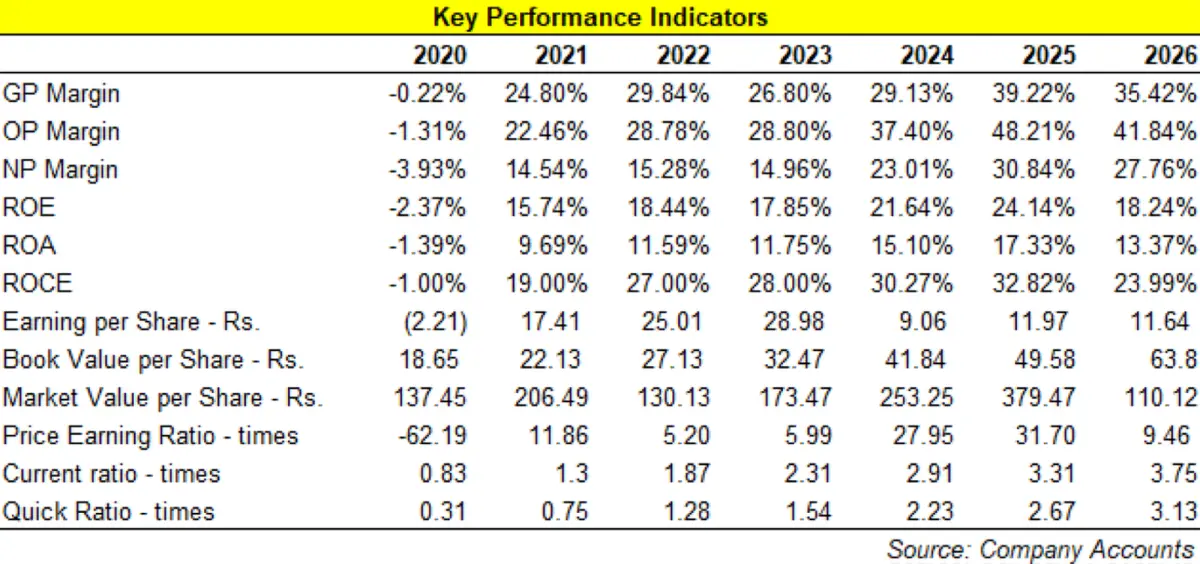
Over the period under consideration, KOHC’s topline posted year-on-year dip in 2024 and 2025. In 2020, KOHC posted gross, operating and net losses. The company’s bottomline exhibited growth thereafter until 2025 followed by a decline in 2026. KOHC’s margins which followed a downward trajectory until 2020 posted a rebound for the next two years.
In 2023, KOHC’s margins slightly ticked down, however, bounced back to attain their highest levels in 2025. In 2026, KOHC’s margins notably fell. The detailed performance review of the period under consideration is given below.
In 2021, KOHC’s topline boasted 112.89 percent year-on-year growth to clock in at Rs.24,057.38 million. This was backed by 69.30 percent year-on-year growth in cement off-take.
The growth was propelled by government initiatives for the real-estate sector including low-cost housing projects and subsidized house financing along with CPEC related activities during the year. Improved selling prices during the year proved to be a cherry on top resulting in gross profit of Rs.5965.35 million in 2021 with GP margin of 24.80 percent. This was against the gross loss of Rs.24.32 million recorded in 2020.
KOHC took optimum benefit of the increased market demand and made its new production line fully operational in 2021.
Distribution expense mounted by 46.54 percent in 2021 due to higher payroll expense and extensive sales promotion drives undertaken during the year. To activate its new production line, the company hired additional resources which took the tally from 683 employees in 2020 to 696 employees in 2021.
Other expense grew by 1876.81 percent in 2021 mainly owing to higher provisioning done for WPPF and WWF. Other income slid by 13 percent in 2021 due to lower foreign currency gain and lesser realized gain on investment at FVTPL. KOHC posted operating profit of Rs.5403.01 million in 2021 with OP margin of 22.46 percent. This was against the operating loss of Rs.147.61 million registered in 2020.
High interest rates paved the way for finance cost to grow by 26.20 percent year-on-year in 2021. This was despite the fact that the company paid off a huge portion of its outstanding liabilities during the year which resulted in its gearing ratio falling down from 32.82 percent in 2020 to 8.89 percent in 2021.
KOHC registered net profit of Rs.3497.51 million in 2021 with EPS of Rs.17.41. NP margin clocked in at 14.54 percent in 2021. This was against the net loss of Rs.443.74 million and loss per share of Rs.2.21 recorded in 2020.
In 2022, KOHC’s topline picked up by 36.66 percent to clock in at Rs. 32,876.95 million. However, the growth was price-led rather than volume-led. Local and domestic sales posted decline of 0.5 percent and 95.6 percent respectively in 2022. Prices had to be kept high to absorb the exorbitant rise in prices of coal, electricity and petroleum products.
The company used a mix of local and Afghan coal to mitigate the effect of elevated international coal prices. Such measures enabled KOHC to improve its GP margin to 29.84 percent in 2022. In absolute terms, gross profit strengthened by 64.48 percent in 2022.
Distribution expense surged by 29.70 percent in 2022 due to higher salaries and wages paid during the year. Although number of employees remained intact during the year, inflationary pressure resulted in 12.76 percent spike in administrative expense in 2022.
Other income improved by 304.36 percent in 2022 mainly on account on realized gain on investment in treasury bills. Other expense escalated by 73.10 percent in 2022 due to higher profit related provisioning.
KOHC’s operating profit grew by 75.15 percent in 2022 with OP margin clocking in at 28.78 percent. Finance cost grew by mere 4 percent year-on-year in 2022 despite multiple upward revisions in discount rate taken place during the year. This was because the company paid its entire short-term loans during the year. Moreover, massive increase in short-term investment resulted in negative gearing ratio in 2022.
Bottomline of KOHC registered 43.65 percent year-on-year growth in 2022 to clock in at Rs. 5024.28 million in 2022 with EPS of Rs.25.01 and NP margin of 15.28 percent.
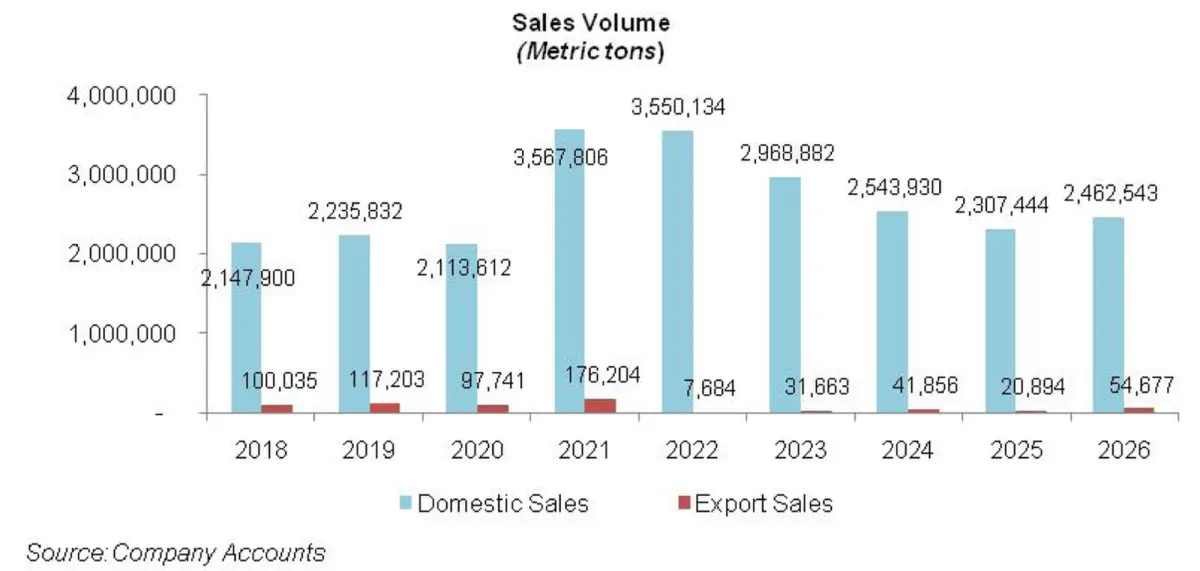
Mounting economic and political instability resulted in a standstill in construction and infrastructure related activities in the country. This translated into 15.71 percent decline in the overall dispatches of cement industry. KOHC’s sales volume ticked down by 15.66 percent in 2023 to clock in at 3 million M tons. On the positive front, export sales grew by over 312 percent in 2023 to clock in at 31663 M tons.
However, it constituted only 1 percent of the total sales volume of KOHC in 2023. KOHC’s topline picked up by 18.39 percent to clock in at Rs. 38,921.64 million in 2023. Spike in the prices of petroleum, coal, electricity and imported consumables was further exacerbated due to Pak Rupee depreciation.
The company tried to control its cost by setting up a solar power plant and switching to cheaper local and Afghan coal.
However, its GP margin ticked down to 26.8 percent in 2023 with only 6.33 percent increase in gross profit in absolute terms. Distribution expense mounted by 44.20 percent in 2023 due to heightened salaries and sales promotion expense incurred during the year. Number of employees remained intact at 696 in 2023, however, inflationary pressure pushed up administrative expense by 12.10 percent in 2023.
Other income picked up by 202.23 percent in 2023 mainly on account of hefty dividend received from investment in mutual funds. Higher profit related provisioning drove up other expense by 30.81 percent in 2023. KOHC recorded 18.46 percent taller operating profit in 2023 while maintaining its OP margin at 28.80 percent.
Finance cost surged by 37.68 percent in 2023 due to monetary tightening. Net profit improved by 15.85 percent in 2023 to clock in at Rs.5820.75 million with EPS of Rs.28.98 and NP margin of 14.96 percent.
In 2024, KOHC’s net sales dipped by 0.7 percent to clock in at Rs.38,647.77 million in 2024. This was on the back of 13.82 percent lesser dispatches recorded by the company during the year on account of economic slowdown. Export sales ticked up by 32.19 percent to clock in at 41856 metric tons, standing at 1 percent of KOHC’s total sales volume.
Increase in cement prices, change in coal mix coupled with the stability in the value of local currency resulted in 7.9 percent uptick in gross profit in 2024 with GP margin climbing up to 29.13 percent.
Distribution expense ticked up by 12 percent in 2024 due to inflationary pressure. Higher payroll expense resulted in 23.17 percent spike in administrative expense in 2024. Other income strengthened by 113.46 percent in 2024 mainly on account of dividend received from investment in mutual funds. Lesser profit related provisioning translated into 22.34 percent decline in other expense in 2024.
The company registered 28.94 percent higher operating profit in 2024 with OP margin climbing an unprecedented level of 37.4 percent – thanks to substantial other income. KOHC was able to cut down its finance cost by 8.50 percent in 2024 by squeezing its loan portfolio on the back of strong liquidity position. As of June 30 2024, the company had no short-term loans outstanding and its long-term loans also ticked down.
KOHC posted net profit of Rs.8893.46 million in 2024, up 52.79 percent year-on-year. This translated into EPS of Rs.9.06 and NP margin of 23 percent. It is to be noted that the company’s EPS fell despite higher net profit in 2024. This was because each ordinary share of the company having a face value of Rs.10 each was split into five ordinary shares of Rs.2 each.
In 2025, KOHC recorded year-on-year decline of 2.88 percent in its topline which clocked in at Rs.37,535.70 million. This came on the back of 9.96 percent dip in the overall dispatches of the company in 2025. Not only did local sales slid by 9.30 percent in 2025 due to lesser demand from residential and commercial projects, export sales also deteriorated by 50 percent due to high regional competition (see the graph of sales volume). Cement prices continued to hike to account of elevated cost.
This coupled with cost control initiatives such as commissioning of 5.34 MW solar power project, commencement of the construction of coal fired power project and efficient sourcing of coal and fuel resulted in 16.71 percent dip in cost of sales in 2025.
KOHC recorded 30.78 percent improvement in its gross profit in 2025 with GP margin attaining its optimum level of 39.22 percent. Distribution expense mounted by 14.37 percent in 2025 due to higher salaries of sales force.
Administrative expense also surged by 42.52 percent in 2025 due to higher payroll expense as well as legal & professional charges incurred during the year. KOHC expanded its workforce from 715 employees in 2024 to 723 employees in 2025.
Higher provisioning done for WWF and WPPF resulted in 64.41 percent spike in other expense in 2025. Other income registered 18.60 percent improvement in 2025 on the back of realized gain on investments at FVTPL.
Operating profit improved by 25.21 percent in 2025 with OP margin jumping up to 48.21 percent. Finance cost descended by 48.34 percent in2025 due to monetary easing. Net profit multiplied by 30.15 percent to clock in at Rs.11,575.15 million in 2025. This translated into EPS of Rs.11.97 and NP margin of 30.84 percent in 2025.
In 2026, KOHC’s topline ticked up by 2.65 percent to clock in at Rs.38,530.65 million. This came on the back of 8.11 percent enhancement in the company’s sales volume which clocked in at 2.517 million tons in 2026.
While local sales inched up by 6.72 percent during the year, export sales registered a splendid growth of 161.69 percent. However, export sales constituted a thin 2.17 percent of the company’s overall sales volume in 2026. Cost of sales surged by a much greater magnitude of 9 percent in 2026 due to higher coal and energy prices.
This coupled with intense competition and lower cement prices suppressed KOHC’s gross profit by 7.29 percent in 2026 with GP margin falling down to 35.42 percent. Distribution expense surged by 11 percent in 2026 due to greater sales volume. Administrative expense also escalated by 54 percent during the year due to higher payroll expense, travelling & conveyance charges as well as repair & maintenance charges incurred during the year. KOHC expanded its workforce to 748 employees in 2026.
Lower gain realized on investments in mutual funds, decline in the fair value of financial assets and thinner scrap sales squeezed other income by 12 percent in 2026. Other expense also slid by 7.67 percent in 2026 due to lesser provisioning done for WWF and WPPF. KOHC registered 10.92 percent plunge in its operating profit in 2026 with OP margin falling down to 41.84 percent. It is to be noted that the company’s robust other income has been ensuring an operating profit greater than gross profit since 2023.
Finance cost dwindled by 56.15 percent in 2026 due to lower average borrowing rate. This was despite greater outstanding debt at the end of the year. Net profit plummeted by 7.59 percent to clock in at Rs.10,696.85 million in 2026. This translated into EPS of Rs.11.64 and NP margin of 27.76 percent in 2026.
Recent Performance (1QFY27)
During the first quarter of the ongoing fiscal year, KOHC’s topline posted a reasonable 15 percent year-on-year growth to clock in at Rs.11,837.40 million. Domestic dispatches grew by 4.4 percent during the period under review; however, it was offset by thinner export sales, resulting in 3 percent decline in the overall dispatches.
Topline growth was the result of stronger retention prices and improved sales mix. These factors offset the impact of higher international coal prices and culminated into 39.78 percent stronger gross profit in 1QFY27. GP margin clocked in at 41.78 percent in 1QFY27 versus 34.39 percent in 1QFY26.
Distribution expense inched up by only 1.63 percent in 1QFY27 due to closure of Afghan border which greatly impacted export sales. Inflationary pressure and the expansion of the company’s operations resulted in 12.61 percent hike in administrative expense in 1QFY27.
Lower dividend income appears to be the cause of 36 percent plunge in other income recorded during the period. Conversely, other expense mounted by 44.22 percent in 1QFY27 likely due to greater provisioning done for WWF and WPPF. Operating profit strengthened by 15.92 percent in 1QFY27 with OP margin clocking in at 44.32 percent versus 44 percent recorded in 1QFY26.
Despite the onset of monetary tightening, finance cost dropped by 30.46 percent in 1QFY27 due to lower outstanding liabilities at the end of the period. Net profit clocked in at Rs.3313.04 million in 1QFY27, up 12.54 percent year-on-year. This translated into EPS of Rs.3.60 and NP margin of 28 percent in 1QFY27. This was against the EPS of Rs.3.20 and NP margin of 28.62 percent recorded in 1QFY26.
Future Prospects
Projected rise in local demand alongside higher pricing power will enable the cement companies to keep their toplines and margins buoyant in 2027. Cost control measures such as the recently commissioned 2.32 MW solar power project and the upcoming 28.5 MW coal fired power project will keep the cost in check and provide energy self sufficiency. KOHC will also keep benefiting from its sizeable other income.
Oil prices fell on Tuesdayas expectations of a supply surplus, fuelled by recovering Middle East exports, overshadowed concerns about continued attacks on tankers in the region.
Brent crude futures were down 44 cents, or 0.5%, at $92.00 a barrel at 0102 GMT, while US West Texas Intermediate (WTI) futures fell 44 cents, or 0.5%, to $85.28.
“Oil is recalibrating lower as the market increasingly accepts that supply has finally caught up with demand and may now be set to exceed it.
That shift in the supply-demand balance is the main factor weighing on prices today,“ said Tim Waterer, chief analyst at KCM Trade.
The International Energy Agency said on Friday that the world oil market will return to a surplus in the fourth quarter of this year, as Middle East exports recover faster than global oil demand despite attacks on shipping.
Despite signs of improved supply, attacks on energy infrastructure and shipping in the Gulf and Strait of Hormuz have continued, maintaining uncertainty around one of the world’s most important oil-export routes.
“The geopolitical risk premium from the US-Iran conflict has not disappeared, but it is clearly taking a back seat for now,” Waterer said.
OPEC held an online meeting on Monday to discuss its review of members’ maximum sustainable production capacity, a key exercise that will help determine OPEC+ output quotas for 2027 and beyond.
The wider OPEC+ producer group, which includes allies led by Russia, is due to meet on November 29 to decide 2027 output policy.
Elsewhere, stocks of crude oil in the US Strategic Petroleum Reserve fell to 276.4 million barrels last week, the lowest level since August 1982, according to data from the Department of Energy.
The recent drawdowns have been part of a US agreement to release 172 million barrels from the facility.
LAHORE: The Lahore High Court (LHC) on Monday adjourned the hearing of a petition filed by a PTI activist and fashion designer Khadijah Shah against the Federal Investigation Agency (FIA) for initiating an inquiry against her on charges of money laundering as her counsel did not appear before the court.
Khadija contended that the agency had not received any complaint against her and initiated the inquiry at its own.
She argued that the inquiry had been launched against her with a mala fide intention and asked the court to restraint the agency from taking any action against her.
ISLAMABAD: In an unprecedented matter, Multan Bench of Appellate Tribunal Inland Revenue (ATIR) has taken judicial notice where the assessing officer granted a fake adjournment of thirty days in order to circumvent limitation of adjudication. Landmark judgement requiring the Federal Board of Revenue (FBR) FBR to streamline the record keeping of adjudication proceeding has been authored by the bench comprising on Khurram Shahbaz Butt and Naveed Zafar Khan.
The backgrounds facts are that Muhammad Imran Ghazi, counsel of the appellant taxpayer argued before the ATIR that impugned order is time barred as adjournment of thirty days mentioned in the order was never claimed by the taxpayer. On that the ATIR required the concerned officer to appear in person with record.
The ATIR observed that “Perusal of the order sheet maintained in the adjudication record revealed that on 20.11.2025 the officer had recorded that “Mr. Muhammad Amir, Partner of firm attended the office proceeding and made request that case may be adjourned for thirty days. The same is granted.”
Whereas before ATIR an affidavit sworn by Aamer Tufail Warraich, son of Muhammad Tufail Warraich, the Managing Partner of the appellant firm, was produced.
Wherein it was solemnly affirmed that the statement recorded in the impugned order regarding attendance and adjournment on 20.11.2025 was incorrect and contrary to the record; that neither he nor any partner, employee or authorised representative of the RP had made any oral or written request for adjournment on 20.11.2025 or signed any document or order sheet for that purpose.
On that the ATIR required the assessing officer to file counter affidavit indicating the consequences of not providing the same. The assessing officer has not provided the counter affidavit and the ATIR held that since no adjournment was actually sought therefore assessment order passed after 180 days of issuance of show cause notice is time barred.
The ATIR observed that “we consider it necessary to observe that the maintenance of a true and contemporaneous order sheet is the foundation of fair adjudication, and an entry which extends the period of limitation to the detriment of a taxpayer demands the highest degree of care and integrity.” The ATIR has sent copy of the order to the Chief Commissioner Inland Revenue “for information and such action as may be deemed appropriate in accordance with law.”
When asked for comments Shahid Jami, tax consultant observed newly appointed members of the ATIR having vast experience in tax laws are a blessing for the taxpayers across the country as now fair judgements are forthcoming frequently setting new precedents which are also being upheld by Superior Courts.
Jami added “let’s see whether any action is taken by the Chairman FBR against such assessing officer who tempered official record to cover up their inefficiency in four cases identified by the ATIR.
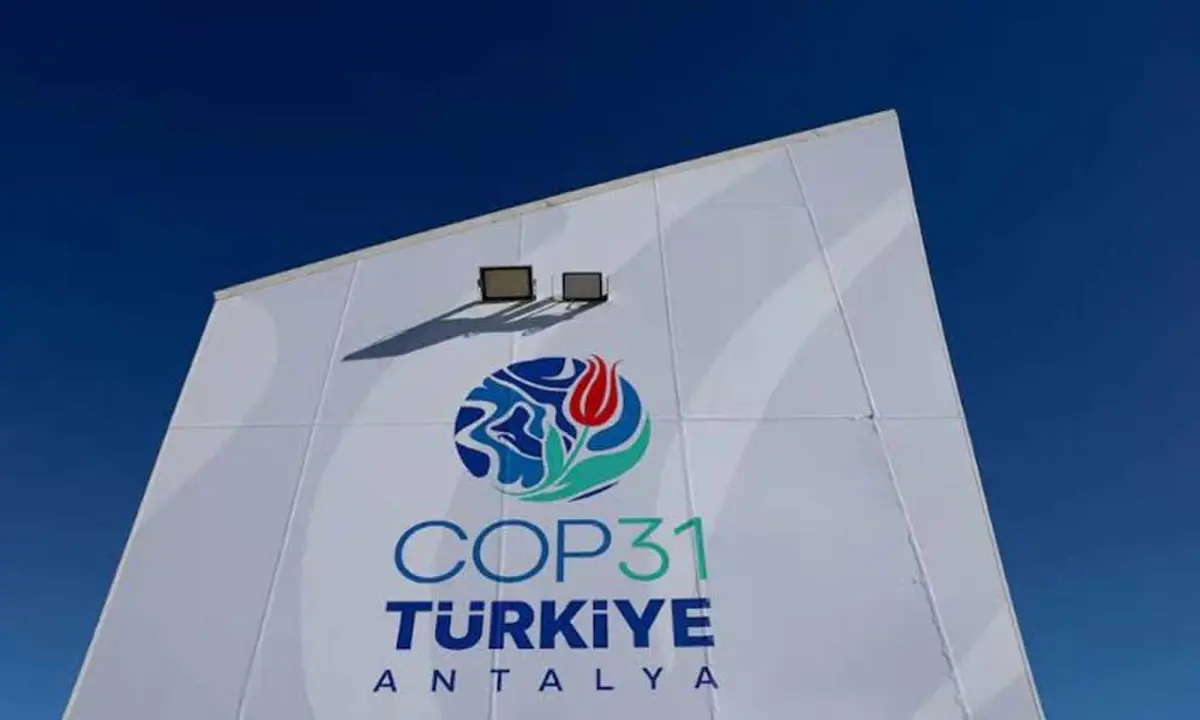
ANTALYA, (Turkiye): COP31 co-host Australia released the first draft of a broad political deal Monday that includes a call for nations to speed up the phaseout of planet-heating coal, oil and gas.
The draft decision needs ultimate approval by the nearly 200 nations at the UN climate summit in Turkiye where the future of fossil fuels has been among the most hotly debated issues.
The summit in Antalya, which is due to finish Friday, takes place against a difficult backdrop, with a conflict-driven energy crisis and geopolitical tensions tempering expectations.
Australia, which is steering the marathon talks, wants to produce an overarching political statement summing up what countries have agreed and setting the course for future climate action.
The proposed “cover decision” lays out the competing positions of governments from tiny island states to oil behemoths and emerging economies — underscoring just how far apart they remain.
In one of the most closely-watched proposals, it “calls for accelerated action to phase out fossil fuels, including through the immediate transition away from fossil fuels in energy systems”.
This could be expected to encounter strong resistance at the UN climate negotiations, where any language around curbing fossil fuels — the main driver of global warming — is highly contested.
The draft also calls on countries to join a global push to raise electricity’s share of final energy demand to 35 percent by 2035, a key initiative of COP31 host Turkiye.
World is watching
The draft deal also includes calls from developing countries for rich nations to triple funding for climate adaptation to at least $120 billion.
This goes to the heart of long-running tensions over the responsibility of wealthy countries most responsible for greenhouse gas emissions to assist poorer nations bearing the brunt of global warming.
It also evokes “deep concern” over the impending breach of the Paris accord’s 1.5C target and recognises the “central role of the best-available science” of the IPCC, the global authority on climate change.
Many countries, particularly in Europe and small island developing nations, had pushed for a reference to the IPCC and a strong response to the “overshoot” of 1.5C that scientists say is imminent and unavoidable.
Among the text’s more divergent positions was a call for wealthy nations to “achieve net zero emissions by 2030” — a target few could realistically meet.
Australia’s Climate Minister Chris Bowen, who is chairing the formal negotiations, said the draft was not “final” but something to be whittled down in the final tense days ahead.
“There are elements in this draft that not all parties will agree on. That is a given,” he told reporters shortly after the document was published.
“What we’ll be concentrating on in coming days are those issues where people can find common ground. That will be the focus of the week ahead — because the world wants us to act on climate change.”
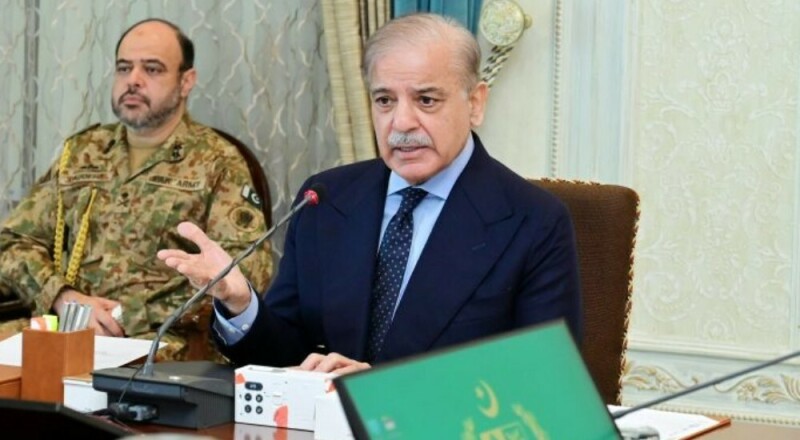
ISLAMABAD: Prime Minister Shehbaz Sharif on Monday approved plans to establish Small and Medium-sized Enterprises (SMEs) facilitation centres in four major cities as part of a government initiative to boost exports, support emerging businesses and expand access to commercial opportunities.
The centres will be established in Lahore, Karachi, Peshawar and Quetta under a pilot project, with plans to extend the initiative gradually to all districts following an assessment of its performance.
Chairing a meeting with a delegation of SME exporters, the Prime Minister said small and medium-sized businesses were the backbone of any economy and that facilitating their access to export markets was among the government’s top priorities.
“The foremost objective of today’s meeting is to make exports easier for Pakistani small and medium-sized businesses,” he said, highlighting the need to raise public awareness about setting up businesses and provide aspiring entrepreneurs with the guidance and support needed to establish and expand their ventures.
He also directed the relevant authorities to prepare an action plan at the earliest for establishing a sustainable cold-storage system to facilitate exports of perishable goods.
On financing, the Prime Minister said Rs300 billion had been allocated under the Export Finance Scheme for SMEs and new exporters.
He emphasised that the entire allocation would be reserved exclusively for small and medium-sized businesses, adding that the Export-Import Bank of Pakistan (EXIM Bank) had issued a circular to this effect.
He also approved the modernisation of the Trade Development Authority of Pakistan (TDAP) and the Small and Medium Enterprises Development Authority (SMEDA) to strengthen export promotion and help domestic industries meet international export standards.
Members of the delegation welcomed the government’s initiatives and presented proposals aimed at strengthening the SME sector and addressing the challenges faced by exporters.
The Prime Minister subsequently constituted a committee to examine the delegation’s practical recommendations and directed it to submit a report on their implementation.
The meeting was attended by Federal Ministers Rana Tanveer Hussain, Jam Kamal, Ahad Cheema, Muhammad Aurangzeb, Attaullah Tarar and Shaza Fatima, State Minister for Finance Bilal Kayani, Haroon Akhtar, Special Assistant to the Prime Minister on industries, Jameel Ahmad, governor State Bank of Pakistan (SBP), Chairman Securities and Exchange Commission of Pakistan (SECP), and senior officials from relevant government departments.
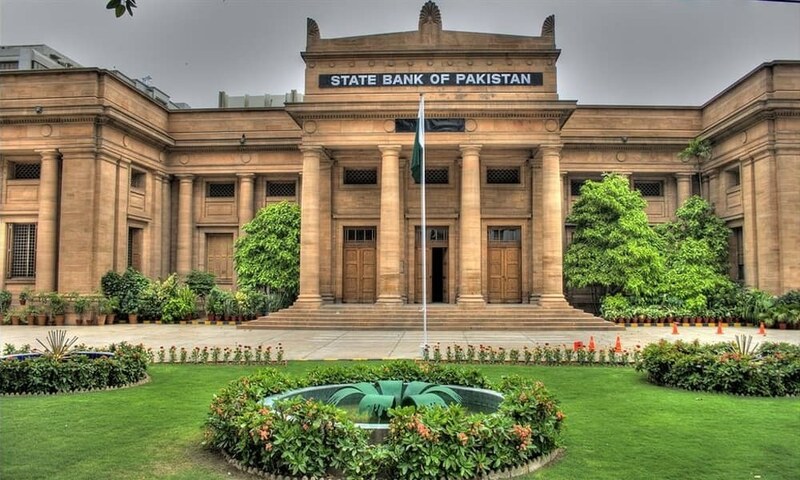
KARACHI: The State Bank of Pakistan (SBP) has projected that inflation to remain above its medium-term target range in FY27, as global energy price shocks and rising input costs continue to exert upward pressure on domestic prices.
According to the SBP’s Annual Report on the State of Pakistan’s Economy for FY26, average National CPI inflation is projected to range between 5.5 and 7.5 percent in FY27, slightly above the government’s target range of 5 to 7 percent. This projection is based on oil price of USD 80/bbl., as per practice, projection range will be revised in January 2027 to account for higher oil prices and other key developments, it added.
The report said that the direct and indirect impact of the global energy price shock is anticipated to exert upward pressure on inflation. However, to manage heightened global commodity price volatility, the government revised the petroleum pricing mechanism, moving from fortnightly reviews to weekly reviews in March 2026, and subsequently introducing daily price adjustments from July 2026 onward.
The daily revision of petroleum prices helped in a smooth pass-through of changes in international oil prices in a more predictable manner, rather than abrupt and, sometimes, large adjustments. Moreover, to mitigate food supply constraints, the government has allowed wheat import.
While the rising input costs may induce some rigidity in core inflation, continuation of prudent monetary policy stance is expected to keep inflation expectations anchored. In view of these developments, the SBP expects inflation to remain above the medium-term target range in FY27.
The report said that outbreak of the Middle East conflict in late February 2026 posed significant upside risks to inflation outlook. Global fuel prices and freight and insurance costs rose sharply, while trade and transport routes were also disrupted.
Accordingly, the MPC assessed the year-on-year inflation to remain in double digits and exceed the upper bound of the target range for most of FY27. The committee therefore increased the policy rate by 100 bps to 11.5 percent in April 2026 to limit the potential second-round effects of the oil price shock and keep the inflation expectations anchored.
The average NCPI inflation rose to 7.1 percent in FY26, compared with 4.5 percent in the previous year. Inflation remained relatively contained for most of the year, supported by coordinated monetary tightening and fiscal consolidation that kept domestic demand in check, benign global commodity prices, and favourable adjustments in electricity prices.