Category: Brecorder

  • Bavuma retires hurt as Bangladesh take quick wickets v S Africa

    Bavuma retires hurt as Bangladesh take quick wickets v S Africa

    Captain Temba Bavuma retired hurt and Ryan Rickelton scored an unbeaten half century as South Africa went to lunch on 386 for seven on day three of the first Test against Bangladesh at The Wanderers on Tuesday.

    South Africa trail Bangladesh’s score of 400 all out by 14 runs and will want to build a lead in the afternoon session on a wicket that remains good for batting.

    Rickelton is unbeaten on 56 and will resume after the interval with Kagiso Rabada, who has five.

    Bavuma (49) and Rickelton put on 79 for the fifth wicket before the South African captain left the field with a leg injury having been troubled by calf issues. He can return to bat later in the innings if required.

    South Africa close on 287-4 after Ackerman’s maiden ton

    Bangladesh seamer Taskin Ahmed (2-88) took two wickets with the new ball, removing Wiaan Mulder for a duck and Marco Jansen (8), both caught by wicketkeeper Litton Das.

    Bangladesh seamer Hasan Mahmud (4-72) was troubled by a sore elbow, but managed to remove Simon Harmer (1) just before lunch, also caught by Das.

    South Africa opener Marques Ackerman scored a career-best 157 from 164 balls and number three Zubayr Hamza made 83 on his return to the side.

    Source: brecorder

  • Rupee registers gain against US dollar

    Rupee registers gain against US dollar

    The Pakistani rupee continued its marginal gain against the US dollar in the inter-bank market on Tuesday.

    The local unit closed the day at 276.56, a gain of Re0.01 against the greenback.

    On Monday, the rupee had closed at 276.57 against the dollar.

    Globally, the US dollar on Tuesday ​scaled a fresh 19-month peak against a basket of peers amid bets for more ‌aggressive policy tightening by the US Federal Reserve following hot inflation data and hawkish central bank rhetoric.

    The US currency extended a 10-month high versus its Australian counterpart as a global selloff in AI stocks weighed on market sentiment, hurting ​the risk-sensitive Aussie.

    A sharper-than-expected acceleration in US consumer inflation last week triggered a run of ​five straight days of gains for the US dollar index , which carried into a ⁠sixth day on Tuesday with it rising to 103.66, the highest since April 2, 2025, when ​President Donald Trump rolled out his tariffs.

    The index measures the dollar against six rivals, including the ​euro, sterling and the Japanese yen.

    Traders now view a Fed interest-rate hike at the next meeting in December as a certainty, and they also lay around 4% odds on a supersized half-point increase, according to the CME Group’s FedWatch tool. ​A day earlier, those bets on an oversized hike were at nearly 12%. A week earlier, ​there were 16% odds for no change to policy.

    Oil prices, a key indicator of currency parity, fell on Tuesday as expectations of a supply surplus, driven by recovering Middle East exports, overshadowed concerns about continued attacks on tankers in the region and broader geopolitical tensions.

    Brent crude futures dropped 78 cents, or 0.8%, to $91.66 a barrel by 0430 GMT, while US West Texas Intermediate (WTI) futures fell 73 cents, or 0.9%, to $84.99.

    Source: brecorder

  • Copper falls to lowest since July as tech weakness saps risk appetite

    Copper falls to lowest since July as tech weakness saps risk appetite

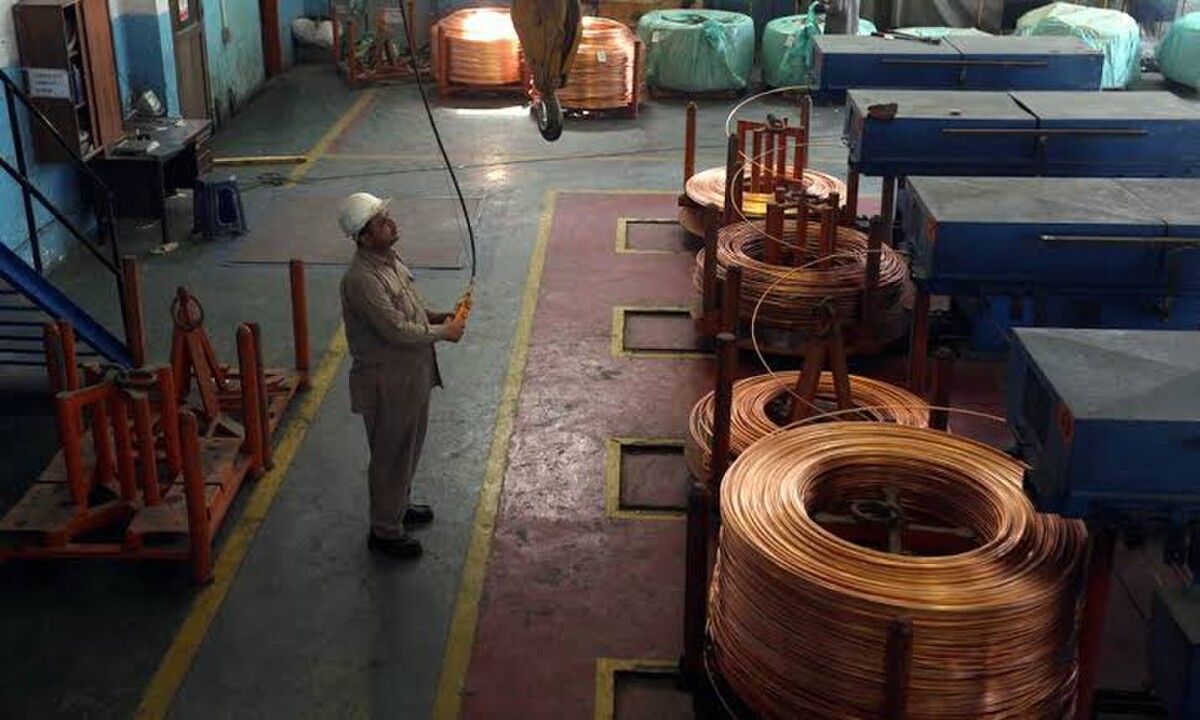
    LONDON: Copper prices fell to their lowest in four and a half months on Tuesday as weakness in technology stocks fuelled concerns about AI-related investment, hurting risk appetite, while a stronger dollar and expectations of higher interest rates added further pressure.

    Benchmark three-month copper on the London Metal Exchange was down 0.3% at $13,211.50 a metric ton by 0955 GMT, after touching $13,144 earlier in the session, its lowest since July 1.

    Stocks in Asia were down after Washington said it would further restrict China’s access to advanced AI chips from companies like Nvidia, tightening controls as President Donald Trump headed to China for talks with President Xi Jinping.

    “The sell-off in AI-related shares has raised concerns around the demand outlook for copper, given the metal’s growing exposure to investment in power grids and data centres,” said ING commodities strategist Ewa Manthey.

    Signs of tight prompt supply still offered some support to copper, visible in an increase in the Yangshan copper premium, a gauge of China’s appetite for imported metal, and the LME cash copper contract’s premium over the benchmark.

    The US dollar scaled a fresh 19-month peak on Tuesday amid bets for more aggressive policy tightening by the US Federal Reserve. A stronger greenback makes dollar-priced metals more expensive for buyers using other currencies.

    LME aluminium fell 1.2% to $2,967, paring losses slightly after hitting a one-month low of $2,965. Meanwhile, the premium of the LME cash contract over the three-month contract hit $278 a ton, the highest since 1988, amid low stocks.

    “We expect this tightness to continue supporting prices in the near term,” Manthey said. “Further out, however, the supply picture looks less supportive as stronger production growth should gradually improve availability.”

    LME zinc lost 0.6% to $3,676, lead was steady at $1,875, nickel gained 0.6% to $15,945 and tin rose 0.5% to $46,285.

    Source: brecorder

  • Saudi’s Delta Energy to explore $30 billion energy investment in Pakistan

    Saudi’s Delta Energy to explore $30 billion energy investment in Pakistan

    ISLAMABAD: Saudi Arabian energy company Delta Energy Saudi signed an agreement with Pakistan’s Inter State Gas Systems to explore development of energy infrastructure in the South Asian country, with a proposed investment of about $30 billion, the companies said in a statement on Tuesday.

    The programme would assess a natural gas pipeline entering Pakistan through its western border and extending toward Gwadar, a port on the Arabian Sea in the south-western part of the country, the statement said.

    It would also consider a possible extension to the eastern border, along with liquefied natural gas facilities, gas processing and storage, and export terminals, it added.

    The programme also envisages a pipeline from Chaman, on Pakistan’s border with Afghanistan, across Pakistan towards the Indian border near Fazilka. Delta Energy described the route as a “core strategic commitment”, requiring formal engagement and agreements with Pakistani and Indian authorities.

    Plans for other pipelines intended to bring gas into Pakistan have been delayed for years.

    Pakistan, Saudi Arabia investors launch fund to boost trade, investment

    Delta Energy identified Afghanistan’s Kashk gas concession and other Afghan resources as potential supplies. It said the programme was separate from the Turkmenistan-Afghanistan-Pakistan-India project and did not depend on Turkmenistan.

    The agreement provides a framework for evaluating the projects and does not constitute a final investment decision or a commitment to finance or build them.

    Source: brecorder

  • Indian equity benchmarks buck Asia weakness to close at highest since February

    Indian equity benchmarks buck Asia weakness to close at highest since February

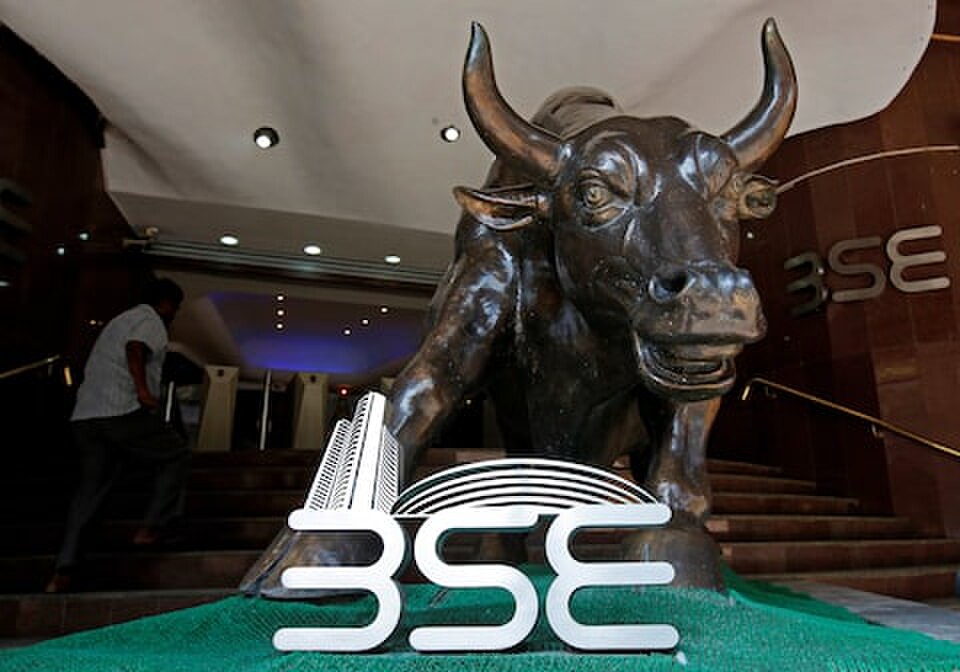
    India’s benchmark stock indexes closed at their highest since late February on Tuesday, bucking weakness in Asian peers, as lower oil prices helped sustain a rally fuelled by record foreign inflows and resilient earnings.

    The Nifty 50 rose 0.38% to 25,387.40 and the Sensex gained 0.52% to 82,532.19. The indexes have gained about 10.1% and 10.8%, respectively, this month as foreign portfolio investor inflows surged to a record $9.53 billion.

    Other Asian markets followed Wall Street lower, weighed down by weakness in technology companies after the US stepped up efforts to curb China’s access to advanced AI chips and by caution ahead of Nvidia’s earnings.

    Eleven of the 16 major sectors advanced. The broader small-caps fell 0.2% and mid-caps added about 0.3%.

    Banks and private banks climbed 1.1% and 0.9% and notched record highs, while financials and state-owned lenders added 0.6% and 2%, respectively.

    A sustained recovery in FPI flows could favour large-caps, and with relative positioning in financials still below average, there is still room for the sectorto catch up, Jefferies analysts, led by Abhinav Sinha, said.

    Lower oil prices have also boosted domestic equities. Brent crude hovered around $93 a barrel on expectations of a supply surplus, driven by recovering Middle East exports. The Brent benchmark has fallen 22% this month, while WTI has declined by 18%.

    Oil marketing companies BPCL, HPCL and Indian Oil added 0.2%, 0.7% and 1.1%.

    Tyre makers MRF, JK Tyre and CEAT and paint makers, Asian Paints, Berger Paints and Kansai Nerolac added 0.3%-2.1%.

    Lower crude prices improve fuel marketing margins for OMCs, while easing input cost pressures for tyre makers and paint makers.

    Among individual stocks, Senco Gold jumped 3.5% after logging a 26% year-on-year growth in net sales value during the recent festive period.

    Brokerage stocks, including Billionbrains and Angel One pared gains on Tuesday after Reuters reported that India’s markets regulator is considering curbs on leveraged stock purchases amid record margin-funded trading.

    Source: brecorder

  • Pakistan posts $39mn current account surplus in Oct 2026

    Pakistan posts $39mn current account surplus in Oct 2026

    Pakistan’s current account posted a surplus of $39 million in October 2026, data released by the State Bank of Pakistan (SBP) showed on Tuesday.

    The latest figure follows a deficit of $371 million recorded in September 2026 and a deficit of $307 million in October 2025. The September 2026 deficit was revised up from $356 million to $371 million.

    The surplus came from significantly higher remittances during the month.

    The surplus was “primarily supported by a 14% YoY increase in workers’ remittances to $3.9 billion and 10% growth in goods exports,” Sana Tawfik, Head of Research at Arif Habib Limited, told Business Recorder.

    “While stronger import demand continues to exert pressure, with the trade deficit widening 9% YoY to $3.2 billion, robust remittance inflows are providing an important cushion against the widening trade gap,” she added.

    “Going forward, we expect the CAD to remain manageable and within the SBP’s target range of 0–1% of GDP in FY27, as sustained remittance inflows and export growth are likely to largely offset the impact of higher imports,” said Tawfik.

    In October 2026, the country’s total exports of goods and services amounted to $3.87 billion, up nearly 12% compared to $3.46 billion in the same month of the previous year.

    Meanwhile, total imports clocked in at $7.08 billion during October 2026, an increase of over 10% on a yearly basis, as compared to $6.41 billion in the same month last year, according to SBP data.

    During October 2026, Pakistan’s workers’ remittance inflows clocked in at $3.89 billion, as compared to $3.42 billion in the same month last year, reflecting an increase of nearly 14% on a yearly basis.

    For 4MFY27, the country posted a current account deficit of $850 million, compared to a deficit of $1,062 million during the same period last year.

    Source: brecorder

  • Britain’s William and Kate ride e-rickshaw to meet climate prize finalists in Mumbai

    Britain’s William and Kate ride e-rickshaw to meet climate prize finalists in Mumbai

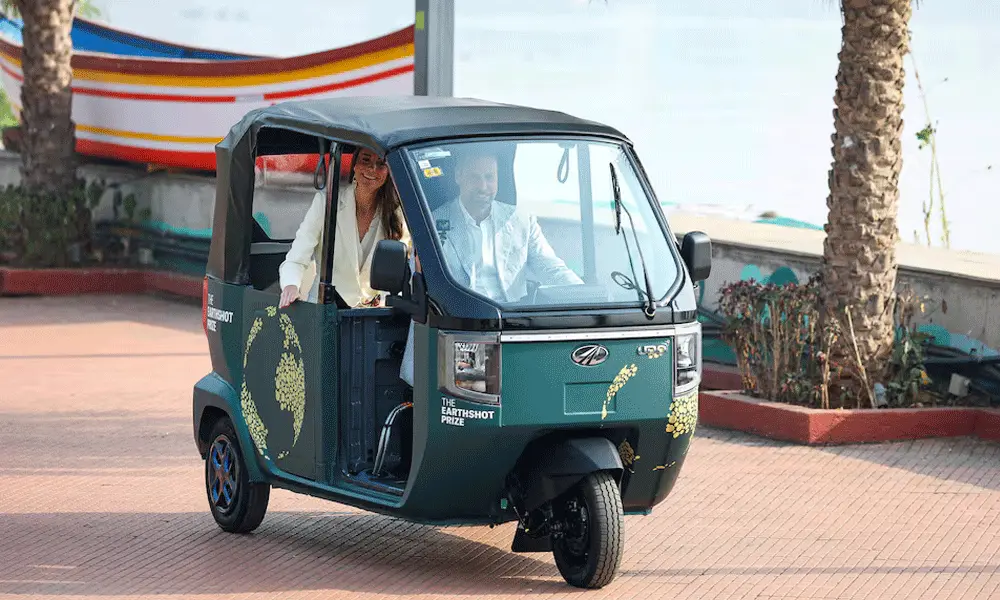
    MUMBAI: Britain’s Prince William drove his wife Kate Middleton in an electric auto-rickshaw in Mumbai on Tuesday, to a meeting ​with the finalists of a climate change award that they ‌will announce later in the day.

    The royal couple are in Mumbai, India’s financial capital, on a three-day visit centred around the Earthshot Prize, which aims to find ​solutions to climate change, and awards five winners £1 million ($1.3 million) ​each to scale up their project.

    The trip, which will ⁠conclude with a meeting with Prime Minister Narendra Modi in New ​Delhi on Wednesday, marks the Princess of Wales’ most high-profile overseas visit ​since undergoing treatment for cancer in 2024.

    On Tuesday, William rode an electric-powered auto-rickshaw to a waterfront overlooking the Bandra-Worli Sea Link bridge, which spans the Arabian ​Sea in Mumbai, with Kate sitting at the back, as they ​arrived to meet the finalists of the prize.

    The couple shook hands with the ‌finalists ⁠and posed for a picture, which was posted on their social media feeds.

    “India is home to more Earthshot Prize Winners and Finalists than any other country,” the couple said in the caption accompanying ​the picture on Instagram. “The ​Earthshot Prize ⁠is the global environmental prize finding and scaling solutions to repair the planet.”

    Kate, 44, underwent preventative chemotherapy ​for an unspecified form of cancer, after which ​she significantly ⁠reduced her official workload.

    Now in remission, she has gradually increased her public appearances, but had not joined William on previous foreign trips.

    Her only ⁠significant ​overseas visit since 2024 was in May, ​when she travelled alone to Italy for two days as part of her work ​focusing on early childhood development.

    Source: brecorder

  • ECO explained: Its history, 10 members and Pakistan’s role

    ECO explained: Its history, 10 members and Pakistan’s role

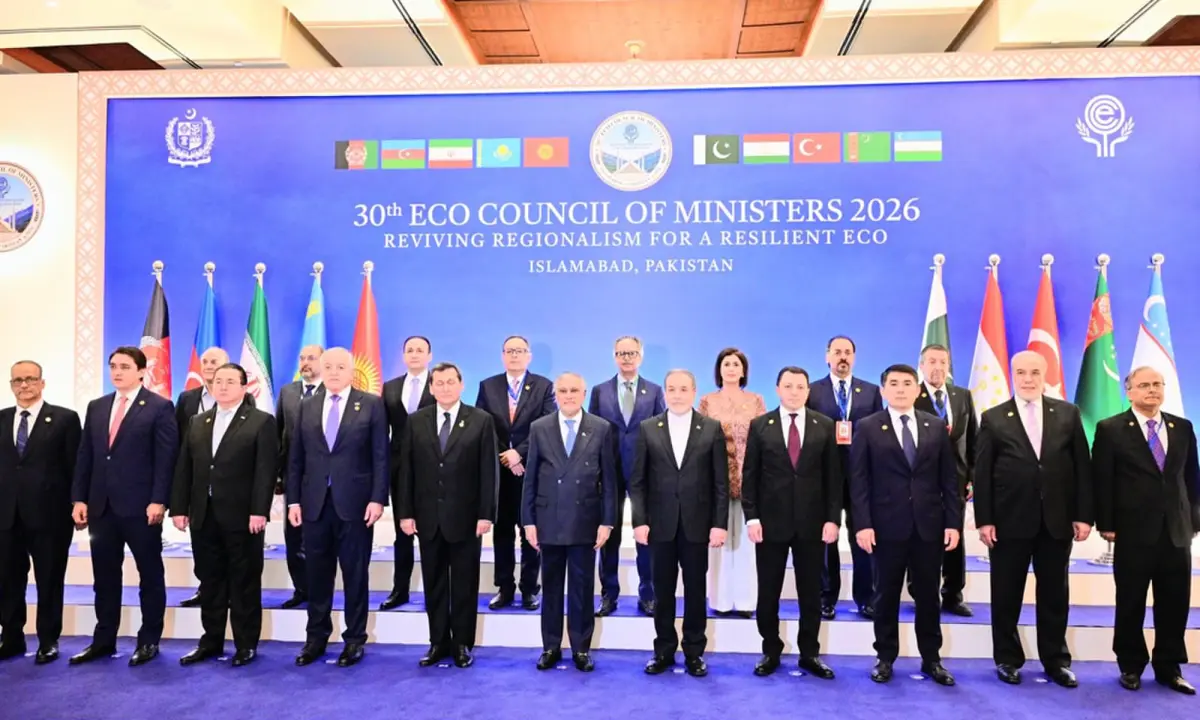
    The Economic Cooperation Organization (ECO) is a 10-member regional bloc aimed at promoting trade, investment and economic cooperation across South Asia, Central Asia and West Asia.

    For Pakistan, the organisation offers an important platform to strengthen regional trade, improve connectivity with landlocked Central Asian countries and expand access to international markets through its seaports.

    Pakistan assumed the chairmanship of the ECO Council of Ministers for the 2026-2027 term following the organisation’s 30th meeting in Islamabad on November 15-16. Under the theme “Reviving Regionalism for a Resilient ECO”, Islamabad aims to prioritise regional connectivity, trade, investment, climate resilience and human development.

    How was the ECO established?

    The ECO was established in 1985 as the successor to the Regional Cooperation for Development (RCD), which Pakistan, Iran and Turkey had founded in 1964 to promote economic, technical and cultural cooperation.

    In 1992, the organisation expanded its membership by welcoming Afghanistan, Azerbaijan, Kazakhstan, Kyrgyzstan, Tajikistan, Turkmenistan and Uzbekistan, bringing its total membership to 10 countries.

    Headquartered in Tehran, Iran, the ECO connects a strategically important region linking Asia with Europe and providing access to major trade routes and markets.

    Its members are Pakistan, Iran, Turkey, Afghanistan, Azerbaijan, Kazakhstan, Kyrgyzstan, Tajikistan, Turkmenistan and Uzbekistan.

    What does the ECO aim to achieve?

    The organisation seeks to strengthen cooperation in trade and investment, transport and transit connectivity, energy, tourism, education, technology and sustainable development.

    One of its key initiatives is the ECO Trade Agreement (ECOTA), which aims to reduce tariffs and facilitate trade among member states. However, intra-regional trade remains limited, accounting for less than 8% of the region’s total trade, according to figures cited by Pakistani officials.

    Why is the ECO important for Pakistan?

    Pakistan’s geographical location gives it the potential to serve as a transit and trade hub for landlocked Central Asian countries seeking access to international markets through the Arabian Sea.

    The ports of Karachi Port, Port Qasim and Gwadar Port could provide these countries with alternative routes for overseas trade, while improved road and rail links could facilitate the movement of goods across the region.

    Pakistan has therefore called for stronger transport corridors, simplified customs procedures, easier cross-border movement and effective implementation of ECOTA.

    Greater regional connectivity could create opportunities for Pakistani exporters, manufacturers, transport operators and investors while strengthening economic ties with Central Asian markets.

    What are Pakistan’s priorities during its chairmanship?

    Pakistan aims to expand market access, strengthen regional value chains, attract investment and encourage private-sector participation, particularly by small and medium-sized enterprises.

    Other priorities include improving road, rail and multimodal transport links between Central and South Asia, modernising regional trade arrangements, and enhancing cooperation in energy, disaster preparedness and climate-resilient infrastructure.

    Islamabad has also advocated greater airline connectivity and relaxed visa arrangements to promote tourism and facilitate travel across the region. ECO members unanimously adopted Pakistan’s proposals on airline connectivity and visa facilitation at a tourism-related meeting in Uzbekistan in April 2024.

    What came out of the November 2026 meeting?

    The 30th ECO Council of Ministers meeting in Islamabad resulted in the adoption of the Islamabad Communiqué and the Strategic Goals of Economic Cooperation 2026-2035.

    The documents provide a common framework for member states to pursue regional cooperation over the next decade, with priorities including trade, investment, connectivity and economic integration.

    What challenges does the ECO face?

    Despite its geographical reach and economic potential, the organisation faces persistent obstacles, including low intra-regional trade, tariff and non-tariff barriers, differences in customs procedures, inadequate transport infrastructure and political tensions.

    The implementation of ECOTA and the development of cross-border transport networks also require sustained commitment and investment from member states.

    For Pakistan, the success of its ECO chairmanship will ultimately depend on translating regional agreements and commitments into practical measures that increase trade, improve connectivity and deliver tangible economic benefits.

    Source: brecorder
  • Pakistan dismiss Sri Lanka for 98 in second Test

    Pakistan dismiss Sri Lanka for 98 in second Test

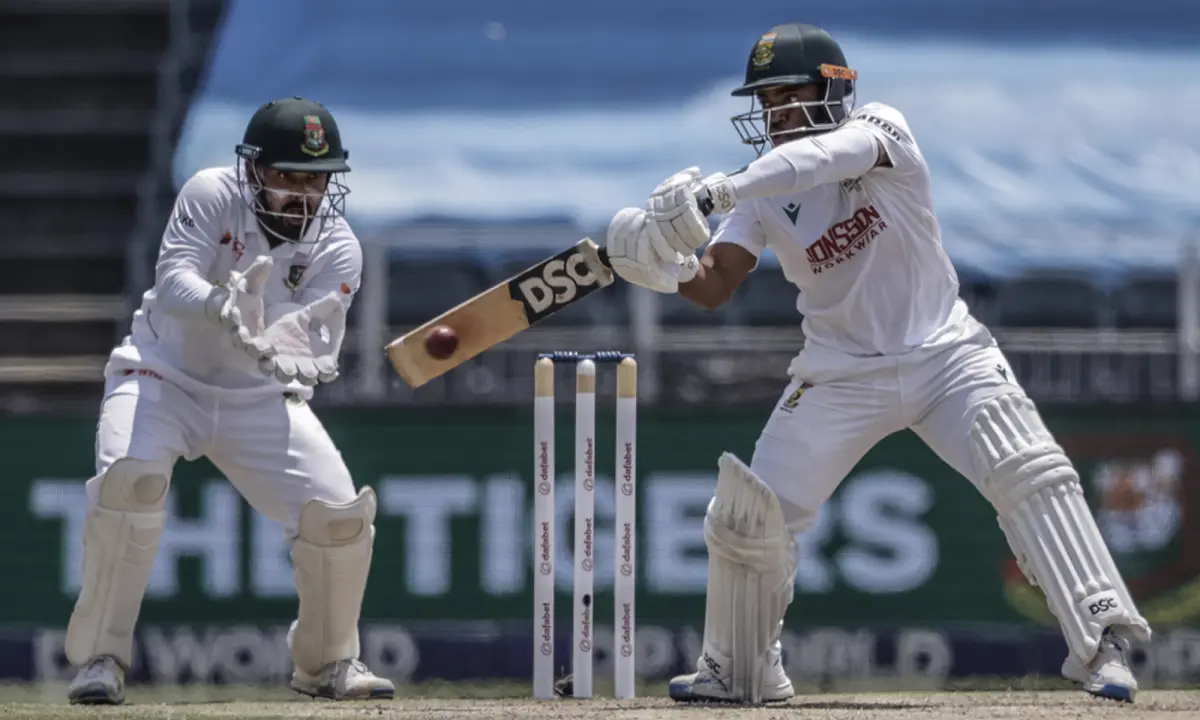
    RAWALPINDI: Pakistan’s pace attack dismissed Sri Lanka for 98 on the opening day of the second and series-deciding Test in Rawalpindi on Tuesday.

    Mohammad Abbas took 3-14, Razaullah 3-21 and Aamer Jamal 3-24 as the tourists – sent in to bat by Pakistan – were all out in 35.3 overs on a green-top pitch.

    Saqib takes seven on debut but Pakistan and Sri Lanka draw first Test

    Skipper Kusal Mendis (32) and Sonal Dinusha with (21) were the only two batters to reach double figures.

    Source: brecorder

  • Supernet Technologies eyes growth through services, cybersecurity, and regional expansion

    Supernet Technologies eyes growth through services, cybersecurity, and regional expansion

    Supernet Technologies Limited (STL) is targeting growth through higher-margin services, cybersecurity, and international expansion after consolidating its operating business into a single listed entity and raising Rs915 million through a rights issue.

    At its corporate briefing, the company official said services contributed approximately 76% of its Rs8.08 billion revenue in FY2026, compared with about 46% in the preceding year’s operating-company figures, helping improve margins despite lower overall sales.

    Service revenue reached Rs6.16 billion, against Rs4.23 billion in FY2025, while equipment and project-related revenue declined to Rs1.92 billion from Rs5.04 billion. Gross margin increased to 24% from 19.8%.

    Of the rights issue proceeds, Rs465 million was allocated to growth working capital and deployed into an awarded Rs1 billion critical-communications project scheduled for delivery in FY2027. Another Rs450 million was earmarked for partial settlement of acquisition consideration payable to Telecard.

    Management said that cybersecurity is emerging as a meaningful contributor through SuperSecure, in which STL holds an 80% stake. The business recorded FY2026 revenue of Rs1.4 billion, gross profit of Rs313 million, and profit after tax of Rs170 million.

    The company identified critical infrastructure projects under execution exceeding Rs1 billion, alongside a multibillion-rupee pipeline of advanced-stage opportunities. Potential awards were expected by December 2026, with execution targeted within FY2027, subject to formal awards and final contracts.

    Internationally, the management said that STL is developing its Supernet Global platform through a UAE commercial hub, regional leadership in Dubai, and satellite connectivity deployments in Africa. Management plans to pursue customers across the Middle East and North Africa through selective partnerships.

    The company said its FY2027 priorities include expanding recurring managed services, cross-selling cybersecurity solutions, protecting connectivity accounts, and improving collections.

    Management identified pricing pressure, foreign exchange movements, global economic conditions, and project execution as principal risks while highlighting digitalisation, cloud adoption, and enterprise modernisation as demand drivers.

    Source: brecorder