Category: Brecorder

  • SCO Dialogue in Delhi: Dar, Musadik discuss participation

    SCO Dialogue in Delhi: Dar, Musadik discuss participation

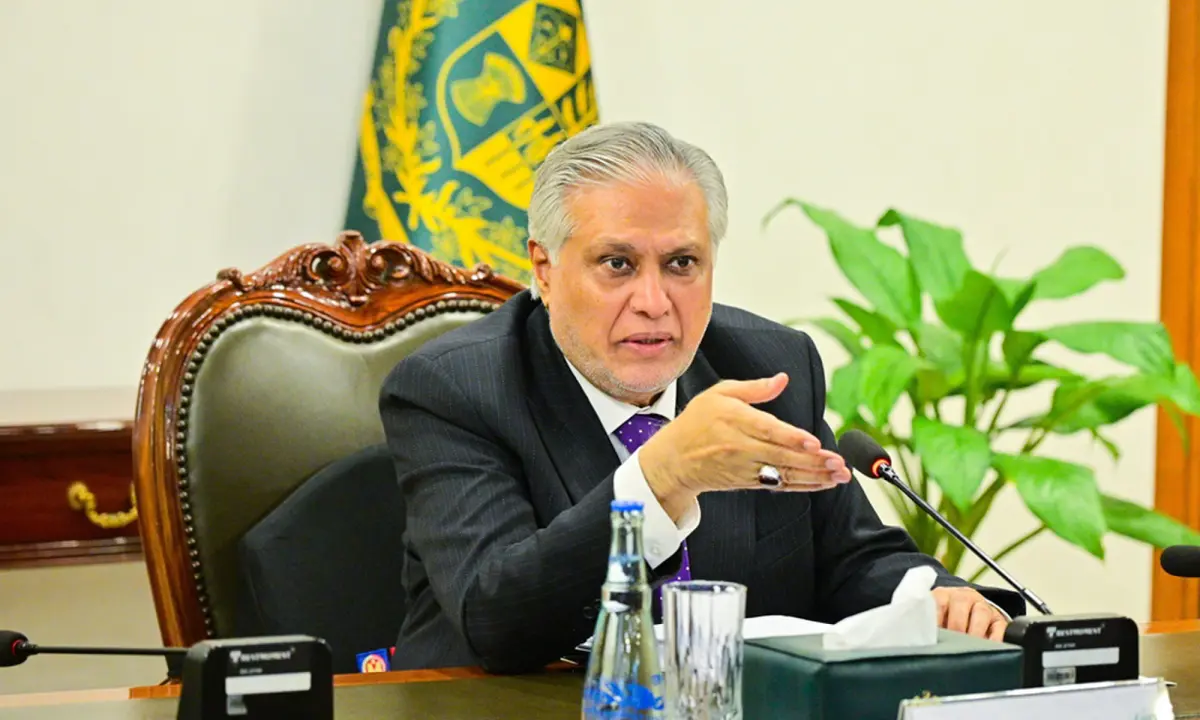
    ISLAMABAD: Deputy Prime Minister and Foreign Minister Senator Mohammad Ishaq Dar held a meeting with the Federal Minister for Climate Change and Environmental Coordination, Dr Musadik Masood Malik, here on Wednesday.

    They discussed Pakistan’s participation at the Shanghai Cooperation Organisation (SCO) Civilization Dialogue, scheduled to be held in New Delhi from 20–22 November 2026.

    The DPM/FM reaffirmed that, as current Chair of Council of Heads of States of Shanghai Cooperation Organization (SCO-CHS), Pakistan is committed to advancing cooperation among member states, promoting cultural exchanges and strengthening people-to-people ties.

    Copyright Business Recorder, 2026

    Source: brecorder

  • Czech Ambassador visits Peshawar

    Czech Ambassador visits Peshawar

    PESHAWAR: Ladislav Steinhübel, Ambassador of the Czech Republic to Pakistan, accompanied by Zden?k Koudelka, Political Counsellor, visited Peshawar on Wednesday to explore opportunities for enhancing bilateral trade, investment and industrial cooperation, particularly with Khyber Pakhtunkhwa.

    The visit was hosted by Barrister Assad Saifullah Khan, Honorary Consul General of the Czech Republic in Peshawar.

    The delegation was received at the motorway toll plaza with floral bouquets by Consulate staff, visited Peshawar Museum for a briefing on the region’s historical heritage and was accorded a traditional Pashtun welcome, including the presentation of turbans, at the Honorary Consulate.

    At Peshawar Barracks, Masood Ahmad Qazi, Honorary Consul General of Romania, also welcomed the delegation with floral bouquets and traditional hospitality.

    The meeting was attended by Honorary Consuls General of Bosnia and Herzegovina, Tajikistan, Japan, Brazil, Finland, Romania and Russia, Osman Saifullah Khan, Advisor to the Governor of Khyber Pakhtunkhwa, Sikandar Kuli Khan Khattak, Chairman KPTMA, Fuad Ishaq, former President Sarhad Chamber of Commerce and Industry; Sultan Khwaja, Malik Riaz Awan and Dr. Ateeq.

    Welcoming the guests, Barrister Assad Saifullah Khan highlighted the province’s industrial base, mineral wealth and untapped economic potential, emphasizing opportunities for Czech investment, technology transfer and business partnerships.

    Ambassador Steinhübel described the visit as an important step towards closer economic relations and particularly stressed his objective of increasing Czech exports to Pakistan, promoting Czech products and developing direct commercial links with Khyber Pakhtunkhwa’s business community.

    Participants discussed cooperation in mineral exploration and processing through Czech technology, textile machinery and technology exchange, industrial partnerships, value addition, exports and investment facilitation.

    Masood Ahmad Qazi stressed coordination among Honorary Consuls, Muhammad Arsalan Khan highlighted mineral-sector opportunities, Fuad Ishaq and Sultan Khwaja emphasized investment and business development; and Sikandar Kuli Khan Khattak proposed textile-sector collaboration, stressing the need to improve the ease of doing business. Nawabzada Fazal Karim Afridi highlighted overseas employment opportunities for the province’s skilled workforce.

    The importance of provincial government facilitation was also emphasized, with Osman Saifullah Khan encouraged to use his experience and business connections to strengthen government-private sector coordination and promote economic development.

    Barrister Assad Saifullah Khan thanked the Ambassador and participants, expressing the hope that the visit would lead to practical business linkages and mutually beneficial cooperation.

    The meeting concluded with a traditional luncheon hosted by him, featuring Lakki Marwat’s special delicacies, Penda, Jawar ki Roti and Saag, reflecting the region’s distinctive cuisine and hospitality.

    Copyright Business Recorder, 2026

    Source: brecorder

  • Islamabad’s elusive LG polls

    Islamabad’s elusive LG polls

    EDITORIAL: The repeated postponement of local government elections in Islamabad has become a damning indictment of the federal government’s commitment to democratic governance and the Election Commission of Pakistan’s (ECP’s) discharge of its constitutional responsibilities.

    For more than four-and-a-half years, residents of the federal capital have been denied their basic democratic right to elect local representatives, as successive attempts to hold the polls have been frustrated by a seemingly endless succession of excuses, including contrived legal complications and administrative manoeuvres.

    The previous local government’s term expired in February 2021. Under Section 219(4) of the Elections Act, 2017, the ECP was required to organise fresh elections within 120 days.

    Yet, instead of enforcing this clear legal obligation, the commission, and the federal government have spent the intervening years engaged in repeated delimitation exercises, amendments to election laws, court battles, and changes in administrative arrangements.

    Election schedules have been announced, only to be withdrawn or deferred on one pretext or another. The ECP, constitutionally mandated to ensure timely elections, has appeared more willing to accommodate these manoeuvres than to resist them.

    Chief Election Commissioner Sikandar Sultan Raja’s latest assertion that the Islamabad polls, scheduled for December 20, will take place as planned is welcome, but hardly reassuring. His allegation that the federal government is attempting to sabotage the exercise, including by refusing to assign teachers for election duties, raises serious questions about the government’s intentions.

    The commission, however, cannot simply complain of official obstruction while remaining answerable for a process that has been allowed to languish for years.

    More importantly, the question is whether this latest announcement will translate into action. Past experience offers little reason for optimism. There is a real danger that another administrative difficulty, legislative amendment or judicial intervention will be invoked to postpone the elections yet again. The suspicion that political considerations lie behind these repeated delays is difficult to dismiss.

    The ruling establishment may well fear that the main opposition party, if allowed to contest freely, could emerge as a major winner in the capital, consolidating its political position at the grassroots level. Denying citizens their right to vote to avert an unfavourable electoral outcome would constitute a troubling assault on democratic principles.

    The CEC must now demonstrate that his words carry institutional weight. The ECP should resist political pressure, resolve logistical issues and ensure that no further excuse is allowed to derail the December 20 schedule. Its constitutional mandate is to facilitate free, fair and timely elections, not to provide cover for their indefinite postponement.

    Any further delay would only reinforce the impression that those in power are willing to embrace the democratic process when it serves their interests and obstruct it when the outcome threatens to go against them.

    Copyright Business Recorder, 2026

    Source: brecorder

  • Intelligence, artificial, and otherwise

    Intelligence, artificial, and otherwise

    EDITORIAL: The speed with which Jensen Huang’s personal scandal became a Chinese espionage story says as much about Washington’s political reflexes as it does about the crisis engulfing Nvidia.

    The man who built the company into the indispensable supplier of the AI boom has resigned, his successor is temporary, and billions have evaporated from its market value. Yet amid the sensational allegations, a rather inconvenient distinction is being lost: the confirmed facts are disturbing enough; the most consequential accusations remain unproven.

    Huang has acknowledged being unfaithful to his wife. Reports have linked him to Alice Huang, a former executive at Singapore-based Megaspeed, whom American intelligence officials reportedly suspect of working for Beijing. Nvidia has launched an independent inquiry, while the FBI is investigating. But on Thursday the US attorney general explicitly said his department had reached no conclusion about whether Alice Huang was a spy.

    Nvidia, for its part, says it has no reason to believe that either its secrets or national security were compromised. That is a considerable distance between suspicion and proof, however confidently speculation travels across television screens and trading terminals.

    The FBI’s involvement will inevitably bring its own scrutiny. Under Kash Patel, the bureau has faced accusations of political interference and questions about its independence. Confidence in the agency is sharply divided along partisan lines. Neither public scepticism nor an investigator’s political associations automatically invalidates an investigation, but credibility has to be earned through evidence. A case involving sensitive technology, prominent business interests and foreign intelligence claims demands an exceptionally transparent accounting of what can actually be established. Anonymous assertions will not do.

    There is also the geopolitical setting. Washington increasingly approaches China with the reflexes of a new Cold War in which almost every technological vulnerability can acquire a familiar Chinese villain. Genuine concerns about espionage, export controls and strategic competition exist, and cannot simply be dismissed. But treating Beijing as a latter-day Soviet Union creates its own temptation to turn suspicion into an explanation before the investigation is finished. China denies the allegations and accuses Washington of using them to justify technological restrictions. Neither side’s political convenience should determine the facts.

    For Nvidia, however, the damage is already real and continues to mount. Its shares plunged as much as 14pc last Thursday before closing about 4pc lower, and had fallen about another 9pc by Wednesday’s trading. Since 6 November, the stock has shed almost a fifth of its value, wiping out hundreds of billions of dollars in market capitalisation.

    This decline was driven principally by the scandal surrounding Huang’s departure, although it came against a backdrop of mounting concerns about the financing, valuations and profitability of the AI boom. But Huang’s departure strikes at the aspect most closely identified with that boom. He was its architect, its salesman, and often its most persuasive argument for investors to keep believing.

    The company’s chief financial officer has taken temporary charge, but replacing a founder who shaped Nvidia for more than three decades involves more than filling an office. Investors must now assess whether its strategy, customer relationships and enormous commitments to the AI ecosystem can survive the loss of their central figure. Rivals may see opportunity; lenders and customers may reassess exposure. Further losses are possible, though neither a collapse in Nvidia’s business nor the bursting of the AI bubble has been established.

    Perhaps the sharpest irony is that an industry selling unprecedented intelligence now finds itself hostage to a shortage of verified information. The allegations warrant investigation, including any possible breaches of export controls. Any governance failures revealed by the inquiry must also be examined. But the investigation must be allowed to discover facts before politics supplies its preferred conclusion. Wall Street has already delivered its verdict on uncertainty. The authorities still owe everyone something more substantial.

    Copyright Business Recorder, 2026

    Source: brecorder

  • Foreign economic assistance

    Foreign economic assistance

    EDITORIAL: Economic Affairs Division has released data that shows foreign economic assistance has risen to 5.549 billion dollars in the first four months (July-October) 2026 compared to 1.815 trillion dollars in the same period of last year.

    The rise is attributable not to a significant rise in bilateral support which registered a decline – from 42.15 million dollars this year compared to 50.56 million dollars in the same period of last year or to multilateral support that registered 36.06 million dollars this year against 50.56 million dollars in the same period of last year but to the massive reliance on borrowing from issuing debt equity and from commercial banks abroad.

    Bond issuance accounted for 2949.19 million dollars in the first four months of the current year while last year in the same period the total was nil under this head due to two possible reasons: the yield on offer was either too high given the continued fragility of the economy or the yield on offer was not considered affordable by the government, a rationale that was publicly acknowledged by the then caretaker Finance Minister in December 2023.

    The incumbent Finance Minister has repeatedly expressed satisfaction at the issuance of a record 3 billion-dollar dual tranche sovereign Eurobond in September this year, the first international bond sale since 2021, claiming that the offer attracted double the required offer, reflective of the fact that Pakistan is again becoming an attractive market.

    The yield on these bonds however was double what is offered by bilateral and multilateral lenders: tranche one of the 1.75 billion dollar with a maturity of 5.5 years is at the coupon price of 7.5 percent at an annual coupon cost of 131.26 million dollars while the remaining tranche of 1.28 billion dollars with a maturity period of 10 years has a yield of 7.90 percent with an annual cost of 98.75 million dollars.

    The longer maturity period carries a much higher yield; an example being bond yield in the US today rising to untenable highs – between 4.26 percent and 5.47 percent across benchmark maturities as of November 17, 2026, with the 10-year Treasury trading at around 5.09 to 6.12 percent – a yield lower than what was offered by Pakistan but a source of major concern to the US Treasury.

    The total annual cost to Pakistan for the 3 billion-dollar bond issuance is estimated at 230 million dollars, which is, indeed, a sizeable amount. However, market reports suggest that the effective yield/actual pricing was above headline coupon rates – around 7.75 percent on the 5.5-year tranche and 8.25 percent on the 10-year tranche, increasing real debt-service costs.

    Borrowing from commercial banks abroad accounted for 300 million dollar inflows in the first four months of the current year against nil in the same period of last year though the budgeted amount under this head was a high of 3.1 billion dollars. This source of funding is also at best at the market rate and at worst well above the market rate.

    The government has begun to ratchet up borrowing costs that are subject to a rupee depreciation, on average, estimated at between 4 and 5 percent annually – borrowing that is used to fund current expenditure, with little growth potential that accounts for over 93 percent of the budgeted outlay in any given year, which traditionally rises at the end of the year as development expenditure is slashed to meet the deficit targets. A better option would have been to slash current expenditure instead of borrowing from abroad at such a high yield.

    Copyright Business Recorder, 2026

    Source: brecorder

  • Bilawal says PPP may move to opposition if govt refuses to hear allies

    Bilawal says PPP may move to opposition if govt refuses to hear allies

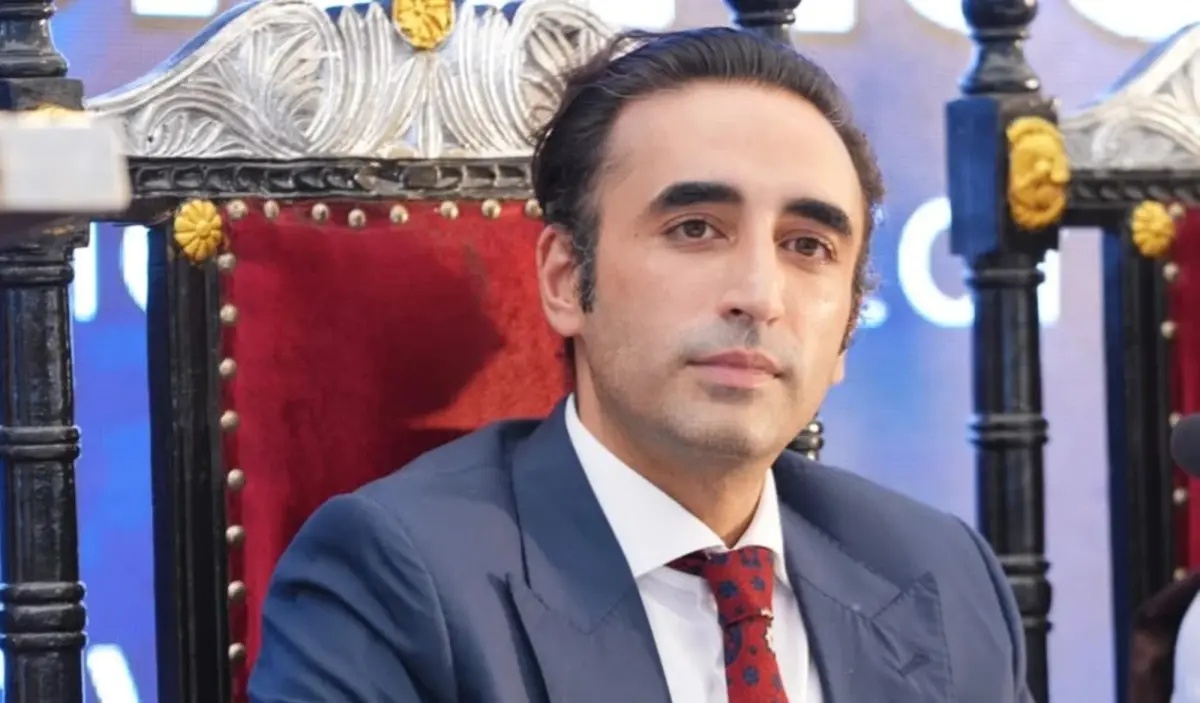
    Pakistan Peoples Party (PPP) Chairman Bilawal Bhutto-Zardari on Wednesday indicated that his party could leave the treasury benches and sit on the opposition benches if the PML-N-led government was unwilling to listen to the views and concerns of its coalition partners.

    Speaking in an interview with Hum News programme Faisla Aap Ka, Bilawal defended his recent remarks on the country’s political situation, insisting that he had spoken the truth and urging government representatives to have the courage to listen to differing opinions.

    The PPP chairman reiterated his call for a political and democratic reset, cautioning against attempts to create new provinces and stressing that political leadership should focus on addressing the economic difficulties facing the public.

    The debate gained momentum in July after Interior Minister Mohsin Naqvi called for the creation of additional provinces and administrative units as part of a broader overhaul of the country’s governance system.

    The proposal triggered strong opposition from the PPP, which governs Sindh and has repeatedly rejected any move to divide the province. The issue resurfaced in subsequent months, with other government figures, including Defence Minister Khawaja Asif, also expressing support for creating more provinces to improve governance. Bilawal had earlier insisted that the matter should be debated in parliament rather than at business forums.

    Addressing a ‘Meet the Press’ event at the Karachi Press Club on Tuesday, Bilawal said the governance system had not collapsed on its own but had been “made to collapse”.

    He argued that creating new provinces would not address the underlying problems and called for a political reset focused on restoring the legitimacy of state institutions and resolving public issues, including poverty, unemployment and inflation.

    He also opposed any unconstitutional move or referendum to create new provinces, warning that forcibly dividing Sindh could trigger serious unrest.

    He said his remarks were made against the backdrop of the US-Iran conflict, which has affected economies worldwide through rising energy costs.

    “Elites do not have the idea of what kind of difficulties Pakistanis are facing,” he said, urging politicians to set aside their political differences and work together to fix the system.

    Bilawal maintained that being part of the ruling coalition did not undermine his right to criticise government policies. Rather, he argued, his party’s position as a major stakeholder made it more important for the government to hear its proposals.

    “You may disagree with my suggestions, but at least listen. You should have the courage to listen to the truth,” he said.

    He added that he was raising concerns as a stakeholder and wanted the government to take stock of the situation.

    The PPP chairman questioned why the debate over governance and a possible political reset had not been brought to parliament, saying it had instead been initiated in front of business representatives.

    He also rejected the notion that Pakistan’s political discourse could be restricted to one-sided debates.

    Bilawal said the country’s geopolitical and security challenges required political unity, pointing to tensions with India, the near-war situation with Afghanistan and the ongoing fight against terrorism.

    He questioned the government’s decision to open multiple political fronts while the country was facing an economic crisis.

    “The government has been deciding that we will fight the PTI; now the new decision is that they will also fight JUI, and it seems that after my truth, they have also decided they must fight me too,” he remarked.

    “If you are going to fight everyone, and fight everyone internally as well, then who will lead Pakistan and its people out of this economic crisis?” he asked.

    Bilawal described the reactions of federal ministers to his recent remarks as further evidence that politicians lacked the courage to hear criticism.

    He said that if government representatives could not listen to his concerns, it raised questions about how ordinary Pakistanis could expect their grievances to reach the prime minister, ministers or parliament.

    ‘Unaware of what is behind this debate’

    The PPP chairman said he did not know what had prompted the debate over creating new provinces, claiming that neither the prime minister, any federal minister nor another political stakeholder had discussed the proposal with him or President Asif Ali Zardari.

    He said the country was facing a historic economic crisis, but little attention was being paid to resolving it.

    Bilawal also questioned the role of Interior Minister Mohsin Naqvi in initiating discussions about a political reset, referring to his additional position as chairman of the Pakistan Cricket Board (PCB).

    He asked whether the PCB chairman had been given the authority to determine how the country’s political system should be restructured, including whether provinces should be divided.

    Asked whether his remarks signalled that the PPP would adopt a confrontational approach, Bilawal said he had not issued any protest call but was presenting the concerns of his party’s voters.

    He said a political and democratic reset was needed to bring politicians together rather than have them fight among themselves while the public struggled with economic hardship.

    Bilawal also criticised the government’s response to Jamiat Ulema-e-Islam-Fazl (JUI-F) chief Maulana Fazlur Rehman’s criticism, describing it as irresponsible.

    He alleged that the government’s response to political dissent included demolishing houses, arresting political leaders’ family members and pressuring party workers.

    On the possibility of dividing Sindh, Bilawal said the PPP was not a party that resorted to violence but warned that forcibly dividing the province could trigger serious consequences.

    Referring to Sindh’s political history since the 1980s, he said attempts to create divisions in the province’s politics had previously been orchestrated rather than emerging organically.

    He warned that any forced division of Sindh could aggravate the law and order situation, making it difficult for authorities to contain the resulting unrest.

    Source: brecorder
  • Nvidia stops shipping US-approved AI chips to China

    Nvidia stops shipping US-approved AI chips to China

    SHENZHEN: Nvidia has stopped shipping powerful artificial intelligence chips to China, its interim CEO said, raising doubts about the future of a special licensing agreement negotiated by Washington and Beijing.

    Colette Kress, who replaced Jensen Huang following his resignation last week, said during an earnings call on Tuesday that the US chipmaker sold $2.4 billion worth of licensed Hopper-generation data centre products to China in the quarter ended October 25.

    But she said there were no current plans for further shipments.

    “Our guidance does not have any licenced Hopper data centre products included, and we are no longer shipping licenced Hopper data centre products to China,” Kress said.

    She did not explain why Nvidia had stopped shipping the processors or whether the halt would be permanent.

    The Hopper family includes the H200, a powerful processor used to train and run advanced AI models.

    Trump eased export curbs after Xi summit, huang lobbying

    The US introduced export controls on the chips in 2022 and subsequently tightened China’s access to them.

    Following a summit with Chinese President Xi Jinping last year, however, US President Donald Trump said he would allow H200 sales to approved Chinese customers.

    Also read: Jensen Huang’s daughter helped steer Nvidia response to Megaspeed scrutiny, reports

    The US eased its licensing policy for the H200 in January, allowing export applications to be reviewed individually subject to security conditions.

    That decision followed months of lobbying from Huang, who stepped down as he faced allegations he had extramarital affairs with an alleged Chinese spy and two Nvidia employees.

    H200 chips are manufactured for Nvidia in Taiwan by TSMC, the world’s largest contract chipmaker. And the China export arrangement also imposed a 25% tariff on eligible chips imported into the United States before shipment to China.

    Washington approved H200 sales to 10 Chinese companies, including Alibaba, Tencent and TikTok owner ByteDance, according to previous Reuters reporting.

    Beijing has since restricted H200 imports, however, as it seeks to reduce its dependence on US technology even as Chinese companies face growing demand for AI computing power.

    Reuters reported earlier this month that around 600,000 H200 chips were being stored in Hong Kong awaiting shipment to mainland China after Beijing withheld approval for large-scale imports.

    Several major Chinese internet companies had each obtained about 10,000 H200 chips in recent months, Reuters reported, citing people familiar with the matter.

    Source: brecorder

  • Petrol, diesel prices fall further by Rs3 per litre each

    Petrol, diesel prices fall further by Rs3 per litre each

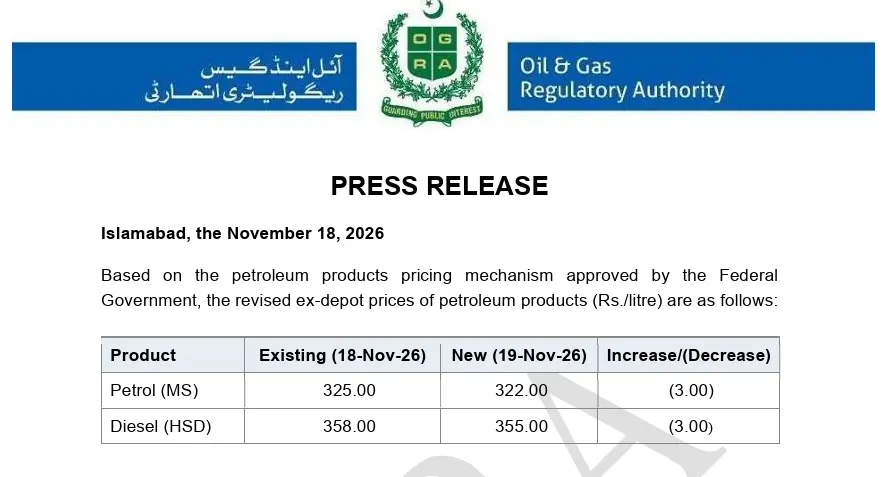
    Pakistan government reduced the prices of petrol and high-speed diesel by Rs3 per litre each, bringing their rates to Rs322 and Rs355, respectively.

    The Oil and Gas Regulatory Authority (OGRA) announced the revised ex-depot prices in a notification issued on Wednesday, saying they were worked out under the petroleum products pricing mechanism approved by the federal government.

    Petrol, diesel prices fall further by Rs3 per litre each

    The new prices are effective for Thursday, November 19.

    On Tuesday, the government reduced the price of petrol by Rs3 to Rs325 per litre and kept the diesel rate unchanged at Rs358 per litre.

    Globally, oil prices fell more than 1% on Wednesday after US crude and fuel inventories posted larger-than-expected rises, according to the Energy Information Administration, adding to expectations of a supply surplus.

    Brent crude futures shed$1.12, or 1.2%, to hit $92.02 a barrel by 10:46 a.m. EST (1546 GMT). US West Texas Intermediate futures fell$1.63, or 1.9%, at $84.38 after hitting their lowest level since late August.

    Source: brecorder

  • Internet users may face connectivity issues as submarine cable develops fault

    Internet users may face connectivity issues as submarine cable develops fault

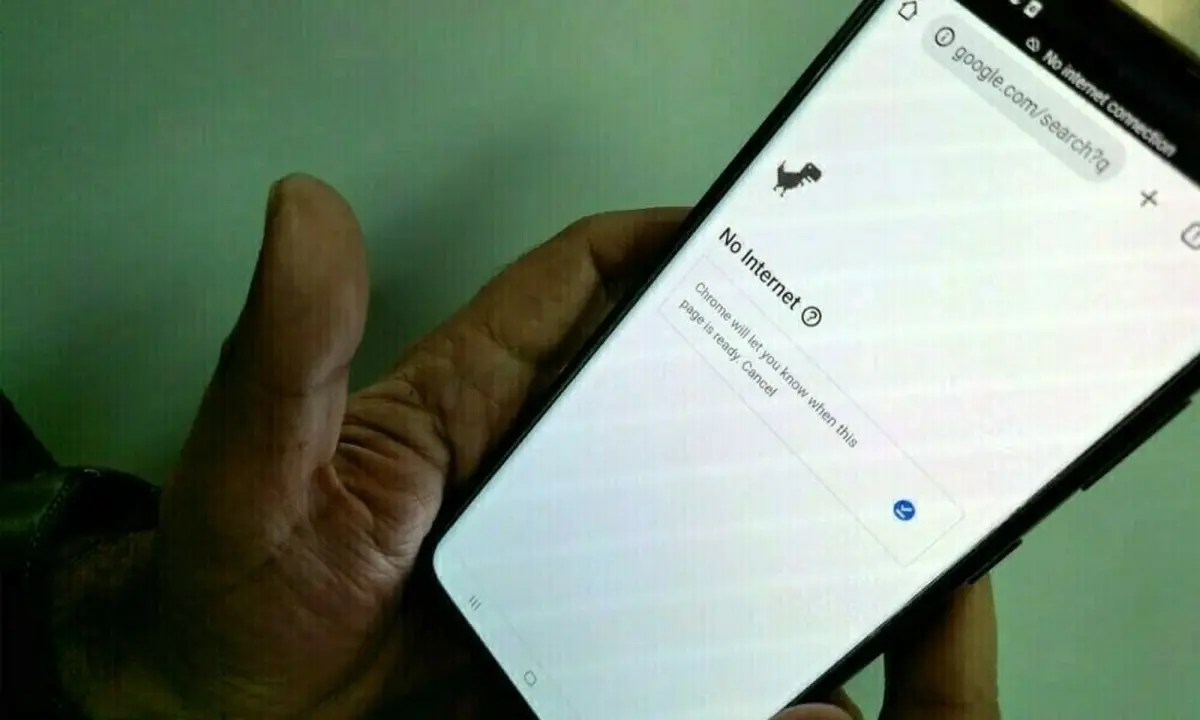
    Pakistan’s internet users may experience intermittent connectivity issues and a decline in service quality after an international submarine cable system developed a fault near the country’s coast, the Pakistan Telecommunication Authority (PTA) said on Wednesday.

    In a press release, the PTA said the SEA-ME-WE 5 (SMW5) submarine cable system had reported a fault approximately 11 kilometres from Pakistan’s coast.

    Transworld Associates (TWA) is coordinating with the SMW5 Consortium to identify the cause of the fault and determine the estimated time for restoration (ETTR), the regulator said.

    Meanwhile, internet traffic is being rerouted through alternative international links to minimise disruptions and maintain services as much as possible.

    The PTA said it was closely coordinating with relevant stakeholders and monitoring the situation to facilitate the earliest possible restoration of normal internet services across the country.

    Source: brecorder

  • Rupee records gain against US dollar

    Rupee records gain against US dollar

    The Pakistani rupee continued its marginal gain against the US dollar in the inter-bank market on Wednesday.

    The local unit closed the day at 276.55, a gain of Re0.01 against the greenback.

    On Tuesday, the rupee had closed at 276.56 against the dollar.

    Globally, the US dollar held steady near a 19-month high on Wednesday as US ​economic data and comments from Federal Reserve officials lent support to the case for interest rate hikes.

    The yen edged lower ‌even after Japanese trade figures showed exports set a record monthly value in October on strong demand in the semiconductor sector. The Aussie dollar languished near a 10-month low.

    Data on Tuesday showed US retail sales increased moderately in October, reinforcing expectations for a rate hike next month. Attention turns to US housing starts data due later ​on Wednesday as well as a series of Fed speakers, all ahead of the Thursday release of minutes of the central bank’s ​meeting last month, when it held rates steady.

    The dollar index, which measures the ​greenback against a basket of currencies, edged up 0.05% to 103.66. It touched 103.78 overnight, its highest level since April 2, 2025.

    The euro fell 0.12% to $1.0984, while the yen weakened 0.06% to 159.46 per dollar. Sterling lost 0.06% to stand at $1.32.

    Investors remain convinced the Federal Reserve will raise interest rates in December as it tries to ​curb inflation. Traders expect a quarter-point rate hike in December, the CME FedWatch tool showed.

    Oil prices, a key indicator of currency parity, fell more than 1% on Wednesday after US crude and fuel inventories posted larger-than-expected rises, according ‌to the Energy Information Administration, adding to expectations of a supply surplus.

    Brent crude futures shed $1.12, or 1.2%, to hit $92.02 a barrel by 10:46am EST (1546 GMT). US West Texas Intermediate futures fell $1.63, or 1.9%, at $84.38 after hitting their lowest level since late August.

    Inter-bank market rates for dollar on Wednesday

    BID Rs 276.55

    OFFER Rs 276.75

    Open-market movement

    In the open market, the PKR lost 4 paise for buying and gained 11 paise for selling against USD, closing at 277.27 and 278.34, respectively.

    Against Euro, the PKR gained 52 paise for buying and 42 paise for selling, closing at 304.20 and 307.41, respectively.

    Against UAE Dirham, the PKR lost 1 paisa for buying and gained 2 paise for selling, closing at 75.53 and 76.11, respectively.

    Against Saudi Riyal, the PKR lost 2 paise for buying and gained 2 paise for selling, closing at 73.88 and 74.40, respectively.

    Open-market rates for dollar on Wednesday

    BID Rs 277.27

    OFFER Rs 278.34

    Source: brecorder