Category: Brecorder

  • Pakistan’s mango exports decline 36% to 78,000 tonnes amid Middle East tensions

    Pakistan’s mango exports decline 36% to 78,000 tonnes amid Middle East tensions

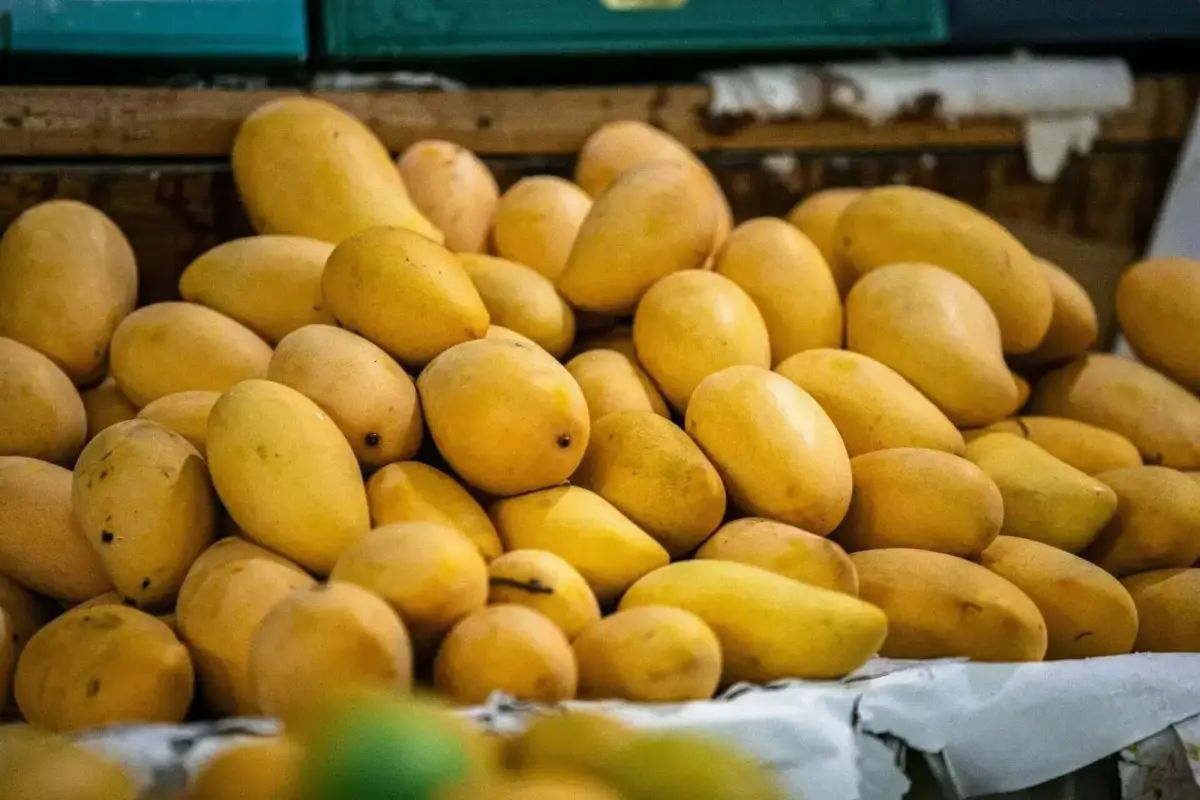
    Pakistan’s mango exports declined by 36% to 78,000 tonnes during the current season amid ongoing tensions in the Middle East, falling short of the official export target of 80,000 tonnes and resulting in a significant loss of foreign exchange earnings.

    According to Waheed Ahmed, Patron-in-Chief of the All Pakistan Fruit and Vegetable Exporters, Importers and Merchants Association (PFVA), the decision to commence mango exports from June 1 helped the country achieve nearly its targeted export volume. Pakistan earned $58.5 million in foreign exchange from mango exports during the current season.

    During the previous season, Pakistan exported 123,000 tonnes of mangoes, generating $92.2 million in foreign exchange. This means the country faced a decline of 45,000 tonnes in export volume and $33.7 million in export earnings due to the impact of tensions in the Middle East.

    Waheed Ahmed said Pakistan witnessed a significant decline in mango exports to Gulf countries, particularly the United Arab Emirates and Saudi Arabia. Higher freight charges substantially increased export costs, while tensions in the Middle East also restricted demand in key export markets, contributing to the overall decline.

    ALSO READ: Pakistan’s mango exports shrink as Middle East war impacts linger

    Exports to Afghanistan and Central Asian markets were also disrupted due to the continued suspension of cross-border trade with Afghanistan.

    He said the cooperation of the Ministry of Commerce and the Ministry of National Food Security and Research, particularly the decision to start mango exports from June 1, played a significant role in helping exporters achieve the targeted volume. Had exports started in May, Pakistani mangoes would have faced complaints regarding quality, making it difficult to achieve even the current export volume.

    He said that during the export season, which ran from June 1 to the end of September, mango exports to Gulf countries fell to 14,500 tonnes from 36,000 tonnes recorded last year.

    Exports to Qatar declined to 880 tonnes from 1,900 tonnes, while shipments to Oman decreased to 8,900 tonnes from 10,200 tonnes. Exports to Saudi Arabia also fell to 1,460 tonnes from 2,030 tonnes. The closure of the Afghan border further contributed to an estimated loss of 24,000 tonnes in export volume.

    Waheed Ahmed said Pakistan’s mango industry was facing serious challenges due to climate change, which had reduced production by around 35% from its potential capacity of 1.8 million tonnes. Farmers were also facing continuously rising production costs.

    He said this was the second consecutive year of declining mango production, while orchards were increasingly affected by diseases and their resistance to diseases was weakening.

    Describing mangoes as an important part of Pakistan’s national identity, he stressed the need for federal and provincial governments to support mango growers and help them adopt modern farming techniques to protect the country’s mango industry.

    He expressed hope that Pakistan’s mango exports would return to their previous levels if lasting peace was established in the Middle East.

    Source: brecorder

  • Pakistan eases export rules for potatoes, kinnow to Russia

    Pakistan eases export rules for potatoes, kinnow to Russia

    Pakistan government has granted a one-time exemption from the financial instrument requirement for exports of kinnow and potatoes to Russia through sea and land routes until May 15, 2027.

    According to an official memorandum seen by Business Recorder, the decision allows exporters to ship three categories of products to the Russian Federation without meeting the financial instrument requirement. These include potatoes (HS Code 0701.9000), kinnow/mandarin (0805.2100) and other mandarins (0805.2910).

    The exemption will remain effective until May 15, 2027.

    • A financial instrument in exports is a payment, credit, or risk-mitigation arrangement – such as a Letter of Credit (L/C), export contract, documentary collection, or advance payment – that secures payment and manages trade risk between an exporter and an overseas buyer.

    Pakistan had previously granted a similar one-time exemption in December 2025 for kinnow and potato exports to Commonwealth of Independent States (CIS) member countries through Iran’s land route. The CIS is a regional intergovernmental organisation established in December 1991 following the dissolution of the Soviet Union. It currently has nine full member states including Armenia, Azerbaijan, Belarus, Kazakhstan, Kyrgyzstan, Moldova, Russia, Tajikistan, and Uzbekistan.

    In February this year, Pakistan and Russia agreed to promote regional trade and economic activity by expanding direct land and air links.

    Later in April, the Russian Federal Service for Veterinary and Phytosanitary Surveillance (Rosselkhoznadzor) allowed the import of potatoes from Punjab province into the Russian Federation. The approval came after phytosanitary restrictions that had been in place since May 2025.

    Cultivation of potato, one of the country’s most important food crops after wheat, rice, and maize, has seen rapid expansion over the past decade, driven by rising demand and improved farming practices.

    The land dedicated to potato cultivation has expanded over the last 10 years, from about 177,700 hectares in 2015-16 to around 462,160 hectares in 2025-26, an increase of approximately 160%. The 2025–26 harvest reached about 12 million tonnes.

    Kinnow season in Pakistan generally runs from December to April, with the peak season occurring in January and February.

    In December 2025, the All Pakistan Fruit and Vegetable Exporters, Importers and Merchants Association set a kinnow export target of 300,000 tonnes, a move which was expected to generate $110 million in foreign exchange.

    Experts believe Pakistan can scale export earnings to $400 million within five years by introducing new citrus varieties and improving supply chain efficiency.

    Source: brecorder

  • IAEA chief says planned US-Saudi nuclear deal ‘very satisfactory’ on inspections

    IAEA chief says planned US-Saudi nuclear deal ‘very satisfactory’ on inspections

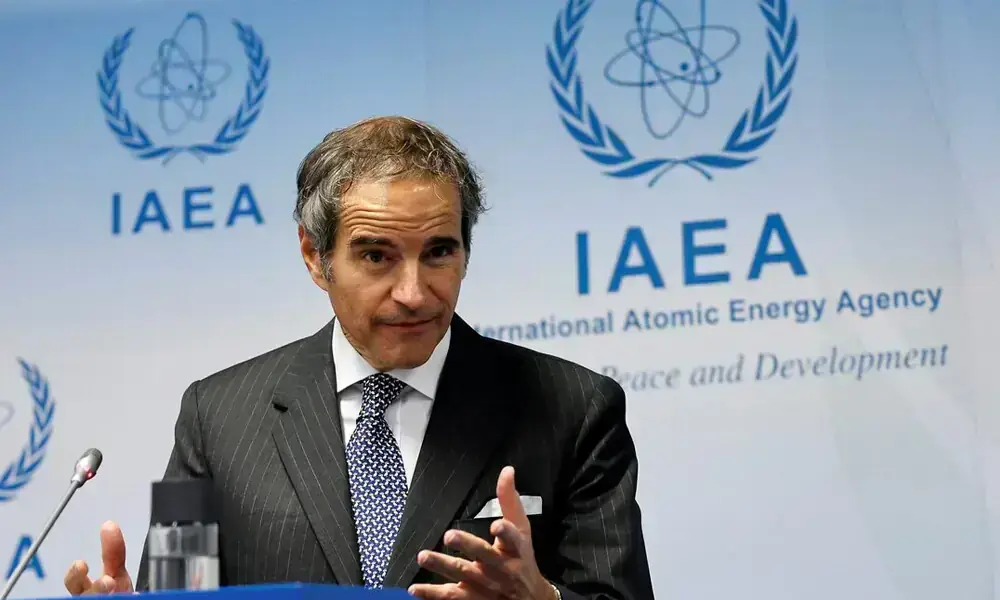
    VIENNA: The provisions in a planned US-Saudi nuclear deal for inspections in Saudi Arabia are “very satisfactory” even though they do not include the gold-standard Additional Protocol, the UN nuclear watchdog’s chief said on Wednesday.

    The proposed deal on civil nuclear cooperation, known as a 123 agreement, has yet to be approved by US lawmakers and has been criticised by nonproliferation experts for not barring Riyadh from enriching uranium or reprocessing spent reactor fuel, two potential ⁠pathways ​to a nuclear weapon.

    Saudi Arabia has a nascent nuclear programme and recently signed up to a Comprehensive Safeguards Agreement with the International Atomic Energy Agency, which spells out the core obligations of countries that possess nuclear technology, such as allowing IAEA inspections of declared nuclear facilities.

    It has not, however, signed the Additional Protocol, which would grant the IAEA more intrusive powers, including snap inspections at undeclared sites. A US-Saudi text on nuclear safeguards sent to the IAEA for approval by its board and seen by Reuters allows snap inspections but only at declared sites.

    Saudi Arabia preparing to grant IAEA more intrusive powers, Grossi says

    “I think that for the specific agreement we have, it is a very satisfactory outcome,” IAEA chief Rafael Grossi told a press conference during a quarterly IAEA Board of Governors meeting.

    Grossi is running to be UN secretary-general and as such needs the support or acquiescence of the five permanent members of the UN Security Council, including the United States.

    Saudi Crown Prince Mohammed bin Salman has said Saudi Arabia will develop nuclear weapons if regional rival Iran does.

    Iran agreed to implement the Additional Protocol (AP) under a 2015 nuclear deal with major powers but stopped in 2021 as the deal unravelled after President Donald Trump pulled the US out in 2018.

    “Obviously, the AP provides more access and it is in this sense considered by many as the standard … We think it’s good that countries have Additional Protocols and perhaps this will be the case in the future,” Grossi said.

    The US-Saudi inspections text seen by Reuters says activities including enrichment and reprocessing will only occur “on a location on a covered site”.

    Saudi Arabia will grant the IAEA “short notice access” to any place on a covered site, and the IAEA will give Riyadh advance notice “of at least 2 hours when the Agency is already on a covered site, or otherwise advance notice of at least 24 hours”, the text says.

    Source: brecorder

  • ‘GTA VI’ publisher Take-Two jumps as gamers relish blockbuster release

    ‘GTA VI’ publisher Take-Two jumps as gamers relish blockbuster release

    As “Grand Theft Auto VI” begins its global rollout on Wednesday, gamers and critics are applauding the blockbuster release. And so is Wall Street.

    Shares of Take-Two Interactive, the owner of the studio behind GTA VI, jumped more than 6% in premarket trading, with investors betting that glowing reviews from critics and players will propel sales and boost the company’s bookings and revenue this year.

    Demand has been feverish – with players doing everything from taking several days of paid time off to signing “contracts” with their partners to get uninterrupted game time.

    Gamers get ready to enter Vice City as Grand Theft Auto VI begins global rollout

    On the expected revenue impact for Take-Two:

    Wells Fargo expects GTA VI to sell about 65 million units in its current fiscal year that runs through March, up from its prior forecast of 35 million units.

    The brokerage’s estimate is also boosted by expectations for a potential PC release of the game early in 2027.

    It lifted its annual bookings forecast by 19% to $9.76 billion, versus a consensus estimate of $8 billion from LSEG data, and Take-Two’s own projection of $8 billion to $8.20 billion.

    Take-Two sticks to annual bookings outlook, says on track for ‘GTA VI’ November launch

    Brokerage Oppenheimer estimates about $1.85 billion in gross revenue in the first three days, compared with the $1 billion recorded by predecessor GTA V, released more than 13 years ago.

    A Sensor Tower tracker estimates roughly 17.1 million units have been sold as of early Wednesday, far exceeding pre-order volumes of all the biggest game releases in recent history.

    Source: brecorder

  • SBP governor calls for export-led growth to break Pakistan’s boom-and-bust cycles

    SBP governor calls for export-led growth to break Pakistan’s boom-and-bust cycles

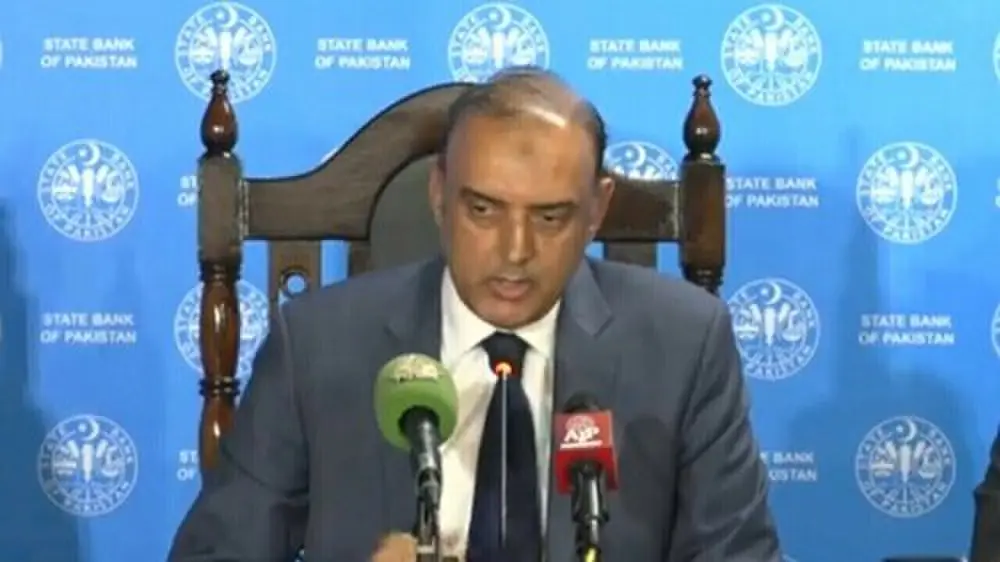
    State Bank of Pakistan (SBP) Governor Jameel Ahmad on Wednesday stressed the need to strengthen economic resilience, undertake structural reforms and boost exports to achieve sustainable economic growth and break the country’s recurring boom-and-bust cycles.

    Speaking at Standard Chartered Bank’s Annual Global Research Briefing in Karachi, Ahmad said Pakistan had made progress in restoring macroeconomic stability but needed to build on these gains through consistent policies, stronger institutions and greater private-sector participation.

    He said emerging economies were increasingly exposed to global economic shocks, including commodity price volatility, geopolitical tensions and climate-related disruptions. Countries with stronger fiscal and external buffers, credible policy frameworks and resilient institutions were better positioned to absorb such shocks.

    Reflecting on Pakistan’s economic challenges during FY22 and FY23, the SBP governor said the government and central bank had taken difficult but necessary measures, including monetary tightening, fiscal consolidation and temporary administrative steps to manage foreign exchange outflows.

    These measures, supported by prudent macroeconomic management and assistance from multilateral and bilateral development partners, helped restore economic stability and rebuild confidence, he added.

    Ahmad said Pakistan’s improved macroeconomic fundamentals had strengthened its ability to manage recent external shocks, including developments linked to the ongoing Middle East conflict, compared with the pressures faced during the Russia-Ukraine crisis.

    Discussing the economic outlook, he said inflation averaged close to the target range during FY26 and, despite a recent increase, was projected to gradually ease towards the medium-term target range.

    The current account deficit was expected to remain within 0-1% of gross domestic product (GDP), while foreign exchange and fiscal buffers continued to strengthen, he added.

    Economic activity was also recovering, with real GDP growth reaching 3.7% in FY26 and expected to improve further in the current fiscal year, according to the governor.

    He said these improvements were increasingly being recognised by international credit rating agencies, multilateral partners and foreign investors.

    Emphasising the private sector’s role in sustainable growth, Ahmad called on businesses and financial institutions to contribute to strengthening the country’s economic structure.

    He said breaking Pakistan’s recurring boom-and-bust cycles required higher exports, greater domestic savings and investment, and deeper financial markets.

    Source: brecorder

  • IAEA says North Korea is expanding uranium-enrichment plant at Yongbyon

    IAEA says North Korea is expanding uranium-enrichment plant at Yongbyon

    VIENNA: North Korea has built an extension to its original uranium-enrichment plant at its Yongbyon nuclear complex as it continues to expand its production of weapons-grade material, UN nuclear watchdog chief Rafael Grossi said on Wednesday.

    The International Atomic Energy Agency (IAEA) has not had access to North Korea since Pyongyang expelled its inspectors in 2009. The agency now observes the country mainly using satellite imagery.

    North Korea, formally known as the Democratic People’s Republic of Korea (DPRK), has carried out several nuclear tests and appears to continue to produce the two materials with which one can make the core of a nuclear weapon – highly enriched uranium and plutonium.

    “Previously, I have reported to you about the ongoing operation of enrichment facilities at Kangson and Yongbyon, the construction of an additional enrichment facility at Yongbyon, and the reported further expansion of the DPRK’s production of weapons-grade nuclear material,” Grossi said in a statement to a quarterly meeting of the IAEA’s 35-nation Board of Governors.

    North Korea fires around 10 ballistic missiles toward sea off east coast, Seoul says

    Kangson is just outside Pyongyang to the southwest, while the much larger site at Yongbyon is further away from the capital to the north.

    “Since mid-September 2026, a further extension to the original Yongbyon enrichment facility has been under construction with the new extension externally complete by late October 2026,” he said, without elaborating.

    “The ongoing expansion of the DPRK’s uranium enrichment programme remains a cause for serious concern,” he added.

    Grossi said the IAEA has also “observed indications” that the 5-megawatt nuclear reactor at Yongbyon that North Korea uses to produce plutonium from spent fuel probably continues to operate and is in its seventh irradiation cycle, after which the spent fuel would be removed for reprocessing.

    Another, light-water reactor at Yongbyon has been operating since April of this year, he added.

    Source: brecorder

  • Pakistan conducts successful launch of Fatah-3 supersonic cruise missile: ISPR

    Pakistan conducts successful launch of Fatah-3 supersonic cruise missile: ISPR

    Pakistan Army on Wednesday successfully conducted the launch of the Fatah-3 supersonic cruise missile, marking a significant milestone in the country’s defence capabilities, the military’s media wing said.

    According to a statement issued by the Inter-Services Public Relations (ISPR), the missile is equipped with advanced navigation and propulsion systems and can engage targets at long ranges with high precision and lethality at supersonic speeds.

    The Fatah-3 missile is expected to enhance the operational flexibility and strike range of the Pakistan Army’s Rocket Force Command, further strengthening the country’s conventional deterrence and defence capabilities, the statement added.

    The launch was witnessed by the Commander Army Rocket Force Command, senior officers of the Pakistan Armed Forces, and scientists and engineers.

    President Asif Ali Zardari, Prime Minister Shehbaz Sharif, Chief of Army Staff and Chief of Defence Forces Field Marshal Syed Asim Munir, and the services chiefs congratulated the teams involved in the successful launch.

    They also appreciated the dedication and commitment of all those who contributed to the development of the country’s defence capabilities, according to the ISPR.

    Source: brecorder

  • How inDrive uses technology and human care to keep rides safe

    How inDrive uses technology and human care to keep rides safe

    As urban mobility continues to grow across Pakistan, maintaining commuter confidence requires more than just basic travel tools. For inDrive, security is treated as a fundamental, non-negotiable right for everyone on the road, shaping a proactive safety architecture designed to protect millions of daily journeys.

    Moving beyond traditional, reactive measures, the platform relies on a multi-layered technological framework powered by a combination of artificial intelligence and human diligence.

    Instead of addressing incidents only after they occur, machine learning models continuously evaluate live operational data to anticipate potential risks before they manifest.

    This protective shield activates long before a trip begins. Advanced automated tools streamline driver onboarding by rigorously vetting identification documents, vehicle records, and profile photos to minimize manual human error.

    System algorithms also actively screen for duplicate accounts or multiple profiles tied to a single device, restricting unauthorized access instantly.

    Safety features remain active throughout a driver’s tenure on the platform. Drivers undergo periodic photo re-verification to confirm that the person behind the wheel matches official records.

    Simultaneously, automated filters monitor in-app order feeds, avatars, and chat exchanges in real time, instantly blocking prohibited content, explicit material, or abusive language while escalating severe violations to specialized response units.

    Throughout every active trip, the system tracks behavioral anomalies, such as sudden account modifications, device switches, or unusual route deviations, to trigger automated safety checks.

    In emergency scenarios, intelligent classification systems prioritize urgent support inquiries, ensuring that help requests receive immediate attention without administrative delays.

    Despite the heavy reliance on algorithms, inDrive maintains a strict human-centric philosophy. Artificial intelligence acts as an advanced detection shield, processing millions of signals simultaneously to flag potential hazards. However, technology never operates as the final decision maker.

    Ultimate decision making authority rests firmly with trained human specialists who review flagged anomalies and execute critical resolutions.

    This governance model is built on the principle that true safety is an ongoing, shared responsibility distributed collaboratively between advanced technology, attentive drivers, and mindful passengers.

    Source: brecorder

  • Trump’s Board of Peace faults Israel and Hamas for failure to end Gaza war

    Trump’s Board of Peace faults Israel and Hamas for failure to end Gaza war

    JERUSALEM: The body overseeing US President Donald Trump’s plan to end the Gaza war accused both Israel and Hamas of failing to meet their commitments to end hostilities, leaving the population of Gaza in dire conditions and the ceasefire in danger of collapse.

    The 12-page Board of Peace report, seen by Reuters, is the body’s second to the United Nations Security Council since the US-backed ceasefire came into effect 13 months ago. It offers a sobering assessment of progress made since then.

    The board, established and headed by Trump, is expected to present the report’s findings to a meeting of the council in New York at the end of November.

    “The distance between what has been agreed and what is happening on the ground nonetheless remains the principal risk to the process,” the report said, warning that “a ceasefire that delivers nothing visible cannot be sustained indefinitely.”

    Gaza plan rejected by Netanyahu ‘only way forward’: Trump board

    Peace plan stalled

    While the ceasefire has halted major fighting, the wider plan, which calls for Hamas to disarm, Israeli troops to withdraw and reconstruction to begin, has effectively stalled since soon after it came into effect last year.

    Hamas agreed in July to a Board of Peace roadmap to surrender its weapons and transfer governance of Gaza to a civilian transitional authority, but Israel rejected the roadmap, saying it will not withdraw until Hamas is dismantled.

    Israel has carried out near-daily strikes on Gaza, while the report said Hamas fighters have also continued attacks on Israeli troops.

    “Every day that Israel continues strikes against Hamas targets, it delays putting Hamas’ agreement to the roadmap to the test,” the report said.

    “Meanwhile, Hamas activity continues, the commitment to cease all military activities has not been met in full by the parties, and the population faces another winter in tents and rubble.”

    Senior Hamas official Basem Naim dismissed the report as “pure disinformation”, accusing the Board of Peace of providing cover to Israel to evade its commitments under the plan to end the war and to continue its aggression in Gaza.

    Trump envoys bring Russia and Ukraine together for first peace talks in 9 months

    The office of Israeli Prime Minister Benjamin Netanyahu and a spokesperson did not immediately respond to a request for comment.

    Israeli ‘absence of decisions’

    Gaza’s population of more than 2 million Palestinians lives confined to around a third of the coastal territory, mostly in makeshift tents and damaged buildings, under the control of Hamas fighters. Israel occupies two-thirds of Gaza that has been largely razed and depopulated.

    The report criticised Israel’s government for an “absence of decisions” on arrangements to train and deploy a civilian Palestinian police force to replace Hamas as Gaza’s law enforcement authority. It said this was impeding the full implementation of the plan.

    It said restrictions imposed by Israel on supplies and equipment, alongside funding shortfalls, had hindered the ability of Gazans to prepare for and respond to seasonal flooding. Heavy rain inundated displacement camps last week across Gaza and more rain is expected later this month.

    Senior Hamas commander killed in Israeli strike in Gaza

    Hamas, for its part, was collecting taxes on goods entering Gaza that were impacting the availability of basic commodities, the report said.

    The Board of Peace was established by Trump to oversee his ambitious plan to end the war that Israel launched in response to Hamas-led attacks from Gaza in October 2023.

    Around 1,200 people were killed in Israel in the 2023 Hamas attacks, while the Israeli assault on Gaza has since killed 74,000 Palestinians. More than 1,600 Palestinians, including many civilians, and five Israeli soldiers have been killed in Gaza since the US-mediated ceasefire was struck in October 2025.

    Trump’s plan received strong international backing, though the board itself has been met with scepticism from many of Washington’s Western allies.

    Netanyahu’s right-wing coalition government remains in power in Israel in a caretaker capacity despite losing its majority in an inconclusive election last month. On Wednesday, Defence Minister Israel Katz said Israel would not withdraw from Gaza until Hamas was dismantled and Gaza was demilitarized.

    Source: brecorder

  • Iran fires at Kuwait after US strike on Iranian island

    Iran fires at Kuwait after US strike on Iranian island

    DUBAI: Iran said it targeted US drone and missile sites in Kuwait overnight after the United States struck Qeshm Island in the Strait of Hormuz, marking Tehran’s first attack on the US-allied Gulf state since September.

    Underlining a broader uptick in hostilities in recent days, Bahrain said it intercepted Iranian aerial attacks on Wednesday for a third time in a week, accusing Tehran of a “systematic hostile approach” towards the Gulf kingdom, where the US Navy’s Fifth Fleet is headquartered.

    The latest attacks highlighted the obstacles facing diplomatic efforts to end a conflict that has destabilised the Middle East, disrupted shipping, driven up global energy prices and drawn in countries across the region.

    Iran issues fresh warning to ‘the enemy’

    The Iranian army said it had targeted US drone and missile installations at Kuwait’s Ali Al Salem base after Kuwait said its air defences were countering hostile drone attacks.

    Iran says US struck Qeshm island, after Guards target Bahrain

    It followed US airstrikes on Tuesday evening, when American fighter aircraft targeted a missile launch site on Qeshm in retaliation for Iranian attacks on US personnel and assets, a US military official told Reuters. Iranian media, citing an Iranian official, said the US attack caused no damage to infrastructure.

    Kuwait said it reserved the right to take all necessary measures to safeguard its sovereignty and protect its territory and vital facilities against any aggression or threat.

    In videos published by state media on Wednesday, Iranian Army Commander-in-Chief Amir Hatami issued a fresh warning to the United States, which launched the war against Iran alongside Israel in February.

    “If the enemy repeats its mistake… we have the readiness and the plans to confront it and its supporters in a stronger, more crushing way and without geographic limitations,” he said.

    Hasan Al Hasan, a senior fellow for Middle East Policy at the International Institute for Strategic Studies, said Iran was undertaking a “cautious” escalation.

    “But there is no ruling out further escalation, especially if the US begins to widen military operations, begins to widen its target set to include not just Iranian military coastal infrastructure, but also more deeply within Iran,” he said.

    US warplanes struck Iran missile site on Qeshm Island: US official

    Mediator Qatar aims to narrow gaps

    The United States and Israel attacked Iran on February 28 and Tehran responded with strikes on Israel and Gulf states hosting US military bases.

    The conflict later spread to Lebanon, where fighting erupted between Israel and Hezbollah, and to Yemen, from where the Houthis have launched attacks on Saudi energy facilities, airports and other targets.

    Iran has also fired at US forces in Jordan.

    Global oil and gas prices have shot up with shipping through the Strait of Hormuz severely disrupted after Tehran declared it closed, while the US has imposed a naval blockade on Iran, hitting Iran’s economy hard.

    Qatari and Iranian officials met on Tuesday for talks aimed at “bridging perspectives and narrowing the gap between proposals presented on the ground,” Qatari spokesperson Majed Al Ansari said.

    A Saudi-led coalition said on Wednesday it had intercepted a cruise missile launched by the Houthis towards the Saudi capital Riyadh.

    There was no immediate confirmation from the Houthis.

    A surge in attacks on shipping since October has threatened to further strain global oil supplies. On Tuesday, a crew abandoned a liquefied petroleum gas tanker off Oman’s Khasab.

    The United Arab Emirates’ ADNOC L&S said on Wednesday that one crew member was missing and 11 injured after one of its vessels was attacked in the Strait of Hormuz on Tuesday.

    Iran provincial official says US attacked fishing boats off Qeshm Island, state media

    Saudi Arabia condemned Iran’s latest attacks.

    “The Kingdom renews its demand for an end to all acts of aggression, respect for international law and the principles of good neighborliness, and an opportunity for diplomatic efforts to achieve peace and resolve the crisis through negotiations,” the Saudi foreign ministry said.

    Rubio sees no imminent threat to Washington

    Trump said on Tuesday the US was taking seriously the possibility that Iran could be planning an attack on Washington, when asked about a CNN report that cited US intelligence assessments on a potential Iranian plot involving a so-called dirty bomb.

    On Wednesday, US Secretary of State Marco Rubio said he did not think there was any imminent threat to the US capital.

    Iran’s Foreign Ministry denied the allegations, calling them “baseless.”

    A dirty bomb uses conventional explosives to disperse radioactive material. Unlike a nuclear weapon, it does not produce a nuclear explosion, but can spread radioactive contamination and cause significant disruption and public alarm.

    “I am not,” Rubio said when asked by a reporter in Manila if he was concerned about an “imminent attack” on Washington. “I don’t think there is any imminent threat.”

    Source: brecorder