Category: Brecorder

  • Australia, NZ dollars track Wall Street futures higher, but risks linger

    Australia, NZ dollars track Wall Street futures higher, but risks linger

    SYDNEY: The Australian dollar bounced on Monday after nine consecutive sessions of losses, drawing support from gains in Wall Street futures, while the kiwi steadied above a 17-year low, though both currencies remained vulnerable to renewed selling pressure.

    The Aussie rose 0.4% to $0.6645 after tumbling 2.3% last week to as low as $0.6609, its weakest level since December 22. The decline erased all of its 2026 gains, leaving it down nearly 9% from the four-year high in May.

    “In the first half of this year, the story for FX was just buy the high yielders because they’re getting even higher yield,” said Ben Jarmen, chief economist for Australia and NZ at JPMorgan.

    “We’ve started to see higher rates have started to crack the high yielding currencies because it’s starting to become ‘bad hikes’.” “They’re the kind of hikes which reflect problematic inflation and it’s making a growth downturn worse.

    It’s eroding the outlook to where interest rates will be next year. And so Aussie’s been going as the poster child for that.“

    After five interest-rate hikes this year lifted the cash rate to an 18-year high of 4.85%, markets are betting the Reserve Bank of Australia is done tightening after the unemployment rate jumped to a five-year high of 4.9%.

    A rate cut in August is now fully priced in, with investors expecting a total of 50 basis points of easing by year-end.

    The sharp selloff in tech stocks have also hit the risk-sensitive Aussie hard, while declines in gold, copper and iron ore prices among Australia’s key exports added to the pressure.

    The kiwi has held up better than the Aussie, though its lower interest-rate backdrop meant it started from a much weaker position.

    The currency rose 0.2% to $0.5479 on Monday after skidding 0.9% last week to a 17-year low of $0.5464.

    Technical support remains fragile around the COVID-era low of $0.5469.

    Data showed retail sales jumped 2.2% in the third quarter, well above expectations and signalling a sharp recovery in consumer spending that has improved the economic outlook.

    Swaps now imply an 80% probability that the Reserve Bank of New Zealand will raise interest rates by a quarter percentage point to 3%, with 90 basis points of tightening priced in by the end of next year.

    “The relative policy story is turning more supportive for the NZD, with the RBNZ signalling that tighter policy will likely be required,” analysts at OCBC said in a note.

    “Lower energy prices should also offer greater terms-of-trade relief to New Zealand than Australia, adding to the case for some further unwinding of AUDNZD gains.”

    The Aussie rebounded 0.2% to NZ$1.2123, after losing 1.3% last week to hit the lowest since late August.

    It is down nearly 4% from its 13-year peak of $1.2601 in October.

    Source: brecorder
  • Thai baht/US dollar weaker on Monday

    Thai baht/US dollar weaker on Monday

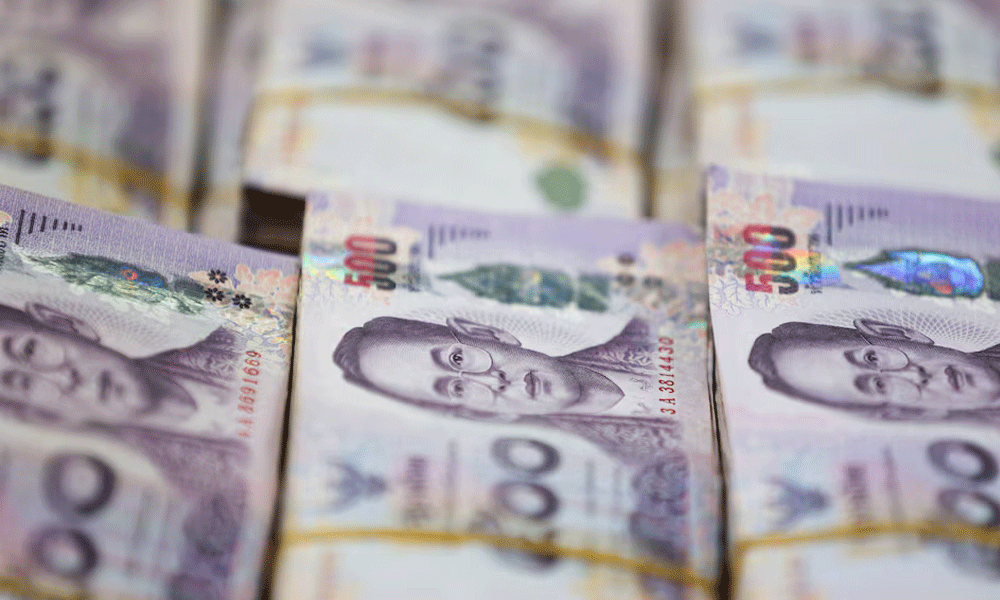
    BANGKOK: The Thai baht weakened against the US dollar on Monday.

    At 0218 GMT, the baht was 0.15% lower at 33.97 versus the dollar, after trading in a range of 33.995 to 33.975.

    It ended the previous session at 33.9175 per dollar, as per LSEG data.

    Source: brecorder

  • Saudi Arabia’s influence loomed large over failed COP31 deal

    Saudi Arabia’s influence loomed large over failed COP31 deal

    ANTALYA: As the COP31 climate conference drifted into what proved to be record overtime, a negotiator from a small island state complained that a promised meeting with the talks’ Turkish and Australian presidents had been cancelled yet again.

    Saudi officials, meanwhile, had regular access, allowing them disproportionate influence at the Antalya conference, according to negotiators from Europe, small island states, Latin America, Asia and Africa.

    Riyadh was at the forefront of resisting language on reducing reliance on fossil fuels, the negotiators said, adding that was chiefly why a political agreement could not be reached for the first time since 2009.

    The European Union, several small island states, and other nations particularly vulnerable to climate change said they could not accept a text that failed to mention the oil, gas, and coal that scientists say drive global warming.

    “This COP, I believe, was hijacked by some oil states,” Ireland’s climate minister Darragh O’Brien told Reuters on behalf of the European Union when asked about Saudi Arabia’s role in the negotiations.

    The Turkish COP presidency said in a statement no group or country was given “preferential treatment”.

    Representatives for Saudi Arabia and Australia did not immediately comment for this story.

    Saudi Arabia and fellow members of the Organization of the Petroleum Exporting Countries have long opposed climate language targeting fossil fuels, saying they need to be part of the global energy mix for the foreseeable future.

    Fossil fuels were explicitly mentioned in texts from previous COPs in 2021 in Glasgow and 2023 in Dubai.

    But several negotiators said Riyadh’s hand was strengthened at Antalya by the absence of active US engagement at COP31 and the lack of close US-China coordination that has helped broker compromises at previous COPs.

    “Instead of having one or two major players helping define the boundaries of the discussion, those boundaries have become less clear,” Singapore Environment Minister Grace Fu said.  LOW Expectations from the outset

    COP31 began with modest expectations.

    Host Turkey was pushing a pledge to boost global electrification, and promising to emphasize implementation of past climate deals meant to help the planet avoid the worst consequences of global warming.

    But divisions deepened after the Turkish presidency released a revised draft cover text that omitted any reference to fossil fuels.

    As countries spent the second week of the talks trying to forge consensus around the wide range of options, delegates and observers said Saudi Arabia kept a fixed position: the text must not mention fossil fuels, and it should include language boosting carbon capture technologies that can reduce their emissions.

     One delegate from an Asian country involved in the talks said Riyadh framed the positions as non-negotiable, even existential.

    Saudi Arabia was not the only side unwilling to compromise, however.

    The European Union also hardened its position.

    When asked how talks were going on Saturday, EU Climate Commissioner Wopke Hoekstra said:

    “It’s either going to be a good deal or it’s going to be no deal.” Germany convened meetings with small island states and other members of the High Ambition Coalition, which groups vulnerable nations, African countries and developed countries, including Singapore and Canada.

    Together they produced a letter, backed by around 130 countries, that said any deal at Antalya must include mention of transitioning away from fossil fuels, and sent it to the presidency.

    Around the same time, and as Saturday slipped into Sunday, Saudi, Chinese and Russian officials frequently visited the presidency’s offices, even as representatives from other groups struggled to get meetings, delegates told Reuters.  

    An angry reaction to sunday’s collapse

     When the revised text finally emerged early on Sunday, many countries reacted angrily.

    The text largely ignored the coalition letter: it still had no mention of fossil fuels and kept strong language promoting carbon capture.

    “It seems like we are negotiating with the Saudis,” Maina Talia, Tuvalu’s climate minister, said at the time.

    As Sunday wore on, negotiators openly discussed the possibility that the talks could collapse without achieving a political statement.

    Delegates were leaving Antalya to catch flights.

    Countries race to secure COP31 deal after fossil fuel row

    Time was running out.

    After the closing plenary started on Sunday afternoon in Antalya, COP31 president Murat Kurum said he could see there was no agreement and confirmed he would not advance any new text.

    Some negotiators were left with the feeling the producers of the fossil fuels that have contributed to climate change wielded more power than those who want to accelerate the transition to a low-carbon world.

    “It seems like when fossil fuels cannot be mentioned in the cover text, then somehow the oil countries have a larger voice at this COP,” said Danish Climate Minister Samira Nawa.

    Source: brecorder

  • Fintech Neem secures investment from ADB Ventures to expand Pakistan’s financial infrastructure

    Fintech Neem secures investment from ADB Ventures to expand Pakistan’s financial infrastructure

    Neem, a Karachi-based embedded financial wellness platform, has secured an undisclosed investment from ADB Ventures, the venture capital arm of the Asian Development Bank (ADB).

    The investment forms part of Neem’s Pre-Series A round, which the startup says is approximately 80% funded. Neem previously raised $3.6 million in its Seed round.

    Other investors in the Pre-Series A include DNI Group, HI2 Global, AKD Securities Limited, Epic Angels and the Pakistan Startup Fund, alongside strategic angel investors from PayNet, Aspire, Stripe and other global fintech and payments leaders, read a company statement.

    Founded by Vladimira Briestenska, Nadeem Shaikh, and Naeem Zamindar, Neem went to market in January 2025. The platform provides a unified financial infrastructure platform that enables businesses to manage money movement, from collecting payments and disbursing funds to managing balances, automating settlements and reconciling transactions.

    Neem currently serves more than 70 enterprise clients across key sectors, including logistics, utilities, manufacturing and retail.

    Where the funding goes

    Talking to Business Recorder, co-founder Vladimira Briestenska said the investment will support three key priorities: expanding Neem’s core payments infrastructure and lending products across Pakistan; advancing our regulatory licensing roadmap; and further strengthening the security, resilience and scalability of our technology infrastructure.

    “Our ambition is to make reliable, integrated financial infrastructure accessible to businesses of all sizes across Pakistan, enabling them to digitise how they collect, move and manage money,” she said.

    Briestenska was of the view that Pakistan’s businesses do not lack the ambition to go digital. “They lack financial infrastructure that works as one connected system.”

    “ADB Ventures’ investment is a strong vote of confidence in our approach and in the opportunity to build the financial infrastructure Pakistan needs. With this support, we aim to bring more businesses, workers and communities into the formal digital economy,” she added.

    ADB Ventures invests in early-stage technology companies across Asia and the Pacific, with a focus on sectors including financial technology, agricultural technology, climate resilience, and inclusive growth.

    “Pakistan is laying a strong foundation for digital payments, and the next step is ensuring that businesses of all sizes can fully benefit from this progress,” said Emma Fan, ADB Country Director for Pakistan.

    “Neem is helping enterprises move away from cash and fragmented systems toward payment solutions that are faster, more transparent, and easier to manage.”

    From wage access to merchant financing

    According to the company, Neem plans to extend its financing capabilities to businesses, enabling merchants on its platform to access working capital based on their transaction and settlement history, rather than relying solely on traditional financial statements.

    Neem is expanding its lending business along two complementary areas, said Briestenska.

    “First, we are evolving our earned wage access offering into a broader financial wellness platform, providing employees, particularly underserved and blue-collar workers, with access to responsible financial products beyond salary advances. We plan to scale this offering nationwide through partnerships with employers and financial institutions.

    “Second, we are developing merchant financing capabilities built directly on top of our payments infrastructure. By leveraging merchants’ transaction flows and settlement histories, we aim to enable access to working capital based on actual business activity, reducing reliance on traditional financial statements and collateral requirements,” she said.

    The co-founder added that Neem’s merchant financing portfolio is currently under development. “We will share specific portfolio targets as the product and its financing partnerships progress.”

    Neem’s 12 to 18 months

    Over the next 12 to 18 months, the startup plans to focus on nationwide expansion, regulatory progress and building more secure, intelligent infrastructure.

    That includes collections, disbursements, multi-party ledgers and cross-border payments.

    “In parallel, we will expand our earned wage access offering into a broader financial wellness platform and introduce merchant working capital financing, leveraging transaction data from our payments infrastructure,” said Briestenska.

    On regulation, the company plans to advance engagement with regulators and “pursue relevant licensing frameworks to support the expansion of our financial services capabilities”.

    It also plans to continue strengthening data infrastructure, fraud detection, risk management and AI-driven automation.

    “Together, these priorities will strengthen Neem’s position as a leading financial infrastructure platform powering how businesses across Pakistan move and manage money,” Briestenska said.

    Source: brecorder

  • PSX: stocks surge, KSE-100 up nearly 600 points

    PSX: stocks surge, KSE-100 up nearly 600 points

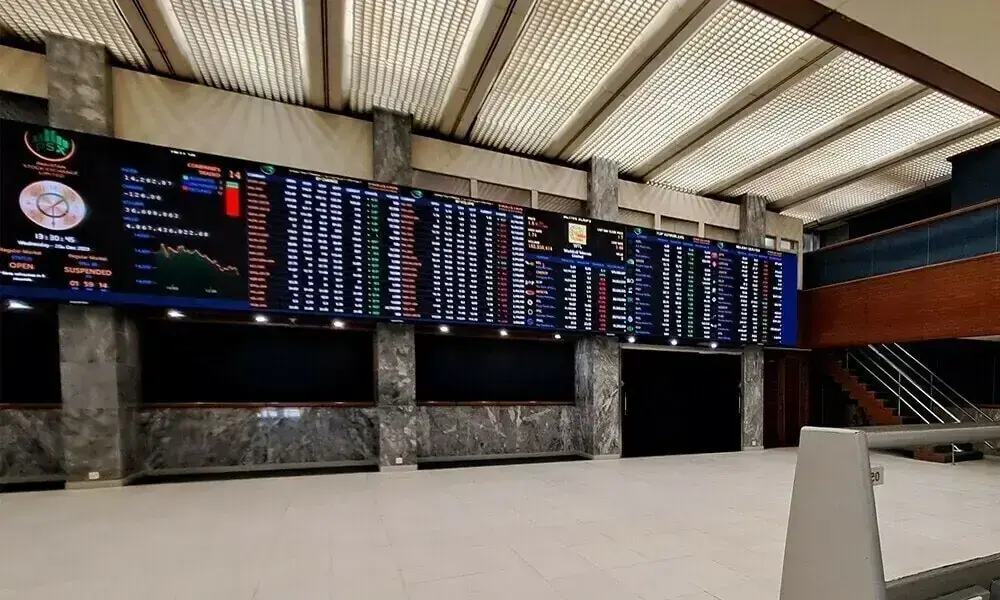
    Buying interest was observed at the Pakistan Stock Exchange (PSX), with the benchmark KSE-100 Index gaining nearly 600 points during the opening minutes of trading on Monday.

    At 9:35am, the benchmark index was hovering at 177,974.15, up 591.58 points or 0.33%.

    Buying was observed in key sectors, including automobile assemblers, commercial banks, fertiliser, oil and gas exploration companies, OMCs and power generation. Index-heavy stocks, including HUBCO, PSO, MARI, OGDC, PPL, POL, HBL, MEB and MEBL, traded in the green.

    During the previous week, the PSX closed marginally lower as domestic political uncertainty surrounding a proposed referendum on the creation of new provinces weighed on investor sentiment, offsetting support from softer international oil prices and reduced domestic fuel costs.

    The benchmark KSE-100 Index lost 491.32 points to settle at 177,382.56 points.

    Globally, US stock futures rose on Monday while authorities scrambled to shore up sliding stock markets in Asia, after a wipeout last week for the tech ​and chip stocks at the centre of the AI boom.

    Investors are questioning whether vast ‌sums of mostly borrowed money spent building data centres to power AI tools will generate returns fast enough to repay lenders or big enough to justify some of the high stock prices.

    Last week’s 10% drop in the Nasdaq was its ​largest weekly decline since pandemic panic gripped markets in March 2020 while the fall in ​Taiwan’s benchmark was the biggest since 1990. Taiwan is home to the world’s ⁠dominant advanced chipmakers and a critical link in the AI supply chain.

    On Monday, Nasdaq 100 futures bounced nearly ​3% in early trade and S&P 500 futures rose by 2%, while Taiwan stocks steadied and South ​Korean shares fell about 4% to a 10-month trough before finding support.

    This is an intraday update

    Source: brecorder

  • Pop star Miley Cyrus weds drummer Maxx Morando in California

    Pop star Miley Cyrus weds drummer Maxx Morando in California

    Grammy-winning pop star Miley Cyrus married her longtime partner, drummer Maxx ​Morando, in a private ceremony in California, with black-and-white ‌pictures of the event posted on social media.

    The 33-year-old singer announced the marriage on Instagram on Sunday, with the wedding photographs captioned simply “M + ​M” and “11.21.26.”

    Cyrus wore a backless white silk gown, ​while Morando, 28, appeared in a classic black suit ⁠and white shirt at Saturday’s event.

    People magazine and Entertainment Tonight ​were among the first to report the news. Representatives of ​the couple did not immediately respond to a Reuters request for comment.

    Cyrus and Morando reportedly married in Palm Springs, a month after performing “Let’s ​Get Married” together at the Hollywood Bowl, a song that ​features in Cyrus’ latest studio album, Bass Persuades.

    Cyrus and Morando have been ‌together ⁠for about five years. They met on blind date in 2021, Cyrus told British Vogue in an interview.

    “Well, it was blind for me and not really for him,” the singer ​said in 2023. “I ​thought, ‘The worst ⁠that can happen is I leave.’”

    In December, Cyrus spoke of her engagement to the drummer ​during an appearance on ABC’s “Good Morning America”.

    Morando ​is ⁠the drummer for Liily, a Los Angeles-based alternative rock band affiliated with Atlantic Records, the band says on its website.

    The “Flowers” singer ⁠was ​previously married to Australian actor Liam Hemsworth, ​who filed for divorce in Los Angeles in 2019.

    Source: brecorder

  • India need five wickets for victory over New Zealand in first Test

    India need five wickets for victory over New Zealand in first Test

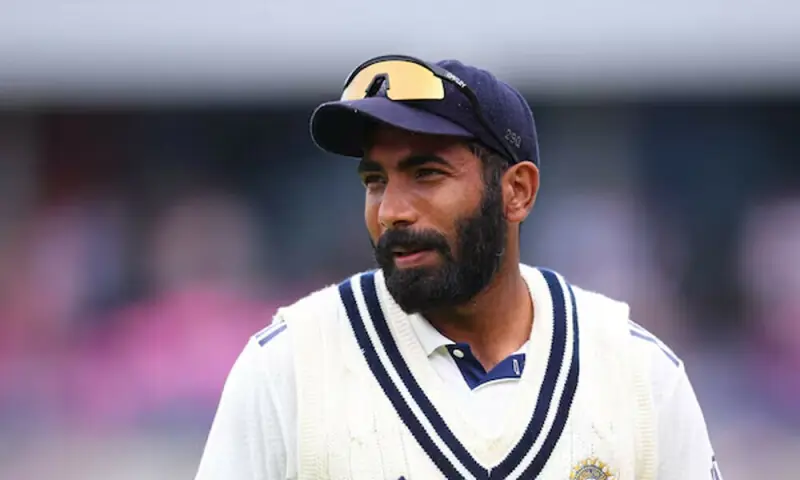
    India need to take five wickets in the final session to win the first Test after dismissing Tom Blundell ​to leave New Zealand on 206-5 at tea on the ‌final day in Wellington on Monday.

    The Black Caps, who made 368 in their first knock, still trail India’s first-innings 720-9 declared by 146 runs and can ​only hope to bat out the day and salvage a ​draw.

    Blundell will consider himself a little unfortunate to have ⁠departed for 15 off the bowling of Anshul Kamboj shortly after ​lunch.

    The delivery appeared to have beaten the bat before going through to ​wicketkeeper Rishabh Pant but Kamboj heard something and India reviewed. The DRS technology revealed the faintest of nicks.

    Daryl Mitchell, who was unbeaten on 24, and first-innings centurion Glenn Phillips (19) will continue ​New Zealand’s rearguard action after the break on a breezy day ​at Basin Reserve.

    In the opening session, spinner Washington Sundar made the first breakthrough by removing ‌Devon ⁠Conway for 65, the ball popping up off the opener’s bat and pad for Pant to collect with an athletic catch.

    New Zealand cling on in Wellington after India build mammoth lead

    Rachin Ravindra, the other overnight batter, followed for 37 with a miscued shot off the ​bowling of Prasidh ​Krishna that flew ⁠to KL Rahul in the slips.

    Seamer Krishna (2-22) was the pick of the Indian bowlers on a surface that ​has offered little since the opening session of the match.

    New Zealand: ​Tom Latham (captain), ⁠Devon Conway, Henry Nicholls, Rachin Ravindra, Daryl Mitchell, Tom Blundell, Glenn Phillips, Nathan Smith, Kyle Jamieson, Matt Henry, Jacob Duffy.

    India: KL Rahul, Yashasvi ⁠Jaiswal, Devdutt ​Padikkal, Shubman Gill (captain), Rishabh Pant, Washington ​Sundar, Dhruv Jurel, Anshul Kamboj, Akash Deep, Jasprit Bumrah, Prasidh Krishna.

    The second and final Test ​starts in Christchurch on Friday.

    Source: brecorder

  • India’s Tata Steel to buy 26.4% of APL Apollo for $1.67 billion

    India’s Tata Steel to buy 26.4% of APL Apollo for $1.67 billion

    India’s Tata Steel said on Monday it will acquire a ​26.38% stake in APL Apollo Tubes for ‌about 155.11 billion rupees ($1.67 billion) and launch an open offer to acquire a further 26% holding.

    The deal gives ​Tata Steel control of India’s largest structural ​steel tubes maker and boosts its exposure ⁠to higher-margin value-added products, as the company seeks ​to expand its downstream steel business.

    Under the transaction, ​Tata Steel will buy the stake from certain existing shareholders of APL Apollo for 2,100 rupees per share, a ​1% discount to its close on Friday.

    Tata Steel will ​also make an open offer to acquire an additional 26% ‌stake, ⁠as required under Indian takeover regulations.

    Indian shares set to open higher on foreign inflows as AI selloff persists

    If the open offer is fully subscribed, its holding in APL Apollo would rise to about 52.38%, giving it majority ​control of the ​company.

    APL Apollo, ⁠India’s largest structural steel tube maker, has benefited from robust demand ​linked to infrastructure, construction and industrial projects, ​while ⁠steelmakers have increasingly sought higher-margin downstream segments to offset volatility in commodity steel markets.

    The stock has ⁠gained ​nearly 11% so far this ​year, compared with Tata Steel’s 1.2% drop.

    Source: brecorder

  • Indian shares set to open higher on foreign inflows as AI selloff persists

    Indian shares set to open higher on foreign inflows as AI selloff persists

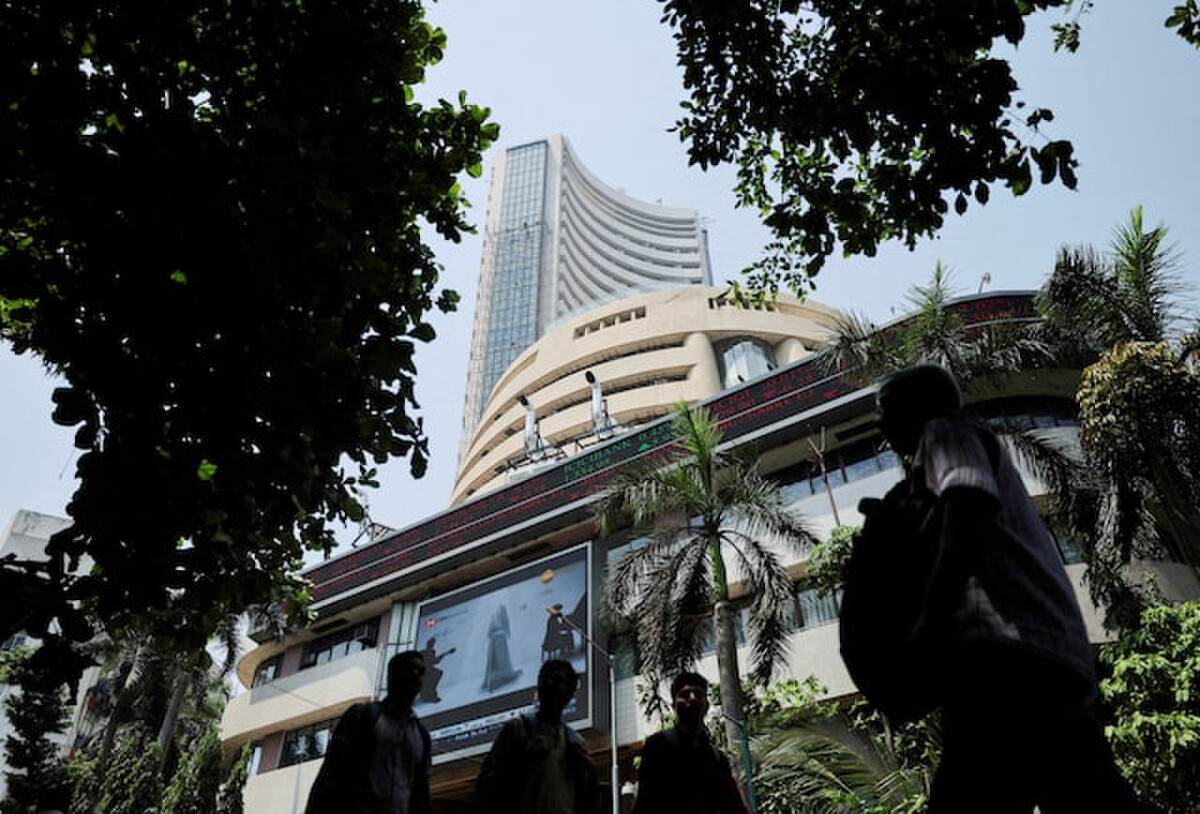
    Indian shares are expected to open higher on Monday, extending a four-week winning streak, as foreign investors continued to buy stocks in Asia’s third-largest economy amid easing ​oil prices and a global selloff in AI-linked stocks.

    GIFT Nifty futures were ‌at 25,912 points, as of 7:58 a.m. IST, indicating a positive start for the benchmark Nifty 50 index, which closed at 25,800.6 on Friday.

    Foreign investors net bought Indian shares worth 103.08 billion rupees ($1.11 billion) ​on Friday, as per provisional data. They have invested a record $13 billion so ​far in November, reducing year-to-date outflows to $18.4 billion.

    MSCI’s broadest index for ⁠Asia Pacific stocks outside Japan was down 1% with South Korean equities trading 3% ​lower, as investors questioned the massive, largely debt-funded spending on data centres to power AI ​models.

    India’s Nifty 50 has surged nearly 12% this month, compared with a 10% decline in MSCI’s regional index, as global investors rotated out of AI stocks and returned to Indian equities after two years of ​selling.

    The rally has also been supported by bullish calls from global brokerage firms HSBC and ​Goldman Sachs, both of which upgraded Indian equities to “outperform” as funds shifted away from global AI stocks.

    “Following ‌the ⁠sharp, largely uninterrupted rally in recent sessions, the market’s ability to withstand deteriorating global risk appetite and defend key support levels will be critical in determining whether the uptrend retains momentum or gives way to profit-booking,” said Ponmudi R, CEO of Enrich Money.

    Brent crude ​futures were down 0.2% ​at $92.3 per barrel. The ⁠contract has fallen 21.6% so far this month on expectations of easing Middle East tensions and a recovery in regional oil supplies.

    Source: brecorder

  • Oil prices fall amid equity selloff though Iran war attacks limit losses

    Oil prices fall amid equity selloff though Iran war attacks limit losses

    PERTH: Oil prices fell on Monday as the selloff in the wider financial markets amid concerns about the ability of the AI sector to ​boost economic growth spilled over into commodities, though the continuing attacks on ‌Gulf shipping limited the losses.

    Crude dropped, adding to its three-week losing streak, amid the overall negative sentiment in global financial markets as Asian equities, opens new tab opened lower on Monday, with the tech-heavy South Korean market ​down 4% and China, Hong Kong and Australia all falling.

    Iran unveils missile launcher as commanders tout capabilities

    US equity ​markets have also slumped with the Nasdaq plunging 10% last week.

    Brent ⁠crude futures fell 28 cents, or 0.30%, to $92.29 a barrel by 0216 GMT.

    US ​West Texas Intermediate futures fell 15 cents, or 0.18%, to $83.26 a barrel.

    Brent declined 4% ​last week and WTI 5%.

    Still, the fighting from the unresolved US-Israeli war against Iran continues to limit any losses.

    On Sunday, the Houthi movement claimed it attacked a Saudi Arabian oil refinery ​and over the weekend multiple attacks on shipping in the Gulf and near the Strait of ​Hormuz were reported.

    “It’s momentum carrying (oil) down,” said Mukesh Sahdev, chief oil analyst at Sydney-based XAnalysts. But ‌he ⁠cautioned that the shipping attacks are having an effect as “ballast (empty) vessels counts are building in crude while laden vessels are not. This risk to flows will start to price soon.”

    In Turkiye, talks on Sunday at the global climate summit COP31 collapsed for the ​first time since 2009 ​after nations could ⁠not come to an agreement over including a statement on the phase-out of fossil fuels in a final text.

    Saudi Arabia and ​other big oil-producing countries have said fossil fuels will play a ​role in ⁠the economy for the foreseeable future and they lobbied to keep any mention of fossil fuels out of the text, observers at the summit said.

    OPEC had earlier defended fossil ⁠fuel ​use at the summit.

    Trump holds meeting with Putin on sidelines of APEC summit in China

    OPEC+ ministers will hold a series of ​meetings on November 29 to decide their 2027 output policy. The group comprises the Organization of the Petroleum ​Exporting Countries and allies such as Russia.

    Source: brecorder