Category: Brecorder

  • Govt reduces petrol price by Re1, diesel’s by Rs4 per litre

    Govt reduces petrol price by Re1, diesel’s by Rs4 per litre

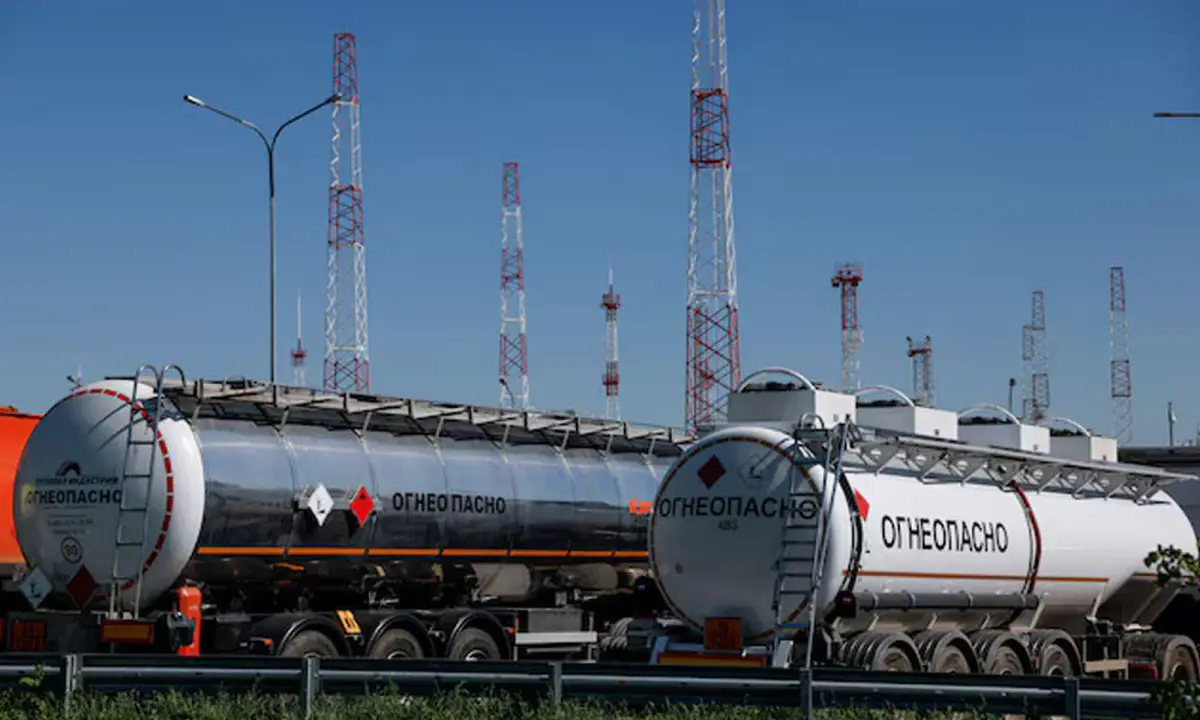
    Pakistan government on Tuesday decreased the price of petrol by Re1 to Rs318 per litre and high-speed diesel (HSD) rate by Rs4 to Rs353 per litre, effective for Wednesday, November 25, 2026.

    The Oil and Gas Regulatory Authority (OGRA) said the prices were worked out under the petroleum products pricing mechanism approved by the federal government.

    The new prices will remain effective for Wednesday, November 25, 2026.

    On Monday, the government decreased the price of petrol by Rs3 to Rs319 per litre and kept the diesel rate unchanged at Rs357 per litre.

    Globally, oil prices fell to three-month lows on Tuesday on signs of rising crude supply and a potential market surplus, though risks to shipping through the Strait of Hormuz persisted.

    Brent crude futures dropped 20 cents, or 0.2%, to $89.17 a barrel by 1107 GMT, after hitting its lowest since August 27. US West Texas Intermediate crude futures were 22 cents, or 0.3%, lower at $79.95 a barrel, after falling to the weakest since August 10.

    Source: brecorder

  • ABHI goes public at PSX with 75% of its total lending made against gold-jewellery

    ABHI goes public at PSX with 75% of its total lending made against gold-jewellery

    ABHI Microfinance Bank Limited (ABHI) has made its shares available to trade publicly at the Pakistan Stock Exchange (PSX) on Tuesday, with management expressing confidence that its heavily gold-backed lending portfolio will remain resilient despite a recent sharp decline in gold prices.

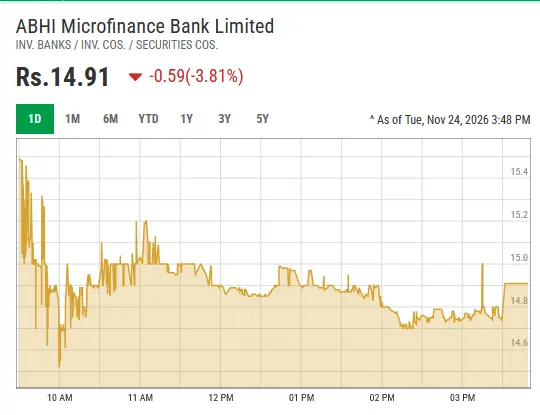
    The microfinance bank’s share price dropped 3.81% (or Rs0.59) to Rs14.91 per share on the first day of its public trade, with a volume of 1.54 million shares changing hands at PSX.

    ABHI goes public at PSX with 75% of its total lending made against gold-jewellery

    Talking to Business Recorder on the sidelines of its formal listing at the bourse following its IPO earlier this month, ABHI Co-Founder & CEO Omair Ansari said the size of his bank’s lending portfolio had grown to Rs60 billion. Out of the total lending, around 75% was made against gold-jewellery as collateral.

    Gold price dropped 32.7% (Rs187,426 per tola/11.66 grams) to Rs385,436 per tola (24-karat) in Pakistan on Tuesday, compared to a record high hit at Rs572,862 per tola on January 29, 2026.

    When asked what impact his lending portfolio could take from gold having sharply declined in Pakistan in line with global trends in the recent past, he said, “in terms of default rates, we have not seen impact because this tends to be people’s jewelry. So, because it is peoples’ jewelry, in fact, we start seeing repayment happening at a quicker pace. If you look historically as well, not just here but in other markets, you don’t tend to see a very big spike in terms of NPLs [non-performing loans] for gold back lenders, especially when they focus on the jewelry segment because it tends to be household jewelry that they want back. So the worst case scenario is that we end up seeing prepayments happen”.

    “We see a slowdown in terms of people wanting to borrow against their gold because the price is coming down,” he added.

    When asked to comment on ABHI share price decreasing in the middle of the day session at PSX, he replied: “This is a long-term game. So first day possibly, let’s see how we continue in the next six months to a year and in longer duration than a day.”

    ABHI Microfinance Bank raised a total of Rs2.046 billion through selling 132 million shares to investors through the IPO earlier this month. It sold the stocks at Rs15.50 per share. The share price was determined through Dutch-bidding (book building).

    The bank aims to utilise the IPO proceeds to strengthen and expand its business by increasing its lending capacity and bolstering its capital adequacy ratio (CAR) in line with the State Bank of Pakistan’s regulatory requirements.

    The remaining 25% of lending was made through its products including earned wage access (EWA). “We have merchant financing.We have revenue based financing. Everything is done purely digitally. There is no physical footprint on that,” Ansari said.

    Abhi Fintech (UAE) Entrepreneur in Residence Kabeer Naqvi said ABHI bought FINCA Microfinance Bank back in 2025 and transformed it into ABHI Microfinance Bank.

    FINCA was having a financial hole of Rs6 billion. It was losing around Rs200-250 million a month in credit. “We have turned around it with its lending portfolio rising to its current level from Rs16 billion in 2025. And deposits with the bank have surged to Rs100 billion from Rs26 billion before the acquisition,” he said.

    The size of ABHI’s flagship lending product, Earned Wage Access (EWA), has grown to Rs15 billion from Rs1.5 billion before the bank’s acquisition. The facility allows employees of organisations registered with ABHI to access a portion of their earned salaries before their scheduled payday, providing them with greater financial flexibility.

    PSX Managing Director & CEO Farrukh H. Sabzwari said ABHI’s listing marked the 14th listing of the current calendar year and the 6th of the fiscal year 2026-27, reflecting the continued momentum of Pakistan’s capital market.

    Source: brecorder

  • PTA proposes solar power for telecom towers facing frequent outages

    PTA proposes solar power for telecom towers facing frequent outages

    The Pakistan Telecommunication Authority (PTA) has proposed a phased transition of telecom towers to alternative energy solutions, including solar power, battery storage and hybrid systems, to reduce diesel dependence, address power outages, and improve network reliability.

    The authority has invited telecom operators and infrastructure providers to submit time-bound plans for shifting Base Transceiver Stations (BTS) to alternative energy sources, while proposing a technology-neutral and industry-led framework instead of imposing uniform conversion targets on all sites.

    The authority has sought industry feedback by December 7, 2026, on the development of a roadmap for alternative energy deployment across telecom infrastructure, amid persistent electricity reliability challenges, rising energy costs and exposure to fuel-price volatility.

    Under the proposed framework, cellular mobile operators (CMOs) would identify sites experiencing prolonged power outages, assess their technical and commercial viability for alternative energy solutions, and provide proposed investment plans and implementation timelines of one, two or three years.

    The PTA has particularly emphasised addressing high-outage sites, where power failures affect network availability and service quality. It has proposed identifying sites experiencing outages of 5% or more during a month as high-outage locations, seeking industry views on whether renewable energy installations should be mandatory at such sites.

    The proposed solutions include solar power, solar-battery systems, and solar-diesel-battery hybrid arrangements, depending on site-specific requirements, lifecycle costs and network characteristics.

    The regulator has also asked operators to prepare plans for progressively reducing diesel consumption at their 10% highest diesel-consuming BTS sites, including identifying existing consumption levels, proposed reductions, and timelines.

    The PTA said alternative energy deployment should not compromise telecommunications services, particularly during night-time, cloudy weather, snowfall or periods of inadequate solar generation. Adequate battery backup and other arrangements would therefore remain necessary to ensure uninterrupted connectivity.

    The consultation recognises that telecom infrastructure faces particular energy challenges as towers cannot suspend operations during electricity outages. Operators currently rely on grid electricity, batteries, and diesel generators to maintain connectivity, with remote and weak-grid locations facing greater operational difficulties.

    The authority has proposed collecting detailed site-level information on accumulated BTS downtime, existing backup arrangements, grid availability, diesel consumption and proposed alternative energy solutions. Operators would also be required to provide data aggregated at Union Council, tehsil, district, and national levels.

    The PTA said a uniform renewable-energy obligation for every BTS site may not be practical, given differences between reliable-grid, weak-grid and off-grid locations, investment requirements and commercial viability.

    The authority is considering regulatory facilitation for operators meeting energy-efficiency or renewable-energy benchmarks, as well as an annual recognition mechanism for companies demonstrating progress in renewable energy deployment.

    The consultation also proposes exploring shared renewable-energy systems, batteries and energy-management infrastructure at sites used by multiple operators, potentially reducing investment duplication and improving commercial viability.

    The PTA has called for coordination with energy-sector institutions, including NEPRA, power distribution companies and other relevant agencies, to explore ways of improving electricity reliability for telecom infrastructure.

    The proposed roadmap would initially focus on establishing an industry-wide energy baseline, identifying critical outage sites, reducing diesel dependency and monitoring operators’ commitments before considering further regulatory targets or obligations.

    Stakeholders, including telecom operators, tower companies, energy-service providers, equipment manufacturers and government agencies, have been invited to submit comments by December 7, 2026.

    Source: brecorder

  • Pakistan govt selects three banks for $500mn MIGA-backed trade finance facility

    Pakistan govt selects three banks for $500mn MIGA-backed trade finance facility

    Pakistan government has selected Commerzbank, JPMorgan, and Standard Chartered Bank as financing partners for a $500 million trade finance facility backed by the World Bank Group’s Multilateral Investment Guarantee Agency (MIGA).

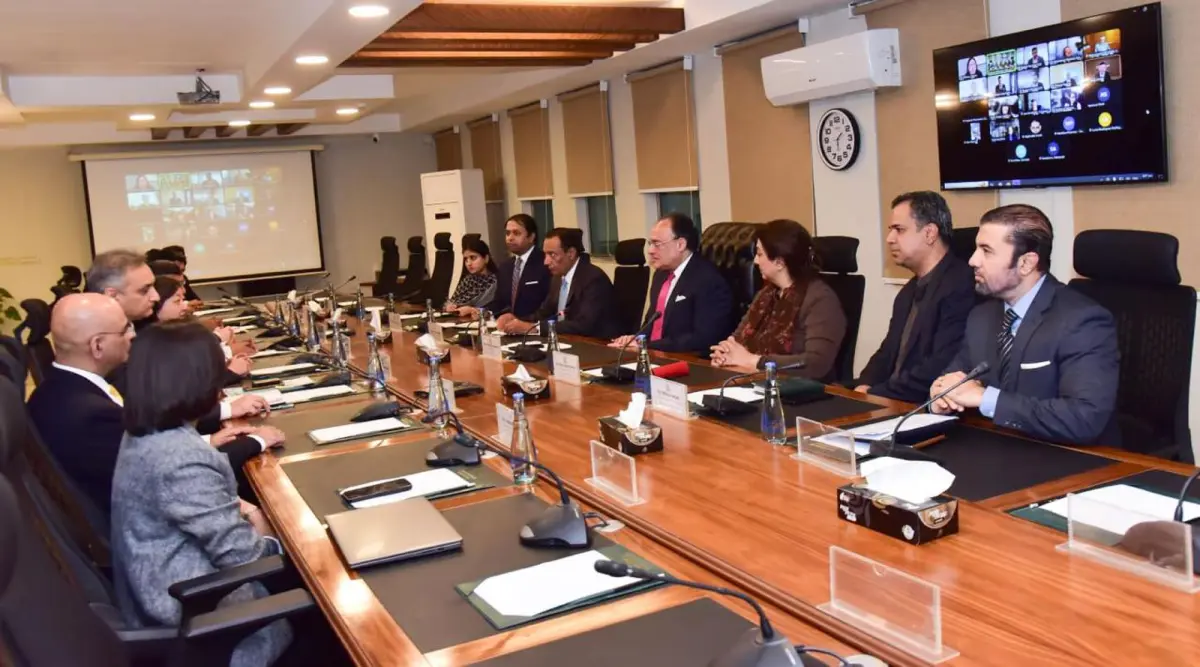
    The development came as Finance Minister Muhammad Aurangzeb held a virtual meeting with the senior leadership of a consortium of international banks and representatives of the MIGA, a member of the World Bank Group, according to a statement from the Finance Division on Tuesday.

    • The Multilateral Investment Guarantee Agency is a World Bank Group institution that provides political risk insurance and credit enhancement guarantees to attract private investment to developing countries.

    “Following a competitive selection process and receipt of bids from nine international financial institutions, the Finance Division, Government of Pakistan, has selected the following banks as financing partners for the facility:

    1. Commerzbank
    2. J.P. Morgan
    3. Standard Chartered Bank

    “The one-year facility, renewable on a rolling 1+1+1 basis, will support the financing of essential imports and trade-related expenditures. The transaction marks the Government of Pakistan’s first-ever credit enhancement transaction with MIGA under its Trade Finance programme, while also representing the first-ever participation of Commerzbank and J.P. Morgan in commercial lending to the Government of Pakistan,” the statement read.

    The banks were selected on the basis of the “most competitive financing terms offered to the Government of Pakistan”.

    “The strong response and participation from international financial institutions reflect growing confidence in Pakistan’s improving economic outlook and progress towards sustainable growth. The Government appreciates the interest shown by all participating institutions and is grateful for their time, effort and engagement throughout the process,” the Finance Division said.

    “The transaction marks an important step towards mobilising private international capital through multilateral risk-mitigation instruments, diversifying external financing sources and exploring innovative financing structures, while maintaining prudent debt management and fiscal responsibility.”

    The Finance Division said the government would work closely with MIGA and the selected banks to advance the transaction towards its timely execution.

    Source: brecorder

  • Zelenskiy confirms Ukraine hit Russian ship in Gulf of Finland, ally Norway urges caution

    Zelenskiy confirms Ukraine hit Russian ship in Gulf of Finland, ally Norway urges caution

    KYIV/OSLO: Ukrainian President Volodymyr Zelenskiy confirmed his country was responsible for Saturday’s drone strike on a Russian cargo ship in the Gulf of Finland, while Norway, a strong supporter of Kyiv, urged it to exercise caution in such operations.

    Finnish, Estonian and Russian vessels took part in a joint rescue operation to put out the fire. On Sunday, a Russian vessel towed the ship back into Russian waters, where it is now anchored in St Petersburg.

    Zelenskiy said the operation had struck a legitimate military target.

    “We did everything right,” Zelenskiy told Bloomberg on Monday. “Every vessel with a Russian flag, everything that carries weapons or any sanctioned cargo that can carry God knows what, it is a legitimate target for us in Russian territorial or neutral waters.”

    The Sparta II is a Russian-flagged cargo vessel owned by Oboronlogistika, a Russian shipping company providing logistics services for the Russian Defence Ministry, according to the company’s website.

    Zelenskiy said the attack occurred in Russian territorial waters. “We had all the rights for that and then some drift happened and surely there are questions,” he said.

    He acknowledged that some European allies were “worried when something is happening in the Baltic Sea” and said he had instructed his ministers and the military to “communicate more with partners so that they have enough details and there are no surprises”.

    ‘Need for stability in our near areas’

    Norwegian Defence Minister Tore Sandvik said on Tuesday there was an ongoing dialogue with Ukraine regarding “a need for stability in our near areas”.

    “All attacks would stop immediately if Russia stopped this war. That said, we are focused on the fact that Ukraine must do this (these actions) within the rules of international law. So we take this matter up with them,” Sandvik told reporters.

    “We are also focused on the fact that they must respect our need for stability in our near areas and we have a good dialogue with the Ukrainians on that now,” he added.

    Sandvik was speaking after signing an agreement with his Ukrainian counterpart, Yevhenii Khmara, to expand bilateral cooperation on an anti-drone system in order to increase its use in more parts of Ukraine.

    Russian forces have been subjecting Kyiv and other cities to virtually continuous air attacks since September.

    Sandvik did not say whether he had discussed the Gulf of Finland attack with Khmara at their meeting.

    NATO member Norway has set up a long-term funding plan for Ukraine, with the backing of all parties in parliament, amounting to some $27 billion between 2023 and 2030, making it one of Kyiv’s most generous backers per capita.

    Source: brecorder

  • Nasdaq, S&P 500 ease as Nvidia-driven AI rally fizzles

    Nasdaq, S&P 500 ease as Nvidia-driven AI rally fizzles

    The Nasdaq and the S&P 500 fell on Tuesday as investors retreated from AI-linked shares after an Nvidia-fueled rally, with attention turning to this week’s inflation data for a definitive clue on the Federal Reserve’s policy path ahead of its December meeting.

    Sentiment was further dented by a Wall Street Journal report that the US was preparing to raise tariffs on China and other countries.

    “Oil prices, the hawkish Federal Reserve, inflation — just bringing Jensen Huang back doesn’t solve any of that. It just maybe solves the near-term question of who’s going to run Nvidia, but it doesn’t resolve anything else,” said Robert Pavlik, senior portfolio manager at Dakota Wealth.

    “And I think that little bit of reality is just sort of coming back into investors’ minds.”

    The pullback followed outsized gains on Monday, when Jensen Huang was reinstated as Nvidia’s CEO in a historic reversal. Nvidia shares surged 31.5% in that session, adding nearly $1 trillion to the company’s market value.

    On Tuesday, the stock fell 5.8% as investors weighed the implications of Huang’s reinstatement, focusing on the political and governance risks surrounding his return.

    Semiconductor stocks also followed suit after a fleeting respite on Monday, with the Philadelphia Semiconductor index down 5.8% after gaining over 14% on Monday.

    Neocloud and data-center companies, which surged in the prior session, gave up some of their gains. CoreWeave was down 6.9%, while IREN and Nebius lost 9% and 7.3%, respectively.

    The S&P 500 information technology index fell 2.4%, leading declines on the benchmark.

    However, defensive stocks including healthcare and consumer staples were trading higher as investors took shelter from the AI-driven trade. Gains in these sectors helped the Dow Jones stay in positive territory.

    Before Monday’s rebound, AI-linked stocks had struggled for weeks as investors questioned the sector’s debt-fueled spending and the returns it could generate.

    Anthropic’s shares fell 6.9% to $81.60, dropping below their $83 IPO price as enthusiasm surrounding the AI startup’s blockbuster market debut last week faded after the listing failed to rekindle sentiment towards the AI trade.

    Amazon was off 0.5% and Alphabet fell 1%. Both companies are among Anthropic’s biggest investors.

    At 9:54 a.m. ET, the Dow Jones Industrial Average rose 202.05 points, or 0.41%, to 49,797.36, the S&P 500 lost 33.90 points, or 0.47%, to 7,203.27 and the Nasdaq Composite lost 291.32 points, or 1.21%, to 23,798.24.

    Adding to policymakers’ recent calls for caution, New York Fed President John Williams said on Monday that persistently high inflation continued to point to tighter monetary policy.

    Wednesday’s US PCE inflation report will be the final major data release before the year’s last Federal Open Market Committee meeting.

    Money markets show traders are fully pricing in a 25-basis-point Fed rate hike next month and see a slim chance of a 50-basis-point move, up from zero a day earlier, according to CME Group’s FedWatch tool.

    Among other movers, Hewlett Packard Enterprise fell 14% as investors focused on margin pressure despite a sharply raised fiscal 2027 outlook.

    Discount retailer Dollar Tree gained 10.1% after raising its annual profit forecast.

    Advancing issues outnumbered decliners by a 1.02-to-1 ratio on the NYSE and by a 1.16-to-1 ratio on the Nasdaq.

    The S&P 500 posted 6 new 52-week highs and 2 new lows while the Nasdaq Composite recorded 27 new highs and 141 new lows.

    Source: brecorder

  • AI-driven parametric insurance: a new frontier for climate risk financing

    AI-driven parametric insurance: a new frontier for climate risk financing

    Growing exposure of Pakistan to floods, droughts, heatwaves, and other extreme weather events underscores the need to move beyond reactive disaster response towards proactive climate risk management and financial preparedness. Climate-related shocks increasingly threaten agricultural productivity, livelihoods, public infrastructure and economic stability, while placing mounting pressure on public finances. As the frequency and intensity of climate extremes increase, strengthening the capacity to anticipate, assess and finance these risks is becoming an economic and development imperative.

    Artificial Intelligence (AI) presents an opportunity to transform how climate risks are understood and managed. When integrated with parametric insurance and disaster risk financing (DRF), AI-driven climate intelligence could help Pakistan strengthen financial preparedness, improve the targeting of resources and accelerate support to communities affected by climate shocks.

    The opportunity lies not simply in adopting new technology, but in connecting reliable risk information with pre-arranged financial mechanisms that deliver assistance when it is needed most. AI can process extensive datasets, including historical rainfall, temperature, river flows, soil moisture, satellite imagery, land-use patterns and geographical information to identify emerging climate patterns and assess potential exposure.

    Machine learning and predictive analytics can help identify flood-prone settlements, monitor drought conditions, assess agricultural vulnerability and estimate the potential economic consequences of extreme weather events. Combining meteorological, hydrological, geographical and socioeconomic information could enable more comprehensive climate risk assessments at national, provincial and district levels.

    One of the most promising applications of artificial intelligence is parametric insurance. Unlike conventional indemnity-based insurance, which generally requires an assessment of actual losses before compensation is determined, parametric insurance provides a pre-agreed payment when a specified, independently measurable event or index crosses a contractual threshold. These triggers may include rainfall levels, river discharge, temperature, wind speed or drought indicators. Because payments are linked to predefined parameters rather than individual loss assessments, such arrangements can reduce administrative delays and facilitate faster access to financial support.

    AI can strengthen the design of parametric insurance by improving historical risk analysis, identifying geographical exposure, modelling climate scenarios and calibrating insurance triggers. It can also support the integration of different data sources to make insurance products more responsive to local climate conditions. For instance, an agricultural insurance product in Punjab could provide farmers with a predetermined payout if rainfall falls below an agreed threshold during critical crop-growing stages.

    AI models could analyse historical rainfall, soil moisture, temperature and satellite-derived vegetation indicators to help establish appropriate thresholds. Similarly, a flood-related insurance product in Sindh could use predefined rainfall or river discharge indicators to determine when a contractual trigger has been reached. Satellite observations and automated data processing could support event verification, reducing the time between a qualifying climate event and the release of payments.

    International experience offers useful lessons for Pakistan. In Bangladesh, index-based flood insurance initiatives have demonstrated how satellite-derived rainfall and water-level information can support insurance arrangements for households in flood-prone areas. Pre-agreed triggers and digital payment channels can help deliver financial assistance without relying exclusively on lengthy individual loss assessments.

    Kenya provides another relevant example through its Index-Based Livestock Insurance programme. Satellite-based vegetation monitoring is used to assess pasture conditions and identify drought-related deterioration in grazing resources. When predefined thresholds are reached, eligible livestock owners receive payments to help protect their animals and livelihoods. Rwanda has also developed agricultural insurance arrangements supported by automated weather stations, which collect observations used to determine whether specified insurance conditions have been met.

    Collectively, these experiences demonstrate the potential of combining climate data, digital technologies and predefined financial arrangements to extend protection to vulnerable agricultural communities. For Pakistan, these approaches could be adapted to its diverse agro-ecological and geographical conditions. Rainfall-deficit insurance could be explored for rain-fed farming areas, while satellite-based vegetation indices could support livestock protection in drought-prone parts of Balochistan, Sindh and southern Punjab.

    Flood-related parametric products could be piloted in selected districts exposed to riverine and flash flooding. However, their effectiveness would depend on reliable historical datasets, locally calibrated triggers, transparent payout methodologies and insurance products designed around the actual needs and affordability of intended beneficiaries.

    The potential of AI extends beyond individual agricultural insurance to sovereign disaster risk financing. Governments need to understand not only where disasters may occur, but also their potential fiscal consequences. AI-supported predictive analytics and catastrophe risk modelling can help estimate the financial exposure associated with different disaster scenarios, assess contingent liabilities and inform decisions about financial reserves, contingent financing, insurance coverage and risk transfer arrangements.

    A layered disaster risk financing strategy would be particularly relevant for Pakistan. More frequent and relatively smaller disasters could be financed through contingency budgets and dedicated reserves, while less frequent but more severe events could require contingent credit, insurance and other risk transfer instruments. AI-supported catastrophe modelling could help governments assess the probability and potential financial impact of different events and determine an appropriate combination of financing instruments.

    This would reduce exclusive reliance on post-disaster budget reallocations, emergency borrowing and the diversion of resources from planned development investments.

    National-level disaster risk financing institutions and dedicated financing mechanisms could play an important catalytic role in this transition. By supporting climate risk assessments, financing pilot interventions, strengthening technical capacity and facilitating public-private partnerships, these mechanisms could help develop a more systematic approach to financing climate and disaster risks.

    The objective should be to complement investments in prevention, preparedness and resilient infrastructure with financial instruments that address the residual risks that cannot be eliminated. An equally important opportunity lies in connecting climate risk financing with adaptive social protection. Climate disasters frequently push vulnerable households further into poverty by disrupting employment, agricultural income, housing and access to essential services.

    AI-assisted geographical risk mapping, combined with socioeconomic vulnerability information, could help identify communities exposed to climate shocks and improve the targeting of assistance. When supported by pre-arranged financing, qualifying climate events could trigger timely emergency cash assistance through established social protection delivery systems.

    Such an approach could strengthen the relationship between climate risk information, disaster financing and social protection. Rather than establishing parallel delivery arrangements after every disaster, governments could build on existing beneficiary databases, payment infrastructure and institutional systems to provide timely assistance.

    This would help protect household consumption, prevent distress asset sales and support faster recovery, particularly among low-income families, smallholder farmers and informal workers. Nevertheless, integrating AI into parametric insurance and disaster risk financing requires careful attention to technical, institutional and governance challenges. One of the most significant is basis risk, which occurs when an insurance index does not adequately reflect the actual losses experienced by the insured population.

    For example, localised flooding may destroy a farmer’s crops without rainfall measurements at a designated weather station crossing the contractual threshold. AI could help reduce this risk by combining ground-based observations, satellite imagery, soil moisture information and other environmental indicators. However, insurance payments must ultimately remain governed by independently verifiable data sources and transparent contractual triggers, rather than opaque or automated AI decisions.

    The reliability of these systems will also depend on stronger climate data infrastructure. Gaps in weather monitoring, limited historical records, inconsistent data-sharing arrangements and insufficient digital connectivity in remote areas can undermine the accuracy of predictive models. Investment in meteorological stations, river monitoring systems, satellite-based observations, digital infrastructure and technical expertise is therefore essential.

    Data governance, cybersecurity, model transparency, consumer protection and the affordability of insurance premiums must remain central to implementation. A practical way forward would be to initiate carefully designed pilot programmes in selected climate-vulnerable districts, focusing initially on agricultural drought, excessive rainfall and riverine flooding. These pilots should establish historical climate baselines, develop and back-test insurance triggers, assess premium affordability, estimate potential payouts and establish reliable digital payment arrangements.

    Their performance should be evaluated against actual climate events, payout accuracy, basis risk and the extent to which financial protection reaches intended beneficiaries. Public investment, private insurance capacity, development finance and climate finance could support the gradual expansion of successful models.

    Ultimately, AI should not be viewed as a standalone technological solution to climate change. Its strategic value lies in connecting climate intelligence with sound financial decision-making, institutional preparedness and timely protection. For Pakistan, integrating AI-driven climate analytics with parametric insurance, disaster risk financing and adaptive social protection could help transform the country’s approach from responding to climate disasters after they occur to preparing financially before they happen.

    The real measure of progress will not be the sophistication of predictive models or the volume of climate data collected, but whether this intelligence translates into pre-arranged financial resources, timely insurance payouts and meaningful protection for people and institutions exposed to climate risks. By bringing together technology, finance and social protection, Pakistan has an opportunity to build a more anticipatory, inclusive and financially resilient approach to climate and disaster risk management.


    The article does not necessarily reflect the opinion of Business Recorder or its owners.

    Source: brecorder
  • China, India set for record Russian oil imports in 2026, but demand seen peaking

    China, India set for record Russian oil imports in 2026, but demand seen peaking

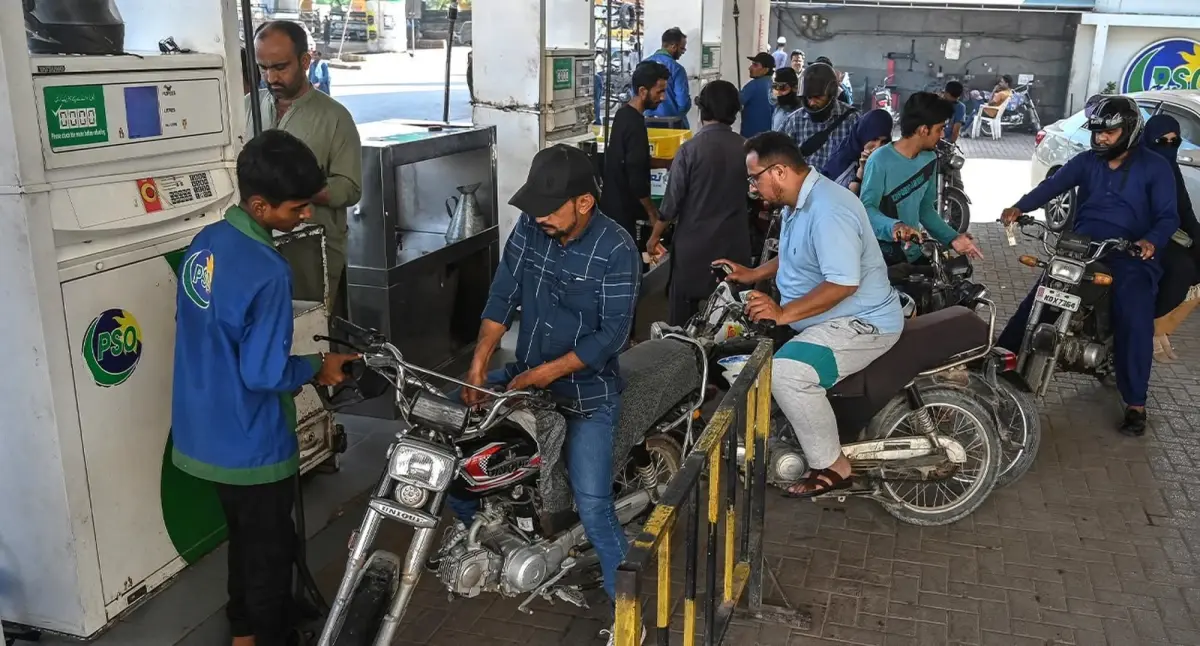
    China and India are on track for record Russian oil imports this year, plugging a supply gap caused by the Iran war, as US sanctions waivers eased purchases and Ukrainian drone attacks knocked out Russian refining, according to tanker data and industry sources.

    But traders and analysts expect shipments to Russia’s two biggest customers to wane in 2027 as Middle Eastern supplies recover and reclaim market share.

    Seaborne Russian oil supplies to the world’s two most populous countries averaged 3.4 million barrels per day this year through mid-November, up about 530,000 bpd from a year earlier, according to Vortexa Analytics.

    With Brent crude up nearly one third since the start of the war, the increased volumes, which include Kazakhstan oil transited via Russian ports, have bolstered Moscow’s oil revenue even as repeated drone attacks by Kiev have hit nearly half of Russian refining capacity, prompting more crude exports.

    Russia’s oil exports are expected to rise 6% in 2026 to 244.7 million metric tons, or about 4.9 million bpd, according to a forecast by its Ministry of Economic Development.

    Temporary US waivers on Russian oil sanctions, aimed at keeping markets supplied amid the Middle East crisis, widened the pool of vessels and suppliers available to India and China, allowing them to increase purchases.

    Together, the two bought more than 80% of Russia’s crude exports, according to estimates by two industry sources familiar with Russian oil flows.

    Russia supplies a quarter of China’s imports

    Russian oil exports to top overall buyer China rose 17% to 2.34 million bpd during January-October, worth $59.6 billion, accounting for about a quarter of Beijing’s oil imports, according to Chinese customs data, despite a 15% fall in its crude imports as Middle Eastern supplies plunged.

    “Lower shipping risks and greater supply reliability have been the main reasons behind the increase in China’s Russian crude imports since the war broke out,” said Muyu Xu, analyst with tanker tracker Kpler.

    However, Michal Meidan, head of China Energy Research at the Oxford Institute of Energy Studies, predicted China’s appetite will wane in 2027 as Russia’s surging import share exceeds Beijing’s comfort zone with a single supplier.

    “More importantly, they are no longer at a discount and are trading at higher premiums to Brent than Gulf crudes. The teapots can no longer afford them,” said Meidan, referring to smaller independent Chinese refiners that rely on discounted crude.

    “As Gulf flows stabilise, Chinese refiners will revert back to those crudes and are already favouring Brazilian grades,” she added.

    Strong demand for Russian barrels, spurred also by dwindling Iranian oil flows due to the US naval blockade, lifted spot premiums of ESPO to as high as nearly $30 a barrel over ICE Brent for deliveries into east China.

    India’s record Russian purchases

    India, the top buyer of seaborne Russian crude, averaged imports of 1.99 million bpd through early November, up 250,000 bpd annually, Kpler data showed, despite cutting purchases earlier this year after a threatened hike in US tariffs.

    During January to October, India’s Russian oil imports rose about 10% to 1.87 million bpd, about 38% of overall volumes, according to data from trade sources.

    India’s Russian oil imports are likely to average 1.9 million bpd in 2026, sources at Indian refiners said.

    India’s purchases are likely to return to pre-Iran war levels in 2027 if supplies from the Middle East normalise, with imports expected to be driven by prices, the sources said.

    Source: brecorder

  • Tallest skyscraper in Riyadh hit second time in less than a week: witnesses

    Tallest skyscraper in Riyadh hit second time in less than a week: witnesses

    RIYADH: The tallest skyscraper in the Saudi capital was hit Tuesday by an unspecified projectile, three witnesses told AFP, the second time in less than a week the building in Riyadh’s business district has been struck.

    Three separate witnesses said a strike targeted the skyscraper, which houses the headquarters of Saudi Arabia’s Public Investment Fund (PIF) – the kingdom’s sovereign wealth fund.

    A fourth witness told AFP a vehicle fitted with a speaker had warned pedestrians in the area to take cover.

    There was no official comment from Saudi officials or a warning sent to phones about any threats to the capital, which are often issued.

    Last week, Saudi officials said an attack on a tower in Riyadh’s financial district damaged several floors and two adjacent buildings but caused no casualties.

    Although authorities did not identify the building, photos released by the civil defence agency appeared to show shattered glass and other exterior damage to the PIF tower.

    Yemen’s Houthis claimed responsibility for last week’s attack, but they did not claim any fresh attacks on Tuesday.

    Standing 385 metres high, the PIF tower dominates Riyadh’s King Abdullah Financial District, which acts as a showcase for Saudi Arabia’s economic ambitions.

    With imposing skyscrapers, luxury shops and green spaces, the district also hosts the headquarters of the Saudi stock exchange along with multinationals such as Goldman Sachs.

    The Houthis have stepped up their attacks against Saudi Arabia in recent weeks, striking targets including airports, energy infrastructure, military sites and Riyadh’s financial district.

    In October, a deadly attack on Riyadh’s King Khalid International Airport killed 14 people and injured hundreds, forcing the suspension of flights for two weeks.

    In response, a Saudi-led military coalition has been striking Houthi targets in Yemen.

    Source: brecorder

  • Rupee registers gain against US dollar

    Rupee registers gain against US dollar

    The Pakistani rupee strengthened against the US dollar, appreciating 0.01% in the inter-bank market on Tuesday.

    The local unit closed the day at 276.47, a gain of Re0.03 against the greenback.

    On Monday, the local unit closed at 276.50.

    Internationally, the US dollar hovered near a 20-month high on Tuesday, after Jensen Huang’s reinstatement as Nvidia’s ​CEO breathed new life into the AI rally and stoked expectations that the recovery would give the Federal ‌Reserve greater scope to raise rates further.

    Against the resurgent greenback, the euro languished near an over 18-month low at $1.0907 after sliding 0.6% overnight, while sterling similarly struggled to bounce from a one-year low and last bought $1.3037.

    The dollar firmed at 104.32 against a basket of currencies, having peaked at 104.53 ​in the previous session.

    Nvidia on Monday reinstated Huang as CEO under pressure from US President Donald Trump, a stunning reversal following ​his resignation over revelations of extramarital affairs, including one with an alleged spy for China.

    The move ⁠reignited the AI euphoria and sparked a blistering rally across equities, with Nvidia adding roughly $950 billion to its market capitalisation overnight.

    Traders have now fully priced in a 25-basis-point Fed hike next ​month and see a slim chance of an outsized 50bp move, up from zero a day earlier, according to the CME FedWatch tool.

    Oil prices, a key indicator of currency parity, fell to three-month lows on Tuesday on signs of rising crude supply and a potential market surplus, though risks to shipping through the Strait of Hormuz persisted.

    Brent crude futures dropped 20 cents, or 0.2%, to $89.17 a barrel by 1107 GMT, after hitting its lowest since August 27. US West Texas Intermediate crude futures were 22 cents, or 0.3%, lower at $79.95 a barrel, after falling to the weakest since August 10.

    Inter-bank market rates for dollar on Tuesday

    BID Rs 276.47

    OFFER Rs 276.67

    Open-market movement

    In the open market, the PKR gained 6 paise for both buying and selling against USD, closing at 277.21 and 278.41, respectively.

    Against Euro, the PKR gained 2.06 rupees for buying and 1.99 rupee for selling, closing at 302.27 and 305.24, respectively.

    Against UAE Dirham, the PKR gained 7 paise for buying and 2 paise for selling, closing at 75.50 and 76.12, respectively.

    Against Saudi Riyal, the PKR gained 8 paise for buying and 3 paise for selling, closing at 73.91 and 74.46, respectively.

    Open-market rates for dollar on Tuesday

    BID Rs 277.21

    OFFER Rs 278.41

    Source: brecorder