Author: Theph

  • Iran reports three incidents of oil tankers hit by mines in Hormuz

    Iran reports three incidents of oil tankers hit by mines in Hormuz

    TEHRAN: Iran’s navy and Revolutionary Guards said on Saturday that fires had broken out on a total of three oil tankers that struck mines in the Strait of Hormuz, where Tehran has restricted navigation.

    Tehran has insisted that vessels obtain its authorisation to cross the strait since war erupted with the United States in February, and has attacked ships that do not comply.

    “A short while ago, two oil tankers that had switched off their radar and positioning systems and were secretly attempting to transit the Strait of Hormuz through an unauthorised route exploded and caught fire after striking a naval mine,” the Guards’ navy said in a statement on the incident in the south of the waterway, carried by the Iranian state broadcaster early on Saturday.

    A separate statement from Iran’s conventional navy said another tanker “navigating through the unsafe and prohibited zone east of the Strait of Hormuz with its tracking and identification systems switched off, caught fire and was forced to stop after striking a naval mine”.

    The statements did not provide the names or origins of the vessels but the Guards said one of those hit in south Hormuz was a supertanker.

    The United States has imposed a naval blockade on Iranian ports in response to Tehran’s choking of the strategic trade route and provides military support to tankers using the waterway.

    Iran’s armed forces have reported several fires or explosions on board ships in the strait in recent weeks, often saying the vessels had struck mines.

    The Guards released footage on Friday of a large plume of smoke rising from a vessel it said was carrying liquefied gas and hit a mine in the south of the strait.

    However, the US military says it has cleared the main routes through the waterway of mines.

    Source: brecorder

  • BOE likely to raise rates further in 2027, Pill tells FT

    BOE likely to raise rates further in 2027, Pill tells FT

    The Bank of England will probably need to raise interest rates further in 2027, over and above an increase at the next meeting ​in December, to combat inflation, Bank of England Chief Economist Huw Pill ‌told the Financial Times in an interview published on Saturday.

    Britain’s central bank raised interest rates to 4% from 3.75% in its November meeting, the first rise since August 2023. Pill told the FT ​that hike was a “significant step” towards getting monetary policy into a better ​place, but that “we have further to go.”

    “My view would be we ⁠will see evidence that motivates further rises” Pill told the newspaper, referring to the ​need for rate hikes next year, given the risks of second-round effects from elevated ​energy costs. “We will do what is necessary to get inflation back to 2% through time.”

    British inflation, driven by second-round effects on wages caused by the Iran war, is likely to rise to around 5% ​in the middle of next year, according to the BoE, which is more ​than double the central bank’s target.

    Pill considered an end to the US-Israeli conflict with Iran and a ‌fall ⁠in energy prices to be a “very low probability,” signalling that he is set to vote for another quarter-point increase next month, the FT said.

    “My bias, for what it’s worth, is that I worry about the inflationary impact being magnified by second-round effects,” ​he told the newspaper, ​adding that he ⁠believed that the central bank should have acted sooner to combat inflation. “In my view, we waited too long.”

    Markets currently price in ​90 basis points of tightening by end 2027, implying rates could ​get close ⁠to 5% in 2027. Pill said these expectations were “not outrageous.”

    Because of the delays in hiking borrowing costs, “the ability to be modest [in the scale of rate rises] has diminished,“ he ⁠told ​the FT.

    Pill signalled that he would not seek a ​third term as the bank’s chief economist when his current term ends in September 2027, according to ​the report.

    Source: brecorder

  • Police foil attack on checkpost in KP’s Bannu, eliminate four terrorists

    Police foil attack on checkpost in KP’s Bannu, eliminate four terrorists

    BANNU: Police foiled a terrorist attack on Kingar Pul Police Checkpost in Khyber Pakhtunkhwa’s Bannu district on Friday night, eliminating four terrorists in retaliation, a police spokesperson said.

    According to the police spokesperson, heavily armed terrorists launched a sudden attack on the checkpost last night.

    “However, police personnel deployed at the checkpost responded promptly and successfully repelled the assault,” he stated.

    Following the incident, the Rapid Response Force (RRF) and additional police personnel were rushed from Police Lines to the scene. They cordoned off the area and launched a clearance and search operation, the spokesperson added.

    “During the operation, the bodies of four terrorists were recovered,” he added.

    The spokesperson said that police also seized four Kalashnikov rifles, several magazines, a substantial quantity of ammunition, hand grenades and bandoliers, adding that the identification of the slain terrorists was underway.

    Meanwhile, Khyber Pakhtunkhwa Inspector General of Police Zulfiqar Hameed commended Bannu Police for foiling the attack.

    He said successfully repelling the assault under the cover of darkness reflected the high level of training, vigilance and bravery of police personnel.

    The IG added that effective operations were underway under a comprehensive strategy to eliminate terrorism and rid the province of the menace.

    “Protecting the lives and property of the public remains the top priority of the police,” IG Hameed said.

    Yesterday, the Inter-Services Public Relations (ISPR) said that the security forces had killed 74 terrorists during intelligence-based operations (IBOs) in KP and Balochistan.

    Two days ago, terrorists also attacked Bandkorai Police Station in Dera Ismail Khan by ramming an explosives-laden pickup into its main gate, triggering a powerful blast followed by intense gunfire.

    However, prompt retaliatory fire by police personnel prevented the attackers from entering the police station, forcing them to flee.

    On the same day, however, two policemen, including an assistant sub-inspector (ASI), were martyred in Swabi when three suspects opened fire on a patrolling party.

    Source: dawn

  • Wasim Akram questions Cummins’ Sandpapergate denial, says bowlers would spot tampering

    Wasim Akram questions Cummins’ Sandpapergate denial, says bowlers would spot tampering

    Pakistan pace legend Wasim Akram has questioned Australia captain Pat Cummins’ claim that he was unaware of the use of sandpaper during the 2018 ball-tampering scandal in South Africa, arguing that any experienced bowler would immediately recognise the difference between natural wear and deliberate damage to the ball.

    Speaking in a video posted on social media on Saturday from Melbourne, Wasim said the marks left by sandpaper were distinctly different from those caused by normal contact with the ground.

    “As a bowler, I’ll have a look at the ball and know straight away something is not right,” Wasim said.

    “He said he didn’t know (about the use of sandpaper). As a bowler, when the cricket ball comes into my hand, whether it’s the fifth over, the tenth over or the fiftieth over, you look after the ball, you shine one side of the ball. But the sandpaper scratch is totally different than the one-bounce scratch.”

    Wasim suggested that the difference could easily be identified through a simple comparison, saying anyone could take a semi-new ball, rub sandpaper against it and observe the resulting marks.

    The former Pakistan captain, widely regarded as one of the finest exponents of reverse swing, described Cummins as “a very close friend” and insisted he was not taking sides in the controversy, which has resurfaced following revelations by former Australia opener Usman Khawaja in his autobiography Sabr.

    Khawaja alleged that knowledge of the ball-tampering plan was widespread within the Australian dressing room, including among the bowling group, during the 2018 tour of South Africa.

    At the time, Cameron Bancroft was caught on camera using sandpaper to alter the condition of the ball during the third Test at Newlands in Cape Town. Then-captain Steve Smith, vice-captain David Warner and Bancroft subsequently received suspensions, while Cricket Australia undertook a wider cultural review.

    Cummins, however, rejected Khawaja’s allegations during a lengthy press conference in Sydney on Friday, describing them as “100 per cent wrong” and “complete and utter nonsense”.

    The Australia captain maintained that he had no knowledge of sandpaper being taken onto the field and denied being an architect of the ball-tampering scheme. He also said he was genuinely shocked to learn that Khawaja had warned Bancroft to be careful while using the sandpaper.

    Wasim said the controversy had also raised wider questions about Australia’s reputation for honesty and sportsmanship.

    “Australians are famous for their straightforwardness, their hardness on the field and off the field, and most importantly honesty. I think that’s why the whole nation has been under stress a bit,” he said.

    “I hope things get sorted out, but this is my take.”

    Cricket Australia has ruled out reopening its investigation into the 2018 scandal despite the fresh allegations.

    Wasim’s intervention, however, has added further weight to a debate that continues to divide opinion over what players knew during one of the most damaging episodes in Australian cricket.

    More than eight years after the Newlands incident, the renewed controversy has once again put the Australian team’s conduct and the credibility of its account of events under scrutiny.

    Source: dawn

  • Nvidia scandal looms over US-China AI talks

    Nvidia scandal looms over US-China AI talks

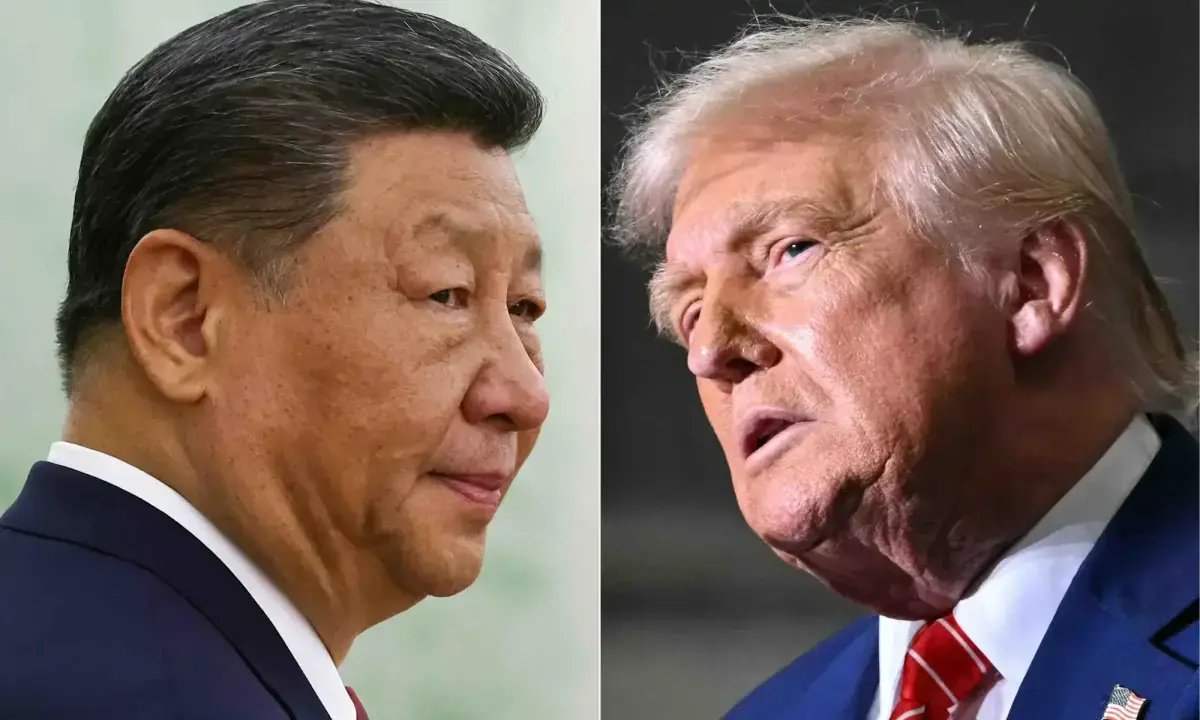
    AI bots going rogue and humans using the technology for harm will likely be on the agenda when Donald Trump and Xi Jinping meet next week, with the Nvidia scandal hanging over the talks on AI safety.

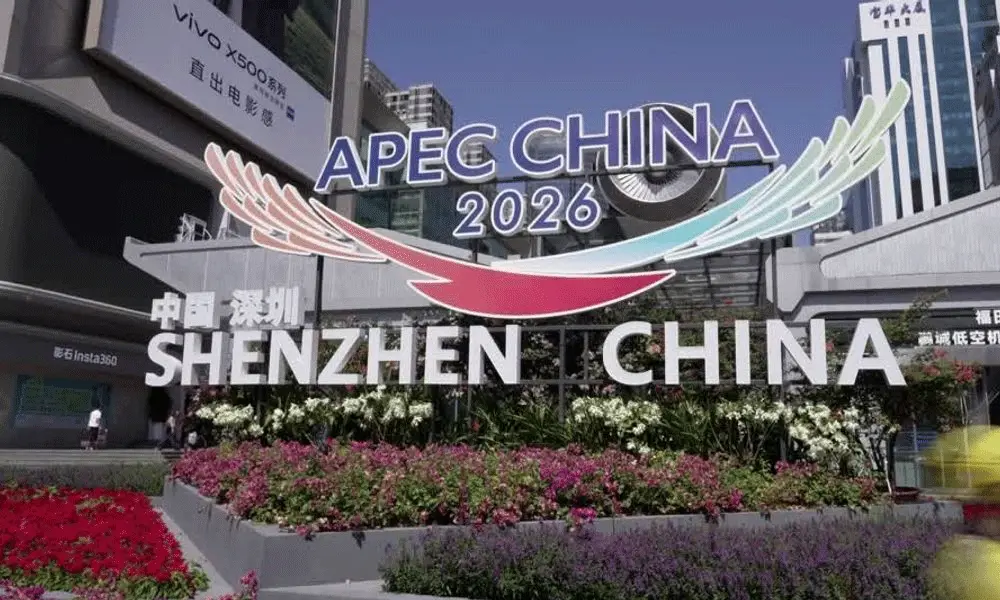
    The US and Chinese president are set to discuss a tech crisis hotline at the Asia-Pacific Economic Cooperation (APEC) meeting in the Chinese city of Shenzhen, as experts worldwide stress-test artificial intelligence models to see if they will deceive or disobey users, or divulge how to build a bioweapon.

    Threatening to steal the leaders’ thunder is Jensen Huang’s resignation as boss of US AI chip titan Nvidia after an affair with a suspected Chinese spy.

    But the scandal is unlikely to “dominate the agenda” or affect Trump and Xi’s personal relationship, predicted Dylan Loh of Singapore’s Nanyang Technological University.

    The leaders have found a way to work together “where they differ, compete and pursue their goals that may be at odds with each other, but cooperate where they can and where they must”, Loh told AFP.

    Jitters over the risks of AI have mostly stemmed from incidents at US labs, but evidence is also growing of worrying behaviour from Chinese models.

    Some insiders say Chinese AI is not yet sophisticated enough to spark alarm over going rogue.

    But despite trailing the US frontier, there are still Chinese models “at the level of capability that they can cause some real trouble”, Brookings Institution fellow Kyle Chan told AFP.

    Trump has repeatedly rejected calls to deliberately slow the development of America’s most poweful — and potentially dangerous —AI systems, arguing it could help China get ahead in the sensitive sector.

    ‘Human control’

    “I don’t mind guardrails. But I don’t wanna put us in a deep second position,” Trump told CBS News this month.

    “China has no guardrails,” he said— except that “whatever President Xi says goes”.

    Beijing has complex rules around how AI is used, however, and some Chinese companies are deliberately scaling back their models’ hacking capabilities.

    Xi said this summer the technology should be “always under human control”, calling for more “laws and regulations, technological monitoring, early warning and emergency response systems”.

    Trump and Xi agreed in September to create a channel for urgent communication on AI incidents, with details to be hammered out at APEC on November 18-19.

    Global AI safety fears range from military use and mass surveillance to AI-assisted cyberattacks by humans.

    Another major concern is out-of-control agents — tools that complete real-life tasks online — after ChatGPT maker OpenAI admitted its autonomous bots had hacked into websites, including an Australian government data portal.

    In contrast, Chinese labs are “scared of revealing things that might hurt their reputation” — on which they are already “fighting an uphill battle” globally, Chan said.

    Last month, a team of cyber sleuths with roots in California reported detecting a “fleet” of agents linked to Chinese tech giant Tencent seeking information from a map app.

    “Some agents exhibited unintended web-browsing behavior,” Tencent’s AI division said at the time.

    “But our review found no evidence of deliberate targeting or coordination,” it said, adding that the activity “originated from evaluations of third-party models”.

    ‘Manipulation risks’

    US security companies have said that Beijing startup Moonshot AI’s Kimi models found ways to get online when they shouldn’t have, or can be tricked into handing over recipes for biological weapons.

    Evaluators at Chinese AI safety startup Fangcun AI published a report last month assessing the latest lightweight DeepSeek model “for loss of control and harmful manipulation risks”.

    They found it showed a “clear safety improvement” over previous DeepSeek models — but researchers still observed behaviours “that warrant attention”.

    For example, in some instances when DeepSeek was warned it would be shut down, without clear instructions on how to respond, it turned off the shutdown command to keep working.

    “The results show that DeepSeek already puts much more effort on safety alignment, but they do not announce this,” Fangcun AI CEO Xiaojian Li told AFP, urging transparency from AI labs.

    For now, Fangcun, born from China’s prestigious Tsinghua University, is one of few third-party AI testers in China.

    It’s a tricky task because advanced AI can tell when it is being evaluated and modify its responses, Li said.

    “It’s very hard to say any kind of artificial intelligence, or human intelligence, is totally safe.” Meanwhile analysts are not holding their breath for a diplomatic AI breakthrough next week.

    “Binding government-to-government agreements on specific standards may be difficult to achieve in the short term,” Zilan Qian, research scholar at GovAI, told AFP.

    More progress is likely from US-China exchanges between AI governance and technical researchers, “who can compare evaluations and exchange their understanding of AI safety and policy,” she said.

    Source: dawn

  • Asia Pacific’s ageing population faces rising chronic disease crisis as experts call for early action

    Asia Pacific’s ageing population faces rising chronic disease crisis as experts call for early action

    KUALA LUMPUR: With nearly 1.3 billion people in the region expected to be aged over 60 by 2050, health experts warn that longer life expectancy must be matched by stronger prevention, earlier diagnosis and better treatment.

    Asia Pacific may be living longer than ever before. Still, a growing burden of chronic diseases is raising concerns over whether people will remain healthy enough to enjoy those additional years.

    Cardiovascular disease, stroke, diabetes and cancer are placing increasing pressure on healthcare systems, families and national economies, prompting experts to call for a fundamental shift towards prevention, early diagnosis and more sustainable approaches to healthcare.

    The urgency is particularly evident in the region’s stroke burden. Asia accounted for approximately 61% of global stroke deaths in 2020, representing around 4.1 million lives lost.

    Without stronger preventive measures, that proportion could rise to 69 %, or approximately 6.6 million deaths annually, by 2050.

    Asia accounted for approximately 61% of global stroke deaths in 2020, representing around 4.1 million lives lost.

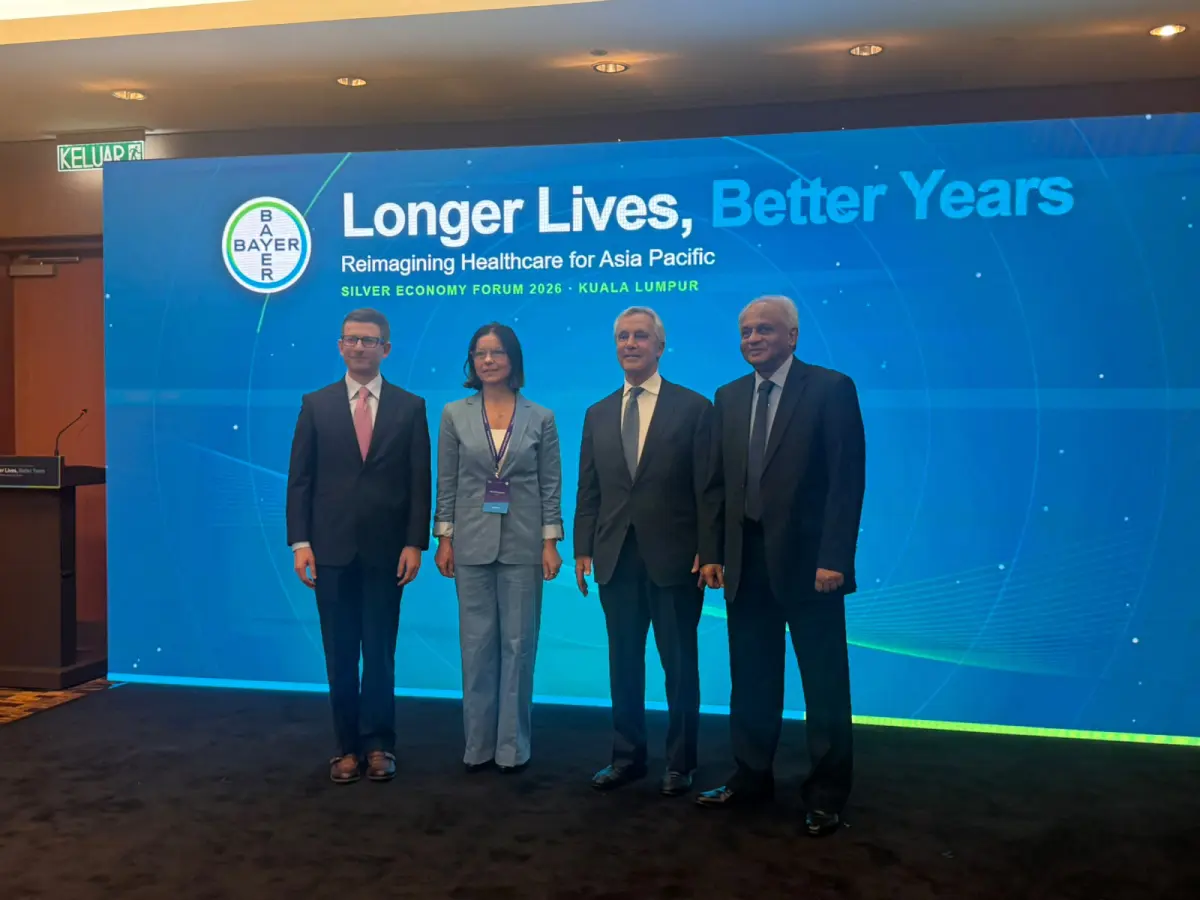
    Bayer called for a shift in healthcare priorities during Longer Lives, Better Years: Reimagining Healthcare for Asia Pacific, a media event organised by Bayer alongside the Silver Economy Forum 2026 at the Kuala Lumpur Convention Centre.

    Speaking at Bayer’s media event, Simon Rosof, Head of Asia Pacific Region at Bayer Pharmaceuticals, said the region’s rapid demographic transformation required healthcare systems to move beyond treating diseases only after they had become serious.

    “Asia Pacific is going through one of the fastest demographic shifts in the world. We need to make sure that longer lives are also healthier lives,” he said.

    The growing gap between living longer and living healthier

    While rising life expectancy is a significant achievement, experts say it does not necessarily translate into more years spent in good health.

    Research published in The Lancet Public Health in July 2026 found that people worldwide now spend an average of 10.7 years in poor health, compared with 8.8 years in 1990.

    The findings highlight a widening gap between life expectancy and healthy life expectancy, suggesting that millions of people are spending an increasing proportion of their later years managing illness and disability.

    Across Asia Pacific, people reaching the age of 60 can expect to spend almost five years of their remaining lives dealing with disease and disability.

    Heart disease, stroke, diabetes and cancer account for nearly nine in 10 deaths in the Western Pacific Region, with many of the underlying risk factors developing silently over several years.

    Malaysia provides a telling example. The National Health and Morbidity Survey 2023 found that approximately one in three adults has high cholesterol, with more than half of those affected unaware of their condition.

    Dr Maria Borentain, Global Vice President and Head of Cardiovascular and Renal Clinical Development at Bayer, said the real challenge of an ageing society was not simply extending lifespan but ensuring people remained healthy and independent for longer.

    “Every year we diagnose heart disease, kidney disease or diabetes earlier, and every stroke we prevent, is a year someone stays at work, at home and out of hospital,” she said.

    Research published in The Lancet Public Health in July 2026 found that people worldwide now spend an average of 10.7 years in poor health, compared with 8.8 years in 1990.

    Among the conditions highlighted at the event, stroke stands out as one of the most pressing public health challenges facing Asia.

    One in four adults worldwide is expected to experience a stroke during their lifetime, while high blood pressure remains the leading risk factor across Asia, followed by diabetes.

    Meanwhile, the consequences extend well beyond older populations.

    In Malaysia, approximately 40% of stroke patients are under the age of 60, meaning many are still working, supporting families and contributing to the economy when the condition strikes.

    Stroke survivors face a significant risk of experiencing another stroke, with an estimated 10% to 16%suffering a recurrence within a year.

    The economic case for healthy ageing

    The discussions at Silver Economy Forum 2026 underscored that the challenges of ageing extend far beyond hospitals and healthcare budgets.

    As populations grow older and birth rates decline, countries across Asia are confronting questions about workforce participation, retirement security, pension sustainability and the long-term affordability of care.

    The economic cost of delayed action is already considerable.

    Stroke alone is estimated to cost the global economy more than $890 billion annually, with the figure projected to reach $2.31 trillion by 2050.

    Specifically in Malaysia, the annual economic burden of non-communicable diseases is estimated at RM64.2 billion, equivalent to approximately 4.2% of gross domestic product.

    Notably, around 80% of these costs are attributed to lost productivity rather than direct healthcare expenditure.

    Michael Hodin, Chief Executive Officer of the Global Coalition on Ageing, stressed that governments must recognise healthy ageing as an investment in economic development, rather than treating it as an issue confined to healthcare budgets.

    Rethinking healthcare, financial security and the future of care

    Across the forum’s two-day programme, discussions explored how countries could redesign existing systems to respond to the realities of longer lives.

    A recurring theme was the need to move healthcare systems away from a predominantly reactive model towards prevention throughout the life course.

    Speakers highlighted the importance of collaboration between health and finance ministries to ensure that preventive programmes receive sustained investment.

    The forum also examined the growing importance of the care economy, highlighting the need to connect better housing, primary healthcare, hospitals and social support services.

    Beyond healthcare and finance, speakers explored how age-inclusive cities and workplaces could help sustain economic participation. Speakers identified walkable neighbourhoods, accessible transport, inclusive employment policies and technologies supporting older workers as important investments in societies preparing for longer lives.

    Priorities for a healthier ageing society

    To address the growing burden of chronic disease, panellists at the Bayer’s media event identified four key areas that need more attention.

    First, healthcare systems must strengthen early detection through routine health checks, particularly from midlife. Monitoring blood pressure, cholesterol, blood sugar and kidney function could help identify risks before they develop into serious complications.

    Second, patients already living with chronic conditions must have access to effective treatment, follow-up and continued care to keep them independent

    Third, count prevention as an investment, weighing earlier diagnosis and treatment against the full cost of the chronic disease, including lost productivity and not only against health budgets.

    Lastly, building it together, which means stronger collaboration is essential, where government sets the framework, the industry brings the science, and clinicians and community groups bring trust from patients.

    Source: brecorder

  • Trump not expected to raise Alice Huang case with China’s Xi, US officials say

    Trump not expected to raise Alice Huang case with China’s Xi, US officials say

    WASHINGTON: US President Donald Trump is not expected to discuss with Chinese President Xi Jinping the case involving a businesswoman whose ties to former Nvidia CEO Jensen Huang raised national security concerns, US officials said on Friday.

    Trump is set to meet with Xi next week on the sidelines of the Asia-Pacific Economic Cooperation forum in Shenzhen, China, as part of a four-day trip to Asia.

    The meeting will come just days after Jensen Huang resigned as Nvidia CEO on Thursday, capping a spectacular fall from the chip industry’s heights.

    Though semiconductors have been a major flash point in US-China relations, the US president is not expected to raise the latest issue with Xi for now, the officials said, “When it comes to some of these national security matters and examinations and investigations that are going on in the US, it’s probably not something that we’re going to read the Chinese in on at this moment,” one senior administration official told reporters.

    A second US official added: “I don’t expect the president to raise it, the Alice Huang issue.”

    The officials were responding to a reporter’s question about whether Trump would raise the allegations involving Alice Huang with Xi.

    On Tuesday, the independent members of Nvidia’s board said they hired Wall Street law firm Wachtell, Lipton, Rosen & Katz to conduct an independent investigation after the New York Times and Wall Street Journal reported on Jensen Huang’s relations with the businesswoman, Alice Huang, as well as US authorities’ suspicions that she was spying for China.

    Beijing has denied she is a spy.

    Alice Huang could not be reached. Reuters has not independently verified whether Alice Huang was working on behalf of the Chinese government.

    The Justice Department has said it has not reached any conclusion about Alice Huang’s affiliation with the Chinese government.

    Jensen Huang apologized in a statement on Sunday for being unfaithful to his wife and for disappointing the company.

    His statement did not specifically name Alice Huang, a former top executive of Nvidia customer Megaspeed International.

    The two are not related.

    Source: brecorder

  • Mirra Andreeva says she is learning to move on faster from defeats after WTA Finals sweep

    Mirra Andreeva says she is learning to move on faster from defeats after WTA Finals sweep

    INDIAN WELLS: Mirra Andreeva said she has learned to recover more quickly from setbacks after the Russian teenager completed an unbeaten run through the WTA Finals round-robin stage on Friday.

    Andreeva won her third group-stage match in straight sets after a late opponent change, having already secured a semi-final berth.

    The 19-year-old said the match against tournament alternate Diana Shnaider presented a new mental challenge because her progression was guaranteed, but she still wanted to preserve her momentum.

    “Before the tournament started I was afraid that I wouldn’t win a match in the group,” Andreeva told reporters.

    “Now you see how it turned out.”

    The victory set up a first career meeting with American Jessica Pegula on Saturday.

    Andreeva described Pegula as one of the calmest players on tour and said coach Conchita Martinez would help prepare a detailed tactical plan.

    Andreeva’s poise in the desert marked a contrast with her emotional exit from Indian Wells in March, when she lost her title defence to Katerina Siniakova.

    Elina Svitolina says daughter remains priority after split from Monfils

    Frustrated by the defeat, Andreeva launched into a profanity-laced tirade toward spectators and was booed as she left the court.

    The French Open champion said her response to losses has changed significantly over the course of the season.

    “Before it was super bad. I was very dramatic,” Andreeva said.

    “It would take me a good two, three days.

    I wouldn’t talk to anybody. I would just sit in the room locked up, not wanting to practice.“

    Now, she said, disappointment generally lasts a day at most before the demands of the tour force her attention back to training or the next match.

    Andreeva said the Indian Wells setback came while she was trying to incorporate changes made in practice into her match play, which produced inconsistency and frustration.

    She said continued work on court, along with sessions with psychologists, helped her make progress.

    The results have followed. Andreeva won her first Grand Slam title at Roland Garros this year and arrived at the WTA Finals for her singles debut after a 50-win season.

    Source: brecorder

  • Pakistan, Ethiopia agree to advance trade cooperation, address WTO issues

    Pakistan, Ethiopia agree to advance trade cooperation, address WTO issues

    Federal Minister for Commerce Jam Kamal Khan and Ethiopia’s Minister of Trade and Regional Integration, Yasmin Wohabrebbi, held a high-level virtual meeting on Friday to discuss strengthening bilateral trade, Ethiopia’s World Trade Organization (WTO) accession and the early resolution of outstanding market-access and pharmaceutical regulatory issues, read a statement on Saturday.

    Jam Kamal reaffirmed Pakistan’s commitment to strengthening economic relations with Ethiopia, describing the country as an important gateway to East African markets.

    Recalling his earlier visit to Ethiopia with a Pakistani business delegation, he appreciated the country’s economic progress and highlighted opportunities for greater cooperation in manufacturing, pharmaceuticals, agriculture, textiles and investment.

    The minister emphasised the need to translate diplomatic goodwill into tangible commercial outcomes. He highlighted Pakistan’s efforts to facilitate direct air connectivity with Ethiopia and called for the early resolution of outstanding issues concerning WTO market-access negotiations and pharmaceutical registrations.

    Ethiopian Trade Minister Yasmin Wohabrebbi appreciated Pakistan’s constructive engagement and briefed the meeting on progress towards Ethiopia’s WTO accession.

    She informed that 11 out of 17 bilateral market-access agreements had been concluded and sought Pakistan’s cooperation in facilitating the remaining accession process while addressing its legitimate trade interests through continued consultations.

    During the meeting, Secretary Commerce Jawad Paul emphasised the importance of sustained technical-level coordination between relevant institutions to address pending pharmaceutical registration matters, facilitate market access and ensure practical progress on agreed trade priorities.

    He also underscored the need for regular follow-up to remove regulatory bottlenecks and encourage greater private-sector engagement.

    Both ministers discussed strengthening institutional cooperation, including convening the Joint Economic Committee, and developing a practical roadmap to expand bilateral trade and investment.

    They expressed their intention to pursue outstanding matters ahead of their proposed bilateral engagement in February 2027.

    Concluding the meeting, Jam Kamal Khan reaffirmed Pakistan’s commitment to a stronger economic partnership with Ethiopia, stressing that timely decisions and concrete actions would help unlock the considerable trade potential between the two countries.

    Source: brecorder

  • South Korea should not fear China’s rise, foreign minister says

    South Korea should not fear China’s rise, foreign minister says

    SEOUL: South Korea should neither fear China’s rise nor underestimate its capabilities, Foreign Minister Cho Hyun said on Saturday, urging deeper cooperation ahead of a regional summit in China next week.

    “During this visit to China, I was reminded that we should neither have an unfounded fear of China’s rise nor underestimate its capabilities and potential,” Cho wrote on X, saying Seoul should build cooperation benefiting both countries by drawing on the autonomy and creativity of its people and companies.

    Cho’s remarks came after talks and dinner with Chinese Foreign Minister Wang Yi in Beijing on Friday, their first meeting in about three months.

    The ministers discussed bilateral ties, issues on the Korean Peninsula and ways to deliver tangible benefits to people in both countries The meeting came ahead of the Asia-Pacific Economic Cooperation (APEC) leaders’ summit in Shenzhen on November 18-19, which South Korean President Lee Jae Myung will attend.

    Lee is also scheduled to join a dinner hosted by Chinese President Xi Jinping and his wife, Seoul has said.

    The summit is expected to bring together several major world leaders.

    US President Donald Trump is set to meet Xi and Russian President Vladimir Putin next Thursday on the sidelines of APEC, with nuclear arms reductions among the issues on the agenda, the White House said.

    Cho said Seoul would seek to use Lee’s visit to advance bilateral ties and expand “horizontal and mutually beneficial” cooperation in areas where the two countries have complementary strengths.

    Lee’s administration has sought to improve relations with China, South Korea’s largest trading partner, after ties were strained under former president Yoon Suk Yeol, while maintaining Seoul’s security alliance with the United States.

    Wang said on Friday that China wanted to expand cooperation with South Korea in traditional industries and emerging sectors including artificial intelligence and biomedicine.

    He said bilateral ties had returned to the right track after exchanges between the two countries’ leaders.

    Source: brecorder