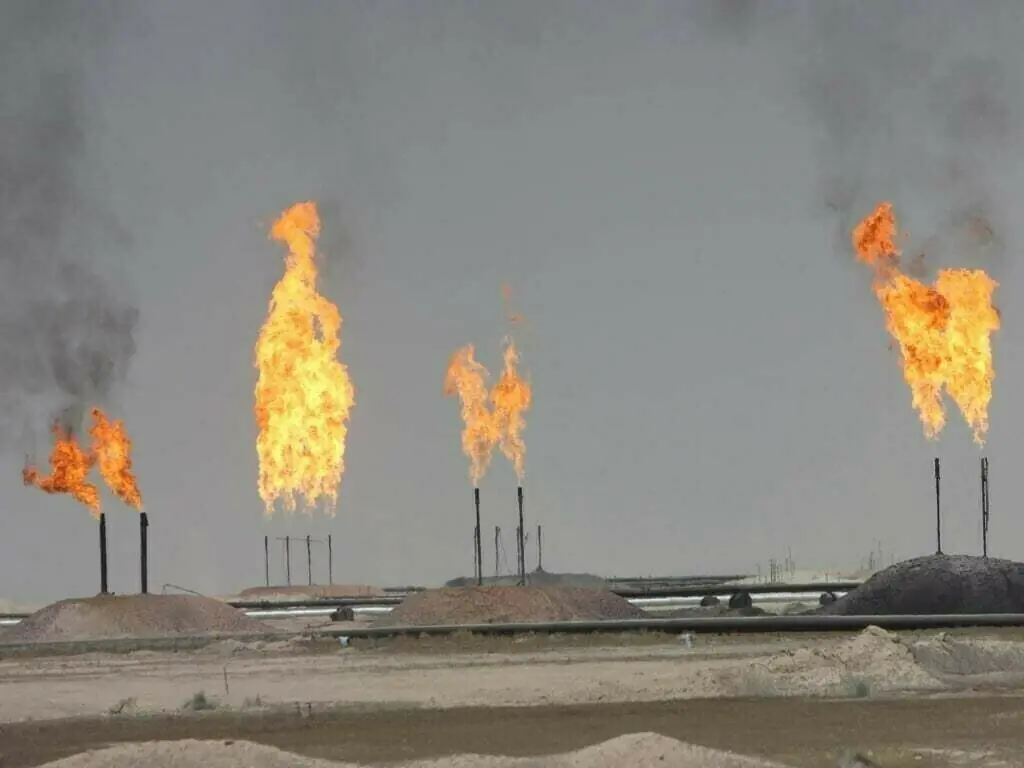
Oil & Gas Development Company Ltd (OGDCL), one of Pakistan’s largest E&Ps, has made a gas and condensate discovery at its Bitrisim Northwest-1 exploratory well in District Khairpur, Sindh.
The listed company disclosed the development in a filing to the Pakistan Stock Exchange (PSX) on Wednesday.
“The well is in the Bitrisim Exploration License, where OGDCL is the operator with a 95% working interest, and Government Holdings (Private) Limited (GHPL) holds the remaining 5%,” read the notice.
OGDCL shared that during testing, the well yielded 12.8 million standard cubic feet per day (MMSCFD) of gas and 175 barrels of condensate per day through a 32/64-inch choke at a wellhead flowing pressure of 3,020 pounds per square inch (psi).
“Bitrisim Northwest-1 was spudded on August 21, 2026, and drilled to a total depth of 3,732 metres in the Sembar Formation. Based on the interpretation of well logs, a Drill Stem Test (DST) was conducted in the Basal Sands of the Lower Goru Formation,” it added.
The company said it is expediting the necessary activities to connect the well to the national gas gathering system on a fast-track basis for early monetisation of the discovery.
“This discovery will enhance OGDCL’s hydrocarbon reserves base and contribute to Pakistan’s energy security by helping bridge the growing energy demand–supply gap through indigenous resources,” the company said.
ODGCL is the largest E&P company in Pakistan with operations including exploration, drilling operations services, production, reservoir management, and engineering support.
The company has the most extensive exploration acreage in Pakistan, covering over 40% of the country’s total awarded acreage, with net hydrocarbon resources of oil and gas.
With over 67%, the Government of Pakistan is the largest shareholder in OGDCL, followed by the OGDC Employee Empowerment Trust and the Privatisation Commission of Pakistan.
American actress and model Marilyn Monroe died in 1962. Sixty-four years later, an AI-generated image of her is still capable of getting Pakistani defence minister Khawaja Muhammad Asif to reply on X. But that episode is not the subject of this piece. This piece is about how the government uses artificial intelligence (AI) to talk to the public. Brands, political parties, and news outlets in Pakistan are using it to say something. From what I can see, the government is mostly using it to decorate what it was going to say anyway.
We are not in the frontier AI race as a country. But we definitely are in the race to become its most agile consumers. Historically, developing countries always faced a massive resource gap. Today, when it comes to access, that gap is gone. People working out of Toba Tek Singh and Nawabshah now have access to the same world-class research assistant, strategist, and programmer which a technology executive sitting in Silicon Valley has.
But what are we doing with this access? If we look at the marketing and communications area, not much. Actually, we are doing a lot, as in quantity, but not quality.
You open any social platform today and see AI staring you in the face. There is hardly any social media post which is not polished with AI tools; sometimes it’s a simple image, sometimes a video, and most of the time the captions and descriptions are improved with AI.
Government departments and ministries are also using AI quietly, regularly, and normally in infographics, static images, and captions. They are not using it to capture attention; they are using it to show they also have access to ChatGPT, that their social media executive can also upload a press release and prompt it to transform it into an infographic. Yes, that’s it.
It looks like whatever image comes up on the first attempt is published on official social media channels. Why do I say first attempt? Because the first attempt almost always produces the most generic, cliched visual language when your prompt is a single line and lacks any depth or detail whatsoever.
A post about youth is published; every young person looks the same, not just same age or other demographics, but literally same. A post about investment will have an upward arrow and a Pakistan flag somewhere. Sometimes the Pakistan flag on the infographic has no white portion, or the comparison of persons shown has different features on both sides. There is no second thought, no art direction. In government communication efforts, AI has become a substitute for design rather than a tool for design.
This matters more for a government than it does for a brand. When a brand publishes a careless image, it hears about it from its customers and moves on. A government is the one that keeps asking people to verify before they share, to doubt what they see online and to trust official sources. That is hard to ask when the official source doesn’t always get the basics right in its own graphics.
To be fair, barring a few government departments, social media messaging was never great before AI either. Stock photos were used, the same template with a different headline each time. So, AI did not create the problem. It just made the weak version faster to produce, and easier to publish without anyone looking at it.
The effort that is missing on the official channels shows up on the unofficial ones, I would say. When you scroll through social media feeds, most of the AI content that supports the government narrative falls in one category, propaganda or simply political content. I’m not saying this is unique to Pakistan; every government around the world does this in one form or another. It will not stop, but this shouldn’t be the only thing AI is used for. A propaganda video might give easy reposts on X in the short term but will have little effect on the larger public narrative.
When you use AI to its full potential for communication, it can work. And we have seen that in the 2026 Iran-USA war. Explosive Media (Akhbar Enfejari), an Iranian outlet, gained global attention for producing AI-generated, Lego-styled short social media videos ridiculing the United States and its role in the conflict. These videos were shared and watched by millions.
I am not talking about what those videos said, only how they were made. They used AI to perfection. From what I can see, they had one consistent look and a clear idea in each video and it doesn’t look like anyone published the first thing the tool gave them. They also came out in the middle of a war, when the news was already full of it, and that helped a lot. A government organisation in its normal routine can’t count on that. The effort is the part anyone can copy.
We don’t need to produce Lego-styled AI videos. Pakistan is home to over 60 distinct languages. The least we can do with AI is translate dense government policies into simple language, in text and in audio, for people with low literacy living in far-flung areas of the country. Someone who speaks the language should check the output before it goes out.
India has already built something like this. BHASHINI, India’s national AI-powered language-translation platform, was launched in 2022. It handles voice-based services in 23 Indian languages, text translation in 36 Indian languages, and supports 35 international languages. It powers government websites, citizen services, public events, and even live speeches. It is a translation tool, not a communication campaign, and I am not saying Pakistan should copy it as it is. But it shows what a state can do when it decides that being understood is part of its job, not something the audience has to figure out on its own.
On access, the gap is closed. Anyone running an official account today has the same tools as everyone else. What separates one post from another now is whether someone looked at it a second time before it went out, whether it is a graphic or a translated notice, and that takes a few minutes and, I would guess, a person who is allowed to say this isn’t good enough. Until that person is on the desk, the next post about youth will have the same face in it again.
The article does not necessarily reflect the opinion of Business Recorder or its owners.
GROWING inequality is a serious economic and social issue. Internally, we tend to treat poverty and inequality as separate problems. They are closely connected but not identical. Poverty is about deprivation; inequality is about how income, wealth, opportunities, and economic power are distributed. An economy can grow and even reduce poverty temporarily while allowing wealth and privilege to become concentrated.
Household data underlines the problem. The consumption-based Gini coefficient increased from 28.4 in 2018 –19 to 32.7 in 2024 –25. This figure does not capture the full extent of inequality in income and wealth, because household surveys tend to underrepresent the assets and incomes of the richest households.
The distribution of income and wealth influences what people consume, what businesses produce, where investment flows, and how much a country imports. In Pakistan, a relatively small segment commands a disproportionately large share of purchasing power and assets, while much of the population struggles to meet basic needs.
A relatively small segment commands a disproportionately large share of purchasing power and assets.
The benefits of economic growth have been distributed unevenly. Expanding sectors such as banking, telecommunications, IT, energy, oil and gas require capital, technology, and specialised skills, favouring those who already possess financial resources or access to quality education. The state’s failure to provide decent education and healthcare has denied much of the population a fair opportunity to participate in these activities. Hence, economic disadvantages are passed from one generation to the next.
Equally damaging is the continued protection of selected businesses from competition through high import duties, subsidies, tax exemptions, and special regulatory concessions. Powerful business groups have resisted competition, sometimes forming cartels to influence prices and markets. Profits earned through state protection rather than efficiency reward influence instead of innovation, raise costs for consumers, and weaken competitiveness.
The tax system has reinforced these inequalities by treating similar incomes from different sources unequally. Salaried individuals face substantial income taxes, while earnings from property, capital gains, and certain commercial activities have historically enjoyed relatively favourable treatment.
The state itself has been a major contributor to wealth concentration. Valuable public land and plots have been given to officials and influential individuals, while discretionary powers over building permissions, zoning regulations, and public contracts have created opportunities for private enrichment. Rising property prices, reinforced by speculative investment and the use of real estate to park undeclared wealth, have further increased the fortunes of existing asset owners. Corruption, smuggling, tax evasion, and manipulation of import and export prices have provided additional avenues for accumulating wealth, often beyond the reach of effective taxation and accountability.
Together, these factors constitute a system in which public authority is used to transfer economic opportunities and resources to privileged groups. The consequences extend beyond unfair income distribution; they also distort how the economy allocates and uses its scarce resources.
When fortunes can be made through political connections, regulatory concessions, and protection from competition, capital and entrepreneurial talent are diverted towards securing favours rather than productive investment. It becomes more profitable to lobby for higher import duties or special exemptions than to invest in technology, improve quality, or develop export markets.
The concentration of purchasing power also shapes the structure of domestic demand and, therefore, what businesses choose to produce. Businesses often respond to this purchasing power by directing investment towards activities serving a narrow market.
Meanwhile, the limited purchasing power of the majority constrains demand for mass-consumption goods, discouraging investment in industries that could serve a broader domestic market, create jobs, and compete globally.
This distorted pattern of consumption and production also contributes to our recurring external imbalances. The concentration of disposable income generates demand for imported vehicles, electronics, luxury goods, foreign travel, and education abroad, adding to the foreign exchange needed for machinery, fuel, technology, and industrial inputs. Not all imports are undesirable. Many are essential for productivity and exports. However, our consumption and production structures generate substantial demand for foreign exchange without a corresponding capacity to earn it through competitive exports.
Remittances from overseas Pakistanis have helped bridge this gap. But however valuable these inflows, they cannot substitute indefinitely for an economy capable of financing its import requirements through its own export earnings.
Inequality is certainly not the sole cause of external deficits. Exchange rate policies, tariffs, energy costs, inflation, low productivity, and weak export competitiveness also matter. Still, the concentration of purchasing power helps explain why import demand remains substantial even when we face severe foreign exchange constraints. There is another damaging effect.
When influential groups secure tax exemptions, subsidies, and protected markets, government revenues suffer. The burden of financing an oversized, extractive state, with its extensive controls and perks and privileges, consequently falls disproportionately on salaried workers, compliant businesses, and ordinary consumers unable to escape taxation.
Public expenditure compounds the problem. Chronic underinvestment in quality education and healthcare has denied millions of children a fair start. Affluent households can purchase good private education and medical care, while poorer families depend on poor and overstretched public services. Their children’s prospects depend on family circumstances. The failure to provide equal opportunities thereby perpetuates inequality across generations.
Addressing these disparities does not mean penalising wealth creation. It means distinguishing wealth earned through enterprise, innovation, and productivity from fortunes accumulated through political connections, monopolies, and state-granted privileges. This requires a fairer tax system.
Protection must give way to competition, while discretionary allocations of public land, contracts, and regulatory concessions need to be replaced by transparent, rule-based processes. Foreign aid, remittances, and favourable global developments have provided only temporary relief, enabling successive governments to shelve tough reforms, thereby sustaining an economic structure that rewards privilege over productivity.
Unless this system of privileges and unequal opportunities is dismantled, Pakistan will remain trapped in recurring internal and external imbalances, regardless of how many stabilisation programmes it negotiates with the IMF and others.
The writer is a former governor of the State Bank.
SLEAZE, bribery, and secret alliances allegedly marked Trump’s Middle East policy in his first term, and set him on the road to an illegal and unwinnable war against Iran in his second. The central characters in that sordid set of machinations were his own son-in-law and senior adviser Jared Kushner, a few Gulf rulers, and Israel’s prime minister Benjamin Netanyahu — all working towards a plan to redraw the political map of West Asia. Iran was the adversary to be contained, and it was on this that they converged: a plan to “blow up Obama’s Iran nuclear deal”.
Billions of dollars were allegedly paid to Kushner in what may be the biggest scandal in recent history — one that best defines the link between money and Trump’s conduct of his Middle East policy, and which has pushed the entire region into an intractable conflict with global consequences.
A recently published book, Princes and Thieves by investigative journalist Matthew Cole, provides startling details on how billions of dollars were allegedly transferred into accounts — managed by Kushner — by Gulf sheikhdoms, to implement a plan to break Obama’s nuclear deal with Iran and change the “political map of the Middle East”. The author supports his view of the transactions with details drawn from accounts hacked by a Western intelligence agency, though Kushner has called the allegations fabricated.
According to the author, the transfers began in 2017 and were well underway by the spring of 2018, during Trump’s first term — when Kushner served as the president’s special envoy on the Middle East. While he had very close relations with Israel, he also cultivated strong business and diplomatic connections with willing Gulf sheikhdoms to allegedly pay for influence with the Trump administration.
>A recent book details how money and corruption were leveraged to redesign the Middle East.
According to the author, “Kushner, UAE ruler Mohamed bin Zayed (MBZ), and Mohammed bin Salman (MBS) of Saudi Arabia, converged at an auspicious moment. MBS wanted to be crown prince. MBZ wanted to blow up Obama’s Iran nuclear deal, and Kushner wanted both to help him force the Palestinians into a deal that Israel would accept”. The convergence against Obama’s nuclear deal with Iran — formally the Joint Comprehensive Plan of Action (JCPOA) — brought Saudi Arabia and the UAE together on the issue.
Agreed on July 14, 2015, between Iran and the P5+1, and endorsed by Security Council Resolution 2231, the deal came into effect in January 2016. Under it, Iran capped its enrichment at 3.67 per cent, cut its centrifuge numbers and opened its nuclear facilities to IAEA inspection. In return, nuclear-related sanctions on Iran were lifted on oil exports, banking, and SWIFT access, with frozen assets to be released in stages.
But Israel, Saudi Arabia, and the UAE had strong reservations. Each opposed the JCPOA for different reasons and with different intensity; the common ground was that the agreement was too narrow and too temporary, its restrictions written to expire under sunset clauses. Israel openly campaigned against it, and the two Gulf states lobbied against it too.
For deal sceptics, Trump’s election in 2016 was good news. In May 2018, the president withdrew from the JCPOA and reimposed sanctions in phases under a “maximum pressure” campaign. The move brought the Gulf nations closer to the Trump administration. The billions alleged to have flowed into Kushner’s accounts appeared to have delivered. The book maintains that early in Trump’s first term, “MBZ and MBS offered to pay for a slush fund dedicated to helping the new administration with foreign policy goals”. Both Arab rulers saw this as part of an effort to help Trump win a second presidency.
In the same period, Kushner conceived the so-called Abraham Accords aimed at normalisation between Israel and the Arab states. He owned the file. No State Department desk, no regional bureau, no ambassador in the chain: a son-in-law with a security clearance and a direct line to the president negotiated directly with the Gulf rulers, according to the book. One goal was to sideline the question of a separate Palestinian state. The UAE, Bahrain, Morocco, and Sudan signed.
The book also reveals that during that period Kushner helped negotiate a secret warming of diplomatic relations between Israel and the UAE — the arrangement that later became public as the Abraham Accords. Cole writes that “Kushner helped negotiate an agreement by Israel to help defend the UAE against a major Iranian military attack. The UAE needed to cover the cost of that emergency defence, and its government secretly made another transfer to Israel’s Central Bank. This was something like a rainy-day defence fund. Combined, the three accounts represented a secret foreign policy negotiated by Kushner with the leaders of Israel, the UAE, and Saudi Arabia.
“Although Kushner’s position as senior adviser to the president was unpaid, he was an official government employee. Not only did his position require financial disclosure for ethics regulations, but each year he worked in the White House he had to file both a public and a confidential financial form, the Executive Branch Personnel Public Financial Disclosure Report, known as a 278e disclosure. Because he had access to classified government secrets, Kushner was required to disclose any bank account to which he had signatory — or beneficiary — access.” But apparently, the president’s son-in-law did not comply.
The writer quotes a source that Kushner “promised MBZ he’d push their agenda with Trump if they participated in a fund. He wanted normalisation with Israel so that business could take off”. For the Gulf Arab governments, money was not a problem. “The Emiratis and the Saudis do this once a year. A billion or two is nothing for them, and if it gets them what they want, it’s money well spent,” the source told the author.
The book exposes the sordid linkage between power and corruption that marked Trump’s presidency. It also lays bare the unholy alliance between Israel and the Gulf governments, formed to change the political map of the Middle East. In the end, this design has left the region more destabilised than before.
LOS ANGELES: A vehicle plowed into a group of pedestrians in the North Hollywood district of Los Angeles on Tuesday, killing three people and leaving at least three others critically injured, the city fire department reported.
The three injured people were taken to area hospitals for treatment, according to an online statement posted by the Los Angeles Fire Department.
There were no official details immediately available on the circumstances of the incident, which occurred shortly before 6 p.m. PST (0200 GMT).
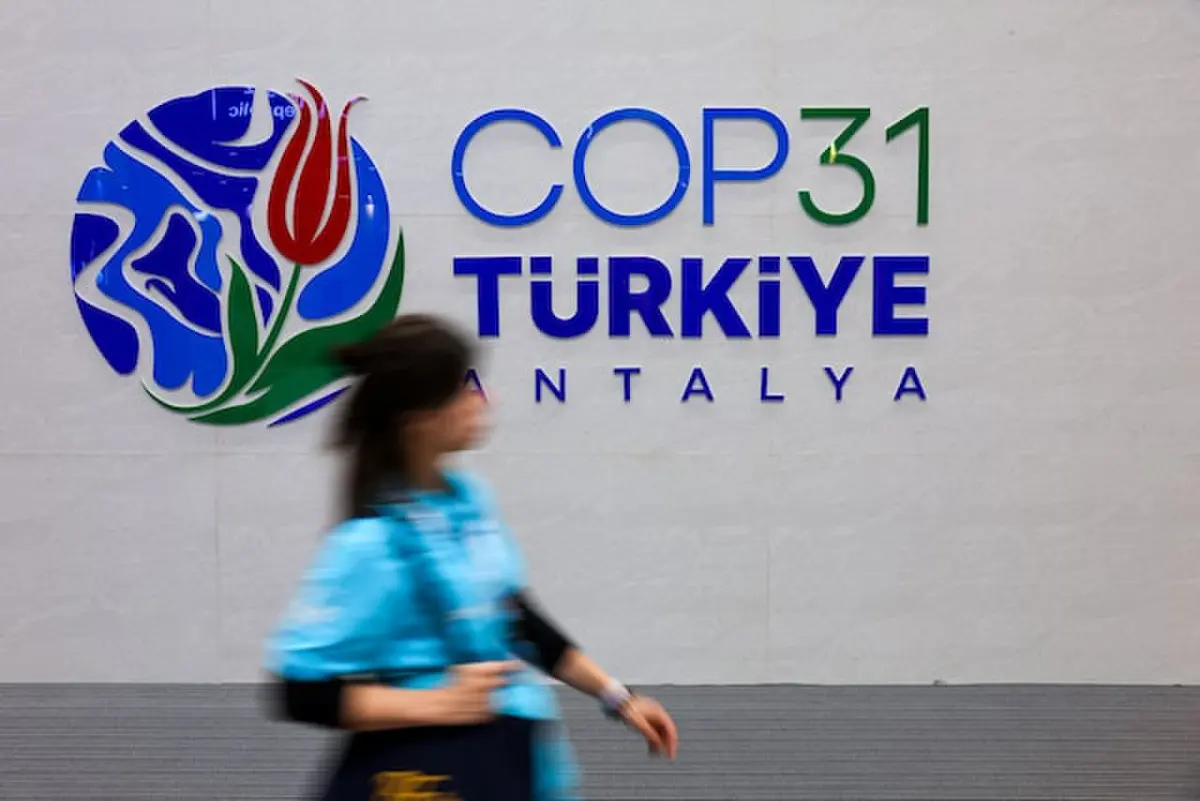
ANTALYA: World leaders will set out their climate priorities in speeches at COP31 in Turkiye on Wednesday, as negotiators seek agreement on a plan to increase the share of electricity in global energy use and revive stalled efforts to move away from fossil fuels.
Delegates from nearly 200 countries are meeting in the Mediterranean resort city of Antalya as global greenhouse gas emissions show little sign of falling and wars, inflation and other crises compete for political attention.
A UN report last month found the world on course to break through the 1.5 degrees Celsius (2.7 degrees Fahrenheit) warming limit that countries had agreed to pursue under the Paris Agreement to prevent the worst of climate change.
Former French Prime Minister Laurent Fabius, who presided over the 2015 Paris climate conference and leads an advisory council of former COP presidents, said the speeches could give political impetus to the negotiations.
“It is an opportunity for leaders to make some announcements, and more this time, to explain how they will implement, because the key word in Antalya is implementation,” he told Reuters.
Scores of world leaders – including presidents and heads of government – will begin their rapid-fire speeches on Wednesday afternoon and continue through the day on Thursday, according to the COP31 schedule.
Wednesday’s speakers are expected to include Brazilian President Luiz Inacio Lula da Silva, who was re-elected at the end of October, and whose country hosted last year’s climate talks.
European Commission President Ursula von der Leyen, Chinese Vice President Han Zheng, and Marshall Islands President Hilda Heine will also speak on Wednesday.
The United States, the world’s largest historical emitter, has skipped the talks for the second year in a row after President Donald Trump – who has called global warming a hoax – withdrew the US from climate cooperation following his return to office in 2025.
Age of electricity?
COP31 host Turkiye has so far been pushing the government representatives attending the conference to put a goal on electrification at the centre of a final deal, even as critics say it may do little to curb warming.
The proposal targets a rise in electricity’s share of total global energy consumption to 35% by 2035, up from a little over a fifth now, theoretically reducing greenhouse gas emissions from cars, factories, and buildings.
But the proposal does not include language requiring new power to be generated by clean energy sources, and world governments have yet to clarify a broader plan to transition away from fossil fuels like coal, oil and gas.
“It is long past time to stop treating the transition away from fossil fuels as taboo or intractable,” United Nations Secretary-General Antonio Guterres told the conference on Tuesday, urging countries to produce clear timelines for the transition.
The previous COP in Brazil was unable to reach consensus on the need for a global plan to reduce dependency on fossil fuels.
The Brazilian COP presidency has in recent weeks, however, published a roadmap aimed at keeping that idea central to the climate negotiations. It asks countries to first plan and assess their energy systems by 2028, then work together to reduce fossil fuel supply from 2031.
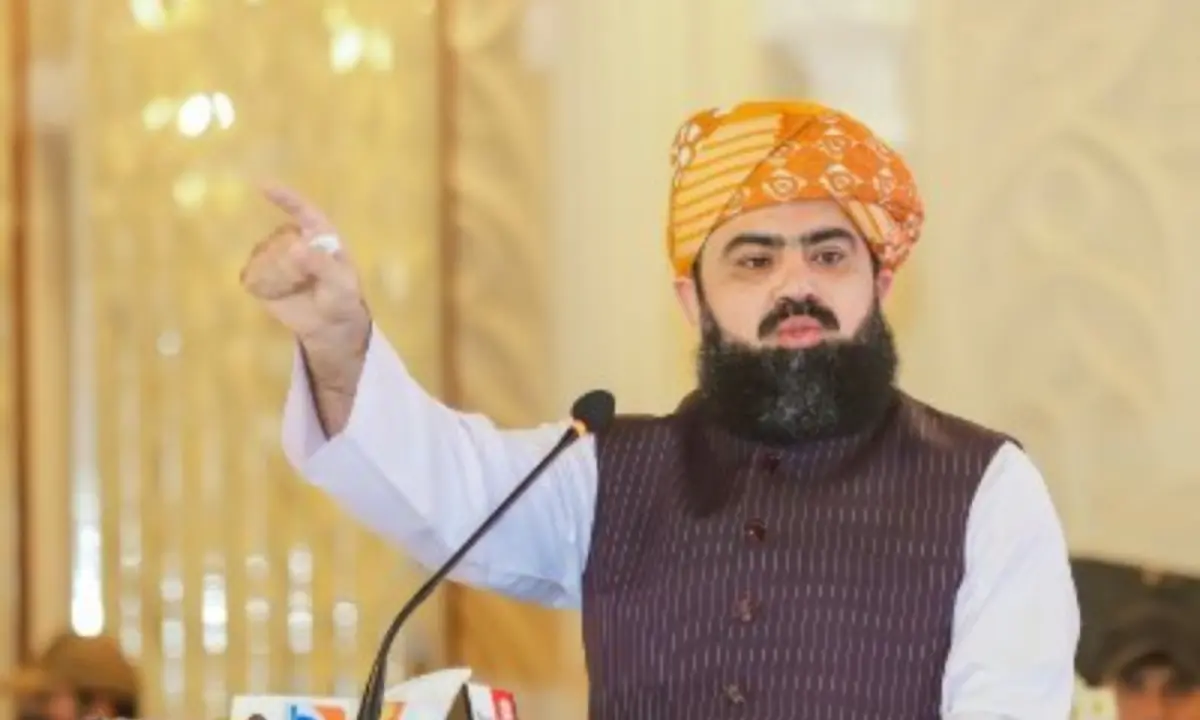
ISLAMABAD: Defying a summons from the National Accountability Bureau (NAB), Asad Mehmood, son of Jamiat Ulema-i-Islam (JUI-F) chief Maulana Fazlur Rahman, failed to appear before the anti-graft watchdog on Monday in a case concerning alleged irregularities in appointments at Pakistan Post.
NAB, meanwhile, remained tight-lipped about its next course of action. In such cases, the bureau usually issues second and third notices before taking punitive action, including arrest, if the accused continues to ignore the summons.
Mr Mehmood had been directed to appear before the investigation team at 11am on Nov 10 to explain his position on alleged irregularities in 4,252 appointments made at Pakistan Post during his tenure as federal minister in 2022-23.
When contacted, a senior NAB official declined to disclose the bureau’s future course of action, saying that under the new laws, details of investigations could not be shared with the media until the relevant court had decided the case.
According to the notice, the Establishment Division had authorised recruitment against 3,938 posts at Pakistan Post, but 4,252 people were allegedly appointed, exceeding the approved strength. Of these, 2,646 appointments were reportedly made against posts that had already been abolished, in violation of a cabinet committee’s directions.
The bureau is also examining allegations that permanent appointments were made despite a recommendation for contractual recruitment, placing an additional financial burden on Pakistan Post. The alleged political affiliations of some selected candidates are also under scrutiny.
Other allegations include the use of forged documents, recruitment of over-age candidates and violations of the domicile quota.
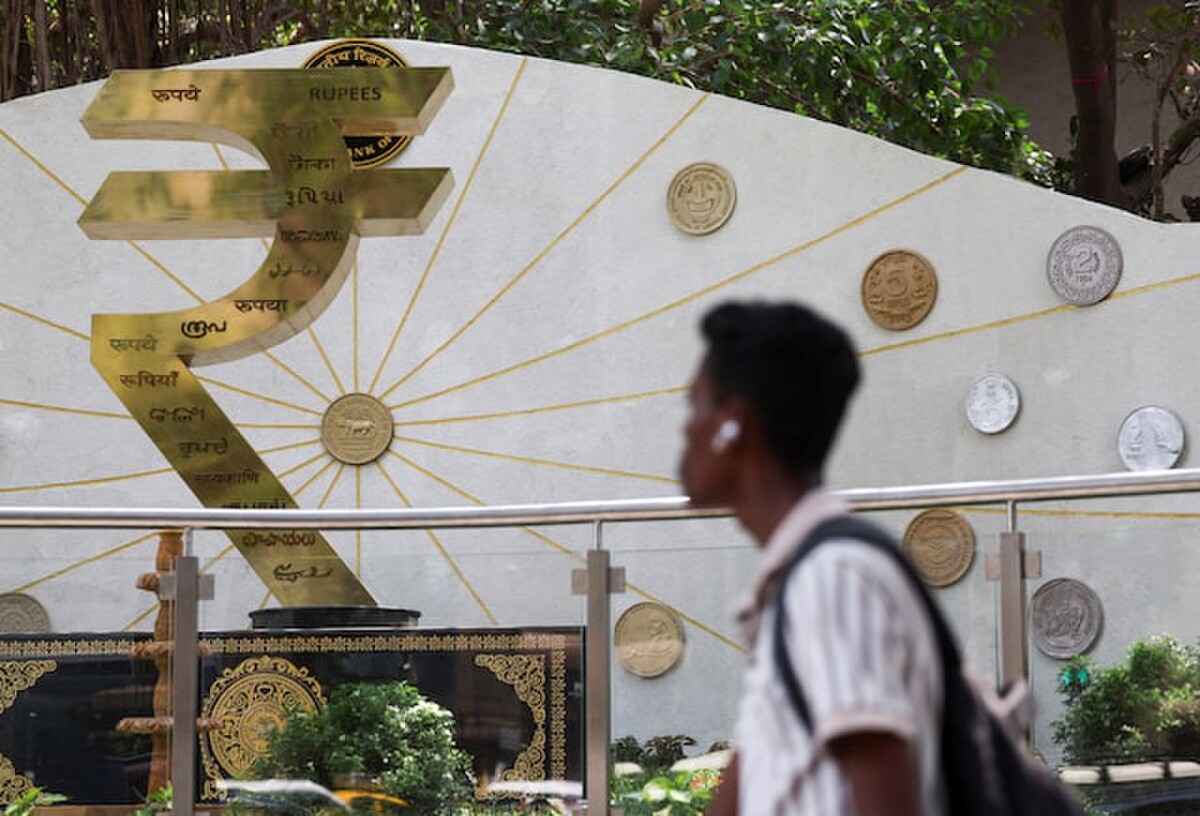
The rupee is expected to open in the 93.70 to 93.74 range, per traders, having settled at 93.93275 to the dollar on Monday.
Indian financial markets were shut on Tuesday or a local holiday.
Brent crude slid below $90 a barrel for the first time since August on Tuesday after US officials played down the need for further military action against Iran, tempering fears of additional disruptions to Middle Eastern oil supplies.
While prices have recovered from their lows of $92.20, they remain more than 6% down this week, following a decline of over 16% last week.
Lower oil prices offer the rupee relief from one of its biggest pressure points in recent months. High crude prices had kept the currency under sustained pressure, driving up dollar demand from oil importers and prompting the Reserve Bank of India to open a special window for oil refiners to meet their dollar requirements outside the market.
The RBI’s efforts to address dollar demand, alongside a revival in foreign equity inflows, have helped the rupee recover more than 3% from its recent lows. India has benefited from investors reassessing their concentrated bets on AI-linked shares and looking to diversify into other markets.
“For the rupee, all the right boxes are being ticked right now,” a currency trader at a bank said.
However, after the rupee’s recent rally, the level is looking very attractive for importers, particularly with the risk from US Treasury yields coming into play, he said.
US Treasury yields jumped on Tuesday after data showed that US consumer prices rose more than economists expected in October, leading traders to bolster bets on a larger interest rate hike at the Federal Reserve’s December meeting.
THE opposition alliance TTAP has hinted at another anti-government drive. Its recent talks with the JUI-F on parliamentary coordination indicate that the party’s chief Maulana Fazlur Rahman is poised to lead the campaign.
All this raises obvious questions: is the opposition seriously planning an anti-government drive? Is it actually convinced that such a movement at this time can remove the government? Will the pragmatic JUI-F chief join such an effort? At least for now, the answer may disappoint the opposition’s supporters.
The PTI is locked in a protracted battle with the government, while much of its top leadership remains behind bars. It has twice attempted to mobilise public support for a mass movement and rally people around its political objectives since the controversial February 2024 elections, but both attempts failed. It is obvious that people, particularly in Punjab and Sindh, are not ready to join any such movement at this time. Even in KP, where the PTI had been in power since 2013, the party has failed to mobilise the public.
The Jamaat-i-Islami’s drive against high petrol prices similarly failed to bring people out onto the streets.
Though the JUI-F has staunch supporters on the streets who are ready to answer their party’s call, its leader has never been one to take needless risks. His azadi march against the PTI government brought thousands of supporters to Islamabad, but failed to dislodge the Imran Khan administration. The sit-in was eventually called off without achieving its objective.
The federal government has imposed emergency measures and governor’s rule in KP, claiming they were necessary for security and administrative reasons. The opposition sees these moves as an assault on provincial autonomy.
Maulana Fazlur Rahman is actively opposing the move. The government’s response to his criticism has fuelled fears that the JUI-F could face the same crackdown as the PTI. Those concerns are not difficult to understand.
The recent actions of the Balochistan government against JUI-F Senator Kamran Murtaza on a questionable citizenship claim reinforce these fears. Yet expectations of the maulana leading another street confrontation with the government anytime soon are likely to remain wishful thinking.
Nevertheless, this consensus of politicians of different persuasions reflects a growing frustration with the government’s high-handed actions.
The lawyers’ emergence in this arena is particularly significant. The All Pakistan Lawyers Action Committee in Quetta has vowed to support Senator Murtaza and resist any attempt to undermine constitutional supremacy. There are also reports of raids on lawyers’ homes.
Although the prospects of a new anti-government movement remain remote, public discontent should not be ignored. Small, isolated protests and expressions of dissent can gradually gather momentum and develop into a much larger movement.
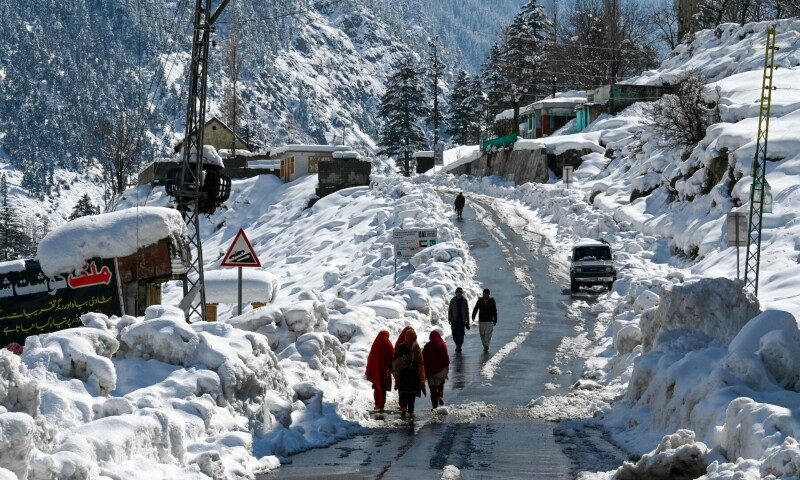
RAWALPINDI: The Pakistan Meteorological Department (PMD) has forecast rain, wind and thunderstorms, with snowfall over the hills, in the upper parts of the country over the next two to three days, urging the authorities concerned to take precautionary measures to prevent any untoward incident, particularly in hilly areas.
According to the Met Office, a shallow westerly wave is approaching the western and northern parts of the country. The system is likely to intensify on Nov 12 and may persist over the upper regions until the morning of Nov 14.
In Khyber Pakhtunkhwa, under the influence of this weather system, rain, wind and thunderstorms, accompanied by isolated heavy falls and hailstorms, are expected in Dir, Chitral, Swat, Kohistan, Shangla, Battagram, Mansehra, Abbottabad, Haripur, Buner, Malakand, Bajaur, Mohmand,
Kohat, Peshawar, Charsadda, Nowshera, Mardan, Swabi, Khyber, Orakzai, Kurram, Hangu, Lakki Marwat, Karak, Bannu, Dera Ismail Khan and Waziristan from the evening/night of Nov 10 until the morning of Nov 14, with occasional breaks. Snowfall is also likely over the mountains during this period.
In Punjab and Islamabad, light rain, wind and thunderstorms are expected in the capital city, the Potohar region, Mianwali, Khushab, Bhakkar, Sargodha, Murree and adjoining areas on Wednesday (today). More rain, wind and thunderstorms are forecast for Islamabad, Rawalpindi, Murree, Galiyat, Attock, Chakwal, Jhelum, Mandi Bahauddin, Gujrat, Gujranwala, Hafizabad, Wazirabad, Lahore, Kasur, Sheikhupura, Sialkot, Narowal, Mianwali, Khushab and Sargodha on Nov 12 and 13, with occasional breaks.
Rain, wind and thunderstorms are also expected in Dera Ghazi Khan, Layyah, Bhakkar and Multan on Nov 12. Isolated hailstorms are also likely during the period.
Snowfall over hills
Meanwhile, rain, wind and thunderstorms, accompanied by snowfall over the hills, are expected in Azad Kashmir, including Neelum Valley, Muzaffarabad, Rawalakot, Poonch, Hattian, Bagh, Haveli, Sudhanoti, Kotli, Bhimber and Mirpur, and Gilgit-Baltistan, including Diamir, Astore, Ghizer, Skardu, Hunza, Gilgit, Ghanche and Shigar, until the afternoon of Nov 14, with occasional breaks.
Dry weather
Mainly dry weather is expected to prevail across most districts of Sindh and Balochistan. However, isolated rain, wind and thunderstorms, accompanied by hailstorms, are expected in Duki, Harnai, Pishin, Sherani, Surab, Zhob, Barkhan, Musakhel, Quetta, Ziarat, Chaman, Qila Abdullah, Qila Saifullah, Kalat and Khuzdar on the night of Nov 11 and Nov 12.
Impacts and advisories
The Met Office advised farmers to plan their agricultural activities in accordance with the prevailing and forecast weather conditions.
It warned that light snowfall over high mountains and glaciers could occur during the wet spell. Foggy conditions are also likely to develop in patches over the plains following the spell.
Daytime temperatures are expected to fall by 2-4 degrees Celsius during the forecast period.
The department urged provincial and district authorities to remain vigilant and take all necessary precautionary measures to avoid any untoward incidents during the forecast period.