The second match in the two-Test series between Pakistan and Sri Lanka next week has been moved to Rawalpindi from Lahore due to worsening smog, the Pakistan Cricket Board said on Tuesday.
Rawalpindi is currently hosting the series opener, with the second match to be played from November 17-21 as scheduled.
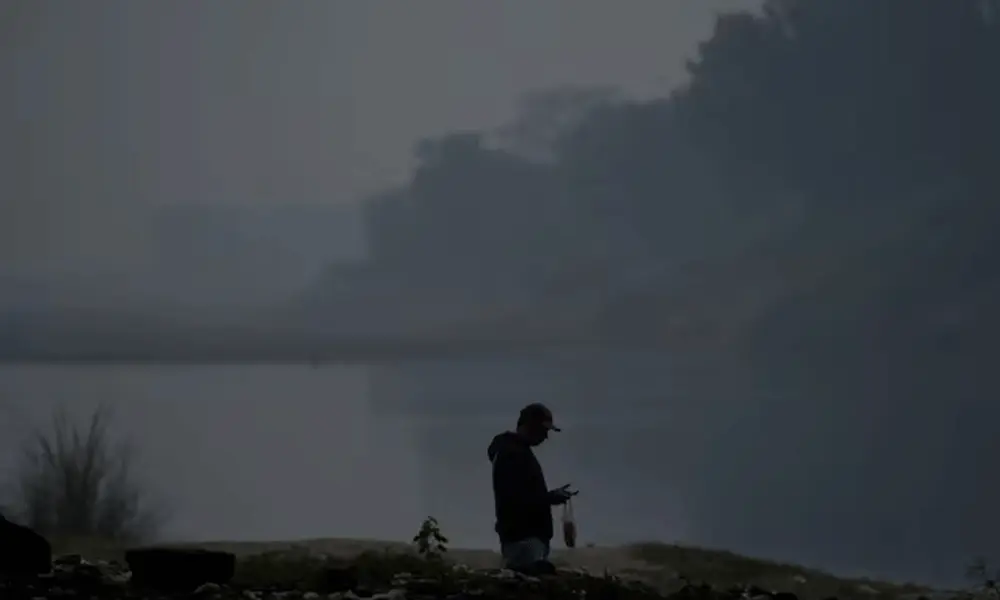
Lahore has been grappling with poor air quality in recent weeks as seasonal smog blankets large parts of Pakistan during the winter months.
According to IQAir, a Swiss air-quality monitoring company, Lahore is currently the most polluted major city in the world.
Air-quality concerns have disrupted cricket schedules in Pakistan before. Smog led to the relocation of a limited-overs series against Zimbabwe from Lahore to Rawalpindi in 2020, and a Test against New Zealand from Multan to Karachi in 2022.
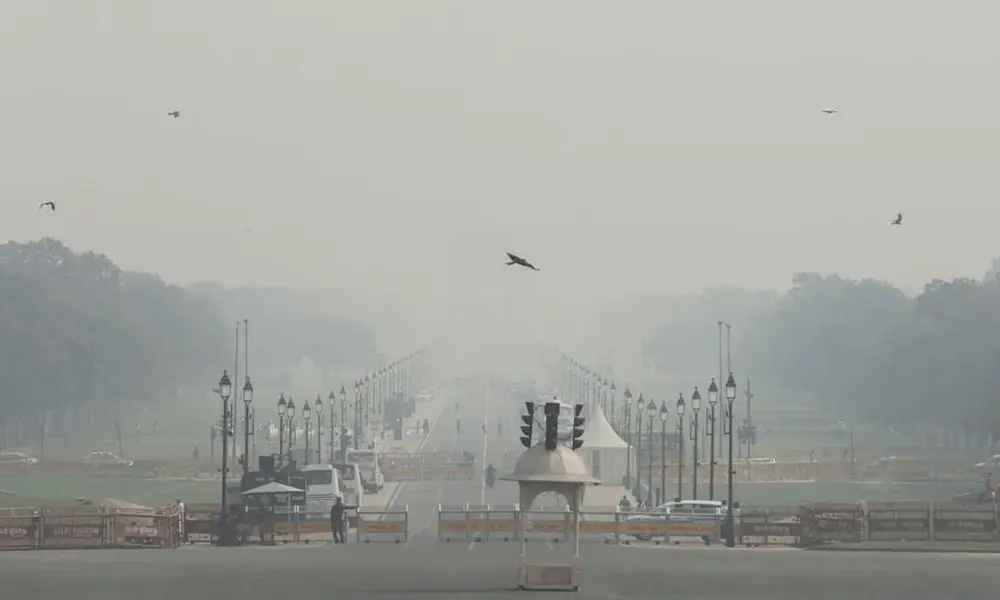
Smog engulfed Pakistani skies on Wednesday as air quality continued to hover in the “hazardous” category, according to IQAir.
Of the major cities globally, IQAir ranked Lahore as the most polluted again on Wednesday, between 11am to noon, with an Air Quality Index (AQI) of 425, with levels above 300 being considered “hazardous”.
The Punjab government’s readings for the same hour showed that Muzaffargarh and Nankana Sahib’s AQI levels were at 500.
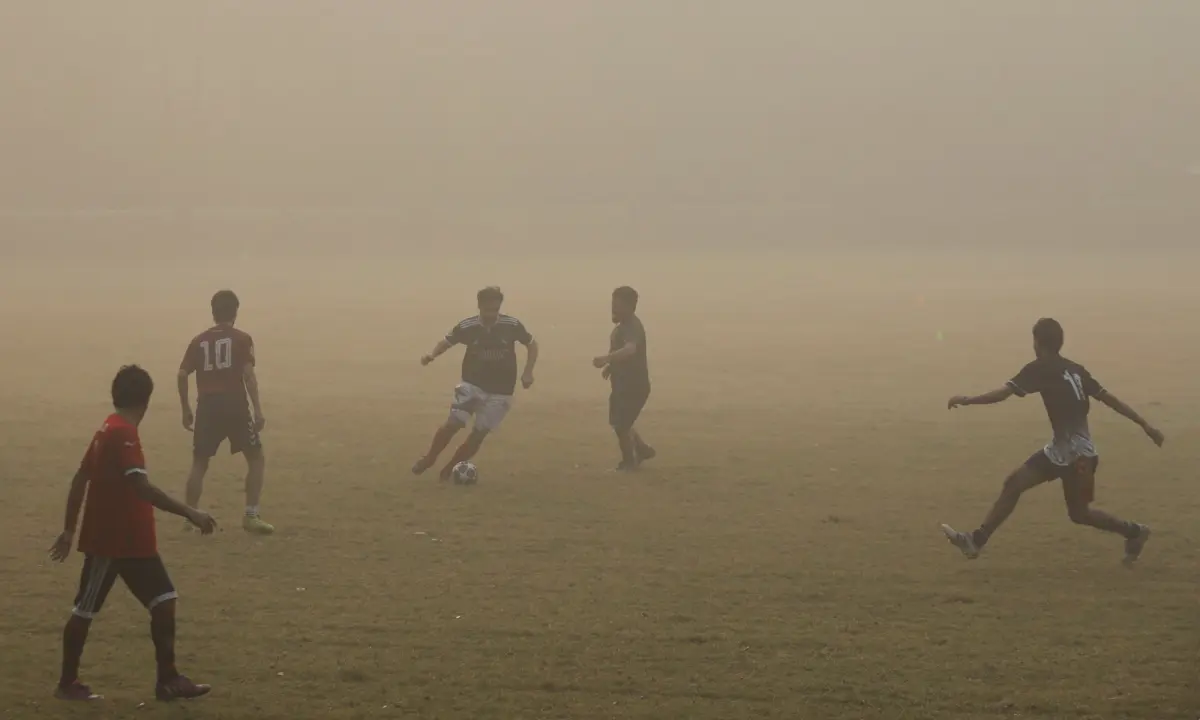
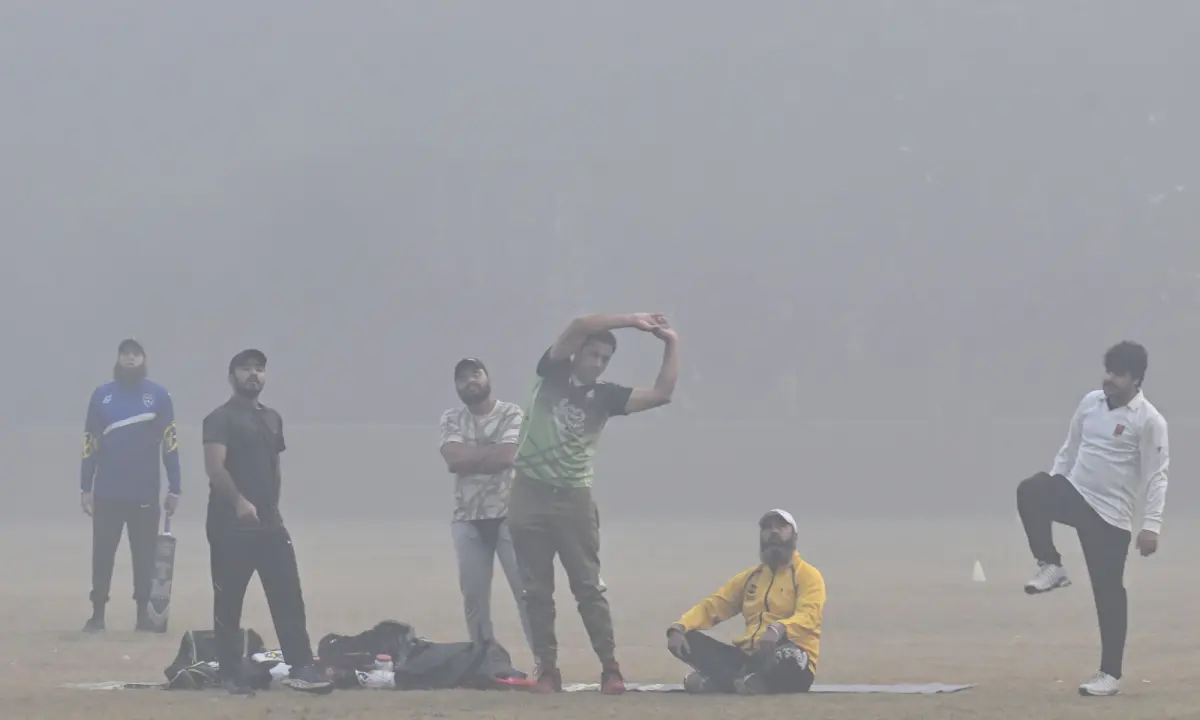
Men play football amid smog and air pollution during the early morning in Lahore, Pakistan on November 11, 2026. —Reuters
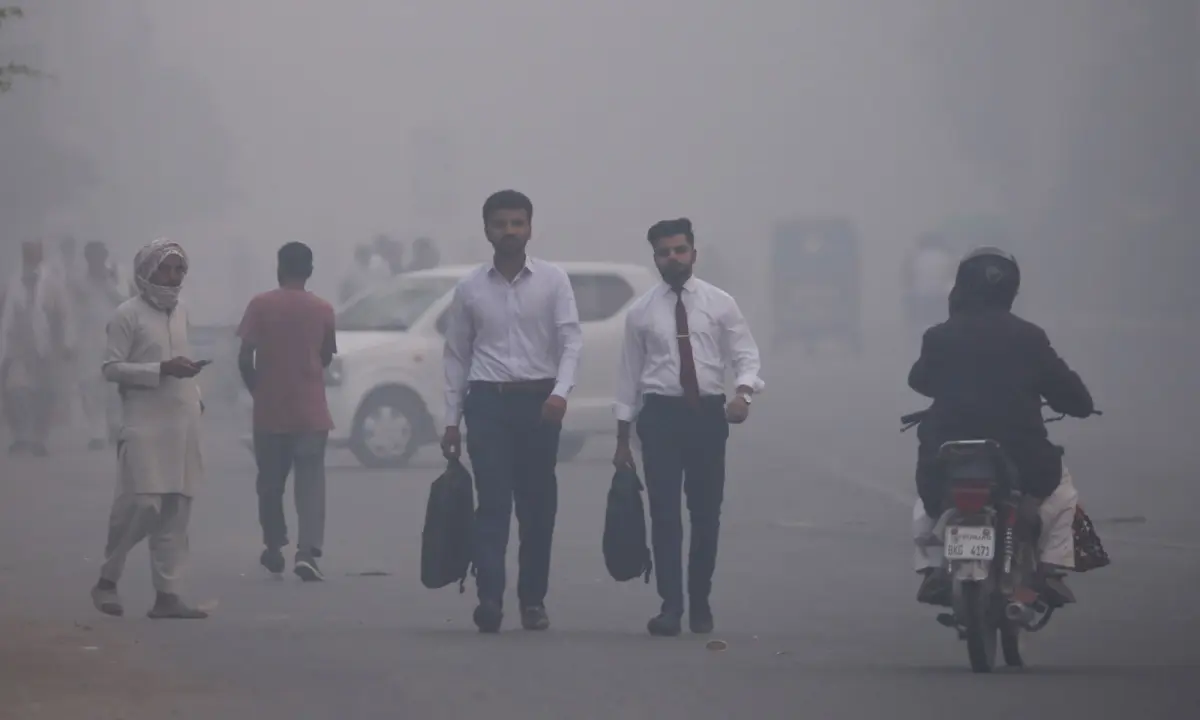
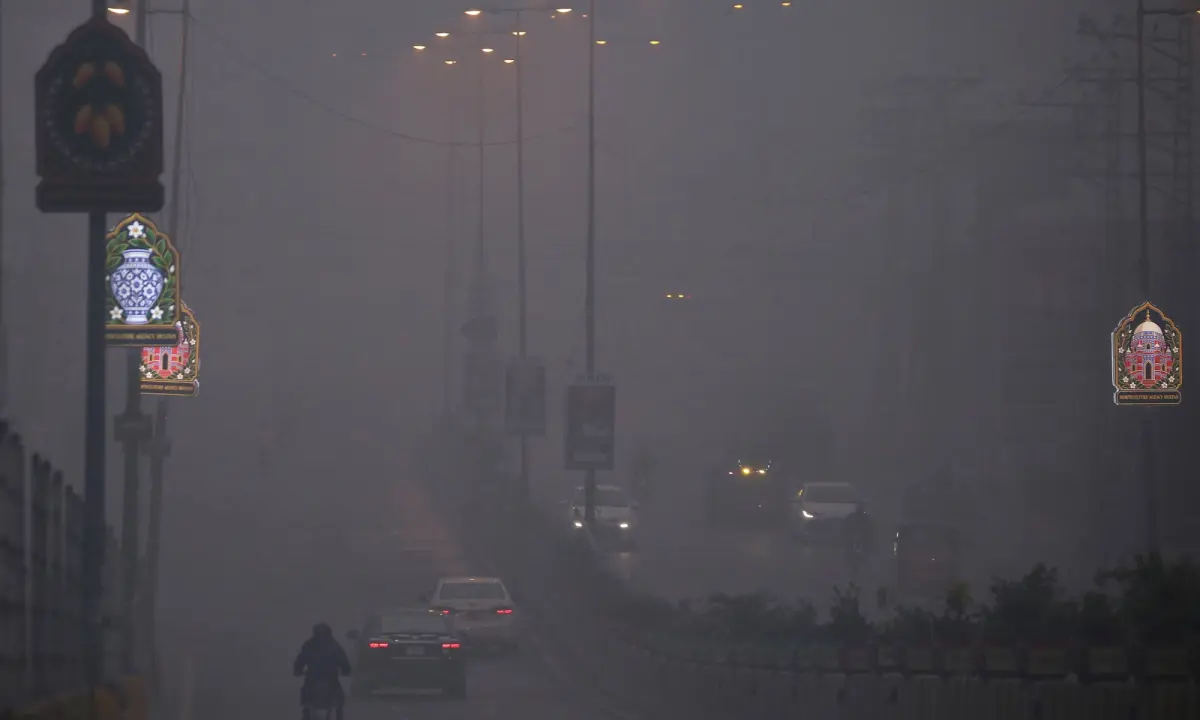
Pedestrians walk along a street amid dense smog in Multan on November 11, 2026. —AFP
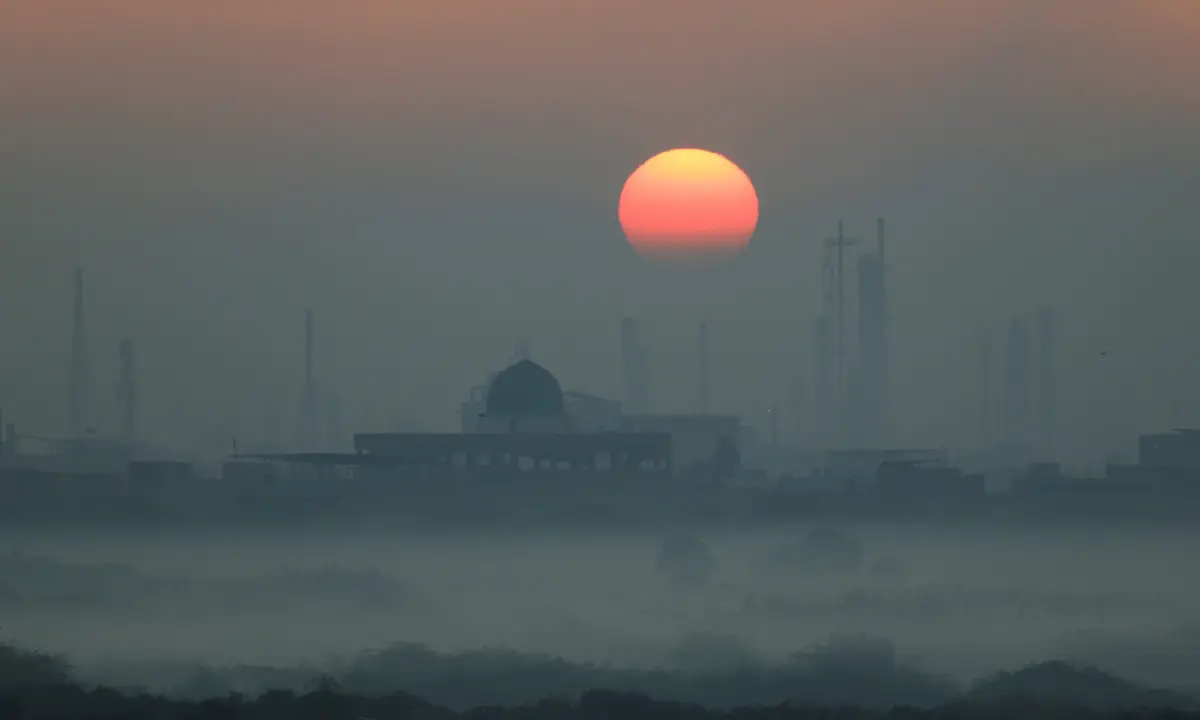
The sun rises amid smog and air pollution in the early morning in Karachi, Pakistan on November 11, 2026. —Reuters
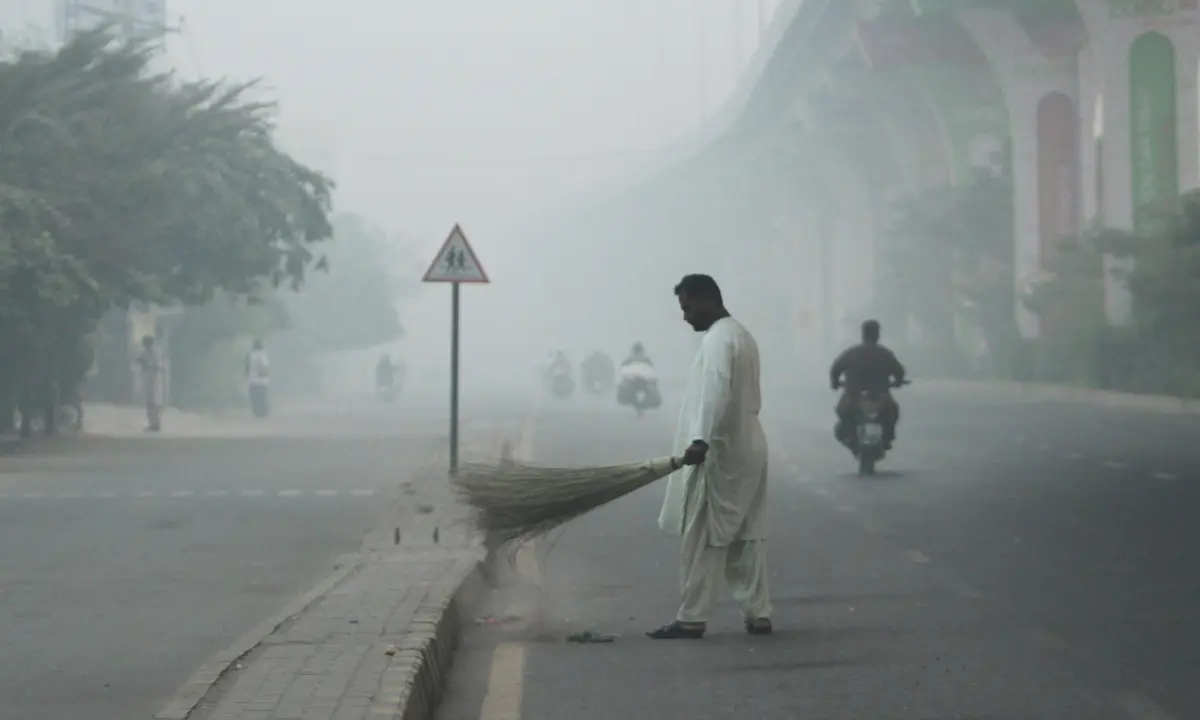
A worker sweeps a road amid smog and air pollution in the early morning in Multan, Pakistan on November 11, 2026. —Reuters
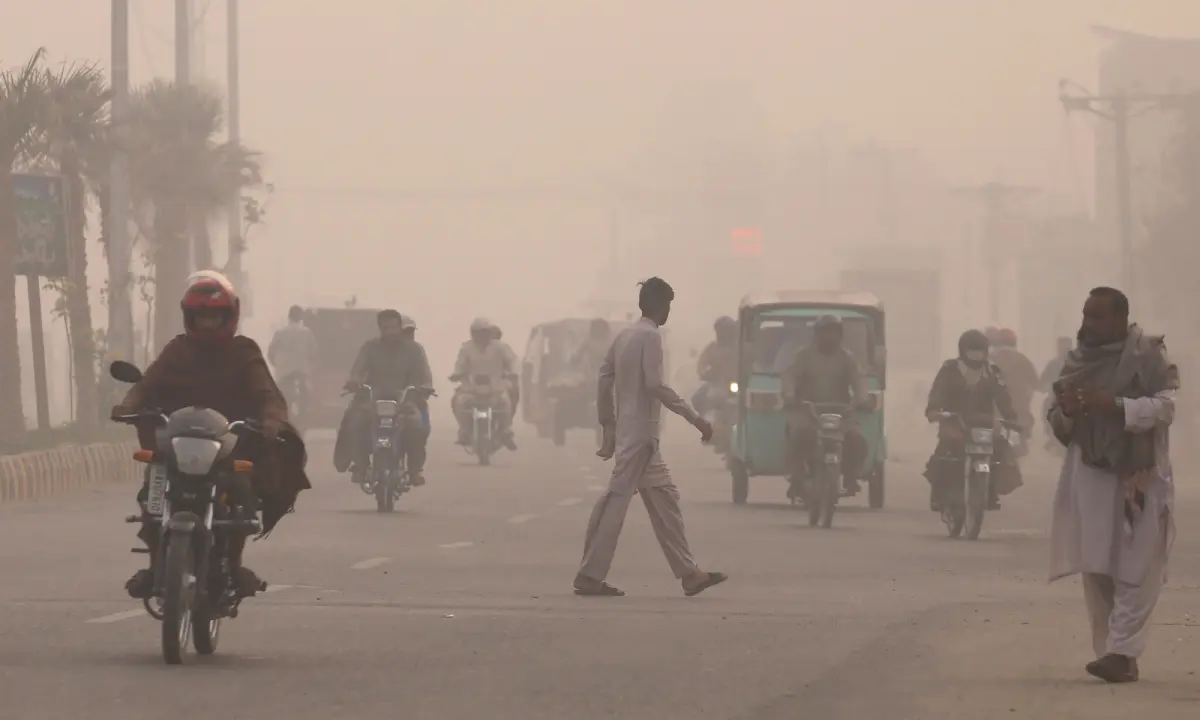
A man crosses a busy street amid dense smog in Multan on November 11, 2026. —AFP
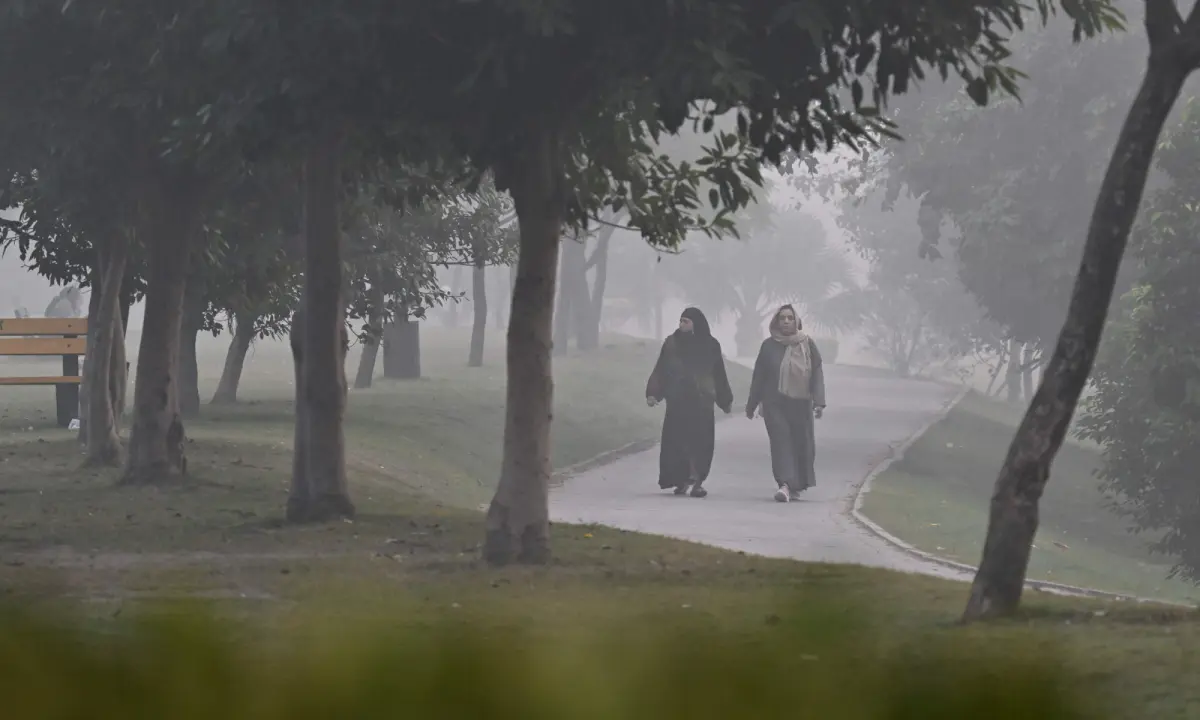
Women walk inside a park amid smoggy conditions in Lahore on November 11, 2026. —AFP
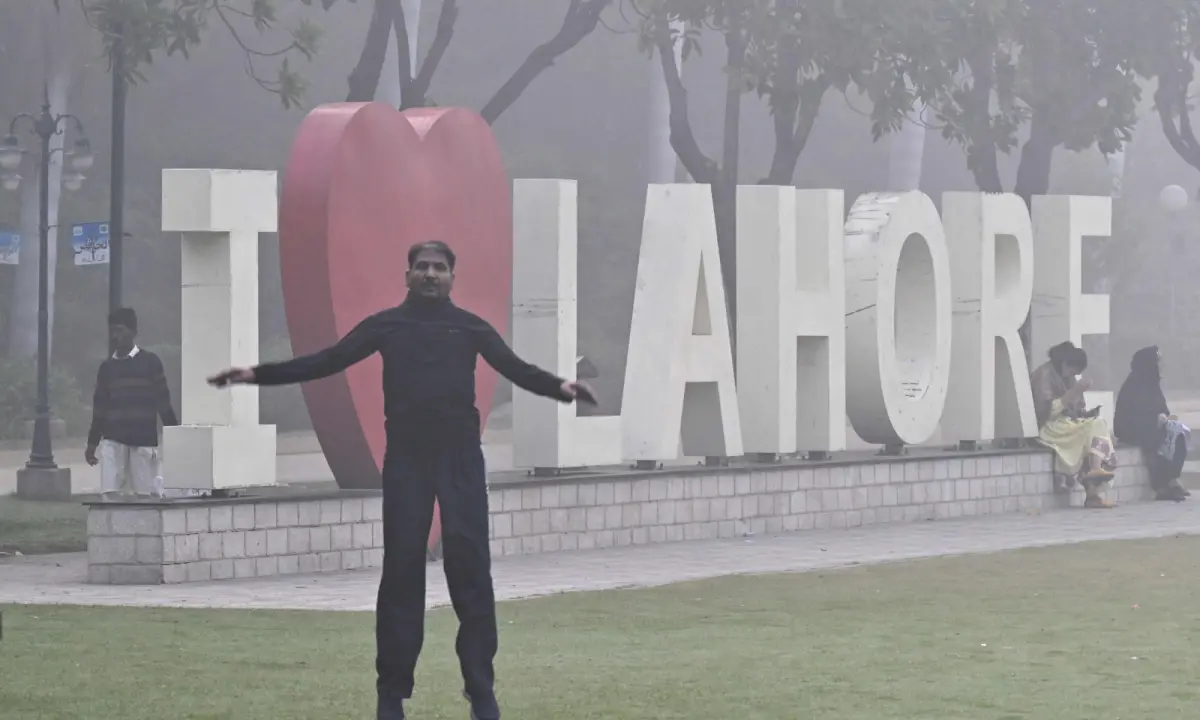
People exercise outdoors amid smoggy conditions in Lahore on November 11, 2026. —AFP
Commuters ride along a street amid dense smog in Multan on November 11, 2026. —AFP
A man exercises in a park amid smoggy conditions in Lahore on November 11, 2026. —AFP
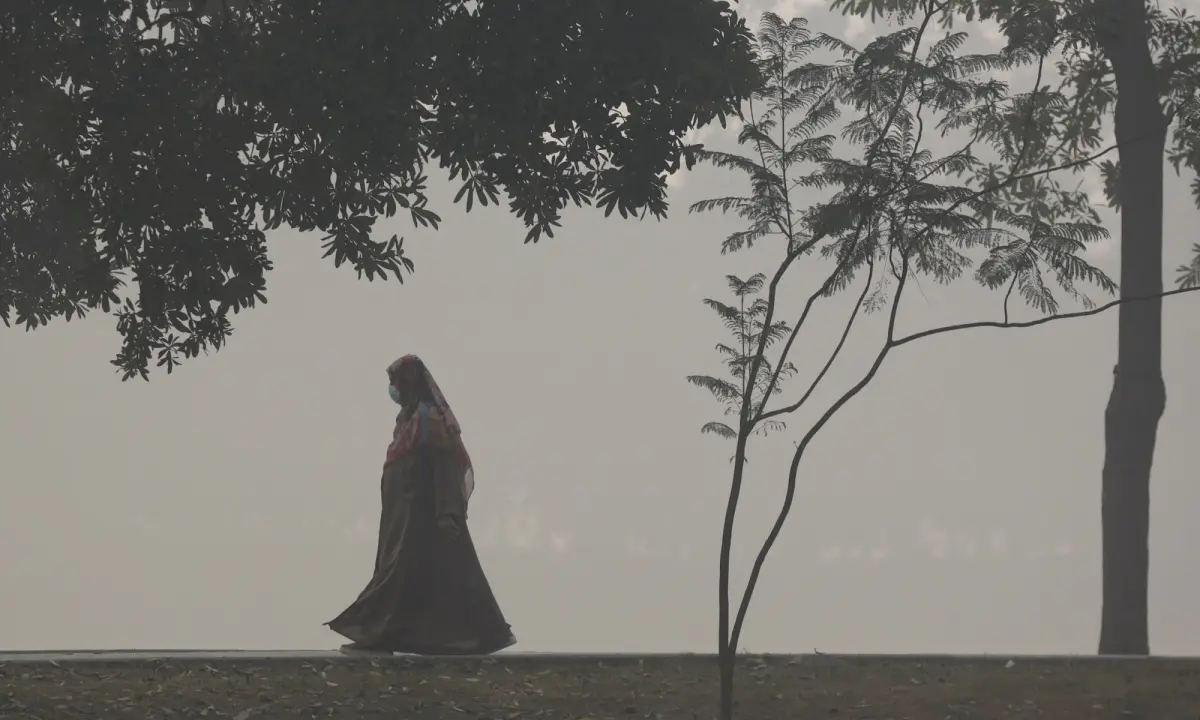
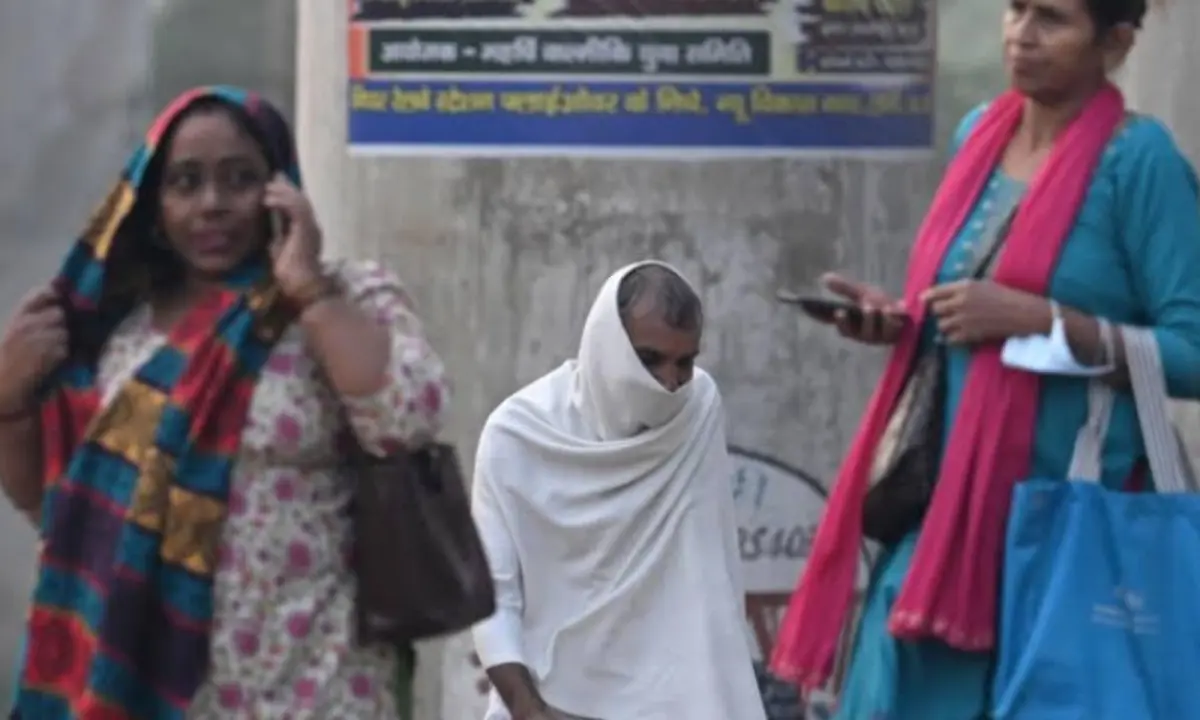
A woman walks wearing a mask amid smog and air pollution during the early morning in Lahore, Pakistan on November 11, 2026. —Reuters
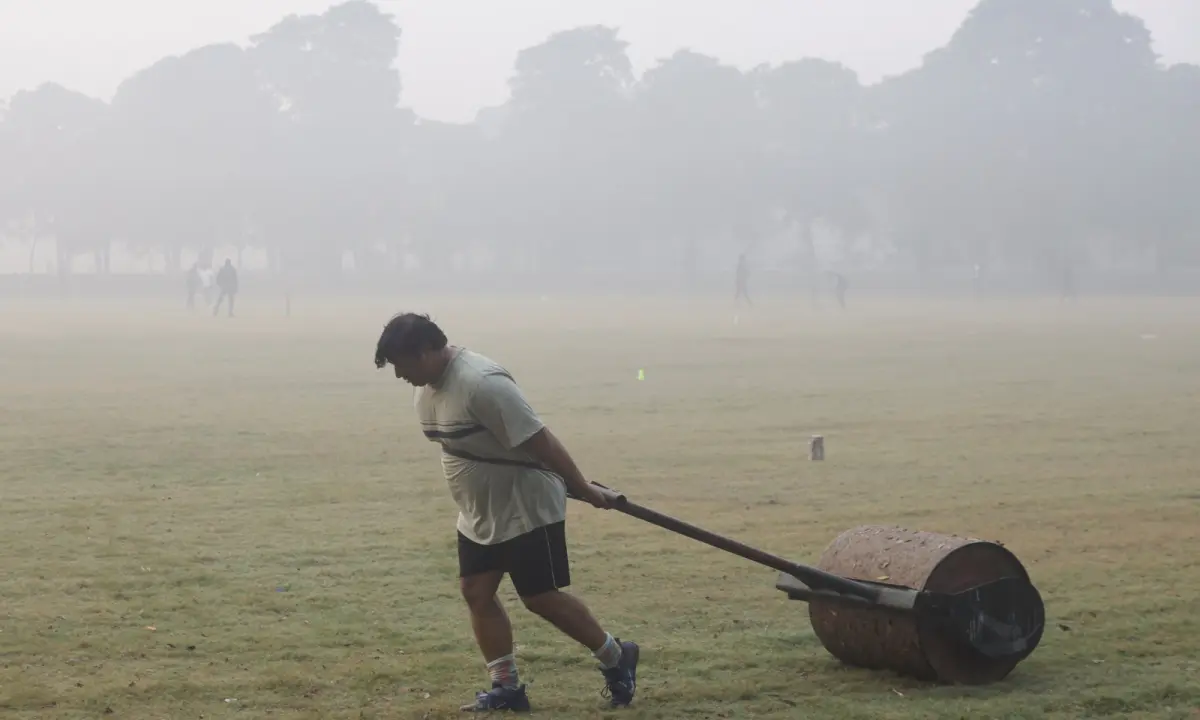
A man pulls a pitch roller amid smog and air pollution during the early morning in Lahore, Pakistan on November 11, 2026. —Reuters
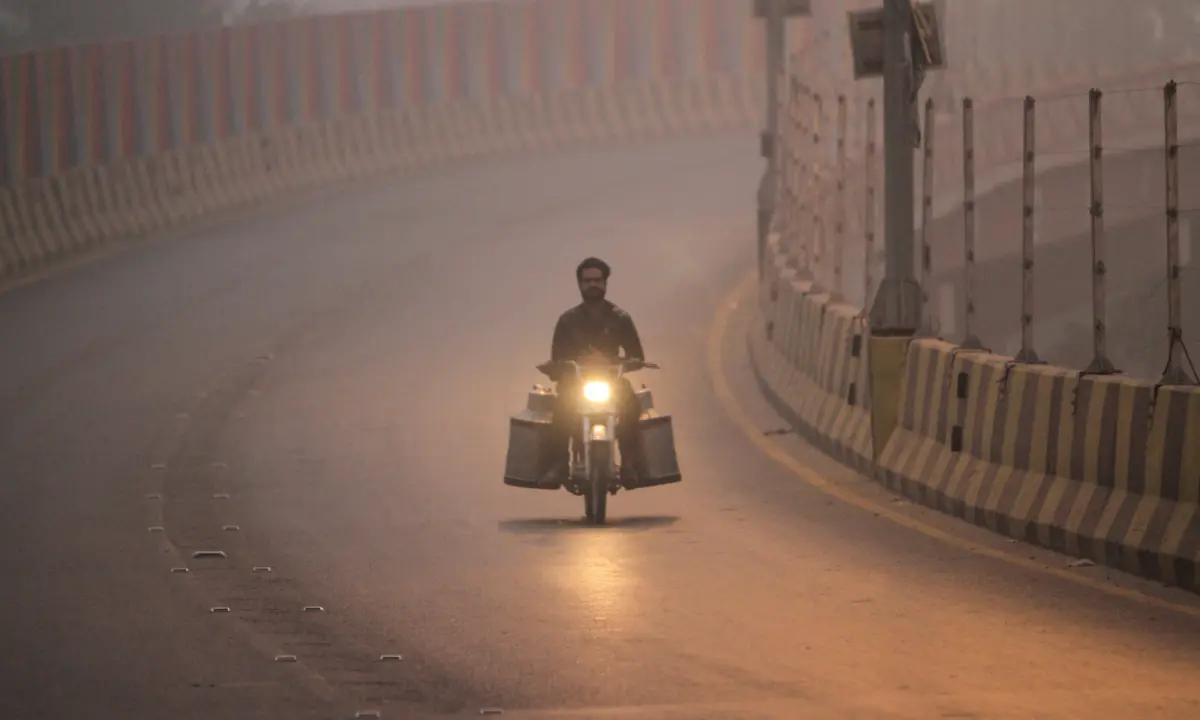
Header image: A man rides a motorcycle amid smog and air pollution in the early morning in Multan, Pakistan on November 11, 2026. —Reuters
NEW DELHI: India’s air pollution monitors were overwhelmed this week by toxic smog so severe that concentrations exceeded their upper measurement limit, equivalent to 66 times the World Health Organization’s recommended daily maximum, regulators said.
The admission comes after opposition politicians accused authorities of deliberately allowing gaps in official readings for several hours overnight Sunday into Monday, just as pollution surged with a barrage of fireworks for Diwali, the Hindu festival of lights.
New Delhi is one of the world’s most polluted capitals, where winter smog from vehicle emissions, farm fires and industry already chokes millions.
But the missing readings meant official data failed to capture the full extent of the pollution at its worst.
“The government which shuts down air quality monitoring stations on the night of Diwali, the government that does data fraud, how will you trust such a government?” Aam Aadmi Party (AAP) Delhi president Saurabh Bharadwaj said in a video posted on X.
“If Diwali night’s PM2.5 (toxic particulates) is not in the record, who will answer for that air?” senior Congress party lawmaker Ajay Maken said in a social media post.
The Central Pollution Control Board (CPCB) rejected accusations of deliberate under-reporting, saying the gaps reflected “differences in measurement of pollutant concentration” rather than an attempt to conceal pollution.
‘Extreme episodes’
Particulate matter analysers, installed when the National Air Quality Index (NAQI) was introduced in 2015, were calibrated to measure concentrations of up to 1,000 micrograms per cubic metre.
The WHO recommends a daily maximum of 15 micrograms per cubic metre for PM2.5, fine particles small enough to penetrate deep into the lungs and linked to cancer.
“The designed system of automated data validation treats hourly readings beyond the calibrated range as outside range, and such readings are not used in the computation,” the Central Pollution Control Board (CPCB) said in a statement late Tuesday.
“During extreme episodes, which are occasional like Diwali firecracker bursting, this may appear as a data gap at the particular station concerned”, it added.
Although choking clouds filled the streets early Monday, the scale of the pollution was only captured when monitors resumed reporting, around eight hours after the fireworks peaked.
Readings then hit 879 micrograms per cubic metre in the Mandir Marg locality, according to monitoring organisation IQAir, which cited data from a city government station. That is more than 58 times the WHO daily limits.
“There is one thing the people of Delhi can be certain of: the fact that the data has gone missing doesn’t mean the pollution has disappeared too,” Congress party lawmaker Pawan Khera added.
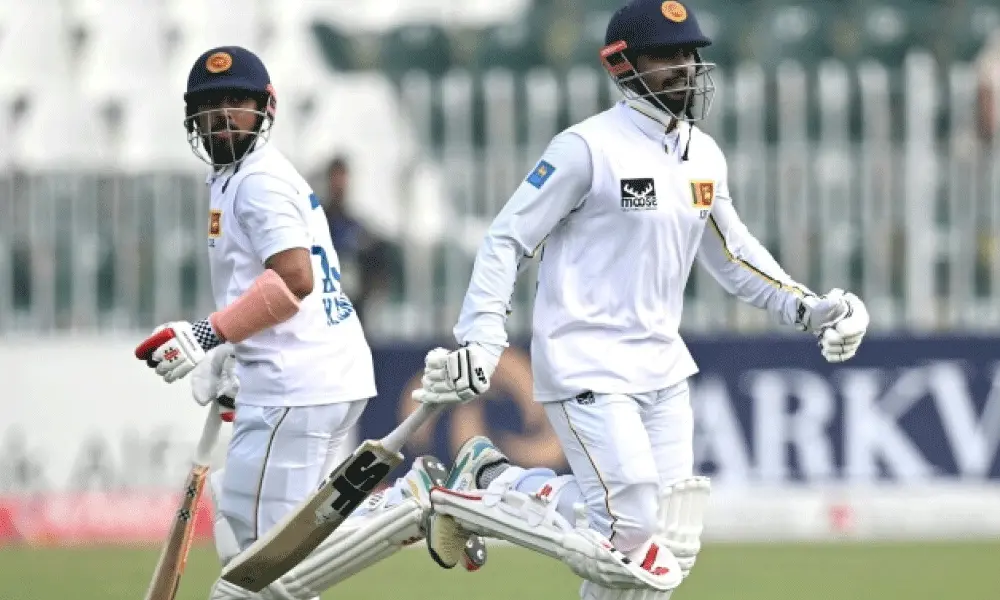
RAWALPINDI: Fifties from Dhananjaya de Silva and Kamindu Mendis helped Sri Lanka reach 221-4 at lunch on day three of the opening Test against Pakistan in Rawalpindi on Wednesday.
After resuming at 114-3, De Silva was on 87 after reaching his 21st half-century, while skipper Kusal Mendis was 21 not out, leaving the tourists still 213 runs behind Pakistan’s first innings 434-9 declared.
Sri Lanka lost just one wicket in the session as De Silva and Kamindu put on a 91 for the fourth wicket, enjoying a stroke of fortune along the way.
De Silva, on 38, flashed at a Razaullah delivery but Saud Shakeel failed to hold on a sharp chance at slip.
De Silva took full advantage of the reprieve and has so far hit nine fours off 121 balls.
LOS ANGELES: Nicolas Cage so fully transformed himself into NFL legend John Madden for the new biopic “Madden” that co-star Kathryn Hahn says she spent an entire production with him without ever feeling she had met the real Cage.
Hahn, who plays Madden’s wife Virginia, said Cage remained covered in prosthetics throughout production, transforming him into Madden more than just physically.
“I do feel like he fully embodied John Madden,” Hahn told Reuters. “I would even venture to say that I haven’t really met Nicolas Cage yet because the prosthetics do something to you. He was definitely transformed from within.”
Directed by David O. Russell, the sports film arrives in select theaters on Wednesday and on Prime Video on November 18.
The movie follows Madden from his years as a Super Bowl-winning coach of the Oakland Raiders under owner Al Davis to his role in creating Madden NFL with Electronic Arts, one of the most influential video game franchises in history.
After retiring from coaching, Madden became one of the most recognizable voices in American football during a three-decade broadcasting career before retiring in 2009.
The cast includes Christian Bale as Davis and Sienna Miller as Davis’ wife Carol Davis.
Miller, who grew up in Britain not knowing about Madden or Davis, said she was struck by the strength of the Davises’ marriage.
“He was devoted, completely devoted to her, and likewise,” she said. “And that was inspiring.”
Hahn, who played the witch Agatha Harkness in “WandaVision” and “Agatha All Along,” said the film needed to examine the challenges in the Maddens’ marriage and family life.
She said exploring the less visible parts of the Maddens’ marriage and family life helped make them more than two-dimensional characters. “That’s what makes it such a human story,” she said.
Prime Minister Shehbaz Sharif is set to highlight Pakistan’s climate priorities at the COP31 Antalya Leaders’ Summit in Turkiye today, with other world leaders joining him in setting out their climate priorities.
Delegates from nearly 200 countries are meeting in the Mediterranean resort city of Antalya as global greenhouse gas emissions show little sign of falling and wars, inflation and other crises compete for political attention.
The world leaders will begin their speeches in the afternoon and continue through the day on Thursday, according to the COP31 schedule.
Wednesday’s speakers are also expected to include Brazilian President Luiz Inacio Lula da Silva, who was re-elected at the end of October, and whose country hosted last year’s climate talks.
European Commission President Ursula von der Leyen, Chinese Vice President Han Zheng, and Marshall Islands President Hilda Heine will also speak on Wednesday.
The United States, the world’s largest historical emitter, has skipped the talks for the second year in a row after President Donald Trump — who has called global warming a hoax — withdrew the US from climate cooperation following his return to office in 2025.
For his part, PM Shehbaz will highlight Pakistan’s climate priorities and emphasise the urgent need for enhanced global climate action and strengthened international cooperation to mitigate the adverse impacts of climate change, the Prime Minister’s Office (PMO) said following the premier’s arrival in Turkiye on Tuesday night.
The Foreign Office (FO) has said the prime minister will also highlight “Pakistan’s steps towards rapid solarisation and expansion of its renewable energy capacity, as part of its transition towards a cleaner and more resilient economy, along with its efforts to strengthen disaster preparedness and early-warning systems”.
He will call for predictable, adequate and accessible climate finance for developing countries to strengthen their resilience and pursue sustainable development, it added.
PM Shehbaz will also address a high-level dialogue on clean energy transition and electrification convened by the COP31 presidency, titled “35 by 35: Powering the Future” and scheduled for 3pm local time (5pm Pakistan time).
On the sidelines of the summit, the prime minister is scheduled to hold bilateral meetings with Turkish President Recep Tayyip Erdogan and other world leaders attending COP31 to discuss matters of mutual interest and explore avenues for strengthening bilateral cooperation.
According to the PMO, a “Pakistan Pavilion” has been established at the COP31 venue where 54 events will be hosted on various themes.
‘Difficult start’
Ahead of the conference, negotiators had been locked in discussions late on Sunday over demands by developing nations to include items on climate finance in the official agenda.
“This has already been a difficult start for COP31,” said Jasper Inventor, head of Greenpeace’s COP31 delegation.
Under UN climate agreements, developed countries, which are historically responsible for most greenhouse gas emissions, have provided financial support to help developing nations adapt to climate impacts and transition to cleaner energy. But poorer countries say the sums remain insufficient.
Inventor said developed countries were “taking a hard line” over whether to include a platform, agreed at COP30 in Brazil last year, aimed at discussing how wealthy nations should provide funds to developing nations.
African countries are also pushing for the agenda to include discussions on the tripling of adaptation finance, which aims to help poorer nations pay for measures such as building sea walls or planting drought-resistant crops.
Observers say few major breakthroughs are expected at COP31 as countries grapple with an oil price shock and geopolitical tensions fuelled by the US war on Iran and Russia’s conflict in Ukraine.
As negotiators tussled in Antalya, the UN’s World Meteorological Organisation released a report indicating that 2026 has continued a streak of exceptional global temperatures, melting ice and rising sea levels.
India’s air pollution monitors were overwhelmed this week by toxic smog so severe that concentrations exceeded their upper measurement limit, equivalent to 66 times the World Health Organisation’s recommended daily maximum, regulators said.
The admission comes after opposition politicians accused authorities of deliberately allowing gaps in official readings for several hours overnight Sunday into Monday, just as pollution surged with a barrage of fireworks for Diwali, the Hindu festival of lights.
New Delhi is one of the world’s most polluted capitals, where winter smog from vehicle emissions, farm fires and industry already chokes millions.
But the missing readings meant official data failed to capture the full extent of the pollution at its worst.
“The government which shuts down air quality monitoring stations on the night of Diwali, the government that does data fraud, how will you trust such a government?” Aam Aadmi Party (AAP) Delhi president Saurabh Bharadwaj said in a video posted on X.
“If Diwali night’s PM2.5 (toxic particulates) is not in the record, who will answer for that air?” senior Congress party lawmaker Ajay Maken said in a social media post.
The Central Pollution Control Board (CPCB) rejected accusations of deliberate under-reporting, saying the gaps reflected “differences in measurement of pollutant concentration” rather than an attempt to conceal pollution.
‘Extreme episodes’
Particulate matter analysers, installed when the National Air Quality Index (NAQI) was introduced in 2015, were calibrated to measure concentrations of up to 1,000 micrograms per cubic metre.
The WHO recommends a daily maximum of 15 micrograms per cubic metre for PM2.5, fine particles small enough to penetrate deep into the lungs and linked to cancer.
“The designed system of automated data validation treats hourly readings beyond the calibrated range as outside range, and such readings are not used in the computation,” the Central Pollution Control Board (CPCB) said in a statement late Tuesday.
“During extreme episodes, which are occasional like Diwali firecracker bursting, this may appear as a data gap at the particular station concerned”, it added.
Although choking clouds filled the streets early Monday, the scale of the pollution was only captured when monitors resumed reporting, around eight hours after the fireworks peaked.
Readings then hit 879 micrograms per cubic metre in the Mandir Marg locality, according to monitoring organisation IQAir, which cited data from a city government station. That is more than 58 times the WHO daily limits.
“There is one thing the people of Delhi can be certain of: the fact that the data has gone missing doesn’t mean the pollution has disappeared too,” Congress party lawmaker Pawan Khera added.
“The poisonous smoke we have been inhaling… will continue to choke our lungs, threaten our lives and shorten our life expectancy”.
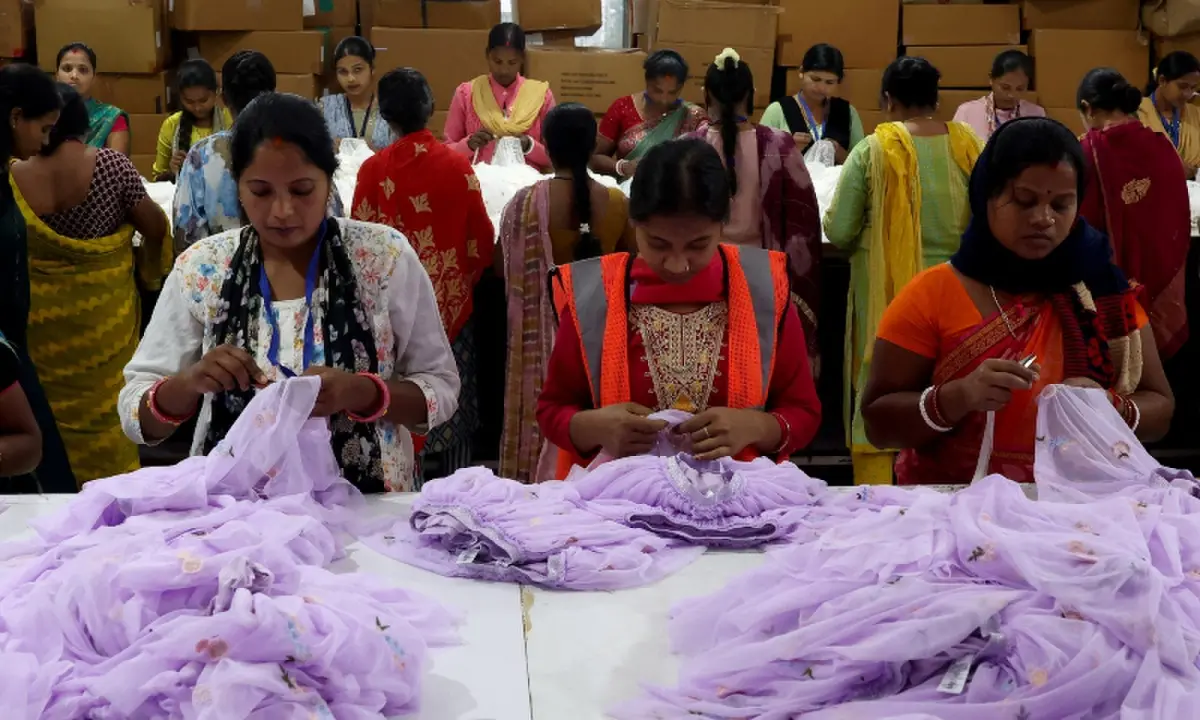
At Orient Craft’s factory in Ranchi, hundreds of women stitch dresses, shirts and children’s clothing for British retailers Next and Marks & Spencer.
Not long ago, most of Orient Craft’s output would have gone to the US. But founder Sudhir Dhingra, 77, has cut shipments there since the US hiked tariffs, which rose to as much as 50 per cent last year, hitting orders from customers including American Eagle and Gap.
Even with duties now lower and the possibility of a trade pact, Dhingra has decided it is too much of a risk to depend so heavily on one market.
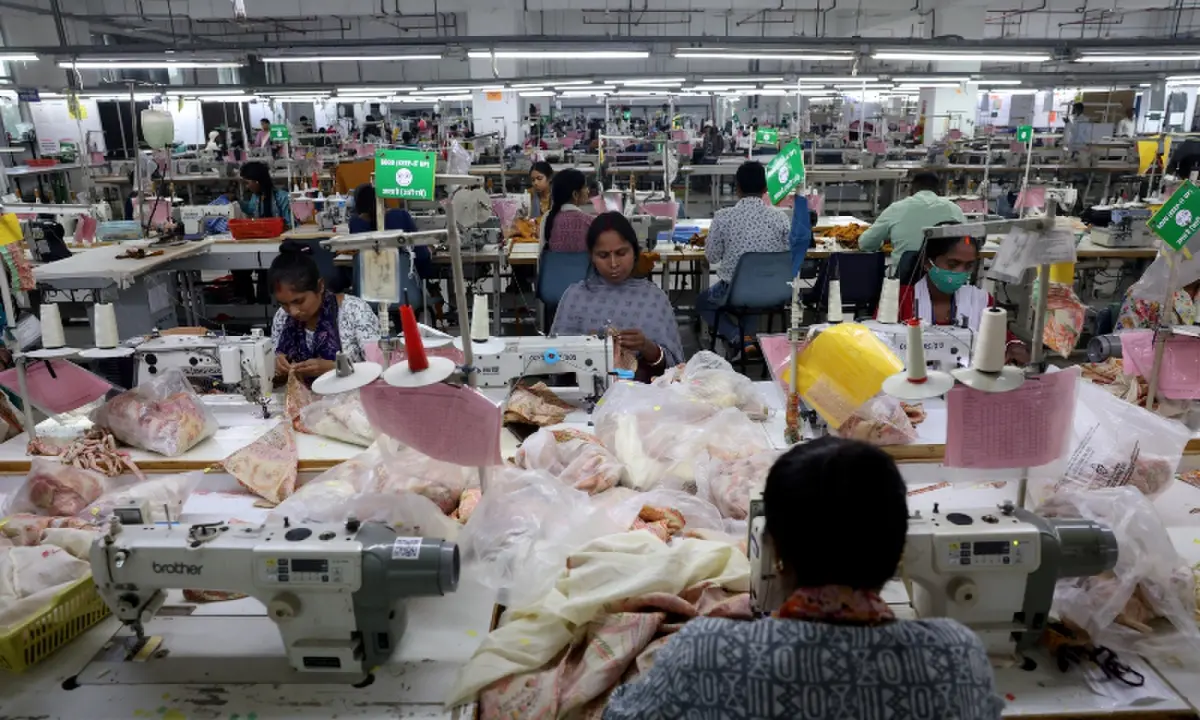
Workers stitch clothes using sewing machines at a garment factory of Orient Craft in Ranchi, India, October 28, 2026. —Reuters
“Even if there is a deal, what is the guarantee that it will hold water?” he said. “I don’t wish to see that sword on my head.”
Orient Craft is one of many Indian companies reconfiguring their export destinations, and their exposure to the US, in light of the tariff shock, in a move that is likely to strengthen New Delhi’s hand in its trade negotiations with Washington, and potentially reduce India’s vulnerability to US pressure over time.
Dhingra said US buyers cancelled orders or sought discounts after US President Donald Trump first announced the tariff hikes in April 2025, with some asking suppliers to absorb 25pc of the duty, despite manufacturers’ margins being less than 10pc.
Orient Craft has since moved sales to Britain, Europe and, to a lesser extent, India. The US now accounts for less than 10pc of sales, down from 84pc before the tariffs, with annual exports of about 1.5 billion rupees ($15.82 million).
US duties on Indian product are currently 10pc under Section 301, a US law allowing tariffs on imports, as well as base tariffs from 6pc to 12pc.
Gokaldas Exports, which employs more than 53,000 people and is one of India’s biggest garment exporters, is turning to Europe.
“It is not a temporary shift,” said Managing Director Sivaramkrishnan Ganapathi.
Workers stitch clothes using sewing machines at a garment factory of Orient Craft in Ranchi, India, October 28, 2026. —Reuters
The company aims to raise Europe’s revenue share to 25pc to 30pc over the next 3 to 5 years, he said, from 15pc to 16pc, reducing the US share to 35pc to 40pc from 50pc to 55pc.
In April to August, India’s textile, apparel and home-furnishings exports to the US fell 9.8pc to $4.0bn, while shipments to other markets rose 3.7pc to $15.2bn, according to the Global Trade Research Institute.
Building new markets, lowering costs
Exporters said US tariff uncertainty, higher shipping costs and US buyers’ discount demands have squeezed margins, making other markets, including the UAE, UK and EU, look more attractive.
Indian clothing also gets duty-free access to Britain under the India-UK trade deal that came into effect in July, while a similar EU agreement could eliminate duties of 12pc to 17pc.
“Germany, France, Italy and the Netherlands are key targets,” said A. Sakthivel, chairman of the Apparel Export Promotion Council, an industry group.
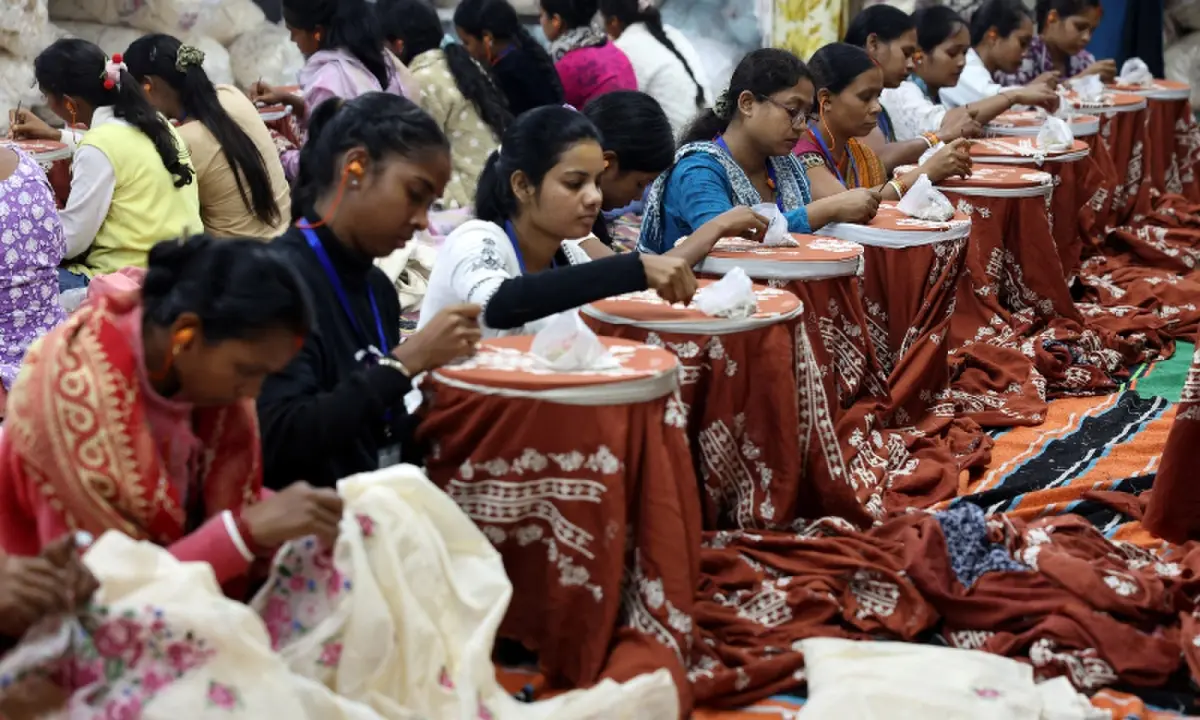
Workers inspect clothes for loose threads and other defects at a garment factory of Orient Craft in Ranchi, India, October 28, 2024. —Reuters
Exporters are also looking to lower manufacturing costs.
Ranchi, in the eastern state of Jharkhand, is best known for coal and iron ore, but is now luring garment factories with subsidies, easier land access and its educated and reliable workforce.
Reuters visited three factories in and around Ranchi, together employing about 8,000 people.
“We have at least a 10pc efficiency advantage here over other locations,” said Mrityunjay Singh, senior vice president of operations at Gokaldas, which has two factories in Ranchi and plans to open a third, creating up to 4,600 jobs.
“We can’t rely on a single market, product or buyer,” said Birendra Rawat of Ranchi-based Auburn Design, which makes Jockey underwear and clothing for local licensee Page Industries, and produces 5m to 6m garments a month to be sold in India and neighbouring countries.
India’s own apparel market, valued at $150bn and growing 7pc to 8pc annually, provides a buffer against export uncertainty through steadier cash flows and demand.
“Diversification is becoming a structural strategy, especially for exporters heavily exposed to the US market,” said Chandrima Chatterjee, secretary general of the Confederation of Indian Textile Industry.
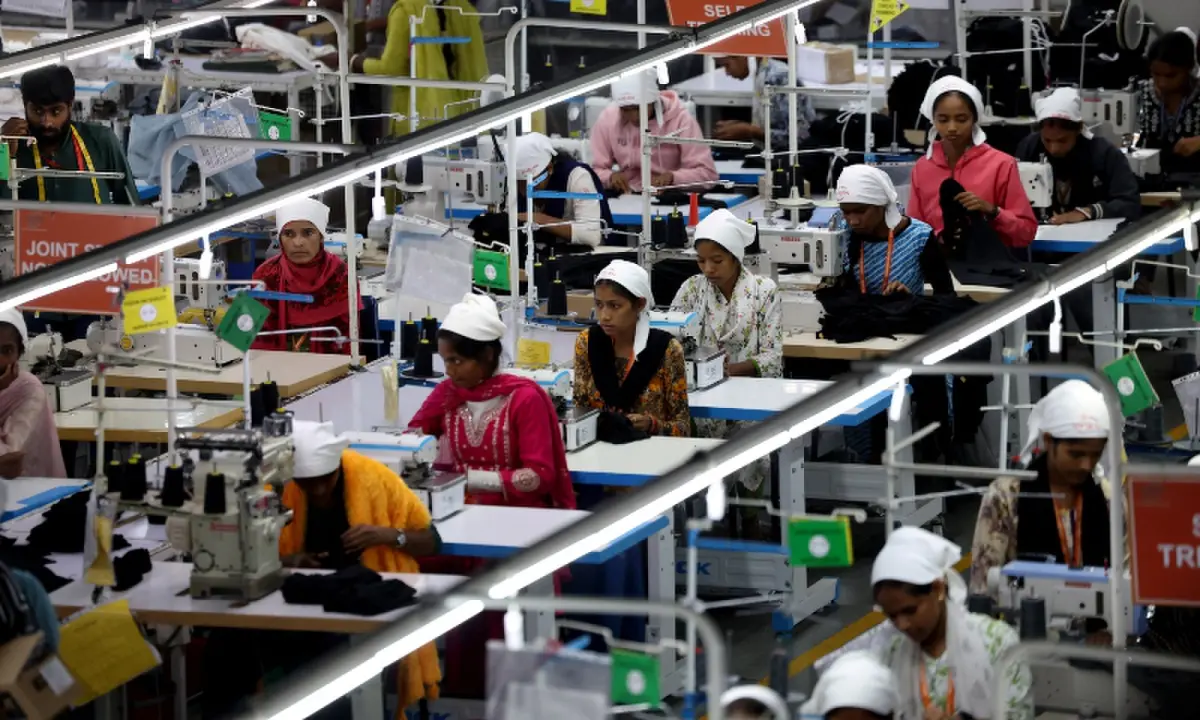
Workers stitch clothes using sewing machines at a garment factory of Orient Craft in Ranchi, India, October 28, 2026. —Reuters
Exporters said they would not abandon the US completely given the size of the market and longstanding relationships with buyers, but the upheaval of the tariff shock meant the US was unlikely to regain its former dominance, even if duties eased.
“The US market remains important, but it can’t decide the future of thousands of families who depend on us,” Dhingra said.
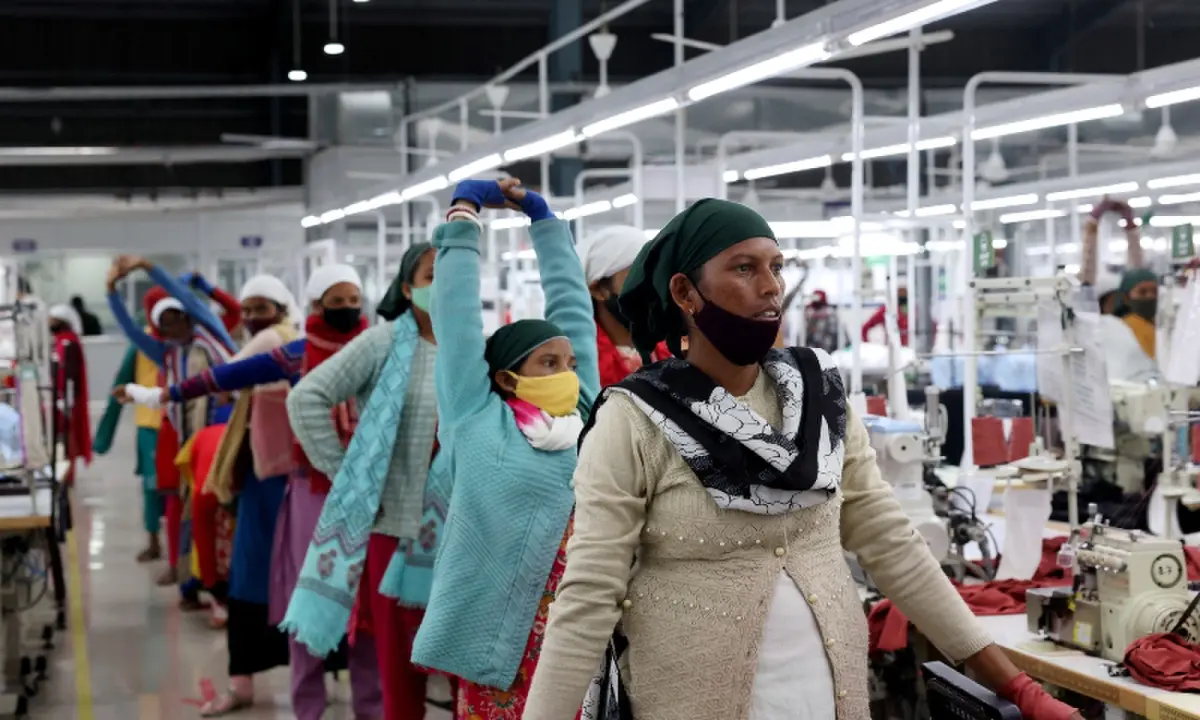
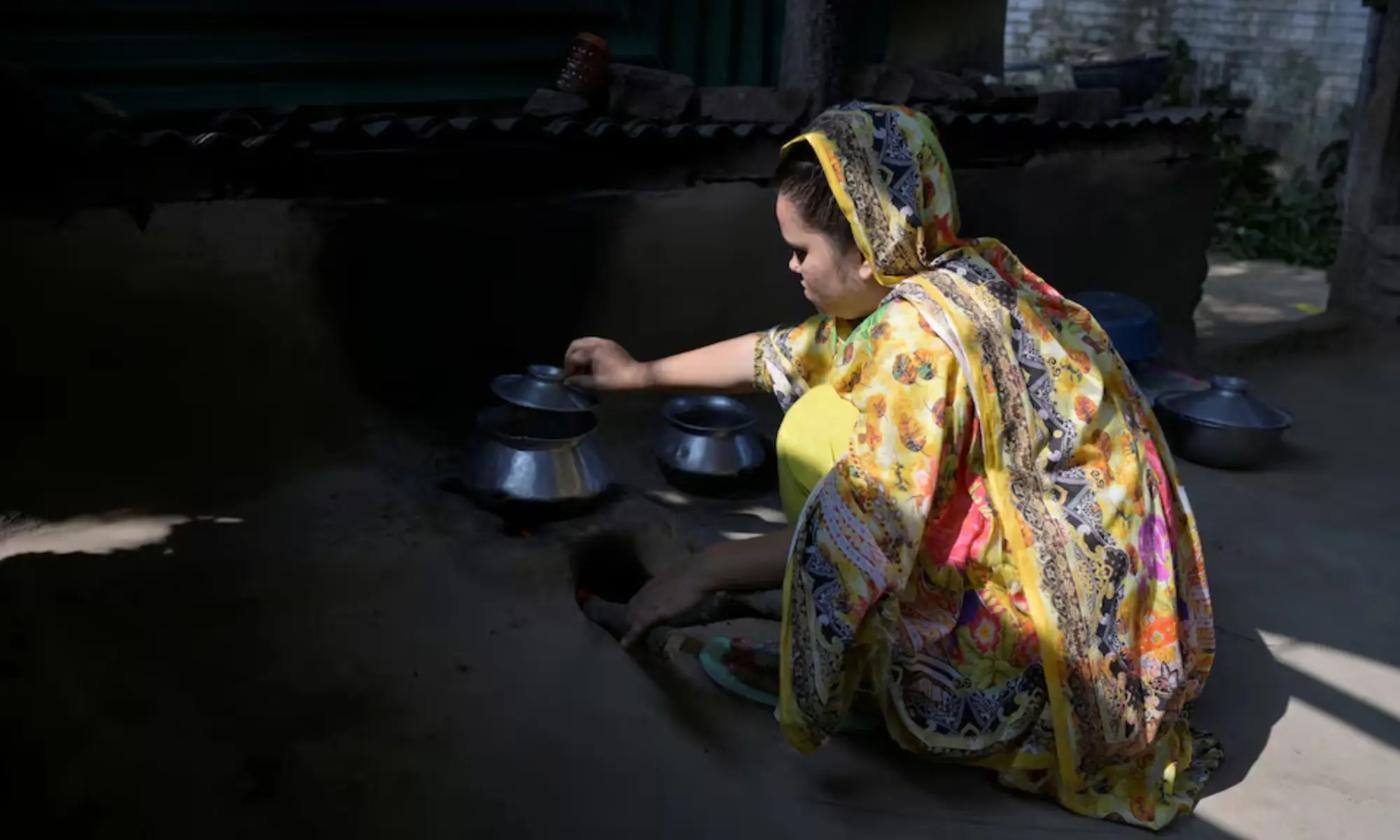
GAZIPUR: Before dawn each day, garment worker Shilpi Khatun cooks over a wood-fired clay stove because her family cannot afford gas, before heading to a factory in Gazipur, an industrial hub on the outskirts of Dhaka.
The 27-year-old is the sole breadwinner in a household where her husband is unemployed and her parents and in-laws depend on her wages.
Rising prices have left Khatun struggling to afford basic necessities despite five years in the garment industry, a frustration shared by thousands of Bangladesh’s garment workers who staged protests last week demanding the minimum monthly wage be raised to 30,000 taka ($242.82) from 12,500 taka.
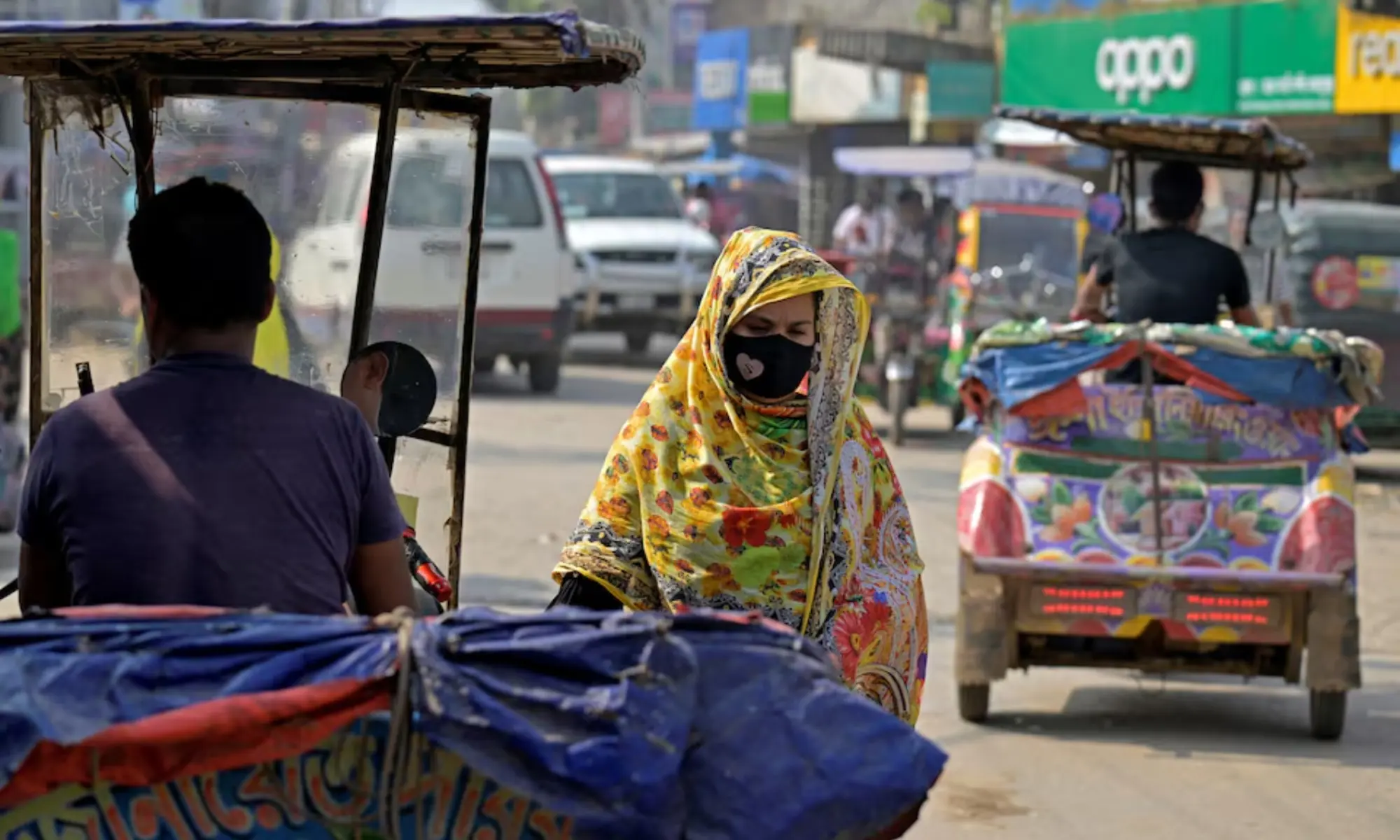
Shilpi Khatun, 27, a garment worker, walks in a busy street in Gazipur, Bangladesh on November 6, 2026. —Reuters
“Everything costs more now. Rent has doubled, food is more expensive and whatever I earn disappears before the month is over,” Khatun said as she gathered leafy greens outside her home to eat with rice for lunch.
Wage pressure mounts
Last week’s unrest, some of it violent, forced hundreds of factories to shut down as workers staged protests and clashed with police, who used tear gas and sound grenades to disperse demonstrators.
The government’s wage board agreed on November 4 to implement a revised wage structure from December, with workers set to receive their first pay under the new scale in January, but has yet to determine the size of the increase.
Low labour costs have helped make Bangladesh the world’s second-largest apparel exporter after China and a preferred manufacturing base for global brands including H&M, Zara, Gap, Primark and Walmart. The industry generates more than 80 per cent of the country’s export earnings and employs more than 4 million people.
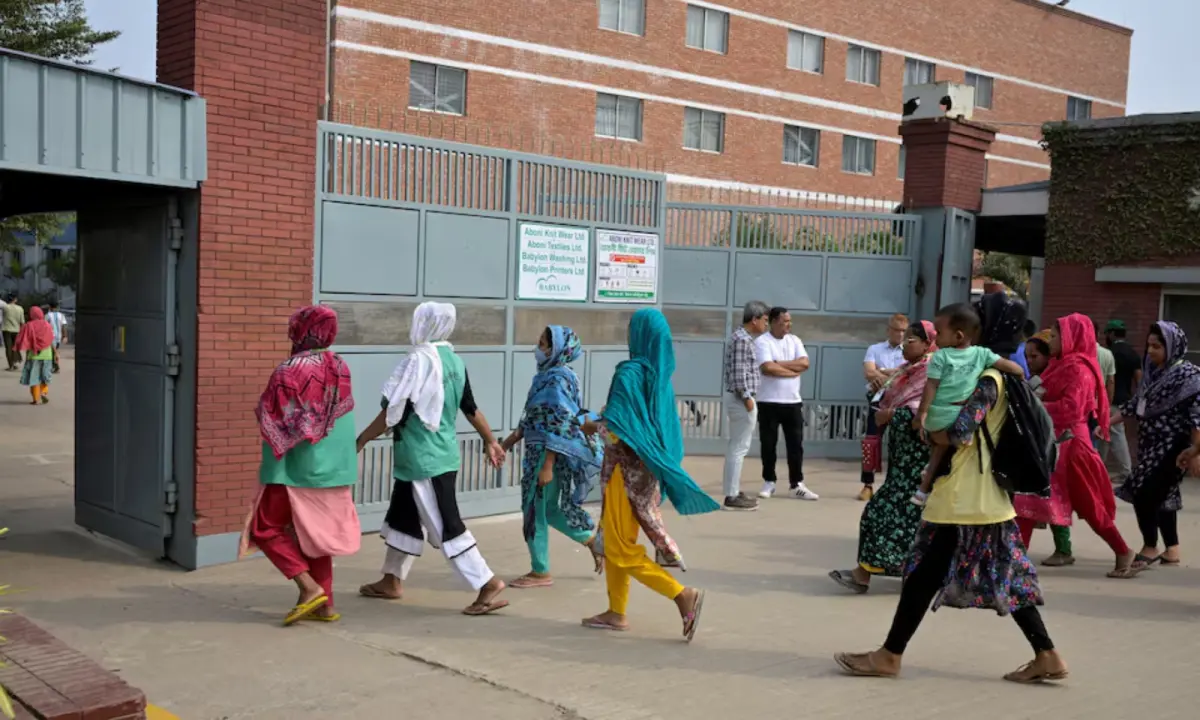
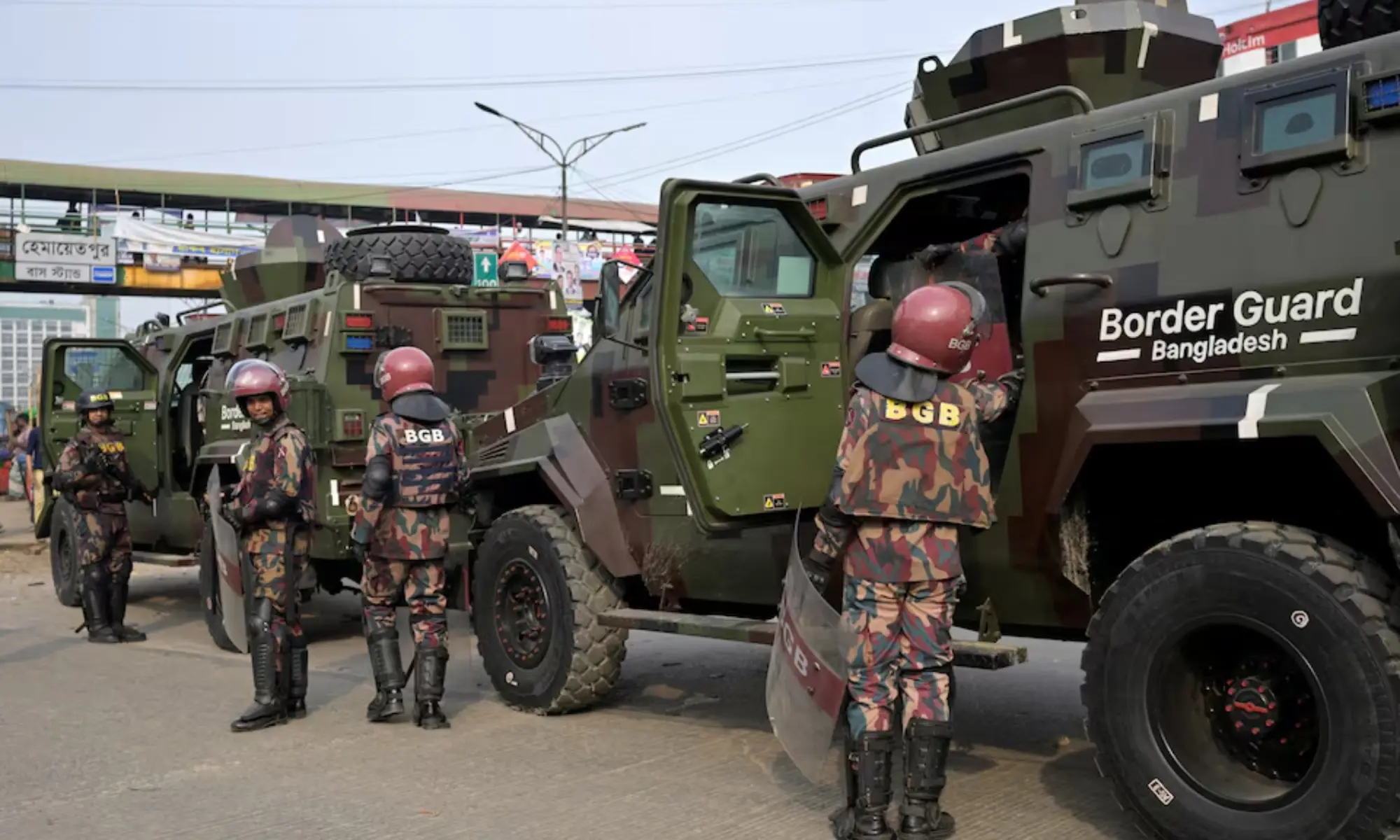
Members of the Border Guard Bangladesh (BGB) stand guard outside a garment factory in Baipail, near Dhaka, Bangladesh on November 5, 2026. —Reuters
Manufacturers, however, say a steep wage increase would erode Bangladesh’s cost advantage over rivals such as India and Vietnam and further squeeze margins already under pressure from higher energy costs.
Workers also receive a 9pc annual increment and two festival bonuses in addition to their basic wages, manufacturers say, arguing there is limited room for substantial pay increases.
Workers make stark choices
Workers like Khatun say the wage increase has not kept pace with rising prices, forcing them to make difficult choices over everyday spending.
On the hardest days, Khatun’s family survives on puffed rice, she said. Sitting in the small tin-shed room she shares with her husband, she said she had not seen a doctor in three years despite worsening health problems.
Her salary has crept up over five years but not enough to match rising costs. She now earns 13,500 taka ($108), up from 9,000 taka when she started. With overtime, she earns about 16,000 taka, but the money rarely lasts until the next payday, she said.
Shilpi Khatun, 27, a garment worker, cooks food in a shared kitchen area outside her one-room house in Gazipur, Bangladesh on November 6, 2026. —Reuters
Bangladesh has faced a prolonged cost-of-living squeeze since 2022, with inflation averaging around 9pc. Food prices initially drove the surge, but non-food costs have remained high.
“I think twice before buying anything, even food,” said Roksana Parveen, a 29-year old sewing operator in a factory in Ashulia on the outskirts of Dhaka.
“I know my daughters should be eating better, but I just can’t afford it.”
Parveen and her two daughters often live on little more than rice and vegetables, with meat and fish becoming luxuries beyond their reach. To cut costs, one of her daughters dropped out of school.
Header image: Garment workers enter a factory to begin their shift in Baipail, near Dhaka, Bangladesh on November 5, 2026. —Reuters
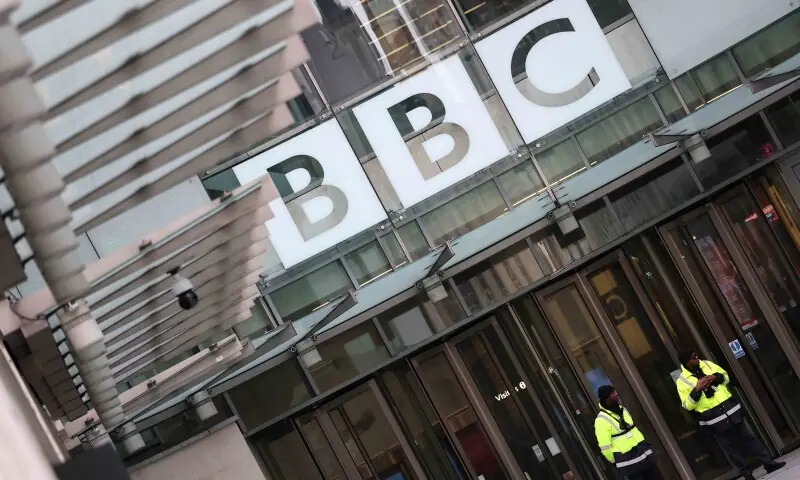
A federal judge allowed US President Donald Trump’s multi-billion dollar defamation suit against the BBC to proceed on Tuesday, rejecting a bid by the British broadcaster to dismiss the case.
Trump has accused the BBC of deceptively editing a documentary to make it seem as if he was inciting violence when he told supporters to march on the US Capitol on Jan 6, 2021.
He has sought at least $5 billion each for one claim of defamation and a separate claim under a Florida consumer protection law.
US District Judge Jeffrey T. Kuntz rejected the BBC’s bid to dismiss the defamation suit, but tossed the Florida protection law claim.
“Whether President Trump can prove these claims and establish he sustained damages at summary judgement or trial is left for another day,” Kuntz wrote in a 40-page ruling.
The BBC documentary at issue spliced together two separate sections of Trump’s speech on January 6, 2021, making it appear that he had explicitly urged supporters to attack the US Capitol.
While the BBC has apologised for the incident, which prompted the resignation of multiple senior executives, the broadcaster has denied it caused Trump any real injury.
“Given the time disparity between the two statements, the distance itself tends toward a plausible inference that BBC knew or should have known that the segment they were creating would not and could not have been a truthful statement,” Kuntz said in his ruling.
“This was not trimming around the edges but creating something different than what was stated in the speech.” Trump, in a Truth Social post, hailed the Kuntz’s ruling as “A Huge Victory.”
“We will continue fighting against, and defeating, all of those who try to deceive the American People!” he added.
Last month, the president faced a setback in the case when a magistrate judge ordered him to give a deposition by Dec 11, after the BBC claimed he was dodging their efforts to get sworn testimony.
Trump risks sanctions if he fails to attend the deposition by then, including the potential dismissal of his lawsuit, the court said.