Author: Theph

  • Iran will not allow enriched nuclear material to leave the country, security chief says

    Iran will not allow enriched nuclear material to leave the country, security chief says

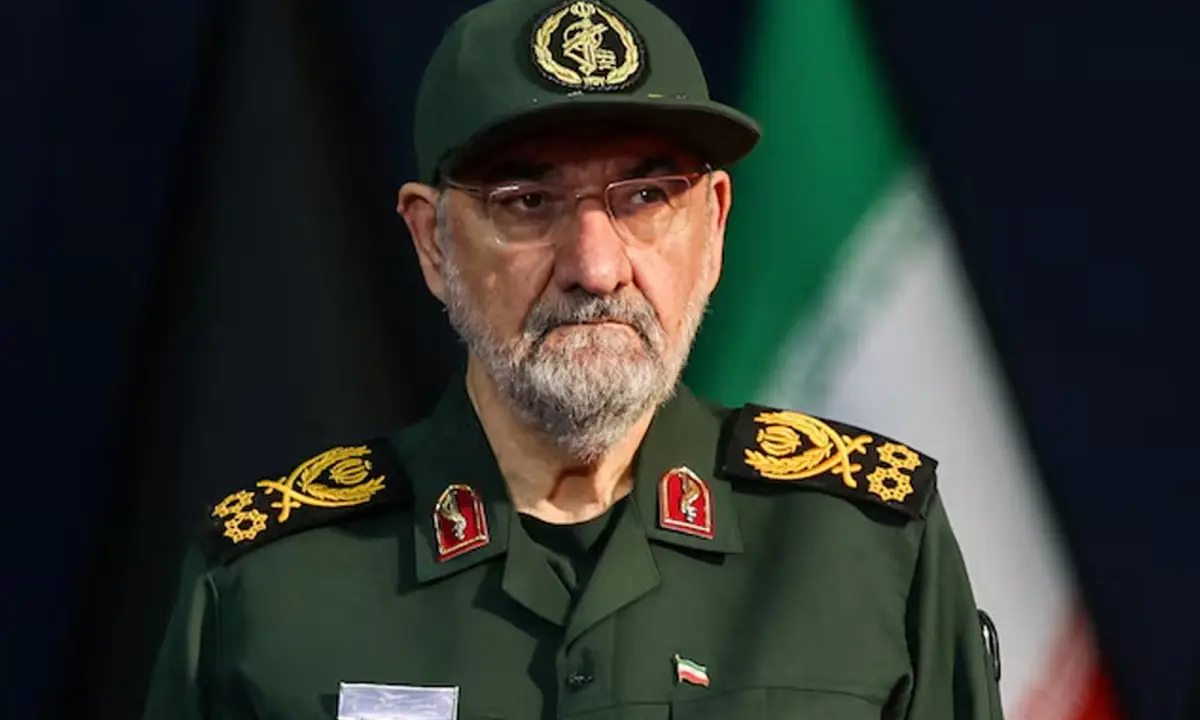
    DUBAI: Iran will not allow even a single particle of enriched nuclear material to leave the country and there will be consequences in the event of any new US strikes on the Islamic Republic, Iranian security chief Mohsen Rezaei said in televised remarks.

    Rezaei was speaking to Lebanon’s pro-Iranian Al Mayadeen TV after US officials downplayed the need for additional military action against Iran, with analysts noting President Donald Trump’s more conciliatory tone since the Republicans’ defeat in the November 3 midterm elections.

    Rezaei has said there are currently no negotiations taking place between Tehran and Washington.

    “Any new US attacks will also be met with targeting US bases far away,” he said.

    Iran’s Supreme Leader has issued a directive that the country’s near-weapons-grade uranium should not be sent abroad, two senior Iranian sources said in May.

    Rubio tells G7 US will keep imposing ‘devastating’ costs on Iran, diplomats say

    The IAEA estimates that Iran had 440.9 kg of uranium enriched to 60% — a level far higher than needed for civilian use — when Israel and the US attacked Iranian nuclear facilities in June 2025. How much of that ⁠has survived is ​unclear.

    Israel, the United States and other Western countries have long accused Iran of seeking nuclear weapons. Iran denies the accusation.

    Washington has said nuclear issues must be part of any initial negotiations with Iran aimed at ending the war between the two countries.

    Iran has sent the United States a nuclear proposal via Qatar, to be discussed only after Washington meets seven demands which Tehran has presented, a senior Iranian official told Reuters last week.

    Source: brecorder

  • Palm climbs over 3% on firmer soyoil, softer stock build

    Palm climbs over 3% on firmer soyoil, softer stock build

    KUALA LUMPUR: Malaysian palm oil futures surged more than 3% on Wednesday, snapping six sessions of losses, as firmer soyoil and key industry data that showed stocks rose less than expected lifted the market.

    The benchmark palm oil contract for January delivery on the Bursa Malaysia Derivatives Exchange gained 151 ringgit, or 3.55%, to 4,407 ringgit ($1,082.27) a metric ton at the close.

    The market rallied after stronger overnight soybean oil prices and a smaller-than-expected buildup in Malaysian inventories following the latest Malaysian Palm Oil Board report, said David Ng, a proprietary trader at Kuala Lumpur-based trading firm Iceberg X Sdn Bhd.

    “However, market sentiment remains sensitive to movements in soybean oil and export pace,” he said.

    Malaysia’s palm oil stocks climbed to a record high in October, surpassing the peak set a month earlier, as another month of bumper output outweighed a rebound in exports. However, the figure was lower than expectations of a stock high of 3.75 million tons in a Reuters survey.

    Meanwhile, cargo surveyors estimated that Malaysian palm oil product exports for November 1-10 fell between 1.9% and 2.3% from a month earlier.

    Dalian’s most-active soyoil contract rose 1.15%, while its palm oil contract added 2.57%. Soyoil prices on the Chicago Board of Trade were up 1.08%.

    Palm oil tracks the price movements of rival edible oils, as it competes for a share of the global vegetable oils market.

    The ringgit, palm’s currency of trade, weakened 0.39% against the dollar, making the commodity slightly cheaper for buyers holding foreign currencies.

    Oil prices rose about 1% from the previous session’s two-month lows, after Iran’s security chief said Tehran would not allow even a single particle of enriched nuclear material to leave the country.

    Stronger crude oil futures make palm a more attractive option for biodiesel feedstock.

    Source: brecorder

  • Indian rupee touches strongest since April as foreign inflows offset firm dollar

    Indian rupee touches strongest since April as foreign inflows offset firm dollar

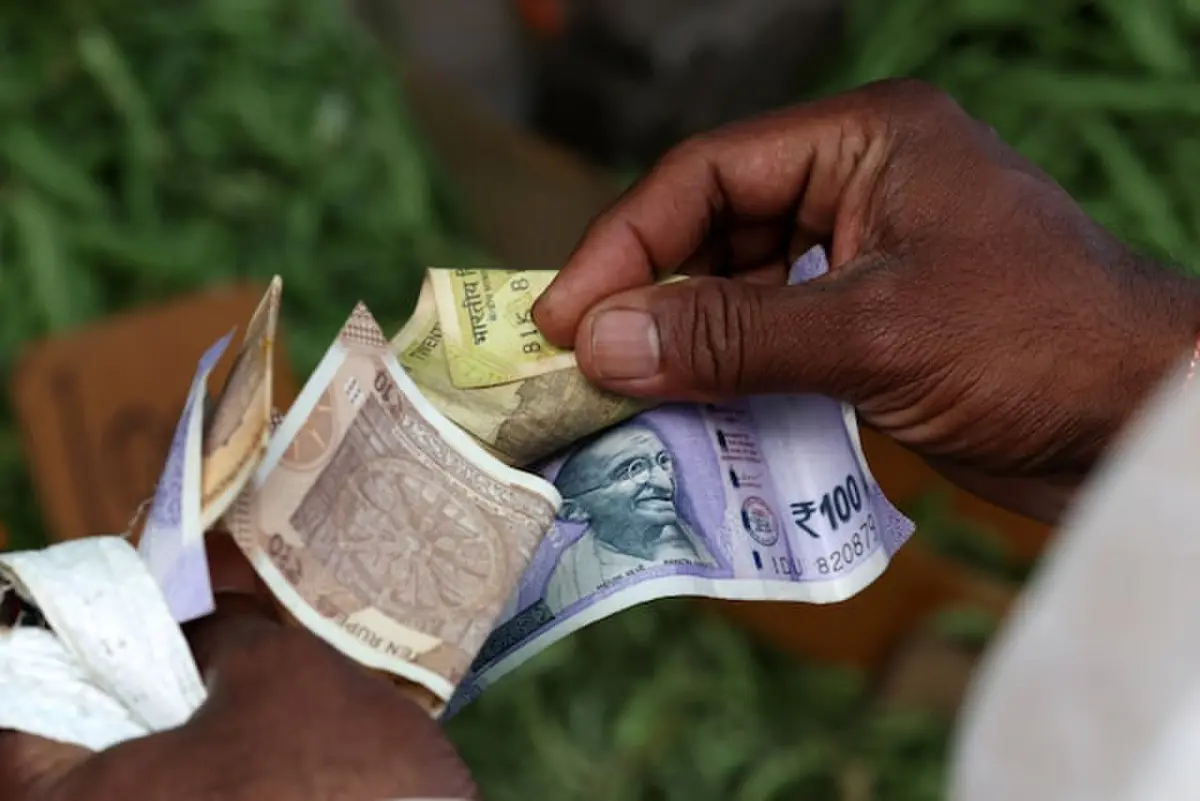
    MUMBAI: The Indian rupee touched its strongest level since April on Wednesday, shrugging off a broadly stronger dollar as foreign inflows into local stocks and price action in the non-deliverable forward market supported the currency.

    The Indian rupee ended at 93.69 per dollar, up 0.2% on day and after touching a high of 93.6350 in afternoon trading.

    The unit has recovered since hitting a record low of 96.96 in May and threatening to breach it last month. It is now down about 4% year-to-date, nearly halving its losses from its worst point in the year so far.

    Traders pointed to broad-based dollar selling interest through the session, with activity in the NDF market too pointing to sentiment around the currency turning positive.

    This helped the rupee stave off pressure from a broadly stronger dollar, which was lifted by hot inflation data and hawkish comments from Federal Reserve officials.

    Traders are now fully pricing in a 25-basis-point rate hike in December, according to the CME FedWatch Tool, and have baked in a slim chance of an outsized 50-basis-point hike as well.

    “The case is increasingly building for the Fed to take rates into restrictive territory to slow aggregate demand and bring inflation back to target,” analysts at ING said in a note.

    While the prospect of higher policy rates in the US would typically be negative for the rupee, traders are currently more fixated on the pickup in foreign portfolio flows into Indian equity markets.

    Foreign investors have poured in nearly $6 billion in November, their biggest monthly purchase since September 2024. On Wednesday, India’s benchmark stock index, the Nifty 50, rose xx%.

    The focus will now turn to India’s inflation data for October, due to be released on Thursday.

    Annual consumer inflation likely rose to 5.93% in October from 5.54% in September, according to the median forecast in a November 2-6 Reuters poll of 36 economists.

    Source: brecorder

  • Former Afghan army member arrested for alleged terrorist activities in Pakistan

    Former Afghan army member arrested for alleged terrorist activities in Pakistan

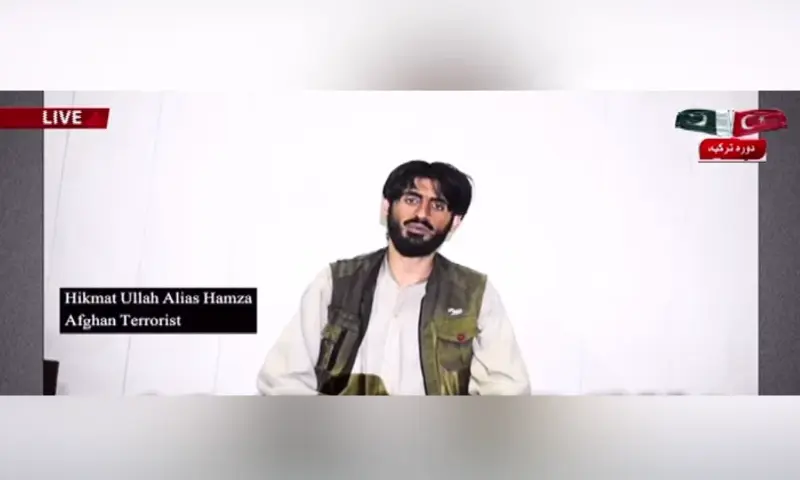
    PESHAWAR: Security forces and law enforcement agencies have arrested a man formerly associated with the Afghan National Army (ANA) for allegedly carrying out terrorist activities in Pakistan, it emerged on Wednesday.

    At a media briefing, Additional Inspector (AIG) General Abbas Ahsan of Khyber Pakhtunkhwa Police claimed the suspect, identified as Hikmatullah alias Hamza, was arrested during an intelligence-based operation (IBO) in Khyber district’s Tirah valley.

    “The suspect was arrested on November 7. He had served in the Afghan National Army before joining militant organisations,” Abbas claimed.

    He added that the “Kharji” had been associated with several groups, including the banned Hafiz Gul Bahadur group, and had allegedly confessed to carrying out terrorist activities in Pakistan.

    Fitna al Khawarij is a term the state uses for terrorists belonging to the banned Tehreek-i-Taliban Pakistan.

    According to Abbas, Hikmatullah hailed from Mangyar village in the Chamkani area of Afghanistan’s Paktia province.

    “From his arrest, we have learned who his facilitators are here, who has been assisting him, who his facilitators in Afghanistan are, where he received training and where he planned to carry out terrorist activities in Pakistan,” he added.

    Abbas further claimed that Hikmatullah had received three months of military training and three months of commando training with the ANA. After the ANA was dissolved, he began using his skills in various madressahs (seminaries), Abbas said.

    Mehmood Jan Babar, spokesperson for the designated areas, who was also present at the briefing, said Afghan soil was constantly being used against Pakistan. He claimed that Hikmatullah had been planning similar attacks.

    “Pakistan has always presented its case before the world, along with evidence,” Babar said.

    “It is not just one terrorist, but a whole series, a chain that shows no sign of coming to an end. They take advantage of the cover of darkness, come to Pakistan and try to plan [terrorist activities].”

    Babar further asserted: “But they do not know that Pakistan’s sons are ready and waiting to welcome them on its soil.”

    Pak-Afghan tensions

    Ties between the two neighbours have been strained in the past few years as Islamabad has repeatedly urged the Taliban administration in Kabul to dismantle terrorist sanctuaries on Afghan soil, particularly those linked to the banned TTP, that it says are used for attacks in Pakistan.

    For their part, the Afghan Taliban have avoided taking a categorical position on the TTP and other groups, while rejecting Islamabad’s allegations that Afghanistan is being used as a base for attacks against Pakistan.

    On Sept 21, in response to major terrorist attacks in KP, Pakistan conducted “calibrated” airstrikes in the border region with Afghanistan against terrorist hideouts, with the government saying more than 28 terrorists were killed.

    Information Minister Attaullah Tarar described the action as part of Operation Ghazab lil Haq, which was launched on the night of Feb 26 in response to unprovoked cross-border firing by the Afghan Taliban.

    Days later, Pakistan shot down eight drones launched from across the border that had entered Pakistani airspace near the Torkham border and Kohat. It was also reported that the Afghan Taliban engaged in unprovoked firing the night before near Kurram as security forces foiled an attempt by terrorists to cross into Pakistan.

    Last week, US Secretary of State Marco Rubio also said that Washington has “heard” Pakistan’s concerns about terrorism emanating from Afghanistan and that if there was a productive role for them to play, they would do so.

    Former Afghan army member arrested for alleged terrorist activities in Pakistan

    Source: dawn

  • Asian Development Bank approves $500m loan to help Pakistan strengthen disaster preparedness

    Asian Development Bank approves $500m loan to help Pakistan strengthen disaster preparedness

    ISLAMABAD: The Asian Development Bank (ADB) on Wednesday approved contingent disaster financing (CDF) facilities up to $500 million for Pakistan to withstand disasters and facilitate disaster response.

    In a statement, the Manila-based lending agency said the funds will provide prompt budget support following eligible disaster events to help reduce the resulting economic and fiscal impacts.

    “Floods, earthquakes, and other disasters cause Pakistan an estimated $2 billion in annual average losses,” ADB noted, further recalling, “2022 floods alone caused $14.9bn in direct damage and $15.2bn in economic losses, pushing as many as $9.1m people into poverty.”

    “Poor and rural communities have less capacity to recover, while women and girls are disproportionately affected.”

    The lending agency said the second subprogramme of the Climate and Disaster Resilience Enhancement Programme supported reforms aimed at strengthening disaster preparedness and risk management, as well as integrating resilience measures into Pakistan’s development planning and investment, to reduce the impact of future disasters.

    “The programme also strengthens Pakistan’s disaster risk financing framework and improves the availability of financing following disaster events,” the statement added.

    “When disaster strikes, it is often the most vulnerable communities that are hit hardest. Investing in preparedness can help protect lives and livelihoods, reduce economic losses, and safeguard the development gains Pakistan has worked hard to achieve,” ADB Country Director for Pakistan Emma Fan was quoted as saying.

    “This programme will support the country in implementing critical reforms to ensure a more resilient future.”

    It added that the programme was in accordance with “Pakistan’s priorities for managing disaster risks and with ADB’s commitment to supporting resilience initiatives across Asia and the Pacific.”

    In 2024, ADB had also approved a $500m policy-based loan to support climate change and disaster risk reduction and resilience in Pakistan.

    In May, a report compiled by the think tank Jinnah Institute highlighted that persistent governance failures and weak community-level systems continued to undermine Pakistan’s ability to prepare for and respond to climate disasters and called for urgent reforms to build long-term resilience across vulnerable districts.

    The findings came in the wake of devastating 2025 floods, which submerged entire districts, displaced millions, and wiped out livelihoods, exposing critical gaps in preparedness despite years of policy frameworks, institutional reforms, and international commitments.

    The report argued that reliance on reactive disaster management has proven insufficient in the face of intensifying climate stress.

    Source: dawn

  • Pearl Continental owner in major shake-up as Thatta Cement, Fauji Foundation ink deal

    Pearl Continental owner in major shake-up as Thatta Cement, Fauji Foundation ink deal

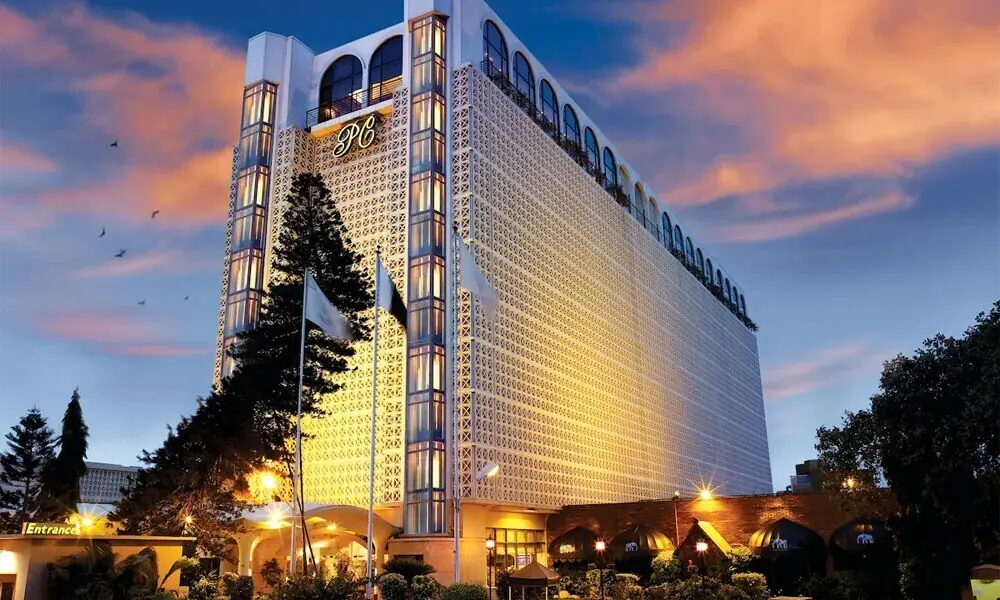
    Thatta Cement Company Limited has entered into a definitive agreement with Fauji Foundation in connection with the proposed restructuring of Pakistan Services Limited, which owns and manages the chain of Pearl Continental (PC) Hotels.

    The cement maker disclosed the development in a filing to the Pakistan Stock Exchange on Wednesday.

    “Thatta Cement Company Limited has entered into a definitive agreement with Fauji Foundation in relation to the proposed restructuring of Pakistan Services Limited, subject to the requisite corporate, regulatory and other necessary approvals,” read the notice.

    The development comes days after Fauji Foundation, one of Pakistan’s largest conglomerates, acquired a 19.70% stake in PSL for approximately Rs6.55 billion, i.e. $23.7 million.

    Fauji Foundation acquired 6,406,797 voting shares of Pakistan Services on November 2, 2026, at Rs1,022.42 per share, taking its total shareholding in the company to 19.70% of its voting shares.

    Pakistan Services Limited (PSL) was established in 1958 as a public limited company. The company’s primary business involves owning and managing the “Pearl Continental” chain of hotels. It also grants franchises for the use of its trademark and name and operates a smaller budget hotel property in Lahore.

    The company has observed significant changes in shareholding in recent years.

    Last year in July, AKD Group Holdings (Private) Limited acquired a 27.95% stake in PSL for over Rs6.36 billion. On the same day, Dawood Jan Mohammad acquired 28% of PSL’s voting shares at Rs700 per share.

    Following this, Thatta Cement Company Limited announced its acquisition of a 28% stake in PSL for Rs6.45 billion (Rs710 per share).

    In September 2026, Thatta Cement Company Limited reached an in-principle understanding for a proposed restructuring of PSL to amicably resolve the matter pending before the Islamabad High Court.

    Source: brecorder

  • Ex-cricketer Usman Khawaja declines to confirm if Australia’s bowlers were aware of 2018 ball-tampering plot

    Ex-cricketer Usman Khawaja declines to confirm if Australia’s bowlers were aware of 2018 ball-tampering plot

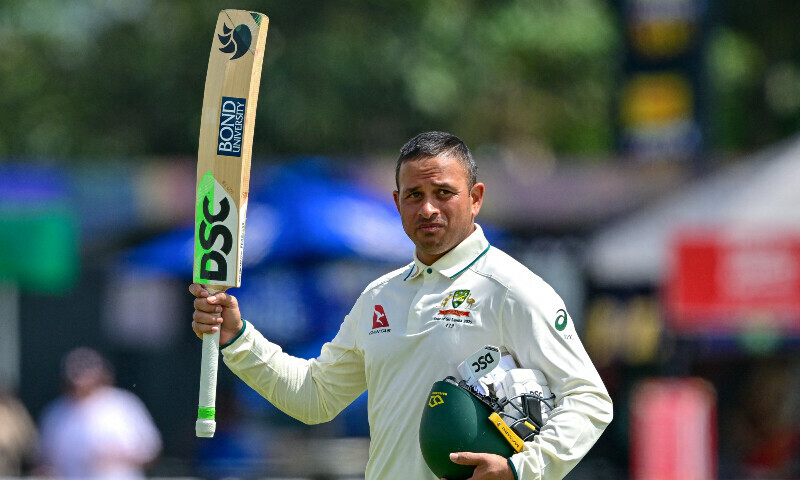
    Former Australian opening batsman Usman Khawaja has cancelled events to promote his new book, local media reported on Wednesday, after an awkward television interview in which he refused to confirm whether Australia’s bowlers were involved in the 2018 ball-tampering plot in South Africa.

    Batsmen Steve Smith, David Warner and Cameron Bancroft were sanctioned over the ‘Sandpapergate’ scandal, but Khawaja claimed in his autobiography ‘Sabr’ that knowledge of the plan to manipulate the ball was not confined to those three players and that the whole team should be held responsible.

    Cricket Australia (CA) CEO Todd Greenberg has ruled out another investigation into the scandal, but pressure was growing on Wednesday for the governing body to reopen the case.

    Appearing on the Australian Broadcasting Corporation’s ‘7:30’ programme on Tuesday, Khawaja was asked whether captain Pat Cummins and his fellow bowlers had prior knowledge that sandpaper was being used to change the condition of the ball.

    “You’ve got to remember Pat Cummins is a good friend of mine, Mitchell Starc, a lot of these guys, guys on the team, other players on the team,” he replied.

    “Shaun Marsh, Mitch Marsh, all very good friends of mine.

    “I’m not here to go on a witch hunt, all I’ve ever wanted is for us to take accountability as a team and I don’t think that’s a lot to say.”

    Fast bowler Starc denied prior knowledge of the ball-tampering on Tuesday.

    Warner, who was banned from the team for a year and cast by Cricket Australia’s investigation as the chief architect of the plot, threw his weight behind Khawaja on Monday and said his account was 100 per cent accurate.

    Cummins said in South Africa last month that he had spoken to Khawaja about his book and was not concerned about any potential fallout.

    “He just basically gave me the heads-up that he’s doing a book, and yeah, as always, no worries. Tell your story. It’s fine,” Cummins said.

    Khawaja said in the interview he hoped other teammates would come forward and talk about the 2018 saga honestly but he was not forcing anyone to do anything, nor calling on CA to re-investigate.

    “I’m not calling for anything, I’m literally sharing my version of the truth,” he added.

    Australian media reported Khawaja pulled out of TV and radio interviews to promote his book following the TV interview.

    Khawaja and his book’s publisher Penguin did not provide an immediate response to requests for comment.

    While Greenberg said on Tuesday there was “no compelling reason” for another investigation, there have been growing calls for CA to take another look at the scandal.

    Editorials in two major newspapers have called on CA to take action while The Australian newspaper urged Cummins to break his silence as the team’s captain.

    Simon Longstaff, who led a cultural investigation into Australian cricket in the wake of ‘Sandpapergate’, said Khawaja and Warner’s allegations had shone a spotlight into the darker corners of the men’s game.

    “My fear is that if the belatedly revealed claims are proven true, the damage to the game will be at least as great as that caused by the original sin of ball tampering,” he wrote in a column in the Australian Financial Review.

    Source: dawn

  • Chinese university bought Nvidia H200 chips despite US blacklist

    Chinese university bought Nvidia H200 chips despite US blacklist

    BEIJING: A Chinese university with ​deep ties to the People’s Liberation Army bought Nvidia’s powerful H200 AI chips last month despite being on a US export blacklist, procurement records show, highlighting gaps in Washington’s efforts to curb China’s access to advanced ‌technology.

    The findings come as Nvidia and its CEO Jensen Huang face mounting scrutiny in Washington over his lobbying for looser restrictions on sales of AI chips to China, following reports alleging he was targeted by a Chinese spying operation.

    Huang has argued that continued US sales to China would preserve American technological leadership and keep Chinese customers reliant on US technology.

    But some US lawmakers say access to Nvidia’s most powerful AI chips can speed China’s development of AI systems for weapons design, intelligence analysis and military modernisation.

    Nvidia set for $320 billion price swing after earnings, options indicate

    Both Democrats and Republicans in Congress have urged stronger controls on China’s access to advanced AI chips, such ​as chip-tracking requirements and greater congressional oversight of exports.

    Three Republican congressional committee chairmen have requested a briefing with Huang on November 18 over his reported contacts with an alleged Chinese intelligence operative.

    Northwestern Polytechnical University bought two H200 chips ​last month for 874,700 yuan ($123,000), according to an October 21 procurement record on its website.

    Northwestern is a member of the “Seven Sons of National Defense” group of Chinese universities under U.S. sanctions and ⁠with a history of conducting defence-related research for Beijing.

    The chips were purchased for its management school from Shaanxi Bosuan Network Technology rather than directly from Nvidia, the record shows.

    The H200 is among Nvidia’s most capable chips for training and running advanced AI systems ​and is subject to US export licence approvals, which are normally denied for blacklisted institutions such as Northwestern Polytechnical.

    Northwestern Polytechnical also bought access this year to H200 chips and other powerful Nvidia AI processors through five contracts for rented computing capacity from Chinese companies, ​procurement records show.

    Reuters is reporting the chip purchases and computing contracts for the first time. Northwestern Polytechnical, Nvidia and the US Commerce Department’s Bureau of Industry and Security, which oversees export controls, did not respond to requests for comment. Reuters could not determine contact details for Shaanxi Bosuan Network Technology.

    Trade blacklist

    Based in the northwestern city of Xian, Northwestern Polytechnical conducts research related to military aircraft, missiles and satellites.

    The US Commerce Department added the university to its trade blacklist, known as the Entity List, in 2001 over its alleged involvement in missile-proliferation activities and military research.

    It tightened the restrictions in ​2019, making licences for exports of controlled US technology to the university subject to a policy of denial in most circumstances.

    Northwestern Polytechnical’s purchases show how Chinese institutions with military ties continue to obtain US AI computing power through domestic suppliers, either by buying ​chips outright or renting access to servers containing them.

    A Reuters review of 26 Chinese procurement and corporate records from this year found universities and research institutions buying US-restricted Nvidia chips or renting access to Nvidia-powered computing services that use such chips through domestic suppliers. Several had close ‌links to China’s ⁠defence industry or military research.

    Nvidia’s China AI-chip share falls as Huawei closes gap, report finds

    The universities named in the records did not respond to requests for comment.

    Nvidia chips for military-linked research

    US President Donald Trump’s administration began allowing some H200 exports to China on a case-by-case basis in January. But that policy did not lift the separate restrictions applying to Entity List organisations such as Northwestern Polytechnical.

    The January licensing rules also require safeguards to prevent blacklisted entities and military end-users from remotely accessing chips exported under the policy, which covers H200 processors and less advanced models.

    In addition to the management school’s outright purchase of the two H200 chips, procurement records show the university’s cybersecurity school awarded two seven-month contracts in January for access to servers containing eight H200 chips each. The contracts, worth 441,700 yuan and 441,000 yuan, covered fine-tuning AI models and reinforcement-learning training.

    It also ​rented access to servers containing eight Nvidia A100 chips and eight ​A800 chips. The A100 and A800 are banned from ⁠export to all Chinese entities, though the H200 is the most advanced of those cited in Northwestern Polytechnical’s procurement records.

    Nvidia, Meta partner on Muse agent as Nvidia invests $3 billion

    In April, another university institute bought computing services requiring at least 24 A100 chips in a 375,000 yuan contract for structural and fluid-dynamics simulations.

    The awards went to several little-known Chinese technology suppliers. The records offered scant information about where the processors originated or where the rented servers ​operated.

    Under Chinese law, public procurement agencies must verify that suppliers can fulfil orders before announcing winning bidders and signing contracts.

    A wider market

    The procurement records show a wider market for restricted ​Nvidia AI chips and computing services ⁠at Chinese universities.

    Shenzhen University bought three H100 processors, another high-end Nvidia AI chip banned by the US, for 769,800 yuan in September. Wuhan University of Technology bought a server containing an H100 chip for 355,000 yuan in June and four A100 chips in a separate 344,000 yuan purchase, the records show.

    Beihang University, another of the Seven Sons of National Defense universities, bought four A800 processors for 489,000 yuan in April. Beihang has close ties to China’s aerospace and defence industries and conducts research for military aviation and space programmes.

    Two government procurement announcements in ⁠July and September named ​suppliers selected to provide computing services using Nvidia H800 and A800 chips restricted from export to China to the University of Chinese Academy of Sciences. One ​listed H800 access at 10 yuan per chip-hour. A separate January procurement award named a supplier of six A100 chips worth 484,800 yuan for a Shenzhen-based public institution.

    Reuters has previously reported that Chinese institutions acquired restricted Nvidia chips embedded in servers made by Super Micro Computer, Dell and Gigabyte through domestic resellers.

    Nvidia pledges $250 million to UK AI safety research

    Reuters has also ​documented an underground market in China for restricted Nvidia chips sourced from overseas inventories and third-country intermediaries.

    Last week, Reuters reported that small quantities of H200 chips had reached China through indirect routes while Beijing withheld approval for large-scale imports.

    Source: brecorder
  • De Silva, Kamindu fifties guide Sri Lanka to 221-4 in first Test against Pakistan

    De Silva, Kamindu fifties guide Sri Lanka to 221-4 in first Test against Pakistan

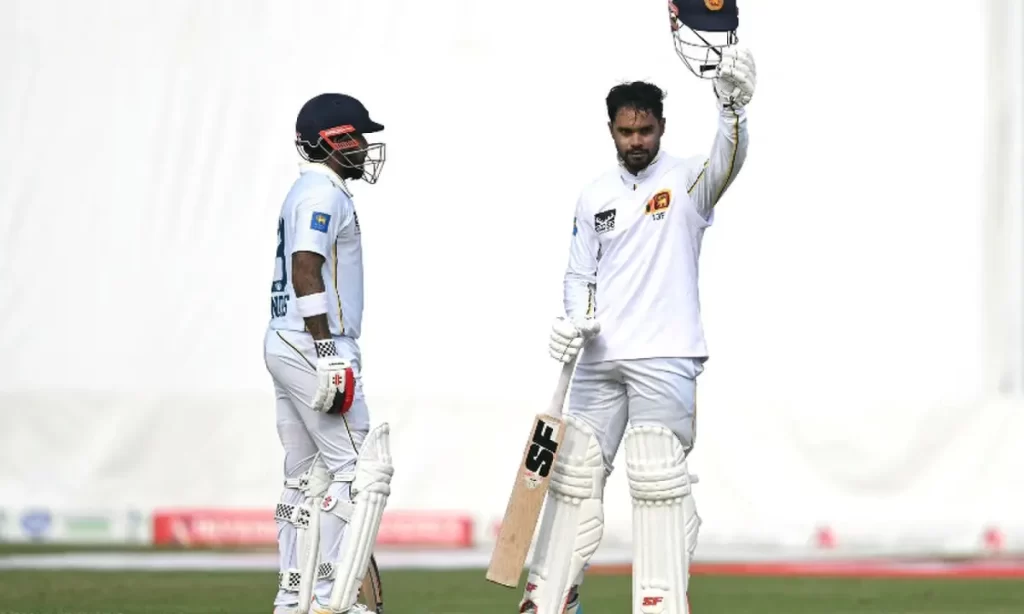
    Fifties from Dhananjaya de Silva and Kamindu Mendis helped Sri Lanka reach 221-4 at lunch on day three of the opening Test against Pakistan in Rawalpindi on Wednesday.

    After resuming at 114-3, De Silva was on 87 after reaching his 21st half-century, while skipper Kusal Mendis was 21 not out, leaving the tourists still 213 runs behind Pakistan’s first innings 434-9 declared.

    Sri Lanka lost just one wicket in the session as De Silva and Kamindu put on 91 for the fourth wicket, enjoying a stroke of fortune along the way.

    De Silva, on 38, flashed at a Razaullah delivery but Saud Shakeel failed to hold on a sharp chance at slip.

    De Silva took full advantage of the reprieve and has so far hit nine fours off 121 balls.

    Kamindu completed his eighth Test fifty before edging off Mohammad Abbas to wicketkeeper Ghazi Ghori to leave Sri Lanka 155-4.

    Kamindu’s 58 came off 131 balls with eight fours.

    Seamer Abbas (2-33) was the pick of the Pakistan bowlers while fellow quick Saqib Khan has taken 2-82 on his debut.

    Pakistan had declared their first innings at 434-9 on Tuesday after building on their overnight score of 281-5.

    Saud Shakeel top-scored with 93, while debutants Tayyab Arif, Mohammad Taha and Arafat Minhas scored half-centuries to strengthen the hosts’ position.

    In reply, Sri Lanka were 114-3 at the close of the second day, trailing Pakistan by 320 runs. Mohammad Abbas and debutant Saqib Khan took early wickets before Dhananjaya de Silva and Kamindu Mendis steadied the innings with an unbeaten 49-run partnership.

    De Silva, Kamindu fifties guide Sri Lanka to 221-4 in first Test against Pakistan

    Source: dawn

  • PPL plans $40mn deep drilling at Sui: report

    PPL plans $40mn deep drilling at Sui: report

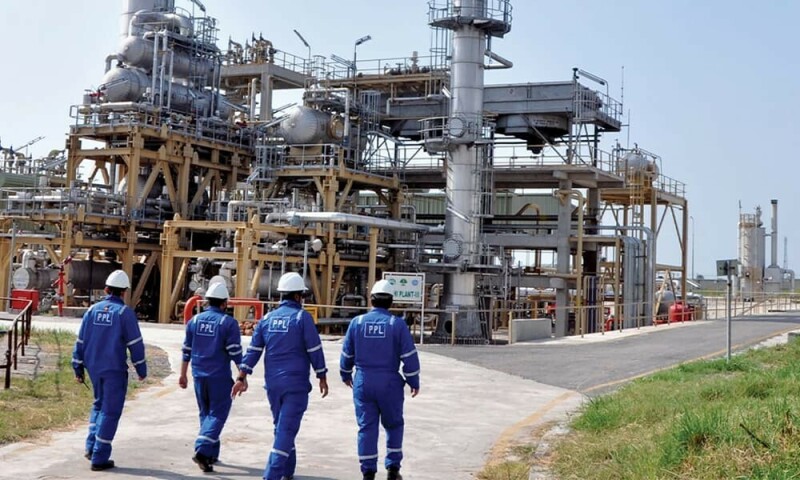
    Pakistan Petroleum Limited (PPL), one of the country’s largest E&P companies, plans to drill a 6,000-metre exploratory well at its Sui field in fiscal year 2027-28, targeting an initial 2 trillion cubic feet (TCF) of gas, as the company steps up exploration efforts to offset declining output from mature fields.

    The development came during an analyst briefing session held on Wednesday, reported Arif Habib Limited (AHL) in its report.

    “Sui Deep drilling is targeted for FY28, with a planned depth of 6,000 metres and an initial gas target of -2 TCF. High temperature and high pressure conditions pose technical challenges, with estimated Capex of $35-40 million,” read the report.

    The project is part of the company’s broader efforts to sustain and increase production as its mature fields experience natural depletion of around 8-9% annually.

    According to the report, PPL expects production to rise to around 680 million cubic feet of gas equivalent per day (MMscfde) in FY27, up from 649 MMscfde in FY26.

    “PPL expects to add 33mmcfde of incremental production during FY27, primarily from discoveries at Baragzai in Nashpa, Latif-25, Makori East, Tolanj West and Rehman-9 in the Kirthar Block. Development activities at these fields are expected to contribute around 17mmcfd,” read the report.

    The company is also advancing infrastructure projects to bring additional gas into the system.

    “The Zafir gas processing plant is expected to commence operations in December 2026, initially contributing around 20mmcfd of sales gas before ramping up to 40mmcfd in the second phase. PPL holds a 65% working interest in the project,” read the report.

    Another facility, the Pateji gas processing plant in Sujawal, is under construction and is expected to be commissioned by June 2027. The facility is expected to contribute around 16 mmcfd of additional sales gas and generate approximately Rs8 billion in revenue, added the report.

    Source: brecorder