Author: Theph

  • Manchester United sack manager Carrick with club in relegation zone

    Manchester United sack manager Carrick with club in relegation zone

    Manchester United dismissed manager Michael Carrick on Thursday after a prolonged winless Premier League run culminated in a 4-4 draw against Aston Villa at Old Trafford last weekend, leaving the struggling team mired in the relegation zone.

    United have won only three of their 15 matches in all competitions under Carrick this season – including one league victory – leaving them 18th in the table on eight points after 10 games, one point from the bottom.

    “After a disappointing start to the season, the club has come to the extremely difficult conclusion that a change is necessary in order to achieve our ambitions,” United said in a statement on their website.

    Carrick came under mounting pressure after a 3-0 home loss to Bournemouth and the former United midfielder carried the air of someone awaiting the inevitable after the defeat when fans chanted his name but booed the players off the pitch.

    He had dropped captain Bruno Fernandes to the bench against Bournemouth and did not bring him on even when United were desperate for inspiration in midfield, but the struggling club gave Carrick another chance to revive their season.

    Ten Hag says relegation a real possibility for Man Utd

    Although he restored the playmaker to the starting lineup against Chelsea following clear-the-air talks and spoke of the team’s determination to put things right, little changed as they were comprehensively outplayed in a 2-0 loss at Stamford Bridge.

    A 3-2 comeback win over AS Roma in the Champions League briefly eased the pressure on Carrick, but United’s familiar defensive frailties were exposed again in the 4-4 draw with Aston Villa, despite two injury-time goals salvaging a point.

    Carrick’s tenure

    Carrick was appointed on an interim basis following Ruben Amorim’s sacking in January before being handed a contract until 2028 after overseeing a turnaround in the side’s fortunes.

    United won 11 of their first 16 matches under Carrick, including victories over Arsenal, Manchester City, Liverpool and Chelsea, to climb to third in the Premier League and secure qualification for the Champions League.

    The 45-year-old proved unable to carry that momentum into the new season, however, with United notching wins only against promoted Ipswich Town and Champions League debutants Sabah FK before embarking on a nine-match winless run.

    Manchester United expects higher fiscal 2027 revenue on Champions League boost

    The club praised Carrick for his professional conduct during his managerial tenure, and said they were working towards appointing a permanent successor as soon as possible.

    He ultimately became another managerial casualty at Old Trafford after the reigns of David Moyes, Louis van Gaal, Jose Mourinho, Ole Gunnar Solskjaer, Erik ten Hag and Amorim.

    What next for united?

    Carrick is likely to be replaced by Mauricio Pochettino, the US men’s national team coach, who has agreed to take over the newly vacant post, according to reports in British media.

    The former Southampton, Tottenham Hotspur and Chelsea manager is one of the Premier League’s most highly regarded former coaches.

    United have not won the English league title since lifting the trophy for the 20th time in 2013 when Alex Ferguson left the club following a trophy-laden 27-year stint as manager.

    A daunting trip to Anfield to face rivals Liverpool awaits United after the international break.

    Pochettino is expected to remain in charge of the US for their upcoming CONCACAF Nations League quarter-final matches, which would leave the Argentine little time to prepare for his first game in one of English football’s most demanding jobs.

    (Reporting by Rohith Nair and Suramya Kaushik in Bengaluru; Additional Reporting by Karan Prashant Saxena; editing by Ed Osmond, Toby Chopra and Ken Ferris)

    Source: brecorder

  • Pakistan-Sri Lanka Test hit by bad weather after Saqib Khan’s heroics

    Pakistan-Sri Lanka Test hit by bad weather after Saqib Khan’s heroics

    Rain and bad light hit the first Test between Pakistan and Sri Lanka after pacer Saqib Khan took seven wickets on debut to lead the home team’s fightback on Thursday.

    Saqib grabbed an impressive 7-130 on an overcast morning in Rawalpindi to spark a Sri Lankan collapse which saw the tourists slumping from their overnight 404-4 to 446 all out.

    Pakistan, who conceded a slender first innings lead of 12 runs, were 57-1 when bad light and then rain stopped play 45 minutes into the second session.

    Opener Azan Awais and Mohammad Taha were the unbeaten batters with 22 and 24 respectively, with the home team now leading by 45 runs with nine wickets intact.

    Pakistan had lost opener Tayyab Arif just before lunch, skittled lbw by Asitha Fernando for 11.

    With more rain forecast for Friday, the Test is heading for a draw, leaving the series result on the second and final match, also in Rawalpindi from November 17.

    It was Saqib who shone in the overcast morning session.

    He started the collapse in the first over of the day when he bagged the prize wicket of centurion Dhananjaya de Silva, caught behind by Ghazi Ghori without adding to his overnight 167.

    De Silva hit 20 fours in a 405-minute marathon knock and was soon joined back in the pavilion by Sri Lanka captain Kusal Mendis, who had also reached his hundred on day three.

    Kusal, who added 249 runs for the fifth wicket with De Silva, fell to Saqib for 119 in the fifth over after adding just two to his overnight score. He hit 10 fours and four sixes in five hours at the crease.

    Sri Lanka lost their last six wickets for 42 runs and Saqib took his fifth when Sonal Dinusha (20) edged to slip.

    Saqib then mopped up tail-enders Lahiru Kumara (0) and Asitha Fernando (four) to become only the fourth Pakistani to take seven wickets in an innings on debut.

    The others were pace bowler Mohammad Zahid (7-66), off-spinner Mohammad Nazir (7-99) and leg-spinner Abrar Ahmed (7-114).

    Source: dawn

  • Asia rice: Indian rice export rates gain on Africa demand, firm rupee

    Asia rice: Indian rice export rates gain on Africa demand, firm rupee

    Indian rice export prices rose this week, buoyed by modest demand from African buyers and a rupee that strengthened to its highest level in nearly seven months, while Thai and Vietnamese export rates also drifted higher.

    India’s 5% broken parboiled variety was quoted at $385-$390 per ton, up from last week’s $382-$386. Indian 5% broken white rice was priced at $390-$395.

    The rupee’s sustained appreciation in recent days has prompted exporters to raise prices to protect their margins, said a Kolkata-based exporter.

    Thailand’s 5% broken rice rose to $495-$500 per ton, up from $490-$495 last week, with traders expecting further modest gains amid concerns over tightening supplies and the impact of the Middle East conflict.

    Demand remained subdued, with purchases largely limited to regular customers and the Philippines, traders said. One trader also reported interest from Indonesia, driven by expectations that Indian rice prices could rise further.

    Traders added that the supply outlook would become clearer with the next crop, expected in February 2027.

    Vietnam’s 5% broken rice was offered at $490-$495 per metric ton, slightly up from a week ago.

    “The resumption of rice purchases by the Philippines has helped support Vietnamese rice prices as supplies are tightening,” a trader in Ho Chi Minh City said.

    Vietnam is expected to retain its position as the world’s second-largest rice exporter in 2026 and 2027, state media reported, citing the latest report from the US Department of Agriculture.

    Elsewhere, Bangladesh will procure a total of 850,000 metric tons of paddy and rice from local farmers and millers during the current harvesting season, officials said.

    Despite rising agricultural production costs, the government has reduced the procurement prices of parboiled and non-parboiled rice by 1 taka per kg to 49 taka and 48 taka, respectively, while slightly raising the paddy procurement price to 35 taka per kg, raising concerns over whether the revised rates will adequately compensate farmers for higher production expenses.

    Source: brecorder

  • Forex crowding out

    Forex crowding out

    THE State Bank of Pakistan (SBP) has successfully rebuilt foreign exchange reserves over the last three years. Much of this success, however, has been purchased by drawing liquidity directly out of the forex market. It attributes its purchases to improved market liquidity and describes their purpose as strengthening external buffers and the capacity to meet external obligations. These are legitimate considerations. Yet the extent to which dollars have been siphoned from the market to accumulate reserves raises concerns for the wider economy.

    When the central bank becomes a persistent and dominant buyer of dollars in the market, it effectively crowds out some private businesses, which must compete with an institution that enjoys an informational advantage. While Pakistan is familiar with the crowding out of the private sector through large and persistent government borrowing to finance budget deficits, crowding out in the foreign exchange market is unprecedented.

    If the forex market has sufficient depth, it can smoothly accommodate both the central bank’s purchases and the private sector’s requirements. But where the market is constrained, the adjustment has to take place somewhere. It may appear in the exchange rate, transaction spreads, delays in opening letters of credit (LCs), or restrictions on access to foreign currency. In effect, private sector buyers are either priced out of the market or pushed into waiting queues.

    There have been several media reports of import payment delays and dollar rationing by some banks. Concerns about these practices have also surfaced in official trade assessments. The US National Trade Estimate Report 2026, for instance, records stakeholder concerns about delays in banks’ issuance of LCs, reportedly resulting from informal SBP limitations on commercial banks’ borrowing of foreign currency through the interbank market. The report also highlights that corporations and foreign equity holders have encountered administrative delays, documentation hurdles, and informal queuing systems when seeking to repatriate their profits, dividends, and royalties in dollars.

    The SBP must reassess its market interventions.

    Such restrictions carry consequences. Central banking, in essence, is not an accounting exercise and balance sheet management. Every action has microeconomic and macroeconomic repercussions for resource allocation, business costs, investment decisions, and, ultimately, economic growth. Thus, a policy intended to strengthen the country’s external position can, paradoxically, undermine investors’ sentiments and the productive capacity to generate future foreign exchange.

    A further paradox concerns the exchange rate signal. Despite extensive purchases, the exchange rate is not responding. Conventional macroeconomic models offer limited help in explaining such interventions. Instead, an exchange rate microstructure approach, built on order flow, may offer a better explanation of exchange rate determination. Order flow refers to the buying and selling pressure generated by market participants. This approach recognises the importance of participants’ identities, information and trading behaviour in influencing exchange rate movements. A study by Evans and Lyons, published in the Journal of Political Economy in 2002, shows that order flow has substantial explanatory power for exchange rate changes.

    When a central bank, which also issues licences to the market participants, enters the market, its order flow may convey its preferences about price as well as quantity. Forex dealers, observing this institutional order flow, may adjust their quotes and inventory positi­ons accordingly. Consequently, the exchange rate may increasingly reflect the central bank’s institutional prefere­nces rather than the underlying balance of forex demand and supply.

    Granular level data can explain forex dynamics on the basis of the order flow model. The SBP has both the technical capacity and the high-frequency data required for such analysis. It could examine import payment delays, outstanding foreign exchange requests, transaction spreads, interbank turnover, and the daily pattern of its own purchases. A range of forex market data is already covered by IMF monitoring and reporting requirements on a daily basis. Greater transparency and wider dissemination of this data may also allow independent researchers to apply an order flow model to exchange rate formation in Pakistan.

    Reserve accumulation is a necessary but not sufficient condition for stability, which ultimately depends on the economy’s ability to generate foreign exchange through exports, investment, and productive activity. The SBP must, therefore, assess its market interventions within a robust analytical framework and develop an exit strategy for its dollar purchases for reserve accumulation.

    The writer is an economist.

    m.farooqarby@gmail.com

    Published in Dawn, November 12th, 2026

    Source: dawn

  • Imran’s sisters Uzma, Noreen released from jail after extended detention orders withdrawn, says lawyer

    Imran’s sisters Uzma, Noreen released from jail after extended detention orders withdrawn, says lawyer

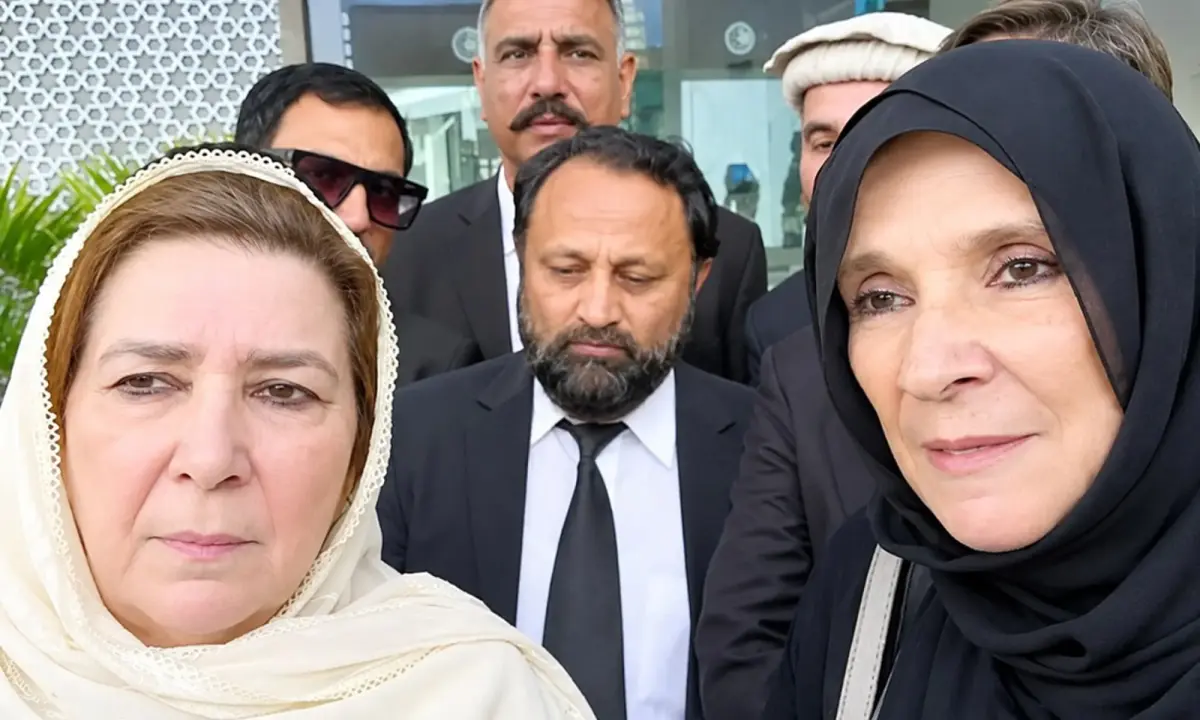
    LAHORE: Dr Uzma Khan and Noreen Niazi, sisters of incarcerated PTI founder Imran Khan, were released from Kot Lakhpat jail following the withdrawal of their extended detention orders, PTI legal counsel Rana Mudassar Umer told Dawn on Thursday.

    In a post on X, he said the two — who were detained in September under the Punjab Maintenance of Public Order Ordinance (MPO) along with their sister Aleema Khan — had returned home “safely”.

    PTI lawyer Taimur Malik also said on X that the two women had been released upon the withdrawal of the “unlawful MPO detention order”.

    “Everyone else detained under these MPO orders should be released as well,” he said.

    Noreen’s son, Wali, also said on X that his mother and his aunt had been released from jail.

    “For 53 days they were held under Section 3 of the MPO. No charge. No trial. Two weeks ago, Noreen, in her seventies, was taken to a cardiac hospital. No one told us. Today they were let out. No reason given,” he said.

    He called for a judge to “explain both decisions”, but added: “No one can, because neither decision rested on law. Their jailing was arbitrary and so is their release.”

    Imran’s three sisters — Noreen, Aleema and Uzma — have been in jail on the Lahore deputy commissioner’s (DC) orders as the PTI geared up for a protest march towards Islamabad. Their detention was initially ordered for 30 days.

    Their detention was then challenged in the Lahore High Court after the 30-day period lapsed last month, following which the Punjab government informed the court that it had been extended for another 30 days.

    Aleema, who was the first to be detained, still remains in jail.

    On Oct 28, Noreen was moved from Kot Lakhpat jail to the Punjab Institute of Cardiology (PIC) due to high blood pressure. At the time, her lawyer claimed that no family member had been informed about her deteriorating health.

    The PTI had also condemned Noreen’s transfer to the PIC without informing her family, expressing grave concern over her health and the treatment of “political prisoners”.

    However, the government had insisted that she was “fine” after being provided medical treatment.

    “As per the information available, she is fine and all her medical tests are normal,” the adviser to the prime minister on political affairs, Rana Sanaullah, had informed the Senate on Oct 29.

    Source: dawn

  • China’s Xi says Taiwan ‘reunification’ must happen as history cannot be stopped

    China’s Xi says Taiwan ‘reunification’ must happen as history cannot be stopped

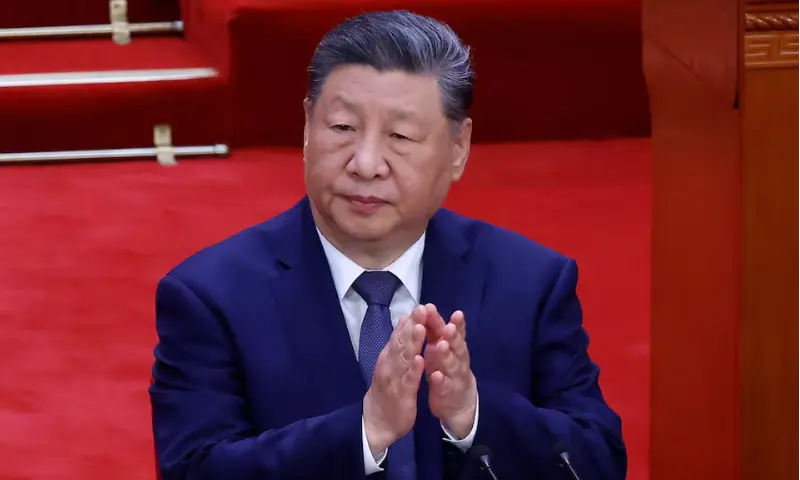
    The tide of history cannot be stopped, Chinese President Xi Jinping said on Thursday, ​while urging peaceful “reunification” with Taiwan and making no mention of using force, though he still drew a firm rebuff from Taipei.

    China views democratically-governed ‌Taiwan as its own territory, despite Taipei’s strong rejection of that claim, and has repeatedly offered a “one country, two systems” model of autonomy not supported by any major Taiwanese political party.

    Resolving the Taiwan question is an “unwavering historical mission” of China’s Communist Party, Xi said in a speech in Beijing’s Great Hall of the People.

    “The tide of history cannot be stopped,” Xi added. “The complete reunification of ​the motherland must be realised, and it will certainly be realised.”

    Taiwan’s government dismissed the remarks.

    Its Mainland Affairs Council said neither the government nor Taiwan’s people ​could accept “one country, two systems,” which would ultimately mean submitting to the Communist Party’s authoritarian rule.

    “As for the wording on Taiwan ⁠unification, it isn’t much different from the past,” council spokesperson Liang Wen-chieh told reporters.

    Xi’s comments came in a speech on the 160th birthday of revolutionary hero Sun ​Yat-sen, who helped lead a 1911 revolt that ended centuries of rule by emperors and empresses and ushered in the Republic of China.

    Xi said China adheres to “peaceful reunification ​and the policy of ‘one country, two systems’” and is willing to talk to Taiwan while upholding the “one-China principle”, or Beijing’s position that both sides of the Taiwan Strait are one country.

    All Chinese, including those in Taiwan, should join hands to jointly oppose Taiwan independence “separatist” forces and strive for peaceful development of cross-Strait ties, Xi added.

    Despite Xi not mentioning the use of force, which China ​has never renounced for Taiwan, its military operates around the island on a daily basis and is extending its reach further into the Pacific.

    Taiwan’s defence ministry said it ​had detected 29 Chinese military aircraft, including J-16 fighter jets and drones, carrying out a “joint combat readiness patrol” around Taiwan in conjunction with Chinese warships, starting on Thursday.

    Taiwan tells people to stay away

    Xi’s ⁠speech comes a week ahead of the APEC summit in China’s southern tech hub of Shenzhen, where he is due to again meet US President Donald Trump, and also a little more than two weeks before important local elections in Taiwan.

    Last month, Taiwan called on its people to steer clear of any of China’s events to mark the Sun anniversary, saying China had a distorted view of him and his legacy.

    Beijing calls Sun a great national hero and patriot, as well as the forerunner of the 1949 communist ​revolution that forced the defeated Republic of ​China government to flee to Taiwan, ⁠where it remains to this day.

    Xi said Sun was a great national hero, a great patriot and a “great pioneer of China’s democratic revolution”.

    “Mr Sun Yat-sen consistently upheld the unity of the country and the solidarity of the nation, and he firmly opposed ​all words and actions that split the country or the nation,” he added.

    ‘Father of the nation’

    In Taiwan, Sun is officially ​considered the “father of the ⁠nation” and his portrait hangs in the presidential office, though his political philosophy, “Three Principles of the People”, is no longer a required text for schoolchildren.

    While Taiwan President Lai Ching-te and his ruling Democratic Progressive Party champion Taiwan’s separate identity from China, they have been striking a tougher tone with Beijing on the role of the Republic of China.

    Taiwan has ⁠been particularly upset ​by Beijing’s effort to claim credit for the victory in World War Two, saying it was the ​Republic of China government that fought alongside the allies, as the People’s Republic of China did not exist at the time.

    China says Lai is a “separatist” and has refused to speak with him. Lai says only ​Taiwan’s people can decide their future.

    Source: dawn

  • Gold price in Pakistan plunges by Rs10,900 per tola

    Gold price in Pakistan plunges by Rs10,900 per tola

    Gold prices in Pakistan decreased on Thursday in line with their loss in the international market. In the local market, gold price per tola reached Rs416,536 after a massive decline of Rs10,900 during the day.

    Similarly, 10-gram gold was sold at Rs357,112 after it fell by Rs9,345, according to rates shared by the All-Pakistan Gems and Jewellers Sarafa Association (APGJSA).

    On Wednesday, gold price per tola reached Rs427,436 after a decline of Rs3,400 during the day.

    The international rate of gold declined by $109 to reach $3,940 per ounce.

    Meanwhile, the price of silver also decreased by Rs163 to reach Rs4,782 per tola.

    Source: brecorder

  • Imran Khan’s sisters Noreen, Uzma released from Kot Lakhpat jail

    Imran Khan’s sisters Noreen, Uzma released from Kot Lakhpat jail

    Pakistan Tehreek-e-Insaf (PTI) founder Imran Khan’s two sisters, Noreen Niazi and Dr Uzma Khan, have been released from Lahore’s Kot Lakhpat Jail after nearly one and a half months in detention.

    PTI legal adviser Rana Mudassar Umar confirmed their release in a post on social media platform X, saying that both sisters had safely returned home.

    According to sources cited by Aaj News, PTI Chairman Barrister Gohar Ali Khan played a key role in securing their release through special efforts.

    Noreen and Dr Uzma were taken into custody on September 21 under Section 3 of the Punjab Maintenance of Public Order (MPO) Ordinance, 1960, ahead of protests announced by the PTI.

    Meanwhile, another sister of the PTI founder, Aleema Khan, was also taken into custody on September 20. However, no information regarding her release has emerged so far.

    Source: brecorder

  • Palm extends gains on firmer rival Dalian

    Palm extends gains on firmer rival Dalian

    KUALA LUMPUR: Malaysian palm oil futures rose for a second straight session on Thursday, supported by gains in other major vegetable oils markets, although weaker crude oil prices, ample inventories and profit-taking kept gains in check.

    The benchmark palm oil contract for January delivery on the Bursa Malaysia Derivatives Exchange gained 29 ringgit, or 0.66%, to 4,439ringgit ($1,087.99) a metric ton at the close.

    The market traded higher following bullish rallies in rival Dalian during Asian trading hours as well as overnight soyoil futures in Chicago, said Anilkumar Bagani, head of research at Mumbai-based vegetable oil broker Sunvin Group.

    But he said lower energy prices and large Malaysian stockpiles prompted some traders to lock in profits after prices reached a key resistance level.

    Dalian’s most-active soyoil contract rose 0.46%, while its palm oil contract added 2.55%. Soyoil prices on the Chicago Board of Trade were down 0.44%.

    Oil prices moved slightly lower after recovering from earlier losses, as persistent geopolitical tensions in the Middle East and Russia offset pressure from rising crude output.

    Weaker crude oil futures make palm a less attractive option for biodiesel feedstock.

    The Malaysian ringgit, weakened 0.15% against the dollar, making palm oil a little cheaper for overseas buyers.

    Source: brecorder

  • Pearl Continental owner says ‘not a party’ to Thatta Cement-Fauji Foundation restructuring deal

    Pearl Continental owner says ‘not a party’ to Thatta Cement-Fauji Foundation restructuring deal

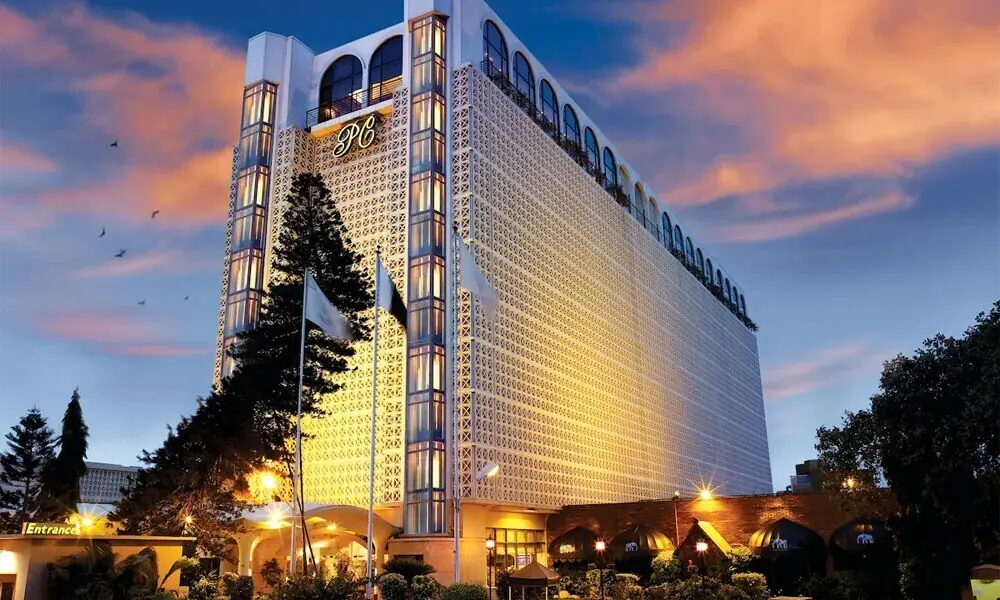
    Pakistan Services Limited, which owns and manages the Pearl Continental (PC) Hotels chain, said on Thursday it was not a party to, and had not been notified of, a definitive agreement between Thatta Cement Company Ltd (THCCL) and Fauji Foundation (FF) over its proposed restructuring.

    The response came a day after Thatta Cement disclosed to the Pakistan Stock Exchange that it had entered into a definitive agreement with Fauji Foundation in connection with the proposed restructuring of PSL.

    Pakistan Services said, “It has neither been notified of nor is it aware of the execution of any definitive agreement between THCCL and FF in connection with the proposed restructuring of the company”.

    “The company, therefore, is not a party to the definitive agreement as referred to in the aforesaid disclosure,” it said.

    Thatta Cement, in its filing on Wednesday, had said: “Thatta Cement Company Limited has entered into a definitive agreement with Fauji Foundation in relation to the proposed restructuring of Pakistan Services Limited, subject to the requisite corporate, regulatory and other necessary approvals.”

    Neither filing disclosed the terms, structure, or valuation of the proposed restructuring.

    The development came days after Fauji Foundation, one of Pakistan’s largest conglomerates, acquired a 19.70% stake in PSL for approximately Rs6.55 billion, i.e. $23.7 million.

    Fauji Foundation acquired 6,406,797 voting shares of Pakistan Services on November 2, 2026, at Rs1,022.42 per share, taking its total shareholding in the company to 19.70% of its voting shares.

    Pakistan Services Limited was established in 1958 as a public limited company. The company’s primary business involves owning and managing the “Pearl Continental” chain of hotels. It also grants franchises for the use of its trademark and name and operates a smaller budget hotel property in Lahore.

    The company has observed significant changes in shareholding in recent years.

    Last year in July, AKD Group Holdings (Private) Limited acquired a 27.95% stake in PSL for over Rs6.36 billion. On the same day, Dawood Jan Mohammad acquired 28% of PSL’s voting shares at Rs700 per share.

    Following this, Thatta Cement Company Limited announced its acquisition of a 28% stake in PSL for Rs6.45 billion (Rs710 per share).

    In September 2026, Thatta Cement Company Limited reached an in-principle understanding for a proposed restructuring of PSL to amicably resolve the matter pending before the Islamabad High Court.

    Source: brecorder