JUDGES spend their lives judging others. This month it was their turn. On Nov 17, Bilawal Bhutto-Zardari, whose party supported the 27th Amendment, said it was passed “with brute majority”, adding: “If the lawyers and judges themselves do not have confidence in the courts, then the system did not collapse, but was made to collapse.”
A day later the International Commission of Jurists published Judicial Capture. It concluded that after the 26th and 27th Amendments, Pakistan’s superior courts no longer enjoy the safeguards of independence that international law requires. The first judges of the new Federal Constitutional Court, it found, were chosen almost entirely by the executive.
The record is long, and time has never been neutral. In 1955 the Federal Court under Chief Justice Muhammad Munir let the dissolution of the Constituent Assembly stand; Justice A.R. Cornelius dissented.
From Dosso in 1958 to Nusrat Bhutto in 1977 to Zafar Ali Shah in 2000, the court chose necessity over the Constitution. Each wrong decision hardened into precedent for the next. Dosso stood for 14 years; by the time Asma Jilani overruled it, the country had been broken in two.
In March 2024, the Supreme Court acknowledged that Zulfikar Ali Bhutto had been denied a fair trial. He had been dead for nearly 45 years.
The company a judiciary keeps shapes the judiciary it becomes.
Pakistan now ranks 130th of 143 on the World Justice Project’s Rule of Law Index. Do we wish to continue on the same course?
Where courts gave way, it was never only the courts that paid. Venezuela’s compliant Supreme Tribunal presided over economic collapse and the flight of nearly eight million people. When the courts do not stand up to a wrong, the nation goes down with them.
Elsewhere, courts held. Kenya’s Supreme Court annulled a presidential election in 2017; five Malawian judges, facing threats and a bribe, annulled an election in 2020; and in 2025 South Korea’s Constitutional Court upheld the impeachment of a president who had declared martial law.
What might we draw from this?
First, the company a judiciary keeps shapes the judiciary it becomes.
In April our Supreme Court signed a memorandum with Türkiye’s Constitutional Court; on Nov 23, another with its Court of Cassation. In 2023, when the Constitutional Court ordered an elected MP’s release, the Court of Cassation refused to comply and filed a criminal complaint against the judges who voted for it. Those Turkish judges stood by their constitution.
I would like our judges to hear what it took to sign that order. Our courts have also courted Russia’s Supreme Court and Azerbaijan’s justice ministry. Freedom House rates all three countries not free. Our judges should learn instead from courts that held the line, such as Kenya’s or South Korea’s: how independence is defended, not merely how case files are digitised.
Second, a judge under pressure has two honourable paths. Where the power to decide survives, the judge can dissent, as Cornelius did in 1955 and Justice H.R. Khanna did in India’s Emergency; Khanna’s dissent later became the law of India. Where that power has been withdrawn, the judge can resign.
When Pervez Musharraf demanded a fresh oath in 2000, Chief Justice Saeed-uz-Zaman Siddiqui replied that he had already sworn one, to defend the 1973 Constitution.
In 1940, denied the right to review the German occupiers’ decrees, Norway’s Supreme Court resigned en masse. I have called this the vacant court. An empty bench tells the truth about where power lies; a compliant one lends that power a legitimacy it has not earned.
Third, the bar must return to its post. In 2007 the black coats marched for a deposed chief justice, and kept marching until his restoration in 2009. Today too many bar leaders have welcomed the amendments, applauded the appointments or kept silent. Every lawyer must ask whether the two amendments, and the manner of their passage, meet the Constitution’s requirements.
At the very least, the bar can press for what the ICJ recommends: that the Judicial Commission explain how each nominee meets its published criteria, and that no judge be transferred without a hearing, consent and reasons.
Fourth, the young must lead. Politics, offices and ministries were never the purpose of the legal profession; its calling is the defence of the Constitution and human rights. Young lawyers owe their leaders courtesy, not blind obedience. Where those leaders lose their way, the young must not follow. File the petition. Argue the case. Hold the bench to its oath.
A judiciary, as Hamilton wrote, commands neither the sword nor the purse. It has only the trust of the people, and in the end its legacy. The applause of the powerful fade with their power. Judgments remain.
History remembers Dorab Patel, Fakhruddin G. Ebrahim and Siddiqui, who refused to take oath under military orders. Abroad, it remembers Khanna, Lord Atkin and David Maraga. In 1955, Munir and Cornelius sat on the same bench and heard the same case. Seventy-one years later, we still remember where each stood.
Every judge now sitting, and every lawyer standing before them, is writing that record with every order signed and every silence kept. The time to choose which page you will be on is not tomorrow. It is now.
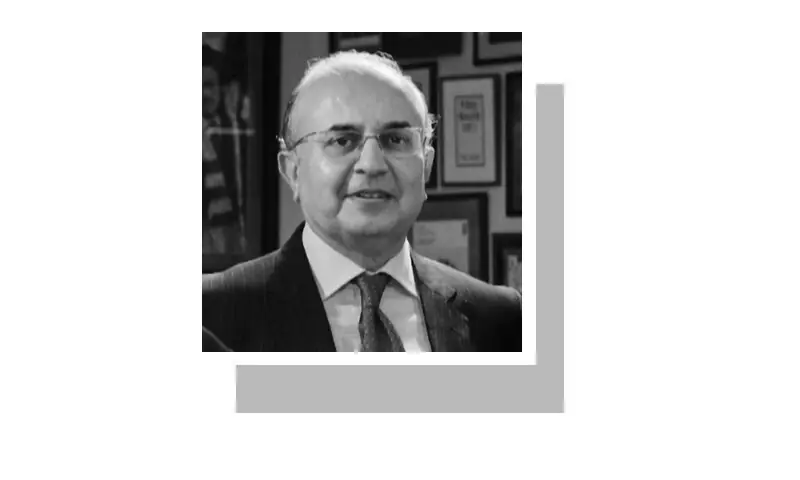
The writer is a former senior puisne judge of the Supreme Court of Pakistan and distinguished chair in constitutionalism & justice at SAHSOL, Lums.
Published in Dawn, November 29th, 2026
Source: dawn
Leave a Reply