LAHORE – The Specialised Healthcare and Medical Education Department will conduct interviews next week for the appointment of MSs to various government teaching hospitals.
Source: Nation
Source: Nation
Source: Nation
Source: Nation
Source: Nation
Source: Nation

ISLAMABAD: The government has allocated Rs300 billion exclusively for small and medium enterprises (SMEs) exporting under the Export Finance Scheme (EFS). The move aims to improve SMEs’ access to concessional financing, reduce their cost of doing business and strengthen the country’s export competitiveness.
Khurram Schehzad, Adviser to the Finance Minister, announced the initiative, saying that the entire Rs300 billion financing allocation, equivalent to around USD1.1 billion, would now be dedicated to eligible SME exporters through the Pakistan Export-Import Bank (Pak EXIM).
He said the allocation had previously been shared with other categories of borrowers but had now been exclusively earmarked for SMEs to facilitate their access to export financing.
The initiative is part of the government’s broader agenda to expand access to finance for SMEs and promote export-led economic growth.
According to the announcement, the dedicated financing facility will be complemented by tax relief measures introduced in the federal budget for FY2026-27, including reductions in export-related taxes and Super Tax, to ease the financial burden on exporters.
READ ALSO: What holds SMEs back?
Pak EXIM has also directed participating banks to ensure the effective implementation and utilisation of the dedicated allocation, Schehzad said.
The move is expected to provide SMEs with improved access to working capital, enable them to fulfil export orders, expand production capacity and explore new international markets.
SMEs constitute a significant segment of Pakistan’s business sector but continue to face constraints in accessing affordable credit, particularly for working capital and export expansion.
The government believes that ring-fencing the financing allocation for SME exporters, alongside tax concessions, will help improve their competitiveness and encourage greater participation in international trade.
The initiative is being pursued under the Prime Minister’s vision and the Finance Minister’s leadership as part of the Ministry of Finance’s broader agenda to improve access to finance and promote export-led growth.
Copyright Business Recorder, 2026
Source: brecorder
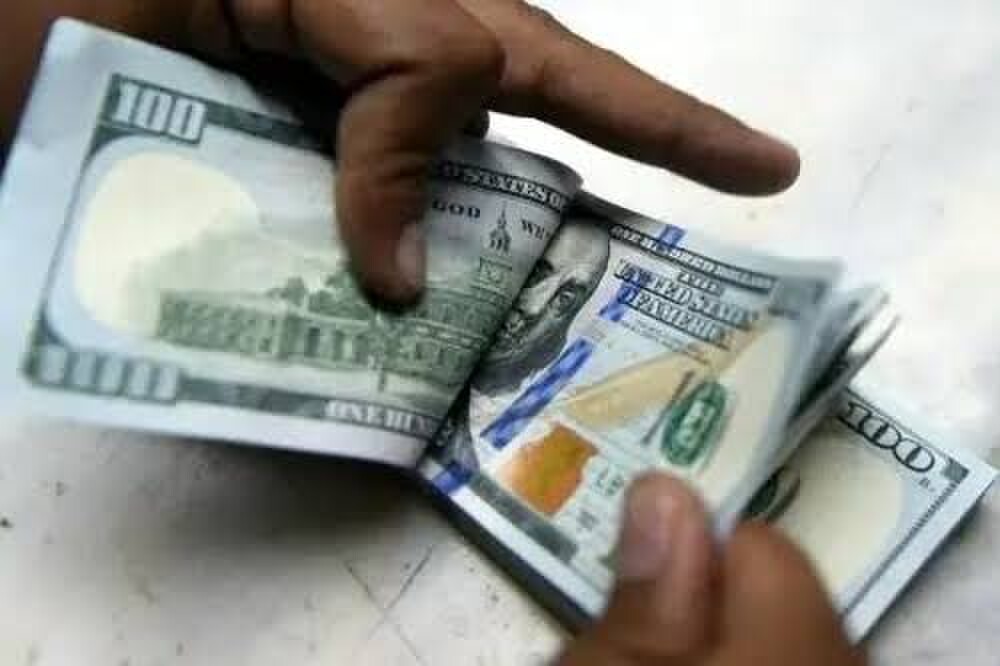
ISLAMABAD: India’s leading newspaper The Times of India on Saturday acknowledged the improvement in Pakistan’s foreign exchange reserves, reporting a USD110 million weekly increase to USD26.864 billion despite continuing geopolitical tensions and disruptions in global energy markets triggered by the West Asia crisis.
In its November 7 edition, the Indian newspaper highlighted the upward trajectory of Pakistan’s foreign exchange reserves, noting that the country’s total holdings had increased from USD26.754 billion in the preceding week, according to the latest figures released by the State Bank of Pakistan (SBP).
READ ALSO: SBP-held foreign exchange reserves rise $39mn to $21.56bn
The report also noted that SBP-held reserves had increased by USD5 billion since the West Asia conflict began in February, rising from USD16.568 billion to USD21.568 billion as of October 30.
The newspaper further highlighted that the improved reserve position had helped stabilise the Pakistani rupee and strengthened exporters’ confidence in repatriating their earnings without delays.
Source: brecorder

KARACHI: Muhammad Naseer, CEO of the Pakistan Horticulture Development and Export Company (PHDEC), visited the head office of the Green Pakistan Initiative (GPI) on October 29, 2026.
During the visit, Asif Khan, Project Director, GPI, briefed participants on horticultural processing and storage facilities being developed across Balochistan.
The project covers 22 locations across 20 districts and will support the processing of major fruits and vegetables, including dates, apples, tomatoes, onions, pomegranates, grapes, plums and cherries. Each location will have a cold storage capacity of 1,000 tonnes, with processing capacities ranging from 1 to 5 tonnes per hour. Eight locations are expected to become operational within the next few months.
Naseer commended the infrastructure development, highlighting its potential to strengthen horticultural value chains and support the production of high-quality, traceable products at commercial scale. He proposed prioritising date syrup, date paste, dried onions, apple cider and tomato pulp for export through collaboration with Pakistani exporters and trade missions. Mr. Khan endorsed the proposal.
GPI will showcase its value-added products at FoodAg, scheduled for November 23–26 in Karachi. Its participation will encourage exporter engagement in product development and introduce international buyers to the quality and scale of horticultural products available from Pakistan.
Naseer reaffirmed PHDEC’s commitment to strengthening market linkages for regional produce and facilitating local producers’ participation in the upcoming exhibition.
Copyright Business Recorder, 2026
Source: brecorder
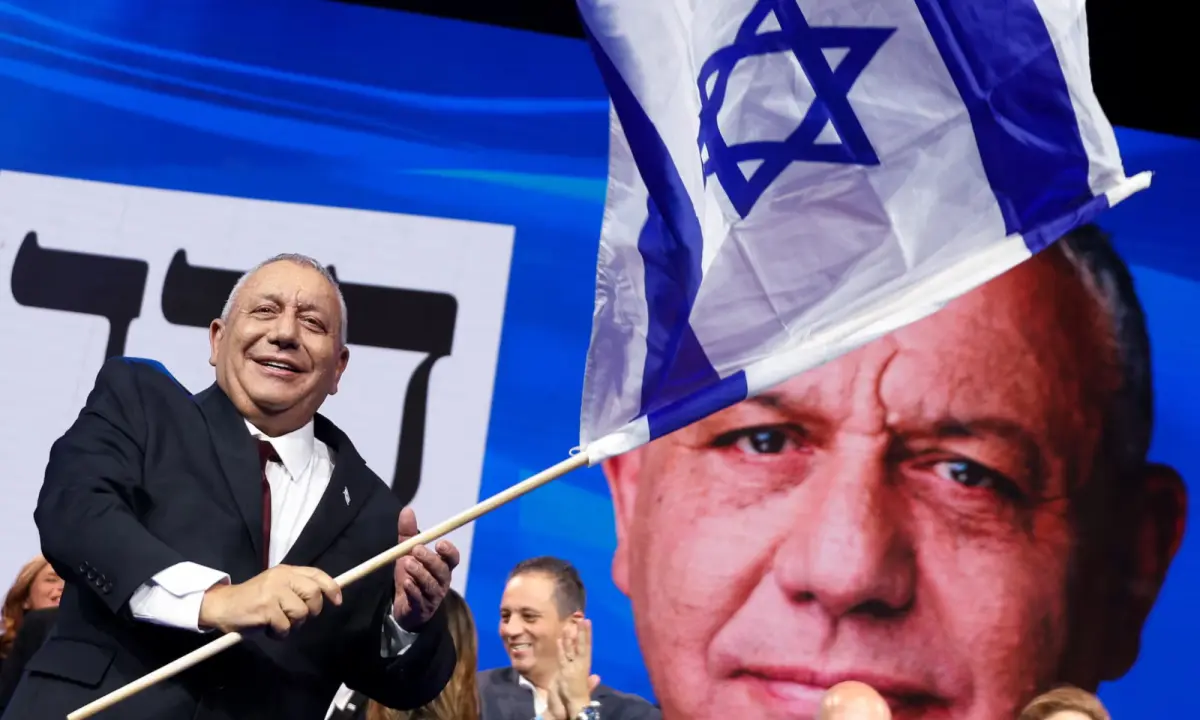
Israel’s president on Saturday chose Gadi Eisenkot, Prime Minister Benjamin Netanyahu’s strongest rival, to try to form a new government following a deadlocked election that left neither man with a clear path to power.
Netanyahu, Israel’s longest-serving leader, is fighting to stay in office after his religious-nationalist coalition lost its majority in an Oct 27 election but still emerged as the largest bloc in parliament.
Eisenkot, a former military chief, has declined to join forces with Arab parties, with whose support he would have a majority of seats in parliament.
But Arab leaders, incensed by what they view as the racist policies of Netanyahu and his far-right allies, still nominated Eisenkot to try to form a government first giving him the most endorsements.
“President Herzog has invited Gadi Eisenkot to the President’s Residence, where he will be tasked with forming the government tomorrow,” said the spokesperson of President Isaac Herzog, whose largely ceremonial role involves nominating a candidate to form a coalition after elections.
As part of this process, the president met Eisenkot and Netanyahu, among others, a statement by Herzog’s office said.
At the end of the consultations, factions comprising 67 Knesset members recommended to the president that Yashar party’s Eisenkot be tasked with forming the government, while factions comprising 46 Knesset members recommended Likud’s Netanyahu, the statement noted.
Meanwhile, seven Knesset members chose not to recommend anyone.
“Now is the time to form a national emergency government. I will do everything to ensure we are worthy,” Eisenkot wrote on X in his first reaction to the announcement of his designation.
Weeks of protracted negotiations are expected to follow Eisenkot’s nomination. He has 28 days to try to forge a government, with a possible 14-day extension.
His potential pathways to power include trying to form a minority government with Arab support from the outside; forming a coalition with ultra-Orthodox parties that he and his allies have shunned in the past; or forging a unity government with Netanyahu.
Analysts say that all three options are unlikely to take shape.
If Eisenkot fails, another candidate can try to form a government and if that candidate fails, parliament can nominate another. There is a deadline for the process of around 100 days. If no one succeeds, another election is held.
Likud won the most seats of any single party with 27 in the 120-seat Knesset, but Netanyahu’s wider religious-nationalist coalition garnered only 53 in total, short of a 61-seat majority.
Eisenkot’s Yashar party emerged as the second-largest party with 21 seats, while his coalition, spanning four centre-left to right-wing Jewish-led parties, won just 48 seats. Two parties representing Israel’s Arab minority won an unprecedented 19 seats.
The result underscored the rightward shift among Israeli Jews during Netanyahu’s years as the country’s dominant political figure. The centre-left that dominated Israel for the first half of its history has been reduced to a small fringe.
Nearly all Jewish parties now share Netanyahu’s rejection of an eventual independent Palestinian state, the basis of internationally endorsed peace efforts since the 1990s.
Eisenkot and Netanyahu have both said they would not form a government with parties primarily representing Israeli citizens of Palestinian descent, who comprise around a fifth of the population.
A son of Moroccan immigrants, Eisenkot, 66, would be the country’s first prime minister from Israel’s Mizrahi community, Jews who trace their roots to the Middle East and North Africa.
Eisenkot only entered politics in 2022. He briefly served in Netanyahu’s wartime cabinet following Hamas’s Oct 7, 2023, attack on Israel before returning to the opposition. Eisenkot’s son and two nephews were killed fighting in Gaza.
Eisenkot offers a break with Netanyahu’s leadership and far-right allies, but not with the hawkish security views that have hardened since Oct 7, 2023: he opposes Palestinian statehood and says Hamas’s military wing must be destroyed or dismantled.
Beyond that, Eisenkot has said Israel’s next government must prevent Iran from acquiring a military nuclear capability, either by force or through an “arrangement” such as a US-backed diplomatic solution.
He has emphasised his security credentials on the campaign trail, citing his “Dahiya doctrine” of responding to attacks with disproportionate force, which he deployed as a commander during Israel’s 2006 war with Hezbollah in Lebanon.
Eisenkot shares many of Netanyahu’s views on security and has backed the Gaza offensive that has reduced the territory to rubble.
Israel’s relentless campaign in response to the Hamas attacks killed over 74,000 Palestinians and has left it increasingly isolated on the world stage, with Amnesty International, Human Rights Watch and experts declaring its actions in Gaza as a “genocide”, which Tel Aviv rejects.
Both Eisenkot and Netanyahu say Israeli troops will not withdraw from Gaza until Hamas is disarmed, and that Israel is prepared to restart fighting to achieve this.
Eisenkot says the continued rule of Hamas in Gaza is a profound failure, and that within 18 months of taking office he would ensure that the Hamas administration had been replaced, either through a US-brokered plan or through military force.
From the opposition, Eisenkot publicly rebuked Netanyahu over his leadership, including his management of the military campaign in Gaza, and has sworn that he would not serve in government with him.
Although Eisenkot has criticised settler violence against Palestinians in occupied West Bank, which has surged since 2023, he favours settlement in principle and says it should comply with Israeli law.
He opposes settlements built without authorisation, aims to dismantle outposts in areas where they are forbidden and has pledged to rein in violent settlers.
Hundreds of thousands of Israelis live in the West Bank, settling in territory Israel occupied in a 1967 war, a practice nearly all countries consider illegal under international law.
Netanyahu and Eisenkot both say Israel must retain ultimate security control over all territory between the Jordan River and the Mediterranean Sea.
There are, however, differences in their emphasis. Eisenkot’s position on limiting settlements in the West Bank would reserve territory where Palestinians now exercise civil self-rule. Netanyahu’s coalition includes parties that openly call for Israel to fully annex occupied Palestinian land.
Source: dawn
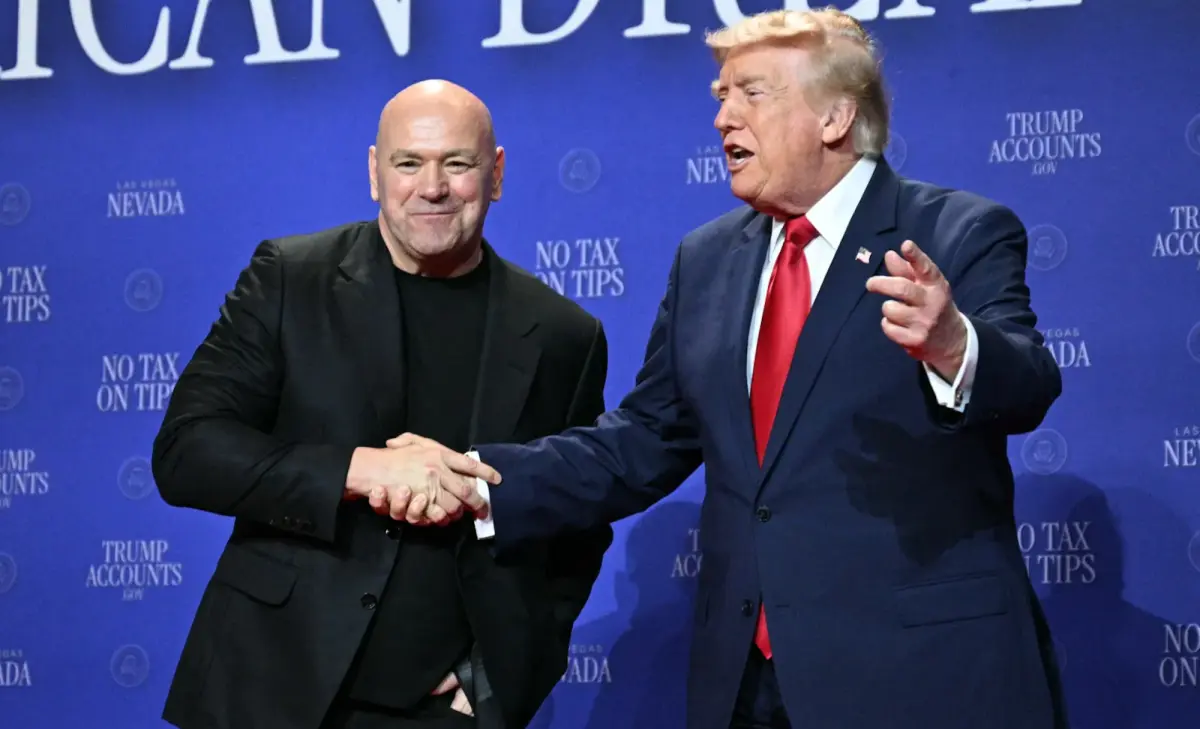
US President Donald Trump said on Saturday he had asked mixed martial arts promoter Dana White to serve as White House press secretary and called on him to bring some fighters along as assistants “even though some are not from our country.”
White, chief executive of the Ultimate Fighting Championship, is a “violent Fighter and Warrior,” Trump wrote in a Truth Social post.
Trump asked for six current or former UFC titleholders to join White, including two athletes from Russia’s Dagestan region, Islam Makhachev and Khabib Nurmagomedov; Americans Justin Gaethje, Daniel Cormier and “Kayla Harris,” likely a reference to Kayla Harrison; and Amanda Nunes, a Brazilian native who became an American citizen last year.
“We need these people to defend us against the Lunatic Left,” Trump wrote. White and UFC’s parent company, TKO Group Holdings, did not immediately return requests for comment.
Last month, White House Press Secretary Katie Zacharia was “let go”, less than a week after she had taken on the role after Trump said he had told her to reconsider the job following public scrutiny.
“I told her: ‘I think you’re better off being happy, and I’m not sure you can ever be happy in this stuff.’ There’s nothing easy about this stuff,” Trump told reporters.
Zacharia had acknowledged that she had failed the bar exam, a prerequisite for practising law in the United States. She had earlier described herself as a lawyer during television appearances and on social media, and listed herself as general counsel of a California-based conservative nonprofit.
Source: dawn