RAWALPINDI: The Board of Intermediate and Secondary Education (BISE) Rawalpindi has postponed the Computer Science papers of the Intermediate Second Annual Examinations 2026 scheduled for November 10 (Tuesday), fixing November 30 as the new date.
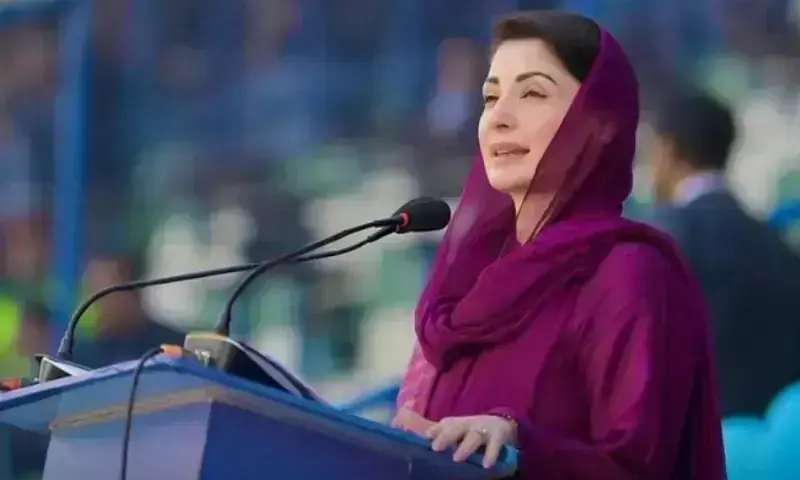
On the recommendation of the Jhelum deputy commissioner, the BISE Rawalpindi rescheduled the papers in view of the expected visit of Punjab Chief Minister Maryam Nawaz to Jhelum and Pind Dadan Khan on November 10.
According to a letter addressed to the BISE Rawalpindi chairman, the deputy commissioner recommended postponing the computer science papers in Jhelum district.
The letter available with Dawn stated that the Punjab chief minister was expected to visit Jhelum district on November 10, for which extensive administrative, security and protocol arrangements were being made by the district administration.
“In this regard, due to the consequent deployment of administrative and security personnel, it is not feasible to ensure the smooth and uninterrupted conduct of the said examination in the district. It is, therefore, requested that the examination be postponed and rescheduled for another suitable date to avoid any inconvenience to students and ensure the smooth conduct of both the examination and the VVIP visit,” the letter stated.
Acting on the request, the BISE Rawalpindi rescheduled the computer science papers for both morning and evening groups. According to BISE spokesman Arslan Cheema, Mubashir Saeed, Controller of Examinations at the board, issued a notification announcing the revised schedule.
He said the computer science papers of the Intermediate Second Annual Examination 2026, scheduled for Tuesday, November 10, had been postponed in Jhelum district following the recommendation of the deputy commissioner in view of administrative arrangements in the district.
Mubashir Saeed clarified that the papers would be held as originally scheduled at all examination centres in other districts falling under the jurisdiction of the Rawalpindi board. The new date for the postponed Computer Science papers in Jhelum district has been fixed for Monday, November 30, 2026.
On that day, the computer science paper for the morning group will be held during the morning session, while the corresponding paper for the evening group will take place during the evening session at the previously assigned examination centres.
According to the controller of examinations, new roll number slips will be issued for the convenience of students. However, previously issued roll number slips will also remain valid.
THE commentary that followed the recent Federal Constitutional Court (FCC) judgement dismissing the harassment claim of an NBP employee gives the impression that the court has rolled back the scope of the workplace harassment law so that it now covers only incidents of an overtly sexual nature, excluding conduct that amounts to gender-based discrimination. This is incorrect.
The correct position of the law now is this: allegations of workplace harassment prior to 2022 (which is when the Protection Against Harassment of Women in the Workplace Act was amended) must involve conduct of an overtly sexual nature to fall within the scope of the law. Actions that take place after the 2022 amendment are covered by the law not only if they are overtly sexual in nature, but also if they are rooted in gender-based discrimination. Let’s see why.
First, let’s look at the definition of ‘harassment’. Prior to January 2022, it was defined to cover “any unwelcome sexual advance, request for sexual favours or other verbal or written communication or physical conduct of a sexual nature or sexually demeaning attitudes, causing interference with work performance or creating an intimidating, hostile, or offensive work environment, or the attempt to punish the complainant for refusal to comply to such a request or is made a condition for employment”.
This definition was amended in January 2022 by adding the following: “discrimination on basis of gender, which may or may not be sexual in nature, but which may embody a discriminatory and prejudicial mindset or notion, resulting in discriminatory behaviour on basis of gender against the complainant” (Section 2[h][ii] of the Act).
The court interpreted the original definition restrictively, following the reasoning of the first Nadia Naz judgement.
The amendment was made after the 2021 Supreme Court decision in Nadia Naz vs President of Pakistan. This case, which analysed and applied the original, pre-2022 definition of harassment, concluded that the law only covers harassment of an overtly sexual nature.
The 2022 amendment, passed a few months after the judgement, rectified the limitation in the original definition as interpreted by the Supreme Court in the Nadia Naz judgement of 2021. The amended definition explicitly includes gender-based discrimination within the meaning of harassment.
The amended definition would not apply retrospectively. The expanded definition, which broadens the scope of the actionable wrong, would only cover actions that take place after the amendment.
But in 2023 the Supreme Court, reviewing the Nadia Naz judgement, held that the original definition was broad enough to include gender-based discrimination. Harassment as originally defined should be interpreted to include conduct that is not overtly sexual in nature but amounts to gender-based discrimination. The Supreme Court declared that the bench’s interpretation of the original definition was too restrictive.
The interpretation in the Nadia Naz judgement on review would be brilliant were it not for the 2022 amendment. By interpreting the original definition to have essentially the same meaning and effect as the 2022 insertion, the Supreme Court implies that the 2022 amendment was redundant. This contradicts a basic principle of statutory interpretation, which requires that each statutory provision should be interpreted to give it a distinct meaning.
It may well be that the 2022 amendment was not needed because the original definition should be interpreted as broadly and purposively as the Supreme Court did in the Nadia Naz judgement on review. But when the legislature amended the definition in 2022 to explicitly cover gender-based discrimination, it also implied that the earlier definition was restrictive, which is why the amendment was needed.
By explicitly expanding the definition, it endorsed the view that the original definition did not cover gender-based discrimination.
The FCC in its recent judgement did the same. The FCC interpreted the original definition restrictively, following the reasoning of the first Nadia Naz judgement. It did not refer to the 2022 amendment, and it did not need to because the incidents involved in the case predated the amendment. The amended definition would not apply to these facts. It would have been more edifying if the FCC had clearly explained this, but lucid, well-written judgements are unfortunately uncommon.
Let’s say, as many have argued, that the FCC should have interpreted the original definition more broadly to include gender-based discrimination. What implication would that have for the current definition of harassment? Such an interpretation would entail that the second part of the definition is redundant because the first part covers conduct embodying gender-based discrimination. Such reasoning would again contradict the principle of statutory interpretation, which says that the legislature does not waste its words.
The FCC decision is deeply flawed, but for another reason. The FCC has not applied its own interpretation properly. The harassment at issue in this case was overtly sexual in nature. The evidence put forward at the earlier stages of the case, before the Islamabad High Court and the ombudsperson, shows that the complainant faced harassment that was unambiguously sexual. It is disturbing that the FCC did not consider this conduct to fall within the scope of the original definition.
Flawed as it is, the FCC has not overruled the 2022 amendment to the law. The expanded definition (Section 2(h)(ii)) still stands, but it will only apply to incidents that took place or are alleged to have taken place after the date of the amendment. Prior incidents will be covered by the original definition, which will be interpreted restrictively.
This clarification is important because after the FCC ruling and the outrage against it, many potential claimants believe that the pervasive gender-based discrimination they currently face at the workplace is not covered by the law. People sitting on workplace harassment committees have told me that their mandate is now restricted to only incidents that are overtly sexual in nature. We must remind them that it is not.
The writer is a lawyer and the author of Progressive Laws In Patriarchal Societies.
WHEN railways and factories began transforming 19th-century Europe, the rulers of the Habsburg Empire understood their economic potential. Yet they resisted industrialisation.
Friedrich von Gentz, Metternich’s adviser, explained why: “We do not desire at all that the great masses shall become well-off and independent.” His reasoning ended with a revealing question: “How could we otherwise rule over them?”
The Habsburg rulers were not necessarily ignorant of the economic benefits of technological progress. They feared its political consequences. A more prosperous society might also become more independent, weakening their grip on power.
This historical episode helps explain a persistent puzzle in Pakistan: why do those in power repeatedly choose institutions (rules of the game) and policies that constrain economic progress, even when they too benefit from better alternatives? The answer may lie in the distinction between economic and political returns.
Elites do not necessarily choose arrangements that maximise national income, or even their own immediate economic gains. They also consider how a change might affect their ability to retain power and capture future returns — what we call the political replacement effect in economics.
Technological and institutional changes can expand economic opportunities while simultaneously creating new centres of political power. Incumbents may, therefore, resist changes that threaten their hold on power. The calculation is straightforward. A reform may make the economy larger and even increase the income of existing elites. But if it also raises the probability of their political displacement, or reduces the share of future gains they can command, their expected returns may decline. Under these conditions, elites may rationally prefer an inferior arrangement that preserves their political dominance.
In other words, a smaller pie under a secure scenario may be more attractive than a larger pie with uncertain future distribution.
An economically promising change can redistribute political power.
Pakistan’s recent history offers three institutional and technological choices that are especially revealing.
First is local government. The Constitution requires provinces to devolve political, administrative and financial authority to elected local representatives. Yet successive governments have either delayed local elections or weakened the institutions they create. The largest province, Punjab, last held LG elections a decade ago. Other provinces have also adopted various approaches to limit devolution. KP, for example, recently increased the population threshold for village and neighbourhood councils to reduce the number of councils, potentially weakening representation. In Sindh, transfers to LGs declined from 15.7 per cent of provincial general revenue receipts to just 5.8pc in the 2025-26 budget.
What makes these choices economically questionable? Elected LGs with genuine fiscal and administrative authority can better respond to local needs, improve service delivery, and strengthen accountability. Why, then, resist them?
Because empowered LGs also create political competitors. A mayor controlling development funds and public services can build an independent political constituency. Legislators lose influence over resources that help sustain their electoral networks. Even if improved local governance generates greater prosperity, its political dividends may accrue to someone else.
The second example is fiscal federalism. The seventh NFC award raised provinces’ share of the divisible pool to 57.5pc, with constitutional protection against subsequent reductions. But since then, the federal government has built a parallel fiscal system undermining the very principle of federalism. Petroleum levy collections, which are not shared with provinces, reached Rs1.567 trillion in 2025-26. Provinces were also asked to generate surpluses and, lately, to provide grants to the federal government.
The parallel system may be responding to genuine fiscal pressures, but it preserves fiscal discretion at the centre, despite the constitutional commitment to provincial autonomy. In essence, after the seventh NFC, the provincial share fell without anyone touching the award. The political economy consideration here is that meaningful fiscal autonomy changes the distribution of power. Provinces with independent revenue sources and predictable resources can pursue their own priorities and strengthen their political standing.
But the provinces are no different. While demanding autonomy from Islamabad, they resist transferring meaningful authority and resources to elected LGs. At each tier, those holding resources resist passing them down.
The third example concerns technology: rooftop solar.
Faced with high electricity tariffs, the public began investing in their own power generation. Solar offered consumers cheaper electricity, greater reliability, and reduced dependence on the national grid. Yet policy increasingly moved towards discouraging its adoption.
The government not only imposed a 10pc sales tax on solar panels but, in February, it replaced net metering with net billing for new connections, substantially lowering the compensation for surplus electricity supplied to the grid. A more economically sustainable response would have restructured costly contractual obligations, modernised the grid, and established fair charges for network use.
Why has such adjustment proved so difficult? One explanation is that decentralised electricity generation threatens more than power producers’ revenues. It also weakens an established system through which economic resources, contracts, subsidies, and regulatory discretion are concentrated. These instruments carry financial and political value. Reforming them could improve overall economic performance while reducing the influence of those who currently control them.
These three cases are not identical, but they share a key feature: an economically promising change can redistribute political power, creating incentives for incumbents to resist or dilute it. This is what makes the political replacement argument more powerful than the familiar explanation that elites protect their economic rents. Sometimes they may sacrifice economic gains, including their own, to preserve the political position from which future gains can be secured.
The implication is that Pakistan’s development problem cannot be resolved through better policy advice alone. The harder challenge is creating institutions that reduce the ability of those in power to obstruct changes that might eventually displace them. The stakes extend beyond the current examples. AI is creating new opportunities while challenging existing economic and political hierarchies. Whether or not Pakistan embraces those opportunities will depend largely on how it responds to a technology most capable of redistributing power.
Until the existing calculations change, the country may continue choosing a smaller pie for the sake of a firmer grip.
The writer is an associate professor of economics at the Lahore School of Economics.
• SC sets aside death sentences upheld by LHC • Observes findings on mental illness raise doubts about culpability
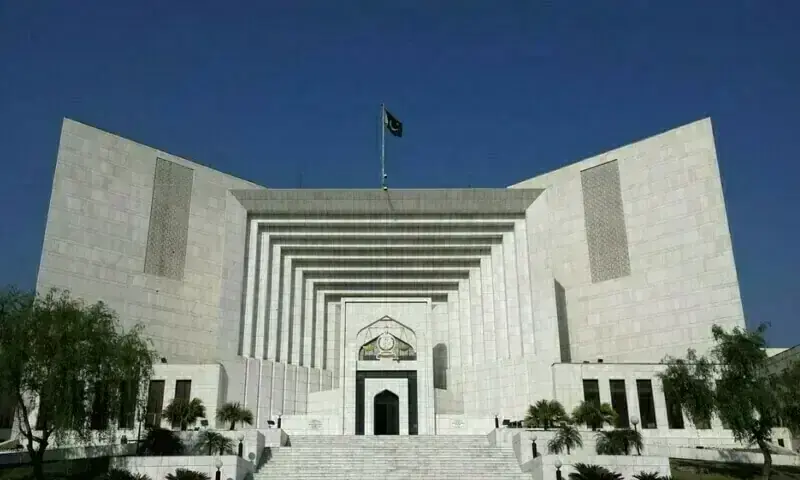
ISLAMABAD: The Supreme Court on Saturday acquitted two brothers in a blasphemy case under Section 295-C of the Pakistan Penal Code (PPC), setting aside their death sentences earlier upheld by the Lahore High Court (LHC) over a decade ago.
A three-judge SC bench, headed by Chief Justice of Pakistan Yahya Afridi and comprising Justices Shakeel Ahmad and Ishtiaq Ibrahim, took up criminal appeals against the Sept 17, 2015 decision of the LHC.
The brothers, Liaqat Ali and Umar Draz, have spent around 20 years behind bars. They were convicted by a sessions judge in Jhang on March 27, 2006. The trial court sentenced both brothers to death and imposed a fine of Rs500,000 each, with five years’ rigorous imprisonment in default. The high court dismissed their appeals and upheld the convictions.
The main SC judgement was authored by Justice Ishtiaq Ibrahim. Justice Shakeel Ahmad concurred with the order but also annexed an additional note.
According to the complaint, Umar Draz had begun making explicit blasphemous statements, leading to a marital dispute between him and his wife that culminated in divorce on March 13, 2006. Draz explicitly affirmed in writing his conversion from Islam in the divorce papers.
During the return of his former wife’s dowry articles, a written document authored by co-appellant Liaqat Ali was recovered. It also contained blasphemous assertions.
On March 18, 2006, when the complainant and witnesses confronted the brothers over the alleged blasphemous material, both appellants acknowledged and verified the contents of the documents and unequivocally declared their willingness to reiterate their assertions before any forum.
Before the SC, their counsel confined his submissions to the plea of mental unsoundness, arguing that the appellants lacked the requisite mens rea (guilty mind) at the time of the alleged offence.
The SC examined three psychiatric assessments. An initial three-member medical board at DHQ Hospital, Faisalabad, found both appellants mentally sound in 2007. However, an eight-member Board of Certification diagnosed them with “bipolar affective disorder with psychotic symptoms” in 2023.
A nine-member Board of Certification in September 2025 concluded that both brothers were suffering from “bipolar disorder current episode manic”. It described the condition as a chronic illness that was most likely permanent in acute cases, with absent insight and an inability to understand their acts at the time.
The SC observed that the unanimous opinions of specialised boards comprising senior professors of psychiatry carried greater weight than the earlier assessment by a board with only one psychiatrist.
It also noted that bipolar disorder was episodic and had a genetic component, and that both brothers had been independently diagnosed with the same condition.
“The appellants have spent around 20 years behind bars. In the light of the opinion of medical board which raises doubts regarding the culpability of the appellants, the benefit of doubt cannot be withheld from the appellants,” the judgement said.
While acquitting the appellants, the SC also expected the executive director of the Punjab Institute of Mental Health, Lahore, to ensure that their medical treatment was not discontinued.
Additional note
In his concurring note, Justice Ahmad agreed with the acquittal but cautioned that a psychiatric diagnosis alone did not satisfy the requirements of Section 84 of the PPC. The judge distinguished medical insanity from legal insanity, noting that the key question was whether, at the time of the offence, the accused was incapable of knowing the nature of the act or that it was wrong or contrary to law.
He argued that legal accountability had to be balanced with humanity, explaining that true justice also included mercy when the law recognised a person’s lack of mental capacity.
The note said the medical reports, along with the surrounding circumstances, created reasonable doubt. It also referred to Islamic principles of legal capacity and responsibility.
ALTHOUGH American President Donald Trump has admitted that the disastrous Iran war was a factor in the heavy drubbing his party received from the Democrats in the midterm polls, there are few indications he has decided to wind down the conflict. In fact, Mr Trump has sent mixed messages, saying there has been “progress” in talks with Iran, while also threatening to “destroy what is left” of the Islamic Republic should negotiations fail.
These are hardly reassuring words for the international community, which wants the war to end quickly. Qatar has taken centre stage in mediation, with Mr Trump discussing the Iran file with the country’s emir.
There is genuine reason to fear another US strike on Iran. For one, Mr Trump may want to act before January 2027, when the new Congress is empowered to scrutinise his decisions.
The US government on Saturday asked its citizens in the Middle East to “exercise heightened vigilance”, while it has struck the Iranian island of Qeshm twice this week. The Iranians have not taken the bait, but have promised strong retaliation to new attacks.
These developments illustrate the unpredictability of the Gulf situation: one rash move could restart the conflict, which is why mediation efforts should be stepped up.
The US leadership is mistaken if it thinks that a fresh round of hostilities would be ‘limited’. If Iran does retaliate to new American or Israeli strikes, the impact of the conflict could be far more devastating than the last round. Along with needless aggression against a sovereign state, the economic shockwave caused by the conflict would hit ordinary people everywhere.
In order to prevent a new military and economic crisis, the US leadership must prioritise diplomacy over war. The Iranians want an end to the blockade of their ports, as well as lifting of sanctions and the release of their funds. All these are achievable goals if the US sincerely desires peace. Even the nuclear issue can be resolved at the negotiating table if Mr Trump eschews his threatening tone.
In return, Iran should promise unhindered navigation in the Strait of Hormuz. Moreover, the ceasefire must be broadened to stop the Yemen conflict as well as Israeli violence in Lebanon and the occupied Palestinian territories. Though technically, these are separate conflicts, they are also interlinked, involving Iran’s allies in the ‘Axis of Resistance’.
It is decision time for Mr Trump. He can either work with regional states and negotiate an end to his own ‘forever war’. Or he can continue down the same path, with the international community paying the price for American and Israeli bellicosity. For the sake of peace, it is hoped he chooses the former option.
ISLAMABAD: The ruling coalition partners have formally submitted the names of their nominees for the proposed parliamentary committee on electoral reforms, while nominations from opposition parties are still awaited.
Talking to Dawn, Parliamentary Affairs Minister Dr Tariq Fazal Chaudhry confirmed that he had received the names from coalition parties, including the PPP.
Declining to disclose the names, the minister said the committee would comprise 30 members from the National Assembly and the Senate, with parties receiving representation proportionate to their strength in the two houses of parliament.
Under the formula, he said, the PPP would have seven members on the committee, while the PML-N would be allocated 10 seats. However, he added: “The PML-N may have to sacrifice some of its members to accommodate smaller parties.”
Opposition yet to submit nominees for parliamentary panel on reforms as PTI doubts govt intent
The minister said he had requested the chief whip of the main opposition party, PTI, Aamir Dogar, to provide a list of the party’s nominees for the committee, but Mr Dogar had sought some time. The other opposition party, Jamiat Ulema-i-Islam-Fazl (JUI-F), had also not submitted the names of its proposed members, he said.
The PTI had objected to the composition of the committee, he said, adding that he had informed the party that all previous parliamentary committees had been constituted on a proportional basis.
The minister expressed hope that the PTI would announce its decision next week.
Interestingly, Dr Chaudhry said his own party, the ruling PML-N, had shortlisted names for the committee, but these would be submitted to the National Assembly Secretariat only after final approval from the party leadership.
Replying to a question, Dr Chaudhry said that if opposition parties decided to boycott the committee, the leadership of the ruling coalition parties would make a final decision on the matter.
In a recent post on X, Dr Chaudhry had said that the allocation of seats in the Senate for the committee would give two seats each to the PML-N, PPP and PTI. The Awami National Party (ANP), Balochistan Awami Party (BAP), National Party and JUI-F would each be allocated one seat, he had stated.
“The final decision on the names of committee members will be made by the leader of the house [the prime minister] and the deputy prime minister after consultations with the opposition, coalition partners and relevant parliamentary leaders,” Dr Chaudhry said.
Earlier this week, the government, taking ownership of an initiative to bring all parliamentary parties, including the opposition, to the negotiating table on electoral reforms, had formally approached its allies to join the proposed Parliamentary Committee on Electoral Reforms (PCER).
PTI serious about reforms
When contacted, PTI Information Secretary Sheikh Waqas Akram said the party was serious about electoral reforms but had doubts that the government wanted to ensure PTI’s representation on the committee merely to legitimise the process.
“The government wants to have five opposition members on the committee. With five members, we will not be able to implement our proposals,” he explained.
Replying to a question, Sheikh Waqas said the matter would first have to be discussed in the party’s political committee and then in its parliamentary and core committees.
“We held meetings of both committees a few days ago, but due to Imran Khan’s health issues, it was decided to limit their agenda to one point — the health of Imran Khan,” he said.
He said the PTI was very clear about its position on electoral reforms and wanted electronic voting machines and a mechanism to ensure that no one could rig elections.
“It was the PTI that introduced electronic voting machines and tried them in Pakistan,” he said.
Asked how many days the PTI would take to decide whether to become part of the electoral reforms committee, Mr Waqas said meetings of the parliamentary and core committees would be held within two to three days to make a decision.
“However, I want to make it clear that the PTI wants electoral reforms and will become part of any sincere effort to ensure that true representatives of the masses run the country,” he said.
Talking to Dawn, JUI-F spokesperson Aslam Ghouri said the party had not yet made any decision regarding the PCER.
He expressed hope that the matter would soon be discussed by the party’s executive committee.
MUZAFFARABAD: Former Azad Jammu and Kashmir (AJK) president Raja Mohammad Zulqarnain Khan died at a hospital in Islamabad on Saturday after a brief illness. He was 93.
The AJK government announced a day of official mourning on Sunday, during which the state’s flag would fly at half-mast. It also ordered his burial with full state honours in his native town of Kasguma, Bhimber district, following funeral prayers at 11am on Sunday.
Born on March 15, 1933, Raja Zulqarnain was the son of Khan Bahadur Raja Mohammad Afzal Khan, an ICS officerfrom the Chib Rajput tribe who served in Maharaja Hari Singh’s administration. He was granted an estate in present-day Bhimber district.
Raja Zulqarnain received his early education in Srinagar and Delhi before joining Lawrence College, Ghora Gali, at the age of 13. His contemporaries there included former prime minister Zafarullah Jamali and former Balochistan chief minister Sardar Akbar Bugti. After graduating from Government College, Lahore, in 1955, he entered the construction business in 1958 by establishing United Builders in Karachi. The company subsequently undertook projects in Pakistan, AJK, UAE and Iraq.
Raja Zulqarnain entered politics in 1960-61 as an associate of KH Khurshid, former AJK president and private secretary to Quaid-i-Azam Mohammad Ali Jinnah. He was elected chairman of his native union council, Kasguma,in the first elections held under the Basic Democracies system introduced by Gen Ayub Khan in Pakistan and subsequently adopted in AJK under Mr Khurshid. When Mr Khurshid founded the Jammu Kashmir Liberation League in 1962, he appointed Raja Zulqarnain its founding secretary general.He remained deeply influenced byhis mentor’s political outlook and personal manner.
Ahead of AJK’s first general elections under the parliamentary system in 1975, Raja Zulqarnain joined the Pakistan Peoples Party (PPP) and was elected to the Legislative Assembly from Samahni. Following the restoration of political activities after Gen Ziaul Haq’s martial law, he joined the Muslim Conference (MC) and won the 1985 election from Bhimberon its ticket. He served in Sardar Sikandar Hayat’s cabinet for five years.
In 1990, he lost the assembly election to PPP candidate Chaudhry Sohbat Ali. He returned to the assembly in 1991 and served in Sardar Abdul Qayyum Khan’s cabinet for five years. In 1996, the MC secured his election to the AJK Council.
In the general elections held that year, he backed Chaudhry Tariq Farooq, who was elected to the assembly for the first time. Their political association, however, ended amid local rivalries ahead of the 2001 election, when Mr Farooq contested as an independent and defeated Raja Zulqarnain.
In 2006, Raja Zulqarnain opposed Mr Farooq, the MC nominee, helping Chaudhry Anwarul Haq win his first assembly seat by a narrow margin. In August that year, the Muslim Conference elected him AJK president, a position he held until August 2011.
He continued to support Mr Haq in the 2011 and 2016 elections, both of which Mr Farooq won. In 2021, Mr Haq, then a PTI candidate, secured his second victory with Raja Zulqarnain’s support. The former president subsequently became disenchanted with Mr Haq.
In April this year, a PML-N delegation called on Raja Zulqarnain and invited him to formally join the party. His son, Babar Ali Zulqarnain, announced his father’s decision to join the PML-Nat a public meeting in Bhimber the following month and was appointed a party vice president.
In his condolence message, AJK Legislative Assembly Speaker Chaudhry Tariq Farooq described Raja Zulqarnain’s death as a major loss for the political, parliamentary and social circles of Jammu and Kashmir.
Former AJK premier Sardar Tanveer Ilyas also expressed deep sorrow over Raja Zulqarnain’s death.
LAHORE – The Specialised Healthcare and Medical Education Department will conduct interviews next week for the appointment of MSs to various government teaching hospitals.
LAHORE – To empower women and providing them with opportunities for dignified employment, the district government has taken a major step following the introduction of ‘model carts’ (vending stalls).