Blog

  • Siblings acquitted in blasphemy case after 20 years

    Siblings acquitted in blasphemy case after 20 years

    • SC sets aside death sentences upheld by LHC
    • Observes findings on mental illness raise doubts about culpability

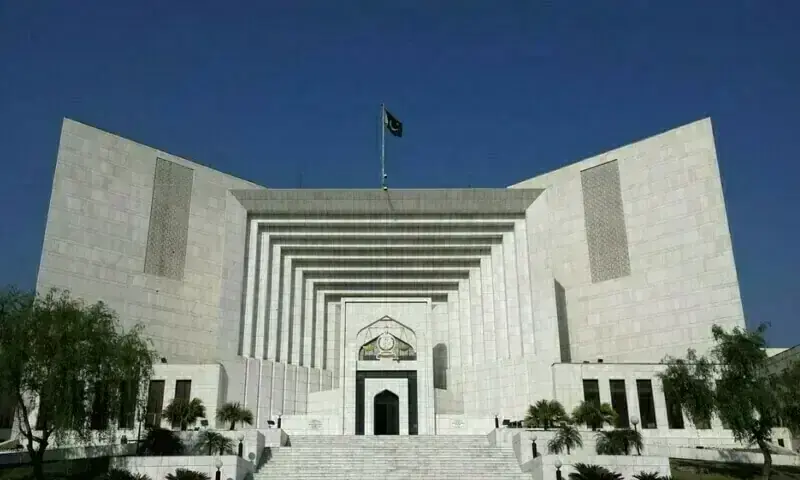
    ISLAMABAD: The Supreme Court on Saturday acquitted two brothers in a blasphemy case under Section 295-C of the Pakistan Penal Code (PPC), setting aside their death sentences earlier upheld by the Lahore High Court (LHC) over a decade ago.

    A three-judge SC bench, headed by Chief Justice of Pakistan Yahya Afridi and comprising Justices Shakeel Ahmad and Ishtiaq Ibrahim, took up criminal appeals against the Sept 17, 2015 decision of the LHC.

    The brothers, Liaqat Ali and Umar Draz, have spent around 20 years behind bars. They were convicted by a sessions judge in Jhang on March 27, 2006. The trial court sentenced both brothers to death and imposed a fine of Rs500,000 each, with five years’ rigorous imprisonment in default. The high court dismissed their appeals and upheld the convictions.

    The main SC judgement was authored by Justice Ishtiaq Ibrahim. Justice Shakeel Ahmad concurred with the order but also annexed an additional note.

    According to the complaint, Umar Draz had begun making explicit blasphemous statements, leading to a marital dispute between him and his wife that culminated in divorce on March 13, 2006. Draz explicitly affirmed in writing his conversion from Islam in the divorce papers.

    During the return of his former wife’s dowry articles, a written document auth­ored by co-appellant Liaqat Ali was recovered. It also contained blasphemous assertions.

    On March 18, 2006, when the complainant and witnesses confronted the brothers over the alleged blasphemous material, both appellants acknowledged and verified the contents of the documents and unequivocally declared their willingness to reiterate their assertions before any forum.

    Before the SC, their counsel confined his submissions to the plea of mental unsoundness, arguing that the appellants lacked the requisite mens rea (guilty mind) at the time of the alleged offence.

    The SC examined three psychiatric assessments. An initial three-member medical board at DHQ Hospital, Faisalabad, found both appellants mentally sound in 2007. However, an eight-member Board of Certification diagnosed them with “bipolar affective disorder with psychotic symptoms” in 2023.

    A nine-member Board of Certification in September 2025 concluded that both brothers were suffering from “bipolar disorder current episode manic”. It described the condition as a chronic illness that was most likely permanent in acute cases, with absent insight and an inability to understand their acts at the time.

    The SC observed that the unanimous opinions of specialised boards comprising senior professors of psychiatry carried greater weight than the earlier assessm­ent by a board with only one psychiatrist.

    It also noted that bipolar disorder was episodic and had a genetic component, and that both brothers had been independently diagnosed with the same condition.

    “The appellants have spent around 20 years behind bars. In the light of the opinion of medical board which raises doubts regarding the culpability of the appellants, the benefit of doubt cannot be withheld from the appellants,” the judgement said.

    While acquitting the appellants, the SC also expected the executive director of the Punjab Institute of Mental Health, Lahore, to ensure that their medical treatment was not discontinued.

    Additional note

    In his concurring note, Justice Ahmad agreed with the acquittal but cautioned that a psychiatric diagnosis alone did not satisfy the requirements of Section 84 of the PPC. The judge distinguished medical insanity from legal insanity, noting that the key question was whether, at the time of the offence, the accused was incapable of knowing the nature of the act or that it was wrong or contrary to law.

    He argued that legal accountability had to be balanced with humanity, explaining that true justice also included mercy when the law recognised a person’s lack of mental capacity.

    The note said the medical reports, along with the surrounding circumstances, created reasonable doubt. It also referred to Islamic principles of legal capacity and responsibility.

    Published in Dawn, November 8th, 2026

    Source: dawn
  • Trump’s choice

    ALTHOUGH American President Donald Trump has admitted that the disastrous Iran war was a factor in the heavy drubbing his party received from the Democrats in the midterm polls, there are few indications he has decided to wind down the conflict. In fact, Mr Trump has sent mixed messages, saying there has been “progress” in talks with Iran, while also threatening to “destroy what is left” of the Islamic Republic should negotiations fail.

    These are hardly reassuring words for the international community, which wants the war to end quickly. Qatar has taken centre stage in mediation, with Mr Trump discussing the Iran file with the country’s emir.

    There is genuine reason to fear another US strike on Iran. For one, Mr Trump may want to act before January 2027, when the new Congress is empowered to scrutinise his decisions.

    The US government on Saturday asked its citizens in the Middle East to “exercise heightened vigilance”, while it has struck the Iranian island of Qeshm twice this week. The Iranians have not taken the bait, but have promised strong retaliation to new attacks.

    These developments illustrate the unpredictability of the Gulf situation: one rash move could restart the conflict, which is why mediation efforts should be stepped up.

    The US leadership is mistaken if it thinks that a fresh round of hostilities would be ‘limited’. If Iran does retaliate to new American or Israeli strikes, the impact of the conflict could be far more devastating than the last round. Along with needless aggression against a sovereign state, the economic shockwave caused by the conflict would hit ordinary people everywhere.

    In order to prevent a new military and economic crisis, the US leadership must prioritise diplomacy over war. The Iranians want an end to the blockade of their ports, as well as lifting of sanctions and the release of their funds. All these are achievable goals if the US sincerely desires peace. Even the nuclear issue can be resolved at the negotiating table if Mr Trump eschews his threatening tone.

    In return, Iran should promise unhindered navigation in the Strait of Hormuz. Moreover, the ceasefire must be broadened to stop the Yemen conflict as well as Israeli violence in Lebanon and the occupied Palestinian territories. Though technically, these are separate conflicts, they are also interlinked, involving Iran’s allies in the ‘Axis of Resistance’.

    It is decision time for Mr Trump. He can either work with regional states and negotiate an end to his own ‘forever war’. Or he can continue down the same path, with the international community paying the price for American and Israeli bellicosity. For the sake of peace, it is hoped he chooses the former option.

    Published in Dawn, November 8th, 2026

    Source: dawn

  • Ruling coalition inches ahead on electoral reforms

    ISLAMABAD: The ruling coalition partners have formally submitted the names of their nominees for the proposed parliamentary committee on electoral reforms, while nominations from opposition parties are still awaited.

    Talking to Dawn, Parliamentary Affairs Minister Dr Tariq Fazal Chaudhry confirmed that he had received the names from coalition parties, including the PPP.

    Declining to disclose the names, the minister said the committee would comprise 30 members from the National Assembly and the Senate, with parties receiving representation proportionate to their strength in the two houses of parliament.

    Under the formula, he said, the PPP would have seven members on the committee, while the PML-N would be allocated 10 seats. However, he added: “The PML-N may have to sacrifice some of its members to accommodate smaller parties.”

    Opposition yet to submit nominees for parliamentary panel on reforms as PTI doubts govt intent

    The minister said he had requested the chief whip of the main opposition party, PTI, Aamir Dogar, to provide a list of the party’s nominees for the committee, but Mr Dogar had sought some time. The other opposition party, Jamiat Ulema-i-Islam-Fazl (JUI-F), had also not submitted the names of its proposed members, he said.

    The PTI had objected to the composition of the committee, he said, adding that he had informed the party that all previous parliamentary committees had been constituted on a proportional basis.

    The minister expressed hope that the PTI would announce its decision next week.

    Interestingly, Dr Chaudhry said his own party, the ruling PML-N, had shortlisted names for the committee, but these would be submitted to the National Assembly Secretariat only after final approval from the party leadership.

    Replying to a question, Dr Chaudhry said that if opposition parties decided to boycott the committee, the leadership of the ruling coalition parties would make a final decision on the matter.

    In a recent post on X, Dr Chaudhry had said that the allocation of seats in the Senate for the committee would give two seats each to the PML-N, PPP and PTI. The Awami National Party (ANP), Balochistan Awami Party (BAP), National Party and JUI-F would each be allocated one seat, he had stated.

    “The final decision on the names of committee members will be made by the leader of the house [the prime minister] and the deputy prime minister after consultations with the opposition, coalition partners and relevant parliamentary leaders,” Dr Chaudhry said.

    Earlier this week, the government, taking ownership of an initiative to bring all parliamentary parties, including the opposition, to the negotiating table on electoral reforms, had formally approached its allies to join the proposed Parliamentary Committee on Electoral Reforms (PCER).

    PTI serious about reforms

    When contacted, PTI Information Secretary Sheikh Waqas Akram said the party was serious about electoral reforms but had doubts that the government wanted to ensure PTI’s representation on the committee merely to legitimise the process.

    “The government wants to have five opposition members on the committee. With five members, we will not be able to implement our proposals,” he explained.

    Replying to a question, Sheikh Waqas said the matter would first have to be discussed in the party’s political committee and then in its parliamentary and core committees.

    “We held meetings of both committees a few days ago, but due to Imran Khan’s health issues, it was decided to limit their agenda to one point — the health of Imran Khan,” he said.

    He said the PTI was very clear about its position on electoral reforms and wanted electronic voting machines and a mechanism to ensure that no one could rig elections.

    “It was the PTI that introduced electronic voting machines and tried them in Pakistan,” he said.

    Asked how many days the PTI would take to decide whether to become part of the electoral reforms committee, Mr Waqas said meetings of the parliamentary and core committees would be held within two to three days to make a decision.

    “However, I want to make it clear that the PTI wants electoral reforms and will become part of any sincere effort to ensure that true representatives of the masses run the country,” he said.

    Talking to Dawn, JUI-F spokesperson Aslam Ghouri said the party had not yet made any decision regarding the PCER.

    He expressed hope that the matter would soon be discussed by the party’s executive committee.

    Published in Dawn, November 8th, 2026

    Source: dawn

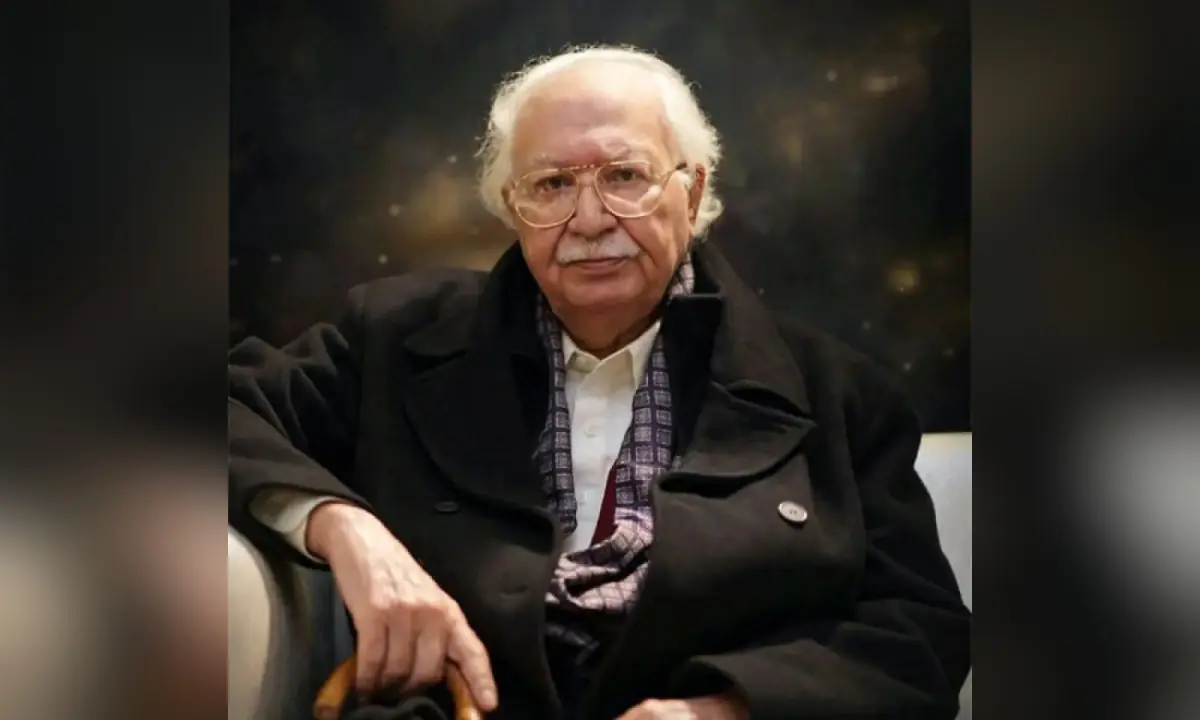
  • Ex-AJK president Raja Zulqarnain dies at 93

    Ex-AJK president Raja Zulqarnain dies at 93

    MUZAFFARABAD: Former Azad Jammu and Kashmir (AJK) president Raja Mohammad Zulqarnain Khan died at a hospital in Islamabad on Saturday after a brief illness. He was 93.

    The AJK government announced a day of official mourning on Sunday, during which the state’s flag would fly at half-mast. It also ordered his burial with full state honours in his native town of Kasguma, Bhimber district, following funeral prayers at 11am on Sunday.

    Born on March 15, 1933, Raja Zulqarnain was the son of Khan Bahadur Raja Mohammad Afzal Khan, an ICS officerfrom the Chib Rajput tribe who served in Maharaja Hari Singh’s administration. He was granted an estate in present-day Bhimber district.

    Raja Zulqarnain received his early education in Srinagar and Delhi before joining Lawrence College, Ghora Gali, at the age of 13. His contemporaries there included former prime minister Zafarullah Jamali and former Balochistan chief minister Sardar Akbar Bugti. After graduating from Government College, Lahore, in 1955, he entered the construction business in 1958 by establishing United Builders in Karachi. The company subsequently undertook projects in Pakistan, AJK, UAE and Iraq.

    Raja Zulqarnain entered politics in 1960-61 as an associate of KH Khurshid, former AJK president and private secretary to Quaid-i-Azam Mohammad Ali Jinnah. He was elected chairman of his native union council, Kasguma,in the first elections held under the Basic Democracies system introduced by Gen Ayub Khan in Pakistan and subsequently adopted in AJK under Mr Khurshid. When Mr Khurshid founded the Jammu Kashmir Liberation League in 1962, he appointed Raja Zulqarnain its founding secretary general.He remained deeply influenced byhis mentor’s political outlook and personal manner.

    Ahead of AJK’s first general elections under the parliamentary system in 1975, Raja Zulqarnain joined the Pakistan Peoples Party (PPP) and was elected to the Legislative Assembly from Samahni. Following the restoration of political activities after Gen Ziaul Haq’s martial law, he joined the Muslim Conference (MC) and won the 1985 election from Bhimberon its ticket. He served in Sardar Sikandar Hayat’s cabinet for five years.

    In 1990, he lost the assembly election to PPP candidate Chaudhry Sohbat Ali. He returned to the assembly in 1991 and served in Sardar Abdul Qayyum Khan’s cabinet for five years. In 1996, the MC secured his election to the AJK Council.

    In the general elections held that year, he backed Chaudhry Tariq Farooq, who was elected to the assembly for the first time. Their political association, however, ended amid local rivalries ahead of the 2001 election, when Mr Farooq contested as an independent and defeated Raja Zulqarnain.

    In 2006, Raja Zulqarnain opposed Mr Farooq, the MC nominee, helping Chaudhry Anwarul Haq win his first assembly seat by a narrow margin. In August that year, the Muslim Conference elected him AJK president, a position he held until August 2011.

    He continued to support Mr Haq in the 2011 and 2016 elections, both of which Mr Farooq won. In 2021, Mr Haq, then a PTI candidate, secured his second victory with Raja Zulqarnain’s support. The former president subsequently became disenchanted with Mr Haq.

    In April this year, a PML-N delegation called on Raja Zulqarnain and invited him to formally join the party. His son, Babar Ali Zulqarnain, announced his father’s decision to join the PML-Nat a public meeting in Bhimber the following month and was appointed a party vice president.

    In his condolence message, AJK Legislative Assembly Speaker Chaudhry Tariq Farooq described Raja Zulqarnain’s death as a major loss for the political, parliamentary and social circles of Jammu and Kashmir.

    Former AJK premier Sardar Tanveer Ilyas also expressed deep sorrow over Raja Zulqarnain’s death.

    Published in Dawn, November 8th, 2026

    Source: dawn

  • Interviews for MS appointments to teaching hospitals next week

    LAHORE – The Specialised Healthcare and Medical Education Department will conduct interviews next week for the appointment of MSs to various government teaching hospitals.

    Source: Nation

  • Pink Model Carts’ initiative to be extended for women

    LAHORE – To empower women and providing them with opportunities for dignified employment, the district government has taken a major step following the introduction of ‘model carts’ (vending stalls).

    Source: Nation

  • LWMC CEO conducts surprise visits, takes action against negligent staff

    LAHORE – Lahore Waste Management Company’s (LWMC) Chief Executive Officer (CEO) Sheryar Arif Khan on Saturday conducted surprise visits to Gulberg Town, Garhi Shahu, Allama Iqbal Road, Abbott Road, Nisbat Road and areas surrounding Lakshmi Chowk to inspect cleanliness arrangements, check workers’ attendance and monitor ongoing.

    Source: Nation

  • Punjab pursues zero-tolerance policy against corruption, says Azma Bokhari

    LAHORE – Punjab Information and Culture Minister Azma Bokhari has said that Punjab is the only province taking concrete measures and effective action against corruption rather than merely making statements.

    Source: Nation

  • Lahore DC reviews arrangements at Raiwind Ijtema site

    LAHORE – Lahore Deputy Commissioner (DC) Muhammad Ali Ejaz on Saturday visited the Raiwind Ijtema site to review arrangements and facilities being provided to participants attending the annual Tableeghi Ijtema.

    Source: Nation

  • Export Finance Scheme: Govt allocates Rs300bn for SMEs

    Export Finance Scheme: Govt allocates Rs300bn for SMEs

    ISLAMABAD: The government has allocated Rs300 billion exclusively for small and medium enterprises (SMEs) exporting under the Export Finance Scheme (EFS). The move aims to improve SMEs’ access to concessional financing, reduce their cost of doing business and strengthen the country’s export competitiveness.

    Khurram Schehzad, Adviser to the Finance Minister, announced the initiative, saying that the entire Rs300 billion financing allocation, equivalent to around USD1.1 billion, would now be dedicated to eligible SME exporters through the Pakistan Export-Import Bank (Pak EXIM).

    He said the allocation had previously been shared with other categories of borrowers but had now been exclusively earmarked for SMEs to facilitate their access to export financing.

    The initiative is part of the government’s broader agenda to expand access to finance for SMEs and promote export-led economic growth.

    According to the announcement, the dedicated financing facility will be complemented by tax relief measures introduced in the federal budget for FY2026-27, including reductions in export-related taxes and Super Tax, to ease the financial burden on exporters.

    READ ALSO: What holds SMEs back?

    Pak EXIM has also directed participating banks to ensure the effective implementation and utilisation of the dedicated allocation, Schehzad said.

    The move is expected to provide SMEs with improved access to working capital, enable them to fulfil export orders, expand production capacity and explore new international markets.

    SMEs constitute a significant segment of Pakistan’s business sector but continue to face constraints in accessing affordable credit, particularly for working capital and export expansion.

    The government believes that ring-fencing the financing allocation for SME exporters, alongside tax concessions, will help improve their competitiveness and encourage greater participation in international trade.

    The initiative is being pursued under the Prime Minister’s vision and the Finance Minister’s leadership as part of the Ministry of Finance’s broader agenda to improve access to finance and promote export-led growth.

    Copyright Business Recorder, 2026

    Source: brecorder