Category: Brecorder

  • Saudi-led coalition says it intercepts two Houthi missiles fired towards Riyadh

    Saudi-led coalition says it intercepts two Houthi missiles fired towards Riyadh

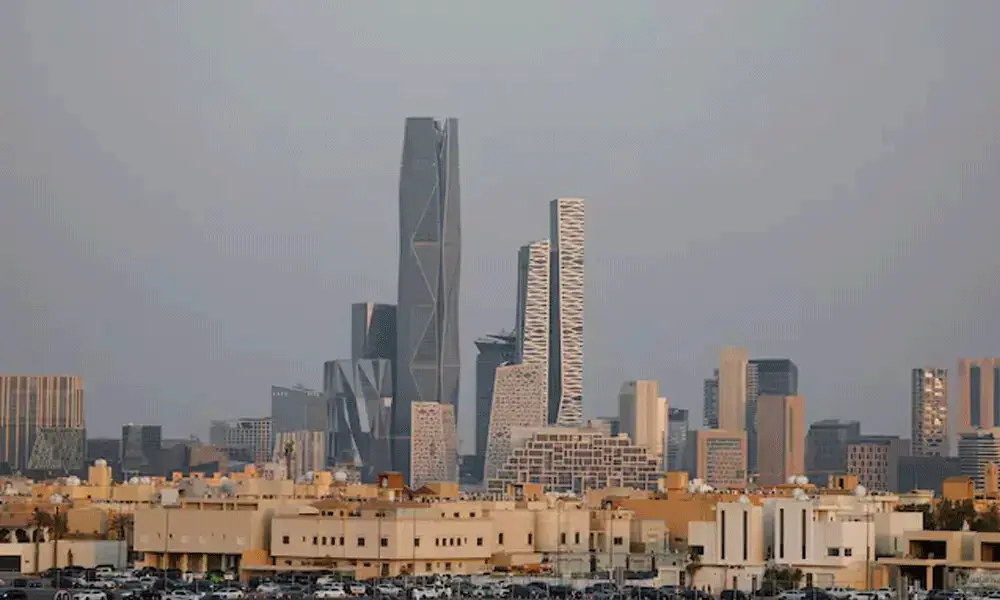
    The Saudi-led coalition in Yemen said on Tuesday it intercepted and destroyed two missiles ​launched by Yemen’s Houthis towards Riyadh, amid weeks of ‌escalating hostilities between the kingdom and the Iran-aligned group.

    The coalition said its air defences destroyed a ballistic missile and a cruise ​missile fired at the Saudi capital.

    Saudi Civil Defence ​had earlier issued an early-warning alert for Riyadh before ⁠the coalition announced the interceptions, later saying the threat ​in the capital had passed.

    In a separate statement, the ​coalition said that it had also intercepted and destroyed a ballistic missile launched by the Houthis towards Saudi Arabia’s southern region.

    Saudi Civil ​Defence had previously issued warning alerts for the southwestern cities ​of Abha and Khamis Mushait, before later saying the danger had passed.

    ‌Southern ⁠Saudi Arabia, which borders Yemen, has repeatedly been hit by Houthi missile and drone attacks on military sites and energy infrastructure.

    Fighting between the Houthis and the coalition backing Yemen’s ​internationally recognised ​government has intensified ⁠after the Houthis advanced in September towards the Bab el-Mandeb Strait, a strategic shipping chokepoint ​at the southern entrance to the Red ​Sea, across ⁠the Arabian Peninsula from the Strait of Hormuz.

    The Houthis have stepped up strikes on Saudi airports, ports and oil ⁠facilities amid ​the wider US-Israeli war with Iran, while ​Saudi Arabia has carried out airstrikes against Houthi targets in Yemen.

    Source: brecorder

  • Dollar sellers hit pause for US inflation data

    Dollar sellers hit pause for US inflation data

    SYDNEY: The dollar found support following a bumpy few days and held firm in Tuesday’s Asia session while ​traders waited for US inflation data, which could push it higher if it bolsters rate hike bets.

    A tumble ‌in oil prices and gains overnight for stocks had knocked the dollar lower as investors rotated back into riskier assets.

    The trade and sentiment-sensitive Australian dollar rose by nearly 1% through Monday to sit at $0.6921 early on Tuesday and the New Zealand dollar rose even further ​to trade at $0.5624, with both steady in morning Asia trade.

    The euro jumped 0.7% overnight to $1.1220, reversing a Friday ​fall when strong US jobs data lifted the dollar and interest rate expectations, and putting ⁠the euro/dollar pair roughly into the middle of a range it has held for a month.

    The market is long ​dollars and the dollar index has gained this year as early expectations for US interest rate cuts quickly turned to ​bets on hikes after the US-Israeli war on Iran drove up energy prices and fuelled inflation.

    A blowout October jobs report on Friday, with hiring more than twice forecasts, has markets pricing an 85% chance of a Federal Reserve rate increase next month.

    US CPI awaited

    Headline inflation ​is seen picking up to 3.9% and core to 2.8%, year-on-year, in October, according to economists polled by Reuters, so ​anything hotter than that will add to rate hike expectations and probably lift the dollar, analysts said.

    “You can only put a little ‌bit ⁠more (in the price) in December, but the price for meetings into the future could go higher,” said Imre Speizer, strategist at Westpac in Auckland.

    Markets have priced two US hikes by the middle of next year, though the outlook has dimmed somewhat amid the recent turbulence in AI stocks on fears a Democratic sweep of Congress could lead to tighter regulation ​and slow the AI boom.

    “This ​could be a factor ⁠that slows US growth in 2027 and helps put a top in for the dollar,” said Macquarie strategists Thierry Wizman and Gareth Berry in a note to clients.

    Sterling , which has drawn ​support since the Bank of England hiked interest rates for the first time in ​three years last ⁠week, sat in the middle of a range it has traded in for almost a year and a half at $1.3441.

    Japan’s yen hovered at 157.97 per dollar , having been the best-performing G10 currency against the greenback over the past six months on the ⁠back of ​heavy official intervention.

    Figures on Monday showed Japan sold $97 billion in reserves defending ​the yen through late July and August as it traversed four-decade lows on the dollar. The threat of further dollar sales is keeping the currency ​steady, even as expectations for a December rate hike in Japan have lately faded.

    Source: brecorder

  • Asian stocks climb as sliding oil prices buoy sentiment

    Asian stocks climb as sliding oil prices buoy sentiment

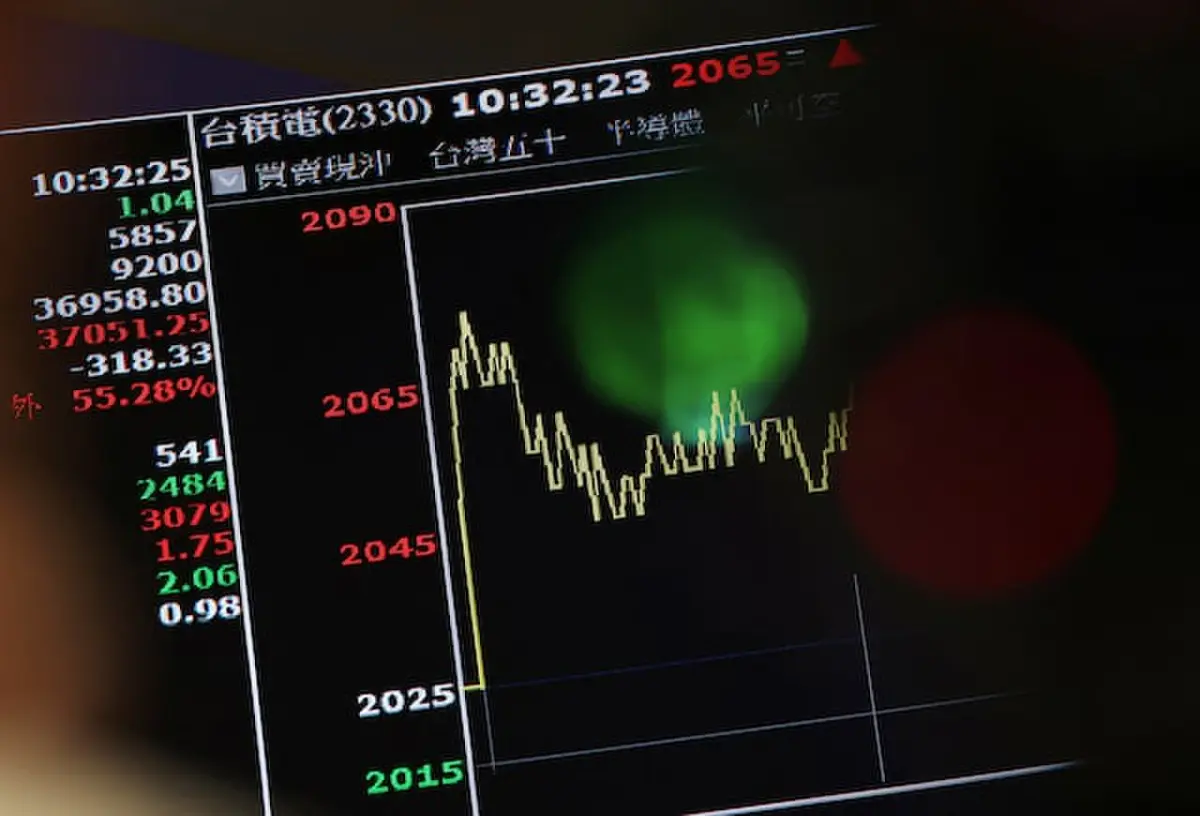
    SINGAPORE: Asian stocks rose on Tuesday as a drop in oil prices after US President Donald Trump said he plans to hold off on new military strikes ​against Iran lifted sentiment ahead of US inflation data that could sway the near-term interest rate outlook.

    Brent crude futures were hovering at their lowest ‌levels since early September, well below $100 per barrel, as investors pinned their hopes on possible talks between US and Iran.

    They were last down 1% at $91.56 a barrel.

    The US-Israeli war with Iran, which erupted at the end of February, has stoked inflationary concerns across the globe, spurring major central banks to raise rates in recent months.

    Nick Twidale, chief market strategist at ATFX Global, said the latest ​developments offered hope that an end to the conflict could be approaching, but there was still a considerable gap between diplomacy and a lasting ​peace agreement.

    “The risk now is that markets have moved too far, too quickly … any indication that negotiations are faltering could see a ⁠substantial rebound in prices as traders rapidly rebuild the geopolitical risk premium,” he said.

    The slump in oil prices eased inflation worries and helped lift stocks after last ​week’s rout as a sweeping victory by Democrats in the US midterm elections fed concerns that new regulations could dent the durability of the AI trade.

    South Korea’s ​KOSPI rose over 5%, while Japan’s Nikkei gained about 3% in early trading. MSCI’s broadest index of Asia-Pacific shares pushed 1.5% higher, moving away from the seven-month low it hit last week.

    On Monday, the S&P 500 clocked its biggest one-day jump since April, closing up 2.35% while the Nasdaq closed 2.7% higher, its best day in over four months.

    “We believe resets in expectations ​are healthy, and the AI trade appears to be working through a reset of its own at the moment,” said Anthony Saglimbene, chief market strategist at Ameriprise.

    Earnings ​reports due this week from tech companies including CoreWeave, a barometer of investor anxiety over AI, will be another test for markets as investors fret about the cost of the ‌AI buildout.

    Saglimbene ⁠said Anthropic’s prospective IPO could be an important test of investor confidence.

    Nvidia remains at the centre of storm

    Market focus remains on Nvidia after the second-most valuable company in the world said its board was probing whether CEO Jensen Huang had been the target of a foreign intelligence operation.

    A media report alleged he had a close relationship with a Chinese businesswoman who passed information to Beijing. Huang has said he was unfaithful to his wife without disclosing details. Shares of Nvidia, which is due ​to report earnings next week, fell 4.2%.

    Daniel ​Morgan, portfolio manager at Synovus Trust, ⁠said certain personalities in the technology space were so intertwined with the success of the company it was hard to separate the two. Morgan holds Nvidia shares.

    “But, the companies can still be successful long after the original founders have taken on ​a lesser role,” he said, adding he remained confident that Nvidia would continue to maintain its lead in the GPU ​AI chip market even ⁠if Huang was forced to step down to a lesser role.

    Inflation data sets up rates outlook

    All eyes will be on US inflation data later in the day, with prices likely to have increased at a moderate pace in October, economists said, and remaining stubbornly high enough for the Federal Reserve to raise interest rates next month.

    Economists polled by Reuters ⁠expect headline ​consumer prices to have risen 0.3% last month, with core prices posting a 0.2% increase.

    Traders are ​pricing in an 84% chance of a rate hike next month versus 74% a week earlier, a CME FedWatch tool showed after a blowout October jobs report on Friday.

    The 2-year note yield, which typically moves in ​step with Fed interest rate expectations, was 1.4 basis points higher to 4.56%. The US dollar was steady in Asian hours.

    Source: brecorder

  • Oil falls as Trump downplays prospect of escalation with Iran

    Oil falls as Trump downplays prospect of escalation with Iran

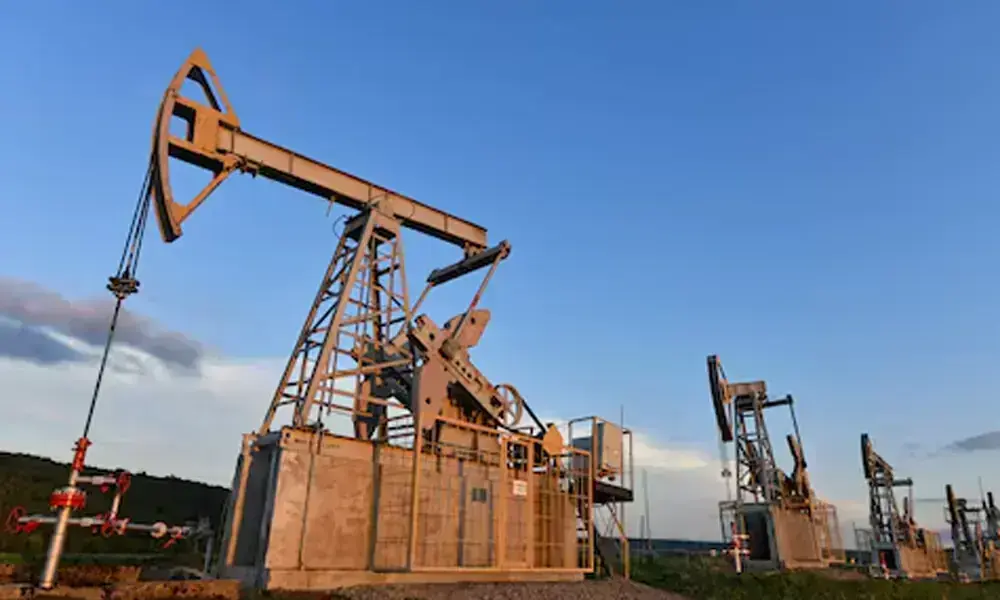
    Oil prices edged lower on Tuesday, extending losses from the previous day, after US President Donald Trump said US military action against Iran ​is not necessary “at this point”, easing concerns about prolonged disruptions to ‌Middle East supply.

    Brent crude futures fell 24 cents, or 0.23%, to $92.33 a barrel by 0102 GMT, while US West Texas Intermediate (WTI) futures fell 35 cents, or 0.40%, to $86.50 a barrel.

    Brent ​settled down 5.85% in the previous session after sliding to its lowest ​since August 31.

    Trump said on Monday he plans to hold ⁠off on new military strikes against Iran for the time being after appeals from ​countries in the region, including from Qatar’s prime minister in White House talks.

    Trump, ​in a Reuters interview and a later appearance in the White House press briefing room, said he plans to keep up a naval blockade in the Strait of Hormuz for now.

    “The ​market continues to prioritise President Trump’s more conciliatory tone toward Iran since ​the midterms,” said Tim Waterer, chief market analyst at KCM Trade.

    “While attacks on shipping around the ‌Strait ⁠of Hormuz are still occurring, they have not escalated in a way that has forced a fresh risk premium into the market,” he said.

    Senior US and Gulf officials have cast doubt on the chances of any imminent peace deal between Washington ​and Tehran.

    Iranian security council ​chief Mohsen Rezaei ⁠said the US should “stop manufacturing fake news about imaginary talks” and that it was “time to surrender to the seven conditions ​Iran has repeatedly set out.”

    On the supply side, OPEC oil output ​rose in ⁠October, a Reuters survey found, led by gains in Saudi Arabia, Kuwait and Iraq despite continued constraints on exports.

    Elsewhere, Russian and Ukrainian officials planned to meet on ⁠Tuesday for two ​days of US-brokered talks — their first since February — ​after Trump suggested last week that a broad peace deal was possible in their 4-1/2-year-old war ​and could incorporate Europe’s security.

    Source: brecorder

  • A world record nobody wants

    A world record nobody wants

    EDITORIAL: The latest confirmation of Pakistan’s eighth polio case this year, in Khyber district, should provoke national shame. The child is a 13-month-old girl; six of the eight cases have been reported in Khyber Pakhtunkhwa. Pakistan and Afghanistan remain the only countries where wild poliovirus is endemic. That is a distinction no country should want.

    Afghanistan has endured decades of war and institutional collapse. Pakistan has its own security challenges, but it cannot explain away this disgrace by pointing across the border. The persistence of a preventable disease is, above all, an indictment of the state’s failure.

    The contrast becomes even more grotesque when the people trying to protect children are themselves hunted.

    On Tuesday, November 3, two policemen were killed and another injured in Mohmand while travelling to provide security for a polio team. A day earlier, four polio workers had reportedly been abducted in Tank. These are not isolated inconveniences in an otherwise successful public-health campaign. They are part of a long and bloody pattern in which vaccinators and their escorts are threatened, attacked and even killed for doing work that should be routine.

    Militant groups and pockets of religious extremism have repeatedly exploited conspiracy theories that vaccination is a foreign plot to sterilise Muslim children. Such propaganda is absurd, but its consequences are lethal. The oral vaccine is safe and effective; polio has no cure, and infection can cause permanent paralysis.

    Yet it remains possible for a handful of local agitators to frighten parents away from protecting their children, while the state struggles to counter the lies with a consistent, credible national message.

    The clergy should have been central to that effort from the beginning. There have been fatwas and public endorsements from respected religious scholars, and some clerics have actively helped persuade hesitant families. But isolated interventions are not a national narrative.

    The state has failed to build and sustain an alliance with religious leaders across the country strong enough to ensure that every parent hears the same unequivocal message: vaccination is medically necessary, religiously permissible and a responsibility towards one’s children. Why has this remained such a difficult task after decades of campaigns?

    There is also a deeper public-health failure. Poliovirus spreads mainly through the faecal-oral route and can travel through contaminated water and food. Poor sanitation, unsafe drinking water, inadequate drainage and weak routine immunisation create the conditions in which it continues to circulate.

    Repeated vaccination drives are indispensable, but they cannot permanently compensate for the absence of basic municipal and health services. The state has spent years counting campaign rounds and children reached while too many communities still lack the sanitary environment, reliable primary healthcare and public awareness needed to break transmission.

    The latest figures make the complacency harder to defend. Four large-scale campaigns have already been conducted this year, with tens of millions of children vaccinated, yet environmental samples continue to detect the virus in the Peshawar Block.

    The next campaign, targeting nearly 24 million children in 97 districts, is now under way. These efforts deserve support, and parents must ensure that every child receives the required doses. But campaign numbers cannot become a substitute for results.

    Pakistan has been pursuing polio eradication for decades. It has had time, resources, international assistance and repeated warnings. What it has not delivered is the political ownership, administrative consistency and public trust required to finish the job.

    Protecting vaccinators, confronting extremist misinformation, engaging clerics, improving sanitation and strengthening routine immunisation must be treated as one national responsibility. Until that happens, another case will follow another campaign, another funeral will follow another attack, and the country will remain trapped in a shameful distinction the rest of the world has left behind.

    Copyright Business Recorder, 2026

    Source: brecorder

  • Auto policy

    Auto policy

    EDITORIAL: First things first: Federal Minister for Information and Broadcasting Attaullah Tarar said the Prime Minister had approved the final draft of the auto policy. The draft will now be submitted to the Federal Cabinet for consideration and requires clearance from the International Monetary Fund (IMF) before it can be formally adopted.

    The proposed policy is in line with the National Tariff Policy (NTP) and aims to support new energy vehicles (NEVs) to reduce emissions on the roads and lower reliance on petroleum products, which are largely imported.

    There are genuine concerns among local assemblers about narrowing the tariff differential between locally assembled vehicles and imports, including used cars.

    However, at the same time, some players are pulling others down, which could be detrimental to the entire sector. They have been trying to prevent the proposed policy from being approved in its current form. They are said to be lobbying the IMF, the government, and other powerful circles at the expense of consumers at large.

    The thorny issue is the duty and tax advantages being offered to NEVs. The idea is to increase NEV penetration, which would help lower carbon emissions, especially in cities where air quality is deteriorating every year.

    The economic benefit is reduced reliance on largely imported petroleum products. A shift towards electrification makes even more sense as Pakistan’s energy mix is increasingly becoming cleaner and more reliant on indigenous sources.

    The problem for some players is that NEVs would pose tough competition to their internal combustion engine (ICE) vehicles, potentially reducing their sales. They do not like that. Previously, the government had imposed a 1 percent GST on EVs (which also included range-extended electric vehicles, or REEVs), while GST on hybrid electric vehicles (HEVs) and plug-in hybrid electric vehicles (PHEVs) was 25 percent. That was unfair to the latter categories.

    The new proposed policy attempts to address this imbalance, with GST proposed at 1 percent for EVs, 6 percent for REEVs, 9 percent for PHEVs, and 18 percent for HEVs. This is the right approach, as the tax rate increases according to the emissions associated with each category. These incentives, along with lower duties on EVs priced below USD15,000, would help increase NEV penetration in line with the government’s target of achieving a 30 percent NEV share by 2030.

    If these incentives are withdrawn, or REEVs and PHEVs are clubbed with HEVs, lower-emission vehicles would be placed at a disadvantage. This may not bode well for the dual objectives of reducing emissions and cutting the fuel import bill.

    The other issue is that, under the NTP 2025-30, import tariffs across industries are to be reduced in a phased manner.

    The reduction in the auto sector was delayed by one year, as the new auto policy was supposed to take effect from this fiscal year. Tariff reductions on imported cars are being implemented from FY27. However, the auto policy is still being finalised.

    Customs tariffs on completely built-up (CBU) vehicles have already been reduced and are planned to fall to a maximum of 15 percent over five years. Accordingly, the plan is to reduce tariffs on completely knocked-down (CKD) kits to maintain a tariff differential of up to 15 percent over the same period.

    CKD tariffs were supposed to be reduced under the new auto policy, but without these adjustments, the tariff differential has turned negative in certain cases, putting local assemblers at a severe disadvantage.

    Now, some legacy players are confusing policymakers. CKD duties differ for localised and non-localised parts. Assemblers with higher localisation levels, typically legacy players, face lower weighted-average duties than those with less localisation, generally newer players. Without any change in CKD duties, legacy players would still enjoy a positive tariff differential, while it would turn negative for certain newer players.

    There are rumours that some players are trying to keep CKD duties unchanged under the new policy or delay its approval altogether. They would remain viable, albeit with lower profits, while some newer players could become unviable. If that happens, it would be unfair to the players that entered the market following the 2016 auto policy.

    Another disadvantage would be the lack of incentives for older players to introduce new models. It would make more commercial sense for them to continue producing existing variants, for which tooling and other costs have already been amortised. That would not be good for the industry.

    The government should avoid further delays and stop fiddling with the policy. The uncertainty is already hurting the sector, with many CKD kits stuck at ports awaiting clearance, adding to assemblers’ costs. Consumers are also delaying vehicle purchases, while those who are buying are largely opting for ICE vehicles. This is not only affecting overall auto sales but also slowing NEV adoption.

    In a nutshell, there appear to be no roadblocks from the IMF as such. The relevant ministries and committees have already deliberated extensively and come up with the proposed policy. It is time to approve and implement it.

    Copyright Business Recorder, 2026

    Source: brecorder

  • Pakistani, Saudi investors launch private equity fund

    Pakistani, Saudi investors launch private equity fund

    ISLAMABAD: A joint council of Saudi Arabian and Pakistani investors launched a private equity fund on Monday as part of the countries’ wider push to deepen two-way private sector trade and investment.

    The Saudi-Pakistan Joint Business Council, formed by the governments of both countries, said the fund’s initial size is “multi-hundred million”, which is expected to expand based on opportunities across sectors.

    Three-fourths of the fund will be invested in Pakistan, while the rest will be invested in Saudi Arabian projects, the council said in a statement.

    The launch of the fund comes at a time when Islamabad and Riyadh are deepening longstanding ties, especially in defence, amid few signs of a breakthrough in the months-long US-Iran conflict. –Reuters

    Press release adds: The Saudi–Pakistan Joint Business Council (SPJBC) have signed Monday a Memorandum of Understanding (MoU) to establish the Saudi–Pakistan Private Equity Fund. The signing was attended by Members of the Council from both two countries. From the Pakistani side, Fawad Mukhtar, Co-Chair of the Council and Chairman, Fatima Group, joined virtually.

    READ ALSO: Economic development, investment, education: Pakistan, Saudi Arabia agree to enhance cooperation

    Members present in person included Zafar Masud, President & CEO, The Bank of Punjab, Nassir Saleem, President & CEO, Habib Bank Limited, Yousaf Hussain, President & CEO, Faysal Bank Limited, and Maqsood Ismail, Director, Ismail Industries Limited. Dr. Gohar Ejaz, Chairman, Lake City Group, Lord Zameer Choudrey, Chairman, Bestway Group, and Jawaid Iqbal, President & CEO, United Bank Limited, also joined virtually.

    From the Saudi side, the signing was attended by H.H Prince Mansour bin Mohammad Al Saud, Chairman of the (SPJBC), and both vice chairman’s council Mohammad bin Abdukaziz Al Ajlan (CEO of Al Ajlan Group), Abdulaziz Bin Ali Al Ashrafi (Tayba Group),and council members: Dr. Mohammed Khan (RAEM Group), Zaid AlSharif (Alsharif group), Eng. Mohammed Al Mufarij (CEO Saudi Meters Company), Dr. Mohammed Al-Sowaidan (CEO of international investment Gare), Abdallah Al Muhnna (CEO of SAFA Investment), Abdulrahman Ayedh Algahtani, (CEO of Somuo Investment), Hani Baothman (CEO of Bin Dawood Investment), Ghassan Amoudi (CEO of ASYAD Group), Feras Albakri (Albakri Group), Barrister Habil Ahmed Khan (CEO of Welt Konnect) and Mansour Chaudhry (CEO of Barq Pakistan).

    The Council was formed by the Governments of the Kingdom of Saudi Arabia and the Islamic Republic of Pakistan, in coordination with both countries high committee to deepen bilateral private-sector trade and investment.

    This MoU is the outcome of a series of meetings of the Saudi–Pakistan Joint Business Council which concluded and proposed to have an initial size of multi-hundred million and is envisaged to grow into a bigger scale figure fund, based on the opportunities on all sectors. Saudi and Pakistani private investors will contribute equally to the Fund, while 75 percent of the fund shall be invested in Pakistan and 25 percent in Saudi Arabia projects.

    The Fund intends to invest in high-growth private businesses, including in agriculture, mining, and industries including construction. It will also explore commercial projects arising from the Government of Pakistan’s programme to monetise its land bank, including airports and Motorways Development, port and maritime development. This will help unlock the economic value of under-utilised public land through commercially structured, transparent investments. The fund will also seek commercial investments across KSA, including in the holy cities. The MOU allows for institutions on both sides to be invited to participate in the equity of the fund management company.

    Speaking at the signing, His Highness Prince Mansour bin Mohammad Al Saud said, “The Kingdom of Saudi Arabia and Pakistan are bound by a friendship and kinship that run deeper than any agreement. That bond has always been strong in spirit; this fund now will give it an equally strong commercial footing.

    Pakistan is a natural partner for the Kingdom, and Saudi investors are looking for partners and markets where they can grow with confidence. Having looked closely at Pakistan, what we see today is a more stable economy with real opportunities. By investing side by side with our Pakistani brothers, in both our countries, we are turning years of contemplation and studies into on ground investment that benefits both our peoples and building a partnership designed to last.”

    Arif Habib said, “This fund is a vote of confidence in profitable investment opportunities in Pakistan. For too long, perceptions of Pakistan have clouded the reality, and this agreement shows that serious investors are ready to act on that reality. Pakistani investors are putting their contribution as the lead in the confidence in Pakistan’s economy, and our Saudi brothers are investing alongside us.

    Directing capital towards the monetisation of the government’s land bank will turn idle assets into productive investment. I am grateful to His Highness Prince Mansour and to colleagues on both sides for the time, patience and goodwill they have devoted to bringing this fund to life. We see it as the first step towards restoring the confidence of Saudi and wider foreign investors in Pakistan.”

    The signing marks a new chapter in Saudi–Pakistan economic cooperation, in which a long friendship between the two nations becomes a shared investment in their future.

    The establishment of the fund shall comply with the regulatory requirements of the Governments of the Kingdom of Saudi Arabia and the Islamic Republic of Pakistan. Once approvals are in place, the two sides will move ahead with the fund’s structuring and first investments.

    Source: brecorder

  • Oil down over USD7 a barrel in post settlement trade

    Oil down over USD7 a barrel in post settlement trade

    LONDON: Brent crude futures continued tumbling after settlement on Monday to lose more than USD7 a barrel, hitting their lowest since late August, after US President Donald Trump downplayed the likelihood of renewed strikes on Iran.

    Brent crude futures settled down USD5.75, or 5.85 percent, at USD92.57 a barrel. Prices continued falling after settlement, and were last down more than USD7 a barrel.

    US West Texas Intermediate futures settled down USD3.98, or 4.38 percent, to USD86.85. US crude futures also continued falling, last down more than USD5 in post-settlement trade.

    The Brent benchmark plunged by 16 percent last week, its steepest weekly drop since the start of the COVID-19 pandemic.

    On Sunday, Trump said he was highly unlikely to order fresh attacks on Iran as long as talks to end the conflict progressed. Still, both countries reported that shipping had been hit in or near the Strait of Hormuz.

    “This seems to have encouraged sellers on the prospects for peace even while the actual fighting is not slowing down,” TACenergy analysts said in a note.

    Last week, Trump had hinted at a resumption of attacks on Iran and Tehran vowed to respond by striking US and Israeli targets. But there has been no sign of a large-scale US military operation.

    A senior Iranian security official told the country’s state media that Tehran has no plans to negotiate unless Washington takes practical steps to meet seven conditions set out in a June interim agreement.

    Saudi Arabia’s foreign minister and his Omani counterpart stressed in a phone call on Monday the need to press ahead with diplomatic efforts to contain the regional crisis and safeguard maritime security and sea lanes, Saudi state media reported.

    On Monday, Trump will meet the prime minister of Qatar, which has been a mediator, though senior US and Gulf officials cast doubt on the chances of an imminent deal.

    Iraq has reached understandings with the US to allow Iraqi oil exports through the Strait of Hormuz via a shipping lane near Oman, Foreign Minister Fuad Hussein said in an interview with Al Jazeera on Sunday.

    “Crude futures are under selling pressure once again as oil volumes continue strong through the Strait of Hormuz,” said Dennis Kissler, senior vice president of trading at BOK Financial.

    In the Medina region, a fire was extinguished after Saudi Arabia’s East-West pipeline was struck, an energy ministry source said, according to state media. There were no casualties and the pipeline’s operations were not affected.

    The Saudi-led coalition fighting Yemen’s Iran-aligned Houthis said on Monday it destroyed a factory used by the group to make ballistic missile components and a chemical plant used for producing ballistic missile fuel, without specifying the locations of the targets.

    The Houthis claimed responsibility for an attack on Sunday at Saudi oil giant Aramco’s corporate office in the heart of the financial district of the capital Riyadh. Debris from the attempted attack blew out windows across several floors, the Saudi energy ministry said.

    “Fresh tanker incidents and an attack on Saudi Aramco’s offices show that shipping and regional security risks remain unresolved as traders price in a less disruptive outcome,” said Gelber & Associates.

    Elsewhere, Russia and Ukraine are coming to US-brokered talks to end Moscow’s war on Ukraine with good intentions, a US official said on Monday.

    In a briefing ahead of Tuesday’s talks in Abu Dhabi, a US official told reporters that both sides have shown a little bit of flexibility privately on territorial issues.

    Well-supplied physical market

    Dated Brent, used to price cargoes around the world, has weakened to a discount to the nearby Brent futures contract, Morgan Stanley said in a report on Monday, highlighting weakness in the physical market.

    The global oil market is showing signs of a return to excess supply as demand drops because of high prices, some analysts said. The global oil surplus is estimated at around 1.4 million barrels per day in October, JPMorgan said in a report last week.

    OPEC oil output rose in October, a Reuters survey found, led by gains in Saudi Arabia, Kuwait and Iraq despite continued constraints on exports.

    Crude output from the 11-member Organization of the Petroleum Exporting Countries rose by 1.38 million bpd from the previous month to 22.87 million bpd, the survey found.

    US crude oil and product stockpiles were expected to have fallen last week, a preliminary Reuters poll showed on Monday.

    Stocks of crude oil in the US Strategic Petroleum Reserve fell to 279.5 million barrels last week, the lowest level since October 1982, according to data from the Department of Energy.

    Source: brecorder

  • USD425m NTM-I project: World Bank flags delays in implementation

    USD425m NTM-I project: World Bank flags delays in implementation

    ISLAMABAD: The World Bank has flagged delays in the implementation of Pakistan’s USD 425 million National Transmission Modernisation-I Project, with only 60.12 percent of the loan disbursed and significant funds remaining undisbursed, primarily due to slow progress on the Islamabad West Substation contract.

    According to Bank’s documents, overall implementation progress has picked up but remains rated “Moderately Satisfactory”, while progress towards achieving the project’s development objectives has retained the same rating.

    The project, being implemented by the National Transmission and Despatch Company (NTDC), now National Grid Company (NGC), was approved in December 2017 to enhance the capacity and reliability of selected sections of the national transmission network and modernise the company’s key business processes.

    The documents showed that against the original USD 425 million financing, the Bank has disbursed USD 255.53 million, while USD 124.31 million remains undisbursed. The project is scheduled to close on December 31, 2026, leaving a limited period for the implementing agency to accelerate execution and utilise the remaining financing.

    The Islamabad West Substation (IWS) contract has been identified as the primary reason for the significant undisbursed balance.

    Also read: IMF-World Bank meetings: Policymakers take on energy shock, rising debt

    The project has also fallen substantially behind several of its original physical implementation targets following repeated revisions in scope.

    Against the original target of 36 new or augmented substations, the number has been reduced to 24, of which only 17 had been completed as of November 2025.

    Similarly, the target for construction or rehabilitation of transmission lines has been scaled down from 131 kilometres to 11 kilometres, while the report records 7.2 kilometres completed.

    The reduction in transmission losses, another key performance indicator, stood at 24.31 gigawatt-hours against the revised target of 414 GWh.

    The report also highlights substantial changes in the project’s expected contribution to improving transmission system reliability. The original scope envisaged augmentation or extension of 31 substations, subsequently reduced to 22.

    Additional substation capacity stood at 3.18 million kilovolt-amperes (kVA) against the revised target of 12.516 million kVA, indicating a significant implementation gap.

    The project’s greenhouse gas reduction indicator was recorded at 0.53 tonnes per year against a revised target of 2.11 tonnes. The Bank noted that these estimates were calculated on the assumption that every additional kVA of transmission capacity would replace an equivalent amount of diesel-based generation.

    On the institutional modernisation front, the deployment of the Enterprise Resource Planning (ERP) system remains behind schedule. The report recorded that the system was not operational as of November 2025, although NTDC had earlier expected it to become operational by April 2026.

    The Bank has maintained the overall project risk rating at “Substantial”. Political and governance, sector strategies and policies, and institutional capacity for implementation and sustainability continue to carry substantial risk ratings.

    The fiduciary risk rating has also been raised from Moderate to Substantial, while environmental and social risks remain Moderate.

    Some progress has been reported in improving the company’s financial management. The time required to submit audited financial statements has declined from 14 months to five months, against a closing target of six months.

    The new integrated budgeting and reporting system has also been reported as operational.

    However, the report indicates that the project has undergone three Level-II restructurings, approved in October 2023, January 2024 and February 2025, reflecting successive adjustments to its implementation arrangements and targets.

    The World Bank’s latest assessment underscores the challenge facing the implementing agency in completing the remaining activities before the revised closing date, particularly the delayed Islamabad West Substation contract and the significant gap between revised physical targets and actual achievements.

    Copyright Business Recorder, 2026

    Source: brecorder

  • Interview with Nabila Yazdani — Director Strategy & Company Spokesperson, Zong

    Interview with Nabila Yazdani — Director Strategy & Company Spokesperson, Zong

    ‘Zong is building Pakistan’s digital and intelligent future’

    Nabila Yazdani is a seasoned telecom and technology professional with 30 years of experience in corporate strategy, business development, customer experience and digital transformation. She has been associated with Zong (China Mobile Pakistan) since 2007, holding various leadership positions and contributing to the company’s strategic growth and transformation. Currently serving as Director Strategy, Communications and Sustainability as well as Company Spokesperson, she brings extensive industry experience and insights into Pakistan’s evolving telecom landscape, digital connectivity and the opportunities and challenges facing the sector.

    Following are the edited excerpts of a recent conversation BR Research had with her:

    BR Research: PTA’s March 2026 spectrum auction allocated 480 MHz of new spectrum, of which Zong secured 110 MHz. How does Zong plan to use this additional spectrum to improve 4G services and introduce 5G? What changes can customers expect in network quality, coverage and internet speeds?

    Nabila Yazdani: Since its inception, Zong has been driven by a long-term vision to serve as a technology partner for Pakistan, advancing the country’s digital transformation through sustained investment, innovation, and world-class infrastructure. Backed by China Mobile, the world’s largest mobile network operator and a global leader in 5G innovation, Zong has consistently brought global technological advancements to Pakistan.

    Zong serves 56 million+ subscribers through 17,000+ network sites, including 1,000+ 5G sites nationwide. In the Twin Cities, Zong leads the industry with 275+ 5G-enabled sites and 1,000+ total network sites. Its fibre footprint exceeds 26,000 kilometres. Continuous capacity enhancements, congestion management and advanced technologies such as Carrier Aggregation optimize spectrum utilization, improve network efficiency and strengthen data performance, delivering an enhanced customer experience, particularly during peak usage hours.

    Our journey has been marked by pioneering milestones, including becoming the first operator to acquire 4G spectrum in Pakistan, conducting the country’s first successful 5G trial, and achieving South Asia’s first 5G video call. These achievements reflect our commitment to bringing global innovations to Pakistan.

    Zong’s acquisition of 110 MHz of spectrum in the March 2026 auction marks another significant milestone in our long-term technology strategy. It strengthens existing network performance while accelerating 5G deployment, providing the capacity and bandwidth needed to support growing data demand, higher speeds, wider coverage, and lower latency.

    Building on our network modernization and expansion, we have already deployed and integrated over 1000 5G and 4G TDD expansion sites across major cities and urban centres. The additional spectrum will help optimize network performance, manage rising data demand, and progressively introduce next-generation connectivity. Our focus is not simply on faster speeds but on transforming how customers experience connectivity in their daily lives.

    For 4G customers, our priority is to deliver a more consistent, reliable, and ultimate experience. Additional spectrum will increase capacity, reduce congestion, and improve data performance, particularly in high-traffic areas and during peak hours. Technologies such as Carrier Aggregation, which combines multiple spectrum carriers for greater bandwidth, will further improve network efficiency. We will continue modernizing our 4G infrastructure alongside 5G expansion to ensure reliable connectivity for all customers.

    For 5G customers, the spectrum lays the foundation for next-generation connectivity and a future-ready digital ecosystem. Higher speeds, lower latency, and greater capacity will improve customer experience while unlocking opportunities in cloud computing, Artificial Intelligence, connected devices, smart infrastructure, industrial automation, and enterprise technology.

    Our ambition goes beyond network expansion and faster connectivity. We are pursuing a broader technology strategy centred on Ultimate Customer Experience, a Diversified Products and Services Portfolio, and AI Enablement. By combining advanced connectivity with computing power, intelligent solutions, and strategic partnerships, we aim to develop innovative digital services and co-create solutions that accelerate Pakistan’s digital future..

    BRR:What are Zong’s plans for investing in and rolling out 5G across Pakistan? How will the company balance 5G expansion with the need to improve existing 4G services, particularly in rural and underserved areas?

    NY: Our 5G service is now available in more than 35 cities, and we continue to expand our footprint in line with customer demand, business priorities, and network readiness. Our approach is to advance next-generation connectivity while strengthening our existing 4G network.

    Our strategy is to expand 5G without compromising the 4G experience that serves the majority of our customers. 4G will remain the primary mode of internet access for most Pakistanis for years to come. We are pursuing a balanced, customer-centric investment approach, expanding 5G where it delivers the greatest value while improving 4G coverage, capacity, speed, and reliability. This ensures that technological progress translates into a better customer experience across major cities and smaller towns.

    Our focus also extends to rural and underserved communities, where reliable connectivity can improve access to education, healthcare, digital banking, entrepreneurship, and government services. Bridging this digital divide requires close collaboration between telecom operators and the government to address infrastructure costs, energy constraints, and connectivity challenges in remote areas.

    For Zong, the objective is to make connectivity more meaningful, inclusive, and accessible. Whether customers rely on 4G today or adopt 5G tomorrow, they should benefit from a reliable network that enables them to learn, work, communicate, and participate in Pakistan’s digital economy.

    BRR:Pakistan remains a price-sensitive market, with relatively low average revenue per user (ARPU) and high infrastructure costs. How strong is the business case for 5G in Pakistan? Does Zong see enough demand to justify the investment?

    NY: The business case for 5G in Pakistan is promising, provided investments are strategically aligned with market demand, customer affordability, and long-term sustainability. In a price-sensitive market, customers expect better connectivity and meaningful digital services at affordable prices, while operators face substantial investments in spectrum, equipment, energy, and infrastructure. For Zong, the priority is to translate these investments into tangible customer value while building a sustainable foundation for growth.

    We see 5G’s potential extending well beyond faster mobile internet. It can enable new digital services, improve enterprise productivity, connect devices and machines, and support applications across logistics, agriculture, and industry. As Pakistan’s digital economy evolves, high-performance connectivity can help businesses improve efficiency, develop new services, and compete more effectively.

    However, adoption will take time and vary across customer segments and geographies. Device affordability, consumer demand, enterprise readiness, and the availability of relevant digital services will determine the pace of growth.

    That is why we are pursuing a balanced, phased investment approach, expanding 5G according to customer needs, business priorities, and network readiness while strengthening 4G coverage, capacity, speed, and reliability. This allows us to advance next-generation connectivity without compromising the experience of customers who continue to rely on 4G.

    The pace of adoption will also depend on energy costs, taxation, currency fluctuations, affordable 5G devices, and a supportive regulatory framework. Collaboration between the government, industry, and the broader technology ecosystem will be essential to improve investment viability, accelerate adoption, and extend connectivity to underserved communities.

    For Zong, the business case for 5G is ultimately about sustainable value creation, not simply deploying new technology. Our focus is on investing responsibly, developing services that meet real customer and enterprise needs, and expanding connectivity in a way that supports commercial sustainability and Pakistan’s digital and intelligent transformation.

    BRR:Businesses are expected to benefit from 5G before ordinary consumers. Which sectors in Pakistan are likely to benefit the most from technologies such as IoT, smart factories and cloud services? Are Pakistani businesses ready to adopt these solutions?

    NY: I believe the greatest opportunities for 5G and digital technologies in Pakistan lie across key economic sectors and business hubs, including manufacturing, agriculture, logistics, healthcare and education, where connectivity, data and automation can transform productivity, operational efficiency and service delivery. Zong is leading this transformation as we are the only operator to deploy a 5G-ready Active DAS Indoor Building Solution (IBS), at the Islamabad International Airport extending high-performance connectivity beyond conventional outdoor coverage.

    In manufacturing, connected machinery and automation can reduce downtime and optimize energy consumption. In agriculture, IoT-enabled irrigation and soil monitoring can improve resource utilization, while real-time tracking can enhance logistics and supply-chain efficiency. Similarly, reliable connectivity and cloud platforms can expand access to healthcare and education, particularly in underserved areas.

    The real transformation will come from integrating 5G, cloud computing, Artificial Intelligence, and the Internet of Things (IoT). Connectivity enables communication, cloud provides computing power, and AI converts data into insights and intelligent decisions. Together, these technologies can transform how businesses operate and compete.

    A key milestone is Z SAIS Public Cloud and Intelligent Cloud Computing Center. Through locally hosted, sovereign cloud infrastructure and Tier III-certified data centres, supported by international ISO security standards, Z SAIS offers Infrastructure-as-a-Service (IaaS), Platform-as-a-Service (PaaS), and Software-as-a-Service (SaaS). This provides enterprises with secure, scalable computing services while supporting data-residency requirements.

    Our enterprise portfolio also includes voice, internet, private data links, M2M and IoT solutions such as intelligent CCTV, cold-chain monitoring, and vehicle tracking, alongside DICT offerings. These solutions support real-time monitoring, asset tracking, and operational efficiency. Our focus is on solving practical business challenges rather than offering technology for its own sake.

    These capabilities are particularly relevant to CPEC and Pakistan’s industrial development. Zong supports connectivity and digital infrastructure across CPEC projects, including Gwadar Port. As industrial and digital integration advances, reliable connectivity, cloud, and intelligent solutions will become increasingly important for industrial zones, energy projects, logistics, and smart infrastructure.

    However, Pakistani businesses are at different stages of digital readiness. Larger enterprises are increasingly adopting cloud, automation, and data analytics, while SMEs need greater awareness, digital skills, affordable solutions, and clearer business returns. Adoption will depend on demonstrating tangible value rather than simply making technology available.

    Zong’s role therefore extends beyond connectivity to becoming a long-term technology and digital transformation partner. By combining 4G, 5G, cloud, AI, IoT, and enterprise solutions, we aim to help businesses improve productivity, strengthen resilience, and unlock growth opportunities.Our ambition is to make advanced digital capabilities accessible to Pakistani businesses and contribute to a more productive, competitive, and intelligent economy.

    BRR:Telecom operators continue to face challenges from high taxes, energy costs, currency fluctuations, and rising investment needs. How are these pressures affecting the industry’s profitability and ability to invest in better services?

    NY:Pakistan’s telecom sector is a key enabler of digital and economic transformation, with the mobile ecosystem contributing over 6% of GDP, according to GSMA. However, maintaining network quality and expanding next-generation services require sustained investment. Rising energy costs, currency volatility, high taxation, and expensive imported equipment are putting pressure on profitability, limiting operators’ ability to expand and modernize networks.

    These pressuresinfluence the pace at which operators can expand coverage, enhance network capacity, deploy new technologies, and improve customer experience. At the same time, Pakistan remains a price-sensitive market where customers expect better connectivity and digital services at affordable prices. This makes it essential for operators to balance investment requirements, operational efficiency, service quality, and affordability.

    At Zong, we remain committed to strengthening our network, expanding 5G in line with market demand and investment priorities, continuously improving 4G services, and developing digital solutions that create tangible value for consumers and enterprises. As part of China Mobile, we benefit from the experience and long-term perspective of a leading global telecommunications group. However, sustained investment across the industry also depends on a viable and predictable operating environment.

    Closer collaboration between the government, regulators, and telecom operators is essential. An investment-friendly tax framework, lower energy costs, and policies encouraging infrastructure development and technology adoption would help operators invest, innovate, and extend connectivity to underserved areas.

    A financially sustainable telecom sector is essential for Pakistan’s digital future. It will enable reliable connectivity, wider 4G and 5G coverage, and greater access to education, healthcare, commerce, and financial services. Creating the right investment conditions is therefore not just an industry priority but vital for Pakistan’s broader digital transformation.

    BRR: AI is already changing how telecom networks operate. How is Zong using AI to improve network performance, prevent service disruptions, and reduce energy costs? Have these efforts led to any measurable savings or improvements in customer experience?

    NY: At Zong, we see Artificial Intelligence as a strategic driver of smarter networks, efficient operations, and better service delivery. AI allows us to move beyond traditional connectivity towards more predictive and autonomous operations. This is the future we envision through “Aisa Hai Future,” where technology delivers tangible value to customers and businesses.

    While a strong and reliable network remains our foundation, AI enhances its potential through greater efficiency, improved customer experiences, and innovative digital solutions.

    AI is transforming network management through real-time analysis, predictive insights, and intelligent decision-making. Rather than simply responding to traffic surges or network faults, AI can anticipate demand, identify congestion, optimize resources, and resolve issues before customers are affected. Our Self-Intelligent RAN Optimization initiative demonstrates this potential, reducing congestion resolution time from 3–5 days to 15–30 minutes in reported pilot results, improving capacity by over 10%, and increasing downlink throughput by up to 18%. For customers, this means the potential for smoother browsing, more consistent streaming and gaming, and reliable connectivity during peak hours.

    Energy efficiency is another important area. As data demand grows and 5G expands, AI-enabled monitoring can optimize energy consumption according to network traffic while maintaining service quality. Beyond networks, intelligent automation, predictive maintenance, and faster data-driven decisions can reduce manual intervention, improve operational efficiency, and enable quicker responses to customer needs.

    These capabilities support Zong’s broader strategy of integrating Communication, Computing Power, and Intelligent Services into a connected technology ecosystem. By combining connectivity, computing infrastructure, and AI, we aim to deliver smarter services, personalized digital experiences, and innovative solutions for consumers and enterprises.

    Ultimately, AI’s real value lies in tangible customer benefits: fewer disruptions, consistent speeds, faster issue resolution, and seamless connectivity. While AI works behind the scenes, its impact is reflected in the reliability and quality of services customers experience every day.

    BRR:Telecom companies are increasingly moving beyond traditional voice and data services into cloud solutions, enterprise technology, and other digital services. How does Zong see its business changing over the next few years? Where will future growth come from?

    NY: As Pakistan’s leading technology services enterprise and a key enabler of digital transformation, Zong is evolving beyond traditional telecommunications to shape the country’s digital and intelligent future. Our growth strategy centres on the convergence of Communication, Computing Power, and Intelligent Services. Connectivity remains our foundation, but future value will increasingly come from digital experiences, enterprise solutions, cloud capabilities, and AI-powered services.

    Communication Services will remain central to our business. Alongside expanding 5G and strengthening 4G, we are improving customer experiences through services such as VoLTE and Vo-WiFi. Z HomeFi, Pakistan’s first 5G Fixed Wireless Access home broadband service, is extending high-speed internet access without relying on conventional fixed-line infrastructure. Our focus is shifting beyond voice and data towards reliable, flexible, and seamless digital experiences.

    Computing Power Services will be another growth driver as businesses and government institutions increasingly demand secure cloud platforms, data storage, and enterprise ICT solutions. Through our Tier III-certified data centres and Z SAIS cloud capabilities, we are expanding opportunities in enterprise cloud, managed services, cybersecurity, IoT, and digital infrastructure, helping organizations modernize operations and improve efficiency.

    Intelligent Services, particularly AI, will shape the next phase of our transformation. Our AI-powered assistant, OZGPT, is accessible through web, app, SMS, USSD, and IVR channels in six local languages, making AI more accessible to customers. Similarly, Zikipedia, our AI-powered IVR helpline, provides information and assistance through voice-based interaction. These initiatives reflect our focus on inclusive and locally relevant AI solutions. Our AI innovation also extends to marketing, including Pakistan’s first fully AI-generated telecom commercial during the ICC Champions Trophy 2025.

    Our My Zong App, with over 20 million monthly active users, is another important part of this ecosystem, offering digital self-service and customer engagement. We aim to further enhance it through personalized and AI-enabled experiences. Similarly, Z-Wallet and other initiatives in education, entertainment, and consumer services will help diversify revenue streams and extend connectivity into everyday digital experiences.

    Enterprise digital transformation offers significant growth potential. By combining connectivity, cloud, AI, IoT, and strategic partnerships, we aim to deliver integrated solutions across intelligent surveillance, fleet tracking, cold-chain monitoring, industrial automation, data management, and managed ICT services. Our objective is to help businesses move from isolated technology deployments towards connected, intelligent, and efficient operations.

    Ultimately, our transformation is not simply about expanding products or entering new markets. It is about moving from connectivity to capability, and from capability to intelligence. For consumers, this means better digital experiences; for enterprises, smarter solutions and infrastructure; and for Pakistan, a stronger foundation for a competitive digital economy. This is the future we envision through “Aisa Hai Future.”

    Source: brecorder