Category: Brecorder

  • Sri Lankan shares log worst week in six months after surprise central bank rate hike

    Sri Lankan shares log worst week in six months after surprise central bank rate hike

    Sri Lankan shares closed lower on Friday, dragged down by broad-based losses across sectors after the central bank raised its key policy rate, marking their worst week since mid-May.

    The CSE All Share index settled 0.8% lower at 21,369.72, shedding 2.97% overa week, that snapped its three-week winning streak.

    Sri Lanka’s central bank raised its key policy rate by 25 basis points in a surprise move on Friday, citing higher-than-expected inflation pressures caused by volatile global energy prices.

    RENUKA HOTELS and ALPHA FIRE were the top percentage losers on the CSE All Share index, falling 8.98% and 6.85%, respectively.

    Trading volume on the CSE All Share index rose to 121.8 million shares from 53.8 million in the previous session.

    The equity market’s turnover rose to 2.33 billion Sri Lankan rupees ($7.01 million) from 1.73 billion rupees in the previous session, according to exchange data.

    Foreign investors were net sellers, offloading stocks worth 52.6 million rupees, while domestic investors were net buyers, purchasing shares worth 2.32 billion rupees, the data showed.

    Source: brecorder

  • Copper heads for biggest weekly drop in 19 months as AI rout continues

    Copper heads for biggest weekly drop in 19 months as AI rout continues

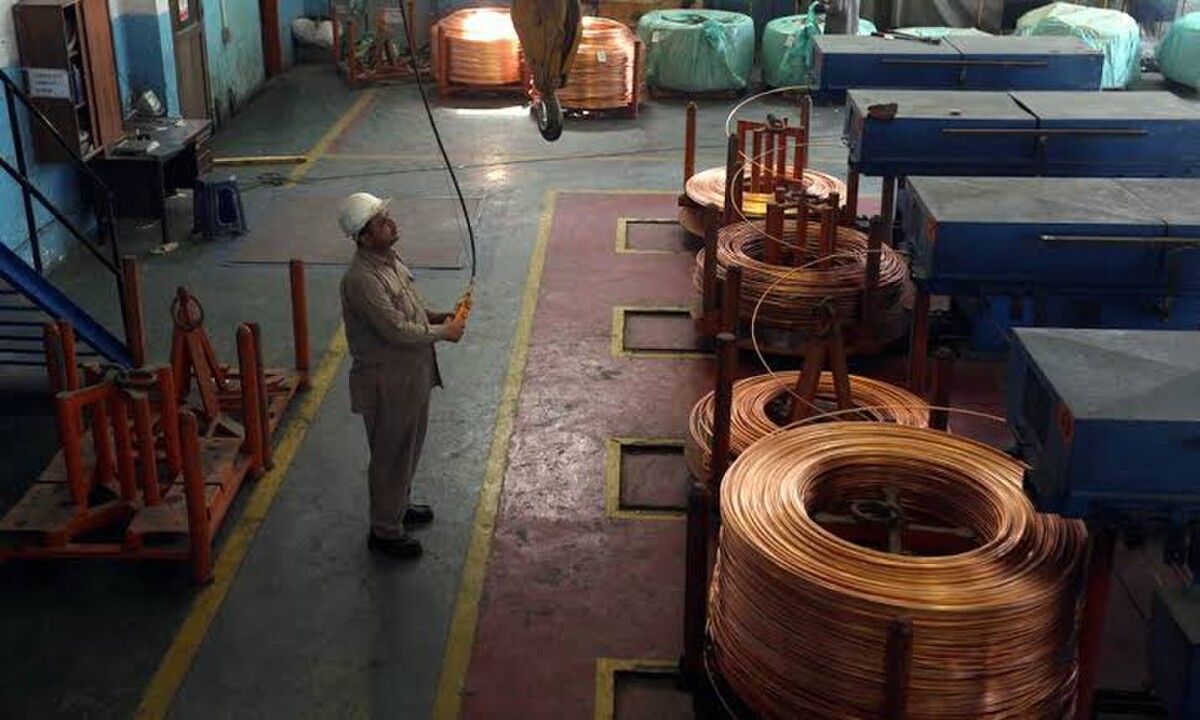
    Copper slumped to its lowest since March on Friday and was on course for its steepest weekly drop in more than 19 months as appetite for investment in the AI sector continued to wane.

    Benchmark three-month copper on the London Metal Exchange was down 1.7% at $12,310.50 per metric ton as of 1030 GMT. It earlier plunged as much as 4% to $12,202, its lowest since March 24.

    The metal tipped to have a huge role in the AI infrastructure build-out is down around 8.2% this week, set for its steepest weekly fall since the week ended April 4, 2025.

    “There’s more and more evidence that the AI investment boom is waning and that the US Fed is going to have to get more aggressive with policy to control inflation,” said Kyle Rodda, senior financial market analyst at Capital.com, adding that copper was being weighed down by a strengthening dollar.

    One copper traded said the metal had been way oversold. “We can not live without AI,” he said.

    However, AI shares continued to sag, with Anthropic shares down 6% in premarket trading after a strong debut on Thursday.

    On the physical side, there was slight relief in the recent tightness in China, where import premiums have hit record highs. Shanghai Futures Exchange copper stocks rose by 3,204 tons over the past week to 30,846 tons – still less than a day’s worth of Chinese consumption.

    In the US, there was a rare delivery of 3,850 tons of copper into LME warehouses in Mobile, Alabama.

    Meanwhile, the aluminium squeeze showed no signs of easing, with the premium of the cash LME contract over the three-month forward last trading at a historical high of $323.50 a ton, indicating severe near-term supply shortages.

    One entity holds 30%-39% of all LME aluminium warrants, LME data show.

    Aluminium fell 0.4% to $2,858 a ton, zinc shed 1.4% to $3,517, lead lost 0.4% to $1,858.50, nickel slipped 0.6% to $15,485 and tin dropped 1.8% to $41,105, touching its lowest since January 2.

    Source: brecorder

  • Service Industries subsidiary explores acquisition of Pakistan clothing retail chain

    Service Industries subsidiary explores acquisition of Pakistan clothing retail chain

    Service Industries Limited said its wholly-owned subsidiary Service Retail (Private) Limited is exploring the possible acquisition of a retail-chain clothing business to expand its footprint in Pakistan.

    The listed company disclosed the development in a notice to the Pakistan Stock Exchange (PSX) on Friday.

     “Service Retail (Private) Limited (SRPL), a wholly owned subsidiary of SIL, has informed the company that it is exploring the possible acquisition of a retail-chain clothing business to expand its business in Pakistan.

    “The transaction, if materialised, will be subject to due diligence, approvals required under applicable law and a binding agreement,” read the notice.

    No further details, including the identity of the target company or the size of the potential deal, were disclosed.

    Service Industries Limited (SRVI) was incorporated in Pakistan as a private limited company in 1957 and later became a public limited company. The company is involved in the purchase, manufacturing, and sale of footwear, tyres and tubes, and technical rubber products.

    A significant portion of its sales revenue comes from export markets, particularly Europe, and the company has been expanding into the US, Australia, and the Middle East.

    In 2024, SRVI underwent a demerger scheme where its tyre undertaking, retail undertaking, and Speed (Private) Limited shares were transferred to its wholly owned subsidiaries. Following this restructuring in 2024, SRVI operates as a holding company managing a diversified portfolio across various sectors through its subsidiaries.

    Source: brecorder

  • US religious freedom panel says India is targeting minorities in voter roll revisions

    US religious freedom panel says India is targeting minorities in voter roll revisions

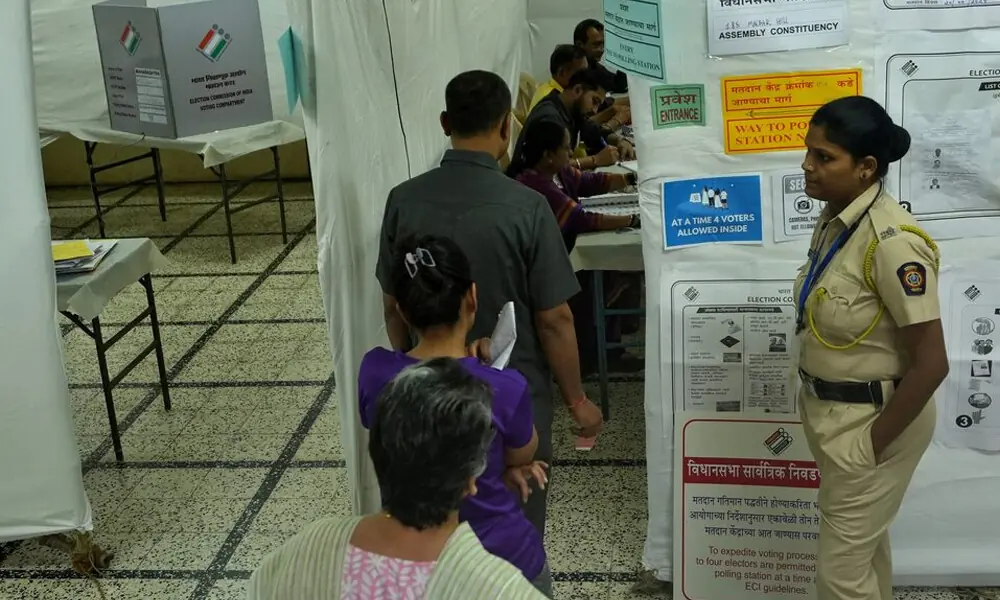
    WASHINGTON: India has escalated its targeting of religious minorities during a voter list revision that struck off tens of millions of names nationwide, a US panel on religious freedom said on Thursday.

    “The Indian gov’t is targeting Muslim citizens by removing them from voter rolls, calling them ‘foreigners,’ and now illegally deporting them,” Asif Mahmood, the chair ​of the US Commission on International Religious Freedom, said in a statement.

    India’s voter list revision removed 130 million names, roughly the population of Mexico, in the largest deletion of voters in the country’s history.

    Data shows the omissions disproportionately affect Muslims, India’s largest minority, who have faced what rights groups describe as exclusionary policies and rising discrimination since Prime ​Minister Narendra Modi’s Hindu nationalist Bharatiya Janata Party took power in 2014.

    India’s Election Commission says it was removing duplicate, deceased, shifted and otherwise ineligible voters and that anyone excluded in error can pursue appeals.

    India opposition parties call for protests over ‘vote theft’

    The revision has become entangled with a separate drive to identify and expel suspected illegal immigrants, even though removal from the rolls does not itself establish that someone is ​a foreigner.

    “The Indian government’s expulsion of its own citizens based on their Muslim faith is a shocking escalation of tactics that target religious minorities,” said Gene Mills, a commissioner on the US panel.

    Mills urged the State Department to designate ​India as a “country of particular concern.”

    USCIRF is ‌a ⁠bipartisan body of the US government that monitors religious freedom around the world and makes policy recommendations, which are not binding. Washington has not acted on its recent recommendations on India.

    India’s foreign ministry has cast USCIRF as biased and repeatedly dismissed such criticism, calling it interference in the country’s internal affairs.

    “We see it as a biased organization with a blatantly political agenda, and I don’t think an organization that is so prejudiced needs to be taken seriously,” India’s Foreign Ministry Spokesperson Randhir Jaiswal said at a regular media briefing on Friday.

    Indian police detain ‘cockroach’ movement leaders demanding election chief’s resignation

    The voter roll revisions sparked protests in recent weeks, with opposition groups and student demonstrators saying the revisions affected those unlikely to vote for the ​Hindu nationalist ⁠BJP. Rights experts condemned India’s crackdown on the protests.

    US Secretary of State Marco Rubio said last month the issue was a “domestic political matter” and Washington would not comment on it.

    UN ⁠experts and human rights groups say abuse of minorities has risen under Modi.

    They point to rising hate speech, a religion-based citizenship law that the UN calls “fundamentally discriminatory,” the demolition of Muslim-owned properties, the removal ⁠of ​Muslim-majority Kashmir’s autonomy and anti-conversion legislation that challenges ​freedom of belief.

    India’s government denies being discriminatory and says its policies, including food subsidy programs and electrification ​drives, benefit all communities.

    Civil rights advocates have also been critical of the treatment of Muslims in the US while noting a rise in Islamophobia in recent years and documenting escalating anti-Muslim rhetoric from Republicans during election campaigns.

    Source: brecorder

  • Indian rupee climbs past 93/USD as investors seek shelter in Indian stocks, shorts unwind

    Indian rupee climbs past 93/USD as investors seek shelter in Indian stocks, shorts unwind

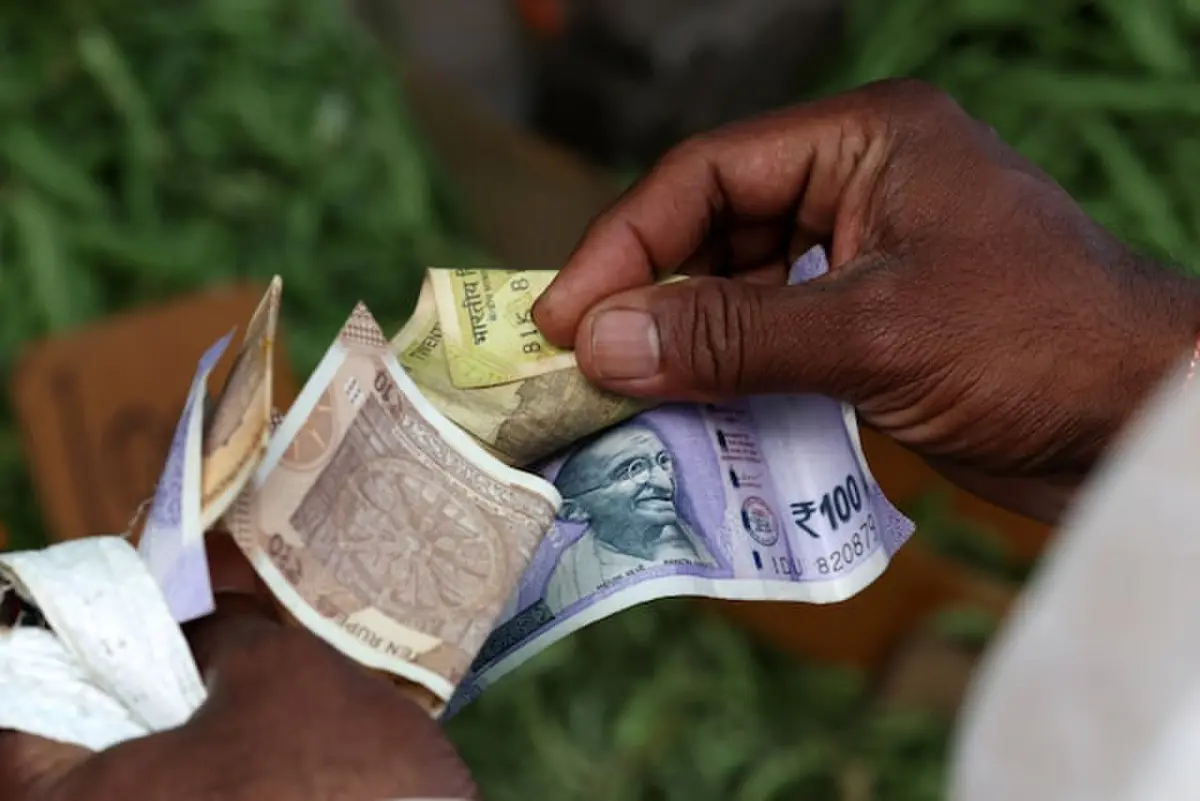
    MUMBAI: The Indian rupee strengthened past the psychologically important 93-per-dollar mark on Friday for the first time since April, as Indian equities attracted investors fleeing AI-driven markets and oil prices dropped, accelerating a sharp reversal in the currency’s fortunes.

    The Indian rupee has struggled for most of 2026, threatening to breach record low levels as recently as last month. It has since recovered sharply, cutting year-to-date losses to about 3% compared to nearly 8% at its weakest point in May and closing the week at 92.67, following its strongest session since October 12.

    Friday’s gains accompanied gains in Indian stocks in the face of a worsening global rout in AI-linked stocks. Asian shares logged their worst week since 2020. India’s benchmark Nifty 50, on the other hand, notched a fourth straight weekly gain.

    Foreigners have poured $12 billion into Indian shares so far in November, the largest-ever monthly inflow, compared with more than $60 billion of selling from September 2024 to October 2026.

    “More balanced global investor positioning and moderation in the oil price could see a sharp reversal in investor flows, to the benefit of the Indian stock market,” said Edward Evans, portfolio manager at Ashmore Group.

    The surge in inflows has sharply increased the supply of dollars, boosting the rupee at a time when measures taken by the Reserve Bank of India have curbed demand.

    Earlier this year, policymakers rolled out steps to alleviate sustained pressure on the local currency, including clamping down on speculative trades, attracting capital inflows from overseas Indians and shifting crude oil import-related dollar demand out of the spot market.

    As the rupee struggled near record low levels of 97 last month, RBI chief Sanjay Malhotra had hinted that monetary tightening could also be used to support the unit.

    A sustained recovery may help reverse capital outflow-induced weakness in the currency, which has eroded returns for foreign investors and could deter further investments, analysts say.

    Offshore shorts unwind, exporters eyed

    The rupee has also benefited from a rush to unwind bearish wagers on the currency this week, with the flows concentrated in offshore markets, bankers said.

    The reversal, which four bankers said was led by overseas hedge funds, has been aggressive enough to lift the rupee to a rare premium in the non-deliverable forward markets.

    The sentiment shift is also apparent in the options market, with a key gauge showing that demand for options betting on rupee weakness has eased relative to those betting on its strength.

    “Importantly, the RBI is choosing to let the INR appreciate and not draw a floor by buying reserves to elicit a behavioural or expectation shift among exporters and offshore participants,” said Dhiraj Nim, an economist and FX Strategist at ANZ.

    Persistently elevated demand for forward dollars – typically from importers – has been a sore spot for the rupee throughout this year.

    A reduction in speculative dollar demand from companies and an unwinding of offshore wagers are both helping the rupee, according to an FX salesperson at a foreign bank.

    Source: brecorder

  • Indian shares rise for fourth straight week as AI rout deepens

    Indian shares rise for fourth straight week as AI rout deepens

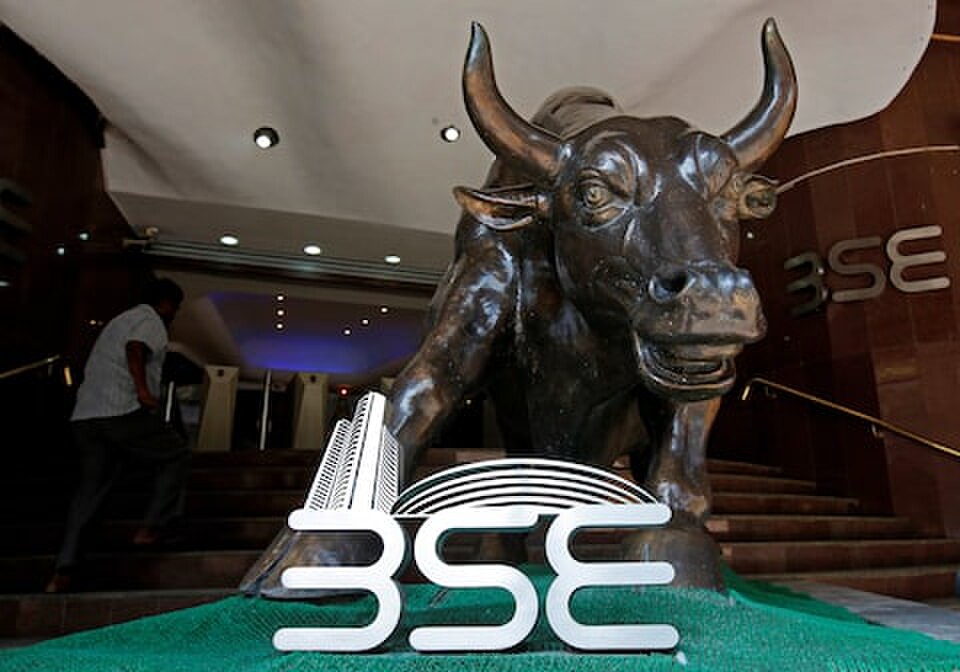
    Indian shares defied a broader Asian market rout on Friday to notch a fourth straight weekly gain, as a global selloff in AI-linked stocks triggered record foreign inflows into the country’s equity markets.

    The rally marks a sharp reversal for Indian stocks, which underperformed emerging market peers over the past two years amid limited exposure to the AI boom and elevated crude oil prices.

    The benchmark Nifty 50 and BSE Sensex rose 2.6% and 2.9% this week, closing at nine-month highs of 25,800.6 and 83,919.71, respectively.

    Both indexes gained 1.1% on Friday.

    Asian equities headed for their worst week since 2020, with MSCI’s broadest Asia-Pacific index down 8.5% this week. The index was down 3.3% on Friday, as Anthropic demand failed to lift AI supply-chain stocks.

    “The capital rotation into India was long pending,” said Sunny Agrawal, head of fundamental equity research at SBICAPS Securities.

    “The sell-off in AI stocks across most global markets has brought focus to value-buying opportunities in India.”

    Foreign investors have poured a record $12.21 billion into Indian equities so far this month, helping the rupee strengthen past 93 per dollar for the first time since April.

    Citi estimates each 100-basis-point rise in active weightage in Indian equities could draw about $12 billion, assuming 20% of the roughly $1.5 trillion benchmarked to MSCI’s emerging markets index. Easing oil, resilient earnings and bullish brokerage calls, from HSBC and Goldman Sachs, have also lifted sentiment.

    Brent crude futures have fallen 23% in November on hopes of a de-escalation in the U.S.-Iran conflict and recovering Middle East shipments.

    Of the 16 major sectors, twelve posted weekly gains. Financials and banks led, rising 3.7% and 5.9%, respectively, to record highs.

    Small-caps fell 1.1%, while mid-caps were little changed.

    Metals dropped 3% on weaker commodity prices and worries over slowing data-centre investment.

    Auto stocks gained 3.1%, helped by lower input costs and strong festival-season sales.

    Max Healthcare and Apollo Hospitals jumped 14.1% and 7.9%, respectively, among top five Nifty gainers, after Macquarie double-upgraded both on improving earnings prospects.

    Source: brecorder

  • Field Marshal Munir visits North Waziristan, reviews security situation

    Field Marshal Munir visits North Waziristan, reviews security situation

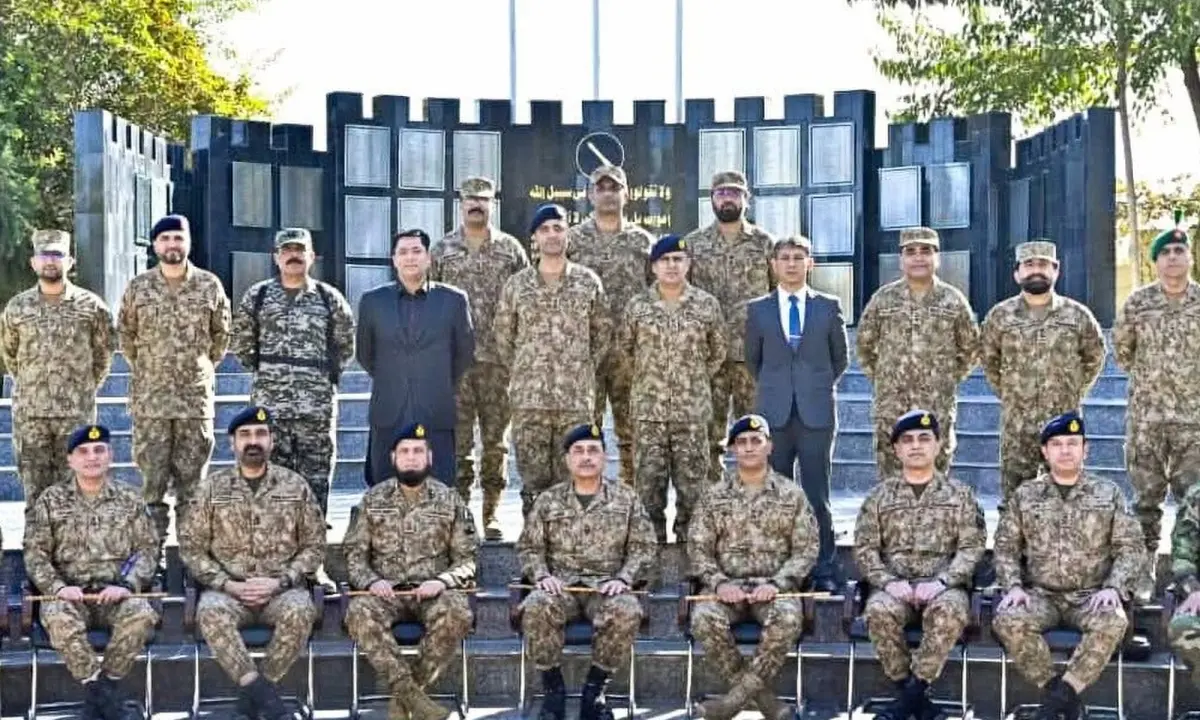
    Chief of Army Staff and Chief of Defence Forces (COAS & CDF) Field Marshal Syed Asim Munir visited Miran Shah in North Waziristan on Friday to review the prevailing security situation and ongoing counterterrorism efforts, the Inter-Services Public Relations (ISPR) said.

    Upon arrival, the army chief laid a floral wreath at Yadgar-e-Shuhada to pay tribute to soldiers who sacrificed their lives in the line of duty.

    During the visit, Field Marshal Munir received a detailed briefing on the security situation, ongoing intelligence-based operations and measures being taken to consolidate gains achieved through counterterrorism efforts and ensure lasting peace and stability in the area.

    He also interacted with officers and troops, appreciating their preparedness, professionalism and commitment to the country’s defence and security.

    The army chief praised the Khyber Pakhtunkhwa Police, describing it as a brave frontline force, and expressed pride in its resilience and sacrifices in the fight against terrorism.

    He reaffirmed the security forces’ resolve, in coordination with law enforcement agencies (LEAs), to eliminate terrorism and maintain peace and stability in Khyber Pakhtunkhwa.

    Commander Peshawar Corps received the COAS and CDF upon his arrival, according to the ISPR statement.

    Source: brecorder

  • Climate Minister Musadik Malik arrives in India for SCO dialogue

    Climate Minister Musadik Malik arrives in India for SCO dialogue

    Federal Minister for Climate Change Musadik Masood Malik arrived in New Delhi on Friday to attend the Shanghai Cooperation Organisation (SCO) Civilisational Dialogue Forum, according to an official statement.

    Malik will lead the Pakistani delegation at the forum, which will discuss the shared civilisational heritage and cultural ties among SCO member states, the Ministry of Climate Change said.

    Pakistan’s participation aims to promote the region’s shared cultural heritage and further strengthen cooperation among member countries.

    Pakistan’s Charge d’Affaires in New Delhi received the federal minister upon his arrival.

    The visit comes amid strained relations between Pakistan and India following their four-day military conflict in 2025, which marked the worst violence between the two nuclear-armed neighbours in decades.

    On November 14, the Foreign Office announced that Malik would attend the SCO meeting in New Delhi from November 20 to 22, making him the first Pakistani minister to visit India in more than three years.

    The last such high-level visit was made by then Foreign Minister Bilawal Bhutto Zardari, who travelled to India’s Goa in May 2023 to attend a meeting of SCO foreign ministers.

    The SCO is a regional political and security organisation comprising 10 member states, including Pakistan, India, China and Russia.

    At the forum, Malik will share Pakistan’s perspective on the salience of dialogue among civilisations and Pakistan’s contribution in the area of diplomacy.

    The climate minister’s statement will highlight Pakistan’s constructive role in the SCO, as well as Pakistan’s diverse civilisational and cultural heritage, the FO had said.

    Pakistan’s participation in this Forum is reflective of its contribution as an active SCO member to promote dialogue, cooperation and understanding in line with “Shanghai Spirit”.

    Pakistan delegation will also participate in thematic sessions of the Forum and engage with SCO member States on the sidelines of the Forum.

    Ahead of the visit, Deputy Prime Minister and Foreign Minister Senator Mohammad Ishaq Dar held a meeting with Dr Musadik Malik at the Ministry of Foreign Affairs to discuss Pakistan’s participation in the event.

    Source: brecorder

  • Turkish seismic vessel arrives in Karachi to begin offshore oil, gas survey

    Turkish seismic vessel arrives in Karachi to begin offshore oil, gas survey

    A Turkish seismic vessel, Orus Reis, arrived at Karachi port on Friday to begin exploring for oil and gas in Pakistan’s offshore waters, officials said, marking a new phase in energy cooperation between Pakistan and Turkiye.

    Turkish Energy Minister Alparslan Bayraktar, who arrived in Karachi a day earlier, joined Deputy Prime Minister Ishaq Dar, Federal Minister for Petroleum Ali Pervaiz Malik and other Pakistani officials to receive the vessel.

    “The arrival of the vessel marks a new chapter in scientific exploration and strategic cooperation between Pakistan and Turkiye,” said Dar, while addressing the arrival ceremony.

    The DPM said that the vessel brings “Turkish scientific expertise together with the experience and capabilities of our national energy companies to advance exploration in Pakistan’s offshore domain”.

    Dar said a seismic survey cannot guarantee a commercial discovery. “But no discovery can be made without seismic and exploration,” he said.

    Dar said that Pakistan possesses a coastline of immense economic and strategic importance connected to vital international energy and commercial routes. “Our maritime domain offers opportunities in energy, shipping and fisheries,” he said.

    The vessel will carry out seismic surveys in Pakistan’s offshore blocks, which Islamabad auctioned for oil and gas exploration for the first time in two decades as part of efforts to revive domestic exploration and reduce reliance on imports, read an official statement.

    Officials said the arrival of the vessel opens a new chapter in Pakistan-Turkiye energy cooperation, with Ankara playing a central role in Pakistan’s offshore exploration push.

    Pakistan has long sought to tap its offshore potential, but exploration has stalled for years due to lack of investment and technical capacity.

    The latest development comes months after Pakistan Petroleum Limited (PPL) signed Production Sharing Agreements (PSAs) and exploration licences for eight offshore exploration blocks awarded under the Pakistan Offshore Bid Round 2025, marking a significant step toward reviving offshore hydrocarbon exploration in the country.

    According to a notice filed by the company with the Pakistan Stock Exchange (PSX), the agreements were executed on May 20, 2026, in the presence of the Federal Minister for Petroleum, following the earlier provisional award of the offshore blocks announced by the company on November 13, 2025.

    The company stated that the newly awarded portfolio includes two PPL-operated offshore blocks — Gharo Creek and Kochi Creek — while PPL is also participating in six partner-operated offshore blocks, namely Bin Qasim South, Keti Bandar, Behr, Zarrar, Offshore Deep D and Sapat Bandar.

    Source: brecorder

  • Pakistan’s regulator reinforces audit report verification through UDIN

    Pakistan’s regulator reinforces audit report verification through UDIN

    The Securities and Exchange Commission of Pakistan (SECP) has advised companies to verify the Unique Document Identification Number (UDIN) on their auditor’s report before filing audited financial statements. This applies to companies required by law to file audited financial statements with SECP.

    A UDIN is a unique number that helps users confirm who issued an audit report. It also helps prevent the use of forged reports. Auditors generate the number through the portal of their respective institute, either the Institute of Chartered Accountants of Pakistan or the Institute of Cost and Management Accountants of Pakistan, read a statement.

    Regulation 6A of the Auditors (Reporting Obligations) Regulations, 2018 requires auditors to include a UDIN on every report they issue under the regulations. Companies can check the number through the relevant institute’s portal before filing. SECP will accept filings only if the accompanying auditor’s report carries a valid UDIN.

    Use of an invalid UDIN may lead to regulatory action or civil or criminal proceedings under applicable law.

    Source: brecorder