Category: Brecorder

  • SBP policy rate may rise to 13% by June 2027: Standard Chartered

    SBP policy rate may rise to 13% by June 2027: Standard Chartered

    Pakistan could face sustained double-digit inflation as international oil prices were projected to hover between $90 and $100 per barrel through December 2027, potentially forcing the central bank to raise its policy rate to 13% by June 2027, Standard Chartered said.

    According to officials at the global financial institution, Consumer Price Index (CPI) is expected at around 10% in FY27.

    This would cause economic growth to slow to 3% in the ongoing fiscal year from 3.7% last year (FY26). Moreover, international investors want Pakistan to enter a new IMF programme once the ongoing Extended Fund Facility (EFF) gets concluded in October 2027, as per the officials.

    “The international oil price – i.e. Brent – will continue to hover around $101 per barrel in the ongoing quarter ending December 2026 and at around $90 per barrel throughout the calendar year 2027 [in the backdrop of the Middle East geopolitical crisis],” Standard Chartered (SC) Economist for Middle East and Pakistan Talha Nadeem said while speaking at a media roundtable held in Karachi this week.

    With the elevated international oil prices, he anticipated, the average inflation reading would be around 10% in FY27.

    Pakistan’s headline inflation clocked in at 9.6% on a year-on-year (YoY) basis in October 2026, down from 10.3% recorded in September.

    “When inflation is in double digits, we expect that the central bank will hike [its policy rate] further. So, by June 2027, we expect the State Bank’s policy rate to be at 13%. And obviously, if the central bank does go ahead with this hike, you can imagine the higher policy rate will put, sort of, squeeze on GDP growth as well.”

    “We forecast Pakistan GDP growth at 3% for FY27. So, we are seeing a bit of a slowdown compared to 3.7% last year [FY26].”

    Pakistan has set the economic growth target at 4% for FY27. The central bank sees it in the range of 3.5–4.5% for the year.

    Moreover, SBP policy rate stands at 12% at present.

    The economist further said international investors wanted Pakistan to continue under an IMF programme after the expiry of its ongoing facility (the 37-month EFF of $7 billion), viewing the Fund’s engagement as a source of policy continuity and discipline in fiscal and monetary management.

    “The majority of investors are more comfortable with Pakistan being with the IMF. For the very simple reason that in their view, this implies policy continuity. So the IMF’s structural benchmarks, the conditions that they place, help keep discipline in terms of fiscal policy, in terms of monetary policy, and so on,” Nadeem said.

    SC Global Head Geopolitical Strategist & Senior Economist, Philippe Dauba-Pantanacce said international oil prices might take significant time to normalise even if the Middle East conflict ended in the near future, as damage to energy infrastructure and depleted strategic reserves were likely to keep prices elevated.

    He said there would be a “long tail to normalisation”, noting that Qatar’s gas infrastructure could take years to repair, while damage to refineries in the Middle East and Russia could continue to disrupt diesel supplies.

    SC Pakistan CEO Adil Salahuddin stressed the need to boost export earnings along with the increasing workers’ remittances to achieve sustainable economic growth. He called for making Pakistani exports more competitive and improving the business environment to facilitate exporters.

    “In tomorrow’s world, how will we sustain our viability just by relying on home remittances as the growth engine? It’s not sustainable,” he said.

    The CEO said Pakistan’s ability to maintain fiscal and economic discipline after the current IMF programme ends was a key concern for investors. “So, how that discipline is retained is the key.”

    He said the formal sector continued to bear a tax burden, and called for broadening the tax base to ease pressure on compliant businesses.

    Source: brecorder
  • Portuguese foreign minister arrives in Pakistan for two-day visit

    Portuguese foreign minister arrives in Pakistan for two-day visit

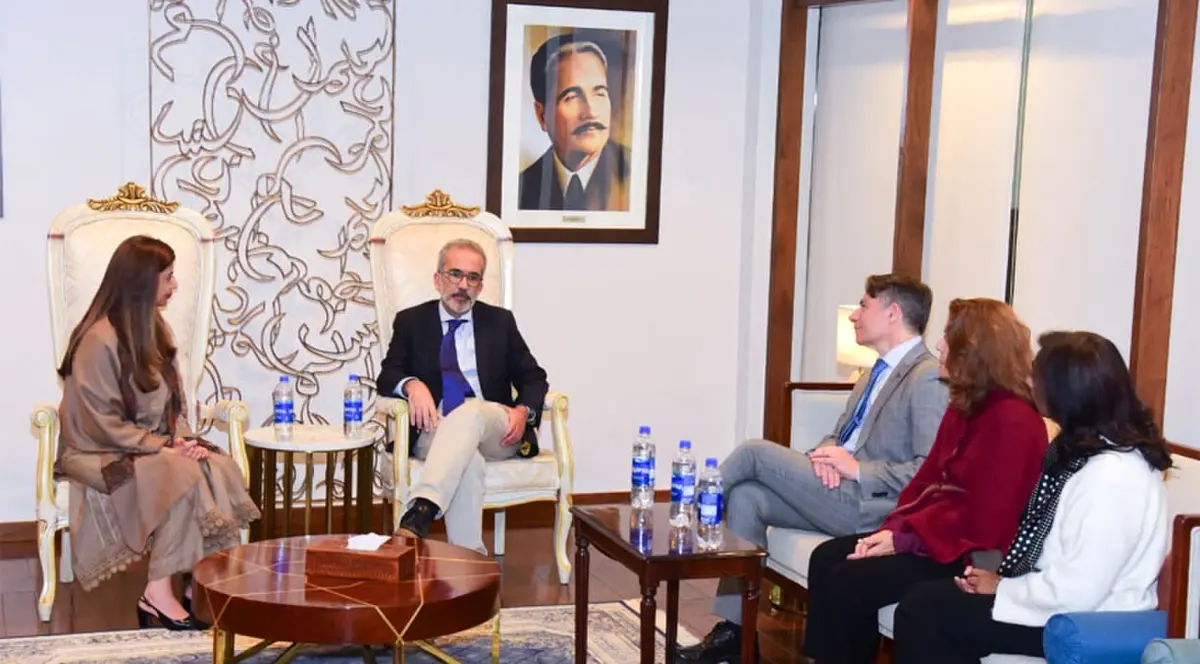
    Portuguese Minister of State and Foreign Affairs Paulo Rangel arrived in Pakistan on Sunday for a two-day official visit aimed at strengthening bilateral relations and expanding economic cooperation between the two countries.

    Rangel is visiting Pakistan from November 22-23 at the invitation of Deputy Prime Minister and Foreign Minister Ishaq Dar. He was received upon arrival by Additional Secretary Europe Ambassador Ayesha Ali, the Foreign Office said in a statement.

    During the visit, the Portuguese foreign minister will hold delegation-level talks with Dar and meet other members of the Pakistani leadership to review the full spectrum of bilateral relations.

    Rangel is also accompanied by a business delegation to participate in the inaugural Pakistan-Portugal Business Forum, which is expected to provide an opportunity to explore avenues for greater trade and investment cooperation.

    The visit is expected to provide an opportunity for both countries to strengthen their bilateral engagement and identify new areas of cooperation.

    On Saturday, Lahore Chamber of Commerce and Industry’s (LCCI) senior vice president Usman Ghani said Pakistan and Portugal have significant opportunities to expand bilateral trade, investment and industrial cooperation, particularly in motorcycles, real estate, healthcare, olive production, medical instruments, and advanced manufacturing.

    He was addressing a seven-member Portuguese business delegation led by Gohar Rehman at the LCCI.

    The LCCI SVP said Pakistan’s large consumer market, growing industrial base, and diverse investment opportunities provide a strong foundation for mutually beneficial economic partnerships.

    He said Lahore offers an attractive economic landscape for international investors, with its strong industrial and commercial base, miniature, heritage, established business community, and connectivity to major national and regional markets.

    The LCCI official highlighted opportunities in modern housing projects, commercial developments, shopping centers, hotels, tourism, and hospitality.

    Source: brecorder

  • The challenge of turning SME financing targets into reality

    The challenge of turning SME financing targets into reality

    Pakistan’s renewed emphasis on financing small and medium enterprises (SMEs) has acquired substantial policy support. The government has now reserved Rs300 billion under the Pak EXIM-administered Export Finance Scheme exclusively for eligible SME exporters, following measures to expand concessional lending, relax eligibility, and simplify access to banks. Its medium-term objective remains Rs2 trillion in outstanding SME financing and 775,000 borrowers by June 2028, while the prime minister has called for the financing target to rise to Rs2.2 trillion. The announcements offer grounds for optimism, but their success will depend on whether lower borrowing costs and better procedures can change the banking system’s willingness to finance smaller businesses.

    The Finance Division’s October figures also show progress, although the required pace of expansion is considerably faster. Outstanding SME financing rose from Rs1.114 trillion in June 2026 to Rs1.148 trillion by October 23, including Rs538 billion for small enterprises. In September, the number of borrowers stood at 350,862.

    The intermediate targets for June 2027 are Rs1.5 trillion and 565,000 borrowers. Reaching the financing target requires another Rs352 billion over approximately eight months, or Rs44 billion monthly, against an increase of only Rs34 billion since June. The arithmetic demands a marked change in lending behaviour.

    The favourable developments extend beyond the newly ring-fenced allocation. The Export Finance Scheme’s overall envelope increased from Rs1 trillion to Rs1.5 trillion for FY2027, while Rs350 billion has been earmarked for the Long-Term Export Growth Financing Facility to support investment in machinery and export-oriented projects.

    The prime minister’s November 5 directive to remove the requirement that SMEs earn at least 80% of revenue from exports for long-term financing could widen eligibility. Export-related tax relief and proposed improvements in accreditation, testing facilities and regulatory procedures may also reduce operating costs. However, a directive to relax eligibility must be reflected in participating banks’ rules before previously excluded firms can benefit.

    The interest rates make the attraction of these facilities clearer. The July-approved enhanced export finance package described six-month working-capital loans at 8.5%, while the new long-term facility provides financing at 2% for the first two years and 5% for the following eight. Pak EXIM’s published general export-finance terms, however, still specify a rate three percentage points below the policy rate, equivalent to 9% following October’s increase to 12%. The distinction requires clarification for applicants. Conventional SME lending, by comparison, is generally priced at KIBOR plus a bank-specific spread, with security and processing costs added. Concessional terms can be valuable, although many domestically oriented businesses will remain outside their reach.

    A policy that expands credit applications without shifting lenders’ incentives risks delivering modest increases in actual lending.

    Institutional initiatives may broaden that reach. Since November 1, SMEConnect has provided a centralised route for loan applications and greater visibility over decisions; more than 10,000 applications were reported within its first days. The State Bank’s October 28 wholesale and agency financing framework also allows banks to work through eligible microfinance and non-bank institutions under risk-coverage arrangements.

    Such intermediaries may understand borrowers whose cash flows are poorly captured by conventional credit assessments. Alongside an additional Rs2 billion grant and proposed reorganisation of SMEDA, these measures could improve documentation, financial literacy and access for women-led and rural enterprises. Together they address some of the institutional barriers that prevent businesses from approaching formal lenders.

    Yet they cannot by themselves remove the incentives that shape banks’ balance sheets. According to the State Bank’s Mid-Year Performance Review, investments accounted for 63.3% of banking assets by June 2026, much of the portfolio concentrated in government securities. Investments generated 79.4% of balance-sheet expansion in the first half of the year, compared with 8.7% from advances. Government paper offers a straightforward destination for deposits; assessing the repayment capacity of an unfamiliar manufacturer involves greater effort and risk. Islamabad is consequently asking banks to lend to entrepreneurs while remaining their preferred borrower.

    That contradiction has a fiscal dimension. Heavy government financing needs, sustained partly by weaknesses in revenue mobilisation, absorb banking resources and reinforce the attraction of sovereign securities. Lowering interest rates might improve loan affordability, but it will not necessarily lead banks to take on small-business risk. The policy rate was raised to 12% in October amid inflationary pressures, making the divide between subsidised export finance and ordinary commercial borrowing more consequential. A policy that expands credit applications without shifting lenders’ incentives risks delivering modest increases in actual lending.

    The difficulties confronting borrowers are equally persistent. Smaller enterprises often lack audited accounts, reliable transaction histories and acceptable collateral. Cash-based operations and seasonal revenues complicate credit assessments; weak contract enforcement raises recovery costs. Formalisation brings its own tax and compliance burdens, while high energy and transport costs squeeze working capital. SMEConnect can improve transparency, and intermediary lenders may reduce information gaps, but neither eliminates these commercial constraints. SMEDA therefore needs to help businesses build credible accounts and financing proposals, rather than simply encourage more applications.

    This makes disbursement the decisive test. The Rs300 billion export allocation and Rs350 billion long-term envelope are lending capacities, not new outstanding loans, and cannot simply be subtracted from the Rs352 billion gap. Similarly, 10,000 portal applications indicate interest, not approvals or credit delivered. The State Bank and SMEDA should report how much has actually been disbursed, at what rates, to how many first-time borrowers and with what rejection and repayment outcomes. Without such disclosure, progress may be judged by announcements rather than financial access.

    The distribution of credit matters as much as its volume. Information technology exports reached approximately $4.6 billion in FY2026, while pharmaceuticals faced declining export receipts, illustrating different financing needs across sectors. Exporters may require receivables finance or machinery; education, healthcare, and local service businesses need models suited to domestic cash flows. Women-led enterprises and emerging technology firms warrant greater outreach without dispensing with commercial scrutiny. A uniform lending model cannot support these varied businesses equally well.

    Pakistan’s SME ambitions offer an opportunity to reconsider the relationship between the state, banks, and private enterprise. Concessional credit, digital applications, and alternative lending channels have strengthened the policy framework. Whether they change the economy will depend on cheaper and more reliable access to finance, stronger business records, and a banking system willing to lend. By June 2028, success should be measured in enterprises expanded, jobs created, and export earnings generated. A larger lending portfolio alone will offer little assurance of a stronger productive economy.


    The article does not necessarily reflect the opinion of Business Recorder or its owners.

    Source: brecorder

  • Pakistan security forces kill 15 terrorists in Balochistan’s Mastung

    Pakistan security forces kill 15 terrorists in Balochistan’s Mastung

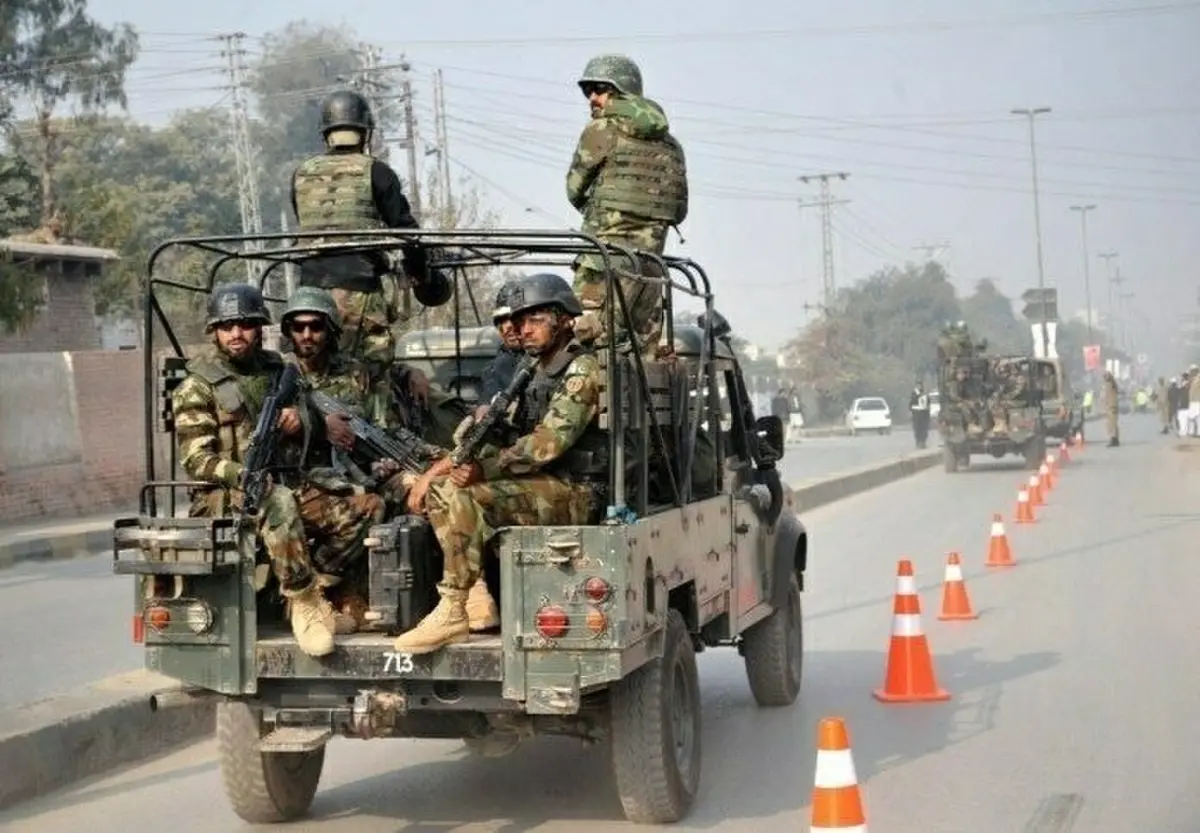
    Pakistan security forces killed 15 terrorists in two separate operations in Balochistan’s Mastung district under Operation Radd-ul-Fitna-3, according to a statement from the Prime Minister’s Office (PMO).

    In the PMO statement, Shehbaz praised the security forces for their successful operations against terrorists belonging ‘Fitna al-Hindustan’.

    The prime minister lauded the forces’ professional capabilities and courage, saying their sacrifices and commitment were commendable in the fight against terrorism.

    He said the entire nation stood alongside the security forces in the war against terrorism and vowed that efforts would continue until terrorism was completely eliminated from Balochistan and other parts of the country.

    Shehbaz added that the country would continue its fight until the last terrorist was eliminated.

    Earlier this week, at least 22 terrorists were killed in multiple engagements with security forces in Khyber Pakhtunkhwa on November 16 and 17, the Inter-Services Public Relations (ISPR) said.

    Source: brecorder

  • Bahrain says Iranian attack hits industrial facility as air defences intercept attacks

    Bahrain says Iranian attack hits industrial facility as air defences intercept attacks

    Bahrain said on Saturday that an Iranian attack had hit a civilian industrial facility, causing a fire but no injuries, ​while Iran’s Revolutionary Guards said they launched a missile-and-drone attack ‌on US military positions in the kingdom, home to the US Navy’s Fifth Fleet.

    The incidents were the latest escalation of regional hostilities since the US and Israel ​attacked Iran in February. Since then, Gulf Arab states have ​been drawn into the conflict, and there have been repeated ⁠Iranian attacks across the region.

    Civil Defence teams were working to contain ​the fire at the industrial facility, the ministry said in a post ​on X. It gave no details on the location or nature of the site.

    Bahrain’s interior ministry initially issued an alert urging residents to move to the nearest ​safe location because of a potential threat, without providing details. It ​later issued an all-clear before sending a second alert.

    Later, Bahrain’s Defence Force said ‌its air ⁠defences had intercepted a number of Iranian aerial attacks. Shrapnel from the interceptions caused material damage but no casualties, it said, adding that Tehran was continuing its “systematic hostile approach” towards the kingdom.

    Bahrain says air defences intercepted Iranian attacks

    The Revolutionary Guards, in ​a statement carried ​by Iranian state ⁠news agency IRNA, said their aerospace forces had launched a combined missile-and-drone attack on US positions at the ​Al-Riffa and Awali bases “in retaliation for ongoing aggression and ​repeated violations ⁠of Iranian airspace.”

    US Central Command did not immediately respond to a Reuters request for comment on the Guards’ account.

    Bahrain has reported intercepting several ⁠Iranian ​aerial attacks in recent days. Gulf Arab ​states have come under repeated fire from Tehran since the war broke out.

    Source: brecorder

  • Myanmar’s army-backed government calls ASEAN decision ‘unfair and imbalanced’

    Myanmar’s army-backed government calls ASEAN decision ‘unfair and imbalanced’

    Myanmar’s army-backed government on Saturday called an ASEAN decision “unfair and imbalanced” and accused the regional grouping ​of discriminatory treatment for denying it full representation ‌at its summits.

    Here are some details:

    Myanmar’s foreign ministry said the decision issued at the 49th ASEAN Summit in Manila did not ​adequately reflect the positive measures it says it ​has taken.

    ASEAN leaders said at the summit they could ⁠gradually restore Myanmar’s full political representation if it made ​progress on a five-point consensus, a framework for ending ​the country’s post-coup crisis.

    The foreign ministry statement called Myanmar’s exclusion from ASEAN summits discriminatory.

    It said Myanmar’s views had often been disregarded ​and its equal rights and full representation had ​been denied.

    It said there were “no political prisoners” in Myanmar and said ‌more ⁠than 126,000 prisoners had received pardons or amnesties since the coup.

    Pakistan, ASEAN agree to deepen trade and investment ties

    The United Nations and rights groups say there have been thousands of political prisoners jailed since ​the coup.

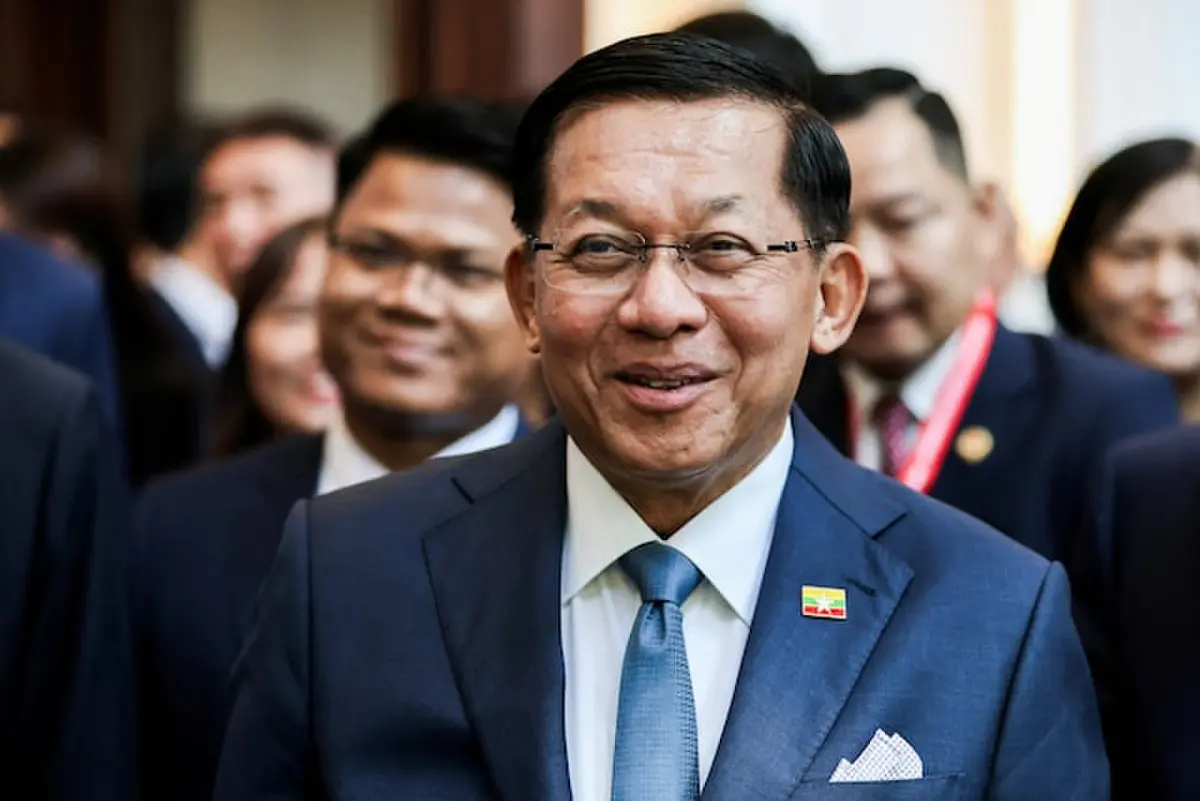
    The ​statement followed ⁠military-backed President Min Aung Hlaing’s Wednesday remarks to parliament where he said his administration was ​reconsidering its ASEAN ties, but would keep ​talking ⁠to members.

    Myanmar has been in turmoil since the military ousted Nobel Peace Prize winner Aung San Suu Kyi’s ⁠elected ​government, triggering a civil war ​that the UN estimates has killed 100,000 people and displaced more than ​3.5 million.

    Source: brecorder

  • Anthropic’s post-debut stumble delivers reality check for AI trade

    Anthropic’s post-debut stumble delivers reality check for AI trade

    Anthropic’s much-hyped arrival on Wall Street fizzled out on Friday as a dramatic unraveling of the AI trade showed that even a blockbuster listing could not shake the gloom hanging over the sector.

    As the first large ​machine-learning model maker to go public, Anthropic is widely seen as a proxy for the AI trade, and its listing had been viewed as a ‌potential boost for a sector struggling to regain its footing.

    But the stock closed at $88.91, 8.5% below Thursday’s close and not far from its $83 IPO price, while declines in other technology heavyweights suggested the listing had done little to stem the broader selloff.

    “Anthropic faded relatively quickly. I don’t think investors believe there’s something inherently wrong with the company, management or business. I think they’re just skeptical of this market,” said Robert Pavlik, ​senior portfolio manager at Dakota Wealth.

    The AI boom has come under pressure over the past month as concerns mount that spending on the technology, expected by some ​estimates to top $1 trillion this year, is not generating returns quickly enough.

    Fears of political hurdles to data center construction and the leadership ⁠turmoil at chipmaker Nvidia have also added to those worries.

    “Investors still believe in AI but are becoming more selective about what they will pay for that growth,” said David Miller, ​chief investment officer at Catalyst Funds.

    Among the Magnificent Seven stocks, Nvidia fell about 14% and Meta Platforms dropped nearly 6%, Amazon lost about 4% and Microsoft ended 3% lower.

    Chip stocks also slid, ​with AMD and Marvell Technology down about 13% and 12%, respectively, and Intel losing roughly 8%.

    The focus now shifts to a potential listing by another AI leader, OpenAI, which could provide another test of investor appetite for AI stocks. OpenAI has indicated it may go public next year.

    Despite a strong IPO pipeline of high-profile AI and infrastructure companies, many have pushed their IPO plans to 2027.

    Patience may pay

    Anthropic’s stock could find support in ​the coming weeks. London-based index rebalance analytics firm Intropic estimates index-tracking funds could account for purchases of up to 30% of Anthropic’s shares by year-end.

    Near-term volatility, however, could persist ​as the initial euphoria around the listing fades and investors assess whether a valuation of about 40 times sales over the past 12 months can be sustained.

    But Morgan Stanley, the underwriter tasked with stabilizing Anthropic’s shares ‌after its ⁠market debut, closed a position meant to do that, the company said, removing a potential pillar of support for shares.

    Anthropic had a fully diluted valuation of about $1.6 trillion at the latest price, and a market capitalization of $1.2 trillion based on shares outstanding.

    Anthropic hits $2 trillion in Nasdaq debut, tops SpaceX’s June listing

    “We favor patience on Anthropic and recommend evaluating the company as it reports public results,” said Kaush Amin, head of private market investing at US Bank Asset Management, adding that the current valuation “assumes years of rapid growth.”

    The debut has also done little to ease broader concerns about the health of the ​AI trade. Wall Street’s main indexes ended ​sharply lower on Thursday, while futures pointed ⁠to further declines on Friday.

    Parallels with spacex

    Anthropic’s IPO has drawn parallels with Elon Musk’s SpaceX (SPCX.O), opens new tab, whose June listing was the second-biggest on record.

    Anthropic raised $93.5 billion in its IPO after underwriters exercised an option to buy additional shares, surpassing SpaceX’s $85.7 billion haul to become the biggest listing on ​record.

    While the companies have different business models, some investors have pointed to SpaceX’s sharp swings in the weeks after its debut ​as a reason for ⁠caution over buying Anthropic immediately after its listing.

    “There’s going to be some volatility like we had with SpaceX. A lot of people are going to have FOMO. I don’t think there’s any need to get on it on the first trade,” said Rob Hackel, CEO of financial advisory and brokerage firm RF Lafferty & Co.

    SpaceX shares fell close to 8%.

    Retail investors traded about $772 million of Anthropic ⁠shares on ​Thursday, the most for an IPO debut since Vanda Research began tracking the data in 2012.

    The stock’s sharp ​swings have left investors weighing the prospects of a rebound against further losses. Options trading, set to begin next week, could add to the volatility.

    “It’s not a good environment for Anthropic at the moment,” said Carsten Hesse, ​head of index events at Berenberg.

    Source: brecorder

  • Nvidia’s accounting is a focus of US SEC investigation, sources say

    Nvidia’s accounting is a focus of US SEC investigation, sources say

    NEW YORK/WASHINGTON: The US Securities and Exchange Commission is probing Nvidia’s accounting practices, said two people briefed on the matter, adding to the legal woes facing the scandal-hit chip giant.

    The Wall Street Journal on Tuesday reported that the SEC was probing Nvidia but said it ​could not ascertain the focus of the investigation. The people, who spoke to Reuters on condition of anonymity to discuss confidential issues, said SEC enforcement ‌staff are scrutinizing potential accounting issues at the company.

    A spokesperson for the SEC declined to comment. Spokespeople for Nvidia did not immediately respond to requests for comment.

    Prices of Nvidia shares extended losses and were down about 13% on Friday, according to LSEG data, after Reuters reported details of the SEC probe. They had been down more than 6% before Reuters published its report.

    Reuters could not immediately determine when the SEC opened its ​inquiry or exactly what potential accounting issues the watchdog is examining. Investigations are not evidence of wrongdoing and many close without resulting in enforcement action.

    Still, the accounting focus ​of the probe, which Reuters is reporting for the first time, increases pressure on Nvidia, whose investors are still reeling from revelations about ⁠ousted CEO Jensen Huang’s extramarital relationships, including with Alice Huang, who US authorities suspect is a Chinese spy. China has denied she is a spy.

    Alice Huang led Singapore-based Megaspeed, historically ​a large Nvidia chip customer, people familiar with the matter have said. US authorities have been investigating Megaspeed since 2024 over possible violations of export controls related to alleged shipments of Nvidia ​AI chips to China, the US Justice and Commerce departments said this week.

    The crisis has sent shares in Nvidia, a linchpin of the AI boom, tumbling more than a third and stoked calls in Washington for tougher action on tech threats posed by Beijing.

    Nvidia chair dismisses idea of rehiring Huang and vows fast search

    Megaspeed has said Alice Huang left the company in August 2025 and that it conducted “lawful business.” Reuters has not been able to reach Alice Huang. Jensen Huang admitted ​to an affair in a November 8 statement following the reports of his relationship with Alice Huang, without referring to her by name.

    The SEC probe is the latest of Nvidia’s legal ​woes. The Justice Department has also been reviewing Nvidia’s $12.9-billion deal to buy open-source platform Hugging Face alongside a broader antitrust investigation into the company’s acquisitions and practices, Reuters reported last month.

    Singapore accounting change back in focus

    Last ⁠year, Nvidia changed how it reports geographic revenue, using customer headquarters rather than billing addresses, which it said would better reflect the geographic profile of its revenue. The change resulted in Singapore being removed from its geographical breakdown.

    The Financial Times, citing company accounts, reported on Tuesday that Nvidia had made the change even as Singapore sales soared to almost half its global revenue.

    That accounting shift has drawn renewed press scrutiny in the wake of the Alice Huang scandal.

    Southeast Asia has become a hub for chip smuggling to China since the Biden administration barred advanced AI ​chip exports to that country over concerns they ​could boost Beijing’s military.

    Analysts and investors have ⁠also grown increasingly concerned about circular AI financing deals, in which chipmakers including Nvidia have pursued complex financial arrangements to help customers fund purchases of their chips and the construction of costly AI infrastructure, such as data centers. Nvidia has backed AI companies and cloud providers ​and provided guarantees connected to data-center projects that use its equipment.

    Who is Nvidia interim CEO Colette Kress?

    Critics say such arrangements can make it harder for investors to assess ​the quality of chipmakers’ revenue ⁠and their true financial exposure. Speaking to Reuters last month, SEC enforcement chief David Woodcock said the agency was examining AI companies’ corporate disclosures to ensure issuers are giving investors the full picture on potential risks.

    On its Tuesday earnings call, Nvidia’s interim CEO and former CFO Colette Kress said the company was proud of its role in supporting the AI industry, but would be far more ⁠selective moving forward ​about AI industry financing deals.

    The SEC under President Donald Trump has pulled back on enforcement, saying it will ​focus on bread-and-butter securities fraud, including accounting violations that have long been a mainstay of its enforcement work. It recently launched a new financial reporting and accounting unit within its enforcement division, aimed at developing cases in accounting ​and auditing areas.

    Source: brecorder

  • Import of more wheat recommended

    Import of more wheat recommended

    ISLAMABAD: Deputy Prime Minister and Foreign Minister (DPM/FM) Senator Mohammad Ishaq Dar chaired two high-level meetings on Saturday to review the proposed export of surplus sugar and the availability and price stability of essential food commodities, including wheat.

    The committee recommended importing up to 800,000 metric tonnes (MT) of wheat to maintain adequate domestic stocks and stabilise prices.

    The Committee on the Export of Surplus Sugar reviewed updated national sugar stock assessments and domestic consumption requirements. It also examined regulatory safeguards to ensure that export approvals remain strictly aligned with domestic market stability.

    The DPM/FM reiterated that protecting local consumers from unwarranted price hikes remains the government’s top priority. He directed the relevant ministries to maintain close oversight of supply chains to ensure market stability.

    Senator Dar also presided over a high-level meeting to review the availability and price stability of essential food commodities across the country.

    READ ALSO: TCP receives nine bids for wheat import1

    The meeting assessed domestic wheat stocks and market supply mechanisms to ensure adequate availability across the country. Participants also discussed the possibility of importing wheat, if required, to maintain sufficient stocks at reasonable prices.

    The DPM/FM emphasised that all relevant government departments, particularly provincial departments, should work towards implementing Prime Minister Shehbaz Sharif’s directives to ensure nationwide price stability and curb unwarranted profiteering. He directed all concerned authorities to maintain close coordination between federal and provincial stakeholders and take timely measures to prevent artificial shortages and price fluctuations.

    The committee decided to recommend the import of up to an additional 800,000 metric tonnes of wheat.

    The meeting was attended by the ministers for National Food Security and Research and Commerce; SAPM Tariq Bajwa; the Secretary of National Food Security and Research; special secretaries of Finance and Commerce; senior officials from all provinces; and representatives of relevant ministries and departments.

    Copyright Business Recorder, 2026

    Source: brecorder

  • Mentally disabled persons: Court-appointed guardian not necessary for filing case: LHC

    Mentally disabled persons: Court-appointed guardian not necessary for filing case: LHC

    LAHORE: The Lahore High Court has held that it is not necessary for a mentally disabled person to first have a guardian appointed by the court in order to file a case.

    The civil court can also appoint a guardian to the extent of the case after examining the mental disability, the court added.

    The court passed this order in a petition filed by Musarat, sister of a mentally disabled person Safdar Ali.

    The court also observed that the final determination of mental disability can be made even after recording the evidence and giving the parties an opportunity to present their positions.

    The civil court had summoned Safdar Ali in person and questioned him, but he was unable to answer questions other than identifying his name and his relationships.

    The civil court declared the case filled by Safdar Ali’s brother M Yaqoob admissible and prevented further transfer of the disputed property.

    The court remarked that it is the responsibility of the court to protect the legal interests of a person with mental disabilities.

    The court upheld the decisions of the civil court and dismissed the petition of the petitioner’s sister of Musarat.

    Copyright Business Recorder, 2026

    Source: brecorder