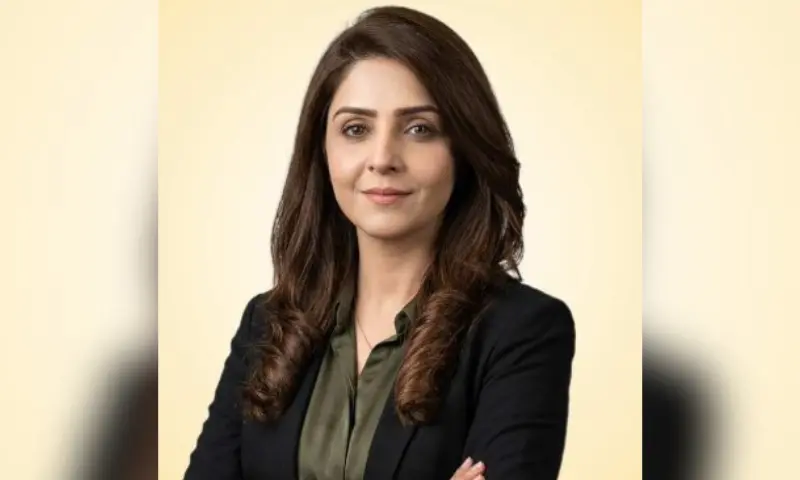
RAWALPINDI: A local court on Monday granted police two-day physical remand of Ahsan, the husband of anchorperson Rabia Ahsan, who was shot dead at home in the Gulshanabad area a day earlier.
Rabia, who previously co-hosted a current affairs show alongside senior journalists Amir Mateen and Rauf Klasra, was found with a gunshot wound below her neck, City Police Officer (CPO) Hassan Sukhera told reporters on Sunday. Her husband was taken into custody following a complaint filed by her brother.
A first information report was registered at Saddar Beruni police station under Section 302 (premeditated murder) of the Pakistan Penal Code (PPC) and Section 2-A of the Punjab Arms Amendment Ordinance, 2015 on Sunday.
On Monday, the suspect was presented before Area Magistrate Talat Waheed by police, who sought physical custody for further investigation.
After hearing the police request, the magistrate approved a two-day physical remand of the suspect, allowing investigators to interrogate him and pursue further investigation into the circumstances surrounding the anchorperson’s death.
Following the court’s order, police took the suspect into custody for further investigation. Ahsan, who is the primary suspect in the case, will remain in police custody for two days.
The judge directed police to produce the suspect at the expiry of the remand period.
A day earlier, police said that a male domestic worker at their house informed them that the victim’s husband claimed the gunshot had been fired accidentally.
First Lady Aseefa Bhutto-Zardari had “expressed deep sadness over the killing” and called for a thorough, impartial and transparent investigation to establish the facts and ensure that those responsible were held accountable.
Indian share benchmarksinched higher to close at their highest levels in over eight months on Monday, as they showed signs of consolidation after last week’s rally fuelled by falling crude prices and optimism over foreign inflows.
Brent crude futures fell 1% to about $97 per barrel, after US President Donald Trump said he was highly unlikely to order fresh attacks on Iran while talks to end the conflict progress.
The Nifty 50 rose 0.23% to 25,044.65 and Sensex added 0.13% to 81,106.65, respectively. This was their highest close since February 27, 2026.
Markets will be closed for Diwali on Tuesday and reopen Wednesday.
The benchmarks surged about 10.5% over seven sessions through Friday, their longest winning streak this year, driven by strong foreign inflows, falling oil prices and an unwinding of the global AI trade.
The rally has also drawn fresh support from global brokerages. Citi raised its end-2027 Nifty target to 28,000, implying about 12% upside from the index’s last close, while HSBC upgraded India to “overweight” from “neutral.”
Foreign investors havebought Indian shares worth over $4.1 billion so far in November, already their biggest monthly inflows since September 2024.
“After the recent sharp rally, some consolidation cannot be ruled out at higher levels and stock-specific action will continue to remain in focus in the near term,” said Pabitro Mukherjee, deputy vice president of research at Bajaj Broking, adding that the ongoing earnings season will be the key trigger.
Thirteen of the 16 major sectors ended higher. The broader small-caps and mid-caps rose 0.1% and 0.6%, respectively.
Asian markets rose after a wild week where doubts about demand for computer chips sent tech-heavy markets in Asia into some of their steepest falls in years.
Among stocks, Divi’s Laboratories rose 4.2%, extending 7.5% jump in the special Diwali session on Sunday, while Gland Pharma gained 4.9% after upbeat quarterly results.
Divi’s and Gland Pharma lifted pharma index .NIPHARM up 1.7%.
Information technology stocks fell 1.2%, while heavyweight financials rose 0.8% on the day.
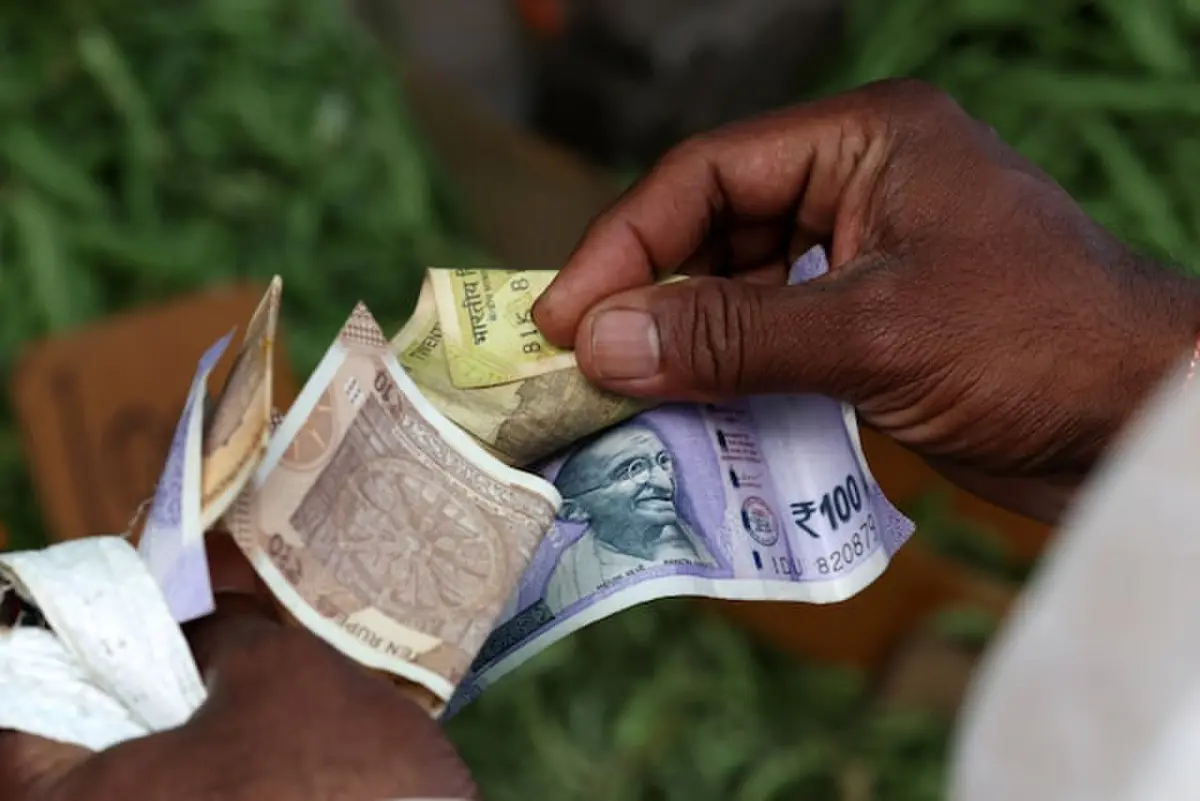
MUMBAI: The Indian rupee snapped a six-session winning run on Monday, amid thin trading volumes, as dollar bids from state-run lenders outweighed the recent positive momentum.
Indian foreign exchange markets will be closed on Tuesday for a local holiday.
The Indian rupee hit a six-month high of 93.69 per dollar, extending last week’s rally of more than 1% but closed slightly lower at 93.9275, from the previous close at 93.9050.
Some traders said state-run banks’ dollar purchases could be on behalf of the central bank, whose recent measures have helped address the persistent supply-demand imbalance in the foreign exchange market.
A decline in crude oil prices alleviated pressure on the Indian currency, with foreign investors returning to equities.
Emkay Global’s Madhavi Arora expects the Reserve Bank of India to use any sustained improvement in inflows to rebuild its foreign exchange buffers rather than allow a sharp appreciation in the rupee.
The central bank’s sizeable net short forward position and India’s continuing current account funding needs are likely to cap the currency’s upside, she said.
The RBI’s net short dollar position in the forward market ballooned to an all-time high of nearly $240 billion in September, leaving it with substantial future dollar commitments.
“The US dollar has strengthened following a stronger-than-expected October jobs report,” said Amit Pabari, managing director at FX advisory firm CR Forex.
US non-farm payrolls increased by 165,000 in October against expectations of 65,000, pushing the US 10-year yield higher. A Reuters poll shows US retail inflation likely stood at 3.9% on-year in October. The data is due on Tuesday evening.
“A higher-than-expected reading could strengthen expectations of another Federal Reserve rate hike and provide fresh support to the dollar,” CR Forex’s Pabari added.
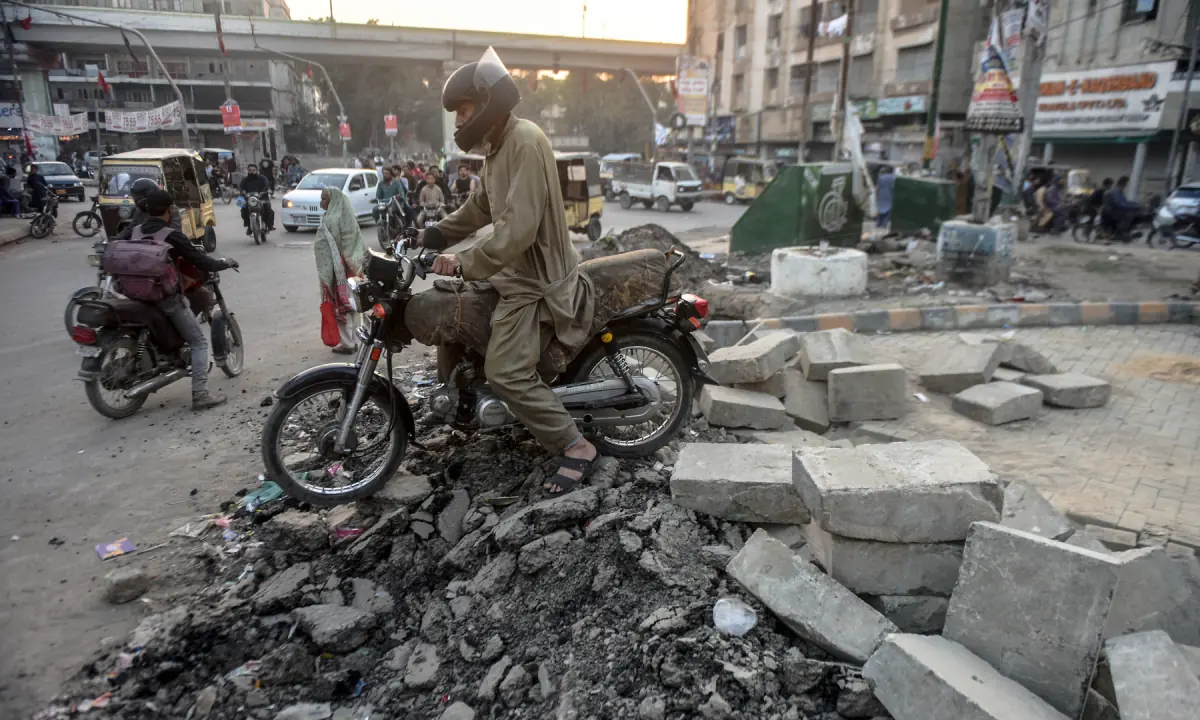
For thousands of Karachi’s industrial workers, the daily commute is less about distance and more about endurance. Muhammad Ali leaves his Baloch Colony home an hour before his 8am shift at a SITE area pharmaceutical plant. While he can zip 14 kilometres to Nazimabad in 15 minutes via the Karsaz corridor, the final 6km crawl to his factory takes twice as long, choked by potholes and gridlock. Across town in the Korangi Industrial Area, refinery worker Ishtiaq Ali loses four hours a day to public transport navigating endless construction and broken roads.
In Pakistan’s largest industrial city, crumbling infrastructure and traffic bottlenecks have turned the simple act of going to work into an exhausting daily ordeal.
The strain is not felt by workers alone. Every day, fleets of heavy vehicles transporting raw materials and finished goods through Karachi’s industrial zones – from SITE and Korangi to Landhi, North Karachi, and Federal B Area – are trapped in hours of gridlock.
For the thousands of enterprises powering the nation’s economy, these dilapidated roads are more than a nuisance; they are a direct hit to the bottom line, bleeding capital through inflated fuel bills, damaged cargo, and costly delays.
Dilapidated roads are inflicting huge financial losses on industrialists through rising fuel costs, longer travel time
But commuting is only one of the problems confronting the city’s industrial zones. Poor sanitation, water shortages, ineffective waste-disposal systems and deteriorating drainage networks have added to the difficulties faced by businesses and workers. Yet the condition of the infrastructure serving these industrial hubs raises questions about whether essential public services are keeping pace with their economic importance.
Earlier last month, the situation compelled Karachi’s industrial, business and trade community to come together and openly voice concerns over, what they described as, the economic cost of civic mismanagement that is driving up production costs and undermining competitiveness.
At a meeting, representatives of Karachi-based trade bodies and industrial town associations questioned how the country’s commercial capital that contributes around 67pc of federal revenue and 54pc of national exports “continues to suffer from crumbling roads, acute water shortages, unreliable utilities, deteriorating sewerage and rampant street crime”.
The condition of the infrastructure serving the industrial hubs raises questions about whether essential public services are keeping pace with their economic importance.
While calling for an urgent, coordinated drive to “rescue Karachi from its deepening civic and economic crisis”, Zubair Motiwala, the chairman of Businessmen Group, has made it clear that their criticism was not aimed at creating any political or administrative controversy, but it was for a liveable, secure and economically competitive Karachi.
However, an industrialist, who attended the meeting but doesn’t want to be named, says that the participants openly expressed their frustration with the PPP administration in the province and lamented that despite ruling Sindh for the past 18 years, the party has ignored the infrastructure that is still in a shambles.
“The seriousness of the provincial government can be gauged from the fact that it had, in December 2025, approved over Rs9 billion for urgent road repairs and infrastructure maintenance in Karachi’s industrial areas, but even after 10 months, the work remains incomplete or has not even begun.”
The industrialist was referring to the allocation for the uplift of industrial areas by Sindh Chief Minister Murad Ali Shah.Recently, Korangi Industrial Trading Estate CEO Saleemuz Zaman highlighted the urgent need for sewerage and infrastructure improvements in areas adjoining the main roads of his industrial estate at the groundbreaking ceremony of the project to improve infrastructure. “The infrastructure challenges are so extensive that the Rs2bn allocation is insufficient to address all the requirements,” he told the participants in the ceremony.
Karachi Mayor Murtaza Wahab assured the KATI members that the government would further increase the allocation in the next financial year as it knew the provision of quality roads, improved drainage systems and modern infrastructure would not only facilitate industrialists but also strengthen commercial activities, create employment opportunities and contribute to the national economy.
Industrialists have identified institutional incompetence, weak accountability and administrative failures as basic reasons behind the city’s longstanding problems like road conditions, traffic diversions, water supply, drainage and waste disposal. They call for timely completion of projects, improved coordination among the relevant authorities and oversight for effective service delivery.
In the words of KATI’s Deputy Patron-in-Chief Zubair Chhaya, the city’s industrialists need a coordinated and apolitical campaign to resolve worsening civic and economic issues where the priority must be implementation and accountability.
Although the Sindh government is taking measures to resolve the chronic issues, until there is timely progress on the infrastructure projects, workers will continue to face lengthy commutes and industries will continue to experience cost and time overruns in transporting raw materials and finished goods.
Published in Dawn, The Business and Finance Weekly, November 9th, 2026
ISLAMABAD: The Drug Regulatory Authority of Pakistan (Drap) has urged consumers to use its Mehfooz Dawa application to verify the authenticity and prices of medicines as part of its efforts to curb the sale of counterfeit drugs.
About 800 pharmaceutical companies and more than 90,000 medicines were registered with Drap, Sajid Shah, a spokesperson for the Ministry of National Health Services, told Dawn.
Shah said Drap had set up a 2D barcode system that allows consumers to scan medicine packs and ensure they receive safe, high-quality and effective products.
The centralised track-and-trace system for pharmaceutical products distributed across Pakistan became operational on October 9, he added.
Furthermore, according to the spokesperson, the system will enable authorities to track medicine supply chains and make it easier to recall products in case of complaints or quality issues. People with smartphones will also be able to scan barcodes to view product details and prices.
The idea of introducing a barcode system was first proposed in 2015. It was approved by the federal cabinet in 2017; however, bureaucratic delays prevented its implementation.
Earlier, Federal Health Minister Mustafa Kamal, taking notice of the delay, announced that the system would be launched as soon as possible.
Earlier this year, Drap had set October 1 as the cut-off date for launching the barcode system to curb the sale of counterfeit and expired medicines and eradicate black marketing.
Shah said the Ministry of National Health Services was “dedicated” to ensuring that citizens had access to high-quality and effective therapeutic products.
DUBAI: Iran defended a proposal on Monday to restart peace talks in as few as two days as the most reasonable offer on the table, after US Secretary of State Marco Rubio called some of Iran’s conditions “outrageous and ridiculous”.
“Is it unreasonable that Iran demands that US illegal sanctions and its naval blockade must be lifted before negotiations start and that the war should end on all fronts?” Foreign Ministry spokesman Esmaeil Baghaei told a weekly press conference in response to Rubio’s remarks.
Iran has made the offer to shorten the time to restart talks from an earlier seven-day proposal, which calls for Washington to first meet conditions including halting hostilities, lifting a blockade and waiving sanctions.
Baghaei also said US pressure on Iraq to close most of its borders with Iran should not affect bilateral ties with Baghdad, after Iraq’s foreign minister said Washington was pushing for such a move.
Baghaei dismissed a US military task force aimed at restricting Iran’s land trade as a diversion following President Donald Trump’s Republicans’ losses in midterm elections.
Women’s football in Pakistan has seen more milestones in 2026 than in a long time. In January, the country’s first women’s national futsal team took part in the South Asian Football Federation (SAFF) Futsal Championships in Bangkok.
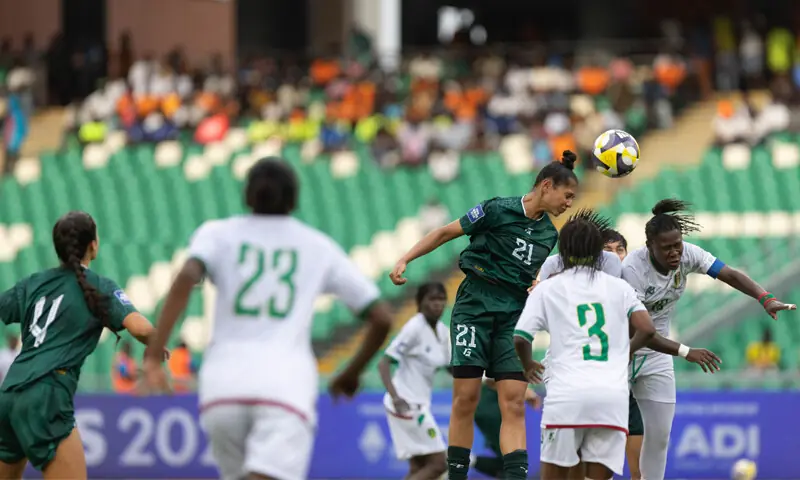
In April, the women’s football team made its historic debut at the FIFA Series in Côte d’Ivoire. In October, Pakistan and Iran signed a three-year memorandum of understanding to boost cooperation in football and futsal for youth, women and men.
Just before that, in September, the Pakistan Football Federation (PFF) finalised its Women’s Football Strategy 2026-30, a five-year plan for the game. This writer spoke to players, coaches and PFF officials to understand both the promise of the strategy and the challenges that may stand in its way.
Part of the new activity stems from a change of leadership at the PFF. The president’s election in May 2025 marked a turning point for Pakistani football after years of governance trouble, during which a FIFA-appointed Normalisation Committee ran the federation’s affairs.
Even so, advancing the women’s game will not be easy. According to the World Economic Forum’s Global Gender Gap Index 2026, Pakistan remains among the countries with the lowest gender parity in the world. That wider inequality matters: securing domestic resources for women’s football may prove even harder than it is for the men’s game.
The strategy
The strategy is promising. Beyond strengthening leadership and giving the women’s national team more competitive opportunities, it identifies three development priorities: getting more girls into football academies and clubs, expanding and strengthening domestic competitions, and building a nationwide system for identifying and developing talent.
To widen participation, the PFF plans a nationwide grassroots programme through schools, clubs and academies, with age-based competitions for girls between seven and 15.
The focus, it says, will be on “fun, fundamentals and inclusion”. The federation also intends to hold District and Regional Youth Club Championships (U-17), with the best teams qualifying for national events, as well as City-Based Schools Championships in at least three major cities.
A tiered women’s league at district, provincial and national levels would then provide regular matches, help spot talent and raise standards. This would be paired with a National Talent Identification Framework, under which trained scouts would pick out promising players at district, regional and national events and track their progress in a central database.
Where the game stands
The problems the strategy seeks to address are well known. Interviews pointed to three main bottlenecks: too few chances to play, unclear routes to higher levels of competition, and poor preparation and irregular fixtures for the national team.
Few chances to play
The shortage of play is not limited to football. One report suggests children in Pakistan get less time for play at school than their counterparts elsewhere in South Asia. At a recent training of 57 master trainers organised by the PFF under its Football in Schools initiative, fewer than 20pc came from girls’ schools.
Outside school, football and futsal compete with property developers and other sports for scarce space. Where grounds are available, boys are often given priority. Women’s sport also ranks low among social priorities and still meets disapproval in many quarters.
“For a young girl, external voices are so loud, it’s hard to stand in your own space,” a former national player said.
No clear pathway
Even for girls who play at school, in academies or at clubs, the road ahead is murky, and parents may feel the time and money are being wasted.
“Parents often ask, ‘khel kar kya karay gee?’” the same player recalled.
Without a visible competitive ladder, coaches have to get creative to keep players, and their families, motivated. They lean on the few national competitions that exist and the chance of university sports scholarships.
“All of my girls want to play at the highest level that Pakistan has to offer,” said a youth women’s coach.
Talented younger girls are sometimes moved into older age groups, where they face physically more developed senior women. That can spur some on, but others lose heart when ambition collides with physical reality.
Results over development
Players picked for the national team get inconsistent coaching. Training tends to be dictated by ad hoc international fixtures, and players rarely get the chance to train and play together regularly, leaving them short of the match experience and cohesion needed at the international level.
A parallel and equally opaque route exists for diaspora players, who live and train abroad and are brought into the national side without necessarily featuring in domestic competitions or camps. This leaves domestic players unsure how selections are made and what they must do to progress.
“The only consistency is the inconsistency of how things are done.” — former national player
From strategy to action
The strategy begins to tackle some of these problems. But it is an ambitious agenda with no clear resource allocation or budget, which raises doubts about delivery. Experience suggests that available funds will decide which activities get priority.
To ensure implementation is guided by evidence and players’ needs, rather than the interests of particular lobbies, the PFF should pick a handful of practical priorities for the first phase. Three stand out.
First, bring continuity and predictability to governance and competition. The PFF should publish an annual calendar of domestic events across youth, men’s and women’s categories. A reliable calendar would let players, coaches, clubs and families plan ahead, and show that the federation is committed to regular competition.
Second, communicate better and be more transparent. The PFF should update its website, make sure the FIFA Connect platform works properly, and align messaging among its officials. Regular social media updates would also help nurture the emerging women’s football ecosystem and make it easier for stakeholders to understand what the federation is doing and how to take part.
Third, set up youth national teams for girls. These would create a pipeline to the senior side and give younger players something to aim for. Coaches should be properly trained, and international safeguarding principles must be upheld at all times.
Better senior coaching and clearer recruitment routes for the national team, including trained scouts and more systematic links with diaspora players, could lift Pakistan’s international performance. But such long-term gains rest on a strong foundation: more girls playing regularly, with real chances to develop. The immediate focus should be on building the game from the bottom up.
“We want to ensure that more girls play football from a young age,” a PFF official said.
The hurdles facing girls also differ across urban, semi-urban and rural settings. The social barriers for a girl in rural Pano Aqil are not the same as the access problems confronting one in inner-city Orangi or Saddar. The PFF’s outreach must recognise this and ensure opportunities are distributed fairly.
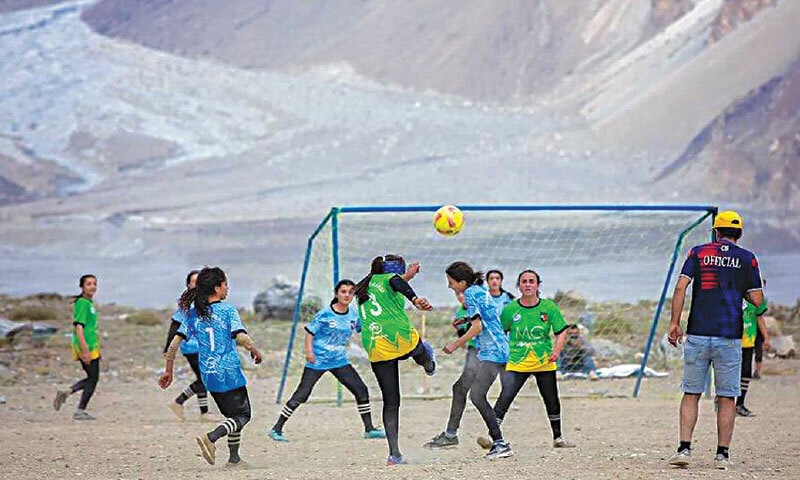
Players in action during a Gilgit-Baltistan Girls Football League match in Passu, Hunza in 2022.
The missing link: a league
Management, coaches and players all identify the same gap: there is no proper development structure built around an established women’s league. The strategy addresses this directly. The PFF’s SHE League (under-23) and SHE League Juniors (under-15), played in Islamabad in October, show the federation is trying to build some structure. But details on the design and frequency of the competitions remain thin.
A well-run league does more than produce a winner. It gives players regular matches, helps coaches assess performance, and provides a framework for developing and identifying talent. What role the PFF should play in organising, regulating and supporting women’s club football is still an open question. Neighbouring countries offer different models.
The Bangladesh Football Federation (BFF) has relied on a national women’s league of roughly 11 clubs. Reports have raised concerns about its competitiveness, including claims that the concentration of national team players at one better-resourced club has put other clubs off.
The BFF’s licensing rules also require men’s clubs to have a youth women’s team in official competitions, a requirement that can link club football to national-team development if properly implemented and monitored.
The All India Football Federation (AIFF) has a more tiered system, with the Indian Women’s League (IWL) at the top, a second division, and U-15 and U-17 leagues.
State and regional competitions add further levels at which players and teams can progress. In September 2026, the AIFF announced a 15-year partnership with Capri Sports to strengthen the IWL and IWL 2.
Here, the federation organises and regulates competitions, clubs manage their teams, and a commercial partner is expected to develop the league’s revenue potential.
The Football Federation of the Islamic Republic of Iran (FFIRI) plays a direct role in organising and regulating women’s club football. The league has three divisions and is run by the Iran Football League Organization, which operates under the FFIRI, placing domestic competition within a wider framework for player development and talent identification.
However, restrictions on spectators and media coverage limit the visibility, and commercial potential, of the women’s game.
These examples show the range of choices open to the PFF as it defines its own role and those of clubs and commercial partners. Several questions must be answered first.
Does it have the capacity to oversee or run such a league? What would it cost, and how would it be financed? Which clubs would take part, and what resources could they draw on? Should there be youth and premier divisions? How would players’ health and safety be ensured?
Answering these will take time. In the interim, clubs and regional associations must register with FIFA Connect, organise women’s matches and keep raising public awareness.
The women’s game cannot be left to the PFF alone. Players, parents, clubs, academies, private-sector funders, men’s clubs and affiliated associations all have a part to play.
Turning ambition into progress
Regular leagues for youth, women and men are essential to expanding competition and building a sustainable football ecosystem. Initiatives such as the SHE League, FIFA Connect and Football in Schools can help identify stakeholders and sharpen coaching skills. But they cannot substitute for sustained institutional commitment from the PFF.
Until the federation shows that women’s football is a priority, and that the priority will last, these initiatives may not be enough to repair the trust eroded among generations of Pakistani players and coaches by repeated governance breakdowns.
As one former player put it: “The only consistency is the inconsistency of how things are done.”
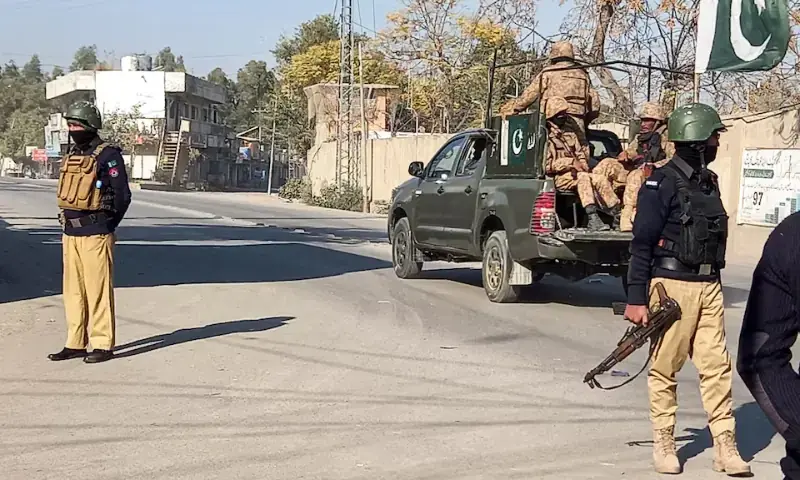
Security forces conducted an intelligence-based operation (IBO) in Muzak village, on the southern outskirts of Mir Ali in North Waziristan, Khyber Pakhtunkhwa, neutralising two terrorist hideouts, the military’s media wing said on Monday.
During the operation, troops “sanitised” the hideouts belonging to the India-sponsored Fitna al-Khawarij, the military’s media wing said.
Fitna al Khawarij is a term the state uses for terrorists belonging to the banned Tehreek-i-Taliban Pakistan.
According to the Inter-Services Public Relations (ISPR), security forces recovered a huge cache of prepared improvised explosive devices (IEDs), explosive preparation material, weapons, and ammunition from hideouts, which were established inside mosques.
The statement added that the terrorists had “deliberately established hideouts in Masajid to store explosive materials and also were running torture cells there,” observing that, “this reprehensible desecration of places of worship by Indian proxy Fitna Al Khwarij serves yet another clear evidence of their utter disregard of fundamental teachings of Islam.”
ISPR maintained that the terrorists, who it had said were facilitated by the Afghan Taliban, had no connection with Islam and their “perverted interpretation and misuse of our great religion is unacceptable and fully rejected by proud and righteous people of KP and Pakistan”.
Moreover, a sanitisation operation was “being conducted by brave soldiers of Pakistan security forces to eliminate any other Indian-sponsored terrorist hideouts in the area,” ISPR said.
“Relentless counter-terrorism campaign under vision Azm-i-Istehkam by security forces and law enforcement agencies of Pakistan will continue at full pace to wipe out [the] menace of foreign-sponsored and supported terrorism from the country.”
President Asif Ali Zardari paid tribute to the security forces for the successful IBO, praising their “professionalism”.
“Using mosques to store explosives and as centres of violence is a blatant violation of Islam’s fundamental teachings,” he said on X.
“Terrorist elements operating with the support of the Afghan Taliban have no connection to Islam. Arbitrary interpretations and misuse of religion are unacceptable,” the president stressed.
Meanwhile, KP Governor Faisal Karim Kundi described the incident as “deeply distressing” while also praising the security forces for the successful IBO, Pakistan TV reported.
The governor also called for “intensified” IBOs to restore peace across KP and reaffirmed his support for security forces in their efforts to bring lasting peace to the province, Pakistan TV stated.
KP and Balochistan have been witnessing terrorist attacks and security challenges for a long time.
The country’s security environment continued to show considerable volatility from October 30 to November 5, 2026, with renewed terrorist activity in parts of KP and the former tribal districts, alongside intensified counterterrorism operations and changing patterns of militant violence, according to Pakistan Institute for Conflict and Security Studies (PICSS).
Per the latest PICSS Weekly Insight, 49 militant attacks were recorded nationwide during the reporting period, compared with 31 in the preceding week. These incidents resulted in 25 fatalities and 21 injuries.
On October 8, security forces killed nine terrorists in an IBO in North Waziristan, while a day earlier, 18 terrorists were eliminated in separate engagements in KP and Balochistan.
BEIJING: A fire on Sunday at a high-rise building in Taiyuan, the capital of China’s northern province of Shanxi, killed at least 14 people, the official Xinhua news agency said on Monday.
State media said 25 people were still in hospital, nine with serious injuries, citing authorities after the fire broke out on Sunday evening in the building on a busy downtown main road.
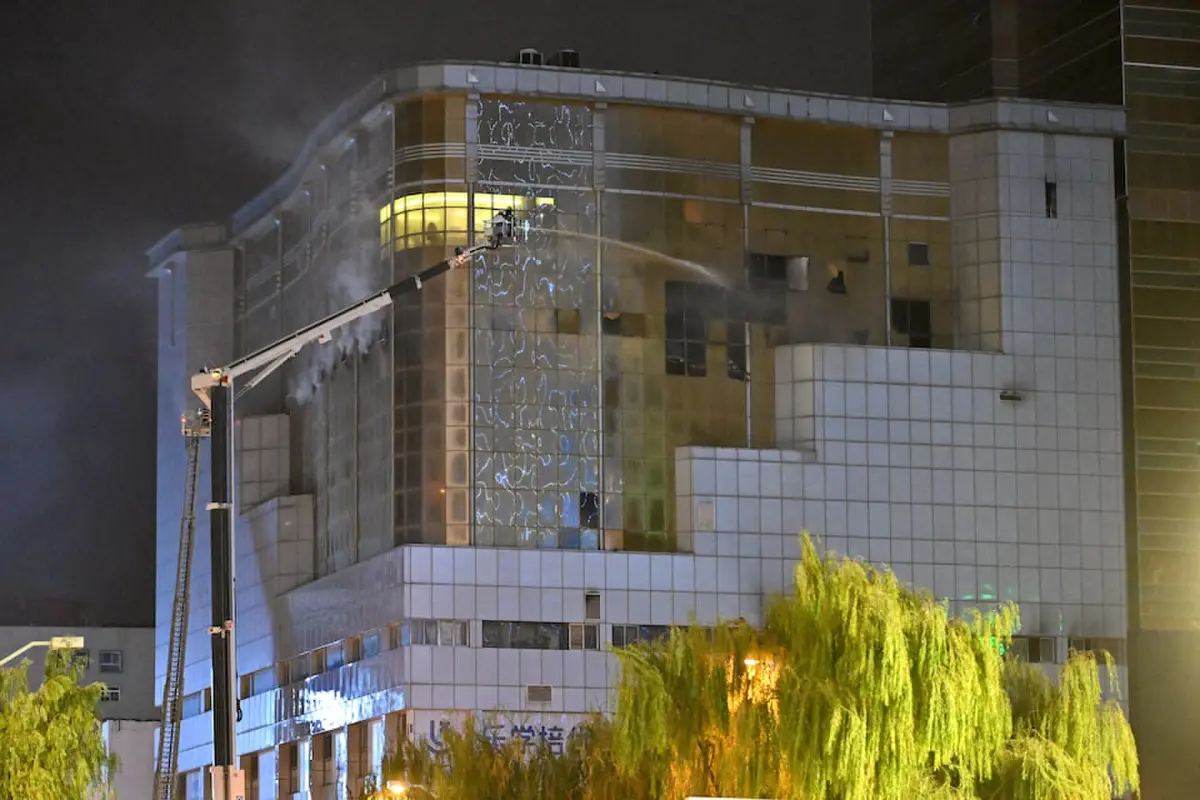
Smoke billowed over the 40-storey structure as firefighters poised on cranes outside fought flames that spread upward from a lower annex, video images circulated online and verified by Reuters showed.
The fire appears to have started around the fourth floor of the annex before spreading to the eighth and ninth floors, which house a hotel, the state broadcaster said.
The entire building is a mixed-use commercial and residential property with several hotels, short-term rental apartments, smaller venues as well as tutoring centres, the report said.
The fire was put out after about two hours and authorities said rescue operations wrapped up by 8:30 p.m. on Sunday night, with 38 people taken to hospital.
Authorities are investigating the cause of the fire in the northern manufacturing hub, state media added.
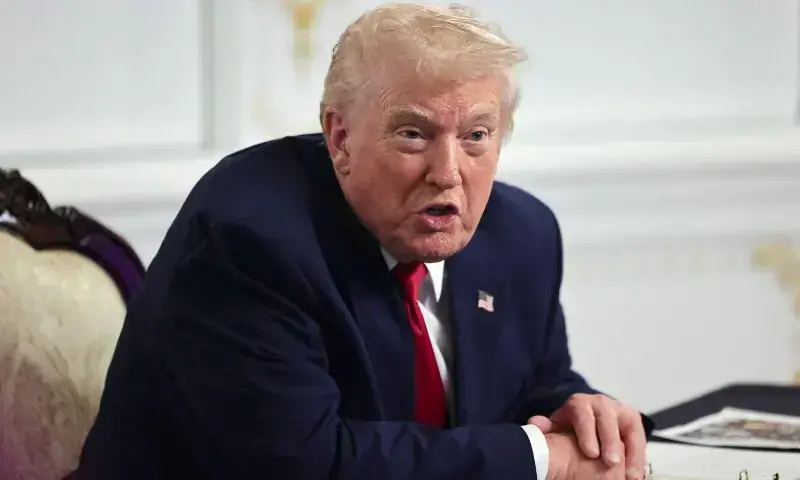
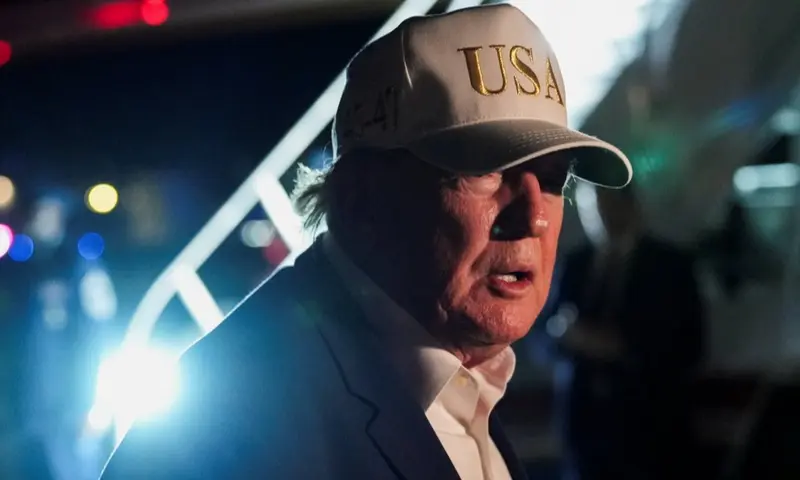
US President Donald Trump cast doubt on renewed fighting with Iran, telling CNN it was “highly unlikely”, ahead of a meeting with mediator Qatar’s prime minister on Monday.
Trump has threatened to resume strikes in recent weeks, with US media reports suggesting that hostilities could restart after last Tuesday’s midterm elections.
The president told CNN in an interview on Sunday that renewed fighting was “highly unlikely,” but warned that his decision “depends on whether or not they sign a very strong agreement.”
“I would if necessary, but we hit them really hard. I hit them so hard. You don’t know how hard I hit them,” he said.
Trump is scheduled to meet Qatar’s Prime Minister Sheikh Mohammed bin Abdulrahman Al Thani, who is also the country’s foreign minister, at the White House on Monday.
The meeting will be Trump’s first with a foreign leader since a massive midterm loss that saw his Republican Party lose control of Congress.
Iranian Foreign Minister Abbas Araghchi suggested on Sunday that peace talks had been paused while the political fallout of the vote was being assessed.
“For the past few days, there has been no more travel (by mediators), and the reason for this is the shock that the election results in the United States have caused to everyone,” Araghchi told state television.
“We now have to see how long it will take for them to digest these results, in order to determine how we are going to move forward,” he added.
‘They had enough’
Trump has acknowledged that the highly unpopular war on Iran — which began with US-Israeli strikes in late February — was at least partially responsible for the Republicans’ defeat.
Araghchi said on Monday that the US president “clearly recognises that the vast majority of Americans are disgusted with Israel.”
“Americans are evidently sick and tired of Israel bamboozling US administrations into forever wars,” Araghchi said on X. “They had enough. So has our region.”
In Sunday’s CNN interview, Trump once again suggested that the economic pressure Iran is under will force its leaders into accepting the United States’ terms.
“They’re a failing nation. It just came out, you saw this year, 301 per cent inflation,” Trump claimed.
“They’re withering away financially. We’ve hit them militarily. We could finish them off.”
Iran’s official figures put inflation at nearly 90pc year-on-year in September.
Iranian state television said the island of Qeshm in the Strait of Hormuz was attacked overnight on Sunday, hours after the official IRNA news agency reported two explosions there.
Various regional powers, including Qatar and Pakistan, have been trying for months without success to bring a definitive halt to the war.
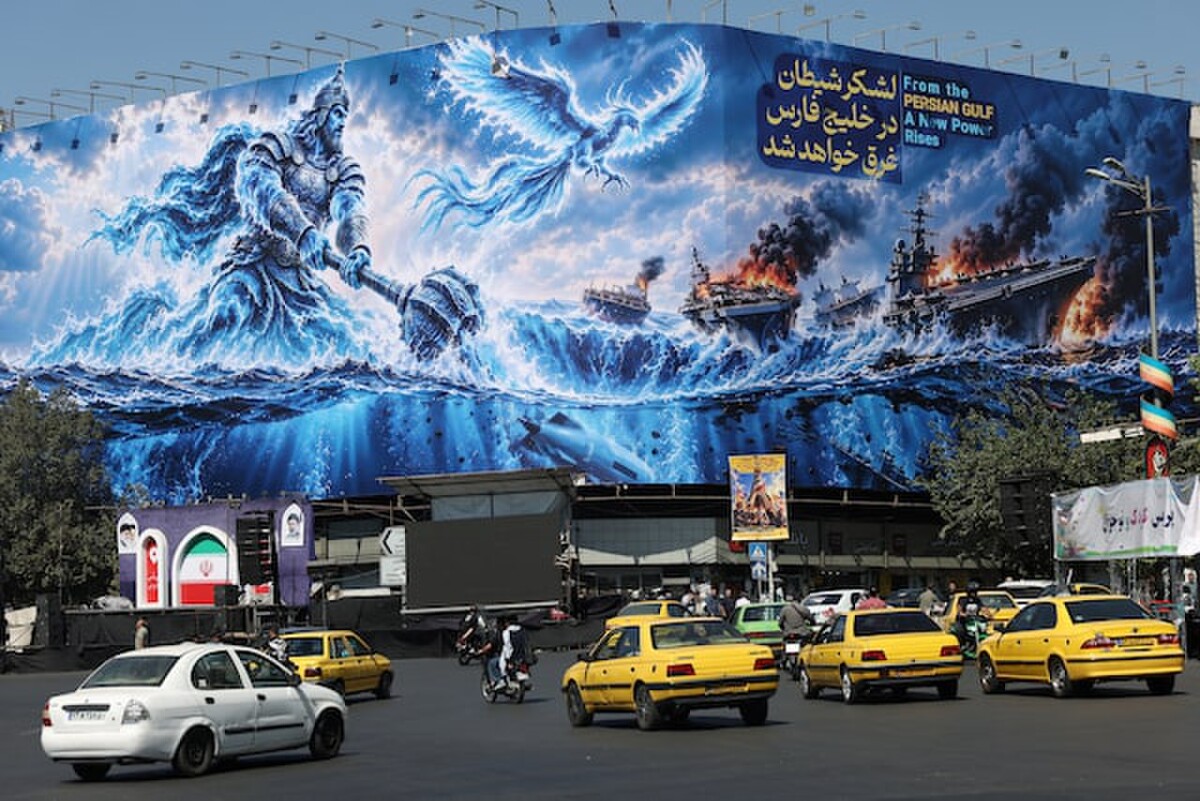
Outright fighting has largely subsided, but Iran continues in its efforts to blockade the Strait of Hormuz, vital to global energy supplies, while the US Navy maintains its own counterblockade of Iranian ports.