Author: Theph

  • Reasoning outsourced: the limits of artificial intelligence in the law

    Reasoning outsourced: the limits of artificial intelligence in the law

    Welcome to the era of reasoning outsourced to Artificial Intelligence (AI). Outsourcing reasoning to AI is just a change of technique. It leaves the lawyer’s obligations exactly where they were, and it makes those obligations easier to breach.

    The claim that AI will replace lawyers is half right. It will dismantle the junior law associate as a unit of cheap, typed drafting output, which is how many chambers still price juniors. It will not remove the need for a seasoned lawyer – an accountable human between the model and the court file, and Pakistani law provides no mechanism to make a machine accountable.

    The fundamentals are legal, not sentimental. The profession’s core duties are written into the legal system’s structure. The precedent system depends on authenticity. Article 189 of the Constitution makes decisions of the Federal Constitutional Court and the Supreme Court of Pakistan on points of law binding on other courts, and Article 201 makes High Court decisions on points of law binding on subordinate courts. A cited authority that does not exist, or says something it does not, corrupts the machinery that makes those articles work. Article 10A, which guarantees a fair trial and due process, is undermined whenever a bench decides on invented law. Responsibility sits squarely with the human signatory.

    Under Order VI Rule 15 of the Code of Civil Procedure, pleadings are verified by the party, but they are drafted and filed through counsel. Section 35-A empowers the court to award compensatory costs for false or vexatious claims and defences. The Legal Practitioners and Bar Councils Act of 1973 and the rules framed under it give Bar Councils disciplinary jurisdiction over professional misconduct. None of these provisions carves out an exception for “the software drafted it.”

    Criminal exposure is narrower, and it is worth being precise about it. Sections 193 and 196 of the Pakistan Penal Code, on false evidence and using evidence known to be false, hinge entirely on intent. A lawyer who honestly files a hallucinated citation out of simple oversight may be negligent, but is not guilty of perjury. However, a lawyer who knows generative tools routinely invent cases, deliberately chooses not to verify them, and files them anyway crosses from mere negligence into reckless misrepresentation before the court.

    Contempt under Article 204 remains a further risk if a bench concludes the court was knowingly misled. Hallucination bites harder here because Pakistani law reporting is fragmented across PLD, SCMR, CLC, YLR, PCrLJ, and others, and a model can produce a plausible-looking citation in any of those formats without any case behind it.

    Statutes are amended and the amendments are unevenly covered in AI training datasets. The Phalia episode shows this in practice. In 2023, an Additional Sessions Judge in Phalia, Muhammad Amir Munir, experimentally consulted ChatGPT-4 while deciding pre-arrest bail for a 13-year-old accused, after the court had already decided to grant bail on the facts, as reported by Gulf News. According to news reports, the judge put 18 questions to the tool and it gave wrong answers twice, requiring him to manually correct it on the amended statutory age provisions connected to Section 83 of the Pakistan Penal Code. A judge who already knew the law caught the errors; a tired junior working from the tool’s output at 11pm before a morning cause list may not.

    What the courts have actually said begins with the Supreme Court of Pakistan. In Ishfaq Ahmed v. Mushtaq Ahmed, decided on March 13, 2025 (C.P.L.A. No. 1010-L/2022, reported at 2026 SCLR 41, 2025 SCP 112), Justice Syed Mansoor Ali Shah and Justice Aqeel Ahmed Abbasi used a rent dispute to address AI in the judiciary. While these observations are framed as recommendations within a rent appeal – meaning they serve as persuasive guidance (obiter dicta) rather than a formal rule bound under Article 189 – they set a clear judicial direction.

    The judgment treats AI as an auxiliary resource only, insists that identifiable humans retain ultimate responsibility, and describes hallucination as fabricated output produced by statistical pattern-matching rather than fact-checking, citing a study where GPT-4 fabricated legal references in 58% of cases.

    It strongly recommended that national judicial bodies consider developing comprehensive guidelines on AI usage. National guidelines of the kind that judgment called for now exist. The National Judicial (Policy Making) Committee approved the National Guidelines for Use of Artificial Intelligence in Judicial Institutions of Pakistan at its 57th meeting in February 2026, published by the Law and Justice Commission.

    Refined by the National Judicial Automation Committee chaired by Justice Muhammad Ali Mazhar, their core is human oversight. Under Clause 4.1, AI may assist judicial functions but not replace the judge’s final decision, requiring human validation checkpoints at which the judge records independent reasoning. Clause 4.2 requires users to identify portions of a document generated by AI and explain how that material was verified. Clause 4.3 protects confidential data, Clause 4.4 provides for training, and Clause 5.5 prefers locally developed systems trained on Pakistani legal data. Clause 5 outlines permitted uses including legal research, initial summaries, sample drafts, case management, and translation, while Clause 2 makes guidelines applicable across superior and subordinate courts and tribunals.

    The gap is on the other side of the bar. While these guidelines govern judicial institutions, they do not directly bind advocates or Bar Councils. Yet the test they set for judges – to identify what the machine produced and explain how it was verified – is the very standard lawyers lack, even though counsel supply most of the authorities a court relies on. It is a ready-made template for a Bar Council rule. Comparative authority shows that courts sharing our common-law heritage are moving quickly. In Pooja Ramesh Singh v. J&K Bank (2026 INSC 668), decided July 2, 2026, India’s Supreme Court adopted zero tolerance for producing or citing unverified AI-generated precedents, asking the Bar Council to frame strict disciplinary norms. Because both jurisdictions share identical procedural and statutory foundations, its reasoning carries strong persuasive weight: citing fake legal authority without verification amounts to professional misconduct, and a judicial decision resting on hallucinated material is no decision at all.

    The same reasoning appears in Mata v. Avianca in the United States, where attorneys were sanctioned for fake ChatGPT citations, and in the English Divisional Court decision Ayinde v. Haringey LBC (2025 EWHC 1383 Admin), which held that freely available generative AI tools cannot conduct reliable legal research. As technique changes, verification becomes the primary skill in legal practice. Every authority gets pulled from the actual report, through the Supreme Court’s website, High Court portals, or a verified subscription database. The lawyer must read the passage, confirm it supports the proposition, and confirm it has not been overruled or distinguished.

    This was always the professional standard. It now has to be explicitly built into daily practice, because the temptation to skip it has never been greater. Evidentiary standards are shifting as well. Article 164 of the Qanun-e-Shahadat Order, 1984 and the Electronic Transactions Ordinance, 2002 recognise electronic records and modern-device evidence, but they were not drafted for synthetic media. A lawyer who cannot interrogate the provenance and integrity of an audio clip, screenshot or AI-enhanced document will inevitably lose to a counterpart who can.

    Data confidentiality requires a concrete policy. Professional communications between advocate and client enjoy statutory privilege under the Qanun-e-Shahadat Order. Pasting a client’s facts or case details into a public AI tool risks breaching that privilege and compromising client trust. While the judiciary’s own guidelines under Clause 4.3 require litigants’ confidential data to be secured against unauthorised access, law chambers must meet the same ethical standard.

    The duty arises directly from advocate-client privilege and legal ethics, regardless of separate data protection legislation. Chambers should establish written policies specifying which digital tools are permitted to touch client material. Local knowledge becomes the real asset. A model gives generic answers on criminal bail or commercial disputes. A lawyer who knows the Supreme Court’s approach from Tariq Bashir v. The State (PLD 1995 SC 34) onward, the “further inquiry” doctrine governing bail under Section 497(2) of the Code of Criminal Procedure, or how a specific bench treats severe offences, adds what an algorithm cannot. The same applies to leave-to-defend practice under Section 10 of the Financial Institutions Ordinance, 2001, or provincial land-revenue procedure.

    The blunt reality regarding junior associates is that the tasks traditionally handed to entry-level lawyers are the ones language models perform fastest: drafting initial plaints, bail applications, legal notices, summary applications, chronologies, and routine research memos. Chambers billing clients primarily for those manual typing hours will face pressure, and the traditional volume of drafting-only junior positions will shrink.

    The profession should state this honestly instead of offering vague reassurances. However, the associate role is undergoing an evolutionary shift rather than an extinction, for three reasons. First, legal accountability cannot be delegated to software. Courts, regulatory bodies, and clients require a human who can be questioned, trusted, and sanctioned. That human will increasingly be a junior associate whose primary responsibility evolves from typing first drafts to auditing machine outputs, checking original sources, and verifying facts.

    Second, the legal apprenticeship pipeline must remain intact. Pupilage under a senior advocate is both a legal requirement for enrolment and an indispensable custom, because legal judgment is learned by doing routine work under correction. A chamber that automates away its junior lawyers today will face a severe shortage of qualified seniors in ten years. Smart chambers will redesign the apprenticeship so that juniors check AI output against original law reports, handle court appearances and client contact earlier, and participate directly in case strategy.

    Third, language models are notoriously weak precisely where Pakistani practice is most dense: unreported judgments, registry requirements, bench-specific habits, and recent statutory amendments. The national guidelines’ preference under Clause 5.5 for locally developed systems trained on Pakistani legal data points the same way.

    Associates who master localised, procedural nuances retain a decisive advantage over those who merely offer speed in basic drafting. AI has altered how a first draft is produced while leaving untouched who answers for the final product.

    The Supreme Court of Pakistan and the National Judicial (Policy Making) Committee have affirmed that human judgment and accountability cannot be surrendered to a machine, while comparative common-law precedents demonstrate that submitting unverified AI authority constitutes misconduct. Lawyers should treat generative tools as fast, fallible assistants – never trusted unchecked and never permitted to sign a pleading.

    Junior associates will not vanish, but the role of the associate as a high-volume typing engine is over. The practitioners who understand this early will be the ones who maintain their standing.


    The article does not necessarily reflect the opinion of Business Recorder or its owners.

    Source: brecorder

  • Pakistan lose thrilling U19 Asia Cup final to India on last ball

    Pakistan lose thrilling U19 Asia Cup final to India on last ball

    India pulled off a dramatic one-wicket victory over Pakistan to win the ACC Men’s Under-19 Asia Cup, chasing down a challenging target of 338 on the final ball of the match at the Al Amerat Cricket Ground in Muscat on Saturday.

    Mohit Ulva and Chigurupati Venkata held their nerve in a tense finish to guide India to the title after Pakistan appeared to have the match firmly under control.

    India were struggling at 252 for eight in the 42nd over when Manal Chauhan and Ulva revived their hopes with a crucial 57-run partnership for the ninth wicket.

    Chauhan scored 47 off 32 balls, including three fours and three sixes, before being dismissed in the 48th over, leaving India needing 29 runs from the final 16 deliveries.

    With eight runs required in the final over, Pakistan’s Ahmed Hussain conceded five runs in the first five balls, including a wide.

    Ulva then struck a boundary off the final delivery to seal a memorable one-wicket victory for India. He remained unbeaten on 49 off 26 balls, while Venkata contributed 11 off eight deliveries.

    Earlier, Pakistan posted an imposing 337 for nine after being put into bat.

    Usman Khan led the innings with a century, scoring 107 off 111 balls, while Abdul Qadir contributed 80 off 54 deliveries and captain Farhan Yousaf made 63 off 60 balls.

    The three major contributions helped Pakistan build a formidable total, but India kept the scoring in check with Kavya Paresh Patel claiming four wickets, while Venkata took three and Arjun Rajput picked up one.

    In reply, India were given a strong start by captain Lakshya Raichandani, who scored 80 off 101 balls, and Aaryavir Sehwag, who made 58 off 61 deliveries.

    However, Pakistan fought back with regular wickets before Ulva and Chauhan turned the contest around in the closing overs.

    The victory handed India the Under-19 Asia Cup title in a final that went down to the last delivery.

    Source: brecorder

  • Mir Raza murder case: Ex-SHO dismissed over misconduct, mishandling of evidence

    Mir Raza murder case: Ex-SHO dismissed over misconduct, mishandling of evidence

    Former Gulistan-i-Jauhar station house officer (SHO), Kamran Qureshi, was dismissed from service on Saturday over charges of misconduct in the Mir Raza Ali murder case.

    Last month, a joint investigation team (JIT) constituted by the Sindh government recommended an inquiry against Qureshi, who was suspended from duty, over the possible facilitation of the destruction of evidence.

    According to the dismissal order seen by Dawn, Qureshi failed to secure the crime scene where Ali’s body was found and did not call in the Crime Scene Unit (CSU) as per regulations.

    “As a result, the crime scene could not be processed promptly, which caused [a] delay in forensic examination and possible loss of important circumstantial evidence which [is] tantamount to gross misconduct, inefficiency [and] dereliction of duty. Thus, you have rendered yourself liable to be awarded one of the major punishment[s] under the Sindh Police (E&D) Rules, 1988,“ the order read.

    The order further noted that an inquiry was conducted by Central Senior Superintendent of Police (SSP) Muhammad Imran Khan, who observed that Qureshi not only failed to discharge his duties in securing the crime scene and evidence, but did not even visit the site. The Central SSP recommended major punishment.

    The order said that Qureshi also failed to submit a reply to a show-cause notice.

    “He was called in [the] orderly room and heard in person on Nov 13. His oral explanation has been considered and found unsatisfactory, as he could not add any cogent reason to repudiate the allegations levelled against him,” the order read.

    “Therefore, agreeing with the recommendation of [the] inquiry officer, he is hereby awarded major punishment of dismissal from service,” the order said.

    The case

    Ali, a 25-year-old businessman, had gone missing on July 28 after leaving his home in PECHS, and his body, bearing a gunshot wound, was found in the bushes in Gulistan-i-Jauhar a day later.

    Initially, the police built the case around suicide on the basis of the first autopsy, which indicated a bullet entry wound on the chest, and by pointing out business losses and money borrowed by the victim.

    Police surgeon Dr Summaiya Syed had disputed the findings of the first post-mortem conducted by medico-legal officer Dr Osama Sheikh.

    The second post-mortem report termed the findings of the first report “inconsistent” with suicide as the manner of Ali’s death. It said the Exhumation Board was of the unanimous opinion that the death was caused by a gunshot wound to the back.

    Last month, a judicial commission formed to probe the case had pointed out the police’s “epic failure” in their investigation of the case. In its 62-page report, the commission, while severely criticising the police investigation, came to the conclusion that it was a “murder”, and made a host of recommendations, including formation of a joint investigation team (JIT) to probe the case.

    The report was made public by the Sindh government.

    Sindh Home Minister Ziaul Hassan Lanjar announced on Oct 22 that a JIT would be formed in accordance with the recommendations of the judicial commission.

    Day later, the government formed the JIT, led by DIG Irfan Baloch, and asked the Inter-Services Intelligence, Intelligence Bureau, Pakistan Rangers and National Cyber Crime Investigation Agency to nominate senior officers to join the team.

    Earlier this week, the JIT seized the licensed pistol of Ali’s business partner and said that the North Nazimabad branch of the deceased’s food chain had also been sealed for further investigation.

    Source: dawn

  • Fed’s Collins says gradual rate hikes best to manage economic risks

    Fed’s Collins says gradual rate hikes best to manage economic risks

    BOSTON: Federal Reserve Bank of Boston President Susan Collins said on Saturday she supports a steady pace of modest interest rate increases because that path of action better manages economic uncertainties.

    The risks on the real side of the economy were “two-sided”, she said, which has implications for both the Fed’s job and inflation mandates and argues against taking aggressive action to target high levels of inflation.

    Fed’s Collins says more rate hikes are coming, reports

    In such an environment, “my current view is that a kind of steady, gradual approach for monetary policy is appropriate” Collins told reporters at a conference at her bank.

    Source: brecorder

  • Sammons to step down as Zimbabwe’s head coach after UAE tour

    Sammons to step down as Zimbabwe’s head coach after UAE tour

    Zimbabwe head coach Justin Sammons will step down from his role following the current second test against Afghanistan in Sharjah, Zimbabwe Cricket said on Saturday.

    Sammons tendered his resignation, citing a desire to return home to South Africa and spend more time with his family.

    Appointed in June 2024, Sammons guided Zimbabwe to their best-ever finish at a Men’s T20 World Cup, reaching the Super Eight stage at the 2026 tournament.

    “I must thank the Zimbabwe Cricket Board for allowing me the opportunity to work with this team, as well as everyone within Zimbabwe cricket,” Sammons said in a statement.

    “However, it is important for me to now move back home to allow more time with my family.”

    Source: brecorder

  • Major among four soldiers martyred, 24 terrorists killed in Balochistan, KP operations: ISPR

    Major among four soldiers martyred, 24 terrorists killed in Balochistan, KP operations: ISPR

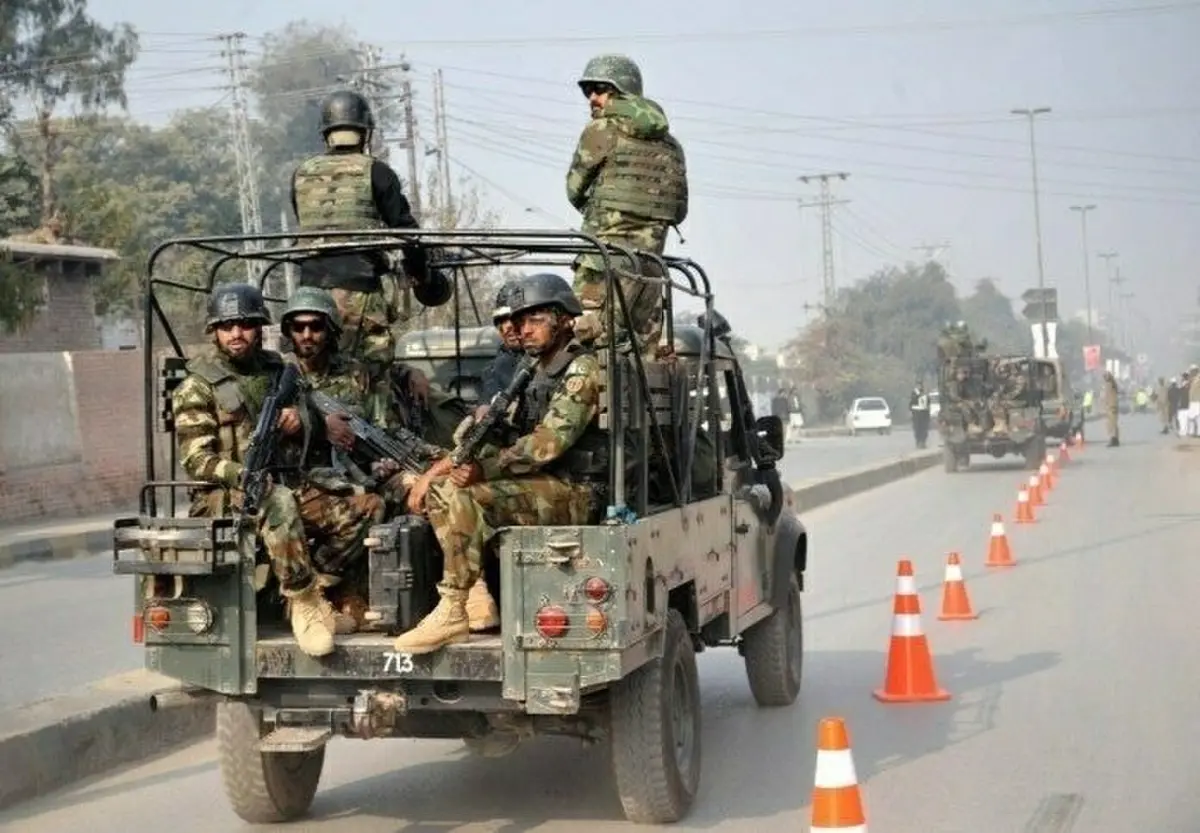
    Security forces killed 24 terrorists, including a suicide bomber and two Afghan nationals, during intelligence-based operations in Balochistan and Khyber Pakhtunkhwa, while four army personnel, including a major, embraced martyrdom in separate incidents, the military’s media wing said on Saturday.

    According to statements issued by the Inter-Services Public Relations (ISPR), security forces killed eight terrorists during an operation in the Kolpur area of Balochistan and another 16 in North Waziristan district of Khyber Pakhtunkhwa.

    In Balochistan, security forces have been conducting multiple intelligence-based operations around Kolpur, Kardagap and Nushki since November 13, alongside area domination and patrolling of the Quetta-Taftan National Highway (N-40).

    During an operation in Kolpur on the night between November 13 and 14, security forces killed eight terrorists, including a suicide bomber, and recovered a large quantity of weapons and ammunition, the ISPR said.

    However, on November 14, terrorists targeted military vehicles on patrol using armed quadcopters, resulting in the deaths of two army personnel.

    The ISPR identified them as Major Omer Minhas Nasir, a resident of Chakwal district, and Havildar Muhammad Adnan Khan, a resident of Kotli Sattian.

    In a separate operation in North Waziristan, security forces engaged multiple terrorist positions in Mir Ali, Datta Khel and surrounding areas.

    Following exchanges of fire, 12 terrorists, including two Afghan nationals, were killed in Ali Khel, while two terrorists each were killed in Mir Ali and Datta Khel, according to the military’s media wing.

    Two more soldiers, identified as Havildar Asmat Ali, 43, a resident of Swabi district, and Naik Aftab Ali, 32, from Mardan district, were also killed during the engagements.

    Weapons and ammunition were recovered from the terrorists, who, according to the ISPR, were involved in several terrorist activities, including attacks on civilians.

    The military’s media wing said clearance operations were continuing in the affected areas to eliminate any remaining terrorists. It added that counterterrorism operations under the government’s Azm-e-Istehkam framework would continue until the threat of terrorism was eliminated.

    The ISPR also said that the terrorist groups were receiving support from India and other hostile intelligence agencies and were using drones, improvised explosive devices and other technologies to target security forces and civilians.

    PM, president pay tribute to martyred personnel

    Separately, President Asif Ali Zardari and Prime Minister Shehbaz Sharif praised security forces for killing 24 terrorists in the two operations and paid tribute to the four personnel who lost their lives.

    According to statements issued by the President’s Media Wing and the Prime Minister’s Office, both leaders commended the professionalism and courage of security forces.

    Zardari expressed condolences to the families of the four personnel, saying their sacrifices strengthened the nation’s resolve to eliminate terrorism.

    The president also reaffirmed his support for continued operations under Azm-e-Istehkam.

    Meanwhile, Shehbaz paid tribute to the martyred personnel and extended condolences to their bereaved families.

    He said the sacrifices of security personnel strengthened the national commitment to eliminating terrorism and reaffirmed that operations against foreign-sponsored terrorism would continue with full force.

    The prime minister added that the nation and law enforcement agencies stood alongside security forces in their efforts to restore peace and stability.

    Source: brecorder

  • NCCIA warns youth against joining illegal call centres for lucrative salaries

    NCCIA warns youth against joining illegal call centres for lucrative salaries

    ISLAMABAD: The National Cyber Crime Investigation Agency (NCCIA) on Saturday warned that loopholes in the existing system are being exploited by illegal call centres, online betting operators and international fraud networks to launder money and trap victims.

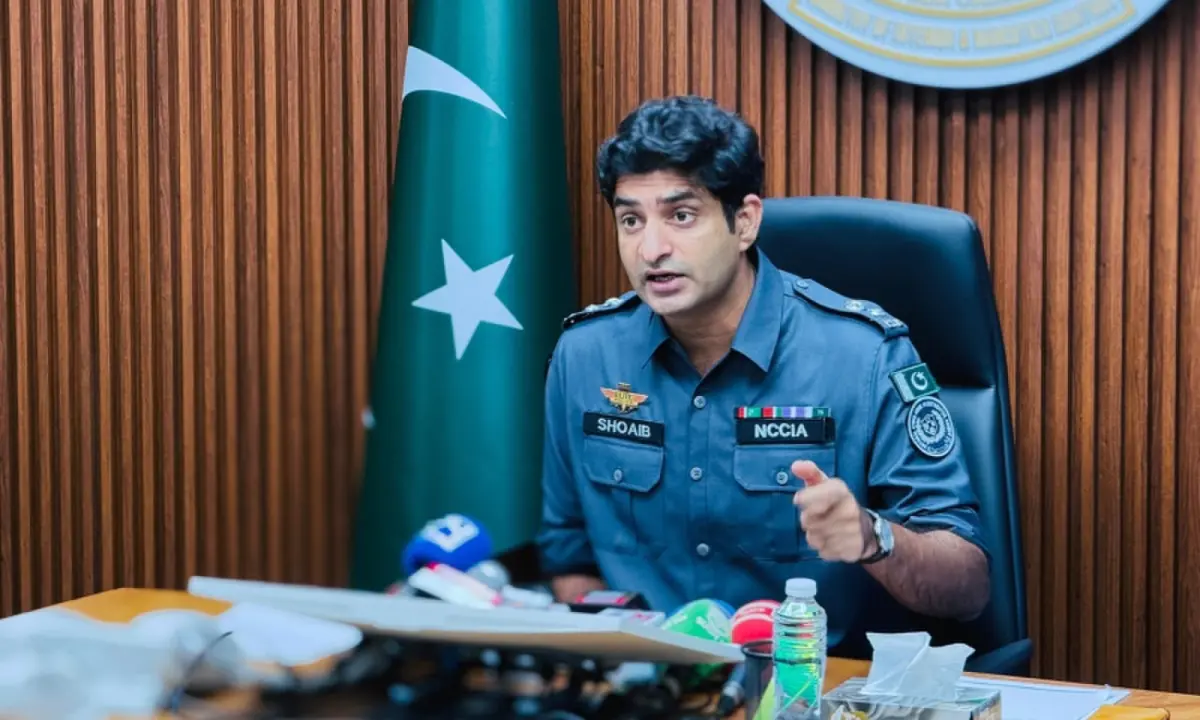
    Addressing a press conference, NCCIA (Islamabad/Rawalpindi) Additional Director Muhammad Shoaib Khan said fake companies were being registered with weak verification, after which bank accounts opened in their names were integrated with loan apps, betting and gaming portals to receive and transfer illicit funds.

    Therefore, he called for stricter rules on company registration and bank account verification.

    The press conference was primarily called to warn educated youths against becoming involved in cybercrime by joining illegal call centres in pursuit of lucrative salaries, urging those seeking jobs with call centres to ask their employers where they are registered and appealing to parents to check whether their children were working at an illegal call centre carrying out scams, fraud or other illicit activities.

    “Ask them what documents the company has, what registration it operates under, which company they work for, which company is providing the loans, where the money is coming from and who is putting money into these applications,” Khan said.

    Acknowledging that young people and university students were engaging in such jobs because the salaries were higher than average, he noted that they risked ending up becoming part of the entire trap and operation.

    “If your son or daughter is arrested in such an operation, the FIR (first information report) becomes part of their record. Tomorrow, when they need a character certificate or apply for a government job, that record can affect them,” the NCCIA officer warned.

    He said the issue concerns merchant accounts provided by banks and the accounts into which money is deposited. A bank account is linked to a company that may already have been registered despite weaknesses in proper verification, standard operating procedures or the Know Your Customer (KYC) process.

    “After the company has been registered, the bank opens an account for it. The operators then take that company’s bank account and integrate it with their online betting or gaming portal,” Khan said, adding that the NCCIA team is working on recommendations to these institutions so that they improve their checking systems.

    The additional director said the agency already raised the issue with senior officials at the policy level, and loopholes identified during investigations and interrogations are brought to light so they can be addressed.

    He said the NCCIA wants to address cases where one-person companies or similar companies were registered and their bank accounts were subsequently used in this way.

    Meanwhile, Khan said that the NCCIA identified the role and other details of each individual involved: who used which computer, what their role was, the extent of their involvement, who trapped victims, made the calls and edited the material.

    “We do not treat everyone as having played the same role. After establishing those roles, we prepare the proper FIR and proceed accordingly,” he explained.

    The NCCIA additional director noted the agency raided two call centres in the Islamabad-Rawalpindi Zone over the past three days.

    In the Rawalpindi raid, 11 people, including 10 women, were arrested, while in the Islamabad raid, 143 people were arrested, including 43 women. He said the centres were carrying out transnational scams and fraud, targeting countries in South Asia.

    Modus operandi

    Explaining the modus operandi, he said the two centres in the latest raids worked differently.

    At the Rawalpindi centre, an elaborate setup posing as the police had been created. The operators would offer loans, and when it was time to recover the loans — or when they had trapped someone and wanted to extract money — they would call and scam that victim.

    The suspects would tell a person that they were either being surveilled or on a hit list. Once someone fell into their trap, they would transfer the person to a setup made to look like the police in Bangladesh, put the victim in contact with someone posing as a police officer and then extort money.

    At the Islamabad centre, they worked in layers; first, they trapped the victim and convinced them to install an application on their mobile phone. Once it was installed, they obtained access to the person’s photo gallery.

    After accessing the gallery and obtaining a selfie, they would issue a loan for a minimal amount. But their real target was to collect the person’s credentials: mobile number, personal information and other data.

    They also obtained information about close family members whom the borrower had identified as guarantors, such as a wife, father, brother, cousin or other family members named as next of kin.

    Once they had collected all these credentials, the case would be passed to senior members. When they had extracted all of the money they could from someone, they would wipe out that person’s account and close the case.

    The second method was to take a person’s selfie and other pictures from their phone gallery and edit them into pornographic material, using the person’s face in what appeared to be a professional manner. They would then start threatening, harassing and blackmailing the victim.

    “Even though the resulting pictures might have been fabricated, the threats were still effective. The victim would be under tremendous pressure, fearing that the images would reach their community or family. Under that pressure, the person would start paying money,” Khan said.

    He said the scammers extracted personal information in the name of loans, manipulated it and used it against the victims, or created sexual content depicting the victim and extracted money through harassment and blackmail.

    Responding to a question about alleged masterminds, Khan said they were present at every call centre and also arrested. After that, the agency would investigate local facilitators, including whoever rented out the building, those who made the arrangements and connections and those who set up the operation through a fake company.

    “We also trace the people who pay the bills and pursue those involved. Then we work at the transnational and international level. We have liaison arrangements with different countries. If a handler or operator belongs to another country, we communicate through embassies and our international contacts,” he noted.

    A global problem

    The additional director further stated that international cooperation was being strengthened because such call centres had become a global problem.

    The NCCIA would handle investigations in Pakistan, while the relevant agencies in the United Kingdom, the United States, China and other countries would handle such matters in their respective jurisdictions.

    Khan added that in a previous Rawalpindi call centre case, foreign nationals were arrested and are in jail, and will face trial according to Pakistani law.

    On the changing methods of call centres, he acknowledged that they were no longer necessarily operating in large plazas. In one house, 10 to 12 people gathered with a computer setup and connected their applications and websites to bank accounts.

    Someone may be sitting in another country while the people here trap the victim, the NCCIA official pointed out. Once the victim starts depositing money into the account, the person in the other country receives the money.

    He noted that the Rawalpindi centre had been operating for about a month, while the Islamabad facility had been established only 15 or 20 days earlier. The floor managers and overall HR managers at both centres were locals, he added.

    “We will investigate and interrogate further to establish who is connected to the back-end operation. We need to find out in which country the application was developed, who developed it and who is handling it,” Khan stated.

    Staying safe

    Speaking about how the youth could tell which call centres are legal, Khan said the first thing is common understanding.

    “If an entire floor is generating sexual content, you know that is illegal. That is a matter of common sense.”

    Khan added that when applying for a job, young people should ask which organisation the business is registered with, who approved it and what approval it received from the Securities and Exchange Commission of Pakistan.

    Moreover, he said many loan applications were operating legally because they have proper permission and follow a lawful procedure. The NCCIA inspects their whole system, including whether the applications are accessing people’s photo galleries, and examines their loan-recovery mechanism. If a borrower does not pay, there are legal channels and procedures for recovery.

    On foreign nationals allegedly involved in cybercrime, Khan said he did not have an exact number, but acknowledged that there have been many deportations.

    “The number in prison is in the hundreds. When the agency raids one call centre alone, it may find between 150 and 250 people on average,” he added.

    Khan also rejected attributing call-centre crime to one nationality, saying there are people of multiple nationalities who come to Pakistan and become involved in this work.

    The agency had also arrested 37 suspects allegedly involved in harassment and blackmail cases over the past two to three years, the official added. The suspects had extracted money from women through harassment and blackmail, and the victims had endured this for the past two or three years.

    On online betting and gambling, Khan said operators initially give users profits deliberately, enticing people to put more money into these portals. They then assess the victim’s financial capacity and, once convinced that the victim has invested their savings, they wipe out the money and cut off contact.

    “We are working on this issue and, God willing, will take further action soon. We are making every effort to address fraud involving millions and billions in the name of online betting and gaming,” he stressed.

    Appealing to young people and businesspeople, including major business owners, Khan urged them against putting business money into buying tokens online and depositing money into gaming applications, gaming websites or betting platforms.

    “Initially, they may even be allowed to withdraw their money, but essentially the operators are giving them time, playing with their mind and encouraging them to keep depositing more money,” he explained.

    Khan said the cyber-patrolling teams work around the clock, 24 hours a day, seven days a week.

    Source: dawn

  • Italy fines Meta $887 million over Android users’ data access

    Italy fines Meta $887 million over Android users’ data access

    MILAN: Italy’s data protection agency said on Saturday it had fined Meta Platforms €805 million ($887 million) after finding the company had accessed Android users’ photographs and videos without obtaining their consent or informing them.

    Meta had access to Android users’ photos and videos through a Facebook app feature that suggested content from users’ personal galleries that they could post, the authority said in a statement.

    Meta has 60 days to disable the feature by default and seek users’ consent separately, it added.

    Meta was not immediately available for comment.

    Meta ordered to pay $25 billion to New Mexico after jury finds company misled consumers about data privacy

    The investigation, which began in 2025, did not cover the possible use of the content to train artificial intelligence models, a practice Meta denied, the authority said.

    It added that it reserved the right to assess separately a new feature, launched in 2026, that allows content from users’ galleries to be processed in the cloud.

    The fine is equivalent to about 0.47% of the group’s global revenue, the authority said.

    Source: brecorder

  • India stun Pakistan by one wicket in last-ball U-19 Asia Cup final thriller

    India stun Pakistan by one wicket in last-ball U-19 Asia Cup final thriller

    Mohit Ulva and Venkata produced a decisive unbeaten ninth-wicket stand to snatch a thrilling one-wicket victory for India over Pakistan in the U-19 Asia Cup final, chasing down a daunting 338-run target off the final delivery of the match in Muscat on Saturday.

    With India struggling at 252 for eight, Ulva and Venkata joined hands to turn the game around, taking the contest into the final over with eight runs required.

    Ulva, who remained unbeaten on 49 off 26 balls, struck the winning boundary off Ahmed Hussain’s final delivery to take India to 339 for nine. Venkata remained not out on 11.

    India had appeared to be out of contention after losing eight wickets for 252, despite a solid start to their chase. Manal Chauhan’s aggressive 47 and the subsequent lower-order resistance kept India in the hunt before Ulva and Venkata completed the remarkable recovery.

    Earlier, Pakistan had posted 337 for nine after being put into bat, with Usman Khan leading the charge with a commanding 107, his fourth century at this level. Abdul Qadir smashed 80 off just 54 balls, while captain Farhan Yousaf added 63 as Pakistan looked set for a total in excess of 350.

    Pakistan were cruising at 204 for two after 30 overs, but India’s bowlers staged a strong comeback in the closing stages.

    Kavya Paresh Patel claimed four for 68, while Chigurupati Venkata, who replaced the injured Ishan Sood, took three for 40. Pakistan managed only 63 runs in the final 10 overs while losing six wickets.

    India’s chase began on a positive note, with Aaryavir Sehwag and Lakshya Raichandani providing a solid opening stand. However, regular wickets in the middle overs put the asking rate under pressure and left India needing a remarkable recovery in the closing stages.

    The dramatic finish capped a high-scoring final, which featured the highest aggregate in India-Pakistan U-19 ODIs.

    Source: dawn

  • President Zardari, PM Shehbaz discuss country’s political, economic and security situation

    President Zardari, PM Shehbaz discuss country’s political, economic and security situation

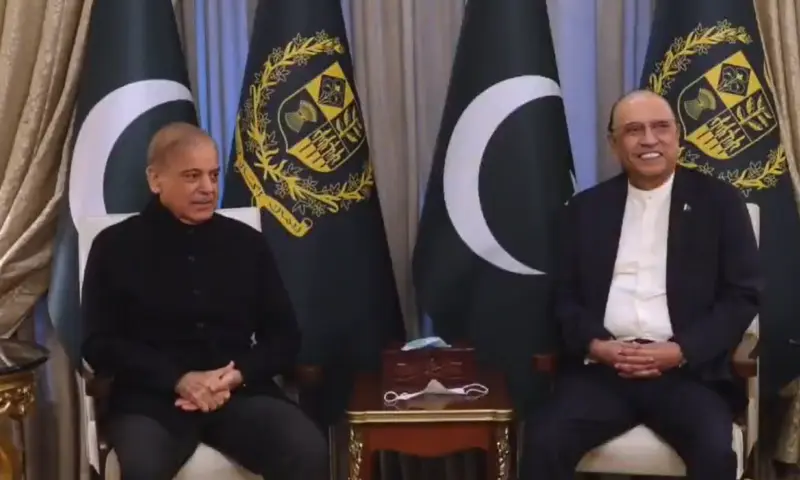
    President Asif Ali Zardari and Prime Minister Shehbaz Sharif on Saturday discussed the country’s political, economic and security situation in detail, the premier’s office said.

    PM Shehbaz warmly welcomed the president upon his arrival at the former’s residence in Lahore’s Model Town, the Prime Minister’s Office (PMO) said.

    The premier briefed the president on his recent visit to Turkiye, where he participated in the 31st Conference of Parties to highlight Pakistan’s efforts in climate action.

    Both leaders exchanged views on “cooperation among allied parties, continuation of consultation and progress on public welfare projects”, PMO said.

    It added that the two leaders also reaffirmed their commitment to working together to accelerate economic stability and development in the country.

    National Assembly Speaker Ayaz Sadiq Khan, Law Minister Azam Nazeer Tarar, PM’s Adviser on Political Affairs Rana Sanaullah, ex-PM Raja Pervez Ashraf, Senator Saleem Mandviwalla and MNA Hamza Shehbaz were also present during the meeting.

    President Zardari’s meeting with the premier comes just two days after Interior Minister Mohsin Naqvi called on the president.

    After media reports emerged claiming that Naqvi and the president had discussed the possible formation of new provinces during their meeting in Nawabshah, the President House clarified that “no such discussion” took place.

    The Presidency explained that “matters concerning national security and the regional situation” were discussed during the meeting.

    The last publicly reported meeting between President Zardari and PM Shehbaz was on Oct 10, where the two discussed the country’s security situation just a day before the federal government imposed emergency and governor’s rule in Khyber Pakhtunkhwa.

    In August, the prime minister had called on the president and briefed him on the Makkah defence pact signed days earlier between Pakistan, Saudi Arabia and Turkiye.

    Source: dawn