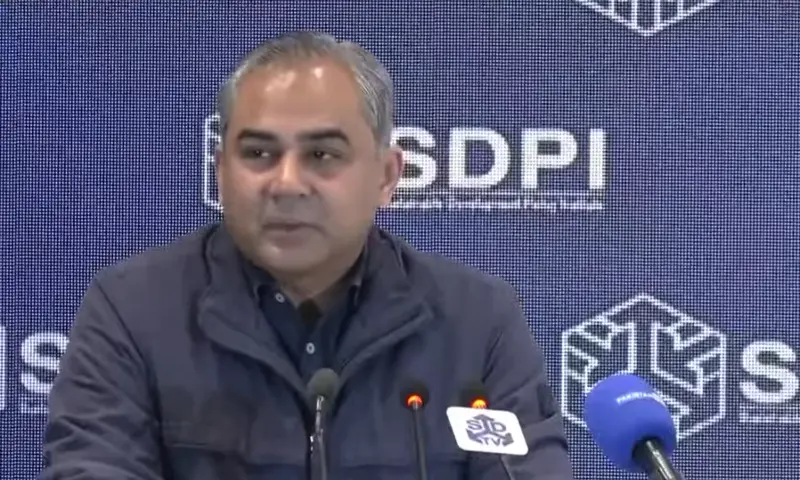
INTERIOR Minister Mohsin Naqvi is right to say that freedom of expression cannot be a licence to promote terrorism, hate speech, incitement to violence or child sexual exploitation.
No responsible media outlet or citizen would argue otherwise. And few would object to curbing such content on social media. Those who spread such material should expect to answer for it under the law. But drawing red lines is only half the job. The state must also show that it respects them. This is where its record raises questions.
There are visible red lines against hate and violence. But there are also invisible ones that journalists and citizens encounter every day when they question powerful quarters or report matters considered inconvenient. Journalists have been picked up, threatened and intimidated for publishing stories that upset those in power.
Media organisations have faced pressure over their editorial choices. Reporters often find themselves working out what they can safely publish and which subjects are best avoided. This has created a vacuum that social media is rapidly filling. So when Mr Naqvi tells journalists they are free to report, and that citizens are free to ask questions, it rings hollow.
Terms such as “anti-state activity”, “misinformation” and “hate speech” are elastic. And when officials interpret them without checks, they become tools for silencing critics. Having a law or a regulator does not make its use legitimate. Enforcement agencies should operate within defined legal limits, give valid and legitimate reasons for their decisions, act in proportion to the harm and be answerable to the courts. The rules should apply equally to everyone, whatever their politics or standing. Otherwise a measure meant to protect citizens ends up policing public debate. The minister’s assurance that dissent, including criticism of the state, will be heard is welcome. But assurances count for little while media organisations and journalists are still being intimidated.
The state must guarantee complete press freedom, subject only to clearly defined constitutional and legal restrictions. A sensible first step would be to bring journalists and their representative bodies, media owners, civil society and relevant state institutions together to agree on what responsible expression means in practice. Such consultations should produce a clear commitment to protect journalists, safeguard editorial independence and prevent the misuse of regulatory powers.
Freedom of expression carries responsibilities. But those responsibilities cannot be imposed on the media alone. The state must also accept its own obligations and allow uncomfortable questions to be asked. Rules against violence and hatred are fair enough. Unwritten and invisible ones against independent journalism are not.
Published in Dawn, November 26th, 2026
Source: dawn
Leave a Reply