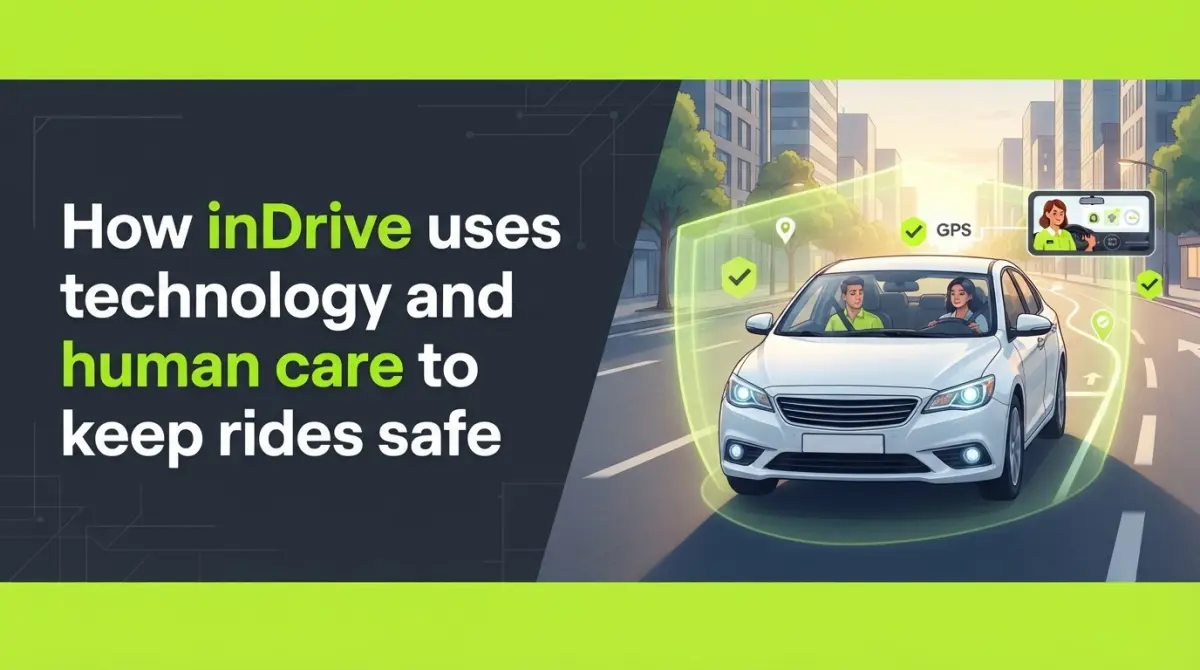
As urban mobility continues to grow across Pakistan, maintaining commuter confidence requires more than just basic travel tools. For inDrive, security is treated as a fundamental, non-negotiable right for everyone on the road, shaping a proactive safety architecture designed to protect millions of daily journeys.
Moving beyond traditional, reactive measures, the platform relies on a multi-layered technological framework powered by a combination of artificial intelligence and human diligence.
Instead of addressing incidents only after they occur, machine learning models continuously evaluate live operational data to anticipate potential risks before they manifest.
This protective shield activates long before a trip begins. Advanced automated tools streamline driver onboarding by rigorously vetting identification documents, vehicle records, and profile photos to minimize manual human error.
System algorithms also actively screen for duplicate accounts or multiple profiles tied to a single device, restricting unauthorized access instantly.
Safety features remain active throughout a driver’s tenure on the platform. Drivers undergo periodic photo re-verification to confirm that the person behind the wheel matches official records.
Simultaneously, automated filters monitor in-app order feeds, avatars, and chat exchanges in real time, instantly blocking prohibited content, explicit material, or abusive language while escalating severe violations to specialized response units.
Throughout every active trip, the system tracks behavioral anomalies, such as sudden account modifications, device switches, or unusual route deviations, to trigger automated safety checks.
In emergency scenarios, intelligent classification systems prioritize urgent support inquiries, ensuring that help requests receive immediate attention without administrative delays.
Despite the heavy reliance on algorithms, inDrive maintains a strict human-centric philosophy. Artificial intelligence acts as an advanced detection shield, processing millions of signals simultaneously to flag potential hazards. However, technology never operates as the final decision maker.
Ultimate decision making authority rests firmly with trained human specialists who review flagged anomalies and execute critical resolutions.
This governance model is built on the principle that true safety is an ongoing, shared responsibility distributed collaboratively between advanced technology, attentive drivers, and mindful passengers.
Source: brecorder
Leave a Reply