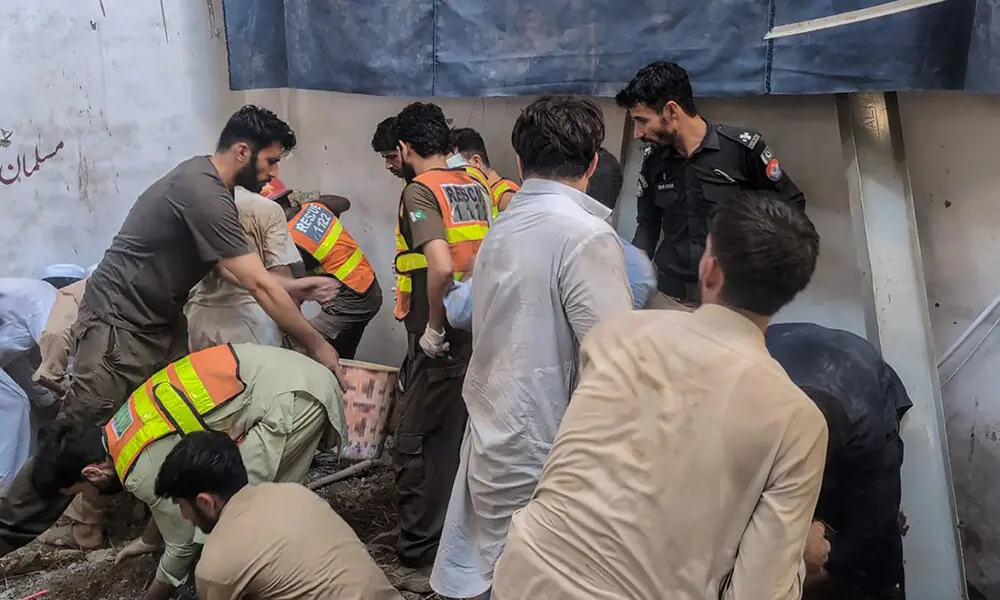
EDITORIAL: The decision of the District Education Authority (DEA), Rawalpindi, to conduct a detailed survey of 143 school buildings declared dangerous is a highly welcome initiative. The safety of children, teachers, and other school employees must be the foremost responsibility of the authorities running educational institutions, and no compromise be made in this regard.
Pakistan has witnessed several tragic incidents of structural collapses at schools and tuition centres in recent years, claiming the lives of innocent children and leaving many others, including teachers and support staff, injured. The scale of these tragedies is particularly alarming. In May 2026, at least four children were killed, and 20 people injured when the roof of a classroom at a private school in Dera Ghazi Khan collapsed.
Barely two months later, 14 children lost their lives when the roof of a private tuition centre in Lahore’s Kahna area caved in. More recently, a school roof collapse in Peshawar claimed 33 lives, including those of 32 students and a female teacher. These heartbreaking incidents underscore the grave consequences of negligence, unsafe construction and inadequate enforcement of building safety regulations.
Against this backdrop, the Rawalpindi administration’s decision to inspect both public and private educational institutions, identify unsafe buildings and relocate students from potentially hazardous classrooms is commendable. Particularly reassuring is the fact that students have been shifted to safe rooms rather than being allowed to continue attending classes in potentially dangerous spaces. Reconstruction and repair work at five government schools has also begun.
However, identifying dangerous buildings and conducting surveys should not become a mere administrative exercise or a one-time undertaking. The authorities must ensure that inspections are comprehensive, technically sound, and conducted by qualified structural engineers. Architects’ certificates submitted by private schools should be independently verified rather than accepted at face value. Any institution found violating prescribed building codes must be held accountable.
Furthermore, all provincial governments should establish a regular inspection and monitoring mechanism for educational institutions, irrespective of whether they are publicly or privately managed. Schools should be required to obtain periodic structural safety certifications, while institutions operating in unsafe premises must not be allowed to expose students and staff to unnecessary risks. The proposed school management councils and internal audit committees can also play a constructive role in ensuring transparency and timely maintenance, provided they are adequately empowered and held accountable.
In the end, education is not merely about providing classrooms, textbooks and qualified teachers; it is equally about ensuring a safe and secure environment in which students can learn without fear. The Rawalpindi initiative should serve as a model for other districts across the country. Protecting children from preventable tragedies must be treated as a national priority, not an occasional administrative concern.
Copyright Business Recorder, 2026
Source: brecorder
Leave a Reply