ISLAMABAD: The government is set to introduce Pakistan’s first National Adolescent and Youth Policy in the coming months, as young people have presented a 41-point charter calling on federal and provincial governments to translate their proposals into legislation, policy reforms and dedicated budgetary allocations within two years.
The charter calls for sweeping reforms in education, employment, skills development, entrepreneurship, financial inclusion, healthcare, climate financing, data protection and political representation, seeking to make young people active partners in national policymaking rather than mere beneficiaries of government initiatives.
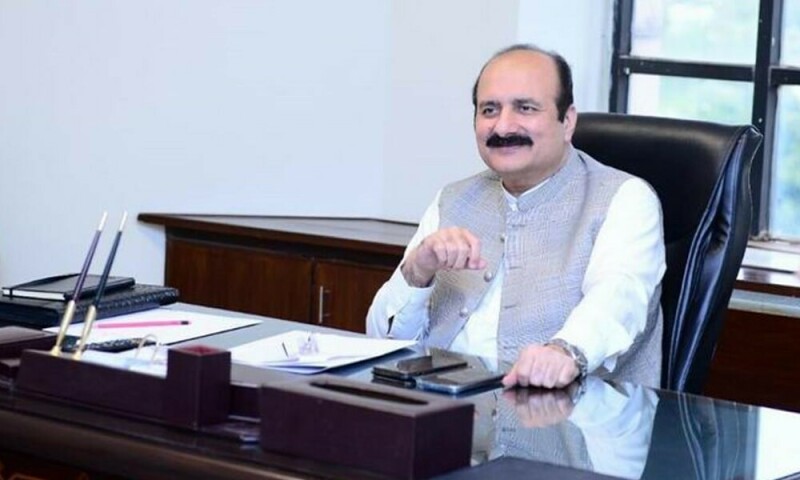
Chairman Prime Minister’s Youth Programme Rana Mashhood Ahmad Khan announced that the government would introduce Pakistan’s first National Adolescent and Youth Policy in the coming months.
Mashhood said this while addressing the National Youth Summit 2026, organized by the Sustainable Development Policy Institute (SDPI) in collaboration with UNFPA Pakistan and the Prime Minister’s Youth Programme here on Wednesday.
He said the proposed policy would cover three age cohorts — 10-15, 15-19 and 19-29 years — recognising the need for targeted interventions at different stages of adolescence and youth.
Rana Mashhood said the government was implementing the National Youth Employment Policy, approved by the federal cabinet, which aimed at ensuring at least 35 percent representation of women in the labour force annually and encourage young entrepreneurs to account for at least 10 percent of new company registrations every year.
He said Rs292 billion had been allocated under the Prime Minister’s Youth Business and Agriculture Loan Scheme, offering financing ranging from Rs500,000 to Rs25 million for startups and business expansion.
Nearly one million young people had registered on the Digital Youth Hub, while around 2,400 domestic and international companies had joined the platform to provide employment, education and other opportunities, he added.
Speaking at the summit, UNFPA Representative in Pakistan Dr Luay Shabaneh urged young leaders to move beyond expressing their views and engage in meaningful policy dialogue to hold the government, parliamentarians and policymakers accountable.
The youth-led 41-point charter, developed through six thematic discussion sessions, seeks time-bound commitments from government institutions, parliament, the private sector and development partners. Its recommendations range from practical skills training and paid internships to mental health services, climate financing and reserved representation for young people in elected institutions.
Presenting their demands, youth representatives said Pakistan could not realise its demographic dividend without providing its young population with meaningful opportunities, institutional support and direct participation in decision-making.
Under the education, skills and employment pillar, participants called for an emergency framework to equip young people with practical skills in renewable energy, solar technology, electric vehicles and other emerging industries.
On entrepreneurship and financial inclusion, young participants demanded paid internships across higher education institutions by December 2027, expansion of National Incubation Centres to tehsil level and development of a venture capital ecosystem to support young entrepreneurs.
They also called for employment opportunities for graduates trained by the National Vocational and Technical Training Commission, integration of financial, tax and economic literacy into the national curriculum and a dedicated job security policy for private-sector employees.
The charter stresses transparent and merit-based recruitment for public-sector jobs, internships and youth schemes, while seeking measures to remove barriers preventing women from entering and remaining in the workforce.
The health-related demands include mandatory life-skills-based education in the national curriculum by 2028, covering age-appropriate information about puberty, menstrual health, consent, personal safety and mental health.
Climate change and disaster preparedness formed another major component of the charter. Young people demanded expanded green employment opportunities, certified green-skills training, climate and disaster education, financial support for young farmers and regular disaster preparedness training for local communities.
A significant financial demand was the ring-fencing of revenues collected through the carbon levy on petroleum products for climate-related initiatives.
Participants said the government had collected around Rs70 billion through the levy since its introduction, while the federal budgetary allocation for the Ministry of Climate Change stood at only Rs2 billion.
They demanded that carbon levy proceeds be channelled towards environmental protection and climate resilience instead of being deposited entirely into the Federal Consolidated Fund. They also sought transparent monitoring of climate-related allocations and expenditure.
The charter further proposes that revenues generated through carbon credits from natural resources, including Sindh’s approximately 300,000 hectares of mangrove forests, should benefit local communities responsible for their protection.
Under governance and political representation, young people demanded a comprehensive data protection law, universal birth and death registration, simplified identification procedures and reserved seats or quotas for youth in the National Assembly, Senate and local governments.
They also called for legislation protecting personal information from misuse through social media platforms and artificial intelligence applications.
Senator Jan Muhammad Buledi said the recommendations should be taken to parliament for meaningful discussion and consideration, pledging to make efforts to present them before the Senate and National Assembly.
Amna Batool of the Prime Minister’s Youth Programme assured participants that the charter would not remain merely a collection of recommendations and would be shared with the Prime Minister’s Office and relevant ministries for consideration.
She said the government would work towards translating youth proposals into reforms, legislation and budgetary allocations through a whole-of-government approach.
Chairman Board of Governors SDPI Shafqat Kakakhel said nearly two-thirds of Pakistan’s population was below 30, making young people central to the country’s development prospects. He stressed the need for a structured mechanism to translate their ideas into policy decisions.
Copyright Business Recorder, 2026
Source: brecorder
Leave a Reply