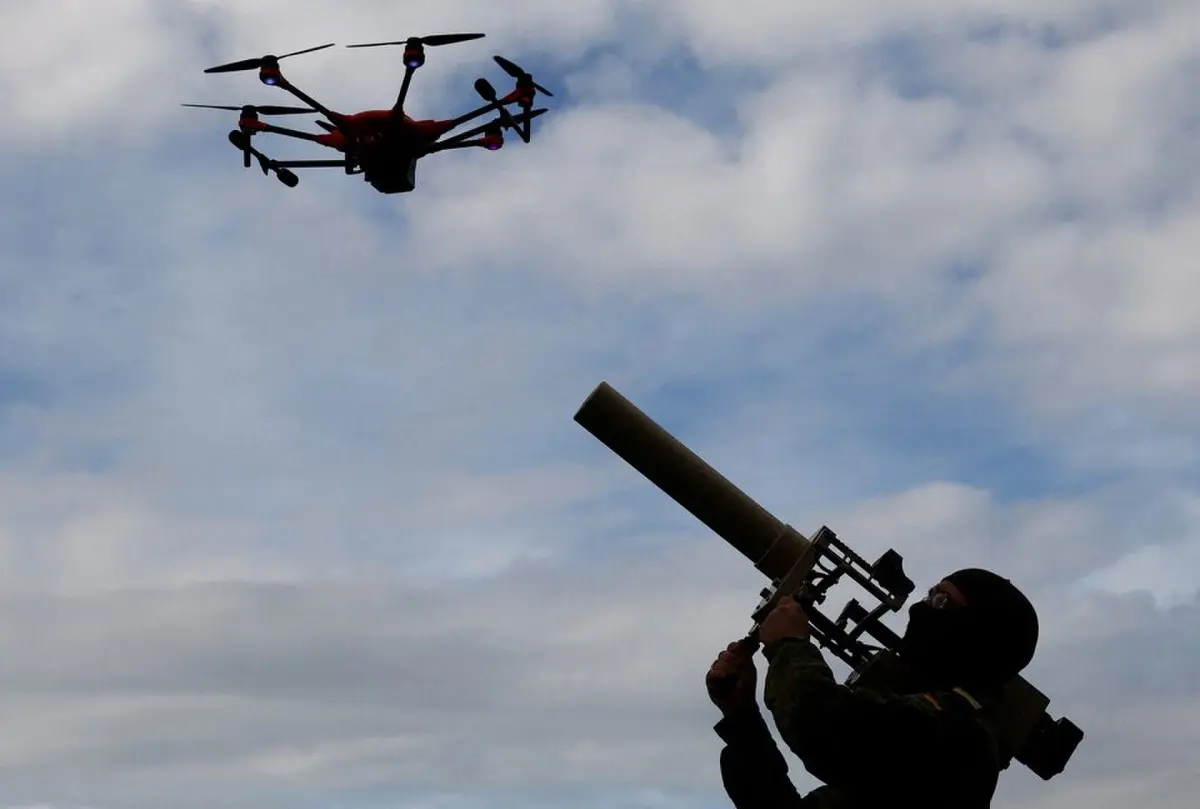
The growing use of commercially available quadcopter drones as weapons by terrorist groups in Pakistan signals an emerging tactic with significant strategic implications for the country’s security landscape.
The initial efforts in 2024 in North Waziristan have now been transformed into a regular tool of the operational arsenal of several terrorists in various parts of Khyber Pakhtunkhwa (KP) and Balochistan.
The quantitative indicators show significant acceleration in attacks. Data from the South Asia Terrorism Portal shows that there were around 60 terrorist drone attacks in Balochistan and KP during the first half of 2026, killing 36 and injuring 178 people, compared to 13 attacks, 13 deaths and 10 injuries during the same period of 2025.
A total of 54 of these attacks were reported on provincial police records in 2025 in KP, with North Waziristan and Bannu districts seeing the most. The report to the federal cabinet adds that no drone attack against police or security forces was recorded in 2024 but jumped to 170 in 2026. The geographic concentration is still very strong in KP’s southern districts with Bannu being the main focus, while Balochistan has become an increasingly active theatre.
Balochistan has also recorded the highest total number of attacks (176) and fatalities (438) in the province during the period compared with KP with 143 attacks and 244 deaths.
In 2024, the first series of attacks concerned the Hafiz Gul Bahadur Group’s activities in North Waziristan, where it was reported to have targeted military convoys and checkpoints by launching attacks with bottles that contain improvised explosive devices (IEDs). The modification of commercial quadcopters is now institutionalised with three principal organisations namely Tehreek-e-Taliban Pakistan (TTP), Baloch Liberation Army (BLA), and Ittehad-ul-Mujahideen Pakistan (IMP) comprising the Hafiz Gul Bahadur Group, Lashkar-e-Islam and Harakat-e-Inqilab-e-Islami Pakistan.
This diffusion is consistent with findings in the literature on the adoption of commercial drones by terrorists, which find that network affiliation, territorial sanctuary, and organisational learning speed up the diffusion of the technology.
The way in which the operation is carried out: Reconnaissance, Payload Delivery and Multi-Domain Integration. The evolution of the operation has been through identifiable stages. The emphasis was on intelligence, surveillance and reconnaissance in the early deployments.
There are three overlapping tactics in modern practice. The first one is a payload drop, wherein terrorists attach mortar shells or IEDs to quadcopters and drop them on security personnel or civilian neighbourhoods. There were reported incidents that injured eight people, including three children, in a January 2026 strike on a residential locality in Mirali in North Waziristan and a May 2026 attack on a cricket ground in Bajaur which injured three persons.
Second, coordinated multi-domain assaults: Drones are being used in conjunction with an assault on the ground, for example in July 2026 when police at the Khazina Banda police checkpost in Hangu were attacked by drones before an intense firefight ensued in which DSP Diyar Khan and nine other officers lost their lives.
Third, adaptive counter-countermeasures: after the use of directional anti-drone jamming by police of KP, the terrorists shifted their focus to multi-directional swarm attacks which were aimed at saturating the defence.
The IMP has captured an anti-drone gun in Bannu. In February 2026, the BLA released its new formation called the “Qazi Aero Hive Rangers” (QAHR), which is tasked with carrying out aerial monitoring and precision strikes, including the alleged attacks on military installations and port facilities in Gwadar during Operation Herof 2.0.
This is a development that is particularly worrisome for the China-Pakistan Economic Corridor, which has a massive territory to monitor, and unmanned systems add a vertical dimension of threat.
How people emotionally respond to a threat is a psychological dimension. A psychological dimension is how people react emotionally to a threat, such as depersonalisation or invisible threat and community impact. Psychological effects are multi-level. Commercial drones make it easier for operators to carry out what can be described as depersonalised violence, allowing the killer to act from afar, using a screen interface to control the drone, which reduces the psychological threshold for killing.
At the same time, drones serve a propaganda role, helping groups to demonstrate technological sophistication and reinforce perceptions of operational reach. The establishment of special teams in the air and the sharing of training and operational videos are strategic demonstrations of competence. The “invisible threat” is central in the phenomenology of the victim and of the affected communities. The attacker cannot be seen, and the platform is small and not very noisy; the strike can happen at any time from a high trajectory.
In Mirali, qualitative reports highlight the resulting long-term insecurity: local elders report widespread fear, in particular among children, and residents of the town report that school attendance has decreased in the face of high mental stress.
While the current literature on conflict-affected populations in Pakistan does not examine conflict trauma in the context of drones specifically, the results of the studies on how repeated exposure to threat amplifies anxiety and the cognitive overload resulting from exposure to emotionally charged content are quite relevant.
Repeated, mild attacks can cause a more lasting and deepening sense of psychological distress than devastating events. Finally, there is a political-psychological aspect. Civilian strikes by drones are often presented as proof of the inability of terrorists to face off against security forces directly. The effect of such framing on the public concern and on the frustration of the public about the state’s protective capacity, however, is an open empirical question. The killing of ten police officers including a senior officer in one incident, assisted by a drone in Hangu, highlights the risk to frontline state officers and the possible impact on the morale of institutions.
Numerous countermeasures and persistent gaps exist. The Pakistani response has been a mix of ad hoc improvisation and step-by-step institutional and technological improvements. At the tactical level, protective netting has been installed at vulnerable checkpoints, while in 2025, anti-drone jammers were installed in several districts, later replaced by more powerful systems in Peshawar and Bannu.
The most notable change in the organisation was in March 2026 when the Inspector General of Police (IGP) announced a standing order to create a dedicated UAV division that would be trained in drone operation, aerial surveillance, intelligence gathering, counter-terrorism and electronic warfare.
The integrated system that covers a radius of about five kilometres and is connected with the central control room of the Safe City project is being expanded in Peshawar to Dera Ismail Khan, Bannu and Lakki Marwat.
There are three main priority areas that require ongoing focus. First, regulation of the drone first-stage supply chain: compulsory geofencing and standards for remote drone identification on commercial drones sold in the country; reinforced customs enforcement for uncertified imports and parts trafficking.
Second, layered counter-drone architectures for fixed and mobile targets: expansion of the Peshawar integrated detection-jamming-alert model for high-value targets such as CPEC installations and development of intercept capabilities for swarm tactics.
Third, psychological support infrastructure: systematic investment in mental health services in affected districts to respond to the trauma caused by the use of drones, including desensitisation, cognitive restructuring and community resilience programmes.
The case of Pakistan shows the wider context of the growing use of commercial drones by terrorists. The transition from individual experiments to coordinated multi-domain operations, with ideologically and organisationally diverse participants, has been facilitated through the use of off-the-shelf platforms.
The current portfolio of countermeasures is a necessary, though largely reactive response to an adversary that is more adaptive and more economical and faster in tempo. A comprehensive strategy therefore needs to put in place regulatory measures, layered airspace defence, intelligence-led disruption of assembly and launch networks, and sustained psychosocial support, all of which are necessary to recognise the drone threat as more than just a transient tactical nuisance but an enduring structural characteristic of Pakistan’s contemporary security landscape.
The article does not necessarily reflect the opinion of Business Recorder or its owners.
Source: brecorder
Leave a Reply