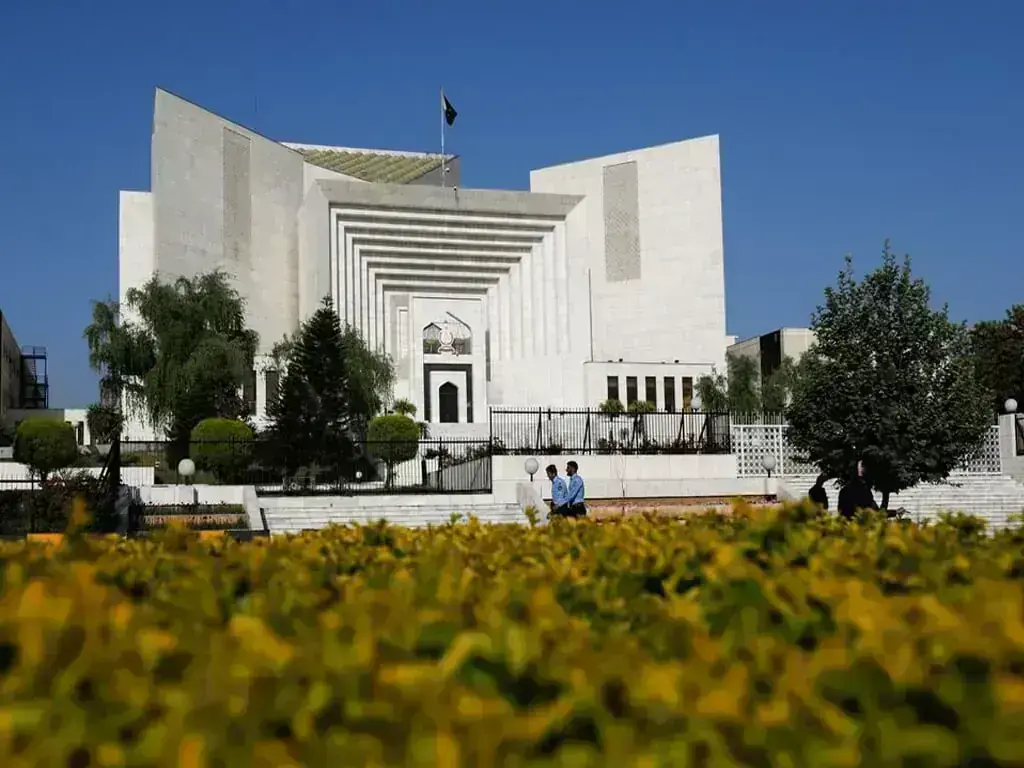
ISLAMABAD: The Supreme Court of Pakistan ruled that the payments received by Attock Refinery Limited for decanting and desalting crude oil, supplied by oil and gas exploration companies, do not constitute taxable supplies or taxable activities liable to sales tax under Section 3 of the Sales Tax Act, 1990
A three-member bench, headed by Justice Munib Akhtar and comprising Justice Malik Shahzad Ahmad Khan and Justice SalahuddinPanhwar, set aside the Islamabad High Court’s judgment and the decision of the Appellate Tribunal Inland Revenue, Islamabad.
The matter arises out of the Act. The case of the department (respondent Commissioners) was that certain transactions, in respect of which the petitioner (Attock Refinery) received payments from third parties, were liable to tax under Section 3 of the Act.
READ ALSO: Attock Refinery Limited resumes crude receipts, product dispatches
The sales tax not having been charged, proceedings were initiated against the petitioner, whose case was that the said transactions did not come within the scope of the Act. The appeal by the petitioner before the Appellate Tribunal was dismissed and the tax reference filed in the High Court met the same fate.
Senior counsel Sirdar Ahmed Jamal Sukhera, representing the Attock Refinery, argued that the dispute originated from the department’s (respondent Commissioners) contention that the amounts received by Attock Refinery from crude oil suppliers, including Oil and Gas Development Company Limited (OGDCL), for decanting and desalting crude oil were consideration for taxable services and, consequently, liable to sales tax.
The department maintained that these activities fell within the definition of “taxable activity” under Section 2(35) of the Sales Tax Act, 1990. The controversy arose because, under the contractual arrangements between the refinery and its crude oil suppliers, the responsibility for decanting and desalting rested with the suppliers. However, the refinery undertook these processes at its own premises and received payments from the suppliers in this regard. The tax authorities treated these payments as consideration for taxable services, a position upheld by the Appellate Tribunal Inland Revenue and subsequently by the Islamabad High Court.
The Supreme Court, after an extensive examination of the relevant statutory provisions and the legislative amendments introduced through the Finance Acts of 1996, 1998 and 2008, rejected the Department’s interpretation.
The Court observed that Section 3(1) of the Sales Tax Act, 1990, being the charging provision, requires the existence of three essential elements: a taxable supply, made by a registered person, in the course or furtherance of a taxable activity. These elements must not only independently exist but must also have the necessary legal connection with one another for the charging provision to apply.
The judgment found that the crude oil remained the same identifiable product before and after the processes of decanting and desalting. No separate or distinct product came into existence as a result of these processes. It noted that the department failed to establish the existence of such a product, which was essential for bringing the transactions within the applicable statutory definition of supply.
The Court further held that the processes undertaken by Attock Refinery did not amount to the rendering or provision of services to the crude oil suppliers. Since the suppliers were contractually responsible for decanting and desalting the crude oil, the payments received by the refinery were, in commercial terms, an adjustment or correction of the price payable for the crude oil rather than consideration for services rendered to the suppliers.
The Supreme Court also clarified an important principle of tax jurisprudence: the existence of a taxable activity, by itself, does not constitute a taxable event. There must additionally be a taxable supply made in the course or furtherance of that activity. Both requirements must be independently established before sales tax can lawfully be imposed.
The Court emphasized that the burden of establishing all the essential ingredients of a taxing event rests upon the State and not upon the taxpayer. In the absence of proof of the statutory requirements, no tax liability can be imposed merely based on the department’s interpretation of a commercial transaction.Consequently, the Supreme Court answered the question of law in favour of Attock Refinery Limited and against the department.
Copyright Business Recorder, 2026
Source: brecorder
Leave a Reply