Category: Brecorder

  • US diesel below $6 a gallon at 2-month low on easing tensions, weaker demand

    US diesel below $6 a gallon at 2-month low on easing tensions, weaker demand

    NEW YORK: US diesel prices fell below $6 a gallon on average on Saturday after two months above that threshold, retreating from record highs as easing geopolitical ​tensions and seasonal demand weakness reduce pressure on fuel markets.

    Diesel had surged ‌as the US-Israeli war against Iran disrupted oil supplies and Ukraine’s systematic attacks on Russian refineries stymied production.

    Elevated diesel prices, a key driver of transportation and freight costs, have boosted overall inflation, causing ​pain for consumers, farmers and businesses. High fuel costs were a major ​factor helping Democrats sweep both houses of Congress from President Donald Trump’s Republicans ⁠in this month’s midterm elections.

    The national average retail diesel price was $5.998 on Saturday, according to ​fuel price tracker GasBuddy. It had risen to $5.820 a gallon on September 3, breaking ​the record set after Russia’s full-scale invasion of Ukraine in 2022. Diesel topped $6 a gallon on September 10 and hit a record $6.519 on September 22.

    In California, where refining capacity is constrained and fuel specifications are ​more stringent than elsewhere in the country, diesel prices briefly exceeded $10 a gallon.

    The ​Trump administration has introduced several measures aimed at easing costs, including temporarily lifting federal taxes on red-dyed diesel, easing ‌sanctions ⁠on Russian fuel and launching an $8 billion support program to help farmers offset higher fuel costs during the autumn harvest.

    Those measures, however, provided only limited relief as supply concerns caused by the ongoing Iran war continued to dominate the market.

    Seasonal factors and a ​drop in crude oil ​prices, to which ⁠diesel prices are closely linked, are now helping bring prices down. Brent crude futures are down 18.5% over the past two weeks.

    Demand typically ​softens in the autumn as people drive less, hurricane season winds ​down and ⁠the risk of Gulf Coast refinery disruptions declines, said Patrick De Haan, GasBuddy’s head of petroleum analysis.

    Refinery maintenance is also largely completed by November, allowing production rates to ⁠recover, ​he said.

    These factors have also contributed to gasoline falling below $4 ​per gallon this month for the first time since August 10, according to GasBuddy data.

    Source: brecorder

  • Bahrain’s interior ministry issues alerts of potential threats

    Bahrain’s interior ministry issues alerts of potential threats

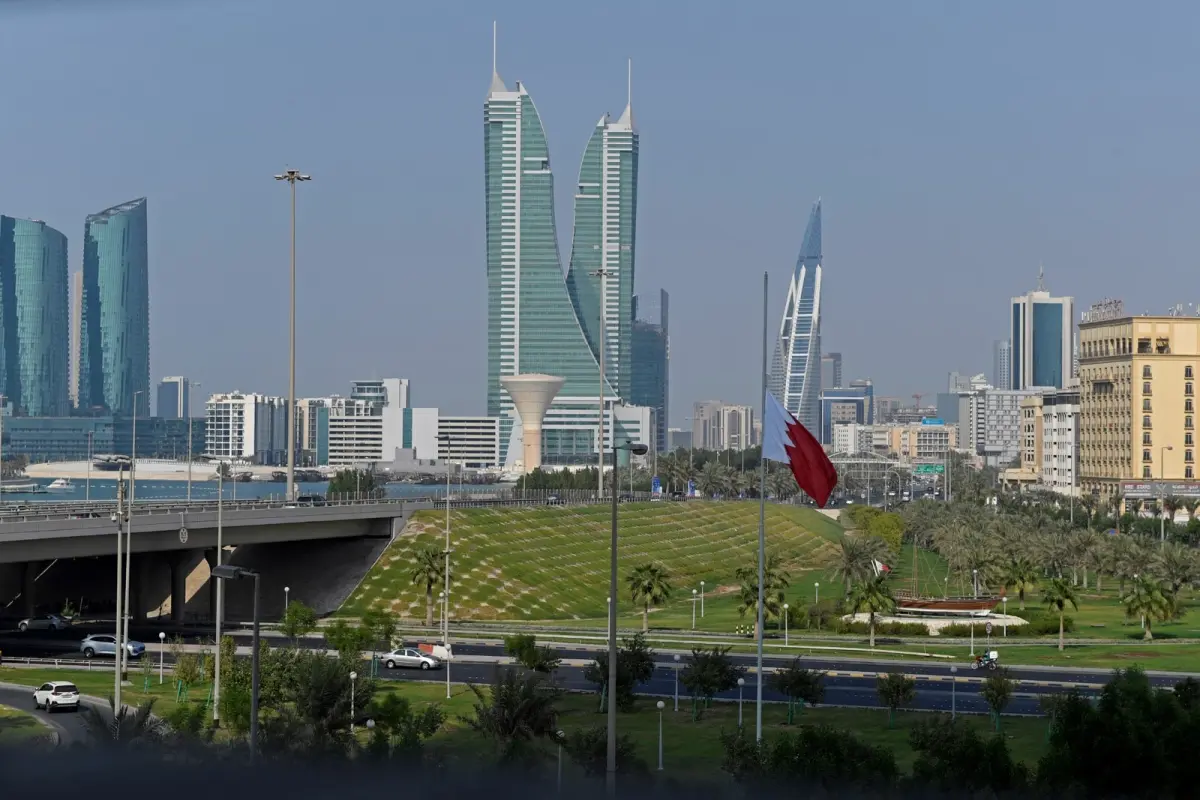
    Bahrain issued two separate alerts about ​potential threats in posts ‌on social media platform X on Sunday, the first ​such warnings by ​the Gulf country since September.

    Bahrain, ⁠home to the ​US Navy’s Fifth Fleet, ​urged citizens and residents to remain calm and proceed to ​the nearest safe location, ​its interior ministry said. It ‌did ⁠not provide further details on the threats.

    Seafarer killed in suspected missile attack on tanker in Gulf

    The warnings came two days after Iran’s ​Revolutionary Guards ​said ⁠they attacked a US early-warning radar ​in Bahrain.

    The ​US ⁠military denied the claim, saying it had intercepted ⁠two ​Iranian drones without ​any harm caused.

    Source: brecorder

  • Philippines, Australia sign defence pact with eye on China

    Philippines, Australia sign defence pact with eye on China

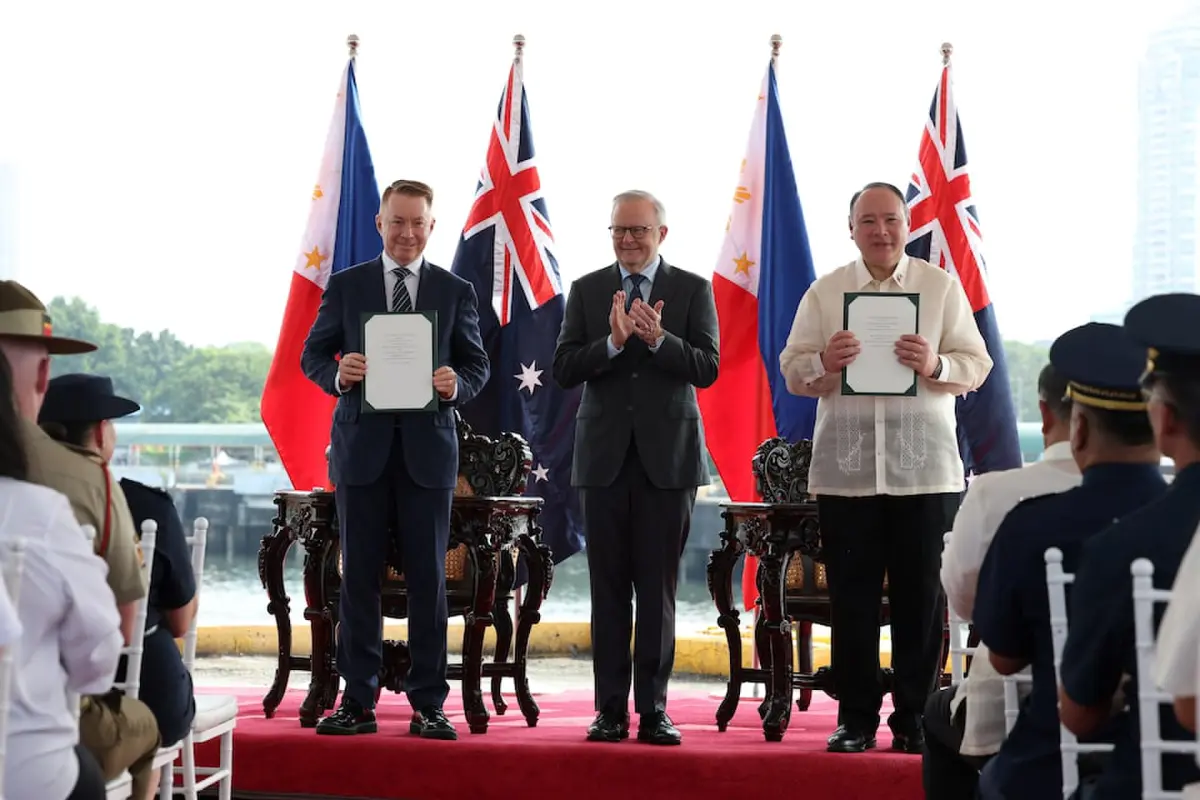
    MANILA: The Philippines and Australia signed a defence cooperation arrangement on Sunday that Manila said would lower bureaucratic hurdles to joint military activities, as ​the two countries further deepen security ties.

    Philippine Defence Secretary Gilberto Teodoro ‌said the arrangement would streamline implementation of the bilateral Status of Visiting Forces Agreement, or SOVFA, by simplifying coordination procedures.

    “Rather than 100 steps to do a single thing, it ​will just now take 10,” Teodoro told reporters, describing the deal as ​an “anti-red tape measure” for implementing SOVFA.

    He said the arrangement would pave ⁠the way for closer cooperation involving maritime, air and land forces, as ​well as humanitarian and disaster response, and would bolster the Philippines’ “credible deterrence posture” ​including in the South China Sea.

    Philippines says foreign minister held talks with China’s Wang Yi

    The Philippines has been broadening its network of security ties while complementing a long-standing alliance with its treaty partner, the United States, in the face ​of what it describes as China’s aggressive behaviour in the South China Sea, ​where countries have overlapping maritime claims.

    Australia has consistently supported Manila’s position on the strategic waterway, ‌backing ⁠a 2016 ruling by an international arbitral tribunal that China’s sweeping claims have no basis under international law, a decision Beijing rejects.

    Beijing maintains that its actions in the South China Sea have been lawful and professional. It routinely opposes ​Manila’s joint military activities ​with its allied ⁠partners, saying such drills heighten tensions in the region.

    Australian Prime Minister Anthony Albanese witnessed the signing of the defence ​pact in Manila, where he is attending a summit of ​the Association ⁠of Southeast Asian Nations.

    Trump, other Quad leaders to meet in Manila on Tuesday

    He said the agreement would enhance maritime awareness and information sharing and increase strategic dialogue, training, interoperability and defence infrastructure development.

    Albanese announced additional Australian ⁠investment ​in maritime domain awareness, including drone technology, equipment ​and training aimed at improving detection of maritime and cybersecurity threats.

    Source: brecorder

  • Punjab approves Rs23.85bn for rural development programme

    Punjab approves Rs23.85bn for rural development programme

    LAHORE: Punjab government has approved Rs23.85 billion for the Khushhal Dehat Programme, aimed at improving infrastructure in villages, with Rs50 million earmarked for development work in each village.

    Chief Minister Punjab Maryam Nawaz Sharif said the first phase of the programme would cover 475 villages, where paved streets and a proper sewerage system would be developed. She directed the authorities to release the first instalment of funds to village development committees by November.

    Under the programme, a committee comprising five government and four private members will oversee development projects. The relevant additional Deputy Commissioner (social services) will head the committee, which will also include the union council chairman and the concerned sub-engineer.

    The Chief Minister has also sought a development plan for another 2,000 villages in the second phase of the initiative. She said the provision of paved streets and an organised sewerage system in every village across Punjab was a priority, adding that development would be carried out across both urban and rural areas without discrimination on political grounds.

    “Development programmes and resolution of public issues are the right of every area of Punjab,” she said, adding that political affiliations would not be allowed to hinder the province’s development process.

    Copyright Business Recorder, 2026

    Source: brecorder

  • Railways revenue exceeds Rs100bn for first time in history: Abbasi

    Railways revenue exceeds Rs100bn for first time in history: Abbasi

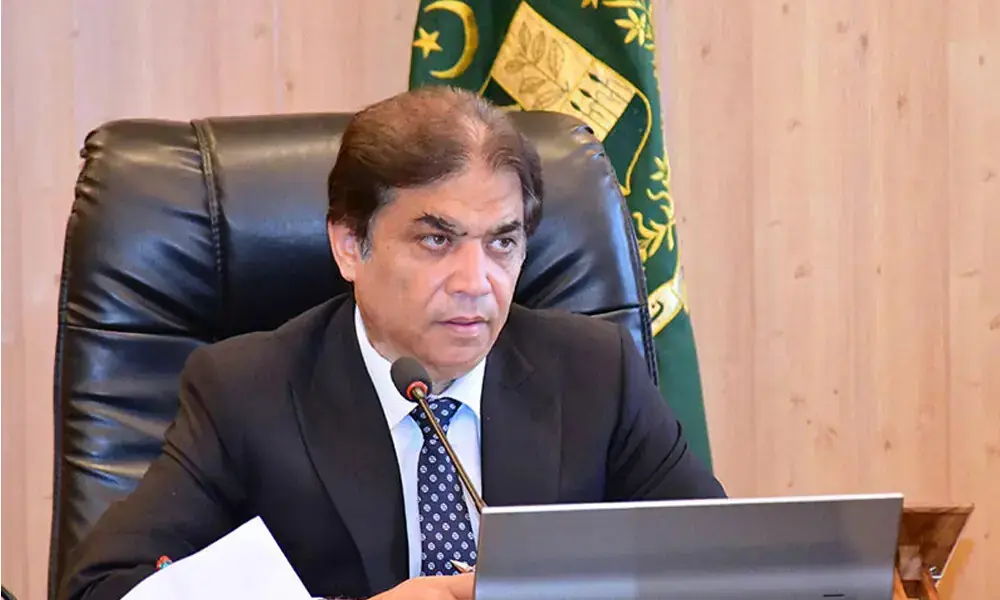
    ISLAMABAD: Federal Minister for Railways Muhammad Hanif Abbasi on Saturday said Pakistan Railways had achieved a historic milestone by generating more than Rs100 billion in revenue for the first time in its history.

    He expressed these views during a meeting with Federal Minister for Parliamentary Affairs Tariq Fazal Chaudhry at the Ministry of Railways where matters of mutual interest, national affairs and parliamentary issues were discussed.

    During the meeting, Tariq Fazal Chaudhry expressed satisfaction over the ongoing reform initiatives in Pakistan Railways and appreciated the steps being taken towards digitalisation, adoption of modern technology and improvement of the operational system.

    He said the measures aimed at increasing railway revenue, reducing financial losses and providing better travel facilities to passengers were encouraging and commendable.

    Briefing his counterpart on the department’s performance, Hanif Abbasi said Pakistan Railways had crossed the Rs100 billion revenue mark for the first time in its history.

    He further said that, under the vision of Prime Minister Muhammad Shehbaz Sharif, Pakistan Railways was committed to achieving its revenue target of Rs160 billion during the current fiscal year.

    The minister reiterated that transforming Pakistan Railways into a financially sustainable, modern and profitable organisation remained the government’s top priority.

    Source: brecorder

  • Asif reaffirms Pakistan’s support for Palestine

    Asif reaffirms Pakistan’s support for Palestine

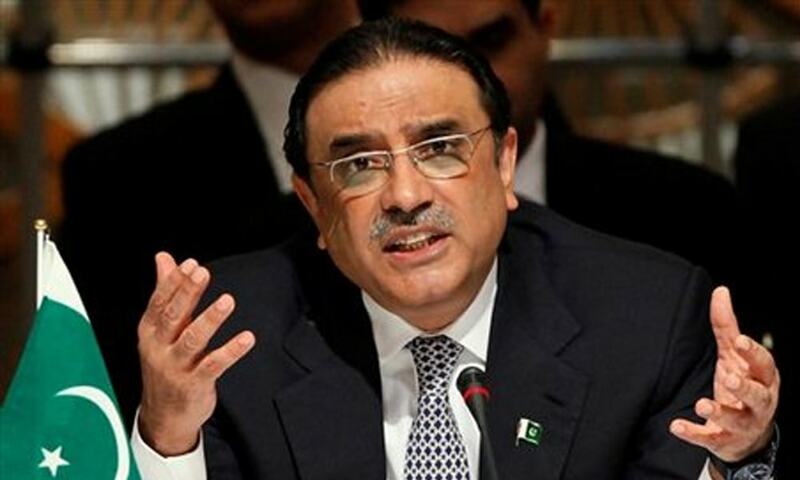
    ISLAMABAD: President Asif Ali Zardari has congratulated Palestinian President Mahmoud Abbas and the people of Palestine on the 38th anniversary of their Declaration of Independence, reaffirming Pakistan’s support for their right to self-determination.

    In a letter addressed to President Mahmoud Abbas, the President extended warm felicitations to President of the State of Palestine Mahmoud Abbas and the people of Palestine on the occasion of the 38th Anniversary of the Declaration of Independence of the State of Palestine, reaffirming Pakistan’s unwavering support for the legitimate rights of the Palestinian people, particularly their right to self-determination.

    He said Pakistan and Palestine enjoy close fraternal relations rooted in shared history, mutual trust, solidarity and common aspirations. He said the people of Pakistan hold the Palestinian people in the highest esteem and remain deeply committed to further strengthening the bonds of friendship and brotherhood between the two countries.

    President Zardari reiterated Pakistan’s firm and principled support for the establishment of an independent, sovereign, viable and contiguous State of Palestine, based on the pre-1967 borders, with Al-Quds Al-Sharif as its capital, in accordance with relevant United Nations resolutions.

    He also reaffirmed Pakistan’s solidarity with the Palestinian people in the face of their continued suffering and expressed support for their aspirations for lasting peace, freedom and dignity.

    Copyright Business Recorder, 2026

    Source: brecorder

  • PAF chief meets Uzbek defence leadership, discusses military cooperation

    PAF chief meets Uzbek defence leadership, discusses military cooperation

    Chief of the Air Staff Air Chief Marshal Zaheer Ahmed Baber Sidhu has held high-level meetings with Uzbekistan’s defence leadership during his official visit to the country, discussing regional security and ways to strengthen bilateral defence cooperation.

    According to a statement issued by the Inter-Services Public Relations (ISPR) on Saturday, the air chief met Uzbek Defence Minister Lieutenant General Botir Qudrathodjayev Bahromovich.

    The discussions focused on regional security, existing defence ties and prospects for institutional collaboration.

    During the meeting, the Uzbek defence minister praised the professionalism, operational capabilities and combat prowess of the Pakistan Air Force (PAF).

    In another meeting, Sidhu held talks with Deputy Defence Minister and Commander of Air Defence and Air Force of Uzbekistan Major General Burkhanov Akhmad Jamolovich.

    The discussions focused on expanding bilateral defence cooperation through joint military exercises, structured professional exchanges and capacity-building initiatives.

    The air chief highlighted the longstanding brotherly relations between Pakistan and Uzbekistan.

    Both sides reaffirmed their commitment to strengthening operational readiness and cooperation in emerging technologies by leveraging their respective expertise and capabilities, the statement added.

    Source: brecorder

  • Reasoning outsourced: the limits of artificial intelligence in the law

    Reasoning outsourced: the limits of artificial intelligence in the law

    Welcome to the era of reasoning outsourced to Artificial Intelligence (AI). Outsourcing reasoning to AI is just a change of technique. It leaves the lawyer’s obligations exactly where they were, and it makes those obligations easier to breach.

    The claim that AI will replace lawyers is half right. It will dismantle the junior law associate as a unit of cheap, typed drafting output, which is how many chambers still price juniors. It will not remove the need for a seasoned lawyer – an accountable human between the model and the court file, and Pakistani law provides no mechanism to make a machine accountable.

    The fundamentals are legal, not sentimental. The profession’s core duties are written into the legal system’s structure. The precedent system depends on authenticity. Article 189 of the Constitution makes decisions of the Federal Constitutional Court and the Supreme Court of Pakistan on points of law binding on other courts, and Article 201 makes High Court decisions on points of law binding on subordinate courts. A cited authority that does not exist, or says something it does not, corrupts the machinery that makes those articles work. Article 10A, which guarantees a fair trial and due process, is undermined whenever a bench decides on invented law. Responsibility sits squarely with the human signatory.

    Under Order VI Rule 15 of the Code of Civil Procedure, pleadings are verified by the party, but they are drafted and filed through counsel. Section 35-A empowers the court to award compensatory costs for false or vexatious claims and defences. The Legal Practitioners and Bar Councils Act of 1973 and the rules framed under it give Bar Councils disciplinary jurisdiction over professional misconduct. None of these provisions carves out an exception for “the software drafted it.”

    Criminal exposure is narrower, and it is worth being precise about it. Sections 193 and 196 of the Pakistan Penal Code, on false evidence and using evidence known to be false, hinge entirely on intent. A lawyer who honestly files a hallucinated citation out of simple oversight may be negligent, but is not guilty of perjury. However, a lawyer who knows generative tools routinely invent cases, deliberately chooses not to verify them, and files them anyway crosses from mere negligence into reckless misrepresentation before the court.

    Contempt under Article 204 remains a further risk if a bench concludes the court was knowingly misled. Hallucination bites harder here because Pakistani law reporting is fragmented across PLD, SCMR, CLC, YLR, PCrLJ, and others, and a model can produce a plausible-looking citation in any of those formats without any case behind it.

    Statutes are amended and the amendments are unevenly covered in AI training datasets. The Phalia episode shows this in practice. In 2023, an Additional Sessions Judge in Phalia, Muhammad Amir Munir, experimentally consulted ChatGPT-4 while deciding pre-arrest bail for a 13-year-old accused, after the court had already decided to grant bail on the facts, as reported by Gulf News. According to news reports, the judge put 18 questions to the tool and it gave wrong answers twice, requiring him to manually correct it on the amended statutory age provisions connected to Section 83 of the Pakistan Penal Code. A judge who already knew the law caught the errors; a tired junior working from the tool’s output at 11pm before a morning cause list may not.

    What the courts have actually said begins with the Supreme Court of Pakistan. In Ishfaq Ahmed v. Mushtaq Ahmed, decided on March 13, 2025 (C.P.L.A. No. 1010-L/2022, reported at 2026 SCLR 41, 2025 SCP 112), Justice Syed Mansoor Ali Shah and Justice Aqeel Ahmed Abbasi used a rent dispute to address AI in the judiciary. While these observations are framed as recommendations within a rent appeal – meaning they serve as persuasive guidance (obiter dicta) rather than a formal rule bound under Article 189 – they set a clear judicial direction.

    The judgment treats AI as an auxiliary resource only, insists that identifiable humans retain ultimate responsibility, and describes hallucination as fabricated output produced by statistical pattern-matching rather than fact-checking, citing a study where GPT-4 fabricated legal references in 58% of cases.

    It strongly recommended that national judicial bodies consider developing comprehensive guidelines on AI usage. National guidelines of the kind that judgment called for now exist. The National Judicial (Policy Making) Committee approved the National Guidelines for Use of Artificial Intelligence in Judicial Institutions of Pakistan at its 57th meeting in February 2026, published by the Law and Justice Commission.

    Refined by the National Judicial Automation Committee chaired by Justice Muhammad Ali Mazhar, their core is human oversight. Under Clause 4.1, AI may assist judicial functions but not replace the judge’s final decision, requiring human validation checkpoints at which the judge records independent reasoning. Clause 4.2 requires users to identify portions of a document generated by AI and explain how that material was verified. Clause 4.3 protects confidential data, Clause 4.4 provides for training, and Clause 5.5 prefers locally developed systems trained on Pakistani legal data. Clause 5 outlines permitted uses including legal research, initial summaries, sample drafts, case management, and translation, while Clause 2 makes guidelines applicable across superior and subordinate courts and tribunals.

    The gap is on the other side of the bar. While these guidelines govern judicial institutions, they do not directly bind advocates or Bar Councils. Yet the test they set for judges – to identify what the machine produced and explain how it was verified – is the very standard lawyers lack, even though counsel supply most of the authorities a court relies on. It is a ready-made template for a Bar Council rule. Comparative authority shows that courts sharing our common-law heritage are moving quickly. In Pooja Ramesh Singh v. J&K Bank (2026 INSC 668), decided July 2, 2026, India’s Supreme Court adopted zero tolerance for producing or citing unverified AI-generated precedents, asking the Bar Council to frame strict disciplinary norms. Because both jurisdictions share identical procedural and statutory foundations, its reasoning carries strong persuasive weight: citing fake legal authority without verification amounts to professional misconduct, and a judicial decision resting on hallucinated material is no decision at all.

    The same reasoning appears in Mata v. Avianca in the United States, where attorneys were sanctioned for fake ChatGPT citations, and in the English Divisional Court decision Ayinde v. Haringey LBC (2025 EWHC 1383 Admin), which held that freely available generative AI tools cannot conduct reliable legal research. As technique changes, verification becomes the primary skill in legal practice. Every authority gets pulled from the actual report, through the Supreme Court’s website, High Court portals, or a verified subscription database. The lawyer must read the passage, confirm it supports the proposition, and confirm it has not been overruled or distinguished.

    This was always the professional standard. It now has to be explicitly built into daily practice, because the temptation to skip it has never been greater. Evidentiary standards are shifting as well. Article 164 of the Qanun-e-Shahadat Order, 1984 and the Electronic Transactions Ordinance, 2002 recognise electronic records and modern-device evidence, but they were not drafted for synthetic media. A lawyer who cannot interrogate the provenance and integrity of an audio clip, screenshot or AI-enhanced document will inevitably lose to a counterpart who can.

    Data confidentiality requires a concrete policy. Professional communications between advocate and client enjoy statutory privilege under the Qanun-e-Shahadat Order. Pasting a client’s facts or case details into a public AI tool risks breaching that privilege and compromising client trust. While the judiciary’s own guidelines under Clause 4.3 require litigants’ confidential data to be secured against unauthorised access, law chambers must meet the same ethical standard.

    The duty arises directly from advocate-client privilege and legal ethics, regardless of separate data protection legislation. Chambers should establish written policies specifying which digital tools are permitted to touch client material. Local knowledge becomes the real asset. A model gives generic answers on criminal bail or commercial disputes. A lawyer who knows the Supreme Court’s approach from Tariq Bashir v. The State (PLD 1995 SC 34) onward, the “further inquiry” doctrine governing bail under Section 497(2) of the Code of Criminal Procedure, or how a specific bench treats severe offences, adds what an algorithm cannot. The same applies to leave-to-defend practice under Section 10 of the Financial Institutions Ordinance, 2001, or provincial land-revenue procedure.

    The blunt reality regarding junior associates is that the tasks traditionally handed to entry-level lawyers are the ones language models perform fastest: drafting initial plaints, bail applications, legal notices, summary applications, chronologies, and routine research memos. Chambers billing clients primarily for those manual typing hours will face pressure, and the traditional volume of drafting-only junior positions will shrink.

    The profession should state this honestly instead of offering vague reassurances. However, the associate role is undergoing an evolutionary shift rather than an extinction, for three reasons. First, legal accountability cannot be delegated to software. Courts, regulatory bodies, and clients require a human who can be questioned, trusted, and sanctioned. That human will increasingly be a junior associate whose primary responsibility evolves from typing first drafts to auditing machine outputs, checking original sources, and verifying facts.

    Second, the legal apprenticeship pipeline must remain intact. Pupilage under a senior advocate is both a legal requirement for enrolment and an indispensable custom, because legal judgment is learned by doing routine work under correction. A chamber that automates away its junior lawyers today will face a severe shortage of qualified seniors in ten years. Smart chambers will redesign the apprenticeship so that juniors check AI output against original law reports, handle court appearances and client contact earlier, and participate directly in case strategy.

    Third, language models are notoriously weak precisely where Pakistani practice is most dense: unreported judgments, registry requirements, bench-specific habits, and recent statutory amendments. The national guidelines’ preference under Clause 5.5 for locally developed systems trained on Pakistani legal data points the same way.

    Associates who master localised, procedural nuances retain a decisive advantage over those who merely offer speed in basic drafting. AI has altered how a first draft is produced while leaving untouched who answers for the final product.

    The Supreme Court of Pakistan and the National Judicial (Policy Making) Committee have affirmed that human judgment and accountability cannot be surrendered to a machine, while comparative common-law precedents demonstrate that submitting unverified AI authority constitutes misconduct. Lawyers should treat generative tools as fast, fallible assistants – never trusted unchecked and never permitted to sign a pleading.

    Junior associates will not vanish, but the role of the associate as a high-volume typing engine is over. The practitioners who understand this early will be the ones who maintain their standing.


    The article does not necessarily reflect the opinion of Business Recorder or its owners.

    Source: brecorder

  • Pakistan lose thrilling U19 Asia Cup final to India on last ball

    Pakistan lose thrilling U19 Asia Cup final to India on last ball

    India pulled off a dramatic one-wicket victory over Pakistan to win the ACC Men’s Under-19 Asia Cup, chasing down a challenging target of 338 on the final ball of the match at the Al Amerat Cricket Ground in Muscat on Saturday.

    Mohit Ulva and Chigurupati Venkata held their nerve in a tense finish to guide India to the title after Pakistan appeared to have the match firmly under control.

    India were struggling at 252 for eight in the 42nd over when Manal Chauhan and Ulva revived their hopes with a crucial 57-run partnership for the ninth wicket.

    Chauhan scored 47 off 32 balls, including three fours and three sixes, before being dismissed in the 48th over, leaving India needing 29 runs from the final 16 deliveries.

    With eight runs required in the final over, Pakistan’s Ahmed Hussain conceded five runs in the first five balls, including a wide.

    Ulva then struck a boundary off the final delivery to seal a memorable one-wicket victory for India. He remained unbeaten on 49 off 26 balls, while Venkata contributed 11 off eight deliveries.

    Earlier, Pakistan posted an imposing 337 for nine after being put into bat.

    Usman Khan led the innings with a century, scoring 107 off 111 balls, while Abdul Qadir contributed 80 off 54 deliveries and captain Farhan Yousaf made 63 off 60 balls.

    The three major contributions helped Pakistan build a formidable total, but India kept the scoring in check with Kavya Paresh Patel claiming four wickets, while Venkata took three and Arjun Rajput picked up one.

    In reply, India were given a strong start by captain Lakshya Raichandani, who scored 80 off 101 balls, and Aaryavir Sehwag, who made 58 off 61 deliveries.

    However, Pakistan fought back with regular wickets before Ulva and Chauhan turned the contest around in the closing overs.

    The victory handed India the Under-19 Asia Cup title in a final that went down to the last delivery.

    Source: brecorder

  • Fed’s Collins says gradual rate hikes best to manage economic risks

    Fed’s Collins says gradual rate hikes best to manage economic risks

    BOSTON: Federal Reserve Bank of Boston President Susan Collins said on Saturday she supports a steady pace of modest interest rate increases because that path of action better manages economic uncertainties.

    The risks on the real side of the economy were “two-sided”, she said, which has implications for both the Fed’s job and inflation mandates and argues against taking aggressive action to target high levels of inflation.

    Fed’s Collins says more rate hikes are coming, reports

    In such an environment, “my current view is that a kind of steady, gradual approach for monetary policy is appropriate” Collins told reporters at a conference at her bank.

    Source: brecorder