Category: Brecorder

  • Fire in Phuket shophouse kills 11 injures 16, police say

    Fire in Phuket shophouse kills 11 injures 16, police say

    BANGKOK: A fire ripped through a commercial shophouse on Thailand’s ​southern resort island of Phuket ‌early on Monday, killing 11 people and injuring 16, police told Reuters.

    The ​blaze started in a ​building housing a vehicle rental business ⁠and later spread to several ​nearby buildings.

    The fire broke out at ​about 3:17 a.m. (2017 GMT), and firefighters took about two hours to bring it ​under control, Thai authorities said.

    Fifteen ​of those injured were Thai nationals and ‌one ⁠was a Myanmar national. No tourists were among those killed or injured, police said.

    At least eight killed after train collision sparks bus fire in Thailand

    The cause of ​the fire ​remained ⁠under investigation.

    The building is in a town area, near ​the popular beach of ​Patong ⁠on Phuket’s western coast.

    The blaze came four months after a fire ⁠at ​a Bangkok bar killed at ​least 27 people.

    Source: brecorder

  • Oil prices fall on expectations of coming supply surplus

    Oil prices fall on expectations of coming supply surplus

    PERTH: Oil ​prices fell on Monday on expectations of a supply surplus as shipments from the Middle East ‌through the Strait of Hormuz have been nearly restored to pre-war levels and the US took steps to support moving fuel cargoes between domestic ports.

    Brent futures were down 47 cents, or 0.49%, to $95.37 a barrel by 0145 GMT.

    US West Texas Intermediate (WTI) crude fell 23 ​cents, or 0.26%, to $88.33.

    Oil closed lower on Friday as the market weighed signs of lowering geopolitical risk ​from the US-Israeli war against Iran, now in its ninth month.

    The benchmarks fell 16% ⁠and 13%, respectively, the prior week.

    The world oil market will return to a surplus in the fourth quarter of this ​year, the International Energy Agency said on Friday, as Middle East exports recover faster than global oil demand despite continued ​attacks on shipping.

    “For the first time since the US-Iran conflict began, traders are actively contemplating the possibility of excess supply rather than persistent tightness.

    That shift in narrative is clearly dampening the tone,“ said Tim Waterer, chief analyst at KCM Trade.

    Oil supply will average 105 ​million barrels per day in the fourth quarter, 1.7 million bpd higher than forecast demand, the IEA said.

    The ​IEA had previously forecast a fourth-quarter supply deficit.

    The agency also gave more details of remaining volumes to come from a record release ‌of ⁠oil from its members’ emergency reserves pledged in March, saying 71 million barrels would be made available by the end of February including 15 million barrels of diesel to ease market tightness.

    Prices were also pressured down by the US decision to extend a waiver of a shipping law that will continue to allow foreign-flagged ships to transport oil and ​fuels such as gasoline and ​diesel more easily between ⁠US ports.

    US President Donald Trump extended for 90 days a waiver of the Jones Act, which requires US-flagged ships to carry cargo between US ports, a White House official said on ​Friday.

    Waiving the rule opens up the number of tankers available to carry commodities between ​US ports.

    Still, ⁠Waterer noted that while supply was loosening, shipping rates remained high, putting a floor on oil prices.

    Rates remain high because of the risks the tankers face carrying crude through the Strait of Hormuz and because the number of ships tied up ⁠in shuttling ​oil through the waterway for transfer to other ships that take shipments ​to refineries has reduced the vessel supply.

    On Sunday night, Iran’s navy said that an oil tanker caught fire after striking a naval mine east of ​the Strait of Hormuz, state media reported.

    Reuters could not independently verify the report.

    Source: brecorder

  • US air travel disruptions continue into third day

    US air travel disruptions continue into third day

    NEW YORK: US air travel disruptions continued for a third day with more than 5,200 flights already affected on Sunday, but Transportation Secretary Sean Duffy predicted a return to normalcy by Monday even as airlines scrambled to get back on schedule following a systemwide ground stop.

    More than 1,600 flights nationwide were canceled and almost 3,600 were delayed on Sunday, according to aviation data site FlightAware. Airlines on Saturday had canceled more than 6,400 US flights and delayed more than 8,000.

    Duffy said on ABC’s “This Week” program there is no evidence of a cyberattack or other malicious intent in the matter, but the cause remained unclear. Duffy said that flights will come “back to normal” on Sunday “but probably fully normal” on Monday, and emphasized the Federal Aviation Administration’s focus on keeping passengers safe.

    On Sunday, 27% of JetBlue flights and 13% of American Airlines flights were canceled, with Southwest, United Airlines and Delta reporting cancellations of 3% to 5% of their flights.

    The FAA issued a nationwide ground stop on Friday that halted nearly all departing flights for almost five hours. It was the longest nationwide halt to US air travel since the September 11, 2001, al Qaeda attacks on the United States.

    The installation by FAA contractor L3Harris of at least one new router at a remote facility led to a situation in which other air traffic control centers were overloaded with a flood of data that hampered communications systems, according to officials.

    Duffy said on Sunday that the replacement of a router at an FAA facility in El Dorado, Arkansas, triggered problems with a recently replaced router in Amarillo, Texas, which started broadcasting and overloading routers at other air traffic control centers across the country.

    The “functionality of the originating routers” has been disabled, the FAA said on Sunday, adding that it did the same for about 60 similar routers in the air traffic control system. But the FAA still does not know what ultimately caused the problem that occurred with maintenance work that had been done thousands of times before without issue, Duffy said.

    The worker who installed the router was “a good American patriot, we believe, a veteran — so we don’t think that someone tried to sabotage the network on the install,” Duffy said. “But we don’t actually have the root cause.”

    Friday’s disruption is the latest and most dramatic sign of strain on a US air traffic control system beset by aging technology, equipment and communications problems and a shortage of several thousand controllers.

    The routers that experienced issues were purchased in 2001 and were obsolete by 2006, Duffy said. Since Friday Duffy has called for $50 billion in funding to upgrade air traffic control systems, up from his earlier request of $30 billion — after Congress approved $12.5 billion last year.

    TRUMP WEIGHS IN

    President Donald Trump on Sunday made his first public comments on this weekend’s air travel issues, also calling for additional funding from US lawmakers.

    “We have already started the work, but it should be done all at once, not in drips and drabs,” Trump wrote on social media. “Congress must approve.”

    Democrats are set to take control of Congress from Trump’s fellow Republicans in January following their gains in the November 3 US midterm elections.

    Duffy’s plea for more money drew skepticism from US Representatives Rick Larsen and André Carson, the top Democrats on the House of Representatives Committee on Transportation and Infrastructure and its aviation subcommittee, respectively.

    Of the $12.5 billion approved in 2025 for upgrades to the air traffic control system, about $11 billion remains unspent, Larsen and Carson said in a statement on Saturday.

    “Explain to Congress, again, why they need more money?” Larsen and Carson asked in their statement.

    Duffy on Sunday said that the money allocated last year was earmarked only for certain spending, and does not include funds for new software to manage the airspace.

    Source: brecorder

  • Islamabad Model Special Economic Zone: Business community approaches govt for allocation of land

    Islamabad Model Special Economic Zone: Business community approaches govt for allocation of land

    ISLAMABAD: The business community of Islamabad has approached the federal government and the Punjab government for the allocation of 800-1,000 acres land for the establishment of Islamabad Model Special Economic Zone (IMSEZ).

    Talking to Business Recorder, President Islamabad Chamber of Commerce and Industry (ICCI), Muhammad Zikria Akbar Zia here on Sunday also called for a 10-year economic policy framework.

    He said that establishment of Special Economic Zone was his top agenda as the project is aimed at replacing the dated Islamabad’s industrial sector which was established some 50 years ago and now the federal capital’s population has increased manifold and at present there was no land in Islamabad to expand and establish new industries.

    READ ALSO: SIFC to set up SEZ in Islamabad

    He said that in this connection he along with senior members of the ICCI has approached the National Coordinator of Special Investment Facilitation Council (SIFC) Lt General Asad ur Rehman Afzal Cheema as well as Punjab’s Provincial Minister for Industries, Commerce, and Investment Chaudhry Shafay Hussain.

    The establishment of SEZ in Islamabad where people from across the country and reaching for better opportunities will bring multibillion investment, create thousands of jobs, play vital part in country’s economic growth and protect migration of local industry which over the period of time due to shortage of industrial plots have located to other areas. He said that Chinese and Turkish companies are keen to invest in Pakistan especially in Islamabad which is the safest area in the country.

    The creation of SEZ in federal capital will help grow Small and Medium Enterprises (SMEs) which are more critical than of large industrial units and SMEs are the backbone of economy.

    He said that at present Islamabad was facing serious water supply shortage related issues and the chamber along with local leadership is trying to resolve the core problem. He also said that recently Chamber in collaboration with local business leaders has brought initial relief for the traders in connection with polyethene bags.

    He further said that the ICCI leadership was making all efforts to bring relief for the business community in connection with State Bank’s debt-recovery rules, port charges and administrative issues involving the Capital Development Authority (CDA) and the Federal Board of Revenue (FBR) and Islamabad Electric Supply Company (IESCO).

    He said that CDA must accommodate a non-voting member of the ICCI, so that business community has a direct say in the policy related matters, adding that the Islamabad region is deprived of local government since long and the government should hold local elections in the federal capital so that people of Islamabad can elect their own representatives.

    Zia also welcomed Pakistan’s hosting of the 30th Meeting of the Economic Cooperation Organization (ECO) Council of Ministers, describing it as a landmark opportunity to strengthen regional economic integration, expand trade and attract investment.

    He said Pakistan’s assumption of the ECO Chair for 2026-27 should be utilized to translate regional commitments into tangible economic gains through enhanced private-sector engagement, stronger trade linkages and removal of barriers to cross-border commerce.

    He said the expected adoption of the Islamabad Declaration and approval of ECO Vision 2035 could provide a strategic roadmap for regional connectivity, economic cooperation and sustainable development.

    He emphasized that meaningful progress on the ECO Trade Agreement (ECOTA) and Transit Transport Framework Agreement (TTFA) was essential to simplifying trade procedures, reducing transportation costs and facilitating the movement of goods across member countries.

    Highlighting Pakistan’s strategic geographical position, the ICCI President said the proposed Uzbekistan-Afghanistan-Pakistan (UAP) railway project could be a game-changer for regional connectivity by linking Central Asian markets with Pakistani seaports.

    He observed that improved transport infrastructure and efficient transit arrangements would enhance Pakistan’s role as a regional trade and logistics hub while providing landlocked Central Asian economies with greater access to international markets.

    Muhammad Zikria Akbar Zia noted that Pakistan’s growing economic engagement with Uzbekistan, Tajikistan, Kyrgyzstan, Azerbaijan and Kazakhstan had created promising opportunities for expanding exports, investment and industrial cooperation.

    He stressed that bilateral agreements and diplomatic engagements must translate into practical business partnerships, joint ventures and increased trade volumes. He proposed regular ECO business forums, trade exhibitions, B2B meetings and exchange of business delegations to connect entrepreneurs and promote commercial opportunities across the region.

    The ICCI President emphasized that the private sector and chambers of commerce must be active partners in advancing ECO’s economic agenda, as sustainable regional integration was impossible without meaningful business-to-business collaboration.

    He expressed confidence that Pakistan’s ECO chairmanship would strengthen the country’s economic and diplomatic standing, adding that the real success of regional cooperation would be measured through increased intra-regional trade, investment flows, employment generation and shared prosperity.

    Zia stressed that improved connectivity, infrastructure development and industrial collaboration were essential to unlocking the full potential of ECO’s economic relations.

    He highlighted the importance of rail link between all the member countries, saying that it could significantly facilitate regional and bilateral trade and provide businesses with an efficient corridor for onward transportation of goods to other regional and international markets.

    Copyright Business Recorder, 2026

    Source: brecorder

  • President upholds decision on FBR’s Faceless Refund Regime

    President upholds decision on FBR’s Faceless Refund Regime

    ISLAMABAD: President Asif Ali Zardari has upheld a decision recommending that the Federal Board of Revenue (FBR) operationalise a Faceless Refund Regime under section 170A of the Income Tax Ordinance, 2001, to ensure automated processing and electronic transfer of income tax refunds directly into taxpayers’ notified bank accounts.

    The President has dismissed an FBR representation against an earlier decision in a case involving a pending income tax refund claim of Rs42.86 million for tax year 2025, while maintaining the recommendation that the Board prescribe an appropriate mechanism for introducing a faceless refund system.

    The decision observed that while the FBR had already launched faceless customs clearance and assessment regimes, it should also operationalise the Faceless Refund Regime under Section 170A of the Income Tax Ordinance, 2001.

    READ ALSO: GST audit cases to go through new ‘faceless system’

    Under the proposed mechanism, refund amounts, to the extent of tax credits verified through the Board’s computerised system, would be sanctioned and electronically transferred into taxpayers’ notified bank accounts without requiring formal refund applications, the President’s order added.

    When contacted, tax advisor Khurram Shahzad Butt said the move would reduce delays and improve taxpayer facilitation. He said delay constituted maladministration. He also referred to the Islamabad High Court’s directions in WP No. 2173/2023 for an automated refund mechanism under Section 170A, to minimize taxpayer interaction with tax offices and speed up refunds.

    FBR has already launched faceless customs clearance and assessment regimes. It said the Board “may” likewise prescribe a mechanism under Section 170A. Refunds to the extent of tax credit verified by the Board’s computerized system would then go electronically into the taxpayer’s notified bank account, without a formal refund application, Shahzad Butt maintained.

    FBR argued an appeal lay before the Commissioner (Appeals) under Section 170(5), and that the claim was still at the verification stage. Appealable nature of a matter cannot shield tax authorities from administrative delay, Khurram added.

    Copyright Business Recorder, 2026

    Source: brecorder

  • Preparatory sessions for ECO ministerial meeting commence

    Preparatory sessions for ECO ministerial meeting commence

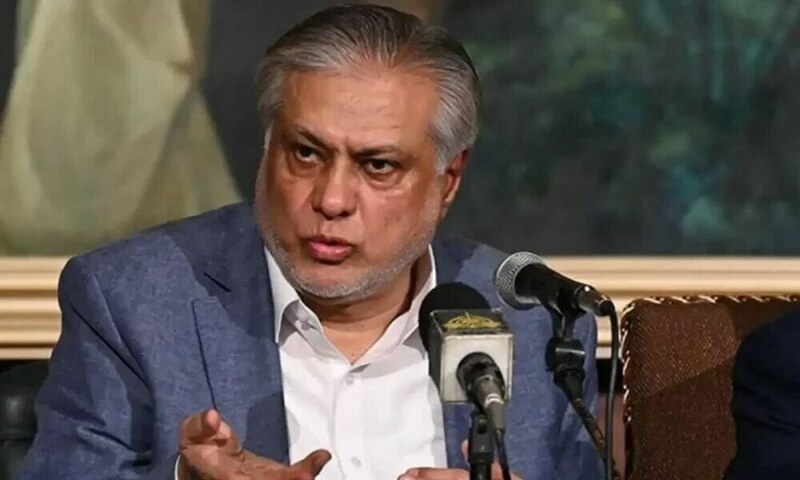
    ISLAMABAD: Preparatory sessions for the 30th Meeting of the Economic Cooperation Organization (ECO) Council of Ministers (COM) commenced in the federal capital on Sunday, November 15, alongside a flurry of diplomatic arrivals and high-level bilateral engagements led by Deputy Prime Minister and Foreign Minister Senator Mohammad Ishaq Dar.

    ECO secretaries and focal representatives convened here on Sunday to finalize the agenda for the upcoming foreign ministers’ summit. Discussions are centered on bolstering regional economic cooperation, expanding trade, and enhancing connectivity among member states, with a specific focus on linking landlocked Central Asia to international markets.

    On the sidelines of the gathering, Deputy Prime Minister Dar held separate meetings with the heads of the Organization of Islamic Cooperation (OIC) and the ECO.

    READ ALSO: ECO FMs meeting from today: Pakistan to assume ECO chairmanship

    During his meeting with OIC Secretary General Ismail Ould Cheikh Ahmed—who is making his inaugural visit to Islamabad since assuming office—Dar reaffirmed Pakistan’s commitment to strengthening the OIC as a unified and effective voice for the Muslim Ummah, assuring the bloc of Islamabad’s continued support.

    In a separate session with ECO Secretary General Dr. Asad Majeed Khan, Dar emphasized regional connectivity and economic integration. Outlining Pakistan’s upcoming Chairmanship priorities under the theme “Reviving Regionalism for a Resilient ECO,” he reiterated Pakistan’s commitment to hosting the 2027 ECO Summit. Dr. Khan commended Pakistan’s hospitality and organizational arrangements for the 30th ECO-COM, while both sides pledged close coordination to implement agreed regional development initiatives.

    Beyond the ECO engagements, DPM/FM Dar held a telephone conversation with Egyptian Foreign Minister Dr. Badr Abdelatty. The two ministers reviewed regional and international developments and discussed the upcoming R4 and R4+E4 meetings in Europe, stressing the need for closer coordination to advance regional peace and stability. Foreign Minister Abdelatty also renewed an invitation for Prime Minister Muhammad Shehbaz Sharif to visit Cairo, which Dar welcomed positively.

    Several high-ranking officials arrived at Islamabad International Airport on Sunday to participate in the 30th ECO-COM and were received by senior officials from the Ministry of Foreign Affairs (MoFA). Deputy Chairman of the Cabinet of Ministers and Foreign Minister Rashid Meredov, welcomed by Pakistan’s Ambassador to Turkmenistan alongside MoFA officials. Deputy Minister of Foreign Affairs and Head of Delegation Elnur Mammadov and Deputy Minister of Foreign Affairs and Head of Delegation Musa Kulaklikaya also arrived.

    Copyright Business Recorder, 2026

    Source: brecorder
  • What mining investment requires

    What mining investment requires

    EDITORIAL: The Pakistan Minerals Investment Forum, which brought together delegations from over 60 countries in Islamabad on November 12-13 was another attempt to sell the country’s considerable mineral potential to international investors.

    Such forums have become a familiar feature of Pakistan’s efforts to attract foreign capital, with speeches, presentations, and memorandums of understanding often generating considerable publicity. What remains far less evident is how many of these commitments translate into actual investment.

    Pakistan’s mining potential is undoubtedly significant. Its mineral wealth is estimated at USD 8 trillion, much of it unexplored or commercially untapped. The country holds considerable copper and gold deposits in the Tethyan belt, including the high-profile Reko Diq project, as well as Thar’s vast coal reserves and deposits of iron ore, chromite, gemstones, and other industrial minerals.

    Exploration has also indicated the possible presence of lithium and rare-earth elements, increasingly vital to electric vehicles, battery manufacturing and renewable energy. If developed responsibly, this resource base could offer Pakistan an opportunity to diversify its exports, attract substantial long-term capital and establish a presence in emerging global supply chains.

    But geological promise alone does not make a mining industry, let alone a competitive one. That requires investment in exploration, extraction, processing, infrastructure and technical expertise. Mining is capital-intensive, with high upfront costs, long investment horizons and a need for specialised technology and skilled labour. Investors must be confident they can operate safely, secure permits predictably, transport equipment and output seamlessly, access affordable power and enforce contracts.

    Pakistan struggles on almost every count, making it difficult to persuade investors that the opportunities outweigh the risks. This is particularly true of Balochistan and Khyber-Pakhtunkhwa, where many of the most promising deposits lie amid persistent insecurity and militant violence.

    Assurances from a conference podium cannot replace peace and stability on the ground. Nor can mining development succeed without local communities sharing in its benefits and having a meaningful stake in it.

    Equally important is the wider investment climate. Pakistan’s cost structures are among the region’s least competitive, with expensive energy a particularly serious handicap for an energy-intensive industry.

    Roads, rail links, water supplies and dedicated mining infrastructure are inadequate in many prospective areas. Much also needs to be done when it comes to geological mapping, ensuring reliable data, establishing technical institutions and workforce development.

    Nor can Pakistan ignore the examples it has already set. The Reko Diq dispute, which saw years of litigation and arbitration before the project was revived remains a cautionary tale.

    The experience of foreign investors in other sectors, including K-Electric, also shapes perceptions of how the state deals with private capital. Crucially, investors also watch how domestic businesses are treated: the regulatory maze, abrupt policy shifts, perceived weaknesses in judicial independence, protracted contract enforcement, and, too often, the lack of respect shown to investors by officialdom.

    Then there are the broader economic signals, which are hardly reassuring. In FY2025, remittances reached approximately USD 38.3 billion, exceeding goods exports of around USD 32.3 billion. Remittances are a vital contribution by overseas Pakistanis, but their comparison with goods exports exposes the weakness of the country’s productive base.

    Meanwhile, more than 762,000 Pakistanis registered for overseas employment in 2025. A country losing so many of its people to better prospects abroad cannot expect investors to ignore the warning signs.

    Policymakers must realise that while investment forums can open doors, they cannot do the hard work of reform. Pakistan must deliver security, political stability, regulatory clarity, affordable energy, infrastructure, credible dispute resolution, and a skilled workforce. It must also ensure mining is environmentally responsible and benefits host communities.

    Until these fundamentals change, Pakistan risks continuing to advertise its mineral wealth while capital, expertise, and opportunity flow elsewhere.

    Copyright Business Recorder, 2026

    Source: brecorder

  • Privatisation of Discos

    Privatisation of Discos

    EDITORIAL: The Public Accounts Committee (PAC) has proposed delaying the privatisation of power distribution companies (Discos), which is planned to start in January 2027, with FESCO being the first to be privatised. The objection is premised on the lack of clarity and transparency regarding the DISCOs’ assets and liabilities.

    It is a valid concern, as without proper valuation, a company can be sold at a higher or lower value than it is worth, putting either the buyer or the seller at a disadvantage. Moreover, it impacts consumers because DISCO tariffs are determined based on the return on their assets.

    A higher asset value means a higher valuation and a higher one-time return for the government. However, that would also mean higher monthly bills for consumers.

    The question is why leave shades of grey when everything can be made black and white? Greater transparency would also help avoid unnecessary criticism, as seen in the case of PIA, where the common perception is that the airline was sold too cheaply. Some argue that its landing rights alone were worth more, while others criticize the government for retaining many of its liabilities.

    However, the company was perhaps sold at fair value, given its net asset position. Greater transparency in the transaction could have cleared the air and addressed many of these concerns.

    Power sector distribution companies have altogether different dynamics. PIA did not provide an essential utility, and the vast majority of the population does not travel by air.

    Additionally, it has to compete with private players. The entire focus of its privatization was on cutting government losses, with the hope of reviving a brand that used to be the country’s pride in its prime.

    There is nothing of the sort for power utility companies. Everyone who uses electricity is a consumer of these utilities, and electricity is deemed a basic necessity, as the normal functioning of any household is impossible without power. Electricity bills affect everyone, and the power supply chain is complicated.

    That is why privatising these companies is an uphill task that requires major reforms. There are still many ifs and buts.

    While the privatisation minister is enthusiastic and has engaged the right international consultants, there is no need to rush the transactions, as doing so could create problems post-privatisation. The experience of KE, which continues to face challenges, serves as a strong reminder of what can go wrong.

    In asset valuation, real estate represents the largest share. The government plans to exclude real estate from the transactions, as the properties will be transferred to the government and leased back to the utility companies. Even today, distribution companies value real estate at a nominal Re. 1, which keeps both asset values and tariffs low.

    However, in the case of grids and other infrastructure, proper valuation is better. These are depreciating assets. And if the government values these assets higher, it may fetch a higher one-time return but would face the issue of recurring higher tariffs for consumers.

    Utility companies in Pakistan, as in much of the world, are valued based on returns on their regulated assets. The Privatisation Commission is reportedly considering allowing a return of 14.5 percent on these assets. This makes asset valuation particularly important, as any upward revaluation could have direct implications for electricity tariffs.

    The government must consider all aspects. There should be transparency, and the leasing terms must be well-thought-out so that neither the government suffers a loss nor the buyer has to pay more, as the burden would eventually fall on poor consumers.

    Copyright Business Recorder, 2026

    Source: brecorder
  • Montreal’s Cinemania film festival: ‘Inside Gaza’ wins best documentary

    Montreal’s Cinemania film festival: ‘Inside Gaza’ wins best documentary

    MONTREAL, (Canada): “Inside Gaza,” a documentary that follows journalists from global news agency AFP after the October 7, 2023 attack, received the Best Documentary Film award at Montreal’s Cinemania Film Festival on Saturday.

    Directed by Helene Lam Trong, the 72-minute film follows the daily lives of four AFP journalists who bear witness to the difficulties of reporting in a war-torn territory largely closed off to international media.

    The film is compiled from material produced by the team on the ground, as well as from interviews conducted after they left.

    Hamas’s October 7 attack on Israel killed more than 1,200 people, the vast majority of them civilians. Armed men also took more than 200 people hostage.

    Israel launched an enormous military response, pulverizing swathes of Gaza in attacks that have left 73,000 people dead, according to the Hamas-run Gaza Health Ministry, whose figures are considered reliable by the United Nations.

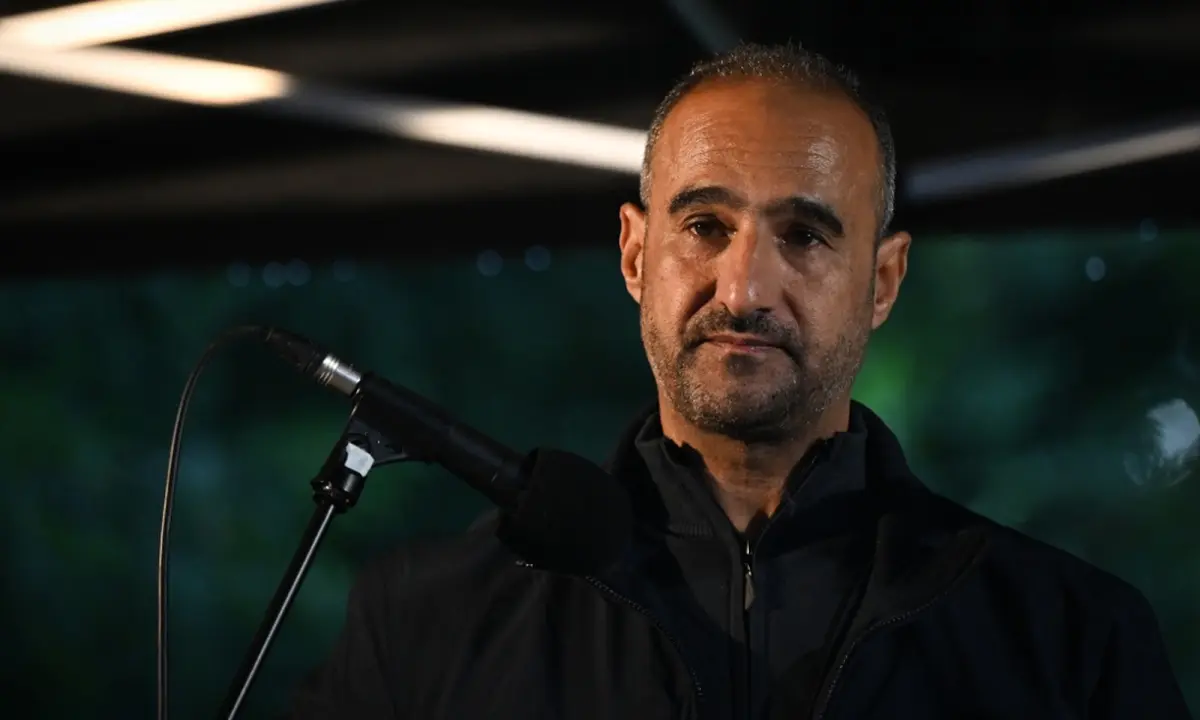
    Adel Zaanoun, AFP’s Gaza bureau chief and one of the film’s four protagonists, accepted the award in Montreal.

    He dedicated the win to all the journalists “killed in this crazy and dirty war in Gaza” and to those “who still work on the ground without food, without water, without internet, without anything.”

    He called on people worldwide to “continue to support journalists not only in Gaza,” but “everywhere for media freedom.”

    The film has won multiple international awards and is eligible for Oscar contention.

    Source: brecorder

  • Trade war in focus at key ASEAN summit

    Trade war in focus at key ASEAN summit

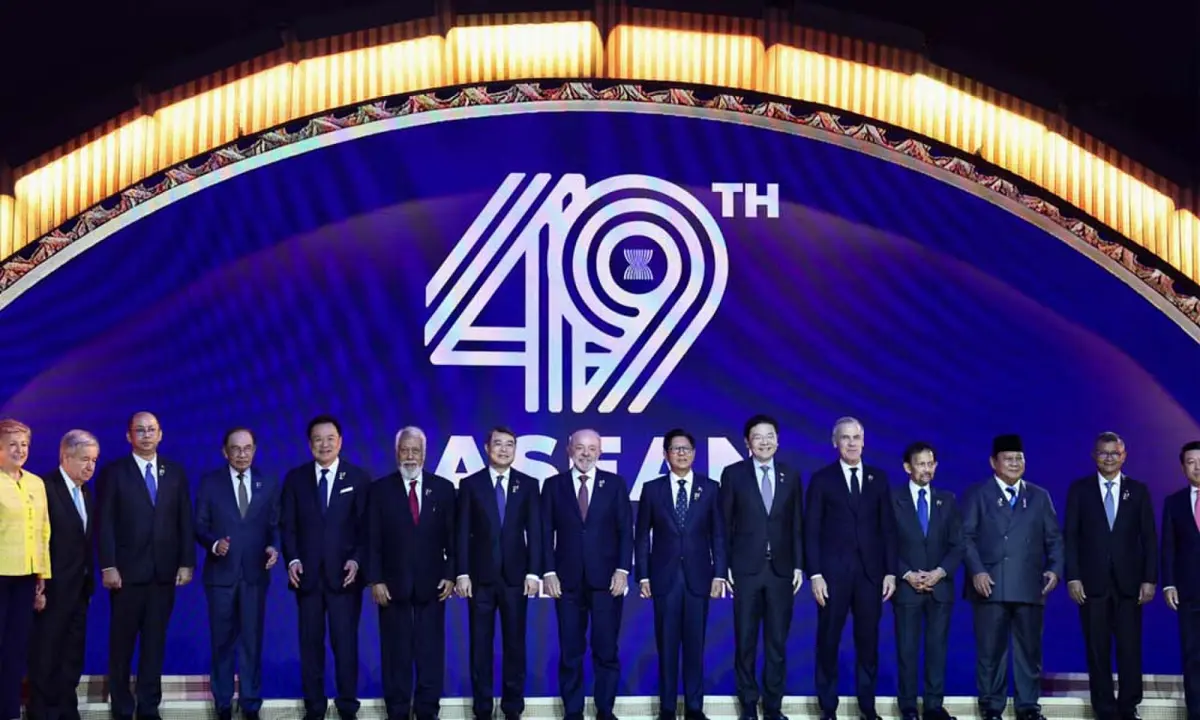
    MANILA: A key summit opened Sunday in Manila, with Southeast Asian heads of state grappling with the Middle East crisis and their own regional flashpoints and global leaders finding common ground over US President Donald Trump’s trade war.

    Trump is scheduled to arrive Tuesday, near the summit’s conclusion, a visit that will include a meeting with the leaders of his fellow Quad countries India, Japan and Australia – the first such sit-down of his second term.

    But it was the US leader’s tariff blizzard that Brazil’s newly re-elected President Luiz Inacio Lula da Silva had on his mind Sunday in Manila.

    “Brazil has learned an extraordinary lesson after the US decided to impose tariffs (on other countries),” he told reporters on the sidelines of the 11-member Association of Southeast Asian Nations (ASEAN) summit.

    “Instead of weeping or begging the US government … to have pity on us, we decided to look for other partners for us to sell and for us to buy from,” he said, noting his country’s trade with regional states Indonesia and Vietnam had jumped 15 and 13 percent, respectively.

    Canadian Prime Minister Mark Carney sounded a similar note at the summit a day earlier while touting a new Philippine free-trade deal and ASEAN trade talks he said had been “substantially concluded”.

    The two pacts were “part of a strategy of developing a dense web of reliable partners to create more opportunities … and reducing our relative reliance on the United States,” Carney said.

    Lula told reporters he had met with Carney on the summit’s sidelines, inviting him to make an official visit to Brazil, and that he hoped to double trade with Canada.

    Nearly 20,000 police officers have been deployed around Metro Manila for the summit, with progressive groups predicting a turnout of thousands on Tuesday for an anti-Trump march on the summit site.

    Much of the uproar targets the US Pax Silica programme – a supply-chain initiative designed to counter China’s dominance in semiconductors and rare earths – whose flagship Philippine project, a 1,620-hectare AI manufacturing hub north of Manila, threatens to displace Indigenous families.

    On Sunday, a crowd of about 200 protesters, some carrying signs reading “the Philippines is not for sale” and “Ban Trump!” clashed with police who blocked an attempted march.

    AFP reporters saw at least three demonstrators taken away by officers.

    Two issues that have vexed ASEAN leaders for years – a languishing South China Sea “Code of Conduct” and the relationship with war-torn Myanmar – will be Singapore’s problem when the bloc’s rotating chair passes to the city-state in 2027.

    Myanmar has been excluded from high-level ASEAN meetings since a 2021 military coup that ousted the elected government of Aung San Suu Kyi and triggered an ongoing civil war.

    Thailand, which shares a border with Myanmar and is leading the charge for closer relations, last week called for Naypyidaw’s foreign minister to be allowed back into meetings.

    On Sunday, a joint ASEAN statement called for “calibrated engagement” with the Myanmar government, echoing language Thailand has used for months.

    Normalisation, however, would depend on “concrete progress” being made on a five-point peace plan, the statement said.

    Philippine President Ferdinand Marcos has previously conceded the plan had made no progress.

    Hopes of achieving a so-called Code of Conduct in the disputed South China Sea between ASEAN states and China during Manila’s year in the chair, meanwhile, have come to an end.

    Philippine Foreign Secretary Theresa Lazaro, who had previously said negotiations were “80 percent complete”, told reporters on Sunday that she trusted “that Singapore will be able to finish the discussions” next year.

    Beijing claims most of the South China Sea despite an international ruling that its assertion has no legal basis, and its coast guard has clashed repeatedly with that of the Philippines.

    The row has reared its head at inopportune times over the Philippines’ year in ASEAN’s rotating chairmanship, with a July foreign ministers summit opening less than a day after Chinese and Philippine sailors engaged in a clash.

    ASEAN is scheduled to meet with Chinese Prime Minister Li Qiang on Monday.

    Source: brecorder