Author: Theph

  • Palm gains on firm Dalian; weak crude, high stocks limit upside

    Palm gains on firm Dalian; weak crude, high stocks limit upside

    KUALA LUMPUR: Malaysian palm oil futures rose for a second consecutive session on Thursday, driven by stronger rival Dalian oils, though weaker crude, higher stocks, and profit-taking capped the gains.

    The benchmark palm oil contract for January delivery on the Bursa Malaysia Derivatives Exchange gained 26 ringgit, or 0.59%, to 4,436ringgit ($1,089.93) a metric ton by the midday break.

    The market traded higher following bullish rallies in rival Dalian during Asian trading hours as well as overnight Chicago soyoil futures, said Anilkumar Bagani, head of research at Mumbai-based vegetable oil broker Sunvin Group.

    However, Bagani said weaker energy prices and Malaysia’s heavy inventories triggered profit-taking at a key technical resistance zone.

    Dalian’s most-active soyoil contract rose 0.21%, while its palm oil contract added 1.44%.

    Soyoil prices on the Chicago Board of Trade were down 0.28%.

    Palm oil tracks the price movements of rival edible oils, as it competes for a share of the global vegetable oils market.

    Oil prices fell more than $1 per barrel as easing concerns over an escalation of conflict in the Middle East reduced the risk premium in crude markets, while rising OPEC+ output and growing US inventories fed worries about oversupply.

    Weaker crude oil futures make palm a less attractive option for biodiesel feedstock.

    The ringgit, palm’s currency of trade, weakened 0.25% against the dollar, making the commodity slightly cheaper for buyers holding foreign currencies.

    Palm oil may test a resistance zone of 4,471 to 4,489 ringgit per metric ton, a break above which could lead to a gain into the 4,519-4,567 ringgit range, Reuters technical analyst Wang Tao said.

    Source: brecorder

  • COP31 host Turkiye, AIIB strike record $1.6 billion climate policy deal

    COP31 host Turkiye, AIIB strike record $1.6 billion climate policy deal

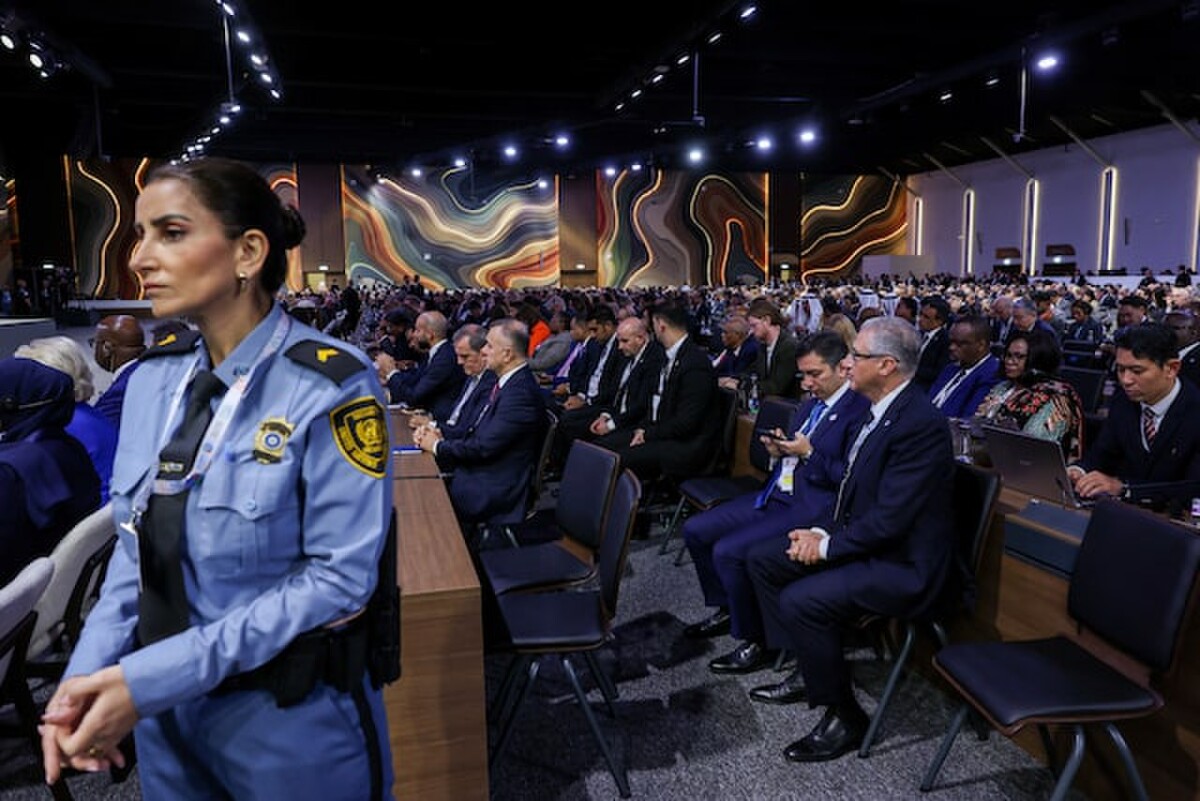
    ANTALYA: The Asian Infrastructure Investment Bank has agreed a record $1.6 billion financing deal with COP31 climate conference host Turkiye to support a series of policy reforms aimed at attracting the investment it needs to hit its climate goals, the bank said.

    Turkiye, a founding member of the AIIB, will need an estimated $68 billion in additional climate investment by 2030, around half from private sources, the bank said in a statement on Thursday, the fourth day of the two-week UN climate conference being held in Antalya.

    Covering fiscal policy, financial regulation and sectoral planning, the agreement will support the implementation of Turkiye Climate Law and its plan to cut planet-warming emissions, which includes an interim target for 2035 and aims to achieve net zero by 2053.

    The money will help scale sustainable finance, accelerate decarbonisation and boost climate resilience efforts across the country of 86 million people as global warming drives drought, floods and wildfires.

    “This financing represents AIIB’s largest climate policy-based financing package to date, and we look forward to contributing to Türkiye delivering on its climate ambitions,” said AIIB Chief Investment Officer Konstantin Limitovskiy.

    Total AIIB climate financing in 2025 was a record $7.47 billion.  Help for Turkiye nascent trading scheme.

    Part of the sustainable finance support will go towards helping the country scale its nascent emissions trading scheme, under which companies in high-emitting sectors will receive and trade allowances.

    A domestic carbon price could help exporters to the European Union in sectors such as steel and cement, as carbon costs paid in Turkiye can be taken into account under the bloc’s carbon border levy on emissions embedded in certain imported products.

    Leaders warn COP31: War, conflict must not distract from climate action

    Programme targets include getting at least 180 facilities reporting baseline emissions under the scheme by April 2027 and securing production licences for 1,800 megawatts of wind and solar capacity by early 2027.

    The plan also aims to help 225,000 farmers in water-stressed basins switch to less water-intensive crops by 2028 and to have 50,000 hectares (124,000 acres) designated as carbon sinks — where land absorbs climate-damaging carbon — by 2028.

    As the country faces increasing pressure from water scarcity, drought, extreme heat, wildfires and urban flooding, the reform plan aims to help strengthen planning and risk management in areas including water, ecosystems and health.

    Source: brecorder

  • Taiwan’s Foxconn reports 34% rise in Q3 profit, beats forecasts

    Taiwan’s Foxconn reports 34% rise in Q3 profit, beats forecasts

    TAIPEI: Taiwan’s Foxconn, the world’s ​largest contract electronics ‌maker, reported a 34% rise in third-quarter ​profit on ​Thursday, beating analyst forecasts ⁠on continued strong ​demand for AI.

    Taiwan’s Foxconn reports 35% rise in Q2 profit, beats forecasts

    Net ​profit for the July to September period for ​Nvidia’s biggest ​server maker and Apple’s top ‌iPhone ⁠assembler was T$77.5 billion ($2.35 billion), versus an LSEG consensus ​estimate ​of ⁠T$69.6 billion and compared with ​T$57.7 billion ​a ⁠year earlier.

    Source: brecorder

  • US marine guard appears to rebuke Hegseth’s delegation at Tomb of the Unknown Soldier

    US marine guard appears to rebuke Hegseth’s delegation at Tomb of the Unknown Soldier

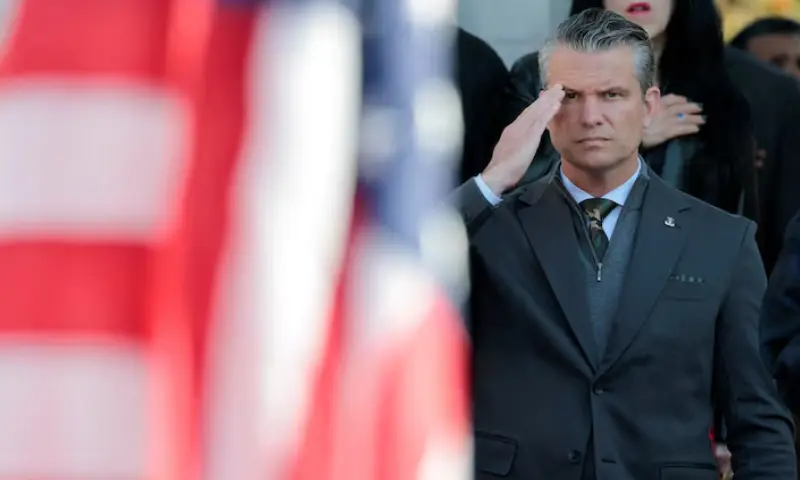
    A US Army sentinel guarding the Tomb of the Unknown Soldier appeared to rebuke Defence Secretary Pete Hegseth’s delegation on Wednesday after laughter could be heard as they climbed the steps of the solemn site, according to a video of the incident.

    Hegseth, his wife and senior aides could be seen taking pictures and speaking to each other on the steps of the memorial at Arlington National Cemetery following a Veterans Day event.

    Immediately after the laughter, the sentinel moved toward the group and, from a distance, shouted toward them: “All visitors will maintain an atmosphere of silence and respect at all times.”

    Sitting at the heart of Arlington National Cemetery, the Tomb of the Unknown Soldier is a sacred site and the grave of three unknown American service members, including one from World War One. It is widely known as a place for mourning and for reflection on military service, and sentinels guard the site 24 hours a day.

    Asked about the incident, which was first reported by CNN, chief Pentagon spokesperson Sean Parnell said in a statement: “The secretary and the entire department have always honoured and will always honour the sacrifices our military men and women have made to keep America safe.

    “While commemorating this solemn day, a soldier correctly and respectfully reminded everyone to maintain decorum.”

    Hegseth, a former Army National Guard soldier who served in Iraq, prevailed this week after the House of Representatives rejected a Republican lawmaker’s effort to impeach him.

    At a rare Pentagon press conference on Tuesday hours before the vote, Hegseth called the impeachment effort a farce and defended his record, which includes championing the unpopular war on Iran, launching strikes on suspected drug vessels in Latin American waters and firing senior military officers.

    Democrats who won control of both chambers of Congress last week have promised to investigate Hegseth for his stewardship of the US military and have not ruled out another impeachment effort.

    Source: dawn

  • Trump to flex muscles on Asia tour after midterms losses

    Trump to flex muscles on Asia tour after midterms losses

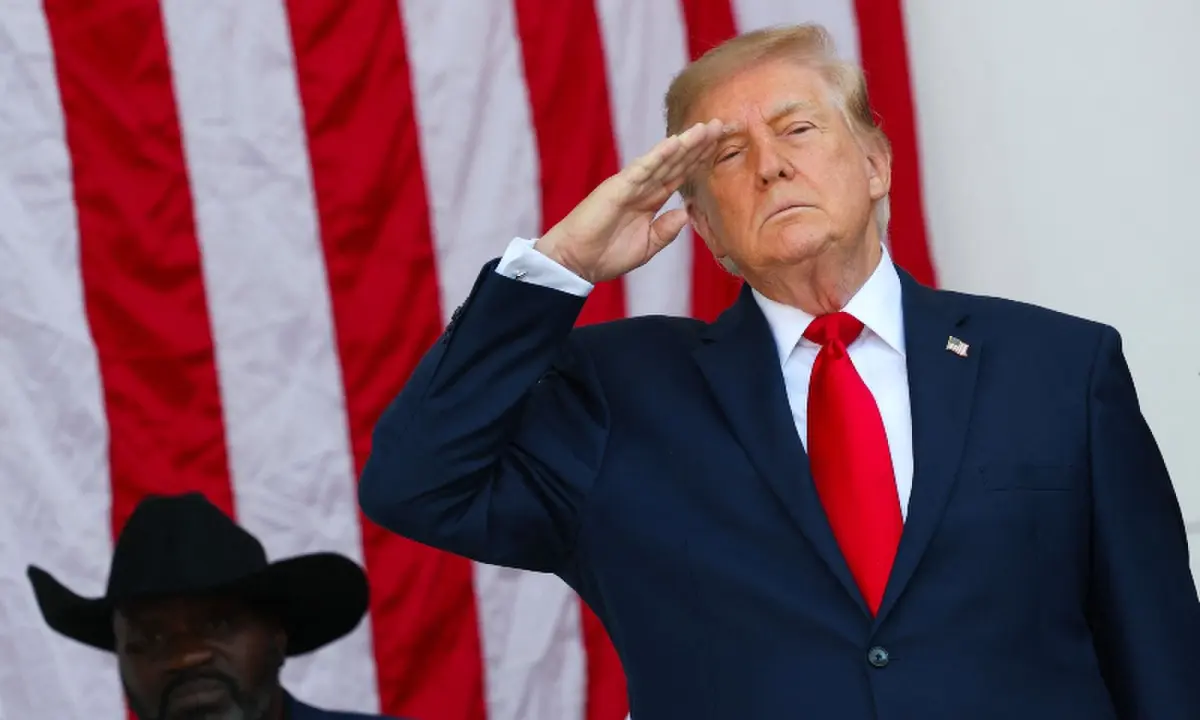
    After his party suffered a midterms hammering, President Donald Trump faces a new challenge: proving he is still the boss of US foreign policy on the global stage.

    With Trump politically hamstrung as he enters the remaining two-year ‘lame duck’ period of his White House tenure, world leaders may be quietly wondering how to leverage the new balance of power in Washington.

    The 80-year-old Republican heads to the ASEAN summit in the Philippines and APEC summit in China from a radically transformed and hostile political landscape at home after the Democrats seized both the House of Representatives and the Senate.

    Constitutionally banned from seeking a third term in the 2028 presidential race, the unpredictable billionaire could be all the more inclined to focus his energy on the international stage.

    “After bad midterms, this is how presidents reset,” Edgard Kagan, an expert at the Center for Strategic and International Studies (CSIS), told a news briefing.

    Iran, trade, China

    That is especially true for Trump on his Asian tour, where he is unlikely to be pressed publicly on domestic politics.

    China has described the midterms as an “internal affair” and said it is “willing to continue working” with the United States after Republicans lost control of both chambers of Congress.

    But the power shift in Washington will still be on leaders’ radars, said Joshua Kurlantzick, an expert in Southeast Asia and South Asia at the Council on Foreign Relations.

    “In private, many (Asian) leaders are relieved,” Kurlantzick wrote in an article this month.

    “The Iran war has been particularly challenging for the United States’ Asian partners and allies, and they hope that after the midterm results US President Donald Trump’s decision-making on the issue will become more predictable.” Trump has said several times since the midterms that renewed fighting between the US and Iran is unlikely.

    A Democratic-controlled Congress could also take a tougher stance towards China, Kurlantzick added, backtracking on the Trump administration’s “soft approach” to Beijing that has sparked unease among US allies in Asia.

    Leaders in the world’s largest continent are also hoping to see Democrats push back on Trump’s barrage of tariffs on trading partners, which have stung Asian economies heavily reliant on exports.

    Democratic House leader Hakeem Jeffries has urged Congress to reassert its authority over US trade policy.

    The Democrats will not get an easy ride in undoing Trump’s policies, though.

    The president enjoys broad authority over trade and holds veto power over congressional legislation — which he has vowed to use.

    High-profile meeting

    Trump relishes dramatic gestures and foreign policy provides an ideal arena for high-profile meetings, such as with Chinese and Russian leaders Xi Jinping and Vladimir Putin.

    Trump told reporters this week he expects to meet Xi and Putin at the APEC summit in Shenzhen, China, scheduled for November 18-19.

    The president said “denuclearisation” and ending the war in Iran would be on the agenda.

    But the bigger goal for Trump may well be a single photo of himself standing with the two other leaders he views as his great power equals, said Kurt Campbell, chair of The Asia Group and a senior diplomat during the Biden administration.

    “I think in many respects this could be ‘the meeting is the message’,” Campbell said.

    Ukraine’s President Volodymyr Zelensky, who watched in horror as the White House appeared to pivot towards Moscow this year, has warned against a “Yalta 2.0,” referring to Western leaders dividing Europe with the Soviet Union in 1945.

    Victor Cha, president of geopolitics and foreign policy and Korea chair at CSIS, said the Republicans’ midterm defeat meant a high-profile meeting was all the more likely.

    “One that he (Trump) has personally staked a lot of time over two terms has been on North Korea,” Cha said.

    “There’s nobody else in the US government that makes policy on North Korea except the president, so I think that he’ll be focused on that sort of legacy issue”.

    Source: dawn

  • War, poverty, repression stalk Yemen’s ancient capital

    War, poverty, repression stalk Yemen’s ancient capital

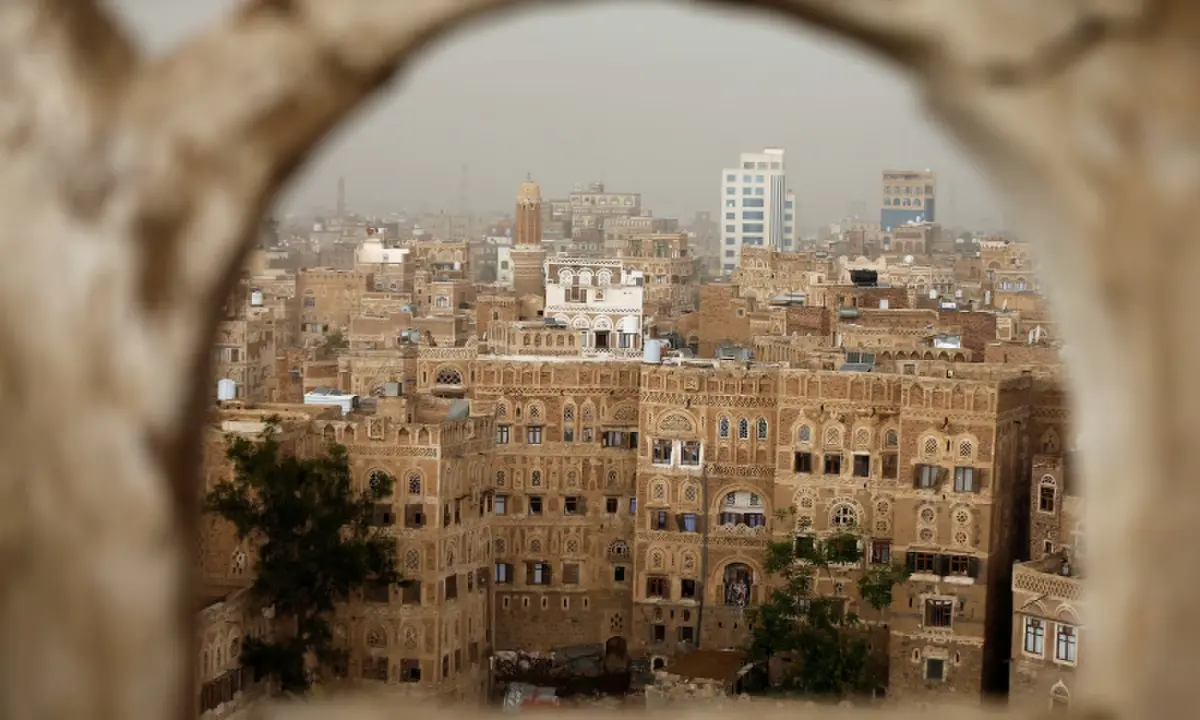
    Beset by poverty, war and repression, the residents of Yemen’s ancient capital Sanaa, under Houthi control for over a decade, struggle to survive.

    The Houthi movement seized the city in 2014, forcing the government to flee south and sparking a brutal civil war in one of the world’s poorest countries.

    In Sanaa, said to be one of the world’s oldest continuously inhabited cities, residents say they long for the pre-war days and a measure of prosperity.

    “Before the war, salaries were paid in full on a regular basis,” Ammar, a 24-year-old university student who asked not to use his last name for security reasons, told AFP by phone.

    “Today, the Houthis have divided salaries into categories,” he said.

    “My father is a civil servant; he falls into the category that receives half a monthly salary once every three months. My mother is a teacher and receives half-a-salary each month.”

    The Old City, with some buildings dating back nearly a millennium, bustles with life as vendors display foodstuffs including grains and spices in large sacks, and restaurant owners grill meat over charcoal.

    Unesco added the Old City to its World Heritage in Danger list in 2015, after it was damaged in fighting between the Houthis and a Saudi-led coalition backing the government.

    The historic alleys between tall, decorated mud-brick buildings are crowded with passers-by filing beneath banners reading “Boycott American and Israeli goods”.

    But many residents struggle to afford basic necessities.

    Two electricity bills

    “We are a family of six, and my siblings are still in school. What our parents earn is not enough to cover basic needs,” Ammar said, adding that “prices have risen sharply”.

    He recently lost his job at a private school, which helped him pay his university tuition fees, amid layoffs.

    Alongside the struggle to secure basic necessities, residents of Sanaa complain of constant power cuts.

    Residents pay two electricity bills, one to the authorities and another to private generators that fill in the gaps during the many blackouts.

    “We try to ration our electricity use as much as possible. Water is also cut off in our neighbourhood, so we have to buy water from trucks at high cost,” Iman, a mother of two, told AFP by phone.

    “Inflation and the soaring cost of living are not matched by any change in salaries. My husband works in the private sector and has not received a raise in three years, and there are no other job opportunities.”

    Living conditions have worsened in recent weeks with Saudi Arabia intensifying its airstrikes on Sanaa, according to Houthi media and officials.

    Since a 2022 truce between the two sides collapsed in July this year, fighting has only escalated.

    Forty-four people were killed in the outlying village of Al-Sharia in Sanaa province on Saturday, the Saba news agency said, citing a spokesperson for the Houthi Ministry of Health.

    ‘Uneducated generation’

    Under the weight of poverty, the education system in Yemen has largely collapsed, and many of Sanaa’s youths have dropped out of school.

    Bilqis Abu-Osba, a former political science lecturer at Sanaa University who now lives outside the city, said dropouts have become endemic. Her colleagues have had to find new ways to make ends meet, like selling cakes out of their houses.

    Meanwhile, “the battlefields have become a refuge for young people to earn a scrap of bread”.

    “Poverty has played a very significant role in changing Sanaa,” she said, especially in eroding the formerly salaried middle class.

    She said the quality of education has also declined, not least because the Houthis have modified curricula to suit “a sectarian ideology that serves their political project”.

    “A new uneducated generation is now growing up, which will affect Yemen both in the present and in the future.”

    “Sanaa used to be a city that was culturally, politically, and socially diverse, but it is now witnessing systematic exclusion to change its identity… into a Houthi ideological identity,” Abu-Osba added.

    “Everyone is afraid to speak, as they can be arrested or severely punished,” she said.

    “There is intense terror about expressing any political opinion, even a simple one, within the city, and silence has become the norm.”

    Above an archway in the Old City a banner flutters with the Sarkha, the Houthis’ ubiquitous slogan: “Death to America, death to Israel, curse the Jews, victory to Islam.”

    Source: dawn
  • Police to have polygraph test of anchorperson’s husband on Nov 16

    Rawalpindi – Saddar Berooni police will take Mohammad Ahsan, husband of the murdered anchorperson – Rabia Ahsan, to Lahore to have his polygraph test on November 16.

    Source: Nation

  • Private schools demand inquiry into alleged hefty fee charged for Civil Defence fitness certificates

    Rawalpindi – Representatives of private schools have urged on the district administration to take notice of hefty fee demanded by Civil Defence to issue fitness certificates related to security and fire fighting.

    Source: Nation

  • JICA team meets commissioner to discuss development, cooperation initiatives

    Rawalpindi – A delegation of the Japan International Cooperation Agency (JICA) held a meeting with Salman Ghani, Commissioner Rawalpindi and Director General Rawalpindi Development Authority (RDA) at the authority office to discuss ongoing and proposed development initiatives in the district.

    Source: Nation

  • 2 held for online blackmail and harassment of women

    ISLAMABAD – A woman receives an email threatening to send her sexually explicit videos to her father.

    Source: Nation