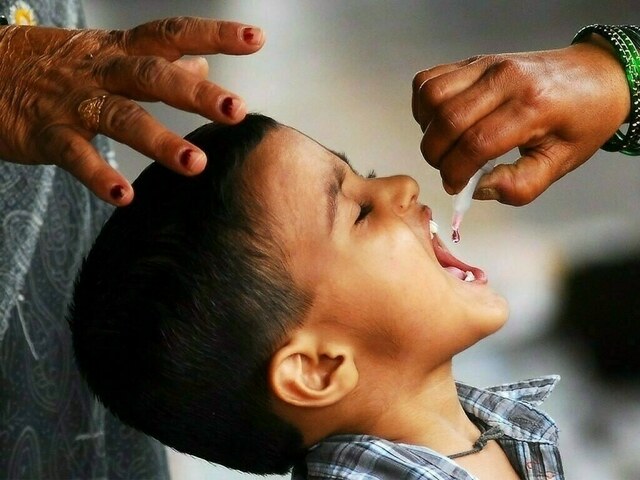
EDITORIAL: The latest confirmation of Pakistan’s eighth polio case this year, in Khyber district, should provoke national shame. The child is a 13-month-old girl; six of the eight cases have been reported in Khyber Pakhtunkhwa. Pakistan and Afghanistan remain the only countries where wild poliovirus is endemic. That is a distinction no country should want.
Afghanistan has endured decades of war and institutional collapse. Pakistan has its own security challenges, but it cannot explain away this disgrace by pointing across the border. The persistence of a preventable disease is, above all, an indictment of the state’s failure.
The contrast becomes even more grotesque when the people trying to protect children are themselves hunted.
On Tuesday, November 3, two policemen were killed and another injured in Mohmand while travelling to provide security for a polio team. A day earlier, four polio workers had reportedly been abducted in Tank. These are not isolated inconveniences in an otherwise successful public-health campaign. They are part of a long and bloody pattern in which vaccinators and their escorts are threatened, attacked and even killed for doing work that should be routine.
Militant groups and pockets of religious extremism have repeatedly exploited conspiracy theories that vaccination is a foreign plot to sterilise Muslim children. Such propaganda is absurd, but its consequences are lethal. The oral vaccine is safe and effective; polio has no cure, and infection can cause permanent paralysis.
Yet it remains possible for a handful of local agitators to frighten parents away from protecting their children, while the state struggles to counter the lies with a consistent, credible national message.
The clergy should have been central to that effort from the beginning. There have been fatwas and public endorsements from respected religious scholars, and some clerics have actively helped persuade hesitant families. But isolated interventions are not a national narrative.
The state has failed to build and sustain an alliance with religious leaders across the country strong enough to ensure that every parent hears the same unequivocal message: vaccination is medically necessary, religiously permissible and a responsibility towards one’s children. Why has this remained such a difficult task after decades of campaigns?
There is also a deeper public-health failure. Poliovirus spreads mainly through the faecal-oral route and can travel through contaminated water and food. Poor sanitation, unsafe drinking water, inadequate drainage and weak routine immunisation create the conditions in which it continues to circulate.
Repeated vaccination drives are indispensable, but they cannot permanently compensate for the absence of basic municipal and health services. The state has spent years counting campaign rounds and children reached while too many communities still lack the sanitary environment, reliable primary healthcare and public awareness needed to break transmission.
The latest figures make the complacency harder to defend. Four large-scale campaigns have already been conducted this year, with tens of millions of children vaccinated, yet environmental samples continue to detect the virus in the Peshawar Block.
The next campaign, targeting nearly 24 million children in 97 districts, is now under way. These efforts deserve support, and parents must ensure that every child receives the required doses. But campaign numbers cannot become a substitute for results.
Pakistan has been pursuing polio eradication for decades. It has had time, resources, international assistance and repeated warnings. What it has not delivered is the political ownership, administrative consistency and public trust required to finish the job.
Protecting vaccinators, confronting extremist misinformation, engaging clerics, improving sanitation and strengthening routine immunisation must be treated as one national responsibility. Until that happens, another case will follow another campaign, another funeral will follow another attack, and the country will remain trapped in a shameful distinction the rest of the world has left behind.
Copyright Business Recorder, 2026
Source: brecorder
Leave a Reply