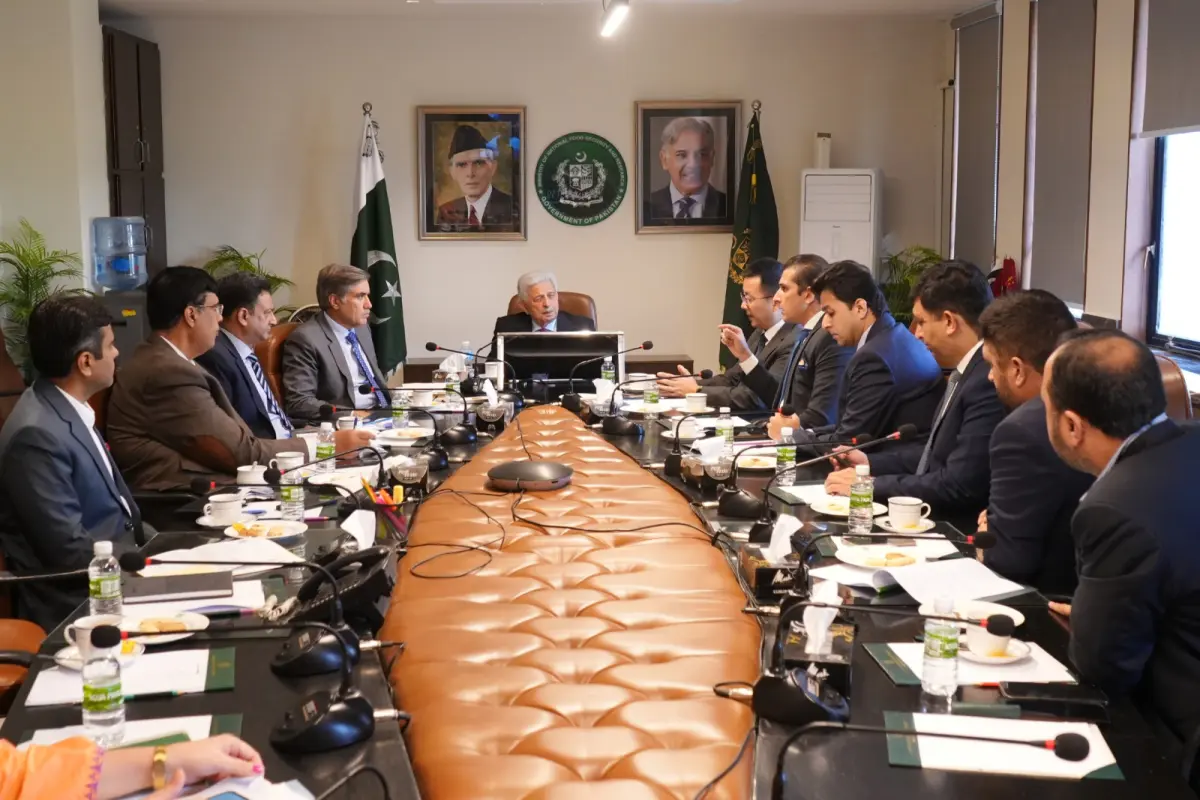
Federal Minister for National Food Security and Research Rana Tanveer Hussain held a meeting with a Syngenta delegation to discuss the use of modern seed technologies, biotechnology, and agricultural research to improve Pakistan’s agriculture sector, a statement said on Monday.
Syngenta Group is a global agricultural technology (AgTech) company, headquartered in Basel, Switzerland, with over 50,000 employees in more than 90 countries.
During the meeting, Hussain emphasised that agricultural modernisation, improved seed quality, technological innovation, and enhanced crop productivity “remain central to the government’s vision for ensuring national food security and strengthening the agricultural economy”.
“The minister highlighted the importance of facilitating responsible investment in agricultural research and development, particularly in advanced seed technologies capable of improving yields, strengthening climate resilience and increasing farmers’ profitability,” the statement said.
According to the details, the delegation discussed the implementation of the National Biotechnology Policy and opportunities for promoting the responsible commercialisation of genetically modified (GM) crops in accordance with national biosafety requirements and applicable regulatory frameworks.
Hussain underscored the need for “an efficient, transparent and science-based regulatory environment that encourages agricultural innovation while ensuring environmental protection, biosafety and farmers’ interests”.
The meeting also explored opportunities for improving coordination among relevant institutions to facilitate timely evaluation, registration and introduction of modern crop varieties.
Discussions further covered the potential for introducing improved cotton and maize varieties, strengthening access to high-performing international germplasm and supporting the growing demand for grain and silage production.
The federal minister particularly welcomed opportunities for collaboration in wheat research and development, including emerging hybrid wheat technologies. He emphasised that improving wheat productivity was a national priority, given the crop’s strategic importance for food security and the country’s agricultural economy.
The delegation also shared suggestions concerning seed import procedures, crop variety evaluation, plant quarantine requirements and regulatory processes. Matters relating to the classification of biological agricultural products and pesticide shelf-life regulations were also discussed.
Hussain emphasised that relevant proposals should be examined through appropriate institutional consultations, keeping in view scientific evidence, international best practices and Pakistan’s regulatory requirements. He stressed the importance of maintaining an appropriate balance between regulatory efficiency, agricultural innovation and national biosafety standards.
Highlighting the significance of private-sector participation, the federal minister stated that international agricultural technology companies could play an important role in supporting Pakistan’s transition towards a more productive, competitive and climate-resilient agricultural sector.
He further emphasised that collaboration between government institutions, research organisations and the private sector was essential for accelerating technology transfer, strengthening domestic agricultural capabilities, and ensuring that farmers benefit from modern agricultural advancements.
The meeting concluded with a shared commitment to continued engagement, stronger institutional coordination, and exploring practical avenues for cooperation in seed development, biotechnology and agricultural innovation.
The Syngenta delegation included Minji Ying, Head of Seeds for Africa, Middle East and Asia; Zeshan Baig, General Manager, Syngenta Pakistan; Khurram Shahzad, Business Unit Head, Field Crops; Muhammad Shoaib, Manager, Seeds and Traits Regulatory Affairs; and Hamad Taifoor Abbassi, Coordinator, Corporate Affairs.
Source: brecorder
Leave a Reply