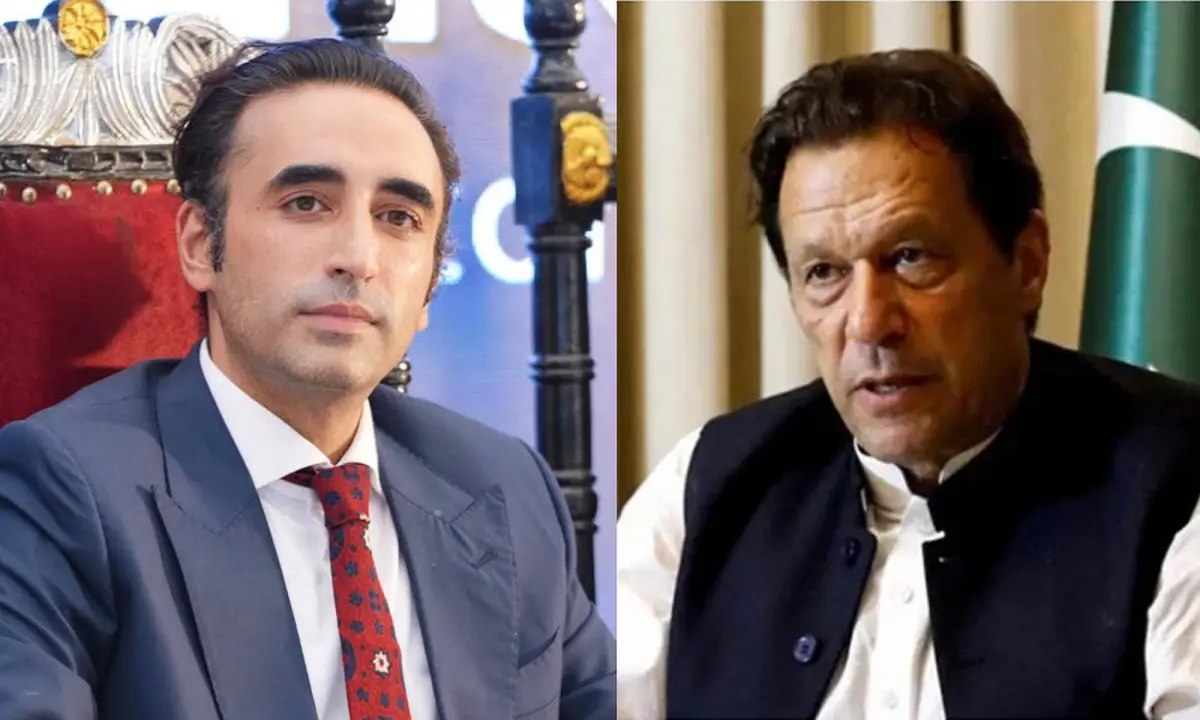
Bilawal Bhutto Zardari has taken a position on Imran Khan that stands out in Pakistan’s increasingly polarised political landscape. The PPP chairman has called Khan a political prisoner, urged an end to political victimisation and argued that PTI should not be excluded from the democratic process. Coming from a leader whose party is allied with the PML-N-led federal government, these remarks raise an obvious question: why is Bilawal speaking up for Imran Khan now, and what does he stand to gain politically?
While this does not signal an alliance between the two, it could reflect a calculated effort by Bilawal to reposition the PPP, distance it from some of the government’s policies and present himself as a voice for political reconciliation.
When Bilawal criticises the government’s conduct, calls for political dialogue, or raises concerns about democratic freedoms and the treatment of opposition parties, it can create the impression that the PPP is softening towards Imran Khan and PTI. But political criticism of the government is not necessarily the same as supporting PTI, nor does it mean the PPP is preparing to join forces with it.
To understand what may be happening, it’s important to look beyond individual statements and examine the political incentives behind them.
The recent shift is real, but Bilawal is not suddenly becoming an Imran Khan supporter. He is advocating political inclusion, dialogue and an end to what he describes as political victimisation. That distinction matters.
What exactly did Bilawal say?
At a press conference at the Karachi Press Club on November 17, Bilawal called Imran Khan a political prisoner and said Pakistan could not function properly by excluding a major political party from the democratic process.
Read More: Bilawal urges political reset, calls Imran Khan a ‘political prisoner’
He argued that the country needed a political reset involving the government, opposition, judiciary and other institutions. He also called for an end to political revenge and urged steps to restore PTI’s trust in Parliament, including addressing the issue of its reserved seats.
These are significant statements, particularly because the PPP is currently allied with the PML-N-led federal government.
Why is Bilawal taking this position?
PTI remains a major political force with a substantial voter base. Keeping its leadership in prison, maintaining political confrontation and leaving the party feeling excluded from Parliament risks prolonging instability.
Bilawal’s argument is that political problems require political solutions. Whether someone supports Imran Khan or not, the exclusion of a major party makes it harder to restore parliamentary functioning, build consensus or address economic issues.
He has also called the cycle of former prime ministers being jailed a recurring problem in Pakistan’s politics, arguing that it needs to end.
Is this a sign of a rift with the PML-N?
Quite possibly.
The PPP is allied with the PML-N at the federal level, but Bilawal has increasingly voiced criticism of government decisions and questioned whether major constitutional and political changes have been made with sufficient consensus.
His criticism of the 27th Constitutional Amendment, concerns over judicial reforms, opposition grievances and his resistance to proposals involving the creation of new provinces have put him at odds with positions emerging from the federal government.
His recent remarks have prompted the government to publicly remind the PPP that it remains part of the same governing arrangement.
Bilawal may therefore be trying to distinguish the PPP from the PML-N without necessarily walking away from the coalition.
Is he trying to gain political advantage?
That is also a possibility.
The PPP has its own political interests. By championing dialogue, parliamentary rights and political reconciliation, Bilawal can position himself as a politician willing to engage across party lines — potentially appealing to voters tired of confrontation and prolonged political instability.
It also allows the PPP to maintain some distance from unpopular government decisions while remaining part of the federal power structure.
However, this position comes with its own criticism: the PPP is still a coalition partner, and critics can question whether it can credibly call for political freedoms and reforms while continuing to share power with the very government it is criticising.
In a post on X, Defence Minister Khawaja Asif said: “He who claims equity must come with clean hands. This is a centuries-old legal maxim. Are your own hands clean? Do you have the right to lecture others or issue threats?”.
“If you are talking about a system collapse, then, as we are all connected to this system, it is also necessary for us to take stock of our responsibilities,“ he added.
So does this mean Bilawal and Imran are becoming allies?
No — at least not based on what Bilawal has said publicly.
There is a difference between supporting someone’s political rights and supporting their politics. Bilawal has previously criticised PTI’s confrontational approach and urged it to return to Parliament, engage with other parties and abandon what he calls extremist politics.
His current position appears to be that PTI should be politically accommodated, Imran Khan should not face political victimisation, and disagreements should be resolved through democratic processes.
The bigger picture
Bilawal isn’t necessarily moving towards Imran Khan. He may be trying to move the political debate towards dialogue, while simultaneously carving out space for the PPP amid growing tensions with its federal coalition partner.
In Pakistan, political alliances shift. But the cycle of political victimisation rarely breaks.
Source: brecorder
Leave a Reply